The Golden Mystery: Amber and the Lost Amber Room

Every year, 26 June is observed as International Amber Day, a celebration of one of nature’s most extraordinary creations. Unlike gemstones that are forged under immense heat and pressure deep within the Earth, amber begins life as something far more ordinary—sticky tree resin. Over millions of years, this resin hardens and fossilizes into a warm, golden substance that has fascinated people across cultures for thousands of years.

Amber is often called “sunshine trapped in stone.” Its rich honey, butterscotch, cognac, and cherry hues have inspired myths, jewellery, medicine, scientific discoveries, and one of history’s greatest unsolved mysteries—the disappearance of the legendary Amber Room.

Nature’s Time Capsule

Amber is not tree sap, as is commonly believed. Sap carries water and nutrients within a tree. Resin, on the other hand, is a protective substance produced when a tree is injured, sealing wounds and defending against insects and disease.

When resin flows over small insects, spiders, feathers, leaves, flowers, or even tiny lizards, these organisms can become trapped. If conditions are just right, the resin is buried under sediments and, over millions of years, transforms into amber. Unlike most fossils, which preserve bones or shells, amber often preserves entire organisms in astonishing three-dimensional detail.

These inclusions make amber invaluable to scientists. Tiny air bubbles reveal the atmosphere of prehistoric forests. Preserved pollen helps reconstruct ancient ecosystems. Even microscopic bacteria and fungi have survived inside amber for tens of millions of years.

For palaeontologists, amber is less a gemstone than a perfectly preserved archive of life on Earth. In fact, amber entered popular imagination through Jurassic Park, whose opening premise is that a mosquito that had fed on a dinosaur millions of years ago becomes trapped in sticky tree resin, which later fossilizes into amber, supposedly preserving the dinosaur’s blood—and its DNA—inside the mosquito’s abdomen. Scientists in the story use this DNA to clone dinosaurs, making amber the unlikely hero of one of cinema’s most iconic scientific adventures. While the preservation of insects in amber is entirely real, the survival of usable dinosaur DNA for 66 million years is not supported by modern science. Even so, the film brilliantly transformed a little-known fossil into a symbol of prehistoric mystery, inspiring countless people to take an interest in palaeontology and the natural world.

The Gold of the Baltic

Although amber is found in several parts of the world—including Myanmar, the Dominican Republic, Mexico, Canada, and even parts of India—the finest and most abundant deposits occur around the Baltic Sea.

For over 5,000 years, Baltic amber travelled across Europe through the famous Amber Road, an ancient trade route linking northern Europe with the Mediterranean. Long before the Silk Road became famous, merchants carried amber southwards in exchange for wine, glass, spices, and precious metals. The Romans valued amber so highly that it sometimes fetched prices exceeding those of gold by weight.

Many cultures also believed amber possessed healing powers. It was worn to ward off illness, ground into powders for medicine, and even carried as a protective charm.

The Eighth Wonder of the World

If amber itself is remarkable, its most famous artistic creation was extraordinary.

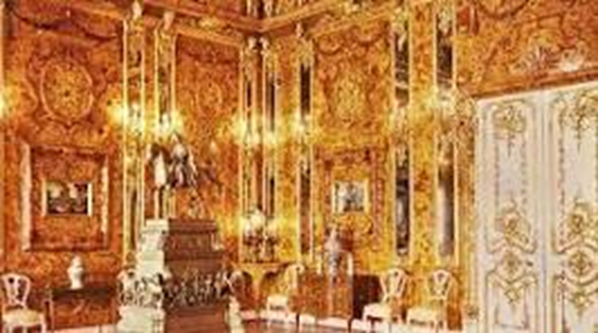
The Amber Room was one of the most lavish interiors ever built.

Constructed in the early eighteenth century in the Kingdom of Prussia, it featured over six tonnes of amber painstakingly carved into intricate decorative panels. Craftsmen combined amber mosaics with gold leaf, mirrors, gemstones, and exquisite carvings to create walls that glowed with warm golden light.

In 1716, Frederick William I presented the room as a diplomatic gift to Peter the Great, symbolizing growing ties between Prussia and Russia.

The room was eventually installed in the magnificent Catherine Palace, where generations of visitors marvelled at what many described as the “Eighth Wonder of the World.”

Sunlight reflecting from thousands of amber tiles created an almost magical glow unlike anything else in European architecture.

A Treasure Lost During War

The Amber Room’s greatest chapter is also its saddest.

During the Second World War, German forces invaded the Soviet Union in 1941. Conservators attempted to protect the fragile amber panels, but the material had become too brittle to dismantle safely. Instead, they covered the room with wallpaper in the hope that occupying forces might overlook it.

The attempt failed.

Specialist German units removed the entire room in just over a day, packed it into dozens of crates, and transported it to the Königsberg Castle, where it was publicly displayed once again.

Then, it vanished.

As Allied bombing intensified and the war drew to a close, the Amber Room disappeared. Whether it was destroyed in fires, hidden in underground bunkers, loaded onto ships that later sank, or concealed in forgotten mines remains unknown.

Despite decades of investigations across Germany, Poland, Russia, and the Baltic region, no verified trace of the original Amber Room has ever been found.

The mystery has inspired countless books, documentaries, archaeological expeditions, and treasure hunters. Every few years, reports emerge claiming that the room has finally been located in caves, tunnels, castles, or shipwrecks. None has yet been confirmed.

The Amber Room remains one of the greatest missing treasures of the twentieth century.

Recreating a Masterpiece

The story, however, did not end with its disappearance.

In 1979, Soviet conservators embarked on an ambitious project to recreate the Amber Room using surviving photographs, architectural drawings, and traditional amber-working techniques.

The painstaking restoration took more than two decades. Craftsmen had to relearn skills that had nearly disappeared, sourcing thousands of kilograms of Baltic amber and hand-carving each decorative panel.

The reconstructed Amber Room was formally inaugurated in 2003, coinciding with the 300th anniversary of Saint Petersburg.

Visitors today can once again experience something close to the original splendour, even though the fate of the authentic masterpiece remains unknown.

Why Amber Still Matters

On International Amber Day, perhaps the greatest lesson is that the most valuable treasures are not always those that glitter the brightest. Sometimes they are those that preserve the memories of worlds long gone—whether hidden inside a tiny fossilized drop of resin or concealed somewhere, perhaps still waiting to reveal the final chapter of the Amber Room’s remarkable story.

–Meena

PIC: SMITHSONIAN MAGAZINE

Every Word Counted: Postcards

Long before automatic word counts, and apps that restrict the number of words, people used to carefully pen the maximum number of words that would legibly fit onto the surface area of a rectangular piece of stiff paper, not counting one fourth of the space that was kept blank for the address of the intended recipient, and the stamp of the post office. A unique medium of communication that allowed messages to be sent out without the need for an envelope. This was the ubiquitous Postcard.

Postcards carried all kinds of news—from good to bad. News of a forthcoming marriage, of an exam passed or failed, of a job appointment, an impending visit from a relative, a birth in the family, as well as of a death. Post cards were cheap, convenient, easily available and transported in their thousands across the length and breadth of the country. For most people of a certain generation this was the primary means of communication. And for many, this was a very “Indian” product.

However, the postcard had already made its debut in Europe. Following earlier experiments in Austria-Hungary and Britain, the first postcard in the world was issued in Austria on 1 October 1869. This was yellow in colour; it was 12.2 cm long and 8.5 cm wide. One side was left blank for writing the message and the other side had space for writing the address.  In Britain, postcards without images were issued by Post Office, and were printed with a stamp as part of the design, which was included in the price of purchase.

In British-ruled India the postcard was officially introduced by the Post Office of India on 1 July 1897. The postcard was light brown in colour, with East India Postcard printed on it. The coat of arms of Great Britain was printed in the centre and in the upper right corner was the crowned face of Queen Victoria, printed in red brown. It was 14 cm in length and 9 cm in width.

The card was priced at one fourth of an anna or 3 paise. It was the cheapest form of post and proved a huge success. It is believed that postcards worth about ₹7.5 lakh were sold in the first three quarters of the inaugural year itself. The convenience of this form of communication led the government to also introduce postcards meant specifically for government use in April 1880. Ten years later reply postcards were introduced. In all cases the specs were uniform: The postage was prepaid in full; the weight of the card was not to exceed 5 grams; the cards shall have a legend Post Card written in Hindi or English or printed on the address side. Thus postcards, while uniform in form, took on multiple roles and uses which continued even after India became independent and do so till this day.

While today there are ‘privacy issues’ related to the sharing of data, the postcard, by its very form, was open and public. It was open to be read by anyone from the clerk in the post office, to the postman who carried it in his bag, to the actual recipient. At the receiving end, sometimes in a remote village, it was often read out loud by the postman himself, or by a literate member of the community; or the contents were shared under a tree where the elders gathered. Whether it bore good news or sad news, the emotions that it conveyed were equally shared by the community.  

The size of the postcard (which has remained unchanged since it was introduced) and the space available for writing presented a silent challenge to every writer. Squish the handwriting or condense the message? This was no place for waxing eloquent or beating around the bush! Keep it short and neat!

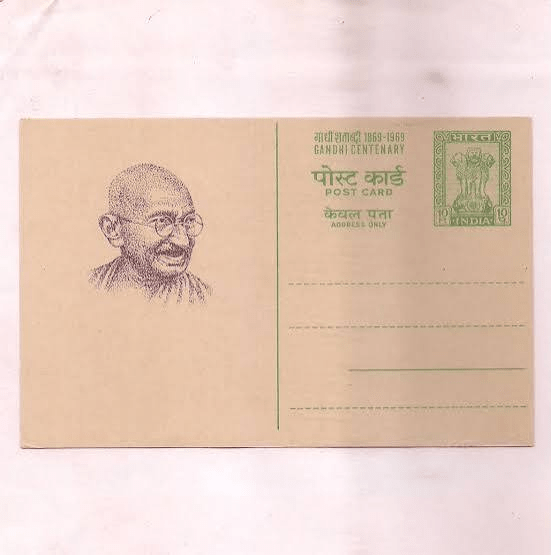
Postcards soon became the cheapest and most accessible form of communication, revolutionizing mass correspondence. Though introduced in India by the British, postcards played a key role in the sharing of information during the movement to gain freedom from the British rule. No one utilized this means of communication better than Mahatma Gandhi.

A prodigious writer of letters, Gandhiji actively used postcards for the majority of his vast correspondence. As a highly practical and budget-conscious communicator who constantly traveled, he found that postcards were the most efficient method to share updates with friends and relatives without wasting time or money. With his unerring logic he explained that postcards were cost-effective, as they cost much less than standard envelopes. Indeed, they did not require an envelope at all, nor the hassle of buying, keeping, and pasting stamps. They were more durable than ordinary writing paper. And their news was transparent, anyone could read the message, and Gandhiji had nothing to hide! And, as a person who could not abide waste in any form, Gandhiji appreciated that the limited space forced the writer to express themselves concisely and clearly.

While Gandhiji wrote perhaps thousands of postcards to people from all walks of life, people from all parts of India and the world also reached out to him through postcards. Throughout the freedom struggle, Gandhiji was constantly on the move, but people who wrote to him were not worried about his address. They simply wrote postcards with his name, and sometimes added “Wherever he may be”. And these postcards did reach him, wherever he was! We can still see some of these original postcards in archives and exhibitions.

Independent India’s first requirement was to collect reliable demographic statistics. A census was considered to be central to this.  But the government faced two immediate challenges: how to persuade people to participate in the census, and how to maintain communication between enumerators and census officials across a vast, poor and largely rural country. By then the postal department was the largest unified communications network available to the Indian state. In the run up to the first census in 1951, government used a bilingual pictorial postmark stamped on postcards and letters travelling across the country to educate the public and mobilize participation. The postmark showed a family of three framed by the words “Census of India” in Hindi and English. Subsequently postcards and postmarks were used for different mass pubic campaigns.

When they were first launched, only plain government postcards were permitted, printed and sold by the Indian Post Office. In 1898 the Post office formally permitted privately printed postcards, provided that adhered to size, layout and message restrictions. This opened up a large picture postcards industry in India. Publishers began printing scenic views, cultural monuments, and daily life in India, which became popular.

Almost a century later, India Post introduced Competition Postcards, following the immense popularity of Doordarshan’s show Surabhi where viewers were invited to send in answers to the quiz questions of the week. Initially viewers used the standard 15 paise postcard to send in responses. The response was so overwhelming that the postal department issued a different category of blue-coloured postcards priced at Rs 2/-  each to send in responses. These Competition Postcards were subsequently used for many competitions inviting mass public responses.  

The Competition Postcards are not currently available, but there are three types of postcards available in post offices. Normal postcards (50 paise), Reply postcards: A double card format which has an attached pre-paid flap that the recipient can detach and send a reply message (Rs 1). Meghdoot postcards wherein the address side features pre-printed colourful advertisements allowing the post office to generate revenue while subsidizing the cost (25 paise). So much to be communicated in so little, literally and cost-wise.  

While there is still a generation for which postcards evoke a lot of nostalgia, sadly there is a generation for whom communication has a whole new meaning.

–Mamata

Kempegowda: The Visionary Who Gave Bengaluru Its Soul

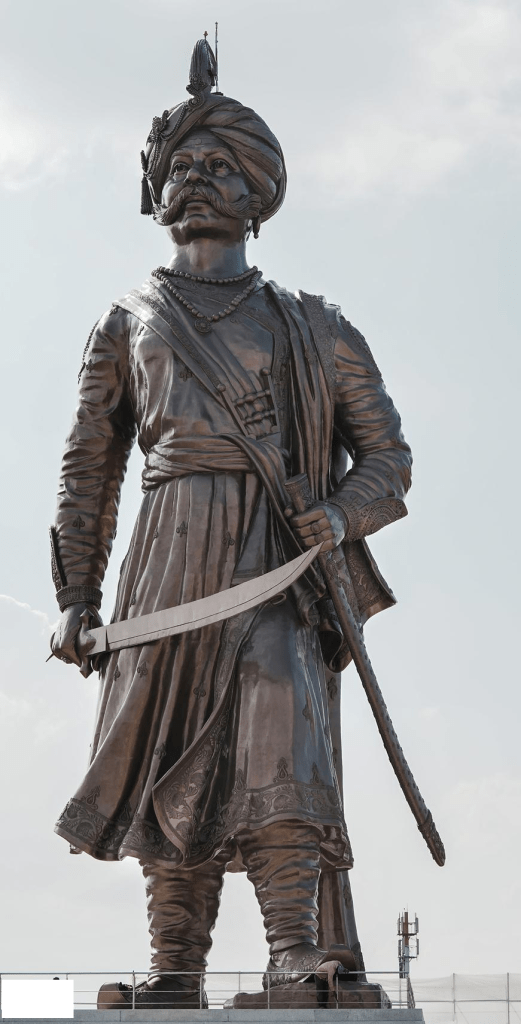
Many cities have founders. Few have one whose vision continues to shape the city nearly five centuries later. As Bengaluru marks the anniversary (27 June) of its founder, Nadaprabhu Kempegowda, it is worth pausing to reflect not merely on the man, but on the remarkable administrator, planner and leader whose foresight laid the foundations of a city that would one day become India’s technology capital.

For most Bengalureans, Kempegowda is a familiar name. His statue greets travellers at the airport, major roads bear his name, and schoolchildren learn that he founded Bengaluru in 1537. Yet the true significance of his achievement lies beyond the simple fact that he established a town. What makes Kempegowda extraordinary is the quality of governance and urban planning he brought to his vision.

Born into a family of local chieftains under the larger framework of the Vijayanagara Empire, Kempegowda inherited responsibility for a region that consisted largely of villages, agricultural lands and trading settlements. Instead of merely ruling over existing territories, he imagined something larger—a thriving urban centre that could serve as a hub of commerce, culture and administration.

The Bengaluru he envisioned was not a city that grew by accident. It was carefully planned. Historical records suggest that he built a mud fort, established marketplaces, encouraged trade and developed infrastructure to support economic activity. In an age when rulers often focused on conquest, Kempegowda focused on creating conditions for prosperity.

Perhaps his most famous contribution to urban planning was the establishment of the four watchtowers that marked the city’s boundaries. Today, Bengaluru has expanded far beyond those limits, but the towers remain symbols of a leader who understood the importance of defining and managing urban growth. In modern governance language, we would call this spatial planning. Kempegowda practised it centuries before the term existed.

His administrative wisdom is equally noteworthy. Successful governance requires balancing multiple interests—farmers, traders, artisans, religious institutions and local communities. Evidence from historical accounts suggests that Kempegowda actively promoted trade and agriculture while ensuring public works were developed for the common good. Tanks and water bodies received attention because he understood a truth that remains relevant today: cities cannot flourish without secure water resources.

Indeed, one of the lessons modern Bengaluru can learn from Kempegowda concerns sustainability. Long before urban planners spoke of environmental resilience, he recognized the importance of lakes and irrigation systems. Many of the tanks developed during his period supported agriculture, groundwater recharge and community life. As Bengaluru grapples with water shortages and environmental challenges, Kempegowda’s approach offers a reminder that good governance means planning not only for today’s needs but also for future generations.

Another aspect of his leadership was inclusiveness. The markets and settlements he established attracted people from different communities and occupations. Bengaluru’s reputation as a welcoming city—a place where people from across India come to work, study and build new lives—can be traced back to these early foundations. The cosmopolitan spirit for which the city is celebrated today did not emerge overnight; it has deep historical roots.

What also stands out is Kempegowda’s ability to combine vision with execution. Many leaders dream of transformation, but fewer possess the administrative capability to turn ideas into reality. Founding a city required mobilizing resources, maintaining law and order, coordinating construction, encouraging settlement and ensuring economic viability. These are not merely political tasks; they are governance challenges. Kempegowda appears to have met them with remarkable effectiveness.

For citizens of modern Bengaluru, his legacy extends beyond monuments and commemorations. It is visible in the city’s enduring role as a centre of enterprise and innovation. Bengaluru’s global reputation as a hub for technology and entrepreneurship reflects qualities that Kempegowda himself valued: openness, opportunity and a willingness to build for the future.

Of course, no historical figure belongs entirely to the present. Kempegowda lived in a different era, under different political circumstances. Yet certain principles are timeless. Strategic planning, investment in public infrastructure, stewardship of natural resources and a commitment to creating opportunities for people remain the hallmarks of good governance today, just as they were in the sixteenth century.

As Bengaluru celebrates Kempegowda’s anniversary, the occasion should be more than a remembrance of the past. It should also be an invitation to reflect on the kind of city we wish to build. Rapid growth has brought immense opportunities, but also challenges of traffic, water, housing and environmental sustainability. Addressing these issues requires the same blend of vision and administrative competence that Kempegowda demonstrated centuries ago.

The founder of Bengaluru gave the city more than its beginning. He gave it a blueprint: plan thoughtfully, govern wisely and build for generations yet to come. That is why, nearly 500 years later, Kempegowda remains not just a historical figure, but a living presence in the story of Bengaluru.

Thank you, Kempegowda! Help us do justice to your vision!

–Meena

Pic: Courtesy The Hindu

Surgeons’ Day and the Extraordinary History of Self-Surgery

Every year on 15 June, India observes Surgeons’ Day, an occasion promoted by the Association of Surgeons of India and other medical institutions to recognize the contribution of surgeons to healthcare. The day is marked by professional meetings, public awareness programmes, health camps, and discussions on advances in surgical practice.

In the Indian context, it is also important to remember Sushruta, the author of the Sushruta Samhita, who over two millennia ago, described surgical instruments, operative techniques, wound management, and reconstructive procedures. His work is among the earliest known systematic texts on surgery anywhere in the world.

Self-Surgery

While surgery is usually associated with teams of highly trained professionals working in carefully controlled environments, history records unique cases in which individuals performed surgical procedures on themselves. These episodes occurred under very different circumstances, but each has become part of medical history because of the unusual challenges involved.

Leonid Rogozov: Appendectomy in Antarctica

One of the best-known cases is that of Leonid Rogozov, a Soviet surgeon stationed at the Novolazarevskaya research station in Antarctica in 1961.

Rogozov developed acute appendicitis while serving as the only physician at the base. Weather conditions made evacuation impossible. On 30 April 1961, assisted by colleagues who handed him instruments and held mirrors, he performed an appendectomy on himself using local anaesthesia.

The operation lasted approximately two hours. Rogozov recovered and resumed his duties within weeks. His case is widely cited in medical literature as a unique example of self-performed emergency surgery.

Evan O’Neill Kane and Surgical Experimentation

In 1921, American surgeon Evan O’Neill Kane carried out an appendectomy on himself at a hospital in Pennsylvania.

Kane’s purpose was not emergency treatment but the demonstration of local anaesthesia for abdominal surgery. He believed that local anaesthesia offered advantages over general anaesthesia in selected cases and used his own operation to support that view.

In 1932, he reportedly performed a second self-operation to repair an inguinal hernia. These procedures attracted significant public and professional attention at the time.

Inés Ramírez Pérez and a Self-Performed Caesarean Section

In 2000, Inés Ramírez Pérez, living in a remote rural area of Mexico, carried out a self-performed caesarean section after prolonged labour and the absence of medical assistance.

Following the delivery, she sought help from local residents and was transported to a hospital. Both she and her baby survived. Medical reports published subsequently documented the case, which is considered one of the rare recorded instances of a successful self-performed caesarean section.

Aron Ralston’s Self-Amputation

In April 2003, American mountaineer Aron Ralston became trapped in Utah’s Bluejohn Canyon when a falling boulder pinned his right arm.

After remaining trapped for several days and exhausting his supplies of food and water, Ralston amputated his own arm using a small multi-tool and then climbed out of the canyon to seek assistance.

His experience was later described in his memoir Between a Rock and a Hard Place and dramatized in the film 127 Hours.

Claude Martin’s Procedure in Lucknow

An earlier and less widely known example has a connection to India.

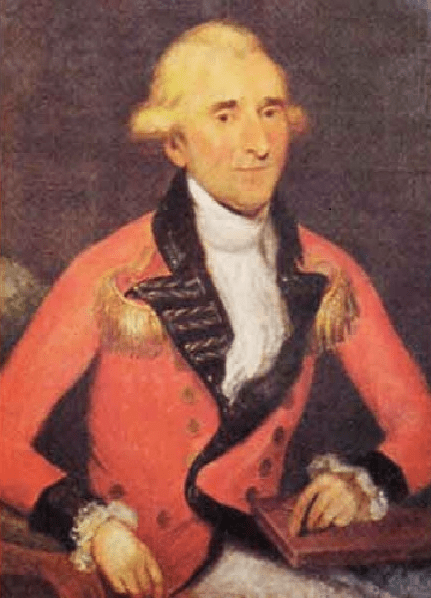
Claude Martin (1735–1800), a French soldier and entrepreneur who spent much of his life in Lucknow under the East India Company, suffered from bladder stones. Around 1782, he devised an instrument that he used on himself over an extended period in an attempt to break down or remove the stone.

Martin later described the procedure in correspondence and records that came to the attention of medical practitioners in Europe. Historians of medicine have noted similarities between his approach and later methods of lithotripsy, the technique used to break up urinary stones without major surgery.

Today, Martin is better known as the founder of the La Martinière schools in Lucknow and Kolkata, but his medical experiment remains a noteworthy episode in the history of self-treatment.

As India marks Surgeons’ Day each year, the occasion serves not only to recognize today’s surgeons but also to remember the long and often remarkable history of surgical practice, innovation, and human resilience.

–Meena

The Bee’s Knees and Other Curious Creatures of Language

Language is a strange and wonderful thing.

Every day, we use expressions that roll effortlessly off the tongue without pausing to think about what they actually mean. We wish people the “best of luck,” promise to “keep an eye on things,” and complain when life becomes “a rat race.” Most of the time, these phrases do their job so well that we never stop to examine them.

But every now and then, an expression invites a second look.

Take the phrase “the bee’s knees.”

If someone describes a new restaurant, a favourite book, or a clever invention as the bee’s knees, they mean it is excellent—something special, perhaps even the best. Yet the moment one stops to think about it, a question arises.

Why a bee?

And why its knees?

Bees are many things. They are hardworking pollinators, builders of intricate hives, and producers of honey. But their knees do not seem especially famous. No one admires a bee and immediately thinks, “What magnificent knees!”

Yet for more than a century, English speakers have happily used the phrase without demanding an explanation.

The story begins in the United States during the roaring 1920s. It was an age that loved novelty. Jazz filled dance halls, fashions changed rapidly, and language became a playground for creativity. People delighted in inventing colourful slang. Something impressive might be called “the cat’s pajamas,” “the eel’s ankle,” “the monkey’s eyebrows,” or “the bee’s knees.”

These expressions were not meant to be logical. In fact, their appeal often came from their absurdity. The more unlikely the combination, the more amusing it sounded.

Most of these phrases disappeared as fashions changed. Yet a few survived. The bee’s knees buzzed on while many of its companions faded into obscurity.

Perhaps it endured because bees themselves occupy a special place in the human imagination.

Across cultures, bees have long been symbols of industry, cooperation, and diligence. Ancient Egyptians kept bees. Greek philosophers admired their organisation. Medieval monasteries prized beeswax for candles. Farmers depended on pollination long before anyone fully understood the science behind it.

Today, we know that bees are among the most important creatures on the planet. Their daily work helps pollinate crops, wildflowers, fruit trees, and countless other plants. A world without bees would be a poorer and less colourful place.

And in an amusing twist, bees do have something noteworthy on their legs. Worker bees collect pollen in specialised structures on their hind legs known as pollen baskets. If you have ever seen a bee carrying bright yellow clumps of pollen, you have witnessed one of nature’s most efficient collection systems at work.

So while the phrase was probably invented as nonsense, modern biology has accidentally given it a touch of credibility.

The bee’s knees are, in their own way, quite remarkable.

The phrase also reminds us of something larger: language is filled with animals.

Consider how often creatures appear in everyday speech.

When we hear information directly from the original source, we get it “straight from the horse’s mouth.” The expression likely comes from horse traders, who could estimate a horse’s age by examining its teeth.

When someone raises a false alarm repeatedly, we say they “cry wolf.” The phrase traces its roots to one of Aesop’s famous fables, in which a shepherd boy repeatedly tricks villagers into believing a wolf is attacking his flock. When a wolf finally appears, no one believes him.

If a person sends us on a pointless errand, we call it “a wild goose chase.” The expression was popularised by Shakespeare, who used it in Romeo and Juliet. Today, it describes any pursuit that is unlikely to succeed.

Then there is the curious warning not to “look a gift horse in the mouth.” Once again, horses are involved. Since age and health could be judged from a horse’s teeth, examining the mouth of a horse that had been freely given was considered ungrateful.

Some animal expressions are easier to understand.

Someone who is “busy as a bee” needs little explanation. A person with “eagle eyes” sees details others miss. A “social butterfly” moves easily from one conversation to another.

Others are delightfully baffling.

Why do we have “ants in our pants” when we are restless? Why are secretive people said to be “as sly as a fox”? Why do difficult situations become a “dog’s breakfast” in some parts of the English-speaking world?

The answer often lies in history. These phrases are linguistic fossils, preserving traces of old occupations, folk tales, observations of nature, and forgotten jokes. Long after the original context disappears, the expression remains.

In this way, language resembles an attic filled with heirlooms. We continue to use objects whose stories have been partly forgotten. Their meanings survive even when their origins grow hazy.

That may be why expressions such as “the bee’s knees” continue to charm us. They remind us that language is not merely a tool for communication. It is also a record of human imagination.

Generations of speakers have played with words, invented absurd images, borrowed ideas from animals, and passed them on. Most vanished. A few endured.

And among those survivors is a tiny insect whose unlikely knees have become a symbol of excellence.

Not bad for a creature that was probably never consulted on the matter.

The next time someone describes a book, a meal, a holiday, or a grandchild as “the bee’s knees,” spare a thought for the strange journey of that phrase. It has travelled through jazz-age slang, survived changing fashions, outlived dozens of rival expressions, and settled comfortably into modern English.

That, one might say, is the bee’s knees of linguistic success.

–Meena

Jack de Sequeira: The Man Who Helped Goa Choose Its Own Future

In the story of modern India, there are some leaders whose influence stretches far beyond the offices they held or the elections they won. They altered the direction of history itself. One such figure was Jack de Sequeira — often remembered as the “Father of the Opinion Poll” in Goa.

At a time when the newly liberated territory of Goa stood at a crossroads, Jack de Sequeira championed something radical for the era: the right of ordinary people to decide their political future directly. His efforts culminated in the historic Goa Opinion Poll of 1967 — the only referendum-like exercise ever conducted in independent India on a major political merger question. Its consequences continue to shape Goa’s culture, language, identity, and politics even today.

Goa After Liberation: A Question of Identity

When Indian forces ended Portuguese colonial rule in Goa in December 1961, the region entered a completely new political reality. Goa, along with Daman and Diu, became a Union Territory of India. But soon another question emerged: should Goa remain distinct, or should it merge with neighbouring Maharashtra?

The merger proposal was not merely administrative. It involved deeper questions of language, culture, identity, and history. Many leaders in Maharashtra argued that Goa’s Konkani-speaking population shared cultural ties with Marathi-speaking Maharashtra and should therefore be integrated into it.

But others feared that Goa’s unique identity — shaped by centuries of interaction between Indian and Portuguese traditions — would disappear within a much larger state.

This was the moment when Jack de Sequeira emerged as a defining voice.

The Rise of a Reluctant Hero

Born in 1915 in Portuguese Goa, Jack de Sequeira was not a fiery revolutionary in the conventional sense. He was measured, thoughtful, and deeply democratic in temperament. Yet beneath that calm exterior was remarkable political courage.

He founded and led the United Goans Party, which became the principal force opposing Goa’s merger with Maharashtra. At the time, this was not an easy or universally popular stand. Powerful political groups supported merger, including influential sections of the ruling establishment.

But Sequeira argued that Goa possessed its own cultural personality — expressed through Konkani language, local traditions, village institutions, architecture, cuisine, music, and social life.

Today this argument may sound obvious. In the 1960s, it was fiercely contested.

The Historic Opinion Poll

Rather than allowing politicians alone to decide Goa’s fate, Jack de Sequeira demanded that the people themselves should choose.

This was a bold democratic idea. Independent India had never before conducted a public vote of this nature on whether a territory should merge with another state.

After intense political campaigning and negotiations, the Government of India agreed. On January 16, 1967, Goa held the historic Opinion Poll.

Voters were asked a straightforward question:
Should Goa merge with Maharashtra, or remain a separate Union Territory?

The campaign was emotional, passionate, and deeply personal for many Goans. Villages debated the issue intensely. Families argued over it. Public meetings drew huge crowds.

Jack de Sequeira became the symbolic face of the anti-merger movement. His speeches often emphasised dignity, self-respect, and the importance of preserving Goa’s individuality.

When the votes were counted, the anti-merger side won decisively.

Goa would remain separate. The Opinion Poll permanently altered Goa’s trajectory.

Saving Konkani and Goan Identity

The Opinion Poll strengthened the long campaign for recognition of Konkani as a distinct language rather than merely a dialect of Marathi. Decades later, Konkani would gain official recognition in the Eighth Schedule of the Indian Constitution.

Equally important, Goa retained a political structure that allowed local culture to flourish on its own terms. Its distinctive blend of Indian and Lusophone heritage survived not as a museum piece, but as a living social reality. (BTW, Lusophone refers to any person, country, or community that speaks the Portuguese language. Derived from the ancient Roman province of Lusitania (roughly modern-day Portugal), the term is also used as an adjective (Lusophone Africa) or to describe the global Portuguese-speaking culture and community –the “Lusophone world”.)

Many Goans today — whether Catholic, Hindu, urban, rural, Konkani-speaking, English-speaking, or Marathi-speaking — continue to see the Opinion Poll as a foundational moment.

A Legacy Larger Than Politics

Jack de Sequeira later served in Parliament and remained respected across political divides. But his greatest legacy was not electoral success. It was helping a small territory articulate confidence in its own identity.

Interestingly, his leadership style contrasts sharply with modern political culture. He was not known for theatrical populism or aggressive rhetoric. Instead, he relied on persuasion, consensus-building, and democratic principle.

That may partly explain why his memory still carries unusual moral weight in Goa.

Today roads, institutions, and memorials honour him. Yet perhaps the most enduring tribute is Goa itself — a state that still retains a distinct cultural voice within India.Top of Form

Any time you visit Goa, don’t forget to give thanks to him—Goa is what it is today because of him!

And as the debate about the identify, administration and control of Ladakh are ongoing, it is a good time to remind ourselves of how we handled such situations in the past.

–Meena

x

In the story of modern India, there are some leaders whose influence stretches far beyond the offices they held or the elections they won. They altered the direction of history itself. One such figure was Jack de Sequeira — often remembered as the “Father of the Opinion Poll” in Goa.

At a time when the newly liberated territory of Goa stood at a crossroads, Jack de Sequeira championed something radical for the era: the right of ordinary people to decide their political future directly. His efforts culminated in the historic Goa Opinion Poll of 1967 — the only referendum-like exercise ever conducted in independent India on a major political merger question. Its consequences continue to shape Goa’s culture, language, identity, and politics even today.

Goa After Liberation: A Question of Identity

When Indian forces ended Portuguese colonial rule in Goa in December 1961, the region entered a completely new political reality. Goa, along with Daman and Diu, became a Union Territory of India. But soon another question emerged: should Goa remain distinct, or should it merge with neighbouring Maharashtra?

The merger proposal was not merely administrative. It involved deeper questions of language, culture, identity, and history. Many leaders in Maharashtra argued that Goa’s Konkani-speaking population shared cultural ties with Marathi-speaking Maharashtra and should therefore be integrated into it.

But others feared that Goa’s unique identity — shaped by centuries of interaction between Indian and Portuguese traditions — would disappear within a much larger state.

This was the moment when Jack de Sequeira emerged as a defining voice.

The Rise of a Reluctant Hero

Born in 1915 in Portuguese Goa, Jack de Sequeira was not a fiery revolutionary in the conventional sense. He was measured, thoughtful, and deeply democratic in temperament. Yet beneath that calm exterior was remarkable political courage.

He founded and led the United Goans Party, which became the principal force opposing Goa’s merger with Maharashtra. At the time, this was not an easy or universally popular stand. Powerful political groups supported merger, including influential sections of the ruling establishment.

But Sequeira argued that Goa possessed its own cultural personality — expressed through Konkani language, local traditions, village institutions, architecture, cuisine, music, and social life.

Today this argument may sound obvious. In the 1960s, it was fiercely contested.

The Historic Opinion Poll

Rather than allowing politicians alone to decide Goa’s fate, Jack de Sequeira demanded that the people themselves should choose.

This was a bold democratic idea. Independent India had never before conducted a public vote of this nature on whether a territory should merge with another state.

After intense political campaigning and negotiations, the Government of India agreed. On January 16, 1967, Goa held the historic Opinion Poll.

Voters were asked a straightforward question:
Should Goa merge with Maharashtra, or remain a separate Union Territory?

The campaign was emotional, passionate, and deeply personal for many Goans. Villages debated the issue intensely. Families argued over it. Public meetings drew huge crowds.

Jack de Sequeira became the symbolic face of the anti-merger movement. His speeches often emphasised dignity, self-respect, and the importance of preserving Goa’s individuality.

When the votes were counted, the anti-merger side won decisively.

Goa would remain separate. The Opinion Poll permanently altered Goa’s trajectory.

Saving Konkani and Goan Identity

The Opinion Poll strengthened the long campaign for recognition of Konkani as a distinct language rather than merely a dialect of Marathi. Decades later, Konkani would gain official recognition in the Eighth Schedule of the Indian Constitution.

Equally important, Goa retained a political structure that allowed local culture to flourish on its own terms. Its distinctive blend of Indian and Lusophone heritage survived not as a museum piece, but as a living social reality. (BTW, Lusophone refers to any person, country, or community that speaks the Portuguese language. Derived from the ancient Roman province of Lusitania (roughly modern-day Portugal), the term is also used as an adjective (Lusophone Africa) or to describe the global Portuguese-speaking culture and community –the “Lusophone world”.)

Many Goans today — whether Catholic, Hindu, urban, rural, Konkani-speaking, English-speaking, or Marathi-speaking — continue to see the Opinion Poll as a foundational moment.

A Legacy Larger Than Politics

Jack de Sequeira later served in Parliament and remained respected across political divides. But his greatest legacy was not electoral success. It was helping a small territory articulate confidence in its own identity.

Interestingly, his leadership style contrasts sharply with modern political culture. He was not known for theatrical populism or aggressive rhetoric. Instead, he relied on persuasion, consensus-building, and democratic principle.

That may partly explain why his memory still carries unusual moral weight in Goa.

Today roads, institutions, and memorials honour him. Yet perhaps the most enduring tribute is Goa itself — a state that still retains a distinct cultural voice within India.Top of Form

Any time you visit Goa, don’t forget to give thanks to him—Goa is what it is today because of him!

And as the debate about the identify, administration and control of Ladakh are ongoing, it is a good time to remind ourselves of how we handled such situations in the past.

–Meena
State Vs. Plate: India’s Long History of Food and Consumption Restrictions

Prime Minister Narendra Modi’s recent appeal asking citizens to avoid unnecessary foreign travel, cut discretionary fuel use, postpone non-essential purchases, and embrace restraint in consumption has revived an old Indian political tradition: the call for austerity in moments of uncertainty. The appeal, made in the context of global tensions and fears over fuel and supply disruptions linked to West Asia, was framed as a precautionary economic measure.

By no means is this new. India has heard such calls before.

Since Independence, governments across political ideologies — Congress, socialist coalitions, Janata regimes, and even regional administrations — have periodically attempted to regulate what people eat, how much they consume, how lavishly they celebrate, and even how many guests they invite. Sometimes these restrictions emerged from genuine shortages. Sometimes they reflected wartime economies. Sometimes they were moral projects tied to ideas of discipline, simplicity, Gandhian restraint, or anti-elitism. And at times, they became deeply political.

The Era of Scarcity: Rationing and Food Controls

In the first decades after Independence, India was a food-deficit country. Grain shortages, droughts, foreign exchange crises, and dependence on imports shaped policy thinking.

The ration card became one of the defining documents of Indian life. Urban Indians especially grew up in a world of controlled sugar, kerosene, rice, and wheat distribution. The Essential Commodities Act of 1955 empowered governments to regulate production, storage, transport, and distribution of key goods.

This was not merely administrative economics; it shaped everyday culture.

Families planned meals around availability. Weddings became simpler in drought years. Restaurants faced restrictions on serving certain foods. In many states, governments imposed “rice control orders” limiting movement and stocking of grains. Hoarding and black marketing became criminal offences.

During severe shortages in the 1960s, Prime Minister Lal Bahadur Shastri famously urged Indians to skip one meal a week. “Monday fasts” became a patriotic exercise in many households. Restaurants in several cities reportedly shut on Monday evenings in support of the campaign.

The symbolism mattered as much as the economics. Food restraint was projected as national duty.

Wedding Restrictions: When the State Counted Your Guests

Perhaps the most striking example of state intervention in private consumption came through attempts to regulate weddings.

India’s long-standing anxiety over “wasteful expenditure” often found weddings at the centre of policy debates. Lavish feasts were criticised not only as economic excess but also as drivers of social inequality.

The most famous attempt came during the Emergency (1975–77), when the government imposed restrictions on the number of guests and dishes at weddings in several places. Though implementation varied across states and districts, stories abound of officials inspecting marriage halls and counting attendees.

Even outside the Emergency, states periodically experimented with controls:

  • Limits on the number of dishes served.
  • Restrictions on use of electricity and lighting during shortages.
  • Curbs on late-night celebrations.
  • Controls on loudspeakers.
  • Taxes or permissions for large gatherings.

In the 1970s and 1980s, “simple marriage” campaigns were encouraged by politicians and social reformers alike. Government employees in some sectors were informally encouraged to avoid extravagant ceremonies.

These debates continue today in different forms. Environmental concerns, food wastage, traffic congestion, and conspicuous consumption have all entered the conversation.

Ironically, Indian weddings evolved in the opposite direction. Liberalisation in the 1990s transformed them into giant economic ecosystems involving tourism, fashion, catering, décor, jewellery, entertainment, and destination hospitality.

The “Big Fat Indian Wedding” became both aspiration and industry.

Meatless Days and Regulating Food Habits

Food restrictions in India have rarely been only about economics. They are also about morality, religion, and identity.

Across decades, many Indian cities and states have periodically imposed bans on slaughter or meat sales during religious festivals.

These restrictions reveal a deeper Indian tension: food is intensely personal, but also intensely political.

The Anti-Waste Moral Economy

A recurring theme across Indian public life is the suspicion of conspicuous consumption.

During crises — wars, droughts, inflationary periods, oil shocks — governments often invoke the language of sacrifice.

In the 1970s oil crisis, many countries experimented with fuel-saving measures. India too promoted conservation campaigns. More recently, during COVID-19 lockdowns, public messaging encouraged minimal movement, reduced fuel consumption, and simplified social ceremonies.

The latest appeal by the Prime Minister fits into this long tradition. Public reactions, unsurprisingly, have been mixed.

On social media, some users compared the moment to earlier periods of austerity and wartime discipline, while others questioned whether ordinary citizens should bear the burden of global crises. Online discussions reflected anxieties about fuel prices, inflation, work culture, and economic uncertainty. (reddit.com)

This duality is very Indian.

The State vs The Plate

India’s relationship with food control differs from many Western democracies because food here is not merely nutrition or commerce. It intersects with caste, religion, region, language, ecology, and politics.

At the same time, the Indian state has historically justified intervention using three broad arguments:

  1. Scarcity management.
  2. Social reform.
  3. Public morality.

The justification changes with the era.

In the 1960s it was famine anxiety. In the 1970s it was socialism and anti-elitism. In the 1990s it became public order and urban governance. Today it is often linked to sustainability, nationalism, health, or cultural identity.

What Restrictions Reveal About India

Food and guest restrictions may appear trivial compared to constitutional politics or macroeconomics. Yet they reveal something fundamental about India.

They show how deeply the state has historically engaged with everyday life.

They also reveal a persistent belief among governments that national crises require behavioural change from citizens — not just policy change from institutions.

Whether it was Shastri’s appeal to skip meals, Emergency-era guest limits, anti-hoarding drives, meat bans during festivals, or recent calls to reduce consumption amid global uncertainty, the underlying message has remained similar:

Private behaviour is seen as part of public national discipline.

India may change governments, ideologies, and economic models — but the debate over what citizens should eat, spend, serve, celebrate, or conserve never quite disappears.

A crisis leads to innovation and change. If this debate can lead to a re-think on the obscenely lavish weddings which have become the norm, it may be one of the good things to come out of this situation

–Meena.

Pic: BBC

Mother’s Day: From Concept to Commerce

As the countdown begins, and the hype builds up to Mothers’ Day, cards, gifts and flower sellers, and restaurants look forward to a bonanza. Yet another day, among at least five other “days” that now mark every one of the 365 days of the year. While these days are created, in many cases, to commemorate an event or person, or to raise awareness about a cause, they have also become lucrative occasions for marketing memorabilia.

Most of us have never thought about Mothers’ Day beyond debating over what to gift Mom. In fact, my generation does not remember celebrating such a day at all. We assumed that it was a relatively new concept. Well, surprise, surprise! The history of this day dates back over a century, and ironically, it was started with completely different objectives.

The story goes way back to the early 19th century and an ordinary working class woman Ann Maria Reeves Jarvis who lived in the Appalachian area of West Virginia in the United States. Ann Maria bore more than a dozen children but, as was common in those times, lost most of them to childhood diseases like diphtheria and measles. While most families took childhood mortality as a will of God, Ann Maria felt that a major factor was the unhealthy and unsanitary conditions amidst which the community lived. She felt that it was important that families, and especially women, were made aware of this.  As an active member of the local Methodist Episcopal Church, she organized Mothers’ Work Clubs where she raised awareness about hygiene and sanitation, and the vital importance of boiling drinking water. The church promoted special Mothers’ Work Days when women would work together to collect trash, and undertake other projects to improve local environmental conditions. The organisers provided medicine and supplies to sick families, and when necessary, quarantined entire households to prevent epidemics.   

The American Civil War that began in 1861 changed the focus on Ann Maria’s work. She organised women’s groups to help soldiers from both sides who were sick or wounded. She worked to promote peace and unity. In 1868, despite threats of violence, she organized a Mothers’ Friendship Day to bring families of both sides together to restore a sense of community. She strongly believed that women, and especially mothers, were best suited to bring people together with a goal of peace.

Thus Ann Maria Jarvis spent her life mobilising women to work for improving the lives of their children. She fervently hoped that the vital work of mothers was recognized. She once wished “I hope and pray that someone, sometime, will found a memorial mother’s day commemorating her for the matchless service she renders to humanity in every field of life. She is entitled to it”.

Ann Maria Jarvis died in 1905. Her daughter Anna Jarvis set out to make her mother’s dream a reality by designing a Mother’s Day celebration in honour of her mother. She chose the second Sunday in May to mark the anniversary of her mother’s death. Ann Jarvis herself never married and had children, but she viewed motherhood simply through the eyes of a daughter. Thus she constructed a child-centered celebration of motherhood for Mother’s Day: a “thank-offering” from sons and daughters and the nation “for the blessing of good homes.” She requested children to visit or write letters home on this day. She chose her mother’s favourite flower, the white carnation, as an emblem for this day.

The first Mother’s Day celebration was held on 10 May 1908 in Andrews Methodist Church in Grafton, Ann’s hometown. Anna handed out hundreds of white carnations to the mothers who attended. After that Anna lobbied to get official recognition for this day. The day was granted federal recognition by President Wilson in 1914, just before the start of World War I.

While she succeeded in getting Mother’s Day adopted as national holiday, Anna Jarvis saw the concept as her intellectual and legal property, and not as part of the public domain. She wished for Mother’s Day to remain a “holy day,” to remind us of our neglect of “the mother of quiet grace” who put the needs of her children before her own.

But the market realized the commercial appeal of a sentimental celebration of motherhood, combined with the story of a daughter’s story of memorialization. The appeal to write letters home fueled a huge boom in the greeting card industry, and the white carnation gesture bloomed into a thriving market for all flowers. By the early twentieth century, it had become yet another observance that turned into a “burdensome, wasteful, expensive day”.  

Anna Jarvis was appalled by the commercialization. She publicly denounced all such gimmicks, and registered her protest in many ways in different forums—from boycotts to gate crashing conventions. She spent the rest of her life fighting, and spending all her money on opposing what she thought was the distortion of the original sentiment of the day, and the crass profiteering that this resulted in. She also struggled for a copyright on the phrase “Second Sunday in May, Mother’s Day”. She insisted that it was Mother’s Day and not Mothers’ Day as was being marketed, and which was also a ploy to counter her copyright claims.

Anna could have easily profited from the day by claiming royalties from the sales of cards and flowers, but she remained firm in her opposition to the commercialization of her original sentiment. She and her sister survived on the small inheritance from their father. She was so distraught at the way the commemoration morphed into a commercial extravaganza, she even started a petition in 1943 to have the national holiday recalled. She spent her last days in a sanatorium in Philadelphia, and died of heart failure in 1948.

This year as we plan special treats for our mothers (and they certainly deserve those!) let us also remember how it all began, and Anna Jarvis who regretted creating this day! And let it not be only a once-a-year gesture. We can show we care and love, in more ways than one. 

Happy Mother’s Day!

–Mamata

The First Electrical Voting Machine

With election-fever and results-fever just abating, one the of the topics of discussion has of course been the controversial EVM—Electronic Voting Machine.

Where did it all start? Surprisingly with Edison—yes he of the light bulb fame.

In 1869, Thomas Edison patented what is widely regarded as the first electrical voting machine—an invention designed to automate and speed up vote counting. This was his very first patent–U.S. Patent 90,646 granted on June 1, 1869. It was s designed to allow legislators to vote “yes” or “no” using a switch that sent signals to a central board,

Edison’s vote recorder was technically sound. By all accounts, it worked exactly as intended. But when he demonstrated it to legislators in Washington, D.C., they turned it down. Not because it was flawed—but because it was too efficient.

At the time, voting in legislatures was a slow, deliberate process. Delays were not bugs; they were features. They allowed for persuasion, negotiation, and, frankly, political maneuvering. A machine that eliminated delay also eliminated strategy. Edison would later reflect that this rejection taught him a lasting lesson: invent only what people are ready to use. The vote recorder’s rejection wasn’t about engineering; it was about human systems resisting change.

Edison’s Curious Patent Portfolio

Edison went on to file over a thousand patents, many of them transformative, some delightfully obscure. Alongside world-changing inventions like the incandescent light bulb and the phonograph, there were also lesser-known creations: an electric pen for duplicating documents, a system for preserving fruit, even ideas for concrete furniture.

Some succeeded because they met an immediate need. Others failed because the ecosystem—technological, social, or economic—wasn’t ready. But probably sowed the seeds for many a current-day device.

The Slow March Toward Voting Machines

Despite Edison’s early setback, the idea of mechanizing voting didn’t disappear. By the late 19th and early 20th centuries, mechanical voting machines began appearing in the United States. These lever-based systems aimed to reduce fraud and standardize ballot counting.

Over time, technology evolved. Punch-card systems—infamously remembered from the 2000 United States presidential election, introduced new efficiencies, along with new vulnerabilities. Hanging ‘chads’ became part of vocabulary, illustrating how even small technical flaws could undermine trust.

By the late 20th and early 21st centuries, electronic voting machines (EVMs) emerged as the next step. These ranged from Direct Recording Electronic (DRE) systems to optical scan ballots and, more recently, hybrid systems with paper audit trails.

Trust, Technology, and Tension

Electronic voting systems around the world have sparked debate. Critics raise concerns about hacking, lack of transparency, and the difficulty of verifying results independently. Supporters counter that well-designed systems are more accurate and less prone to human error than paper ballots.

Countries have taken different paths. While Brazil has widely adopted electronic voting, others like Germany have rolled back its use, citing constitutional concerns about transparency. The Netherlands and Ireland have also stepped away from electronic systems after public and political pushback.

Even within the United States, practices vary widely by state, reflecting a broader unease about balancing efficiency with trust.

India and the EVM

Few countries have embraced electronic voting as extensively as India. Introduced on a large scale by the Election Commission of India, EVMs were designed to tackle logistical challenges: vast electorates, difficult terrains, and the need for rapid, reliable counting.

Indian EVMs are standalone devices, not connected to the internet, which proponents argue makes them more secure. The addition of VVPAT (Voter Verifiable Paper Audit Trail) systems is supposed to strengthen transparency by allowing voters to confirm their choices.

And yet, controversies and fears persist.

The Real Lesson: Technology Isn’t Neutral

Edison’s failed vote recorder reminds us of something we often forget: technology does not exist in a vacuum. It interacts with human behaviour, institutional norms, and political incentives.

Voting, perhaps more than any other civic act, depends not just on accuracy but on perceived legitimacy. A system can be technically flawless and still fail if people don’t trust it. The technical aspects may work fine, but is it still corruptible when the system itself is corrupt?

In that sense, the story comes full circle.

Edison built a machine to make voting faster. Lawmakers rejected it because speed threatened the very nature of their process. More than a century later, we are still grappling with the same tension—between efficiency and trust, innovation and acceptance.

The question is no longer whether we can build better voting machines. It is whether societies are ready to believe in them.

And if Edison were around today, he might recognise the problem instantly.

–Meena

Pic: https://edison.rutgers.edu/life-of-edison/inventions

When Prizes Change the World: What Innovation Contests Teach Us (and Why India Should Care)

Most prizes are given to those who have already changed the world: the Nobel, the Magsaysay, any number of national recognitions. These prizes are ways in which the world recognizes a lifetime’s work, a breakthrough discovery, timeless writing, selfless humanitarian aid. The awards in these instances are however collateral benefits. For these greats, often the wok is their own reward.

But in some cases, the prize itself is the motivator, it is the way to spur developments to change the world. Some of the most transformative technologies in human history were sparked by something deceptively simple: a prize.

A problem recognized. A deadline set for its solution. A reward announced for the solution.

And then—an open invitation to anyone bold enough to try.

Take the British Parliament’s Longitude Prize of 1714. Navigation at sea was perilous because sailors could not accurately determine longitude. The reward on offer was up to £20,000—an astronomical sum at the time. The solution did not come from a celebrated astronomer, but from a self-taught clockmaker, John Harrison. His marine chronometer worked—but recognition did not come easily. Payments were staggered, disputed, and delayed. Even when innovation succeeds, institutions do not always know how to respond.

A century later, war catalysed innovation. Napoleon Bonaparte, seeking to feed his armies, offered 12,000 francs for a reliable food preservation method. The result? Nicolas Appert’s pioneering work on canning. With his innovation, food for armies could be preserved for months and years, and could keep armies fed on long campaigns to distant lands. Explorers and sailors started depending on them, opening up new frontiers of discovery. Canned food gave a fillip to farmers, now that their produce could have extended lives. And brought convenience to dining. One competition, one process, many benefits!

These early contests reveal something important: prizes work best when the problem is urgent, the goal is clear, and the reward is meaningful enough to sustain effort over time.

Rainhill Trials

Fast forward to the industrial age. The directors of the Liverpool and Manchester Railway had originally intended to use stationary steam engines to pull trains along the railway using cables. However, their engineer George Stephenson strongly advocated for the use of steam locomotives instead. As the railway was approaching completion, the directors decided to hold a competition to decide whether locomotives could be used to pull the trains. The Rainhill Trials of 1829 offered a prize of £500 for the best way to haul the trains. George Stephenson’s Rocket won decisively, and its design quickly became the standard for locomotives. Here, the feedback loop between competition and adoption was almost immediate.

Then came the age of flight. The Raymond Orteig Prize promised $25,000 for a nonstop transatlantic flight. Charles Lindbergh claimed it in 1927—but only after multiple failed attempts and fatal crashes by others. The prize went to Lingberg, but more importantly, it accelerated aviation as an industry.

By the late 20th century, competitions had evolved into global innovation platforms. The XPRIZE Foundation’s Ansari X Prize offered $10 million for private human spaceflight—and catalysed over $100 million in investment before it was eventually won. The DARPA Grand Challenges, with prizes of $1–2 million, helped lay the groundwork for self-driving cars.

And in the digital age, contests have become even more distributed. The Netflix Prize offered $1 million to improve its recommendation algorithm—successfully claimed, and now foundational to digital platforms. Competitions on Kaggle for machine learning and data science challenges are designed to solve complex, real-world problems using crowdsourced predictive modelling. They routinely offer prizes ranging from a few thousand dollars to over $1 million, with winning models often deployed in real-world systems.

Not all prizes, however, are claimed. The Google Lunar X Prize, sponsored by Google, famously went unawarded when no team met the deadline. And yet, several participating teams went on to become serious space ventures. More recently, the rebooted Longitude Prize on antibiotic resistance—run by Nesta with a purse of £10 million—was eventually awarded after years of global effort.

Enter the Hackathon: The New-Age Contest

If prizes defined earlier centuries, hackathons define ours.

From college campuses to corporate offices, hackathons have become the default format for innovation challenges. India, in particular, has embraced them at scale through initiatives like the Smart India Hackathon, where winning teams typically receive ₹1–5 lakh, along with visibility and recognition.

At first glance, hackathons look like a natural continuation of the prize tradition. But look closer, and a crucial distinction emerges.

Hackathons are built for speed. Typically compressed into 24 to 72 hours, they excel at generating ideas, prototypes, and energy. They uncover talent and encourage collaboration. But they are not designed for depth.

The breakthroughs that defined earlier prize competitions were the result of years of iteration, backed by incentives large enough to justify sustained commitment. Even modern competitions on Kaggle run for months, allowing refinement and optimisation. Hackathons, by contrast, often end at the stage of a promising prototype.

This is not a weakness. It is a different role.

Hackathons are the sparking mechanisms of the tech world.

Lessons for India: Moving from Events to Ecosystems                            

India is no stranger to ingenuity—though often of the jugaad class. We could surely use the powerful lever of structured, sustained innovation contests.

1. Define Grand Challenges That Matter Locally
India’s problems—air pollution, water scarcity, affordable healthcare—require sharply defined challenges and serious prize money. Rewards must be large enough to sustain effort beyond a weekend.

2. Open Participation Beyond Credentials
Breakthroughs often come from unexpected quarters. Platforms must include informal innovators, practitioners, and non-traditional problem-solvers.

3. Build a Pipeline, Not One-Off Events
Hackathons should be the starting point, not the endpoint. Without this pipeline, ideas from initiatives like the Smart India Hackathon risk fading away.

4. Shift from Inputs to Outcomes
Prize systems reward results, not proposals—encouraging creativity and reducing bureaucratic inertia.

5. Invest in Follow-Through
Mentorship, funding, and testing environments are what convert prototypes into deployable solutions.

6. Measure Success Beyond Winners
India must move beyond a binary view of success. Even if a prize is not claimed, the ecosystem it builds can be valuable.

Because sometimes, all it takes to change the world…is not just a prize—but a prize large enough, a timeline long enough, and a system strong enough to turn ideas into impact.

–Meena                  

Pic: http://www.rainhilltrials.org/