Flying Solo: Amelia Earhart

In an age when women were not only earthbound, but also largely homebound, a young woman not only took to the skies but soared high. Amelia Earhart started challenging traditional roles and stereotypes from an early age. Born in Kansas on 24 July 1897, as a young girl she played basketball, took an auto repair course, and briefly attended college. During World War I she served as a Red Cross nurse’s aide in Canada. She spent a lot of her time at a local airfield in Toronto watching pilots in the Royal Training Force train. After the war she returned to America and enrolled in a pre-med course at Columbia University.

In December 1920 she was in California when she took her first airplane ride with the famed World War I pilot Frank Hawks. She was hooked. She knew that the sky was where she belonged, not as a passenger, but as a pilot. “As soon as I left the ground, I knew I myself had to fly”.

A month later she started flying lessons with a female flight instructor Neta Snook. She worked as a photographer and filing clerk at the Los Angeles Telephone company, to pay for the lessons. Later that year she purchased her first airplane. She named the second-hand yellow plane The Canary. She passed her flight test in December 1921, and obtained a National Aeronautics Association license. Two days later, she participated in her first flight exhibition at the Sierra Airdrome in Pasadena, California. Her days of breaking records were on the horizon. And June was always a significant month in her flying career.

However, her first brush with fame as a “first” achiever was not as a pilot but as a passenger. On June 18 1928, Amelia Earhart became the first woman to fly across the Atlantic as a passenger in a flight piloted by Wilmer Stultz and Lou Gordon from Newfoundland to Wales. She had, in fact, been promised that she would get a chance to fly the plane over the Atlantic, but the men flew the whole way. Earhart did fly the plane on the final hop from Wales to England. 

In 1929, she helped organize the All-Women’s Air Derby—the first transcontinental air race for women. Women pilots proved that they could fly in difficult and competitive conditions. After the race many of the women decided to form an organization to support women pilots.  Earhart helped to form the Ninety-Nines, an international organization for the advancement of female pilots. She became the first president of the organization of licensed pilots, which still exists today and represents women flyers from 44 countries.

Amelia Earhart was always guided by her strong belief that “Women can qualify in the air as in any other sport. Their influence and approval are vital to the success of commercial aviation. Women and girls write to me by the thousands to learn the truth about aviation and what women’s chances are. There is nothing in a woman’s make up which would make her inferior to a man as an air pilot. The only barrier to her swift success is her lack of opportunity to receive proper training.”

Her solo feats followed. In May 1932 Amelia took off from Newfoundland. The flight was fraught with danger; the sides of the engine spewed flames, while the ice formation on the wings of the plane necessitated that she fly at a lower altitude, almost skimming the waves of the Atlantic. Undeterred and determined, fifteen hours later Amelia landed in Norther Ireland. She became the first woman (and second person after Charles Lindbergh) to fly non-stop and solo across the Atlantic.

 Amelia Earhart went on to set a number of records as a solo woman flier and became internationally renowned. Even as she took wings, literally, Amelia was a down-to-earth supporter of similar rights for all women. She lectured across the country on aviation and women’s causes. She was a visiting professor at Purdue University where she lectured on aeronautics. She wrote several books about her flights. She was also politically active; she lobbied American Congress for aviation legislation, birth control rights and support for women in business and politics. She even designed a line of functional women’s clothing and a line of light-weight luggage. All by the age of forty years.

But then her story took a mysterious turn. On 1 June 1937 Amelia, accompanied by navigator Fred Noonan boarded a twin-engine Lockheed 10E Electra at Oakland, California to embark on a flight that was Amelia’s second attempt to become the first pilot ever to circumnavigate the globe. The two flew to Miami, then down to South America, across the Atlantic to Africa, then east to India and Southeast Asia. On June 29 the pair reached New Guinea. They had successfully flown 22,000 miles. They had 7,000 miles to go before completing the circuit and returning to Oakland with a world first record. On July 2 the two took off from New Guinea, heading for their next refueling stop, a tiny island called Howland in the Pacific Ocean. But before they reached their destination they lost radio contact and never landed on the island. The plane and its crew literally disappeared into thin air.

There were no clues, no signs of a crash, no signals and no sightings of the plane, intact or its wreckage. The very next day, the US Government initiated its search for the missing airplane. It ended up being the largest ever search for a lost aircraft. It yielded no results. On July 19, 1937, Earhart and Noonan were declared lost at sea.

Amelia Earhart and her plane vanished without a trace, and till date the mystery of the disappearance has not been solved. Many theories from the most obvious one of crash in the sea, to the more bizarre, including conspiracy theories, have been floated over the years.

Amelia Earhart remains an inspiration and a mystery. She raised the bar for women not only in aviation but as equal partners to men in all spheres of life. She challenged women to excel in themselves, not in comparison to others.

“Please know that I am aware of the hazards. I want to do it because I want to do it. Women must try to do things as men have tried. When they fail, then failure must be a challenge to others.”

–Mamata

Surgeons’ Day and the Extraordinary History of Self-Surgery

Every year on 15 June, India observes Surgeons’ Day, an occasion promoted by the Association of Surgeons of India and other medical institutions to recognize the contribution of surgeons to healthcare. The day is marked by professional meetings, public awareness programmes, health camps, and discussions on advances in surgical practice.

In the Indian context, it is also important to remember Sushruta, the author of the Sushruta Samhita, who over two millennia ago, described surgical instruments, operative techniques, wound management, and reconstructive procedures. His work is among the earliest known systematic texts on surgery anywhere in the world.

Self-Surgery

While surgery is usually associated with teams of highly trained professionals working in carefully controlled environments, history records unique cases in which individuals performed surgical procedures on themselves. These episodes occurred under very different circumstances, but each has become part of medical history because of the unusual challenges involved.

Leonid Rogozov: Appendectomy in Antarctica

One of the best-known cases is that of Leonid Rogozov, a Soviet surgeon stationed at the Novolazarevskaya research station in Antarctica in 1961.

Rogozov developed acute appendicitis while serving as the only physician at the base. Weather conditions made evacuation impossible. On 30 April 1961, assisted by colleagues who handed him instruments and held mirrors, he performed an appendectomy on himself using local anaesthesia.

The operation lasted approximately two hours. Rogozov recovered and resumed his duties within weeks. His case is widely cited in medical literature as a unique example of self-performed emergency surgery.

Evan O’Neill Kane and Surgical Experimentation

In 1921, American surgeon Evan O’Neill Kane carried out an appendectomy on himself at a hospital in Pennsylvania.

Kane’s purpose was not emergency treatment but the demonstration of local anaesthesia for abdominal surgery. He believed that local anaesthesia offered advantages over general anaesthesia in selected cases and used his own operation to support that view.

In 1932, he reportedly performed a second self-operation to repair an inguinal hernia. These procedures attracted significant public and professional attention at the time.

Inés Ramírez Pérez and a Self-Performed Caesarean Section

In 2000, Inés Ramírez Pérez, living in a remote rural area of Mexico, carried out a self-performed caesarean section after prolonged labour and the absence of medical assistance.

Following the delivery, she sought help from local residents and was transported to a hospital. Both she and her baby survived. Medical reports published subsequently documented the case, which is considered one of the rare recorded instances of a successful self-performed caesarean section.

Aron Ralston’s Self-Amputation

In April 2003, American mountaineer Aron Ralston became trapped in Utah’s Bluejohn Canyon when a falling boulder pinned his right arm.

After remaining trapped for several days and exhausting his supplies of food and water, Ralston amputated his own arm using a small multi-tool and then climbed out of the canyon to seek assistance.

His experience was later described in his memoir Between a Rock and a Hard Place and dramatized in the film 127 Hours.

Claude Martin’s Procedure in Lucknow

An earlier and less widely known example has a connection to India.

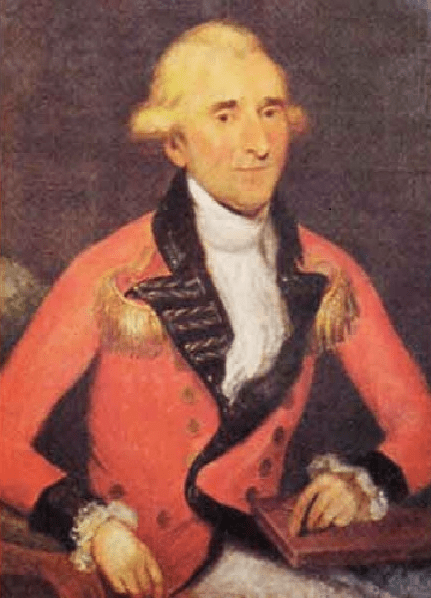
Claude Martin (1735–1800), a French soldier and entrepreneur who spent much of his life in Lucknow under the East India Company, suffered from bladder stones. Around 1782, he devised an instrument that he used on himself over an extended period in an attempt to break down or remove the stone.

Martin later described the procedure in correspondence and records that came to the attention of medical practitioners in Europe. Historians of medicine have noted similarities between his approach and later methods of lithotripsy, the technique used to break up urinary stones without major surgery.

Today, Martin is better known as the founder of the La Martinière schools in Lucknow and Kolkata, but his medical experiment remains a noteworthy episode in the history of self-treatment.

As India marks Surgeons’ Day each year, the occasion serves not only to recognize today’s surgeons but also to remember the long and often remarkable history of surgical practice, innovation, and human resilience.

–Meena

A Pesky Problem: Pest Management

This week we have been exploring quaint expressions that describe human situations using animal analogies. Sometimes these become ‘bees in our bonnet’ as new analogies and comparisons buzz around in our imagination! One of these analogies is our description of someone as a “pest”, and our irritated response to such a person “Don’t pester me!”

Why is the word associated with persistent irritating behaviour in human beings? For that we need to go back to nature.  

A pest is defined as any living thing which humans consider troublesome to themselves, their possessions, or the environment. This includes plants, pathogens, invertebrates, vertebrates or any organism that harms an ecosystem. In its broadest sense a pest is a competitor to humanity. Pests can cause issues with crops, human, or animal health, buildings, and wilderness areas.

Looking at insects alone, it is estimated that 900 million insect types can be ‘pests’ not in nature, but in a world where humans have modified nature to suit their own requirements. And the human species has always found ways, though not wise at times, to tackle insects and other living organisms that they did not like, or want around them. From the earliest times, the battle between humans and ‘pests’ has taken many forms.

Cave dwellers probably swatted mosquitoes or used smoke to ward off the bloodsuckers. As far back as 2500 BC, people used sulfur compounds to control mites and insects. In 1200 B.C., the Chinese deployed predatory ants against pests such as beetles and caterpillars.

With growing populations, and crowded and insanitary living conditions bed bugs and rats proliferated. One of the first publicly advertised pest control companies was the 1690 company H. Tiffin and Son Ltd. in London. The company promoted rat and bed bug control using methods and chemical compounds they invented. Their trademark was “Bug Destroyers to Her Majesty and the Royal Family.”

Probably one of the hardest pests to control are rats. Over the ages, methods to control rats have tried everything from chemicals, plant extracts, prayers, chants, terrier dogs, and music. Ratsbane was one of the first chemicals used. Barbers sold it in the Middle Ages. Then it became a popular item sold by street vendors. Vermin exterminators became a legitimate and in-demand profession. Till date, rats continue to pose a cheeky challenge to every counter measure to control them, and proliferate even in the most sophisticated cities of the world (New York has a serious rat infestation issue).  

Pests are a major threat to health worldwide. Many insects are the primary or intermediate hosts or carriers that transmit debilitating human diseases, ranging from malaria, to Lymes Disease, to Zika. Rodents and birds are also secondary hosts for a large number of diseases transmitted by the parasites that they carry into the human environment — ticks, lice, fleas and mites.

Crops are also at risk from pests which include aphids, caterpillars, whiteflies, locusts and mites. These insects cause damage by feeding on foliage, sucking plant sap, or transmitting diseases. These pests can devastate agricultural yields, reducing quality and quantity, and leading to significant food shortages.

Pests are equally threatening in human habitations. Termites, wood-boring beetles, carpenter ants, and rodents Termites, wood-boring beetles, carpenter ants, and rodents are the primary pests that destroy buildings by compromising structural integrity.

The universal frustration to successfully manage and control pests in every sphere of life, spurred a global effort to increase awareness about pest-related challenges and professional pest control solutions.

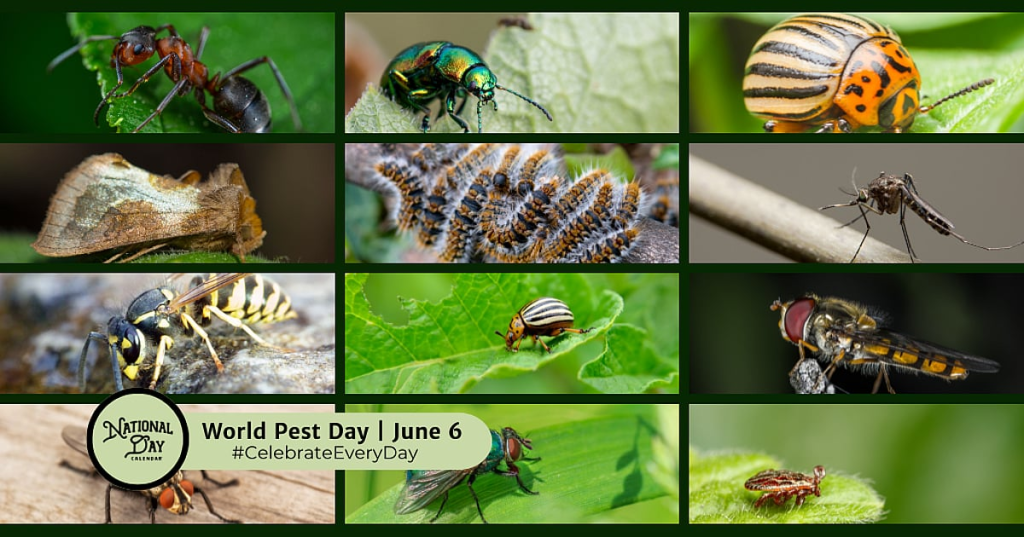
On 6 June 2017 the Chinese Pest Control Association hosted 300 participants including industry experts, media representatives, researchers and academic professionals to discuss how to promote awareness about the role of pest management in public health protection. In 2018, the Global Summit of Pest Management Services for Public Health and Food Safety was held in Portugal, and it was agreed to accord international recognition to an annual World Pest Day.

Since then World Pest Day is observed annually on June 6th across the world. The initiative aims to improve public, government and media awareness, strengthen the professional image of the pest management industry, encourage scientific pest control and highlight major threats caused by small pests. The day promotes scientific and responsible pest control practices while creating awareness about the threats posed by pests worldwide.

Sadly, in the past decade the threat of pest-borne diseases is growing due to climate change, international travel, globalization of trade and increasing urbanization taking over the natural habitats of disease-bearing pests. A better understanding of these diseases is essential for managing them in the future.

Parallely there is ever-growing need to produce more food, fodder, fibre and wood. The lifestyles of a number of insects seem to clash with people’s economic interests. There is a competition for resources and humans tend to describe all competitors as pests that have to be fought on a war footing. When the ‘wonder drug’ DDT was invented in 1939 we thought that the war against pests had been won. But soon insects developed a resistance to pesticides. Fighting pests with chemicals alone is not the answer as we have also learned that these chemicals can have terrible side effects on all living things including humans. We can neither turn back to a chemical-free earth, nor can we continue to poison ourselves.

While technology and researches in more effective chemical measures to counter pests continue to advance, what is perhaps being lost is a better understanding of the ‘pests’ and some traditional, and less toxic ways of meeting the challenge. One way is to take a closer look at pest species and their interaction with the environment, especially in agriculture. A combination of cultural, biological, physical and chemical techniques to manage and control pests is called Integrated Pest Management (IPM).  

IPM is an eco-system-based long-term strategy that minimizes economic costs while protecting human health and the environment by using chemical pesticides only as a last resort.  Effective IPM aims at a synergistic integration of five main methods.

Making the environment inhospitable to pests through crop rotation, planting pest-resistant crop varieties, and proper sanitation (removing food and water sources).

Using natural predators especially certain birds, parasites, or pathogens to manage pest populations (e.g., introducing ladybugs to eat aphids or utilizing bio-pesticides).

Using traps, barriers, netting, or temperature manipulation to physically block or remove pests.

Applying synthetic or natural pesticides in a highly targeted manner taking care to minimize unnecessary environmental impact.

Using genetically modified, resistant plant hybrids or crops (like Bt corn) that naturally deter specific pests.

IPM provides a sustainable, eco-friendly alternative that keeps pest populations in check while preserving ecosystem harmony.

“Pest” is a word conveniently created by us to describe whatever we perceive as a deterrent to our well-being. In Nature every creature has a role to play, the distortion of the role begins when we disturb or alter the natural balance.

In an age when technology seems to be the panacea for all ills, it would be wise to stop and remember, as well as respect, that the health of the ecosystem is the key determinant for the health of all living things.

–Mamata

The Bee’s Knees and Other Curious Creatures of Language

Language is a strange and wonderful thing.

Every day, we use expressions that roll effortlessly off the tongue without pausing to think about what they actually mean. We wish people the “best of luck,” promise to “keep an eye on things,” and complain when life becomes “a rat race.” Most of the time, these phrases do their job so well that we never stop to examine them.

But every now and then, an expression invites a second look.

Take the phrase “the bee’s knees.”

If someone describes a new restaurant, a favourite book, or a clever invention as the bee’s knees, they mean it is excellent—something special, perhaps even the best. Yet the moment one stops to think about it, a question arises.

Why a bee?

And why its knees?

Bees are many things. They are hardworking pollinators, builders of intricate hives, and producers of honey. But their knees do not seem especially famous. No one admires a bee and immediately thinks, “What magnificent knees!”

Yet for more than a century, English speakers have happily used the phrase without demanding an explanation.

The story begins in the United States during the roaring 1920s. It was an age that loved novelty. Jazz filled dance halls, fashions changed rapidly, and language became a playground for creativity. People delighted in inventing colourful slang. Something impressive might be called “the cat’s pajamas,” “the eel’s ankle,” “the monkey’s eyebrows,” or “the bee’s knees.”

These expressions were not meant to be logical. In fact, their appeal often came from their absurdity. The more unlikely the combination, the more amusing it sounded.

Most of these phrases disappeared as fashions changed. Yet a few survived. The bee’s knees buzzed on while many of its companions faded into obscurity.

Perhaps it endured because bees themselves occupy a special place in the human imagination.

Across cultures, bees have long been symbols of industry, cooperation, and diligence. Ancient Egyptians kept bees. Greek philosophers admired their organisation. Medieval monasteries prized beeswax for candles. Farmers depended on pollination long before anyone fully understood the science behind it.

Today, we know that bees are among the most important creatures on the planet. Their daily work helps pollinate crops, wildflowers, fruit trees, and countless other plants. A world without bees would be a poorer and less colourful place.

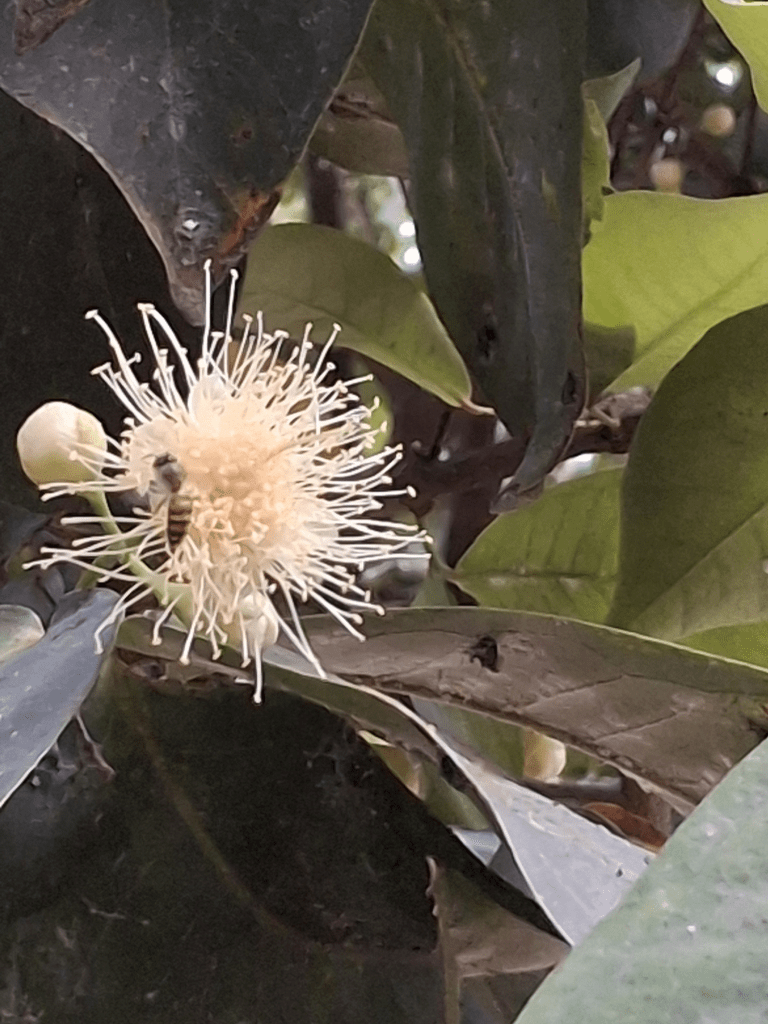
And in an amusing twist, bees do have something noteworthy on their legs. Worker bees collect pollen in specialised structures on their hind legs known as pollen baskets. If you have ever seen a bee carrying bright yellow clumps of pollen, you have witnessed one of nature’s most efficient collection systems at work.

So while the phrase was probably invented as nonsense, modern biology has accidentally given it a touch of credibility.

The bee’s knees are, in their own way, quite remarkable.

The phrase also reminds us of something larger: language is filled with animals.

Consider how often creatures appear in everyday speech.

When we hear information directly from the original source, we get it “straight from the horse’s mouth.” The expression likely comes from horse traders, who could estimate a horse’s age by examining its teeth.

When someone raises a false alarm repeatedly, we say they “cry wolf.” The phrase traces its roots to one of Aesop’s famous fables, in which a shepherd boy repeatedly tricks villagers into believing a wolf is attacking his flock. When a wolf finally appears, no one believes him.

If a person sends us on a pointless errand, we call it “a wild goose chase.” The expression was popularised by Shakespeare, who used it in Romeo and Juliet. Today, it describes any pursuit that is unlikely to succeed.

Then there is the curious warning not to “look a gift horse in the mouth.” Once again, horses are involved. Since age and health could be judged from a horse’s teeth, examining the mouth of a horse that had been freely given was considered ungrateful.

Some animal expressions are easier to understand.

Someone who is “busy as a bee” needs little explanation. A person with “eagle eyes” sees details others miss. A “social butterfly” moves easily from one conversation to another.

Others are delightfully baffling.

Why do we have “ants in our pants” when we are restless? Why are secretive people said to be “as sly as a fox”? Why do difficult situations become a “dog’s breakfast” in some parts of the English-speaking world?

The answer often lies in history. These phrases are linguistic fossils, preserving traces of old occupations, folk tales, observations of nature, and forgotten jokes. Long after the original context disappears, the expression remains.

In this way, language resembles an attic filled with heirlooms. We continue to use objects whose stories have been partly forgotten. Their meanings survive even when their origins grow hazy.

That may be why expressions such as “the bee’s knees” continue to charm us. They remind us that language is not merely a tool for communication. It is also a record of human imagination.

Generations of speakers have played with words, invented absurd images, borrowed ideas from animals, and passed them on. Most vanished. A few endured.

And among those survivors is a tiny insect whose unlikely knees have become a symbol of excellence.

Not bad for a creature that was probably never consulted on the matter.

The next time someone describes a book, a meal, a holiday, or a grandchild as “the bee’s knees,” spare a thought for the strange journey of that phrase. It has travelled through jazz-age slang, survived changing fashions, outlived dozens of rival expressions, and settled comfortably into modern English.

That, one might say, is the bee’s knees of linguistic success.

–Meena

Borim Kim: Climate Activist Every Action Counts

As we get ready to celebrate one more World Environment Day, for a few days, positive stories about actions to ‘save’ the environment will share space with the daily dose of gloom and doom that have become our daily fare. This week Meena wrote about how Governments are trying to make an impact, or measure the impact of global and national efforts to mitigate the overwhelming consequences of so many wrong steps.

While these are large-scale projects undertaken on large scales, throughout the history of environmental efforts, there have also been heart-warming stories of smaller efforts by small groups, communities, and even individuals, who have taken up causes and worked relentlessly for these. Most of these do not make the headlines, but they do make a difference in their own time and space. And some of these receive recognition.

One of these recognitions is The Goldman Environmental Prize. It was founded in 1989 by San Francisco civic leaders and philanthropists Richard and Rhoda Goldman as a way to demonstrate the international nature of environmental problems and draw public attention to the global need for action.

The Goldman Prize recognizes grassroots environmental champions for significant efforts to protect and restore the natural environment. It considers those leading campaigns locally, and effecting positive change through community participation as ‘grassroots leaders’. It is a recognition of “People of ordinary backgrounds doing extraordinary things to save our Earth”.

The Prize believes that a strong environmental movement requires diverse talents, perspectives, and leadership. Often referred to as the Green Nobel, the awards are conferred every year to outstanding environmental advocates from each of the world’s six inhabited geographic regions: Africa, Asia, Europe, Islands and Island nations, North America, South and Central America.

The 2026 Goldman Environmental Prizes were announced on Earth Day this year. A unique feature of this year’s prizes is that all the six winners are women!

Let us celebrate these women this month. Starting with Asia, and young blood

BORIS KIM

Activist Boris Kim and her organization Youth 4 Climate Change won the first youth-led climate litigation in Asia.

It was the summer of 2018, and South Korea was in the throes of a record-breaking heat wave. Borim Kim had just graduated from college and was working on energy conservation in a self-sufficient community in Seoul. The heat wave took a heavy toll as people struggled in buildings with no air conditioning. Borim realized that people, as individuals, could not escape the impacts of climate change. In her search for a way to become safer in the face of climate crisis, Borim found that many young people had similar concerns, but no solutions. This led her to start Youth 4 Climate Action (Y4CA).

Y4CA wanted to move the conversation away from individual solutions to the crisis, and work toward a fundamental transformation in society. The group started by organizing climate strikes and setting up meetings with decision-makers, including South Korea’s minister of education and minister of climate, energy, and environment. But the group soon realized that that just by demanding change, their safety in the face of the climate crisis was not guaranteed.

So in 2020, Borim decided to turn to the judiciary, which could require the legislature to act. Along with Y4CA, she organized a group of 19 youth who sued the South Korean government in the country’s constitutional court. Their suit, the first of its kind in Asia, made the case that the government was violating young people’s fundamental right to live in a clean environment by failing to adequately act on the climate crisis. Specifically, the plaintiffs contended that the government’s existing emissions reductions targets at the time — which sought to reduce emissions to 30 percent below 2020 levels by 2030 — were too weak. They argued that the absence of any additional planning past 2030 left future generations vulnerable. (Borim was not among the initial 19 plaintiffs, but she later joined the case, along with more than 200 others.)

In 2024, in a groundbreaking victory for the youth, the court agreed that the right to a clean environment includes protection from harms related to climate change. On that basis, it found that the government was violating youths’ rights by failing set emissions reductions targets for 2031 through 2049, in line with an existing national pledge to meet net-zero emissions by 2050. It ordered the Korean National Assembly to set such targets by February 2026.

Though the case represented the first youth-led national level climate victory outside of Europe, the plaintiffs didn’t win on all of their claims. Also due to political instability and inertia, the set targets were not achieved.

While the specific goal could not be achieved, the youth movement and the response from the judiciary were milestones in themselves. It was an affirmation that South Korean citizens had a basic right to “exist safely in the face of climate change”. As Borim Kim said, Ultimately, it created a red line from which the country’s climate policies would not go backwards.

Borim Kim continues to work to ensure that climate action moves forward in South Korea. Y4CA is also sharing lessons learned with other youth-led groups across Asia, including a group from Japan that is bringing a constitutional climate claim there. And she’s continuing to build the climate movement in South Korea. That includes making sure that youth and those who most directly face the inequalities of climate change have a voice in decision-making.

Borim Kim is the face of the future for the new generation that must bear the heavy brunt of climate change. A true ‘grassroots leader’ and deserving winner of the Goldman Environmental Prize.

Happy World Environment Day 2026.

–Mamata

The Report Card Nature Gives Us

Every year, World Environment Day arrives with familiar images — children planting saplings, speeches about sustainability, green logos replacing corporate blue for a day, and social media flooded with pictures of forests, oceans, and endangered animals.

And then, by the next morning, the world goes back to business as usual.

Factories continue to pollute rivers. Wetlands quietly disappear under concrete. Species vanish before most people even learn their names. Cities expand. Forests shrink. Temperatures rise.

Which raises an uncomfortable question: if every country claims to care about nature, who is actually doing a good job?

Surprisingly, the world has no single official answer.

There is no universally accepted “Nature Conservation Score” for countries. No equivalent of a cricket points table or Olympic medal tally for ecological responsibility. Instead, scientists, universities, conservation groups, and international organisations have created different systems to measure different aspects of environmental performance.

One of the best-known systems is the Environmental Performance Index (EPI), developed by Yale Center for Environmental Law & Policy and Columbia University. The EPI attempts to rank countries using indicators such as air quality, climate policies, biodiversity protection, water management, pollution control, and ecosystem vitality. In essence, it asks a broad question: How seriously is a country managing its environmental responsibilities?

The rankings often produce interesting results. Countries celebrated for economic growth may perform poorly environmentally. Others, less visible on the global stage, emerge as ecological leaders because of stronger conservation policies or lower environmental damage.

But the EPI is only one lens.

More recently, researchers introduced a more focused Nature Conservation Index (NCI) — an attempt to specifically measure how well countries protect biodiversity and ecosystems. Unlike broader environmental rankings, the NCI looks more directly at habitat conservation, threats to species, land-use pressures, governance systems, and future ecological risks.

This distinction matters. A country may have good urban pollution control but still destroy forests. Another may generate renewable energy while severely damaging wetlands. Environmental protection is a complex web of interconnected systems.

Then there is the Living Planet Index, produced by World Wildlife Fund. This index does not mainly rank countries. Instead, it tracks wildlife populations across the planet. And its findings are sobering. Many species populations worldwide have shown dramatic declines over the past decades. The Living Planet Index functions almost like a planetary pulse monitor. It asks: Is life itself becoming richer or poorer?

Another globally influential system comes from the International Union for Conservation of Nature — better known through its famous Red List of threatened species. The Red List categorises plants and animals according to extinction risk: vulnerable, endangered, critically endangered, and so on. When a species enters those categories, it becomes more than a scientific statistic. It becomes a warning signal about collapsing ecosystems.

Meanwhile, the Convention on Biological Diversity, linked to the United Nations, tracks biodiversity targets globally. Countries commit to goals involving protected areas, restoration, invasive species control, and ecosystem protection. These are not rankings in the conventional sense, but they form a vast international attempt to monitor humanity’s relationship with nature.

Why do all these measurements matter?

Because societies pay attention to what they measure.

Governments obsess over GDP growth because GDP is measured constantly. Investors track stock indices daily. Universities chase rankings. Sports teams live by points tables.

Environmental indicators attempt to bring the same discipline to ecological survival.

Without measurement, environmental destruction easily hides behind rhetoric. Governments can announce “green missions” while rivers die quietly. Corporations can advertise sustainability while their activities may lead ecosystems to degrade invisibly. Numbers are imperfect, but they create accountability.

And they also expose an uncomfortable truth: economic success and ecological wisdom are not always the same thing In fact, they are usually contrary..

Modern economies often reward extraction more than preservation. A forest cut down for mining can increase GDP immediately. A wetland converted into real estate may generate investment and jobs. Yet the ecological loss — biodiversity, groundwater recharge, carbon storage, flood protection — rarely appears in economic accounting.

India illustrates the challenge vividly. Few countries possess India’s ecological diversity — Himalayan ecosystems, rainforests, mangroves, coral reefs, deserts, grasslands, and rich wildlife habitats. At the same time, India faces immense developmental pressures: urbanisation, infrastructure expansion, industrialisation, mining, and rising consumption.

This creates difficult questions with no easy answers.

How much forest should be sacrificed for highways?

Can renewable energy projects damage fragile ecosystems?

How should tourism be balanced against biodiversity protection?

Every country now faces versions of these dilemmas.

That is why World Environment Day should perhaps evolve beyond symbolic tree-planting ceremonies and recycled slogans. The real environmental challenge is not whether humanity loves nature in theory. It is whether nations are willing to measure honestly what they are destroying, preserving, or restoring.

Nature conservation measures try to correct this blindness. Because ultimately, these indices are not really judging forests or rivers. They are judging us. They ask whether humanity is behaving like a responsible custodian of the planet — or merely a temporary consumer exhausting an inheritance built over millions of years.

And perhaps the most unsettling reality is this:

Nature does not care about our speeches, campaigns, or hashtags.

It responds only to actions.

–Meena