One of the most memorable scenes in Life of Pi has nothing to do with a Bengal tiger or a lifeboat.
Piscine Molitor Patel has had enough of being teased about his unusual name. On the first day at his new school, he goes to the blackboard, writes the Greek letter π, and begins reciting its value to an astonishing number of decimal places. The classroom falls silent. His classmates never call him Piscine again. From that day on, he is simply “Pi.”
It is a wonderful moment. Knowledge triumphs over ridicule.
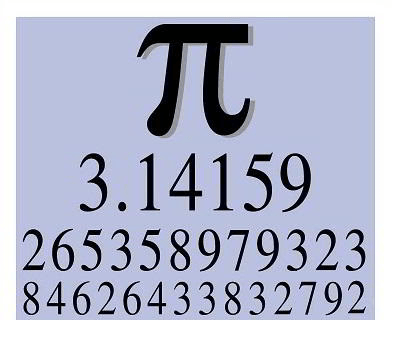
Every year on March 14, mathematicians and science enthusiasts celebrate Pi Day because, in the American style of writing dates, 3/14 resembles the first three digits of π—3.14. There are quizzes, lectures, pie-eating contests and social media posts celebrating perhaps the world’s most famous number.
But there is a small problem.
Outside the United States, most countries write dates as day/month, not month/day. In India, the United Kingdom, Australia, New Zealand, Singapore, Malaysia, and across most of Europe, Africa and Latin America, March 14 is simply 14/3. The neat mathematical coincidence disappears.
If there is one date that deserves to be celebrated as Pi Day, it is July 22. Written as 22/7, it represents the most famous fractional approximation of π—one that generations of students have learned long before they encountered calculators or computers.
The story of π begins with a deceptively simple observation. Measure the circumference of any circle and divide it by its diameter. Whether the circle is a coin, a bicycle wheel, a temple dome or the orbit of a planet, the answer is always the same mysterious number.
Simple in concept. Impossible to write down completely.
Its decimal expansion—3.1415926535…—goes on forever without repeating. It is an irrational number, one that can never be expressed exactly as a fraction.
Yet for thousands of years, practical mathematics has relied on approximations.
The fraction 22/7 is associated with the Greek mathematician Archimedes, who, more than 2,200 years ago, proved that π lay within a narrow range that included this elegant fraction. It is not exact, but it is remarkably accurate and wonderfully easy to remember. Builders, engineers, surveyors and schoolchildren have relied on it ever since.
India has one of the world’s oldest mathematical traditions, and its contribution to understanding π is fundamental. Around the fifth century CE, the great mathematician and astronomer Aryabhata gave a remarkably accurate value for π in his Aryabhatiya. His approximation—3.1416—was correct to four decimal places, an extraordinary achievement for its time. Even more impressive was his suggestion that this value was only an approximation, revealing an understanding that π could not be captured exactly.
Nearly a thousand years later came another remarkable breakthrough. Mādhava of Sangamagrama, founder of the Kerala School of Mathematics, developed infinite series for calculating π with astonishing precision. These methods anticipated ideas that later became central to calculus in Europe. By the fourteenth century, Indian mathematicians were calculating π to many decimal places using techniques that were centuries ahead of their time.
Today, historians increasingly recognise that. Egyptians, Babylonians, Greeks, Chinese, Arabs and Indians all advanced humanity’s understanding of numbers. Pi belongs not to one nation, but to civilisation itself. That makes July 22 an especially meaningful day.
Unlike March 14, which owes its popularity to one country’s date format, 22/7 is a mathematical symbol recognised across generations and across classrooms. For millions of students, it was their first introduction to π. Before calculators became commonplace, “Take π as 22/7” was almost a universal instruction.
Pi itself is everywhere. It appears in wheels and bridges, domes and tunnels, clocks and satellites. Engineers use it to design aircraft. Doctors encounter it in medical imaging. Astronomers use it to understand the cosmos. Physicists find it in equations that have little to do with circles. Even the digital technologies that shape our lives rest on mathematical foundations where π quietly makes an appearance.
Perhaps that is why Pi Patel chose the symbol as his new identity. It represented something larger than a number.
Celebrating July 22 would not simply honour a mathematical constant. It would celebrate curiosity, scientific temper and humanity’s enduring quest to understand the universe.
So by all means enjoy the festivities on March 14.
But when July 22 comes around, take a moment to remember Aryabhata, Archimedes, Mādhava—and perhaps even Pi Patel, the schoolboy who silenced his bullies not with fists, but with an endless stream of digits.
Perhaps it is time we celebrated July 22 as the International Pi Day—a day that honours not only one extraordinary number, but the shared human pursuit of knowledge that transcends borders, languages and centuries.
–Meena