Nature’s Rule-Breakers: Flora and Fauna That Refuse to Behave “Normally”

When we are children, nature is explained to us in neat categories. Birds fly. Fish swim. Spiders spin webs. Plants make food from sunlight and quietly stay rooted in place. Mammals give birth to live young.

And then, slowly, nature begins to reveal its mischievous side.

A spider hunts like a tiger instead of spinning a web. A fish walks on land. A plant eats insects. A mammal lays eggs. A mushroom traps worms. The more one studies biology, the more one realises that evolution has very little respect for the tidy boxes humans create.

Take the Huntsman spider, for instance. Most of us imagine spiders as patient architects sitting in intricate webs, waiting for prey to blunder in. The huntsman spider does something entirely different. It stalks and ambushes prey, relying on speed and agility rather than silken traps. In many ways, it behaves more like a tiny leopard than a conventional spider.

It is not alone.

The Jumping spider has remarkably sharp vision and leaps onto prey with astonishing precision. The Wolf spider actively chases its victims across the ground. The Trapdoor spider lives in underground burrows and springs out like an ambush attacker in a war film.

These creatures remind us that even within a single group, evolution can produce wildly different lifestyles.

Then there are mammals — supposedly the most familiar class of animals to humans. Mammals, we are taught, give birth to live young. Except some do not.

The Platypus looks as though it was assembled from spare parts: duck bill, otter feet, beaver tail — and it lays eggs, and it is a mammal! The male even has venomous spurs. Its cousin, the Short-beaked echidna, also lays eggs despite being a mammal covered in fur.These monotremes are evolutionary oddities, survivors from a far older branch of mammalian history. If they were discovered as fossils rather than living creatures, many scientists might have assumed them to be fictional hybrids.

Birds, too, refuse to follow the script.

We instinctively associate birds with flight, yet the Ostrich abandoned the skies to become the world’s fastest running bird. The Penguin transformed wings into underwater flippers and effectively “flies” through the sea instead of air. The Kiwi of New Zealand behaves almost like a nocturnal mammal, shuffling through forests at night with a powerful sense of smell.

And some creatures seem unable to decide whether they belong on land or in water. The Mudskipper spends large amounts of time outside water, “walking” across mudflats using its fins. The Walking catfish can wriggle across land between ponds. The Climbing perch survives out of water for surprisingly long periods.

Plants provide perhaps the most startling examples of all because we rarely think of them as active or predatory. The Venus flytrap snaps shut on insects with startling speed. Pitcher plant species lure prey into liquid-filled traps where victims drown and decompose. The Sundew uses sticky tentacles to ensnare insects. The underwater Bladderwort employs tiny vacuum traps. These carnivorous plants evolved in nutrient-poor soils where ordinary plant life struggled. Instead of relying solely on the earth for nourishment, they turned to meat.

Some plants go further still and become outright thieves. The parasitic Dodder wraps itself around other plants and steals nutrients directly from them. The Indian pipe is ghostly white because it lacks chlorophyll almost entirely.

Even fungi refuse to stay within expectations. Certain fungi trap microscopic worms using tiny snares and digest them alive. The common Oyster mushroom can behave like a microscopic predator. Ophiocordyceps unilateralis goes a step further, infecting ants and manipulating their behaviour before killing them in locations ideal for fungal growth.

Nature’s rebels are not limited to these. The Electric eel generates electricity powerful enough to stun prey. The Leaf sheep, a tiny sea slug, steals chloroplasts from algae and briefly becomes “solar-powered.” The New Caledonian crow manufactures tools, while the Naked mole-rat lives in colonies resembling ant societies, complete with a queen.

The deeper one looks into nature, the clearer it becomes that “normal” is mostly a human invention. Evolution does not work toward ideals or categories. It experiments endlessly. If a strange adaptation improves survival — whether that means a spider abandoning webs, a fish walking on land, or a plant eating insects — nature keeps it.

In fact, these biological rebels may teach us the most important lesson of all: survival often belongs not to the strongest or fastest, but to the adaptable, the unconventional, and the creatures willing to break the rules.

–Meena

Pic: Hunstman spider, Meena Raghunathan

State Vs. Plate: India’s Long History of Food and Consumption Restrictions

Prime Minister Narendra Modi’s recent appeal asking citizens to avoid unnecessary foreign travel, cut discretionary fuel use, postpone non-essential purchases, and embrace restraint in consumption has revived an old Indian political tradition: the call for austerity in moments of uncertainty. The appeal, made in the context of global tensions and fears over fuel and supply disruptions linked to West Asia, was framed as a precautionary economic measure.

By no means is this new. India has heard such calls before.

Since Independence, governments across political ideologies — Congress, socialist coalitions, Janata regimes, and even regional administrations — have periodically attempted to regulate what people eat, how much they consume, how lavishly they celebrate, and even how many guests they invite. Sometimes these restrictions emerged from genuine shortages. Sometimes they reflected wartime economies. Sometimes they were moral projects tied to ideas of discipline, simplicity, Gandhian restraint, or anti-elitism. And at times, they became deeply political.

The Era of Scarcity: Rationing and Food Controls

In the first decades after Independence, India was a food-deficit country. Grain shortages, droughts, foreign exchange crises, and dependence on imports shaped policy thinking.

The ration card became one of the defining documents of Indian life. Urban Indians especially grew up in a world of controlled sugar, kerosene, rice, and wheat distribution. The Essential Commodities Act of 1955 empowered governments to regulate production, storage, transport, and distribution of key goods.

This was not merely administrative economics; it shaped everyday culture.

Families planned meals around availability. Weddings became simpler in drought years. Restaurants faced restrictions on serving certain foods. In many states, governments imposed “rice control orders” limiting movement and stocking of grains. Hoarding and black marketing became criminal offences.

During severe shortages in the 1960s, Prime Minister Lal Bahadur Shastri famously urged Indians to skip one meal a week. “Monday fasts” became a patriotic exercise in many households. Restaurants in several cities reportedly shut on Monday evenings in support of the campaign.

The symbolism mattered as much as the economics. Food restraint was projected as national duty.

Wedding Restrictions: When the State Counted Your Guests

Perhaps the most striking example of state intervention in private consumption came through attempts to regulate weddings.

India’s long-standing anxiety over “wasteful expenditure” often found weddings at the centre of policy debates. Lavish feasts were criticised not only as economic excess but also as drivers of social inequality.

The most famous attempt came during the Emergency (1975–77), when the government imposed restrictions on the number of guests and dishes at weddings in several places. Though implementation varied across states and districts, stories abound of officials inspecting marriage halls and counting attendees.

Even outside the Emergency, states periodically experimented with controls:

  • Limits on the number of dishes served.
  • Restrictions on use of electricity and lighting during shortages.
  • Curbs on late-night celebrations.
  • Controls on loudspeakers.
  • Taxes or permissions for large gatherings.

In the 1970s and 1980s, “simple marriage” campaigns were encouraged by politicians and social reformers alike. Government employees in some sectors were informally encouraged to avoid extravagant ceremonies.

These debates continue today in different forms. Environmental concerns, food wastage, traffic congestion, and conspicuous consumption have all entered the conversation.

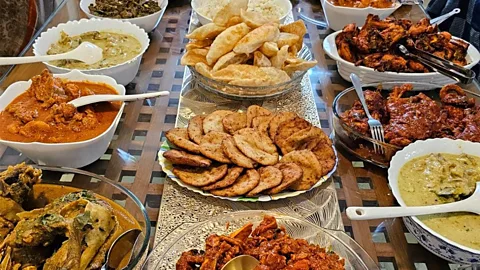
Ironically, Indian weddings evolved in the opposite direction. Liberalisation in the 1990s transformed them into giant economic ecosystems involving tourism, fashion, catering, décor, jewellery, entertainment, and destination hospitality.

The “Big Fat Indian Wedding” became both aspiration and industry.

Meatless Days and Regulating Food Habits

Food restrictions in India have rarely been only about economics. They are also about morality, religion, and identity.

Across decades, many Indian cities and states have periodically imposed bans on slaughter or meat sales during religious festivals.

These restrictions reveal a deeper Indian tension: food is intensely personal, but also intensely political.

The Anti-Waste Moral Economy

A recurring theme across Indian public life is the suspicion of conspicuous consumption.

During crises — wars, droughts, inflationary periods, oil shocks — governments often invoke the language of sacrifice.

In the 1970s oil crisis, many countries experimented with fuel-saving measures. India too promoted conservation campaigns. More recently, during COVID-19 lockdowns, public messaging encouraged minimal movement, reduced fuel consumption, and simplified social ceremonies.

The latest appeal by the Prime Minister fits into this long tradition. Public reactions, unsurprisingly, have been mixed.

On social media, some users compared the moment to earlier periods of austerity and wartime discipline, while others questioned whether ordinary citizens should bear the burden of global crises. Online discussions reflected anxieties about fuel prices, inflation, work culture, and economic uncertainty. (reddit.com)

This duality is very Indian.

The State vs The Plate

India’s relationship with food control differs from many Western democracies because food here is not merely nutrition or commerce. It intersects with caste, religion, region, language, ecology, and politics.

At the same time, the Indian state has historically justified intervention using three broad arguments:

  1. Scarcity management.
  2. Social reform.
  3. Public morality.

The justification changes with the era.

In the 1960s it was famine anxiety. In the 1970s it was socialism and anti-elitism. In the 1990s it became public order and urban governance. Today it is often linked to sustainability, nationalism, health, or cultural identity.

What Restrictions Reveal About India

Food and guest restrictions may appear trivial compared to constitutional politics or macroeconomics. Yet they reveal something fundamental about India.

They show how deeply the state has historically engaged with everyday life.

They also reveal a persistent belief among governments that national crises require behavioural change from citizens — not just policy change from institutions.

Whether it was Shastri’s appeal to skip meals, Emergency-era guest limits, anti-hoarding drives, meat bans during festivals, or recent calls to reduce consumption amid global uncertainty, the underlying message has remained similar:

Private behaviour is seen as part of public national discipline.

India may change governments, ideologies, and economic models — but the debate over what citizens should eat, spend, serve, celebrate, or conserve never quite disappears.

A crisis leads to innovation and change. If this debate can lead to a re-think on the obscenely lavish weddings which have become the norm, it may be one of the good things to come out of this situation

–Meena.

Pic: BBC

Mother’s Day: From Concept to Commerce

As the countdown begins, and the hype builds up to Mothers’ Day, cards, gifts and flower sellers, and restaurants look forward to a bonanza. Yet another day, among at least five other “days” that now mark every one of the 365 days of the year. While these days are created, in many cases, to commemorate an event or person, or to raise awareness about a cause, they have also become lucrative occasions for marketing memorabilia.

Most of us have never thought about Mothers’ Day beyond debating over what to gift Mom. In fact, my generation does not remember celebrating such a day at all. We assumed that it was a relatively new concept. Well, surprise, surprise! The history of this day dates back over a century, and ironically, it was started with completely different objectives.

The story goes way back to the early 19th century and an ordinary working class woman Ann Maria Reeves Jarvis who lived in the Appalachian area of West Virginia in the United States. Ann Maria bore more than a dozen children but, as was common in those times, lost most of them to childhood diseases like diphtheria and measles. While most families took childhood mortality as a will of God, Ann Maria felt that a major factor was the unhealthy and unsanitary conditions amidst which the community lived. She felt that it was important that families, and especially women, were made aware of this.  As an active member of the local Methodist Episcopal Church, she organized Mothers’ Work Clubs where she raised awareness about hygiene and sanitation, and the vital importance of boiling drinking water. The church promoted special Mothers’ Work Days when women would work together to collect trash, and undertake other projects to improve local environmental conditions. The organisers provided medicine and supplies to sick families, and when necessary, quarantined entire households to prevent epidemics.   

The American Civil War that began in 1861 changed the focus on Ann Maria’s work. She organised women’s groups to help soldiers from both sides who were sick or wounded. She worked to promote peace and unity. In 1868, despite threats of violence, she organized a Mothers’ Friendship Day to bring families of both sides together to restore a sense of community. She strongly believed that women, and especially mothers, were best suited to bring people together with a goal of peace.

Thus Ann Maria Jarvis spent her life mobilising women to work for improving the lives of their children. She fervently hoped that the vital work of mothers was recognized. She once wished “I hope and pray that someone, sometime, will found a memorial mother’s day commemorating her for the matchless service she renders to humanity in every field of life. She is entitled to it”.

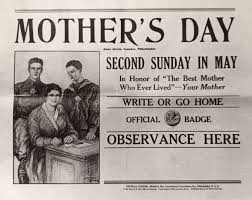
Ann Maria Jarvis died in 1905. Her daughter Anna Jarvis set out to make her mother’s dream a reality by designing a Mother’s Day celebration in honour of her mother. She chose the second Sunday in May to mark the anniversary of her mother’s death. Ann Jarvis herself never married and had children, but she viewed motherhood simply through the eyes of a daughter. Thus she constructed a child-centered celebration of motherhood for Mother’s Day: a “thank-offering” from sons and daughters and the nation “for the blessing of good homes.” She requested children to visit or write letters home on this day. She chose her mother’s favourite flower, the white carnation, as an emblem for this day.

The first Mother’s Day celebration was held on 10 May 1908 in Andrews Methodist Church in Grafton, Ann’s hometown. Anna handed out hundreds of white carnations to the mothers who attended. After that Anna lobbied to get official recognition for this day. The day was granted federal recognition by President Wilson in 1914, just before the start of World War I.

While she succeeded in getting Mother’s Day adopted as national holiday, Anna Jarvis saw the concept as her intellectual and legal property, and not as part of the public domain. She wished for Mother’s Day to remain a “holy day,” to remind us of our neglect of “the mother of quiet grace” who put the needs of her children before her own.

But the market realized the commercial appeal of a sentimental celebration of motherhood, combined with the story of a daughter’s story of memorialization. The appeal to write letters home fueled a huge boom in the greeting card industry, and the white carnation gesture bloomed into a thriving market for all flowers. By the early twentieth century, it had become yet another observance that turned into a “burdensome, wasteful, expensive day”.  

Anna Jarvis was appalled by the commercialization. She publicly denounced all such gimmicks, and registered her protest in many ways in different forums—from boycotts to gate crashing conventions. She spent the rest of her life fighting, and spending all her money on opposing what she thought was the distortion of the original sentiment of the day, and the crass profiteering that this resulted in. She also struggled for a copyright on the phrase “Second Sunday in May, Mother’s Day”. She insisted that it was Mother’s Day and not Mothers’ Day as was being marketed, and which was also a ploy to counter her copyright claims.

Anna could have easily profited from the day by claiming royalties from the sales of cards and flowers, but she remained firm in her opposition to the commercialization of her original sentiment. She and her sister survived on the small inheritance from their father. She was so distraught at the way the commemoration morphed into a commercial extravaganza, she even started a petition in 1943 to have the national holiday recalled. She spent her last days in a sanatorium in Philadelphia, and died of heart failure in 1948.

This year as we plan special treats for our mothers (and they certainly deserve those!) let us also remember how it all began, and Anna Jarvis who regretted creating this day! And let it not be only a once-a-year gesture. We can show we care and love, in more ways than one. 

Happy Mother’s Day!

–Mamata

The First Electrical Voting Machine

With election-fever and results-fever just abating, one the of the topics of discussion has of course been the controversial EVM—Electronic Voting Machine.

Where did it all start? Surprisingly with Edison—yes he of the light bulb fame.

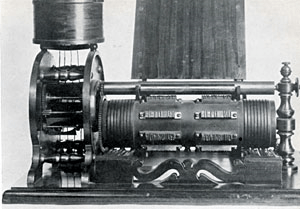
In 1869, Thomas Edison patented what is widely regarded as the first electrical voting machine—an invention designed to automate and speed up vote counting. This was his very first patent–U.S. Patent 90,646 granted on June 1, 1869. It was s designed to allow legislators to vote “yes” or “no” using a switch that sent signals to a central board,

Edison’s vote recorder was technically sound. By all accounts, it worked exactly as intended. But when he demonstrated it to legislators in Washington, D.C., they turned it down. Not because it was flawed—but because it was too efficient.

At the time, voting in legislatures was a slow, deliberate process. Delays were not bugs; they were features. They allowed for persuasion, negotiation, and, frankly, political maneuvering. A machine that eliminated delay also eliminated strategy. Edison would later reflect that this rejection taught him a lasting lesson: invent only what people are ready to use. The vote recorder’s rejection wasn’t about engineering; it was about human systems resisting change.

Edison’s Curious Patent Portfolio

Edison went on to file over a thousand patents, many of them transformative, some delightfully obscure. Alongside world-changing inventions like the incandescent light bulb and the phonograph, there were also lesser-known creations: an electric pen for duplicating documents, a system for preserving fruit, even ideas for concrete furniture.

Some succeeded because they met an immediate need. Others failed because the ecosystem—technological, social, or economic—wasn’t ready. But probably sowed the seeds for many a current-day device.

The Slow March Toward Voting Machines

Despite Edison’s early setback, the idea of mechanizing voting didn’t disappear. By the late 19th and early 20th centuries, mechanical voting machines began appearing in the United States. These lever-based systems aimed to reduce fraud and standardize ballot counting.

Over time, technology evolved. Punch-card systems—infamously remembered from the 2000 United States presidential election, introduced new efficiencies, along with new vulnerabilities. Hanging ‘chads’ became part of vocabulary, illustrating how even small technical flaws could undermine trust.

By the late 20th and early 21st centuries, electronic voting machines (EVMs) emerged as the next step. These ranged from Direct Recording Electronic (DRE) systems to optical scan ballots and, more recently, hybrid systems with paper audit trails.

Trust, Technology, and Tension

Electronic voting systems around the world have sparked debate. Critics raise concerns about hacking, lack of transparency, and the difficulty of verifying results independently. Supporters counter that well-designed systems are more accurate and less prone to human error than paper ballots.

Countries have taken different paths. While Brazil has widely adopted electronic voting, others like Germany have rolled back its use, citing constitutional concerns about transparency. The Netherlands and Ireland have also stepped away from electronic systems after public and political pushback.

Even within the United States, practices vary widely by state, reflecting a broader unease about balancing efficiency with trust.

India and the EVM

Few countries have embraced electronic voting as extensively as India. Introduced on a large scale by the Election Commission of India, EVMs were designed to tackle logistical challenges: vast electorates, difficult terrains, and the need for rapid, reliable counting.

Indian EVMs are standalone devices, not connected to the internet, which proponents argue makes them more secure. The addition of VVPAT (Voter Verifiable Paper Audit Trail) systems is supposed to strengthen transparency by allowing voters to confirm their choices.

And yet, controversies and fears persist.

The Real Lesson: Technology Isn’t Neutral

Edison’s failed vote recorder reminds us of something we often forget: technology does not exist in a vacuum. It interacts with human behaviour, institutional norms, and political incentives.

Voting, perhaps more than any other civic act, depends not just on accuracy but on perceived legitimacy. A system can be technically flawless and still fail if people don’t trust it. The technical aspects may work fine, but is it still corruptible when the system itself is corrupt?

In that sense, the story comes full circle.

Edison built a machine to make voting faster. Lawmakers rejected it because speed threatened the very nature of their process. More than a century later, we are still grappling with the same tension—between efficiency and trust, innovation and acceptance.

The question is no longer whether we can build better voting machines. It is whether societies are ready to believe in them.

And if Edison were around today, he might recognise the problem instantly.

–Meena

Pic: https://edison.rutgers.edu/life-of-edison/inventions