
Many cities have founders. Few have one whose vision continues to shape the city nearly five centuries later. As Bengaluru marks the anniversary (27 June) of its founder, Nadaprabhu Kempegowda, it is worth pausing to reflect not merely on the man, but on the remarkable administrator, planner and leader whose foresight laid the foundations of a city that would one day become India’s technology capital.
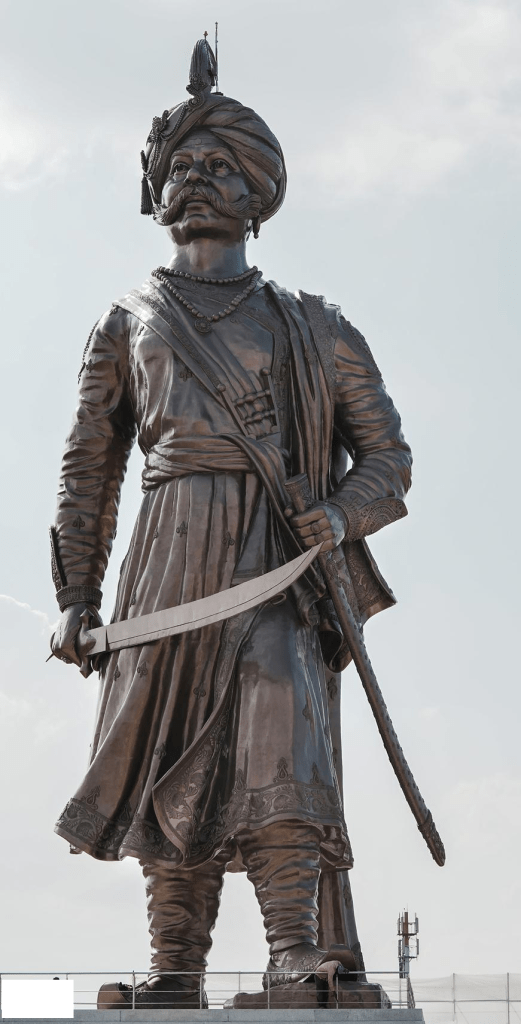
For most Bengalureans, Kempegowda is a familiar name. His statue greets travellers at the airport, major roads bear his name, and schoolchildren learn that he founded Bengaluru in 1537. Yet the true significance of his achievement lies beyond the simple fact that he established a town. What makes Kempegowda extraordinary is the quality of governance and urban planning he brought to his vision.
Born into a family of local chieftains under the larger framework of the Vijayanagara Empire, Kempegowda inherited responsibility for a region that consisted largely of villages, agricultural lands and trading settlements. Instead of merely ruling over existing territories, he imagined something larger—a thriving urban centre that could serve as a hub of commerce, culture and administration.
The Bengaluru he envisioned was not a city that grew by accident. It was carefully planned. Historical records suggest that he built a mud fort, established marketplaces, encouraged trade and developed infrastructure to support economic activity. In an age when rulers often focused on conquest, Kempegowda focused on creating conditions for prosperity.
Perhaps his most famous contribution to urban planning was the establishment of the four watchtowers that marked the city’s boundaries. Today, Bengaluru has expanded far beyond those limits, but the towers remain symbols of a leader who understood the importance of defining and managing urban growth. In modern governance language, we would call this spatial planning. Kempegowda practised it centuries before the term existed.
His administrative wisdom is equally noteworthy. Successful governance requires balancing multiple interests—farmers, traders, artisans, religious institutions and local communities. Evidence from historical accounts suggests that Kempegowda actively promoted trade and agriculture while ensuring public works were developed for the common good. Tanks and water bodies received attention because he understood a truth that remains relevant today: cities cannot flourish without secure water resources.
Indeed, one of the lessons modern Bengaluru can learn from Kempegowda concerns sustainability. Long before urban planners spoke of environmental resilience, he recognized the importance of lakes and irrigation systems. Many of the tanks developed during his period supported agriculture, groundwater recharge and community life. As Bengaluru grapples with water shortages and environmental challenges, Kempegowda’s approach offers a reminder that good governance means planning not only for today’s needs but also for future generations.
Another aspect of his leadership was inclusiveness. The markets and settlements he established attracted people from different communities and occupations. Bengaluru’s reputation as a welcoming city—a place where people from across India come to work, study and build new lives—can be traced back to these early foundations. The cosmopolitan spirit for which the city is celebrated today did not emerge overnight; it has deep historical roots.
What also stands out is Kempegowda’s ability to combine vision with execution. Many leaders dream of transformation, but fewer possess the administrative capability to turn ideas into reality. Founding a city required mobilizing resources, maintaining law and order, coordinating construction, encouraging settlement and ensuring economic viability. These are not merely political tasks; they are governance challenges. Kempegowda appears to have met them with remarkable effectiveness.
For citizens of modern Bengaluru, his legacy extends beyond monuments and commemorations. It is visible in the city’s enduring role as a centre of enterprise and innovation. Bengaluru’s global reputation as a hub for technology and entrepreneurship reflects qualities that Kempegowda himself valued: openness, opportunity and a willingness to build for the future.
Of course, no historical figure belongs entirely to the present. Kempegowda lived in a different era, under different political circumstances. Yet certain principles are timeless. Strategic planning, investment in public infrastructure, stewardship of natural resources and a commitment to creating opportunities for people remain the hallmarks of good governance today, just as they were in the sixteenth century.
As Bengaluru celebrates Kempegowda’s anniversary, the occasion should be more than a remembrance of the past. It should also be an invitation to reflect on the kind of city we wish to build. Rapid growth has brought immense opportunities, but also challenges of traffic, water, housing and environmental sustainability. Addressing these issues requires the same blend of vision and administrative competence that Kempegowda demonstrated centuries ago.
The founder of Bengaluru gave the city more than its beginning. He gave it a blueprint: plan thoughtfully, govern wisely and build for generations yet to come. That is why, nearly 500 years later, Kempegowda remains not just a historical figure, but a living presence in the story of Bengaluru.
Thank you, Kempegowda! Help us do justice to your vision!
–Meena
Pic: Courtesy The Hindu


