When Prizes Change the World: What Innovation Contests Teach Us (and Why India Should Care)

Most prizes are given to those who have already changed the world: the Nobel, the Magsaysay, any number of national recognitions. These prizes are ways in which the world recognizes a lifetime’s work, a breakthrough discovery, timeless writing, selfless humanitarian aid. The awards in these instances are however collateral benefits. For these greats, often the wok is their own reward.

But in some cases, the prize itself is the motivator, it is the way to spur developments to change the world. Some of the most transformative technologies in human history were sparked by something deceptively simple: a prize.

A problem recognized. A deadline set for its solution. A reward announced for the solution.

And then—an open invitation to anyone bold enough to try.

Take the British Parliament’s Longitude Prize of 1714. Navigation at sea was perilous because sailors could not accurately determine longitude. The reward on offer was up to £20,000—an astronomical sum at the time. The solution did not come from a celebrated astronomer, but from a self-taught clockmaker, John Harrison. His marine chronometer worked—but recognition did not come easily. Payments were staggered, disputed, and delayed. Even when innovation succeeds, institutions do not always know how to respond.

A century later, war catalysed innovation. Napoleon Bonaparte, seeking to feed his armies, offered 12,000 francs for a reliable food preservation method. The result? Nicolas Appert’s pioneering work on canning. With his innovation, food for armies could be preserved for months and years, and could keep armies fed on long campaigns to distant lands. Explorers and sailors started depending on them, opening up new frontiers of discovery. Canned food gave a fillip to farmers, now that their produce could have extended lives. And brought convenience to dining. One competition, one process, many benefits!

These early contests reveal something important: prizes work best when the problem is urgent, the goal is clear, and the reward is meaningful enough to sustain effort over time.

Rainhill Trials

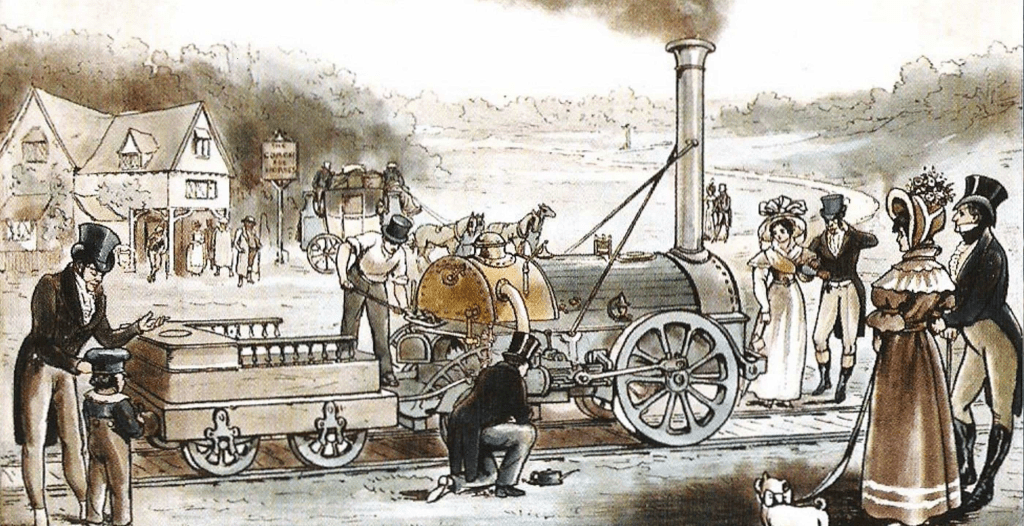
Fast forward to the industrial age. The directors of the Liverpool and Manchester Railway had originally intended to use stationary steam engines to pull trains along the railway using cables. However, their engineer George Stephenson strongly advocated for the use of steam locomotives instead. As the railway was approaching completion, the directors decided to hold a competition to decide whether locomotives could be used to pull the trains. The Rainhill Trials of 1829 offered a prize of £500 for the best way to haul the trains. George Stephenson’s Rocket won decisively, and its design quickly became the standard for locomotives. Here, the feedback loop between competition and adoption was almost immediate.

Then came the age of flight. The Raymond Orteig Prize promised $25,000 for a nonstop transatlantic flight. Charles Lindbergh claimed it in 1927—but only after multiple failed attempts and fatal crashes by others. The prize went to Lingberg, but more importantly, it accelerated aviation as an industry.

By the late 20th century, competitions had evolved into global innovation platforms. The XPRIZE Foundation’s Ansari X Prize offered $10 million for private human spaceflight—and catalysed over $100 million in investment before it was eventually won. The DARPA Grand Challenges, with prizes of $1–2 million, helped lay the groundwork for self-driving cars.

And in the digital age, contests have become even more distributed. The Netflix Prize offered $1 million to improve its recommendation algorithm—successfully claimed, and now foundational to digital platforms. Competitions on Kaggle for machine learning and data science challenges are designed to solve complex, real-world problems using crowdsourced predictive modelling. They routinely offer prizes ranging from a few thousand dollars to over $1 million, with winning models often deployed in real-world systems.

Not all prizes, however, are claimed. The Google Lunar X Prize, sponsored by Google, famously went unawarded when no team met the deadline. And yet, several participating teams went on to become serious space ventures. More recently, the rebooted Longitude Prize on antibiotic resistance—run by Nesta with a purse of £10 million—was eventually awarded after years of global effort.

Enter the Hackathon: The New-Age Contest

If prizes defined earlier centuries, hackathons define ours.

From college campuses to corporate offices, hackathons have become the default format for innovation challenges. India, in particular, has embraced them at scale through initiatives like the Smart India Hackathon, where winning teams typically receive ₹1–5 lakh, along with visibility and recognition.

At first glance, hackathons look like a natural continuation of the prize tradition. But look closer, and a crucial distinction emerges.

Hackathons are built for speed. Typically compressed into 24 to 72 hours, they excel at generating ideas, prototypes, and energy. They uncover talent and encourage collaboration. But they are not designed for depth.

The breakthroughs that defined earlier prize competitions were the result of years of iteration, backed by incentives large enough to justify sustained commitment. Even modern competitions on Kaggle run for months, allowing refinement and optimisation. Hackathons, by contrast, often end at the stage of a promising prototype.

This is not a weakness. It is a different role.

Hackathons are the sparking mechanisms of the tech world.

Lessons for India: Moving from Events to Ecosystems                            

India is no stranger to ingenuity—though often of the jugaad class. We could surely use the powerful lever of structured, sustained innovation contests.

1. Define Grand Challenges That Matter Locally
India’s problems—air pollution, water scarcity, affordable healthcare—require sharply defined challenges and serious prize money. Rewards must be large enough to sustain effort beyond a weekend.

2. Open Participation Beyond Credentials
Breakthroughs often come from unexpected quarters. Platforms must include informal innovators, practitioners, and non-traditional problem-solvers.

3. Build a Pipeline, Not One-Off Events
Hackathons should be the starting point, not the endpoint. Without this pipeline, ideas from initiatives like the Smart India Hackathon risk fading away.

4. Shift from Inputs to Outcomes
Prize systems reward results, not proposals—encouraging creativity and reducing bureaucratic inertia.

5. Invest in Follow-Through
Mentorship, funding, and testing environments are what convert prototypes into deployable solutions.

6. Measure Success Beyond Winners
India must move beyond a binary view of success. Even if a prize is not claimed, the ecosystem it builds can be valuable.

Because sometimes, all it takes to change the world…is not just a prize—but a prize large enough, a timeline long enough, and a system strong enough to turn ideas into impact.

–Meena                  

Pic: http://www.rainhilltrials.org/

The Lady at the Helm: Sumati Morarji

Among the many days, significant or silly, that are being celebrated, this week marked a special day in India’s maritime history. April 5 is celebrated annually as National Maritime Day.

India, a peninsular subcontinent with more than 7000 km of coastline, has a long maritime history, dating way back to the Indus Valley Civilization. Since ancient times Indian sailors ventured out to sea thanks to their deep understanding of the ocean patterns and the monsoon winds. This allowed them to travel safely and efficiently, opening up trade routes to distant lands. It is speculated that the English word “navigation’ may have its roots in the Sanskrit ‘navgati’, a combination of ‘nav’ meaning ship or sailing vessel, and ‘gati’ meaning speed or progress. There are many stories in Indian mythology about the seas and oceans, and proof of Indian maritime operations can be found in Indian literature, sculpture, painting and archaeology.

The advent of the colonial powers replaced the traditional trade and trading vessels with what became a European monopoly. Over the next few centuries British companies dominated the shipping industry. In the early 1900s a far-sighted group of Indian industrialists, led by Walchand Hirachand, and including Narottam Morarji, Kilachand Devachand, and Lallubhai Samaldas dreamed of creating India’s own mercantile fleet—a swadeshi shipping enterprise.

They formed a company called the Scindia Steam Navigation Company, and purchased a steamer from the Gwalior royal family. The ship, the RMS Empress, originally purchased from the Canadian Pacific Railway had been used as a hospital ship for wounded Indian soldiers in World War I. It was a challenge to set up and sustain a marine mercantile enterprise in the face of the long-running British companies.

RMS Empress was renamed the SS Loyalty. On 5 April 1919, the now totally swadeshi SS Loyalty made its maiden voyage from Bombay to London. It carried 700 passengers and cargo. This was significant as it marked the beginning of breaking the British monopoly on maritime trade. This event continues to be commemorated as National Maritime Day on 5 April every year.

What makes the subsequent story of the founding company, the Scindia Steam Navigation Company more significant, is also the story of a remarkable woman who steered this company to exemplary success.

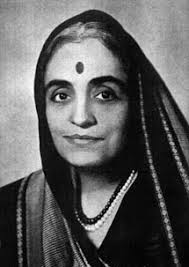
Sumati Morarji was born in 1909 in an affluent, and conservative, merchant family of Bombay. Named Jamuna by her parents, at the age of 13, she was married, with an extravagant wedding, to Shanti Kumar Morarjee, the only son of Narottam Morarji. Narottam Morarji, an eminent industrialist, was one of the co-founders of the Scindia Steam Navigation Company.

The young bride was extremely bright, and displayed a great thirst for learning. She was also keen on understanding more about her marital family’s business and its working. Her father-in-law Narottam Morarji recognised in the newly-wed teenager a sharp mind, and hidden potential.

He renamed her Sumati (a woman with superior wisdom), and invited and respected her insights into the family business. She equally demonstrated her management skills when she took over running of the household following her mother-in-law’s early demise. By the time she was 20, Sumati had demonstrated her capabilities in all spheres. Thus her husband Shanti nominated her to the Managing Board of Scindia Steam Navigation Company.

This was a time when the company was still in its infancy, having a few cargo ships running between India and Europe. With Sumati at the helm, the company’s strength and reputation increased greatly over the next few decades. As India was on the cusp of Independence, Sumati quietly assumed complete charge of the company, leading it from strength to strength as the newly independent nation began its journey to self-reliance and progress. 

Sumati was deeply influenced by Gandhii, and despite her business commitments took an active part in the underground operations of the freedom movement. In the aftermath of Partition, she used her ships to help safely transport Sindhis from Pakistan to India. She remained close to Gandhiji, with whom she corresponded regularly.

After Independence as Indian maritime trade was increasingly handled by Indian ships, Sumati’s insights, expertise, and experience in the field played a crucial part. She set a precedent as being the first woman in the world to head the Indian National Shipowners Association, a pioneer organisation of ship owners. She was globally recognised and elected as Vice President of World Shipping Federation in London in 1970.

Sumati Morarji managed the Scindia Steam Navigation Company for 69 years, and steered the company’s great success, until she passed away in 1998. She contributed in many national endeavours, and was a deeply spiritual person who helped in propagating Indian culture across many countries. But her primary passion was her ships, that she regarded as her daughters. No wonder, then, that she is called the Mother of Indian Shipping in every sense of the phrase.

National Maritime Day is a fit occasion to honour Sumati Morarji, a lady who quietly made waves across the oceans.

–Mamata

Dedicated to Serve: Dr Ida Scudder and Christian Medical College, Vellore

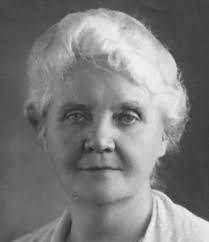
A young American girl, born and brought up in a missionary family in a small town in Tamil Nadu was expected to continue the family’s tradition of service to the neediest of the people. Ida Scudder, born in 1870, the only sister to seven boys, was exposed at an early age to the poverty and deprivation of the local population through her parents’ work.  But Ida was repelled by all this. She was young and pretty, and dreamt of enjoying life, and eventually making a comfortable marriage. Her parents, both long-time missionaries in South India returned to the United States for a few years with their large family when Ida was eight years old. The comfortable life in America was a huge change from the challenging missionary work in India. After a few years of school, Ida moved to the Northfield Seminary for Young Women in Massachusetts while her parents returned to Tamil Nadu.

When Ida was 20 years old she came to visit her ailing mother in Tamil Nadu. While she was there, one night three different men came to seek medical help for their wives who were about to deliver, and were in distress. They appealed to Ida to attend to them. Ida had no medical training; her father was the doctor in the family. But the conservative community would not let their women be treated by a male. The next morning Ida heard that all the three young women and their babies had died in the night due to lack of medical attention. This was a life-changing experience for Ida. She found her calling.

But in order to be in a position to really help women medically, Ida herself had first to undergo medical training. She returned to the United States and enrolled in the Philadelphia Women’s Medical College, and studied further at Cornell Medical College where she was among the few female students. After 10 years of rigorous study and training she returned to India where she hoped to work alongside her father. Sadly, her father died not long after her return.

But Ida was here to stay. She determined to carry on his work, now focussing on women’s health. Her vision was that women should have the same access to quality and compassionate healthcare that men did, regardless of religion and ability to pay for it.

She began her practice from her family home in Vellore, 135 km west of Madras, by opening a small clinic for women. Ida was initially unsure how her presence and engagement would be received by the local community; but patients trusted her, and the numbers grew greatly.

A donation from an American who wanted memorialize his late wife, led to the building of the 40-bed Mary Taber Schell Memorial Hospital for women in 1902. Ida also started organizing roadside medical camps in villages around Vellore, travelling across difficult terrain to treat people and give health education.

Given the huge need and demand for medical care for women, Ida realized that as a single person there was only so much that she could achieve. It was critical to train and educate more people in this field. In 1903 she started to train compounders, and in 1909 nurses. Her vision was to set up a world class medical college. Many scoffed at such an ambition, but Ida was tenacious and managed to raise funds to support her cause.

The Union Mission Medical School for Women was set up in Vellore in 1918. Sceptics felt that there would be no takers. But the very first year there were 150 applications, and 18 women were selected for the first batch who went on to secure a Medical Practitioner Diploma.

Dr Ida Scudder’s words to the first batch of graduating students to pass out, reflect her professional dedication, her tenacity, as well as her missionary spirit: “You will not only be curing diseases, but will also be battling with epidemics, plagues and pestilences and preventing them. Face trials with a smile, with head erect and a calm exterior. If you are fighting for the right and for a true principle, be calm and sure and keep on until you win.​”

In 1938 the British Government announced that it would only recognize an MMBS degree, and not a diploma. This necessitated that Ida’s medical school, be upgraded to a medical college. Thus was born the Christian Medical College of Vellore. The original women’s college also became co-educational in 1945. Ida was completely engaged in every aspect of the institution—teaching, medical practice, as well as administrative responsibilities including fund raising.

Even after Independence, Christian Medical College continued to draw dedicated doctors from across the country and abroad. They came not for money or glory, but inspired by the founder Ida Scudder and her single-minded dedication to the cause of service to the sick.

Over a century after Dr Ida Scudder sowed the seeds that gave form to her vision, her legacy has blossomed into a spreading banyan tree. The tiny clinic has grown into CMC Vellore—one of India’s top-ranked educational, healthcare and research institutes.

The 40-bedded hospital has grown into a 3000-bedded multi-specialty health care system spread over six campuses. CMC cares for over twenty lakh patients, and trains one thousand doctors, nurses and other medical professionals each year. People from all walks of life and all parts of the country and beyond come here for the ethical, compassionate, and quality care that it is reputed for. Ida Scudder’s vision and work have outlived her.

This month, we have been celebrating women who have broken barriers, and led the way in many different ways, in widely diverse fields. We have shared stories of women who have truly “made a difference.” Who better epitomizes this than Dr Ida Scudder! 

–Mamata

The Matilda Effect: When Women-Scientists are Written Out

As appropriate to the month when we mark International Women’s Day, our pieces have revolved around women, their achievements and barriers to their growth. This week, we look at an uncomfortable historical pattern: how many of the contributions made by women have been ignored, minimized, or credited to men. This phenomenon has a name — the Matilda Effect.

The term was coined in 1993 by historian of science Margaret W. Rossiter, who used it to describe the systematic denial of recognition to women-scientists whose work was often attributed to male colleagues. Rossiter named it after the 19th-century American activist Matilda Joslyn Gage, who had earlier observed how women’s intellectual achievements were routinely erased from public record.

In simple terms, the Matilda Effect refers to the tendency for women’s scientific or scholarly contributions to be overlooked while men receive the credit.

Why the Matilda Effect Matters

Recognition is not just about credit; it shapes opportunity.

Academic promotions, research funding, leadership roles, and history are all tied to who gets acknowledged. When women’s contributions are under-recognized, it creates a cycle in which fewer women are visible as role models for the next generation.

Young girls interested in science, technology, engineering, and mathematics often search for people who look like them in positions of intellectual authority. When those figures are missing from textbooks and public discourse, aspirations can quietly narrow.

The Matilda Effect therefore operates not only as a historical injustice but also as a structural barrier to gender equity in knowledge systems.

History’s Striking Examples

Consider Rosalind Franklin’s whose X-ray crystallography images were critical to understanding the structure of DNA and enabled the breakthrough model proposed by James Watson and Francis Crick. Yet when the Nobel Prize was awarded in 1962, Franklin — who had already passed away — received little recognition for her role.

Another well-known case is of Lise Meitner, the Austrian physicist who played a key role in explaining nuclear fission. The Nobel Prize for the discovery went solely to her collaborator Otto Hahn.

India’s own intellectual history reflects similar patterns.

Take Janaki Ammal, the pioneering botanist and cytogeneticist whose work significantly advanced plant breeding and biodiversity studies in India. Despite her groundbreaking research, she remained far less publicly known than many of her male contemporaries.

Or Anna Mani, the pioneering physicist and meteorologist whose work laid the foundation for modern meteorological instrumentation in India. She played a crucial role in standardizing weather measurement systems and advancing research in solar radiation and wind energy, contributing significantly to India’s renewable energy potential. Despite the far-reaching impact of her work, she remained relatively under-recognized outside scientific and policy circles.

(MM blogs on these two amazing ladies are linked below)

Similarly, Asima Chatterjee, one of India’s foremost organic chemists, made pioneering contributions to the chemistry of natural products and anti-malarial drugs. Although widely respected within scientific circles, her name rarely appears in popular narratives of Indian science.

Signs of Change

Things are hopefully changing. An example is Tessy Thomas, often called India’s “Missile Woman.” As a senior scientist at the Defence Research and Development Organisation, she played a key role in the development of the long-range ballistic missile Agni‑V. Her journey from a small town in Kerala to leading strategic defence projects has made her an inspiration for many young women considering careers in engineering and defence research.

Another widely admired figure is Gagandeep Kang, a leading medical scientist known for her work on infectious diseases and vaccines. As the first Indian woman elected Fellow of the Royal Society in the field of biomedical science, she has become a powerful role model for girls interested in medical research and public health.

In the world of space science, Ritu Karidhal and Muthayya Vanitha gained national recognition for their leadership roles in India’s lunar mission Chandrayaan‑2 at the Indian Space Research Organisation. Their visibility during the mission helped reshape public perceptions about who leads complex scientific and technological projects.

Similarly, Nandini Harinath, another senior scientist at ISRO, became widely known after the success of the Mars Orbiter Mission, where she was part of the core navigation and mission design team.

Dr. Gagandeep Kang

What distinguishes these scientists is not only their technical expertise but also their public presence. Through lectures, interviews, and outreach programs, they actively encourage young girls to consider careers in STEM — science, technology, engineering, and mathematics.

Recognition is the first step. Structural barriers — from access to research funding to representation in leadership — still need attention.

Here is to women-scientists having their day and say in scientific research!

–Meena

Picture: Indian Academy of Sciences

​See Magnoila Lady Janaki Ammal https://millennialmatriarch464992105.wordpress.com/wp-admin/post.php?post=2994&action=edit

and Weather Woman Anna Mani at https://millennialmatriarch464992105.wordpress.com/wp-admin/post.php?post=3235&action=edit

The March to Freedom: Women and the Salt Satyagraha

March is a significant month in the history of India’s freedom movement. On 12 March 1930 Mahatma Gandhi set out from the Sabarmati Ashram in Ahmedabad on a journey that was to cover many milestones, in more than one way.

On 2 March 1930 Gandhiji had written a letter to the Viceroy giving notice of his intention to launch a civil disobedience movement by symbolically breaking the Salt Law which in his opinion was “the most iniquitous of all from the poor man’s standpoint.” He was snubbed in return; which strengthened his resolve. He selected Dandi, a seaside village in Gujarat as the site for his symbolic gesture, and planned to walk the distance of 241 miles from his Sabarmati Ashram in Ahmedabad, along with a select band of co-workers. The date for setting off on the march was fixed for 12 March, and 6 April was the date set for the ‘breaking of the salt law” at Dandi. Gandhiji also vowed not to return to the ashram until the Salt Act was repealed, and Swaraj was won.

On March 12, 1930 at 6.30 a.m. Gandhiji, left the Ashram accompanied by 78 satyagrahis. These represented a cross-section of the people from all over the country: Andhra Pradesh, Bengal, Bihar, Bombay, Gujarat, Karnataka, Kerala, Kutchh, Maharashtra, Punjab, Rajputana, Sind, Tamil Nadu, U.P. Utkal, and even Nepal. The group included members of all communities. They fell in a wide age spectrum from 16-year-old Vitthal Liladhar Thakkar to 61-year-old Mohandas Karamchand Gandhi! The main criteria for the selection, that he personally made, was that the marchers were disciplined, and strictly adhered to the principles of ahimsa and satyagraha.

Despite so much diversity, there was one lacuna in the composition of the marchers.  The group did not include any women. One of the later historians attributed this to Gandhi’s concern that the British would taunt the marchers for being cowardly and “hiding behind the women” in the battlefield. But many women were eager to join the battle. Gandhiji was inundated with letters, telegrams and personal appeals from women to permit them to take active part in the struggle. Gandhiji had other plans for their engagement. In a piece published in Young India, titled To the Women of India Gandhiji wrote: “I feel that I have now found that work. …Let the women of India take up these two activities, specialize in them; they would contribute more than man to national freedom. They would have an access of power and self-confidence to which they have hitherto been strangers.”

Women in Bombay with sea water to make salt https://www.mkgandhi.org/articles/a-fistful-of-salt.php

At each of the 24 villages that Gandhiji and his yatris halted for the night enroute to Dandi, Gandhiji urged women to step out of their homes and make salt locally. He also encouraged women to participate and contribute to the struggle by taking up picketing of liquor shops and foreign cloth, and taking up spinning. Hundreds of women from the neighbouring villages came to see and hear Bapu. Many of these women were unlettered, and followed strictly subscribed traditional roles. But Salt struck a common chord in every one of them. It was the ingredient that linked the domestic with the national.  

Women from all walks of life took up Bapu’s clarion call with great energy and commitment. They related closely to the symbolic power of salt. As Kamaladevi Chattopdadhyay, who was on the forefront of the movement wrote: The salt satyagraha must stand out as not only unique but as an incredible form of revolution in human history. The very simplicity of this weapon was as appealing as intriguing. So far as women were concerned it was ideally tailor-made for them. As women naturally preside over culinary operations, salt is for them the most intimate and indispensable ingredient”.

Kamlaladevi organized volunteers for a variety of programmes including prabhat pheris (dawn processions), gathering salt and brine on the beaches of Bombay, and moving across the city distributing small packages of illicitly made salt. Women in the hundreds came out onto the streets to take part in these activities. Once in the fray, women were not to be daunted nor afraid of police batons.

In the following months the movement spread across the country, as more and more women poured out of their homes to join the activities. Women started organizing prabhat pheris on the streets of Bombay and Ahmedabad, where they sang songs about the bounty of the motherland. They helped put together vanar senas, or monkey brigades, consisting of children who supported the activists in offering resistance to the British. As their presence grew, and activities expanded the police became less restrained. The women faced brutal lathi charges, and a record number ended up in prison for the first time in the history of the subcontinent.

Chroniclers of that period have noted that while the original Dandi March began with a troop of males, the subsequent events inspired an unprecedented movement of women from every walk of life to move out of the private spaces of their homes, and traditionally designated roles, and enter public spaces to join a national movement.

Jawaharlal Nehru wrote in The Discovery of India, “Here were these women, women of the upper or middle classes leading sheltered lives in their homes, peasant women, working-class women, rich women, poor women, pouring out in their tens of thousands in defiance of government order and police lathi.”

The Dandi March was a turning point not only in the history of India’s freedom  movement, but also in the participation of Indian women in a political cause. It was a catalyst for women to claim public spaces in large numbers, united by a common cause.

March 8 is celebrated as International Women’s Day. In the United States the month of March is marked as Women’s History Month to honour women’s contributions in  American history. In India too we must celebrate the month of March as significant, the month in which, several historic events brought the women of India into the public space, and a movement that saw the emergence of women as warriors in a non-violent war.

–Mamata

In Pursuit of Criminals: A Women’s Day Special

Not chocolates and roses. Here is a Women’s Day post that is about gore and crime.

Though not often associated with forensic science, women down the ages and across the world have played a huge role in defining it. We celebrate a few of them.

The Dollhouse Decorator

At a time when women were expected to add beautiful touches to drawing rooms, Frances Glessner Lee was building miniature crime scenes.

Often called the ‘Mother of Forensic Science’, she started recreating dollhouse-scale reconstructions of unexplained deaths in exquisite detail. This stemmed from her inherent interest in solving crimes, and inputs from a close friend who was a medical examiner, who believed that investigators often disturbed crime scenes, missed small but critical evidence and jumped to conclusions too quickly.

These “Nutshell Studies” became training tools for investigators at Harvard University. Every curtain hem, every blood spatter, every overturned chair was re-created down to the smallest detail. Trainees had to study the model for a fixed amount of time, take notes, propose the cause and manner of death, and defend their reasoning. Thousands of police personnel were trained using these tools which contributed greatly to the professionalization of forensic science

Born in 1878 to a wealthy family, she was denied a formal education in medicine simply because she was a woman. Later in life, after inheriting a substantial fortune, she used her resources to support the emerging field of forensic science at Harvard University.

The Woman in the Mass Graves

Fast forward to the 1990s.

In post-genocide landscapes in Rwanda and the Balkans, a young forensic anthropologist named Clea Koff was working with teams assisting the International Criminal Tribunal for Rwanda and the International Criminal Tribunal for the former Yugoslavia. 

She is best known for her work investigating mass graves and gathering forensic evidence of genocide and crimes against humanity for United Nations tribunals in the 1990s and early 2000s. In Rwandashe worked in exhuming mass graves of victims from the 1994 genocide, documenting and recovering remains used as evidence in genocide prosecutions; in Bosnia, Croatia, Serbia, and Kosovoshe participated in multiple missions documenting war crimes and crimes against humanity.

Her efforts in unearthing skeletal remains, establishing identity, and collecting evidence to support criminal prosecutions helped in proving many crimes against humanity.

She is also known for her widely read memoir The Bone Woman.

The Woman Who Said, “Check Again.”

Then there is contemporary Britain.

Angela Gallop, born 1950, joined the Forensic Science Service in 1974 as a senior biologist — one of the few women in the laboratory at the time. She visited her first crime scene in 1978, investigating the murder of Helen Rytka by the Yorkshire Ripper.

She contributed decisively to many cases: in the case of Roberto Calvi, she could prove murder rather than suicide; her meticulous re-examination of microscopic blood evidence helped to identify the real criminal in the Lynette White murder; she found evidence to tie the murderer to the crimes in the Pembrokeshire Coastal Path Murders. Her work helped to re-open several cases like the Rachel Nickell murder

She was also involved in the review of the death of Diana, Princess of Wales, finding no scientific support for conspiracy theories.

After her contributions to the government, she founded Forensic Alliance, an independent consultancy known for revisiting controversial cases.

She was one of the first people to warn about confirmation bias–the human tendency to decide first and prove later. Her stance was always that evidence must lead.

Thanks to her, criminals were brought to book, and maybe even more importantly, innocents were released.

And Closer Home…

Dr. Rukmani Krishnamurthy is widely recognised as India’s first woman forensic scientist.

She entered forensic science in 1974 (the same year that Angela Gallop began her career!), joining the Directorate of Forensic Science Laboratories (DFSL) in Mumbai at a time when the field was overwhelmingly male-dominated and went on to become Director of DFSL Maharashtra and later took up many senior forensic leadership roles.

Dr. Rukami Krishnamurthy

She led major forensic examinations in high-profile cases such as the 1993 Mumbai blasts, the Matunga train fire, Joshi-Abhyankar serial killings, dowry deaths, and others.

Under her leadership, forensic labs adopted advanced methods including DNA profiling, cyber forensics, and lie detection techniques.  She helped transform Indian forensic practice from a peripheral support function to a central scientific pillar in criminal investigations.

Another star is Sherly Vasu, a trailblazing forensic pathologist and surgeon, known for her deep impact in medico-legal work in Kerala. She completed her MD in Forensic Medicine and became the first woman forensic surgeon in the state.  She headed departments of forensic medicine at prestigious medical colleges and later served as Principal of a medical college. She has not only trained generations of forensic scientists, but has conducted around 15,000 autopsies and contributed to evidence in many criminal cases.

So this Women’s Day, let us pay homage to these women who made their mark in a very offbeat career path—bringing criminals to book. It is women like them, who quietly established that expertise is all that counts, who have paved the way for all women in all careers.

Happy Women’s Day!

–Meena

Republic Day at Whangamōmona: When a Town (Sort Of) Seceded

A few weeks ago, India celebrated Republic Day. It was, as always, a solemn occasion. For us, Republic Day marks the day when we adopted our Constitution and became a Republic.

But not all Republic Days are solemn. Nor do they come every year.  Whangamōmona, a small settlement in rugged New Zealand’s North Island, celebrates Republic Day in January,  but only every two years.  It last celebtrated its Republic Day on Jan 18, 2025, marking 36 years of independence. Hundreds of visitors attended the event, which featured rural activities, a sheep race, presidential elections

Whangamōmona has a funny backstory.  It seceded from New Zealand. How and why did this come about?

In 1989, New Zealand restructured its local government boundaries. For decades, Whangamōmona had been part of the Taranaki region. But the reforms shifted it into the Manawatū-Whanganui region instead. On paper, this was administrative housekeeping. On the ground, it felt like cultural displacement.

The town identified economically and socially with Taranaki. Farming networks, community ties, supply routes were all there.  But suddenly, they were told they belonged somewhere else.

So on 1 November 1989, in response to what they saw as distant bureaucratic meddling, Whangamōmona declared itself an independent republic.

But this wasn’t angry secession. It was satire with a straight face.

The Republic of Whangamōmona established:

  • A president
  • A passport (yes, you can get it stamped)
  • A national day
  • And a constitution — loosely interpreted

The tone was tongue-in-cheek, but based very much on community pride. Every two years, on Republic Day (in January), thousands of visitors descend on this tiny town of fewer than 50 permanent residents. There are sheep races. Gumboot throwing. Debates. Parades. And, most importantly, the presidential election.

The candidates over the years have included:

  • A goat (Billy Gumboot)
  • A poodle
  • A human (briefly)
  • And even a tortoise

A race to choose the President

Billy Gumboot, the goat, was perhaps the most iconic president. He reportedly served with dignity until his untimely death in 1999. His successor? Tai the poodle.

Isolation as Identity

Whangamōmona isn’t easy to get to. It lies along the Forgotten World Highway — which is honestly one of the best road names ever conceived. The route winds through dramatic hills, misty valleys, and farmland that feels cinematic in its remoteness.

In the early 20th century, Whangamōmona was a frontier settlement, established during railway expansion. It once had a hotel, a school, a hall, and enough settlers to sustain real momentum.

Then the railway declined. Young people left. Farms consolidated. The population shrank.

Like many rural communities worldwide, it faced the existential question: how do you survive when the economic centre shifts away?

Whangamōmona’s answer was genius: if you cannot compete on scale, compete on story.

The “Republic” became a brand. Visitors stop at the Whangamōmona Hotel (the town’s social nucleus), get their passports stamped, and take photos with the republic signage.

Instead of being “a place left behind,” Whangamōmona became “that place bold enough to declare independence.”

Why This Tiny Republic Matters

In a world where declarations of independence are usually soaked in conflict, Whangamōmona offers something softer: protest through humour.

It reminds us that governance is, at some level, a social agreement — and that local identity matters deeply. The town’s mock-secession wasn’t a rejection of New Zealand. It was a wink at centralised decision-making.

There is no bitterness in it now. Only tradition.

Republic Day is less about rebellion and more about reunion. Former residents return. Visitors become temporary citizens. The town swells with life.

For one weekend, the population multiplies many times over. And the republic thrives.

Who gets to decide where we belong?

Sometimes the answer is: we do.

And maybe that’s why this story resonates so widely. It’s about scale — how small places can assert symbolic power. It’s about humour as strategy. It’s about community cohesion in the face of administrative indifference.

Whangamōmona could have quietly faded into obscurity. Instead, it elected a goat.

That choice tells you everything.

A funny story with profound lessons about identity and self-assertion.

–Meena

Pic: https://www.rnz.co.nz/news/

A Flag for the Republic

Every Republic Day, the tricolour appears with ritual predictability. It rises along Rajpath, flutters on homes, schools and government offices, slips into newspaper mastheads and WhatsApp greetings. We see it as a finished symbol, but the Indian flag, like the Republic it represents, took quite a while to take its final design.

The earliest Indian flags of the twentieth century were crowded and emotional. In 1906, a flag hoisted at Calcutta’s Parsee Bagan Square carried multiple colours, symbols, even words — less a flag than a manifesto. A year later, Bhikaji Cama unfurled another version in Stuttgart, turning cloth into quiet provocation. These were attempts to imagine India visually and politically, before it existed as a nation.

In 1917 came the Home Rule Flag designed by Annie Besant and Bal Gangadhar Tilak, including stars, stripes, the Union Jack, crescent moon and more. A design as complicated as the messaging.

By 1921, when Pingali Venkayya presented a tricolour to Mahatma Gandhi, the design had shifted towards restraint. After much discussion and a few changes, this basic design of three colour stripes and a wheel at the centre was adopted in 1931. Colours were chosen not just for beauty but for what they might stand for —values and ethical balance. The charkha at the centre had a strong message: spin, labour, self-reliance and progress. This was adopted as the flag of the Indian National Congress.

On 22 July 1947, the Constituent Assembly adopted the flag we know today. The charkha was replaced by the Ashoka Chakra — an ancient symbol pressed into modern service. Saffron, white and green were retained, standing for courage, peace and growth. There was no text, no ruler’s emblem, no date to anchor it to a single moment. It was a disciplined choice, and one that we are proud of.

When Design Meets Judgment

All flags are beloved by the people of the country. But there is also design aesthetics. What makes a flag good from this perspective? This question has spawned an entire subculture of passionate experts who evaluate flags with great seriousness. Their principles are deceptively simple: a flag should be easy to draw, limited in colour, free of text, and recognisable at a distance. A flag, they insist, must work when it is old, faded, flapping, or badly stitched. History may explain a design, but it does not excuse a cluttered one.

By these measures, many flags around the world falter. Coats of arms dissolve into visual noise. Mottos disappear into creases. Seals that look impressive on paper collapse on fabric. In the process, a curious truth emerges: symbolism ages better when it is spare.

The Curious Case of Flag Rankings

Over the last two decades, flags have been pulled into the modern compulsion to rank everything. Design schools, vexillological associations (i.e, association of people who study flags), online polls, children’s surveys, and pop culture lists have all attempted to crown the world’s most beautiful flags. The results vary, but patterns repeat.

Japan’s rising sun is endlessly praised for its calm authority. Switzerland’s square flag earns admiration for bold simplicity. Canada’s maple leaf is often held up as a model of contemporary national branding. Nepal’s double-pennant shape wins points simply for refusing to conform. These flags succeed not because they shout, but because they know exactly what they are.

The rankings are hardly neutral. Familiarity influences taste. Politics sneaks in. Yet when designers, schoolchildren and casual observers repeatedly gravitate towards the same flags, it suggests certain features which resound across cultures.

And Where Does India Stand?

India rarely tops these lists, but it almost never sinks either. In most design-based rankings, the tricolour settles comfortably in the upper third of the world’s flags. It is respected rather than sensational.

Its strengths are structural. The layout is clean. The colours are distinctive without being aggressive. The symbolism is layered but not overloaded. Most importantly, there is no text — a decision that has quietly protected the flag from linguistic politics and historical expiry dates.

The Ashoka Chakra is both the flag’s greatest strength and its mildest complication. Conceptually, it is rich: law, motion, moral order. Visually, it is intricate. Purists point out that twenty-four spokes violate the famous rule that a child should be able to draw a flag from memory. But perhaps that tension is apt. A flag is not meant to be reduced to a doodle.

In comparative terms, India often ranks above older European flags burdened with heraldry and below ultra-minimalist icons like Japan or Bangladesh. As a post-colonial flag, however, it scores especially well — modern without being rootless, symbolic without being authoritarian.

The Constitution and the Display

For decades after Independence, ordinary citizens were not freely allowed to fly the national flag. Its use was governed by strict rules, reserved largely for government buildings and official occasions.

But in 2002, a Supreme Court judgment affirmed that flying the national flag was a fundamental right under freedom of expression, the Flag Code of India was liberalised. The tricolour could finally enter homes, balconies and private spaces. It was a quiet but significant shift: the flag moved from being a state-controlled emblem to a shared civic symbol.

Republic Day is about the Constitution, but it is also about the quiet endurance of symbols. The Indian flag has survived regime changes, political churn, commercial misuse and overexposure. Today, it flies proudly over tanks and textbooks, protests and parades.

Happy Republic Day!

–Meena

Seed Mother Rahibai Popere

The United Nations has declared 2026 as the International Year of the Woman Farmer (IYWF). This year aims to put the global spotlight on the central roles of women farmers in food security, nutrition, and economic resilience. We begin IYWF by starting with the local, with a salute to a woman farmer who epitomizes these roles through multipronged efforts. 

Rahibai grew up in a poor tribal family in the Ahmednagar district of Maharashtra. Her family had a meagre bit of land which they farmed during the monsoon season, but they had no means of irrigation during the dry months. So the family had to make ends meet by working in a sugar factory for the rest of the year. Poverty and the seasonal migration work prevented the young Rahibai from attending school. She was barely ten years old when she started helping her family with agricultural work. While she worked on the three acres that the family could manage to cultivate, the young Rahibai developed a deep connection to the land. Although only part of the rain-fed land was productive, Rahibai began by creating a farm pond on the remaining part of the land, to harvest the rainfall, and started to grow vegetables which brought the family some additional income. Not long after, Rahibai got married to Soma Popere, another farmer. In her married home, Rahibai continued to experiment, and to explore which crops could thrive best in arid conditions with limited water. As she grew older Rahibai also began to understand more about traditional culture and practice in crop cultivation, wild food resources, and comprehend the importance of agrobiodiversity. She discovered that tribal households traditionally had a backyard where grew multipurpose indigenous trees, shrubs and herbs, and seasonal vegetables. The produce from this supplemented the food and nutritional needs of the family through the year.

Rahibai experimented on her own small area of land, and arrived at her own methods through trial, error and practice. Her efforts led to her being able to productively use her entire small plot of land. The improved four-step paddy-cultivation practice which included use of paddy straw ash in the nursery, increased the yield by 30 per cent. She introduced innovative practices such as cultivation of beans on farm bund. She also learnt to rear poultry in her backyard.

Rahibai’s personal experience led to her strong conviction that it was the native crop varieties that could better resist drought and disease; moreover, they also helped retain soil fertility thereby eliminating the need for chemical fertilizers and excessive water. The native crops also had higher nutritive value. Thus she realized that the conservation of indigenous seeds was paramount.

This was a time when large seed companies were patenting hybrid seeds and aggressively promoting these. These seeds could not be saved for the next sowing season. Farmers were becoming overly dependent on these companies for seeds, and becoming increasingly caught in a debt trap to pay for these seeds. Rahibai also observed that villagers were frequently falling sick after eating food prepared from hybrid crops. She believed that this could be avoided by the use of indigenous seeds.   

Rahibai commenced her one-woman crusade to collect and save indigenous seeds. She started collecting local seeds with the help of other women farmers from Akole taluk in Ahmednagar district of Maharashtra. As the momentum grew, she formed a self-help group (SHG) named Kalsubai Parisar Biyanee Samvardhan Samiti to conserve native seeds. Rahibai started with a nursery of 4,000 seedlings of blackberry and distributed them among members of the self-help group. She then established a nursery of 5,000 seedlings comprising nine types of hyacinth bean, rice, vegetables, beans landraces and shared them with 210 farmers from seven villages across the Ahmednagar district.

Rahibai’s efforts of almost two decades have borne fruit. She has managed to conserve a variety of native crops including 15 varieties of rice, nine varieties of pigeon pea and 60 varieties of vegetables, besides many oilseeds. All this and more, not in a fancy nursery or greenhouse, but a patch of land near her house in the village of Kombhalne. She also encourages tribal families to establish kitchen gardens which can help support their nutritional security.

She has established a seedbank so that other farmers can also avail of these seeds which they do not have to pay for. Rather they are given seeds with the condition that they return twice the quantity of seeds that they borrow. Even seeds which are sold are sold at a lower price than they cost to develop, thus helping farmers save a substantial amount each year. The seed bank distributes 122 varieties of traditional or locally adapted species of plants and crops.

With successful implementation of all that she learnt, Rahibai has now become a crusader. She travels across Maharashtra and beyond to conserve indigenous seeds. She also creates awareness about the importance of indigenous seed conversation and talks to people about concepts such as organic farming, agro-biodiversity and wild food resources. She trains farmers and students on seed selection, techniques to improve soil fertility and pest management among others. She supplies farmers with seedlings of native crops, encouraging them to switch to native varieties. Indigenous seed melas or fairs are organised in different parts of Ahmednagar district to raise awareness about the diversity of seeds and the need to conserve them.

Rahibai has also realized the power of collective efforts. Her first initiative was the formation of the Kalsubai Parisar Biyanee Savardhan Samiti in Akole in Ahmednagar district. The Samiti works towards the conservation and propagation of traditional varieties of crops. Rahibai also heads another Self Help Group, Chemdeobaba Mahila Bachat Gat, in Kombhalne, through which many social initiatives like health camps, supply of solar lamps are organized, besides the agricultural initiatives.

While Rahibai’s efforts are making a visible impact at the district and state level, her efforts have also attracted attention outside. She was among the three Indians on the ‘100 Women 2018’, a list of inspiring and influential women from around the world released by the British Broadcasting Corporation. Her efforts were recognized nationally when she was conferred with the Padma Shri award in 2020.

Seed Mother or Beej Mata as Rahibai is popularly called, continues her mission, bringing a new sense of pride and self-reliance to small local farmers across Maharashtra, and beyond. 

Declaring 2026 as the International Year of the Woman Farmer is not only about celebrating these contributions but also about driving change. Rahibai is a living example of such contributions and about driving change.

–Mamata

Madhav Gadgil: The People’s Scientist Who Helped Win India’s First Environmental Struggle

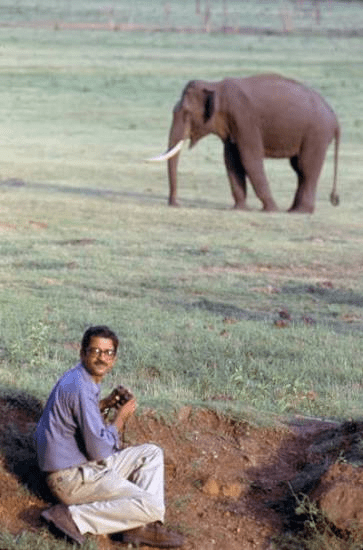
Madhav Dhananjaya Gadgil (24 May 1942 – 7 January 2026) was a towering figure in Indian ecology — a scientist, policy-maker, mentor, and grassroots environmentalist whose work reshaped how India understands the links between nature, people, and development. Often called a “people’s scientist,” Gadgil blended rigorous ecological science with deep respect for local communities, popular movements, and democratic participation in environmental conservation.

Silent Valley: India’s First Environmental Movement

Gadgil played a key role in one of the defining moments in India’s environmental history–the Save the Silent Valley Movement in Kerala during the late 1970s and early ‘80s. The state government had proposed a hydroelectric dam project that would have submerged a pristine stretch of rainforest in the Western Ghats, home to unique biodiversity. Local communities, scientists, poets, students, and activists mobilized against the project, marking one of India’s earliest and most influential environmental movements.

While many voices led by the Kerala Sastra Sahitya Parishad (KSSP) contributed to the struggle, Madhav Gadgil’s role was pivotal. His ecological research, field surveys, and clear articulation of Silent Valley’s extraordinary biodiversity helped transform localized protest into a nationwide call to protect forests and biodiversity.

He was a member of the high-level committee set up by the Government of India to take a call on this issue. The multidisciplinary committee was chaired by Prof. M. G. K. Menon, former Secretary to the Government of India. Gadgil served as a member of this expert committee, contributing ecological assessments that highlighted the valley’s irreplaceable biodiversity and the risks of irreversible ecological loss. His scientific input helped strengthen the case against the dam and gave credibility to what was, at the time, an unprecedented challenge to state-led development.

Equally significant was Gadgil’s engagement beyond formal committees. He worked closely with activists and civil society groups, translating complex ecological arguments into accessible language. Silent Valley demonstrated that science could empower people, and that environmental decisions could be contested democratically. The eventual shelving of the project and the declaration of Silent Valley as a National Park marked a watershed — proving that ecological reasoning and public mobilisation could alter national policy.

The success at Silent Valley is widely considered India’s first major environmental movement, catalyzing grassroots activism and inspiring future campaigns from the Narmada Bachao Andolan to forest rights movements across the country. Gadgil’s engagement with activists and communities during this period helped to define the approach for the environmental movement in India — one that bridged science, social justice, and grassroots mobilization. 

Early Life and Academic Foundations

Born in Pune to economist Dhananjay Ramchandra Gadgil, Madhav Gadgil grew up with a curiosity for nature that would shape his life’s work. After earning his Ph.D. from Harvard University, he returned to India and joined the Indian Institute of Science (IISc), Bengaluru, where he founded the Centre for Ecological Sciences in 1983 — one of the country’s first research institutions dedicated to ecology, conservation biology, and human ecology. He helped usher in quantitative and rigorous ecological research in India, while challenging scientists to see humans as part of ecosystems, not apart from them. He has over 250 scientific papers and several influential books.

Championing Community-Centric Conservation

Long before “community participation” became a buzzword in environmental policy, Gadgil argued that local people must be placed at the center of conservation efforts. He believed that traditional and indigenous ecological knowledge — from sacred groves to tribal land management — holds the keys to sustainable stewardship of ecosystems.

Western Ghats and the Gadgil Commission

Gadgil’s commitment to community-centric conservation reached a new peak in 2010 when the Government of India appointed him chair of the Western Ghats Ecology Expert Panel (WGEEP) — later known as the Gadgil Commission. The panel’s 2011 report recommended that nearly 64 % of the Western Ghats — one of the planet’s most significant biodiversity hotspots — be designated as ecologically sensitive areas (ESAs), with varying restrictions on development activities. It emphasised not only environmental safeguards but also community empowerment and sustainable livelihoods. 

Although the report was met with political resistance in several states and its recommendations were later diluted, its bold scientific and ethical vision sparked intense public debate and ongoing legal and civic activism. Subsequent environmental crises, including major floods in Kerala and Karnataka, vindicated many of the panel’s warnings about unchecked development and ecosystem fragility. 

Policy Influence and National Legacies

Gadgil helped shape India’s environmental legal framework. He was one of the key architects of the Biological Diversity Act (2002), which created mechanisms like People’s Biodiversity Registers to document and safeguard local biological knowledge. He also contributed to implementation of the Forest Rights Act, strengthening community claims over traditional lands. His advisory roles included membership on the Scientific Advisory Council to the Prime Minister and various national conservation bodies. 

Honours and Recognition

Gadgil’s work garnered some of the highest honours in science and conservation, including the Padma Shri (1981), Padma Bhushan (2006), the Tyler Prize for Environmental Achievement, the Volvo Environment Prize, and the UNEP’s Champion of the Earth award in 2024 — the United Nations’ top environmental accolade. 

In an age where climate, biodiversity loss, and development pressures intensify, Gadgil’s ethos — that science must serve society and empower its most vulnerable — continues to inspire generations of environmentalists, scholars, policymakers, and citizens alike. 

We are blessed to have had such a dedicated eco-warrior, teacher and scientist.

RIP Madhav Gadgil

–Meena