Seed Mother Rahibai Popere

The United Nations has declared 2026 as the International Year of the Woman Farmer (IYWF). This year aims to put the global spotlight on the central roles of women farmers in food security, nutrition, and economic resilience. We begin IYWF by starting with the local, with a salute to a woman farmer who epitomizes these roles through multipronged efforts. 

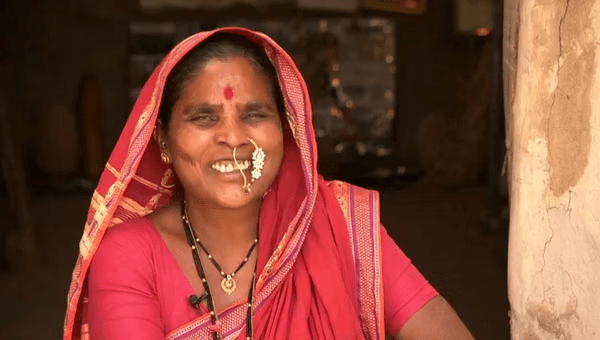
Rahibai grew up in a poor tribal family in the Ahmednagar district of Maharashtra. Her family had a meagre bit of land which they farmed during the monsoon season, but they had no means of irrigation during the dry months. So the family had to make ends meet by working in a sugar factory for the rest of the year. Poverty and the seasonal migration work prevented the young Rahibai from attending school. She was barely ten years old when she started helping her family with agricultural work. While she worked on the three acres that the family could manage to cultivate, the young Rahibai developed a deep connection to the land. Although only part of the rain-fed land was productive, Rahibai began by creating a farm pond on the remaining part of the land, to harvest the rainfall, and started to grow vegetables which brought the family some additional income. Not long after, Rahibai got married to Soma Popere, another farmer. In her married home, Rahibai continued to experiment, and to explore which crops could thrive best in arid conditions with limited water. As she grew older Rahibai also began to understand more about traditional culture and practice in crop cultivation, wild food resources, and comprehend the importance of agrobiodiversity. She discovered that tribal households traditionally had a backyard where grew multipurpose indigenous trees, shrubs and herbs, and seasonal vegetables. The produce from this supplemented the food and nutritional needs of the family through the year.

Rahibai experimented on her own small area of land, and arrived at her own methods through trial, error and practice. Her efforts led to her being able to productively use her entire small plot of land. The improved four-step paddy-cultivation practice which included use of paddy straw ash in the nursery, increased the yield by 30 per cent. She introduced innovative practices such as cultivation of beans on farm bund. She also learnt to rear poultry in her backyard.

Rahibai’s personal experience led to her strong conviction that it was the native crop varieties that could better resist drought and disease; moreover, they also helped retain soil fertility thereby eliminating the need for chemical fertilizers and excessive water. The native crops also had higher nutritive value. Thus she realized that the conservation of indigenous seeds was paramount.

This was a time when large seed companies were patenting hybrid seeds and aggressively promoting these. These seeds could not be saved for the next sowing season. Farmers were becoming overly dependent on these companies for seeds, and becoming increasingly caught in a debt trap to pay for these seeds. Rahibai also observed that villagers were frequently falling sick after eating food prepared from hybrid crops. She believed that this could be avoided by the use of indigenous seeds.   

Rahibai commenced her one-woman crusade to collect and save indigenous seeds. She started collecting local seeds with the help of other women farmers from Akole taluk in Ahmednagar district of Maharashtra. As the momentum grew, she formed a self-help group (SHG) named Kalsubai Parisar Biyanee Samvardhan Samiti to conserve native seeds. Rahibai started with a nursery of 4,000 seedlings of blackberry and distributed them among members of the self-help group. She then established a nursery of 5,000 seedlings comprising nine types of hyacinth bean, rice, vegetables, beans landraces and shared them with 210 farmers from seven villages across the Ahmednagar district.

Rahibai’s efforts of almost two decades have borne fruit. She has managed to conserve a variety of native crops including 15 varieties of rice, nine varieties of pigeon pea and 60 varieties of vegetables, besides many oilseeds. All this and more, not in a fancy nursery or greenhouse, but a patch of land near her house in the village of Kombhalne. She also encourages tribal families to establish kitchen gardens which can help support their nutritional security.

She has established a seedbank so that other farmers can also avail of these seeds which they do not have to pay for. Rather they are given seeds with the condition that they return twice the quantity of seeds that they borrow. Even seeds which are sold are sold at a lower price than they cost to develop, thus helping farmers save a substantial amount each year. The seed bank distributes 122 varieties of traditional or locally adapted species of plants and crops.

With successful implementation of all that she learnt, Rahibai has now become a crusader. She travels across Maharashtra and beyond to conserve indigenous seeds. She also creates awareness about the importance of indigenous seed conversation and talks to people about concepts such as organic farming, agro-biodiversity and wild food resources. She trains farmers and students on seed selection, techniques to improve soil fertility and pest management among others. She supplies farmers with seedlings of native crops, encouraging them to switch to native varieties. Indigenous seed melas or fairs are organised in different parts of Ahmednagar district to raise awareness about the diversity of seeds and the need to conserve them.

Rahibai has also realized the power of collective efforts. Her first initiative was the formation of the Kalsubai Parisar Biyanee Savardhan Samiti in Akole in Ahmednagar district. The Samiti works towards the conservation and propagation of traditional varieties of crops. Rahibai also heads another Self Help Group, Chemdeobaba Mahila Bachat Gat, in Kombhalne, through which many social initiatives like health camps, supply of solar lamps are organized, besides the agricultural initiatives.

While Rahibai’s efforts are making a visible impact at the district and state level, her efforts have also attracted attention outside. She was among the three Indians on the ‘100 Women 2018’, a list of inspiring and influential women from around the world released by the British Broadcasting Corporation. Her efforts were recognized nationally when she was conferred with the Padma Shri award in 2020.

Seed Mother or Beej Mata as Rahibai is popularly called, continues her mission, bringing a new sense of pride and self-reliance to small local farmers across Maharashtra, and beyond. 

Declaring 2026 as the International Year of the Woman Farmer is not only about celebrating these contributions but also about driving change. Rahibai is a living example of such contributions and about driving change.

–Mamata

Madhav Gadgil: The People’s Scientist Who Helped Win India’s First Environmental Struggle

Madhav Dhananjaya Gadgil (24 May 1942 – 7 January 2026) was a towering figure in Indian ecology — a scientist, policy-maker, mentor, and grassroots environmentalist whose work reshaped how India understands the links between nature, people, and development. Often called a “people’s scientist,” Gadgil blended rigorous ecological science with deep respect for local communities, popular movements, and democratic participation in environmental conservation.

Silent Valley: India’s First Environmental Movement

Gadgil played a key role in one of the defining moments in India’s environmental history–the Save the Silent Valley Movement in Kerala during the late 1970s and early ‘80s. The state government had proposed a hydroelectric dam project that would have submerged a pristine stretch of rainforest in the Western Ghats, home to unique biodiversity. Local communities, scientists, poets, students, and activists mobilized against the project, marking one of India’s earliest and most influential environmental movements.

While many voices led by the Kerala Sastra Sahitya Parishad (KSSP) contributed to the struggle, Madhav Gadgil’s role was pivotal. His ecological research, field surveys, and clear articulation of Silent Valley’s extraordinary biodiversity helped transform localized protest into a nationwide call to protect forests and biodiversity.

He was a member of the high-level committee set up by the Government of India to take a call on this issue. The multidisciplinary committee was chaired by Prof. M. G. K. Menon, former Secretary to the Government of India. Gadgil served as a member of this expert committee, contributing ecological assessments that highlighted the valley’s irreplaceable biodiversity and the risks of irreversible ecological loss. His scientific input helped strengthen the case against the dam and gave credibility to what was, at the time, an unprecedented challenge to state-led development.

Equally significant was Gadgil’s engagement beyond formal committees. He worked closely with activists and civil society groups, translating complex ecological arguments into accessible language. Silent Valley demonstrated that science could empower people, and that environmental decisions could be contested democratically. The eventual shelving of the project and the declaration of Silent Valley as a National Park marked a watershed — proving that ecological reasoning and public mobilisation could alter national policy.

The success at Silent Valley is widely considered India’s first major environmental movement, catalyzing grassroots activism and inspiring future campaigns from the Narmada Bachao Andolan to forest rights movements across the country. Gadgil’s engagement with activists and communities during this period helped to define the approach for the environmental movement in India — one that bridged science, social justice, and grassroots mobilization. 

Early Life and Academic Foundations

Born in Pune to economist Dhananjay Ramchandra Gadgil, Madhav Gadgil grew up with a curiosity for nature that would shape his life’s work. After earning his Ph.D. from Harvard University, he returned to India and joined the Indian Institute of Science (IISc), Bengaluru, where he founded the Centre for Ecological Sciences in 1983 — one of the country’s first research institutions dedicated to ecology, conservation biology, and human ecology. He helped usher in quantitative and rigorous ecological research in India, while challenging scientists to see humans as part of ecosystems, not apart from them. He has over 250 scientific papers and several influential books.

Championing Community-Centric Conservation

Long before “community participation” became a buzzword in environmental policy, Gadgil argued that local people must be placed at the center of conservation efforts. He believed that traditional and indigenous ecological knowledge — from sacred groves to tribal land management — holds the keys to sustainable stewardship of ecosystems.

Western Ghats and the Gadgil Commission

Gadgil’s commitment to community-centric conservation reached a new peak in 2010 when the Government of India appointed him chair of the Western Ghats Ecology Expert Panel (WGEEP) — later known as the Gadgil Commission. The panel’s 2011 report recommended that nearly 64 % of the Western Ghats — one of the planet’s most significant biodiversity hotspots — be designated as ecologically sensitive areas (ESAs), with varying restrictions on development activities. It emphasised not only environmental safeguards but also community empowerment and sustainable livelihoods. 

Although the report was met with political resistance in several states and its recommendations were later diluted, its bold scientific and ethical vision sparked intense public debate and ongoing legal and civic activism. Subsequent environmental crises, including major floods in Kerala and Karnataka, vindicated many of the panel’s warnings about unchecked development and ecosystem fragility. 

Policy Influence and National Legacies

Gadgil helped shape India’s environmental legal framework. He was one of the key architects of the Biological Diversity Act (2002), which created mechanisms like People’s Biodiversity Registers to document and safeguard local biological knowledge. He also contributed to implementation of the Forest Rights Act, strengthening community claims over traditional lands. His advisory roles included membership on the Scientific Advisory Council to the Prime Minister and various national conservation bodies. 

Honours and Recognition

Gadgil’s work garnered some of the highest honours in science and conservation, including the Padma Shri (1981), Padma Bhushan (2006), the Tyler Prize for Environmental Achievement, the Volvo Environment Prize, and the UNEP’s Champion of the Earth award in 2024 — the United Nations’ top environmental accolade. 

In an age where climate, biodiversity loss, and development pressures intensify, Gadgil’s ethos — that science must serve society and empower its most vulnerable — continues to inspire generations of environmentalists, scholars, policymakers, and citizens alike. 

We are blessed to have had such a dedicated eco-warrior, teacher and scientist.

RIP Madhav Gadgil

–Meena

Looking Out, Looking Within

We ushered out the last year with a resolve to be more giving. To give not only of our material wealth, but equally of ourselves, in whatever form and scale is best suited for each one of us. We resolved to strive towards a deeper purpose, defined by connection. As the New Year dawns, let us consider what this purpose and connection could really be. And for this let us look back at words of wisdom from the past.

Bertrand Russell reminds of our mortality but also that life is not lived by the length of years but by the depth of living.

Make your interests gradually wider and more impersonal, until bit by bit the walls of the ego recede, and your life becomes increasingly merged in the universal life. An individual human existence should be like a river — small at first, narrowly contained within its banks, and rushing passionately past rocks and over waterfalls. Gradually the river grows wider, the banks recede, the waters flow more quietly, and in the end, without any visible break, they become merged in the sea, and painlessly lose their individual being.

Today we live in an age of uncertainty on every front, and are constantly bracing for an imagined catastrophe. Two millennia before this ‘age of anxiety’, Roman Stoic philosopher Seneca counselled about ‘groundless fears’ about the future that keep us from living fully in the present.

What I advise you to do is, not to be unhappy before the crisis comes; since it may be that the dangers before which you paled as if they were threatening you, will never come upon you; they certainly have not yet come.

Accordingly, some things torment us more than they ought; some torment us before they ought; and some torment us when they ought not to torment us at all. We are in the habit of exaggerating, or imagining, or anticipating, sorrow.

And thus we wallow in our imagined sorrows, and impending gloom and doom scenarios. We become increasingly obsessive about ourselves and our interests, and our perceived threatened security. But Soren Kierkegaard, the existentialist philosopher reminded us a century and a half ago:

The unhappy person is one who has his ideal, the content of his life, the fullness of his consciousness, the essence of his being, in some manner outside of himself. The unhappy man is always absent from himself, never present to himself. But one can be absent, obviously, either in the past or in the future. This adequately circumscribes the entire territory of the unhappy consciousness. The unhappy one is absent… It is only the person who is present to himself that is happy.

So what is the formula for happiness? Something as simple as kindness, as Leo Tolstoy reminds us:

Nothing can make our life, or the lives of other people, more beautiful than perpetual kindness.

The kinder and the more thoughtful a person is, the more kindness he can find in other people.

Kindness enriches our life; with kindness mysterious things become clear, difficult things become easy, and dull things become cheerful.

You should respond with kindness toward evil done to you, and you will destroy in an evil person that pleasure which he derives from evil.

Kindness is for your soul as health is for your body: you do not notice it when you have it.

Kindness is a beautiful act of communication. Speech is another. In these times of instant, truncated communication, often expressed through insta images and emojis, are we in danger of reducing human communication to mere exchange of information? In our frenetic texting, are we forgetting that the heart and soul of a message is a relationship between the sender and the receiver? This comes alive through the power of the spoken word. 

Ursula K. Le Guin reminds us:

Speech connects us so immediately and vitally because it is a physical, bodily process, to begin with. Not a mental or spiritual one, wherever it may end… The voice creates a sphere around it, which includes all its hearers: an intimate sphere or area, limited in both space and time.

Sound is dynamic. Speech is dynamic — it is action. To act is to take power, to have power, to be powerful. Mutual communication between speakers and listeners is a powerful act. The power of each speaker is amplified, augmented, by the entrainment of the listeners. The strength of a community is amplified, augmented by its mutual entrainment in speech.

This is why utterance is magic. Words do have power. Names have power. Words are events, they do things, change things. They transform both speaker and hearer; they feed energy back and forth and amplify it. They feed understanding or emotion back and forth and amplify it.

This year, let us remind ourselves to converse with, and among each other, and not at each other.

And as we continue to seek the elusive “happiness” in the year ahead, may the wisdom of Bertrand Russell once more be our template:

Shift focus from self-absorption to cultivating interests beyond oneself; avoid excessive self-analysis; develop a healthy balance of effort and acceptance; engage in meaningful work; foster deep meaningful relationships; develop a sense of humour, and find contentment in spontaneous participation in life’s stream rather than battle the currents and eddies.  

May this year allow us all this and more, enriching our lives in more ways than one.

Happy New Year 2026!

–Mamata and Meena

A New Year, and the Quiet Power of Giving

The start of a new year is not only a fresh beginning for our personal goals, but also invites a pause to reflect on what really matters. In spite of the wars, the violence and the turmoil there are parts of the 2025 story which are happy, especially the story of how we in India give back.

The recent India Philanthropy Report 2025 — a collaborative effort between Bain & Company and Dasra — offered a thoughtful snapshot of giving across the country. It didn’t just measure how much was donated; it shed light on how giving is changing in character. According to the report, private philanthropy — gifts from individuals, families, and organizations — reached an estimated ₹1.31 lakh crore in FY 2024 and is poised to accelerate rapidly over the next several years.

The EdelGive Hurun India Philanthropy List 2025 also reminds us that India’s giving spirit is alive at the very top levels. Leading philanthropists collectively donated more than ₹10,000 crore last year, with figures rising dramatically over the past few years.

Families are reshaping India’s philanthropic landscape. Where giving might once have been an occasional gesture, it is increasingly becoming a way of life — woven into the rhythms of how families think about purpose and legacy. More than a third of philanthropic households now include intergenerational or next-gen givers whose influence is helping steer funds toward ecosystem building, climate action, and gender equity — areas that were once sidelined in favour of more traditional charitable causes.

This evolution of giving reveals something profound. That there has always been generosity is not to be debated But now generosity in India is becoming more intentional. It’s not just about supporting the familiar or the immediate. It’s about recognizing that the greatest impact often comes from building capacity — strengthening systems, forging partnerships, and investing not just in charity, but in change makers themselves.

Philanthropic journeys are no longer ad hoc, isolated one-off donations, but rather, they are long term commitments. Families — both established and newly affluent — are hiring dedicated staff to manage their giving portfolios, thinking in terms of grant-making and strategic partnerships, and using data and collaboration to guide decisions. It’s a shift from charity to investment. From transactions to transformation.

The sheer breadth of causes gaining traction — education, healthcare, climate resilience, gender equity — reflects a maturing sense of social responsibility.

But I suspect that giving in India is truly underestimated. The true pulse of generosity extends far beyond headline gifts. It lives in the young alumni who pledge to fund scholarships that unlock opportunity. It lives in the professionals who commit a portion of their income to social causes they care about. It lives in the quiet choices families make to support education of their staff, to step in during health emergencies, to support NGOs.

Not just money. I am inspired by an 80 year old who volunteers at government hospitals to help less empowered patients to navigate the system and his 75 year old wife who gives free tuitions; a post graduate student who takes government school students on nature trails over the weekends; a retired professor who motivates college students to undertake plantation drives.

Each one of us is doing it. But it does not get reflected in the statistics, because it often flows through informal channels. If we could count all this, I think the figures would skyrocket far beyond the official ones.

As we step into 2026, perhaps the most hopeful thing isn’t just that giving is growing in size. It’s that we are recognizing that giving in its many forms, isn’t just a response to crisis; it’s a part of how we build the future we want to see.

So if your New Year asks you to think about what you can do, consider what you can givee, not just in money, but in time, attention, skills and compassion. Everyone of us can make a greater difference to the possibility of a better tomorrow — for all of us.

Here’s to a year of deeper giving, rooted in purpose, and defined by connection.

–Meena & Mamata

Birdwoman Jamal Ara

12 November marks the birthday of Salim Ali the Birdman of India. Much has been written and published by, and about, Salim Ali. However very little is known about a young woman who was recognized as the first Bird Woman of India by Salim Ali himself. This was Jamal Ara, a path breaker in more ways than one.

Jamal Ara was born in 1923 in Barh, Bihar, in a conservative Muslim family. She could study only until class ten before she was married off at a young age, much against her wishes. She moved to Calcutta with her husband where a daughter, Madhuca, was born. Sadly her marriage broke down, leaving her in dire straits. Fortunately a cousin who was in the Forest Service in Bihar, came to her aid and Jamal and her daughter moved to Ranchi. As a forest officer, her cousin was posted to different forest divisions of Bihar, and Jamal often accompanied him on his trips. This sparked in her a great love for wildlife, and Jamal would spend hours observing the flora and fauna in her surroundings. The English wife of a senior forest officer encouraged her to keep notes of her observations, and helped her to hone her writing skills. As her proficiency grew, they also encouraged her to turn her notes into articles and send them for publication.

Jamal Ara spent many years doing extensive field work in what is now Jharkhand, and her study of birds in the Chota Nagpur plateau was comprehensive and detailed. She meticulously documented her observations, and wrote prolifically from 1949 to 1988.  She contributed over 60 papers and articles to the journals of the Bombay Natural History Society and Bengal Natural History Society. She could communicate equally well with a lay audience. She wrote for The Newsletter for Birdwatchers, which was popular with amateur as well as seasoned birdwatchers, and also a book for children, Watching Birds which was published by National Book Trust, and translated into many Indian languages. I remember this book as being one of my own early introductions to nature study.

Jamal Ara was a multi-faceted writer. She wrote fiction, translated stories, and worked as a journalist for a short time. She also did programmes for All India Radio. Jamal Ara was also much more than a birdwatcher. She saw birds as an integral part of a healthy ecosystem, and advocated for a balanced conservation approach, something that was not common in an age when shikar was also a popular pastime.

After such an intense involvement in ornithology, and a prolific contribution to the field, in 1988, Jamal Ara suddenly vanished from the Indian ornithology scene. Her contributions stopped, and she herself disappeared. It is believed that a series of personal losses and setbacks affected her badly. She stopped writing, and after a few years also burnt her notes and photographs. She died in 1995.

Gradually Jamal Ara’s name and contributions sunk into oblivion. She would have been lost to the history of Indian conservation if not for a young researcher Raza Kazmi, who stumbled upon a story by Madhuca Singh, a celebrated basketball coach of Ranchi who mentioned Jamal Ara, her mother, who was a great bird lover. Raza Kazmi was intrigued by this mysterious bird lover, and embarked on a search for this woman and her work. After chasing numerous leads, he finally connected with Madhuca who shared her mother’s story.

It is thanks to Raza Kazmi’s single-minded pursuit, and the publication of Jamal Ara’s story in the book Women in the Wild edited by Anita Mani published in 2023, that we can join in celebrating this enigmatic, but brilliant bird woman of India.

It is also heartening that whatever had remained of Jamal Ara’s original work has been collected and digitized as part of the Archives at NCBS, a public centre for the history of science in contemporary India. The Jamal Ara Collection has archival papers relating to her life and work from 1940s to 1980s, including correspondence, unpublished manuscripts, field diaries and notebooks, and drafts of articles.

This week, as we celebrate Salim Ali, as well as Jamal Ara, both passionate bird watchers, here are a few words from them that remind us of the simple joys of bird watching.

”A bird’s song is a sound that touches the soul; it reminds us of the beauty of nature that we must protect. For me, birds have always been the greatest source of joy and inspiration.”  Salim Ali

“Even if you are not a birdwatcher and are not even faintly interested in them you cannot barricade yourself successfully against fugitive but striking impressions that the sight of a bird invariably leaves. The impression is not altogether fleeting although the sight may have been. It persists in memory. Colour, song, manner of flight, the build or some aspect of physiognomy may have thrust itself into your consciousness and nestles there pleasantly. That is why there is no person entirely uninterested in birds. Most persons are unattentive but a few helps to their stored memories and they start taking an interest in birds. They become attentive and surprise themselves by evolving into birdwatchers.” Jamal Ara 

–Mamata

Around a Continent in 18 Months: The First Circumnavigation of Australia

When we think of great explorers, we picture men in naval uniforms, compasses in hand, charting “new worlds.” But tucked away in the annals of Australia’s history is a story that breaks that mould. It’s the story of Bungaree—the first Aboriginal man, and indeed the first Australian, to sail right around a continent.

His name is little known today, but his contribution to one of history’s most extraordinary voyages, in an exploration led by Captain Matthew Flinders, an English navigator was extraordinary.

From Broken Bay to the World

Bungaree was a man of the sea. Born around 1775 among the Kuringgai people near Broken Bay, north of Sydney, he grew up at a time when everything around him was changing. European ships had begun to appear on the horizon; new settlements were springing up on ancient lands. While many Aboriginal communities resisted the newcomers, Bungaree was curious. Quick-witted and charismatic, he learned to move between two worlds—his own and that of the British colonists.

By the time Flinders was preparing to embark on his grand voyage of exploration, Bungaree had already earned a reputation as a skilled sailor and interpreter. Flinders, who understood the need for a knowledgeable local person on his mission, invited Bungaree to join the expedition aboard HMS Investigator in 1801.

The Journey Around a Continent

The Investigator’s mission was to chart the entire coastline of the vast southern landmass known then as New Holland. Flinders hoped to prove it was a single continent—what we now call Australia. For this, he needed not just navigational skill, but also understanding—someone who could help bridge worlds. Bungaree became that person.

Throughout the voyage –from December 1801 to June 1803–Bungaree played a vital role as peacemaker and emissary. When the Investigator anchored near Indigenous communities, it was often Bungaree who stepped ashore first—speaking to local groups in shared gestures, explaining the strangers’ peaceful intent, and easing tensions that could have turned deadly. His presence gave the expedition a human connection that maps and compasses could not.

Flinders, for his part, admired Bungaree’s warmth and humour. In his journals, he wrote that Bungaree “was always of service wherever we went,” and that his “good disposition and open, manly conduct” won respect from both shipmates and the people they met. It was a rare acknowledgment of partnership in an age otherwise defined by hierarchy and conquest.

The Man Beyond the Maps

The voyage was gruelling. The Investigator battled storms, leaks, and disease. Food was scarce; scurvy stalked the crew. Yet through months at sea and thousands of kilometres of unknown coast, Bungaree remained cheerful and steadfast—a figure of resilience and adaptability. When they finally completed the first circumnavigation of the continent in 1803, Bungaree had travelled more of Australia’s coastline than any person before him.

And yet, history gave him only a passing mention. While Flinders returned to England (and was later imprisoned by the French), Bungaree returned to Sydney. There he became something of a local character—always dignified, dressed in military uniforms, wearing his medals proudly. He was lovingly referred to as “King Bungaree,”.

An Amazing Feat

So this was the veryfirst successful circumnavigation of an entire continent in recorded history–the first time anyone had completely circumnavigated a single, continuous continental landmass on Earth.

Other earlier famous circumnavigations (like Magellan’s) went around the globe or around islands (for example, Tasmania, which Flinders himself had circumnavigated earlier with George Bass in 1798). But going around a continent — that is, a vast mainland connected by continuous coastline — was unique. (Incidentally, while one can circumnavigate Africa, the Americas through the Panama Canal, and Antarctica when the ice permits, it is not possible to circle Asia and Europe).

Remembering Bungaree

Bungaree died in 1830 and was buried at Rose Bay. His resting place, like so much of his story, is unmarked. But in recent years, there has been a growing recognition of his contribution—not just as a companion to Flinders, but as a symbol of the spirit of adventure, resilience, and bringing two worlds together.

–Meena

PIC from ABC News

WASTE NOT WANT NOT: WORLD THRIFT DAY

The First International Thrift Congress was held in Milan, Italy from 26 to 31 October 1924.  It was attended by over 300 delegates from 27 countries, who shared a vision: to promote savings as a key to financial security and independence. This was a period following the First World War which was marked by financial instability, and loss of confidence in banks. Banks were adopting a variety of measures and incentives to encourage people to deposit savings in banks in order to secure some stability for future uncertainties. In fact the word savings itself originates from the early 14th century, symbolizing ‘salvat’ a way to protect oneself from life’s uncertainties.  

On the last day of the conference one of the organizers Professor Filippo Ravizza proposed that there should be an annual International Savings Day or Thrift Day, as a reminder of the importance of saving, and to foster the habit of saving. It was unanimously agreed that this should be marked on 31 October. The informal symbol chosen to represent World Savings Day was the piggy bank.

Over a hundred years later, World Thrift Day continues to remind about the value of saving. Taken in a broader context, the word ‘thrift’ implies more than just accumulating coins in a piggy bank, or money accrued in savings accounts and deposits in banks. It refers to the prudent management of one’s resources. It is the opposite of extravagance and waste. It encompasses the philosophy and practice of moderation, conserving, and economizing.

Perhaps there is no better example of a life led by these principles than Mahatma Gandhi. For Gandhiji thrift was not just a habit of saving money; it was an ethical and philosophical principle which guided every aspect of his life. For him, the most direct application of this was in the frugal use of resources in one’s daily life. While his own lifestyle reflected this in every moment of his daily routine, he also expected that the people who lived in his ashram do the same.

There are several anecdotes recalled by his colleagues and ashram inmates that illustrate this.

Kishorelal Mashruwala started working with Gandhiji from the time that Gandhiji returned to India from South Africa, and continued to be closely associated with him for the rest of his life. He recounted some incidents.

‘One of my young nephews lived with me at Sabarmati. He once tore his clothing during play and then went straight to Bapu’s room. Bapu saw the torn condition of the cloth, and when he saw my wife later he showed his displeasure at it. He said: “One need not be ashamed of clothes repaired with sewing or patches. Poverty in itself is not a matter for shame. But there is no excuse for a person to put on unmended or dirty clothes. A cloth must be repaired as soon as it is torn, and washed if it has become dirty”.

It is well known that Gandhiji never threw away a used envelope or telegraph form that was blank on the reverse. He would collect these and convert them into scribbling pads, to be used on the day of his silence, or to write drafts of his articles and important letters, or, sometimes, to write notes to be left for others, or sent to them. Mashruwala recalled this: ‘I may also mention a habit which I developed under his influence. It is that of preserving and using bits of paper written on one side, wrappers on book-post packets etc., and used envelopes. Perhaps the instinct of thrift was inherent in me, and it got encouragement by his example.’ 

Kamlaben Patel came to stay in Sabarmati Ashram with her father when she was a young girl. Every inmate was expected to participate in all tasks from cleaning, washing, cooking, and spinning; and every resource was to be used with respect and frugality. She recalled one incident.

‘One day Bapu was passing by the store when the goods were being unloaded. He stopped and enquired how much soap had come. The soap that we all used was round and white but hard as stone, and the cheapest one that was available. The next day after the women’s prayer Bapu enquired about how much soap was used by each family. From their replies it was calculated that the cost of soap for each person was from 75 paise to one rupee. Bapu proposed that the use of soap be reduced. The women frankly told Bapu that any reduction in use was not possible as the soap was used to wash thick white khadi clothes, sheets, pillow covers, and mattress covers. Bapu said that “you all know that the Ashram runs on the donations of people. We claim to be servants of the people. Three hundred people live in the Ashram, and if each one used one rupee worth of soap, what will our donors feel about 300 rupees being spent on soap every month? Even in the days when there was no soap, our clothes were clean were they not? You must consider reduction in soap use.” After a lot of discussion the women agreed to use 50 paise worth of soap each month. Bapu proposed 37 paise. The women said they would respond after more thought. The prayer meeting dispersed. The women reconvened and after considering all options, unanimously decided to inform Bapu that it was not possible to do with less than 50 paise worth of soap per person, and remain firm on this decision. After the prayer Bapu jokingly said that the women’s ultimatum was like the Viceroy’s ultimatum. He would go to Bardoli to provide an answer to the latter, but he bowed to the women’s ultimatum, and accepted their 50 paise demand.’ 

These insistencies may seem as if Gandhiji was bothering over trifles, but for him such thrift was not simply a habit of saving money, but a practice of core principles connected to self-sufficiency, non-violence and social justice.

He believed that self-sufficiency through Swadeshi was not just an economic protest against foreign goods but a practical lesson in self-reliance and dignity of labour.  He emphasized the respect for resources (material and human) that went into creating any product. He believed that wasting or careless use of any product was to disrespect the person who made it.

These were some of the pillars of Gandhiji’s concept of ‘trusteeship’, a principle that suggested that rich individuals should not see their wealth as their own to squander but as a trust held for the benefit of society, especially the poor. He believed that wealth beyond one’s basic needs should be used for the public good. 

Gandhiji believed that genuine happiness lay in contentment, not in endless satisfaction of demands. He encouraged individuals to voluntarily reduce their wants, arguing that this would lead to a more satisfying life and a more peaceful society.

These ideas are best summed up in Gandhihji’s maxim that ‘The world has enough for everyone’s need, but not for everyone’s greed’. He believed that the world naturally produces enough to satisfy the needs of every person, but insatiable wants lead to exploitation and environmental ruin.

World Thrift Day is a thus not simply a reminder of saving for a rainy day, but a promotion of a way of life that values and respects all resources and their wise use.

–Mamata

Pencil in the Dates: Stationary Fairs around the World

Two weeks ago, we dipped our toes into the pastel-hued wonderland of Japanese stationery. This week, starting from Japan, we do a world-trip of Stationery Expos.

Japan: Two Shows, Two Personalities

Japan doesn’t just have one stationery expo—it has two, each with its own character.

The Japan Stationery Show, held every November in Tokyo, is the country’s premier industry fair. Here, manufacturers reveal their latest innovations: notebooks that open perfectly flat, mechanical pencils that never break lead, and pens that glide like a brush. It is also home to the coveted Stationery of the Year awards, which often set the trends for the year ahead. Though businesslike in its purpose, the show is open to consumers too, making it a buzzing space where industry professionals and stationery fans meet.

The Stationery Girls Expo (Bungu Joshi Haku), by contrast, is pure celebration. Launched in 2017, it caters to bungujoshi—literally “stationery girls,” a term now used for anyone who adores stationery as a lifestyle. Here, washi tapes in hundreds of designs, pastel highlighters, limited-edition pens, and playful planners dominate the stalls. The mood is festival-like—queues of eager shoppers, arms full of bags, and excited chatter about the season’s “must-have” notebook. If the Japan Stationery Show sets the industry agenda, the Stationery Girls Expo captures the culture of stationery—personal, expressive, and joyful.

With the cheerful tagline “the most enjoyable event for stationery lovers,” this expo is playful, creative, and community-driven. Its name might suggest it’s just for girls, but the event welcomes anyone with a soft spot attractive staionary. Spread across several days in Tokyo and Osaka, it has grown into Japan’s largest stationery festival, drawing nearly half a million visitors cumulatively.

The expo is also known for its Bungu Joshi Awards, where visitors vote for their favorite products—categories range from Tokimeki Design (heart-fluttering design) to Heart-throbbing Convenience (products that spark delight through functionality). The audience becomes part of the show, giving the event a democratic, festival-like atmosphere.

What’s especially interesting is the shopping system. Each visitor is given a transparent bag at entry. As they wander through stalls, they pick up treasures and drop them into their bag, paying for everything at a central cashier. It’s a clever system that avoids long queues at individual stalls and keeps visitors free to browse. The expo also offers exclusive merchandise only available on-site—tiny rewards for the true devotees.

Germany and USA

Germany’s Paperworld (now merged with Ambiente), has for decades set the global benchmark. Here the focus is on sustainability, efficiency, and innovation. Think paper made from stone, packaging that biodegrades in weeks, and pens that feel like sleek machines. It is vast, professional, and very B2B—corporate buyers and distributors scanning stalls with intent.

Then there’s the US National Stationery Show (NSS) in New York. This one feels closer to Japan in spirit—independent designers, hand-illustrated journals, greeting cards that are art in themselves. The joy of paper and pen as a form of self-expression is what binds the NSS community.

India: Now taking Mainstage

And, did you know, India has its own Expos too—two of them!

A Stationery Fair has long been part of the well-known Delhi Book Fair. Last month saw not only the 28th Delhi Book Fair, but also the 24th Stationery Fair at Bharat Mandapam. “Besides promoting books of all genres, the aim is to focus on providing students with educational books and stationery,” says Hema Maity, general manager, India Trade Promotion Organisation (ITPO).

The newer entrant is the Stationery & Write Show which debuted in 2019 in Mumbai, co-located with gifting and lifestyle fairs. That first edition saw 272 exhibitors and over 12,000 visitors—a remarkable start for a new platform. By 2022, the event had grown into a three-in-one showcase—Paperworld India + Corporate Gifts Show + Interior Lifestyle India—drawing nearly 15,000 trade visitors and 215 exhibitors. Fast forward to 2025, and the growth is striking: 18,000+ visitors from 285 Indian cities and 49 countries, with 340+ exhibitors. The annual fair, usually held in late January at the Bombay Exhibition Centre, now rivals international events in scale. It has a Delhi edition too.

And the highlights? Eco-friendly stationery made from recycled paper, cork accessories, even moss-covered desk décor. Alongside these, educational toys, quirky notebooks, and premium pens jostle for attention.

What makes India’s fairs unique is the mood—serious business buyers walk the aisles, but so do college and school students and stationery lovers. It is equal parts trade fair and festival.

The Magic That Endures

Whether in Tokyo, Frankfurt, New York, or Mumbai, expos remind us that stationery is not just about function. It is about beauty, culture, even memory. And perhaps that is why, year after year, these fairs continue to draw thousands: they affirm that ink on paper still carries magic in a screen-dominated world.

–Meena

Civil-Society Seshan: A Tribute to Jagdeep Chhokar

Mr. TN Seshan’s tenure as Election Commissioner (12 December 1990 to 11 December 1996) changed how we Indians viewed elections—he made free and fair polls a public expectation rather than an exception. The revolution he brought about was to enforce the Rules, provisions and systems that already existed, but no EC before him had acted sufficiently on. The Model Code of Conduct for instance, which political parties routinely flouted, with EC looking in the other direction. He cancelled or postponed elections where the MCC was blatantly violated. He took action to drastically reduce booth capturing, and clean up electoral rolls and reduce bogus voting. He made candidates and parties accountable for their campaign spending and took strong action against black money in elections. He strengthened monitoring of polling stations, and deployed paramilitary forces in sensitive areas. He laid the ground for Voter ID cards. He increased transparency by publishing election schedules and guidelines well in advance.

The man who ‘ate politicians for breakfast’ helped strengthen and deepen Indian democracy.

If Mr. Seshan brought about all these changes through rigorously using his given power as a bureaucrat, Jagdeep Chhokar, did it purely from the outside. He co-founded the Association for Democratic Reforms (ADR) in 1999 along with his colleague Prof Trilochan Sastry and others as an NGO.

ADR’s primary mission is to improve governance and strengthen democracy by bringing transparency and accountability into India’s political and electoral processes. Over the past two decades, it has become one of the most credible civil society voices on issues of electoral reforms, political funding, and the integrity of candidates and parties.

One can see echoes of Mr. Seshan’s work–one of ADR’s most significant contributions has been its role in disclosure of criminal, financial, and educational background of candidates contesting elections. Following a landmark Public Interest Litigation (PIL) filed by ADR, the Supreme Court of India in 2002 mandated that all candidates must file self-sworn affidavits disclosing their criminal records, assets, liabilities, and educational qualifications. This judgment fundamentally changed the way Indian voters access information about their representatives. Since then, ADR, through its platform MyNeta.info, has been collecting, analyzing, and disseminating this information for every state and national election, enabling citizens to make more informed choices.

ADR has also been active in examining political party funding and expenditure, a highly opaque area of Indian democracy. By studying income tax returns and donation reports of political parties, it has consistently highlighted the growing role of unaccounted money in politics. ADR’s reports show that a large proportion of party funding comes from unknown sources, often via electoral bonds or cash donations, which raises concerns about transparency. These findings have been widely cited in media, parliamentary debates, and reform discussions.

Beyond data disclosure, ADR has worked to strengthen electoral reforms in collaboration with the Election Commission of India (ECI), civil society organizations, and policy experts. Its advocacy has covered areas such as decriminalization of politics, regulation of inner-party democracy, curbing misuse of money and muscle power, and improving voter awareness.

Another major initiative is citizen empowerment through voter education. ADR conducts voter awareness campaigns, disseminates easy-to-understand report cards on candidates, and organizes debates and dialogues to promote ethical voting. It also collaborates with other organizations on programs like the National Election Watch (NEW), a network that monitors elections and promotes democratic accountability.

ADR has been central in challenging the electoral bond scheme in courts. In February 2024, the Supreme Court of India struck down the electoral bond scheme as unconstitutional, ordering disclosure of donor identities, amounts, etc.

In essence, ADR’s work has created a data-driven framework for citizen engagement, holding both candidates and political parties accountable. While challenges remain in implementing deeper reforms, ADR has significantly advanced transparency in Indian democracy and continues to push for systemic change.

Recent Initiatives of ADR

  • ADR has published updated data (as of July 2025) on how parties redeemed electoral bonds from 2018-24, including comparison with State Bank of India RTI responses. Their analyses show that in FY 2022-23, 82.42% of the income from “unknown sources” declared by national political parties came from electoral bonds.
  1. The report also examines the financial disclosures of Registered Unrecognised Political Parties (those registered with the Election Commission but not recognised as state or national parties).  There was a 223% rise in declared income during FY 2022-23 among these parties.
  2. ADR and its network National Election Watch (NEW) analysed the affidavits of 8,337 out of 8,360 candidates in the 2024 Lok Sabha elections
  3. Among findings:
    • Around 20% of all candidates had declared criminal cases; for state party candidates it was ~47%.
    • 46% of the winning MPs declared criminal cases, up from 43% in 2019.

A Friend

For Mamata and me however, he was Jagdeep, husband of colleague and dear friend Kiran. For me, he was also the colleague of my husband, and neighbour for decades.

What I recall very fondly is how caring of older people Jagdeep and Kiran were. Often when my parents were visiting and they knew I was travelling, they would ensure to drop in and chat, and solve any little problem they might have. The affection was mutual. He was a particular favourite of my mother’s who would rush to make rasam if she heard he had a cold.

Jagdeep did his Law when he was teaching at IIM. And he never did well in exams at all, because he did not follow the quarter-baked kunjis from which examiners expected students to mug and regurgitate answers. He would regale us with the regressive and misinterpreted answers that featured in crib-books, and while we laughed, we also worried about what lawyers were learning.

All of us who knew Jagdeep personally will of course miss you. But the whole country will miss you. Thank you for everything you have done for India’s democracy. We know it was your consuming passion and commitment for the last 25 years. And we also know it took an immense amount of courage.

Thank you Jagdeep. RIP.

Wish you all strength, Kiran.

–Meena and Mamata

Also see: Close encouters with Al-Seshan at https://millennialmatriarch464992105.wordpress.com/wp-admin/post.php?post=1106&action=edit

Dashri and Kasturba: Teacher and Student

Tribal communities have long inhabited India’s lands, living in close proximity with their natural environment and following their ancestral ways of life, culture and traditions. At the same time these peoples were always considered to be on the fringes of mainstream society; socially and economically exploited,

and deprived of fundamental rights. Dashri Chaudhary was born in one such community in the Vedchhi region of south Gujarat on 3 October 1918. Her father Rumsibhai and mother Ambaben belonged to one of the tribes which were collectively called ‘rani paraj’ or ‘people of the forests’, and later known as ‘adivasis’.

Although traditionally these communities were deprived of education, Dashri’s father as well as her grandfather Jeevanbhai had both received education. This was because the Vedchhi region was then under the Gaekwad rule of Baroda which encouraged compulsory education for all. Jeevanbhai Chaudhari was a school teacher and social reformer. Dashri was brought up in a progressive environment, and studied up to class 4 in the government school in her village.  

In the meanwhile her father and grandfather were coming under Gandhi’s influence. They began to organize the local adivasi community to oppose the socio-economic exploitation by the British as well as the local moneylenders. They started an organization named Kaliparaj Parishad for the upliftment of their community. The organization started taking shape in 1905 with the convening of the Raniparaj convention where the issues of exploitation of adivasis and social and educational reforms were discussed. The women formed bhajan mandalis, and travelled from village to village singing songs inviting people to join the satyagraha movement.

After Gandhiji’s return to India from South Africa in 1915, Dashri’s grandfather invited him to attend the convention but he could not do so at that time. However Kasturba came in 1923, the first non-adivasi woman to attend. Gandhiji himself attended the next convention in 1924. Dashri was then six years old. Her family had already adopted the khadi movement. Little Dashri was keen that she should also welcome Gandhiji with a garland of handspun khadi thread. The story goes that Gandhi picked up the little girl who was wearing gold bangles and anklets. He told her “Child, we are slaves. We cannot wear jewellry.” The six year old immediately took off the ornaments, and never again in her life, wore any again.

Dashri completed class four in Vedchhi and joined class 5 in the government girls’ school in Valod. However responding to Gandhi’s call to boycott government school education, she left the school.

She moved to Ranipara Kanya Vidyalaya a nationalist school (Rashtriya Shala) imparting basic education, started by Kasturba, Mithiben Petit and others in Pune town in Mandvi district. Kasturba was there at the time. Dashri barely completed one year here when the school was shut down. All the students got involved with the freedom movement which was gaining momentum in the light of the Dandi March in 1930 which sparked a nationwide Civil Disobedience Movement. Dashri was an active participant. She and her friends picketed liquor shops, they protested against the British policy of prohibiting tribals from producing and selling toddy which was locally brewed. 

On 26 January 1933, she was arrested while picketing a shop that sold foreign cloth. She was only 14 years old. She was tried. When asked what work she did, she replied “To free India”.  She was asked if she knew the consequences of such activity, she replied “Yes, I know. If I die I will be called a martyr”. The magistrate is believed to have commented “This is girl is dangerous.”

Dashri was sentenced to one year in Yervada jail. Kasturba was already imprisoned there. She was surprised to see the young student who had been in the Rashtriya Shala. “How you have grown, and now you are in jail”, she said. The two became close. Dashri spent the year in jail doing all the manual tasks that the prisoners were assigned. Kasturba usually requested fellow prisoners to write letters for her, as she herself could not do so. During the time when they were in jail, Kasturba requested the young Dashri to teach her how to read and write. Dashri herself had only completed primary school and here she took on the role of teacher. In the time that they had free from the arduous prison tasks, the young teacher and elder student attentively worked with the slate and chalk, learning Gujarati letters and moving ahead. It is believed that Dashri successfully taught her student in four months! The first letter Kasturba wrote was to Gandhiji who was delighted. He wrote to Kasturba ‘Tell this girl that “you could do what I could not!”

After her release Dashri continued with her studies at Gujarat Vidyapith. She also learnt music from Pandit Narayan More, and learnt to play several instruments. As the Quit India movement gained momentum in 1942, she once again gave up her studies and joined. She added spirit to the protests and processions with her powerful singing of patriotic songs.

She was arrested once again, and sentenced to a year’s imprisonment. After her release, in 1944 she married a fellow satyagrahi Kanjibhai Chaudhary. She continued to be actively engaged with the activities at Vedchhi ashram.

After Independence she resumed her interrupted studies, completing her Matric and Primary Teachers Course. She started a school for children of very backward communities and continued to contribute to the field of education. She was not interested in getting into politics. She herself never gave up learning, and was always active in social causes. She lived in Vedchhi, where one of Gandhi’s close associate Jugatram Dave established an Ashram dedicated to upliftment of the adivasis in the socially and economically backward area through constructive work and education. 

Dashriben passed away in 2013 at the age of 95 years. A long life dedicated entirely to the cause of the nation.   

–Mamata