DESIGN GURU ASHOKE CHATTERJEE: A TRIBUTE ON HIS 90TH BIRTDHAY        

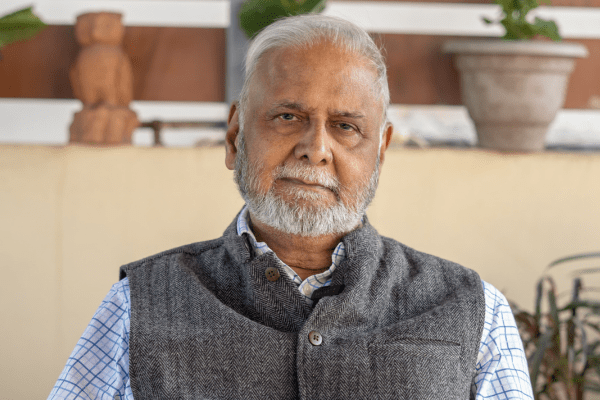
Ashoke Chatterjee (AC) does not like to be called ‘design guru’. But it is really not possible to come up with a better title for this piece on him. For though not a designer, his influence on design and design education in India has been immense. After all, he was Executive Director of India’s first and leading design school, the National Institute of Design (NID) from 1975 to 1985; a Senior Faculty Advisor for Design Management and Communication from 1985-1995, and Distinguished Fellow at NID from 1995 till his retirement in 2001.

AC played a critical role in conceptualizing the meaning of design in the Indian context. In 1977, he brought together UNIDO and International Council of Societies of Industrial Design (ICSID) members, designers, design-educators and others from across the world to the NID campus at Ahmedabad for a 2-day symposium. The meeting ended with the historic Ahmedabad Declaration which embodies the value of humanism in design. The core of the statement affirms:

  • ‘Its firm conviction that design can be a powerful force for the improvement of the quality of life in the developing world;
  • Its firm belief that designers must have a clear understanding of the values of their own societies and of what constitutes a standard of life for their own people;
  • That design in the developing world must be committed to a search for local answers to local needs, utilising indigenous skills, materials and traditions while absorbing the extraordinary power that science and technology can make available to it;
  • That designers in every part of the world must work to evolve a new value system which dissolves the disastrous divisions between the worlds of waste and want, preserves the identity of peoples and attends the priority areas of need for the vast majority of mankind’.

AC has lived this spirit and has helped designers and design-students across the country imbibe this spirit. He made it a fundamental principle of design education that students needed to understand that design is not restricted to contributing to business profits but also includes contribution made to the livelihoods of artisans, farmers, and the marginalized; and that designers must grapple with social issues. He was one of the early votaries of sustainability and brought this understanding to the education of designers.

As AC is always the first to aver, he is not a designer. He went to Woodstock School, after which he took an Economics degree at St Stephens College, New Delhi. Following this, he did his MBA at Miami University in Ohio, USA. He was with the International Monetary Fund in Washington DC, where he worked as a communications specialist, the Indian Tourism Development Corporation etc., before finding his home in NID and Ahmedabad.  He has advised, and advises, several national and international agencies including INTACH, Water Supply and Sanitation Collaborative Council (Geneva), the Gujarat Ecology Commission, the Government of Rajasthan Department of Health.  He served for many years as honorary president of the Crafts Council of India.

We have had the good fortune to regularly interact with AC over the decades. He was a not-infrequent visitor to the Centre for Environment Education where we worked for many decades, and each occasion brought its laughter, learning and a warm sense of having a caring mentor. He has been on the Governing Council (GC) of CEE from the early years, and as a local GC member, was invited for brainstorming, meetings, events, certificate-distributions and what have you—and if he did not have any prior commitments, he would attend.  He generously served on the advisory committee of several large projects that CEE was involved in, and brought his wisdom to bear not only on the content and design, but also on stakeholder management. As programme leaders, we would often be called into the GC meetings to make presentations on our projects; the butterflies in our tummies would settle when we met his twinkling eye, and he nodded ever-so-slightly to us. And after the presentation, he would sometimes pass us a little chit saying that we had done a good job. That truly made our day!

Ashoke Chatterjee played a key role in the National Drinking Water Mission, which in the late 1980s was tasked with ‘providing safe drinking water to all villages, assisting local communities to maintain sources of drinking water in good condition, and for specific attention for water supply to scheduled caste and scheduled tribe communities.’ AC prepared a road map on the communications aspect of this initiative, without which the gains could neither have been attained nor sustained. He worked closely with CEE in developing communication and education on fluorosis, a disease endemic to large parts of Gujarat.

With all his commitments, AC writes too. Dances of the Golden Hall on the art of Shanta Rao, and Rising, on empowerment efforts among deprived communities in rural Gujarat, are among his well-known books. His latest work (with Harji Malik), in English and Hindi, is titled Learning Together at Jawaja and chronicles the 50-year journey of the Jawaja project.

There is never a meeting with AC when we don’t come away feeling enriched—both as professionals and as human beings.

THE RURAL UNIVERSITY, JAWAJA

One of the criticisms against academic institutions is that they are far removed from every day realities and seldom contribute in solving real-life challenges. The Jawaja project undertaken by IIM Ahmedabad in partnership with the National Institute of Design (NID), Ahmedabad is an early exception. Ashoke Chatterjee was a key part of this.

It was in 1975 that Ravi Matthai, IIM-A’s legendary first fulltime director, set out on a journey to see how corporate management principles could be used to solve the major problem facing India–poverty. Ravi Matthai had stepped down as Director in 1972, and could now devote time to such a project.

The decision was taken to work in Jawaja, a drought-prone district of Rajasthan, consisting of about 200 villages and a population of 80,000. There seemed very little scope for development there, given the arid landscape and lack of water and other physical resources. But Prof Ravi Matthai had a different perspective, because he saw people as the biggest resource.

As the project team understood the area better, they found that the area had a 300-year tradition of leather-craft. The communities there were also skilled at weaving. And so the project decided to build on these skills to develop sustainable livelihoods for the communities there. Prof Matthai roped in NID to join hands with IIM-A, to work on livelihoods and empowerment of the communities in Jawaja. Thus along with Ashoke Chatterjee, his counterpart in NID, he started the journey which involved many faculty from both institutes.

The idea was to connect traditional artisans with contemporary disciplines of management and design, and knowledge institutions which had this knowhow. There were some important basic principles underpinning the effort. The first and foremost was that the relationship was one of mutual respect and learning—after all, even as the communities learnt new skills, the faculty of the institutions were learning how their knowledge could be put to use in solving social problems. Another important aspect was to see how much of the value chain could be controlled by the artisans and communities themselves, so that their incomes could be enhanced. The idea was to innovate and design new products which would have new markets, so that the traditional value chains could be broken and the craftspeople could play a greater role in more areas. The focus was also on working in groups, to give greater resilience and strength to the efforts.

The process was, by design, a gradual one, moving from basic products which did not need very high quality craftsmanship, such as leather school bags and woven floor mats, to higher value ones like office supplies, trendier bags, and high-end furnishings.

The challenges were, of course, many. Apart from the need to design new products which would use the old skills, technologies and equipment, another major concern was quality control.

To quote Ashoke Chatterjee on the subject: The Jawaja project was one experiment which integrated many aspects of craft: heritage, culture, social structure, design vocabulary and NID’s design inheritance. But it was not a craft project; it was development defined as self-reliance for those who have been the most dependent in our society. Ravi Matthai explained self-reliance thus: Can people do something for themselves tomorrow that others are doing for them today and they should be released of that dependence? Ultimately, Jawaja taught us that the whole is about people and you have to attend to people first and last or else nothing you do will be sustained.

The depth of AC’s understanding of craft traditions in India, and his humanity are reflected when he says: Jawaja provided a benchmark in crafts: first focus on and understand the community before we intervene in crafts. Who are the people? What are their earnings? What are their aspirations? What is in it for them? Before we start giving people lectures about their ancient traditions, ask what’s in it for them to stay in the tradition? In the case of Jawaja, many of the heritage problems for leather workers were things they wanted to run away from. Their caste elders told them they must not be identified as leather workers; they must have some other identity. When they stopped flaying animals they were left stranded without an identity. We often look at tradition and heredity as some exquisite artefact, but for them it was centuries-old discrimination.

The Jawaja project was an educational experiment-in-action based on the idea that development activities must be a vehicle for learning. The enduring success of the bold experiment is seen even today at several levels.

The first was the creation of self-reliant institution of crafts people–the Artisans’ Alliance of Jawaja and its associations. These started to manage all links of the value chain in Jawaja, from raw material procurement, finances, bank dealings, design and technology know how, and marketing processes. These are active even today, and continue to innovate, produce and market products which are highly valued.

The second is the impact of the project on the larger development scene. It was the learning from running this grassroots education and empowerment project that the idea of setting up a specialized institution for education in rural management came up, and the Institute of Rural Management (IRMA), Anand, was born. This was given shape by Prof Ravi Matthai and two other professors who had been with IIM-A—Dr Kamla Chowdhry and Dr.Michael Halse.

The Jawaja experiment’s widespread legacy is that it influenced development sector thinking on how to approach community-based livelihood interventions in a spirit of mutual respect and learning.

–Meena

From: Inspirations: Individuals and Institutions That Defined India’s Sustainability Journey. Mamata Panday, Meena Raghunathan.Bookwell Publications. 2025.

See also: The Jawaja Project https://millennialmatriarch464992105.wordpress.com/wp-admin/post.php?post=3624&action=edit

Pic: NID site

Under the Same Moon

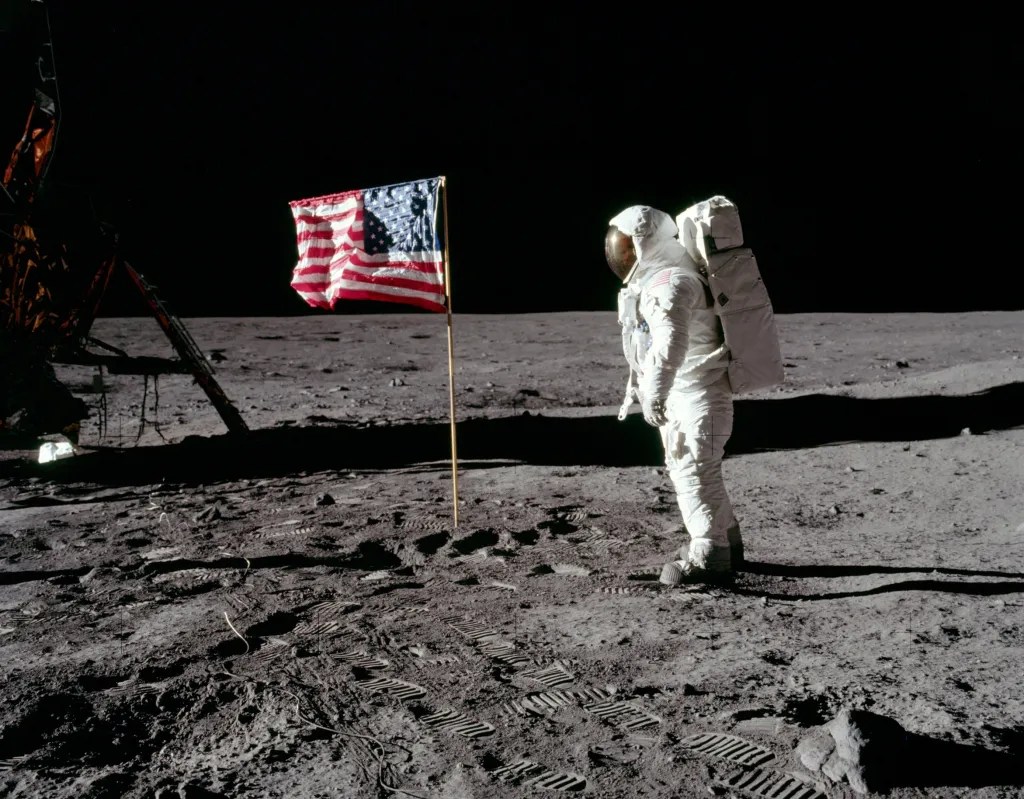
July 20 is a day with special significance for humanity. It is Moon Day—it commemorates the day humans first set foot on the Moon in 1969—a moment that changed forever human imagination, and our relationship to the rest of the universe.

For many of us, the Moon is far more than a historic rock in the sky. It has always fascinated us. It is companion, compass, calendar, and comfort.  It’s poetic, scientific, spiritual, and personal. Whether it is its influence on tides or moods or menstrual cycles—there’s no denying its pull on our lives. It is a part of folklore—in India, a part of the family, with the moon referred to as Chanda mama.

India is writing its own Moon story, with the first manned flight planned for 2027. Grp. Captain Shukla’s sojourn at the International Space Station is part of this preparation. But we have chalked up some notches already:

  • In 2008, Chandrayaan-1 confirmed the presence of water molecules on the Moon—yes, our lunar scout found signs of water where many others hadn’t.
  • Chandrayaan-2 in 2019 didn’t land as planned, but gave us valuable data.
  • And then came Chandrayaan-3 in 2023 when India became the first country to successfully land near the Moon’s south pole—a scientific and symbolic triumph.

This is India’s contemporary moon-story. Here is a beautiful ancient one.

The Rabbit in the Moon: A Buddhist Tale

One of the most enduring tales about the moon is of the rabbit in the Moon, a story rooted in Buddhist Jataka tradition and echoed across generations.

Long ago, the story goes, a kind and gentle rabbit lived in the forest. One day, Lord Indra came down disguised as a hungry old man, asking for food. The rabbit, seeing he had nothing else to offer, jumped into the fire to offer himself as a meal. Touched by this ultimate act of generosity, Indra rescued the rabbit and immortalised him on the Moon—his shape etched forever in the lunar light.

Even today, if you look closely on a clear full moon night, you can make out the shape of a rabbit crouched gently on the surface. Some say he’s still keeping watch. Some say he’s a reminder of kindness and quiet courage.

So on the July 20th, look up at the moon, wonder at its beauty, and ponder the words of some wise people:

“Three things cannot be long hidden: the sun, the moon, and the truth.”

—Buddha

“Don’t tell me the sky is the limit when there are footprints on the moon.”

—Paul Brandt

“The moon is the first milestone on the road to the stars.”

—Arthur C. Clarke

“Always remember we are under the same sky, looking at the same moon.”

—Maxine Lee

“The moon does not fight. It attacks no one. It does not worry. It does not try to crush others. It keeps to its course, but by its very nature, it gently influences. What other body could pull an entire ocean from shore to shore? The moon is faithful to its nature and its power is never diminished.”
― Deng Ming-Dao

–Meena

Next week, some more explorations related to the moon.

Pic: nasa.gov/mission/apollo-11/

Compassion is the Answer: Dalai Lama

We live in a world that is war-worn, strife-torn, and increasingly becoming inured to the constant barrage of news and images that depict the most deplorable facets of human nature and behavior. Amidst such a depressing state of affairs, we feel helpless and downhearted; we fear that we have already reached a tipping point from where there is no way of turning back, where we seem to be hurtling towards a future which, in a sense, has no future.

There are so few today in the world who can instil a ray of light, a light that can help us navigate the seemingly impenetrable darkness that engulfs us.  In this fog of gloom and doom we yearn for some words of wisdom, a glimmer of hope, a Sherpa who can guide us through.

Who better can we turn to than His Holiness the Dalai Lama, who has dedicated his life to the cause of peace, love and compassion? As we recently celebrated the 90th birthday of this remarkable human being, it would be fitting to share some of this thoughts on love and compassion as guiding lights.

Some of my friends have told me that, while love and compassion are marvellous and good, they are not really very relevant. Our world, they say, is not a place where such beliefs have much influence or power. They claim that anger and hatred are so much a part of human nature that humanity will always be dominated by them. I do not agree.

All sentient beings, not only human beings, but birds and animals too, want to live in peace. Amongst all these beings, humans are probably the most mischievous. We have a marvellous intelligence, but sometimes it is misdirected by negative emotions. Predators such as lions and tigers have claws and fangs that equip them to hunt, kill and eat meat. However, they only prey on other animals when they need food. Human beings, on the other hand, cause trouble even when there is no justification.

Can we change this? I believe we can, because it is our essential nature to be compassionate. From the moment we’re born our mother takes care of us. Without this care we would not survive. This experience is our first opportunity to learn that compassion is the root of all happiness. However, this natural appreciation of compassion seems to fade once we go to school. We need to be reminded that good health and a peaceful state of mind are founded on love and compassion.

How can we start? We should begin by removing the greatest hindrances to compassion: anger and hatred. As we all know, these are extremely powerful emotions and they can overwhelm our entire mind. Nevertheless, they can be controlled. If, however, they are not, these negative emotions will plague us – with no extra effort on their part! – and impede our quest for the happiness of a loving mind.
 
So as a start, it is useful to investigate whether or not anger is of value. Sometimes, when we are discouraged by a difficult situation, anger does seem helpful, appearing to bring with it more energy, confidence and determination.

 
Here, though, we must examine our mental state carefully. While it is true that anger brings extra energy, if we explore the nature of this energy, we discover that it is blind: we cannot be sure whether its result will be positive or negative. This is because anger eclipses the best part of our brain: its rationality. So the energy of anger is almost always unreliable. It can cause an immense amount of destructive, unfortunate behaviour. Moreover, if anger increases to the extreme, one becomes like a mad person, acting in ways that are as damaging to oneself as they are to others.

It is possible, however, to develop an equally forceful but far more controlled energy with which to handle difficult situations.
 
This controlled energy comes not only from a compassionate attitude, but also from reason and patience. These are the most powerful antidotes to anger. Unfortunately, many people misjudge these qualities as signs of weakness. I believe the opposite to be true: that they are the true signs of inner strength. Compassion is by nature gentle, peaceful and soft, but it is very powerful. It is those who easily lose their patience who are insecure and unstable. Thus, to me, the arousal of anger is a direct sign of weakness.

So anger and hatred are always harmful, and unless we train our minds and work to reduce their negative force, they will continue to disturb us and disrupt our attempts to develop a calm mind. Anger and hatred are our real enemies. These are the forces we most need to confront and defeat, not the temporary enemies who appear intermittently throughout life.

And who creates such opportunities? Not our friends, of course, but our enemies. They are the ones who give us the most trouble, so if we truly wish to learn, we should consider enemies to be our best teacher!

 For a person who cherishes compassion and love, the practice of tolerance is essential, and for that, an enemy is indispensable. So we should feel grateful to our enemies, for it is they who can best help us develop a tranquil mind! Also, it is often the case in both personal and public life, that with a change in circumstances, enemies become friends.

You should realize that even though your opponents appear to be harming you, in the end, their destructive activity will damage only themselves. In order to check your own selfish impulse to retaliate, you should recall your desire to practice compassion and assume responsibility for helping prevent the other person from suffering the consequences of his or her acts.

So far I have been discussing mainly the mental benefits of compassion, but it contributes to good physical health as well, According to my personal experience, mental stability and physical well-being are directly related. Without question, anger and agitation make us more susceptible to illness. On the other hand, if the mind is tranquil and occupied with positive thoughts, the body will not easily fall prey to disease.

I believe that at every level of society – familial, tribal, national and international – the key to a happier and more successful world is the growth of compassion. We do not need to become religious, nor do we need to believe in an ideology. All that is necessary is for each of us to develop our good human qualities.

Ultimately, humanity is one and this small planet is our only home. If we are to protect this home of ours, each of us needs to experience a vivid sense of universal altruism. It is only this feeling that can remove the self-centred motives that cause people to deceive and misuse one another.

Much has been written about the Dalai Lama in the past few days. His birthday on 6 June is designated as the Universal Day of Compassion. What better reminder than his own words, of how compassion can be a universal guiding light. With all heartfelt wishes that we continue to be blessed by his wisdom and love for many more years to come.

Excerpts from https://www.dalailama.com/messages/compassion-and-human-values/compassion

–Mamata

Libraries Take Wing

How often we randomly pick up a feather as we walk along. And wonder which bird it could belong to.

A feather library is where we can turn to for help in such a situation. These are digital or physical collections of bird feathers, used for research and education. They are an invaluable resource for understanding bird species, identifying feathers, and gathering data on bird health and natural history. These libraries are important tools for the study and conservation of bird species, offering insights into bird morphology and helping in the identification of feathers found in the wild.

There are not too many across the world. Some of the established ones include:

1. The Feather Atlas created by the U.S. Fish and Wildlife Service is a comprehensive image database of North American birds and covers about 438 species. It can be browsed by bird order, family, or species. It has an open identification tool in which one can fill in details about feather patterns, colors, size, and position, which can help you identify the bird your feather belongs to.

2.Featherbase (Germany) has been created by a working group of German feather-scientists and other collectors worldwide who have come together and contributed their personal collections. It holds close to 8000 specimens from over 1,000 bird species, with a focus on European and African birds. The collection includes high-resolution images and detailed anatomical information, and has supporeted studies in forensics, conservation, and biodiversity monitoring. It is rigorously classified and offers options of various languages so that birders from across the world can use it.

3. Found Feathers (iNaturalist Project) is a citizen science initiative where users contribute observations of feathers they find. The project encourages the collection of feather length and placement data, enhancing the database’s utility for researchers and birders. There are over 2,00,000 observations from across the world.

Special among these is India’s Feather Library. This pioneering initiative is the first of its kind in India and the world, dedicated to documenting, identifying, and studying the flight feathers of Indian birds. It is the passion project of architect Esha Munshi, a dedicated bird watcher who has seen over 1500 bird species across the world, and veterinarian Sherwin Everett who works in a bird hospital in Ahmedabad. They have created the library with the aim of having all feather-related data under one roof, fostering collaboration and advancing the collective understanding of Indian birds. In the short span of time since inception on Nov 15, 2021, 135 species have been documented.

The process is rigorous. They collect feather specimens from dead birds at rescue centres to establish a primary database of bird species. They then make detailed notes on the flight feathers, taking into account the number of Primaries, Secondaries, Tertials (Wing Feathers), and Rectrices (Tail Feathers), along with basic details such as overall length, bill length and width, leg lengths, etc. Then they stretch out one wing and fan the tail in both dorsal and ventral views to document the exact number of feathers, unique characteristics, colour, pattern, and size etc. The physical collection is housed at the National Centre for Biological Sciences (NCBS) in Bangalore.

The database is open to all and provides easy access.

Kudos to the dedication and passion of people like Esha and Sherwin who through their efforts help support avian research, conservation efforts, and educational outreach. And make a better world.

Happy Environment Day!

–Meena

Growing Older With Ruskin Bond

Ruskin Bond celebrated his 91st birthday on 19 May. One of India’s most well-known writers, Ruskin Bond has spent over seven decades as a prolific author, delighting readers of all ages with his simple, beautiful and ‘from the heart’ words. When many put down their tools of trade when they reach “retirement age”, Ruskin Bond celebrates every day of each advancing year with reminiscences, observations of life around him, and above all gratitude for the magic of Nature.

As he puts it: For writers, the nice thing about growing old is that it gives us more to write about—all those years of love, friendship, adventure, achievements, a changing country, a changing world, changing ways of life, history in the making. There may have been dull moments, but most of the time, something was happening—and things continue to happen today.

Many people who have been touched and inspired by Ruskin Bond’s writing have shared their memories. I feel that this is also my opportunity to pay my small tribute.

I was introduced to Ruskin Bond over three decades ago by Uncle Ken and Rusty. These were the characters in the first books that I translated. I was invited by the National Book Trust to translate two of Ruskin’s books into Gujarati. Having neither read him, nor having translated before this, but game for trying something new, I embarked on the project. I so enjoyed the madcap adventures of the eccentric Uncle Ken and the restless school boy Rusty, not just for the stories but for the simple style of writing and the lovely use of language. As a translator it was a challenge to try to retain the spirit and the form in another language.

Following this introduction I continued to follow Ruskin Bond on his wanderings and meanderings through his essays and columns. Here was someone who was not only sensitive to, and entranced by every minute detail of nature, but one who could share this evocatively through words. As an environmental educator who was trying to communicate the wonders of the world around us, and sensitize children to the intricate but fragile web of life, it was inspiring, and humbling to see how effortlessly Ruskin Bond could do just that.

Moving on, as the years went by, one could find new nuances and meaning in his words; words that also reflected the passage of time, both as it affected a human being, but also the environment of which we are all a part. With the passing years, Ruskin Bond’s prolific writing reflects his life journey.

It is the journey that fascinates him, the spirit of wandering and exploring that leads him, and the childlike joy of discovery that makes every step exciting. The adventure is not in the arriving, it’s the on-the-way experience. It is not the expected; it’s the surprise. You are not choosing what you will see in the world, but giving the world an even chance to see you.

Ruskin Bond reminds us that the journey will be much enriched when we use all our senses to the fullest. Sight, hearing, smell, taste and touch. He highlights how each one is capable of giving us joy.

The eyes are our windows to the world, the great wide beautiful world that there is for all of us to marvel at—the skies, wandering clouds, mountains, forests, rivers, the sea; the moon, the stars, the rising sun—all the wonder of creation. The eyes see it all.  

And we hear too. We hear the sounds of nature—the wind, the rain, the sound of birds. We hear the voices of our friends, our loved ones. We hear great music. There is so much to hear and enjoy.

And we smell. The fragrance of roses, of jasmine; of gardens, of wildflowers, the mountain air, the sea breeze. We smell good food—appetizing odours! We eat what smells good.

The sense of taste—we take it for granted, but life wouldn’t be much fun without it. If everything tasted the same from chocolates to fish and chips, we would take no interest in our food and would fade away due to lack of nourishment.  Our taste buds keep us going, make life worth living!

And then there’s touch. The touch of a loving hand, the feel of things, good things—your clothes, your books, your intimate belongings, your own flesh. Cold and warmth, pain and pleasure are felt by our sensitive systems. The sense of touch is felt in our brains, and it is there that all happiness resides.

Value those five senses of yours. The more you use them, the better you will be able to appreciate your life and all that the world has to offer.

Ruskin Bond reminds us to value ourselves, our time and everything from the tiniest to the largest that weaves the web of life. His words are an island of calm in turbulent seas. He does not paint the world as perfect, but urges us to look for the rays of sunshine amidst the dark clouds: The human race is destructive by nature, only too ready to go to war or to pollute and do away with seas, rivers, forests, and our natural inheritance; but now and then along comes someone who can create something beautiful, meaningful—a great painting, a piece of music, a work of literature or philosophy, something that survives the conflicts  and injustices that are the main features of human civilization, past and present. But in the darkness there is a gleam of light, and we can turn away from the ugly to appreciate the beautiful.

Simple words that have continued to offer solace, hope, and a quiet joy as I have grown older with Ruskin Bond over the decades.

Happy Birthday Ruskin Bond. As you remind us: Don’t wait for your birthday. Make today your birthday.

(Excerpts from The Golden Years: The Many Joys of Living a Good Long Life. Ruskin Bond 2023)

–Mamata

WAR AND PEACE: BERTRAND RUSSELL

The media has been bringing to our homes never-ending images of different parts of the world which are in the throes of war. The world is on the brink of what could well be the third world war. At some level people are becoming dangerously inured to the horrors through the never-ending barrage of images and reports that have almost become a part of daily sights and sounds. This in itself is frightening; are we accepting that violence (and its consequences) are an inescapable part of life? And while the world is led by egoistic power-hungry leaders, there is a rapidly declining number of people who feel helpless, even hopeless at the situation as it spirals towards a possibly irrevocable conclusion. Amidst the clamour of belligerent war cries, are some who lament that there are, today, so few voices of reason to remind the world of the precipitous path that we seem to be treading.

What does war achieve? And why do we need to seek peace?

Questions that have been asked since millennia. And answered in different ways in different periods of history. Perhaps one of the most pertinent answers came over a century ago, at a time when the sparks of what became the First World War were just beginning to fan the fire that would rage for the next four years. This was an essay titled The Ethics of War, written by Bertrand Russell in 1915. This was first published in the International Journal of Ethics 25, in January 1915.   

Bertrand Russell is considered as one of the greatest philosophers of the twentieth century. He was actively engaged in numerous social and political issues controversies of his time. A mathematician, educator, social critic, pacifist and political activist, Russell authored over 70 books and thousands of essays and letters addressing a wide range of subjects. He was awarded the Nobel Prize for Literature in 1950 in “recognition of his varied and significant writings in which he champions humanitarian ideals and freedom of thought. Bertrand Russell died in 1970 at the age of 97. Till the end of his life he supported free thought in religion and morals, he opposed war, nationalism and political persecution.

Bertrand Russell’s thoughts on all of the above are beautifully articulated in the essay The Ethics of War. Here are some excerpts:

The question whether war is ever justified, and if so under what circumstances, is one which has been forcing itself upon the attention of all thoughtful men. On this question I find myself in the somewhat painful position of holding that no single one of the combatants is justified in the present war, while not taking the extreme Tolstoyan view that war is under all circumstances a crime. Opinions on such a subject as war are the outcome of feeling rather than of thought: given a man’s emotional temperament, his convictions, both on war in general and on any particular war which may occur during his lifetime, can be predicted with tolerable certainty. The arguments used will be mere reinforcements to convictions otherwise reached. The fundamental facts in this as in all ethical questions are feelings; all that thought can do is to clarify and systematize the expressions of those feelings, and it is such clarifying and systematizing of my own feelings that I wish to attempt in the present article. 

At the beginning of a war each nation, under the influence of what is called patriotism, believes that its own victory is both certain and of great importance to mankind. By concentrating attention upon the supposed advantages of victory of our own side, we become more or less blind to the evils inseparable from war and equally certain whichever side may ultimately prove victorious. Yet so long as these are not fully realized, it is impossible to judge justly whether a war is or is not likely to be beneficial to the human race. Although the theme is trite, it is necessary therefore to briefly remind ourselves what the evils of war really are.

To begin with the most obvious evil: large numbers of young men, the most courageous and the most physically fit in their respective nations, are killed, bringing great sorrow to their friends, loss to the community and gain only to themselves. Many others are maimed for life, some go mad, and others become nervous wrecks. Of those who survive many will be brutalized and morally degraded by the fierce business of killing, which however much it may be a soldier’s duty, must shock and often destroy more humane instincts.

The evils which war produces outside the area of military operations are perhaps even more serious, for though less intense they are far more widespread. …The extent and consequences of the economic injury inflicted by war are much greater than is usually realized. …Thus war, and the fear of war, has a double-effect in retarding social progress: it diminishes the resources available for improving the condition of the wage-earning classes, and it distracts men’s minds from the need and possibility of general improvement by persuading them that the way to better themselves is to injure their comrades in some other country.

Of all the evils of war the greatest, in my opinion, is the purely spiritual evil: the hatred, the injustice, the repudiation of truth, the artificial conflict, where if once the blindness of atavistic instincts and sinister influence of anti-social interests, such as those of armaments with their subservient press, could be overcome, it would seem that there is a real consonance of interest and essential identity of human nature, and every reason to replace hatred by love.

It has been over a century since this impassioned plea by Bertrand Russell. Much has changed since then, but much remains the same. Let us remind ourselves of the futility of mindless violence. Let us Give Peace a Chance.

–Mamata

A Curious Herbal: Elizabeth Blackwell

One has heard of herbal teas, herbal treatments and herbal facials, but this was the first time that I heard about a curious herbal! Of course my curiosity was piqued! I discovered that while today the word ‘herbal’ is generally used as an adjective, it is also a noun that refers to ‘a book of plants, describing their appearance, their properties and how they may be used for preparing ointments and medicines’. And thus this was the title of such a book first published in England in 1737. The book consisted of five hundred illustrations drawn, engraved and hand-coloured by Elizabeth Blackwell. This was indeed a voluminous ‘herbal’. Why the added adjective ‘Curious’? This refers to an old use of the word to mean ‘accurate and precise’.

The story of Elizabeth Blackwell herself, and how she came to create this book is itself curious and unusual.

Elizabeth Blackwell was born in 1707 in Aberdeen in Scotland. Her father Leonard Simpson was a painter and his daughter inherited his artistic talent. From a young age she loved drawing and painting, and was constantly observing and sketching the natural world around her.

Elizabeth married Alexander Blackwell a doctor and an accountant. They had to move to London when it was discovered that her husband was practicing medicine illegally. But even there Alexander’s unlawful activities resulted in heavy debts that caused him to be imprisoned. Elizabeth was left alone to fend for herself and her child.  In an age when women were not part of the work force Elizabeth drew upon her skill as a botanical artist for survival and sustenance.

In the early eighteenth century, plants were an essential resource for healthcare. Choosing the right plant to treat an ailment was an increasingly precise science, and mistaking one plant for another could have severe consequences. Elizabeth thought of creating an ‘herbal’, an illustrated reference book to help doctors and apothecaries to develop an “exact knowledge” of medicinal plants, their uses and effects in medicine. Before embarking on the project she consulted various botanists and herbalists who advised her that pictures alone would not suffice, these needed to be accompanied by descriptive and explanatory notes. Elizabeth, being trained neither in botany nor in medicine, realized that she would need these inputs from experts. 

But in order to do all this she first needed access to the plants. The Apothecaries Garden (later called the Chelsea Physic Garden) had a vast collection of medicinal plants from many parts of the world. The garden’s director Isaac Rand gave Elizabeth access to the garden. Elizabeth moved with her daughter, to some rooms close to the garden, and threw herself into making botanical drawing from the actual specimens. She began to document the garden’s many indigenous plants, as well as specimens arriving from across the British Empire. She set about not only making highly detailed, analytical drawings of plants from different perspectives and in different stages of growth within the same picture. In addition to their physical characteristics, she also included information about where and when they could be found; their names in a variety of languages; and their curative properties

Her paintings of the plants were precise, and with an artist’s eye, she described the colour and texture of plants in minute detail. She would take each set of completed drawings to her husband in prison and he drafted descriptions for each one. She also managed to get for each plant, along with its English common name, its name in Latin, Greek, Italian, Spanish, Dutch and German. This was in the days well before the Linnaean system of binomial nomenclature provided a system of universal identification. In fact Linnaeus was born in the same year as Elizabeth.

She also became known to prominent doctors and intellectuals who also helped with the supporting text. When a number of the drawings were ready, a team of nine eminent physicians, apothecaries, and a surgeon examined them, and endorsed their authenticity

Elizabeth worked non-stop. She drew, engraved, and hand-coloured each image, managing the work that would normally require several different craftsmen. She prepared four plates every week in instalments, (125 weeks) until she had produced 500 images with bullet points for the medicinal uses for each plant. Elizabeth Blackwell’s illustrations deeply impressed many English physicians, botanists, and apothecaries in mid-18th century London.

Originally published in weekly parts, the first collected volume of A Curious Herbal appeared in 1737. A Curious Herbal received an official commendation from the Royal College of Physicians. Capitalising on this support, E. Blackwell advertised her publication through word of mouth and journal advertisements. It met with moderate success. A second edition was printed 20 years later in a revised and enlarged format.

Through her industry and perseverance Elizabeth was able to pay off her husband’s debts and secure his release from prison. However her personal life continued to be challenging. Her husband Alexander got himself into fresh financial and political difficulties, and was forced to move to Sweden where he was eventually executed for conspiracy. Elizabeth never saw her husband after he left England for Sweden. But she continued to be loyal to him, even sending him a share of the royalties from her book.

She produced no more botanical works. But A Curious Herbal remains a landmark book in the field of medical botany and botanical illustration. In eighteenth century England, with no standing within London’s scientific and medical institutions, Elizabeth Blackwell managed to produce a work that became a standard reference for apothecaries. A Curious Herbal is a monument to Elizabeth Blackwell’s skill not only as a botanist and artist, but also a testament to her remarkable strength of purpose, and entrepreneurship in a male-dominated age when women were only seen as wives and homemakers.

–Mamata

Reach for the Sky: Recalling Interactions with Dr. Kasturirangan

Last week, India and the world of science lost a doyen: Dr. Kasturirangan who in the decade till 2003, led the Indian Space programme as Chairman of the Indian Space Research Organisation, as Chairman of the Space Commission and as Secretary to the Government of India in the Department of Space. During this period, India saw the launch of PSLV, our indigenously developed launch vehicle; the testing of Geosynchronous Satellite Launch Vehicle (GSLV); and IRS satellites among others.

Before that, as the Director of ISRO Satellite Centre, he headed the development of the Indian National Satellite (INSAT-2) and the Indian Remote Sensing Satellites (IRS-1A & 1B) as well as scientific satellites. He was Project Director of BHASKARA-I & II. He was also the Project Director for India’s first two experimental earth observation satellites, and subsequently was responsible for overall direction of the first operational Indian Remote Sensing Satellite, IRS-1A.

It was in his time as ISRO chief that Chandrayaan-1 was conceived.

I am proud to say that I had the chance of a few personal interactions. However, not in the context of high-science and technology!

As everyone in the country knows, Dr. Rangan was deeply involved in education, and obviously had a passion for science education (what we today call STEM). It was in this context that I had the chance to interact with him. He was the Chairman of the Board of Governors of the Vikram A. Sarabhai Community Science Centre (VASCSC), where I serve as a member. VASCSC was the result of Dr. Vikram Sarabhai’s vision of enabling the country’s top scientists to contribute to science education. The institution was started in 1966 as a facility where people concerned about the quality of science education could come together to try new ideas and methods of science teaching.

The institution has deep programmatic and emotional links with the various institutions associated with Dr. Sarabhai, the father of India’s space programme.  Dr. Kasturirangan was an obvious choice to chair it!

When very busy people take on yet another committee or chairmanship, it is often really only ornamental. With the best of intentions, they lack the time or mind-space to get deeply involved.

Not so with Dr. Rangan. He ensured to attend VASCSC Board meetings, sometimes in person, otherwise by Zoom. He was there on the dot even for Zoom meetings. He was completely clued in and asked sharp questions about the Action Taken Report. He had a prodigious memory and made quick decisions. He was always supportive of the programmes and publically appreciative of the management and staff for their innovative initiatives and their commitment. He never allowed himself to be distracted with anything else during the course of the meetings, and ensured everyone had their say. It was a humbling experience as well as a learning for all of us.

Raghu and I count it as a privilege that he consented to write the Foreword for our book: TO EVERY PARENT, TO EVERY SCHOOL: RAISING RESILIENT CHILDREN IN A VUCA WORLD (Penguin India). Even after he agreed, we were apprehensive: would he find the time to do it within the publisher’s deadline, given the enormous calls on his time? But we need not have worried. The write-up was with us a few days before the date we had indicated! And what a gracious Foreword it was!

These were people cut from a different cloth. They dedicated their lives to their mission. They wore their myriad achievements lightly. They were courteous to one and all. They listened. Nothing was too small for their attention. And they cared.

Grateful for the opportunity to interact with such inspirations.

–Meena

Money, money, money….

Well, it’s what makes the world go around for sure! But some people love money for reasons other than what it can buy.

Bangalore has one such lover of money—Rezwan Rajak, the world’s biggest collector of Indian paper money. And fortunately, he has chosen to share this passion. No, not by giving away the notes, but by setting up a museum!

Rezwan is the co-founder and Managing Director of the Prestige Group (there is a good chance you resident of a Prestige property if you live in Bangalore!). His passion for collecting Indian paper money started when he was 13 or 14. He came across some old currency notes from British India, which no longer were legal tender (think de-mo!) and were stamped ‘Refused payment’. The story behind these intriguing notes goes back to partition. Apparently, when partition happened, the new country of Pakistan did not have currency notes of its own. So for the initial period, they used the notes from undivided India, with their own stamp on them. . So the notes said ‘Reserve Bank of India’ but had an additional over-printing of ‘Government of Pakistan’.  While these were accepted in Pakistan, they were not in India. Some smart people in India of course tried to scratch off the Pakistan stamp and use them here. But the banks had a record of the notes printed for Pakistan and refused payment, in fact stamping these notes with ‘Payment refused.’

From this, to the world’s largest collection! The Museum of Indian Paper Money has over 700 specimens of Indian paper currency collected by Rezwan Razak over the decades. And the fascinating stories that go with them! For instance, there are specimens of notes of Hyderabad state which were printed in England and were being transported by sea. The ship sank with the notes and a million pound worth of gold. After 12 years, bounty hunters after the gold salvaged the ship’s cargo inlcuding the currency, and the notes were still intact in their vault.

All the currency notes printed after Independence, as well as notes from the princely states of India are displayed. There are beautifully designed Portuguese-India notes which were used in their territories, which Razak values very highly for their aesthetic appeal. There are also French-India notes.

Also on view are tokens which 36 princely states were permitted to print when metal for minting coins ran out during World War II. They look like stamps or the platform tickets which those of an older generation will be familiar with.

Another fascinating set of items on display are the prisoner of war money-coupons. During WWII, prisoners of war of various nationalities were housed in India. They could do voluntary work during this time, for which they were paid. But the payment could not be in real money as then they could use this to bribe the jailers. So coupons which looked like currency notes, but were stamped ‘Prisoner of War’ were given to them as payment. These were used to buy luxuries in jail like post-cards, chocolates, etc.

And so on and on….

India also has  the Reserve Bank of India (RBI) Monetary Museum in Mumbai. This displays about 1,500 items including coins dating back to the 6th century BC, and covering the Indus Vally period, the Gupta period, the Kushana empire, coming right up to notes and coins of modern times.  

But Razak’s museum, housed in Prestige Falcon Tower, Bangalore, the corporate headquarters of the Group, is different because it is a result of what the collector himself refers to as: ‘… a hobby which became a passion which has in turn become an obsession.’!

Sadly however, physical money may soon completely disappear with almost all transactions moving to electronic payments.  These museums become even more precious in this context!

–Meena

A Woman of Many Parts: Sarojini Naidu

In a week when women are being celebrated, and their achievements extoled, it is fitting to remember that in every era of history, in every part of the world, there have been women who have broken boundaries and glass ceilings, and have excelled in numerous fields. This is a good week to celebrate a woman who combined seemingly contrary abilities, and played a significant role in several fields of endeavor. This is Sarojini Naidu.

Textbooks traditionally describe Sarojini Naidu as the Nightingale of India. But she was far more just a singer of songs. A poetess, patriot, fierce nationalist and freedom fighter, politician, eloquent orator, inspirer of masses, perfect hostess, and a feminist and firebrand leader in every sphere.

Sarojini was born on 13 February 1879 in a Bengali Brahmin family, the eldest of eight siblings. Somewhat of a prodigy, she entered the University of Madras at the age of 12; she composed 1000-line poems at 13. After graduating in 1895 with the highest rank, she was awarded a scholarship by the Nizam of Hyderabad, and she spent three years in England, studying at King’s College London, and later at Girton College in Cambridge. During this period she also became involved with the suffragist movement in England. She returned to India in 1898 and married Dr M Govindarajulu Naidu whom she had met in England, (the inter-caste marriage attracted opposition) when she was 19. By the age of 25, Sarojini was mother to four children. Her first major collection of poems was published when she was 26. She had literary fame, and a comfortable lifestyle in Hyderabad where she played the perfect hostess.But this was hardly a deterrent to what was to be an extremely active political life.

Sarojini and Gandhiji shared a special relationship. She had first met him in 1914 in London just as the First World War had broken out. That was the start of a long and close bonding between the two. Sarojini was one of the few who could joke about, and with, Gandhi (she nicknamed him Mickey Mouse!). The two exchanged witty repartees, and reproaches, which were totally free from malice. She could stand up to Gandhi and never hesitated to speak her mind. Yet she remained one of his staunchest supporters all her life, and revered him as a guru.

Sarojini Naidu was drawn to Gandhi’s non-cooperation movement and in 1924 travelled across the world to spread the word about the movement. She was a sought after public speaker. In 1925 she became the first Indian President of the Indian National Congress. She was a front-line participant in the Independence movement. Her participation in the Salt Satyagraha and the Quit India Movement was deemed as ‘anti-British activity’ and she was imprisoned several times for this.

Sarojini Naidu believed that the nationalist cause could not be separated from the movement for women’s rights. She helped establish the Women’s Indian Association along with Annie Besant and a few others, in 1917, which championed women’s right to vote. The same year, along with Annie Besant she went to London to represent the case for women’s franchise before the Joint Select Committee.

She was elected to the Constituent Assembly that drafted the Constitution of India. After India achieved independence on 15 August 1947, Sarojini Naidu was appointed governor of the United Provinces, making her the first woman governor in the country. She remained in the post until she passed away on 2 March 1949.

Sarojini Naidu’s contribution to the freedom movement and to the early years of our new republic was marked by her total dedication combined with her boundless energy and multi-faceted brilliance. This was summed up thus by her fellow freedom fighter Jawaharlal Nehru: She began life as a poet, in later years when the compulsion of events drew her into the national struggle, she plunged into it with all the zest and fire she possessed…. whose whole life became a poem and a song and who infused artistry and grace in the national struggle, just as Mahatma Gandhi had infused moral grandeur to it.

Despite her active political life Sarojini’s literary output was also prolific. She published several volumes of poetry, and held ‘salons’ which attracted an array of intellectuals. She led a hectic and productive life despite suffering from a variety of ailments throughout her life. Her zest for life was undiminished till the end, when she passed away at the relatively young age of 70.   As she wrote to her youngest child a few years earlier: One is not so concerned with a long life as with a ‘merry one’—merry as the sum of worthwhile, rich, full, interesting, and who can say that mine has not been and is not in that sense ‘merry’ as well as long?

On a more serious note, several years earlier when she was in Yervada jail, Sarojini wrote to her daughter Padmaja Naidu: In the course of a long and most variegated life I have learned one superlative truth…that the true measure of life and oneself lies not in the circumstances and events that fill its map but in one’s approach and attitude and acceptance of those things.

An inspiration, and a role model indeed!

–Mamata