
Every year on 15 June, India observes Surgeons’ Day, an occasion promoted by the Association of Surgeons of India and other medical institutions to recognize the contribution of surgeons to healthcare. The day is marked by professional meetings, public awareness programmes, health camps, and discussions on advances in surgical practice.
In the Indian context, it is also important to remember Sushruta, the author of the Sushruta Samhita, who over two millennia ago, described surgical instruments, operative techniques, wound management, and reconstructive procedures. His work is among the earliest known systematic texts on surgery anywhere in the world.
Self-Surgery
While surgery is usually associated with teams of highly trained professionals working in carefully controlled environments, history records unique cases in which individuals performed surgical procedures on themselves. These episodes occurred under very different circumstances, but each has become part of medical history because of the unusual challenges involved.
Leonid Rogozov: Appendectomy in Antarctica
One of the best-known cases is that of Leonid Rogozov, a Soviet surgeon stationed at the Novolazarevskaya research station in Antarctica in 1961.
Rogozov developed acute appendicitis while serving as the only physician at the base. Weather conditions made evacuation impossible. On 30 April 1961, assisted by colleagues who handed him instruments and held mirrors, he performed an appendectomy on himself using local anaesthesia.
The operation lasted approximately two hours. Rogozov recovered and resumed his duties within weeks. His case is widely cited in medical literature as a unique example of self-performed emergency surgery.
Evan O’Neill Kane and Surgical Experimentation
In 1921, American surgeon Evan O’Neill Kane carried out an appendectomy on himself at a hospital in Pennsylvania.
Kane’s purpose was not emergency treatment but the demonstration of local anaesthesia for abdominal surgery. He believed that local anaesthesia offered advantages over general anaesthesia in selected cases and used his own operation to support that view.
In 1932, he reportedly performed a second self-operation to repair an inguinal hernia. These procedures attracted significant public and professional attention at the time.
Inés Ramírez Pérez and a Self-Performed Caesarean Section
In 2000, Inés Ramírez Pérez, living in a remote rural area of Mexico, carried out a self-performed caesarean section after prolonged labour and the absence of medical assistance.
Following the delivery, she sought help from local residents and was transported to a hospital. Both she and her baby survived. Medical reports published subsequently documented the case, which is considered one of the rare recorded instances of a successful self-performed caesarean section.
Aron Ralston’s Self-Amputation
In April 2003, American mountaineer Aron Ralston became trapped in Utah’s Bluejohn Canyon when a falling boulder pinned his right arm.
After remaining trapped for several days and exhausting his supplies of food and water, Ralston amputated his own arm using a small multi-tool and then climbed out of the canyon to seek assistance.
His experience was later described in his memoir Between a Rock and a Hard Place and dramatized in the film 127 Hours.
Claude Martin’s Procedure in Lucknow
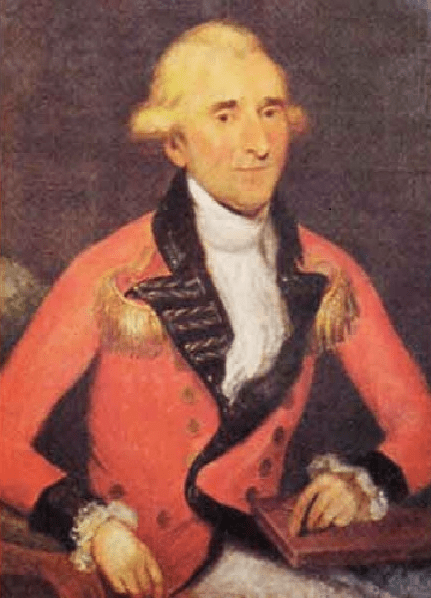
An earlier and less widely known example has a connection to India.
Claude Martin (1735–1800), a French soldier and entrepreneur who spent much of his life in Lucknow under the East India Company, suffered from bladder stones. Around 1782, he devised an instrument that he used on himself over an extended period in an attempt to break down or remove the stone.
Martin later described the procedure in correspondence and records that came to the attention of medical practitioners in Europe. Historians of medicine have noted similarities between his approach and later methods of lithotripsy, the technique used to break up urinary stones without major surgery.
Today, Martin is better known as the founder of the La Martinière schools in Lucknow and Kolkata, but his medical experiment remains a noteworthy episode in the history of self-treatment.
As India marks Surgeons’ Day each year, the occasion serves not only to recognize today’s surgeons but also to remember the long and often remarkable history of surgical practice, innovation, and human resilience.
–Meena


