
November 3 is National Sandwich Day, and the story behind the name involves an English aristocrat, a gambling table and a convenient way of eating without putting down one’s cards.
John Montagu, the Fourth Earl of Sandwich, lived in eighteenth-century England. According to the popular story, he was so engrossed in gambling that he asked for meat to be served between two slices of bread. He could eat with one hand and continue playing with the other. His fellow gamblers began asking for what Sandwich was having, and a culinary institution was born.
Or so the story goes. The precise circumstances are uncertain, and people had been eating food wrapped in or placed between bread long before the earl came along. The word sandwich, however, acquired its modern culinary meaning in eighteenth-century England.
The earl could hardly have imagined what his name would come to represent. Today, sandwiches range from the simplest buttered-bread snack to elaborate creations served in fashionable restaurants. And each country seems to have interpreted the idea in its own way.
Of Famous Five picnics and midnight feasts
For many of us, the first sandwiches we encountered in literature were not in a cookbook but in the pages of Enid Blyton. If you remember the Famous Five, you will remember the food almost as vividly as the adventures. Julian, Dick, Anne and George seemed to spend as much time eating as solving mysteries. Their picnics were lavish, their appetites enormous, and their thirst for ginger beer seemingly unquenchable. In Five Go Off to Camp, the children tuck into Spam and lettuce, egg and sardine sandwiches. In Five Go on a Hike Together, there are several varieties, including cheese, pork, ham and cream cheese.
Blyton even wrote A Picnic Party with Enid Blyton, a 1951 book that describes the contents of a picnic basket. Along with egg, sardine, tomato and lettuce, jam, and honey sandwiches, there are fruit cake, Swiss rolls and lemonade. Honey sandwiches, she warns, can be rather sticky and messy!
The sandwiches were wrapped in greaseproof paper, packed with boiled eggs and fruit, and eaten on a hillside, beside a stream or in a caravan. They were not gourmet creations, but food that could be carried along on an adventure. Blyton made an ordinary picnic sound like an essential part of an extraordinary childhood.
A world between two slices of bread
The sandwich has acquired some fascinating national identities.
Consider Denmark’s smørrebrød, an open-faced sandwich made with a slice of dense, dark rye bread called rugbrød. It is topped with ingredients such as pickled herring, smoked salmon, prawns, roast beef or liver pâté, often accompanied by pickles and herbs. Traditional smørrebrød can be assembled with extraordinary attention to colour, texture and flavour. Some are miniature works of art.
The Swedish smörgåsbord, despite its similar-sounding name, is something else altogether. It is a spread of assorted dishes, including herring, salmon, cold meats, cheeses and bread. The word has entered English to describe a buffet offering a wide variety of choices. A feast, rather than a sandwich!
Vietnam’s bánh mì tells another story of culinary adaptation. The French introduced baguette-style bread during the colonial period, but Vietnamese cooks made it their own. A crisp, light loaf might contain pork, pâté, pickled carrot and daikon, cucumber, fresh coriander and chilli.
The French have the croque-monsieur, a hot sandwich of ham and cheese, often enriched with béchamel sauce and browned until bubbling and golden. Add an egg on top and it becomes a croque-madame.
Japan has its katsu sando, a crisp, breaded pork cutlet tucked between slices of soft white bread, and the creamy tamago sando, filled with egg.
In Cuba, the pressed sandwich combines roast pork, ham, Swiss cheese, pickles and mustard. Different ingredients, different techniques, but the same ingenious principle.
What America puts between its slices
America has developed its own sandwich favourites, some of which are almost institutions in their own right.
The grilled cheese is simplicity itself: cheese between buttered slices of bread, toasted until golden outside and wonderfully melted inside. It is often served with tomato soup, making a particularly comforting combination.
Then there is the peanut butter and jelly sandwich, or PB&J. One slice is spread with peanut butter, the other with fruit jelly or jam. The combination of salty, nutty and sweet flavours has become a childhood staple in the United States.
The BLT takes its name from its three principal ingredients: bacon, lettuce and tomato, usually with mayonnaise. The club sandwich is more substantial, often layering chicken or turkey, bacon, lettuce and tomato between three slices of bread.
Philadelphia has its famous cheesesteak, with thinly sliced beef and melted cheese in a long roll, while Louisiana offers the po’boy, traditionally filled with fried seafood such as shrimp or oysters.
In a 2024 survey of 2,000 Americans, grilled cheese emerged as the favourite, chosen by 42 per cent of respondents, closely followed by chicken sandwiches at 40 per cent. Turkey, ham, tuna and peanut butter and jelly also featured prominently. Clearly, the sandwich is serious business in America!
And then there is India
India, of course, has made the sandwich very much its own.
Mumbai’s famous vegetable sandwich layers slices of potato, tomato, onion and sometimes beetroot between buttered bread spread with green chutney. A sprinkling of sandwich masala provides the characteristic kick. It may be served cold or grilled, with extra chutney and tomato ketchup on the side.
The masala toast sandwich takes the idea further, often adding spicy potato filling and other vegetables before the bread is toasted on a hot griddle. The humble chutney sandwich, meanwhile, is a fixture in many Indian homes. Butter, green chutney and perhaps a few slices of cucumber can transform ordinary bread into an afternoon snack.
Egg sandwiches have acquired their own Indian personality, too. An omelette seasoned with onion, green chillies and coriander, tucked between slices of bread, makes a quick breakfast or evening meal.
And what about vada pav and dabeli? Strictly speaking, these are not conventional sandwiches made with two slices of bread. Both, however, belong to the larger family of portable bread-based foods. Mumbai’s vada pav combines a potato bonda with a soft bread roll, chutneys and often a fried green chilli. Gujarat’s dabeli packs a sweet-spicy potato filling into a pav, adding peanuts, chutneys and sometimes pomegranate seeds.
Indeed, the Indian sandwich is less a fixed recipe than an invitation to improvise. Leftover potato sabzi, paneer bhurji or yesterday’s vegetables can all find a second life between two slices of bread. A little chutney, some butter and a turn on the tava can work wonders.
What makes a sandwich?
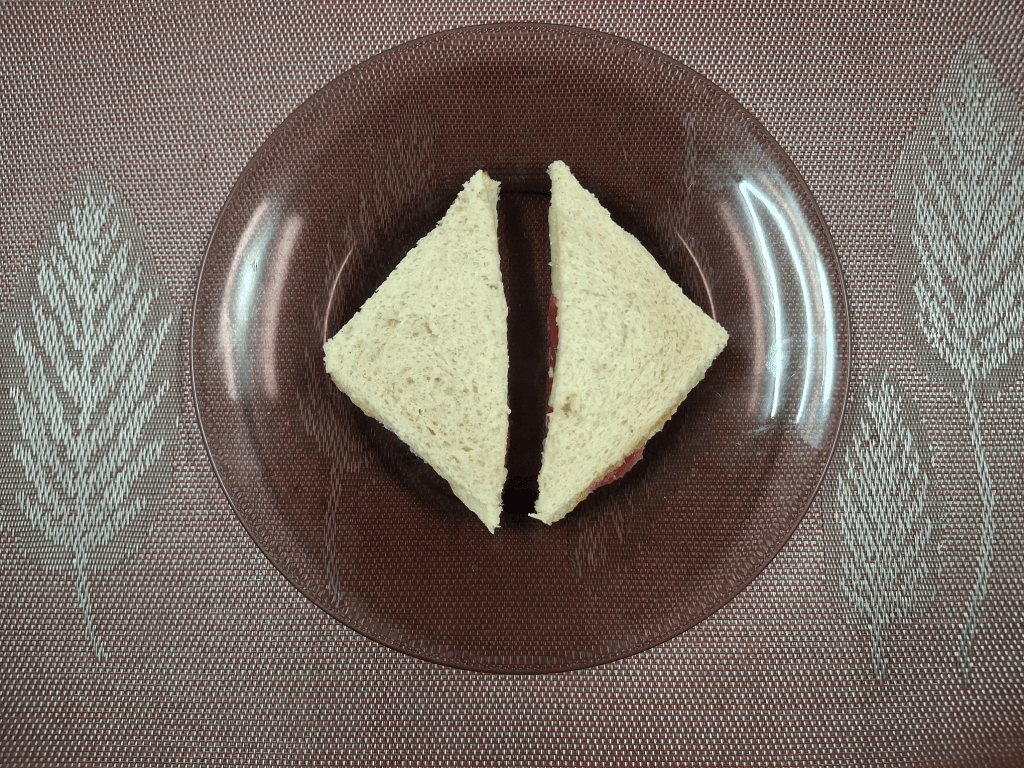
That brings us to the key question, what makes a sandwich? Is it the bread? Must there be two slices? Does a filling in a roll count? And can a single slice with an elaborate topping qualify?
There are no universally satisfying answers. The open-faced Danish smørrebrød challenges the two-slice rule, while vada pav and dabeli invite us to look beyond the conventional sandwich.
Perhaps the sandwich’s greatest strength is precisely this flexibility. It can be breakfast, a school lunch, an office meal or a midnight indulgence. It can be frugal or extravagant, vegetarian or non-vegetarian, cold or toasted. It requires neither fine crockery nor cutlery, and is equally at home in a five-star hotel, a school lunchbox or a roadside stall.
This November 3, you could celebrate with a Bombay vegetable sandwich, a Japanese katsu sando or a Danish smørrebrød. Or you could make a batch of egg sandwiches, pack some cake and lemonade, and set off on a Famous Five-style picnic. I will be celebrating with my favourites–cucumber and tomata, and grilled cheese.
Happy Sandwich Day!
–Meena


