
Prime Minister Narendra Modi’s recent appeal asking citizens to avoid unnecessary foreign travel, cut discretionary fuel use, postpone non-essential purchases, and embrace restraint in consumption has revived an old Indian political tradition: the call for austerity in moments of uncertainty. The appeal, made in the context of global tensions and fears over fuel and supply disruptions linked to West Asia, was framed as a precautionary economic measure.
By no means is this new. India has heard such calls before.
Since Independence, governments across political ideologies — Congress, socialist coalitions, Janata regimes, and even regional administrations — have periodically attempted to regulate what people eat, how much they consume, how lavishly they celebrate, and even how many guests they invite. Sometimes these restrictions emerged from genuine shortages. Sometimes they reflected wartime economies. Sometimes they were moral projects tied to ideas of discipline, simplicity, Gandhian restraint, or anti-elitism. And at times, they became deeply political.
The Era of Scarcity: Rationing and Food Controls
In the first decades after Independence, India was a food-deficit country. Grain shortages, droughts, foreign exchange crises, and dependence on imports shaped policy thinking.
The ration card became one of the defining documents of Indian life. Urban Indians especially grew up in a world of controlled sugar, kerosene, rice, and wheat distribution. The Essential Commodities Act of 1955 empowered governments to regulate production, storage, transport, and distribution of key goods.
This was not merely administrative economics; it shaped everyday culture.
Families planned meals around availability. Weddings became simpler in drought years. Restaurants faced restrictions on serving certain foods. In many states, governments imposed “rice control orders” limiting movement and stocking of grains. Hoarding and black marketing became criminal offences.
During severe shortages in the 1960s, Prime Minister Lal Bahadur Shastri famously urged Indians to skip one meal a week. “Monday fasts” became a patriotic exercise in many households. Restaurants in several cities reportedly shut on Monday evenings in support of the campaign.
The symbolism mattered as much as the economics. Food restraint was projected as national duty.
Wedding Restrictions: When the State Counted Your Guests
Perhaps the most striking example of state intervention in private consumption came through attempts to regulate weddings.
India’s long-standing anxiety over “wasteful expenditure” often found weddings at the centre of policy debates. Lavish feasts were criticised not only as economic excess but also as drivers of social inequality.
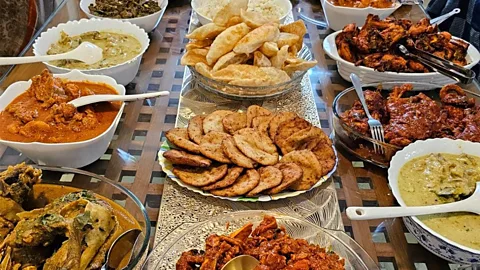
The most famous attempt came during the Emergency (1975–77), when the government imposed restrictions on the number of guests and dishes at weddings in several places. Though implementation varied across states and districts, stories abound of officials inspecting marriage halls and counting attendees.
Even outside the Emergency, states periodically experimented with controls:
- Limits on the number of dishes served.
- Restrictions on use of electricity and lighting during shortages.
- Curbs on late-night celebrations.
- Controls on loudspeakers.
- Taxes or permissions for large gatherings.
In the 1970s and 1980s, “simple marriage” campaigns were encouraged by politicians and social reformers alike. Government employees in some sectors were informally encouraged to avoid extravagant ceremonies.
These debates continue today in different forms. Environmental concerns, food wastage, traffic congestion, and conspicuous consumption have all entered the conversation.
Ironically, Indian weddings evolved in the opposite direction. Liberalisation in the 1990s transformed them into giant economic ecosystems involving tourism, fashion, catering, décor, jewellery, entertainment, and destination hospitality.
The “Big Fat Indian Wedding” became both aspiration and industry.
Meatless Days and Regulating Food Habits
Food restrictions in India have rarely been only about economics. They are also about morality, religion, and identity.
Across decades, many Indian cities and states have periodically imposed bans on slaughter or meat sales during religious festivals.
These restrictions reveal a deeper Indian tension: food is intensely personal, but also intensely political.
The Anti-Waste Moral Economy
A recurring theme across Indian public life is the suspicion of conspicuous consumption.
During crises — wars, droughts, inflationary periods, oil shocks — governments often invoke the language of sacrifice.
In the 1970s oil crisis, many countries experimented with fuel-saving measures. India too promoted conservation campaigns. More recently, during COVID-19 lockdowns, public messaging encouraged minimal movement, reduced fuel consumption, and simplified social ceremonies.
The latest appeal by the Prime Minister fits into this long tradition. Public reactions, unsurprisingly, have been mixed.
On social media, some users compared the moment to earlier periods of austerity and wartime discipline, while others questioned whether ordinary citizens should bear the burden of global crises. Online discussions reflected anxieties about fuel prices, inflation, work culture, and economic uncertainty. (reddit.com)
This duality is very Indian.
The State vs The Plate
India’s relationship with food control differs from many Western democracies because food here is not merely nutrition or commerce. It intersects with caste, religion, region, language, ecology, and politics.
At the same time, the Indian state has historically justified intervention using three broad arguments:
- Scarcity management.
- Social reform.
- Public morality.
The justification changes with the era.
In the 1960s it was famine anxiety. In the 1970s it was socialism and anti-elitism. In the 1990s it became public order and urban governance. Today it is often linked to sustainability, nationalism, health, or cultural identity.
What Restrictions Reveal About India
Food and guest restrictions may appear trivial compared to constitutional politics or macroeconomics. Yet they reveal something fundamental about India.
They show how deeply the state has historically engaged with everyday life.
They also reveal a persistent belief among governments that national crises require behavioural change from citizens — not just policy change from institutions.
Whether it was Shastri’s appeal to skip meals, Emergency-era guest limits, anti-hoarding drives, meat bans during festivals, or recent calls to reduce consumption amid global uncertainty, the underlying message has remained similar:
Private behaviour is seen as part of public national discipline.
India may change governments, ideologies, and economic models — but the debate over what citizens should eat, spend, serve, celebrate, or conserve never quite disappears.
A crisis leads to innovation and change. If this debate can lead to a re-think on the obscenely lavish weddings which have become the norm, it may be one of the good things to come out of this situation
–Meena.
Pic: BBC

 Millennial Matriarchs