And Long Before E-Education, there was SITE…

In the education space, stakeholders in India ( at least private
schools and ’learning solution providers’) have moved to E-learning. An estimate is that overall, technology adoption has been accelerated by upto two decades,
thanks to COVID.

Two things stand out. We would not have done it, if we did not have to
do it! While online tutoring had caught on in a big way, educational
institutions were definitely not leveraging technology to the extent
it should have happened—till COVID. The other, more heartbreaking, is
that this is adding to the already stark inequity in educational
access. The point is not to deny access to some because it cannot be
universal. The point is rather to go on a mission to make it
universal!

In contrast—SITE (Satellite Instructional Television Experiment)
undertaken by India in 1975, was a proactive effort to use technology
for education and development communication for the most-unreached.
Imagine 1975, when TVs were hardly seen even in urban households. Here
was an unimaginably bold initiative to take TV to 2400 of India’s most
backward villages in 6 states.

There were questions even apart from our technical ability to do this—was such an experiment necessary for a country at our level of poverty and problems? Surely, there were more pressing problems and more immediate use for the scarce resources? But the conviction of a team led by Dr. Vikram Sarabhai, that technology-leapfrogging was critical to solve India’s development challenges,
ensured that the topmost decision makers saw the advantages and they
could make  it happen. (‘Technology-leapfrogging occurs when
decision-makers choose to adopt leading-edge technology, skipping one
or more technology generations’).

This was a NASA-ISRO partnership with the objective of using technology for the education of communities in the most deprived and unreached parts of the country . A NASA broadcasting satellite was used. In the first-ever Indo-US space collaboration, it was positioned over India for the
duration of the experiment (August 1, 1975 to July 1976). The
deeply-researched content on critical issues faced by the community,
from agriculture and health, to culture to short films promoting
scientific temper, the production was done mainly by All India Radio,
with social research and evaluation done by a special team from ISRO,
and with the involvement of experts from a range of the most
significant institutions of India-Tata Institute of Social Sciences, to NCERT. Apart from community programs, there was a rich variety of special educational programs for schools as also massive teacher training.
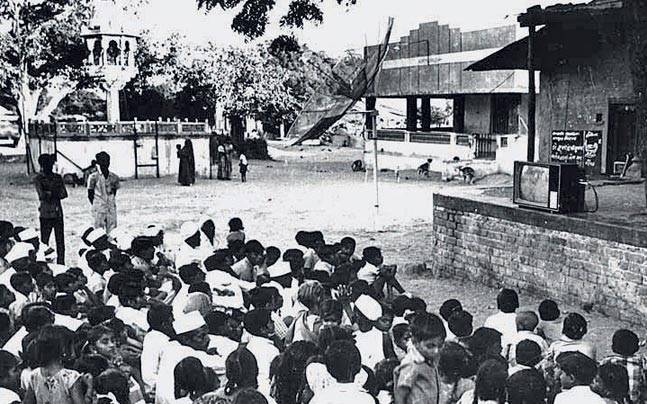
AA930C61-3377-476F-B4AC-6E6DE5EAB179The programs were broadcast for a few hours a day, and hundreds of
people would gather in the village community hall or wherever the
village had installed the TV. In villages which did not have
electricity, truck or car batteries were used to power the viewing.
People in remote Bihar were watching television while many in Delhi
had never seen one!

SITE was a resounding success in proving that technology had a huge
role to play in solving the real development challenges of the
country. It helped ISRO develop its capabilities in operational
satellite systems and contributed to a sound platform for the Indian
National Satellite System (INSAT). It helped us develop an
understanding of educational software programming, from social
research to production to evaluation. And it helped develop managerial
capacities. It was probably also the first time in India that a very
young group (mainly in their 20s) formed the core of the team taking
responsibility for such a complex task of national importance.

Well-known science fiction writer Arthur C. Clarke called SITE ‘the
greatest communication experiment in history’.

So even as education (for some) moves online, here is a Hurrah for the vision of the
giants on whose shoulders we stand! Can that infuse us once again?

And a Hurrah from the Millennial Matriarchs for some of the amazing
people who were part of SITE, whom we have had a chance to interact
with—Prof. Yashpal, Kiran Karnik, BS Bhatia, Binod Agarwal,
Vishwanath, Mira Aghi—to name just a few. We are thankful to life for
giving us these opportunities.

–Meena
How to be a Parent

The last three months of lockdowns across the world have, among other things, put the spotlight on parenting. With children and parents in continuous and close confinement, both have been tearing their hair out in frustration. The challenge of keeping children ‘occupied’; the careful negotiation of time and space that respects personal and physical boundaries; the sharing of responsibilities amidst the constantly looming uncertainty of when and where the virus could strike, has put everyone on tenterhooks.

This has led to a proliferation of Advice Columns. From counsellors to therapists, psychologists to agony aunts, there seems to be an overdose on ‘good parenting’ tips. In our zeal to do the best for our children we sometimes tend to forget the most basic and simple guidelines that are based on the fundamental premise of mutual respect.

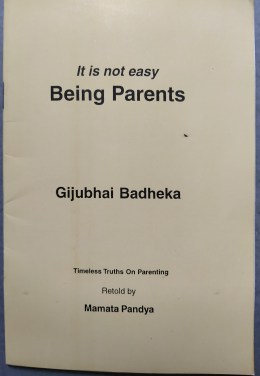
These were offered almost a hundred years ago by Gijubhai Badheka one of the pioneers of the Montessori system of education in India, lifelong advocate of children and their rights, and creator of some of the best loved and popular children’s literature in Gujarati.  Gijubhai believed that every child has its own distinct personality. We as adults need to recognise and respect this. He urged parents to convert to the faith of trust, respect, freedom and love for children. Starting with these five fundamental tenets.

If You Really Want ToIMG_20200625_114247.jpg

If you would like to do just one thing for children…

What could you do?

Do not hit children.


If you would like to do two things; what could you do?

Do not scold children

Do not insult them.


If you would like to do three things; what could you do?

Do not scare children

Do not bribe them to do something

Do not overindulge them.


If you would like to do four things for children; what would these be?

Do not preach to children

Do not blow hot and cold

Do not keep finding fault

Do not exercise authority all the time.


If you are keen to do five things; what will you do?

Do not do whatever the child demands; teach it to do for itself.

Let the child do what it desires to do.

Do not take a child’s work lightly.

Do not interfere into a child’s work.

Do not take away a child’s work.

In a world that has changed dramatically in the last 100 years, these timeless tenets remain as, if not more, true today.

Gijubhai Badheka passed away on 23 June in 1939, at the early age of 54 years leaving behind a prodigious legacy of writing for children, parents and teachers.

Gijubhai was my grandfather. In my small way, I try to carry forward his legacy by sharing and translating his works from the original Gujarati into English.

–Mamata


National Science Day

28 February marks National Science Day in India–it is the day in 1928 when Sir C. V. Raman discovered the Raman Effect. For his discovery, Sir C.V. Raman was awarded the Nobel Prize in Physics in 1930.

The discovery of the Raman Effect itself happened at Calraman effect.jpgcutta, but Bangalore was also Sir Raman’s ‘karma bhoomi’, in that he worked at the Indian Institute of Science from 1933 till his retirement in 1948, after which he founded the Raman Research Institute in the city, and continued working there till his death in 1970.
So on this Science Day, here is a little information on one of the exciting science education venues coming up in Bangalore. Science Gallery Bengaluru, under construction in Hebbal (not too far from IISc and the Raman Research Institute), ‘will be a dynamic new space for engaging young adults at the interface between science and the arts’. The under-construction centre anticipates a footfall of about 40,000 people a year, with a focus on 15-­25 year olds. It is a multi-stakeholder collaboration, including Govt. of Karnataka, Trinity College UK, Indian Institute of Science, etc.

Scheduled to open in 2021, the Science Gallery is already active, having put up several events including ‘Submerge’ a major exhibition on Water.

And keeping with the theme of Science Day 2020 which is “Women in Science”, the Executive Director of the Science Gallery is Dr. Jahnavi Phalkey, a historian of science and technology.  The Board is chaired by Dr. Kiran Mazumdar-Shaw, and includes Dr. Geetha Narayanan.

Bodes well for Science and Women Scientists!

Let us hope that the Science Gallery will help to infuse young people with the spirit of what Sir CV Raman said: ‘Ask the right questions and nature will open the doors to her secrets.’

–Meena

Uncle Moosa

When I saw the name Sathyanaryanan Mundayoor on this year’s Padma Shri list, a recognition for playing a ‘seminal role’ in spreading

Uncle Moosa.jpeg
Photo credit: Bapenlu Kri 

education in Arunachal Pradesh, I was delighted. He epitomises for me a true passion for books and reading, and an inspiring story of a lifetime devoted to this mission. I first heard of him and his library mission, over a decade ago, from my old colleague and friend Ambika Aiyadurai. I sent him some of the books that we had developed in CEE, and over the years we corresponded sporadically. I have not yet been able to meet him in person, but truly hope to do so sometime. In the meanwhile I feel that his work needed to be shared. What could be better than a first-hand account from Ambika who has known him and seen his work over the years.

Thank you Ambika for sharing this!

–Mamata

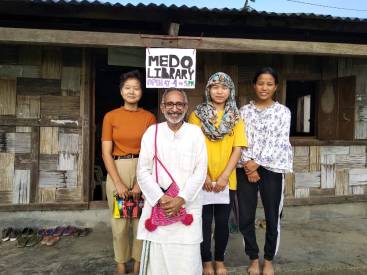
I first heard about Sathyanaryanan Mundayoor, way back in 2006 when I started my research work in Arunachal Pradesh. School teachers, students, engineers, administrators, doctors and local villagers in Lohit district of Arunachal Pradesh suggested I meet him. In Lohit and later Anjaw district, where I started my field research, every one fondly spoke of ‘Uncle Moosa’, a name that people of Arunachal had given him. It was only after two years, in 2008, that I had a chance to meet him at Wakro (Lohit district). My accommodation was in the Circuit House, and he had come there to meet someone. With a pleasant smile, a gentle, fragile-looking man greeted me with a ‘namashkaram’. What struck me was his dress. That evening, in the chill of October, all Uncle Moosa had over him was a sweater and shawl, and a cotton veshti. In fact, I have only seen him in a veshti all these years.

Uncle Moosa invited me to visit Bamboosa library the next day. The days were short, so I decided to visit the library at 3 p.m. A group of children was in the library, sitting on a carpet on the floor, reading books. Few sat on chairs placed along the wall. Soon, another set of students arrived. With an assortment of books neatly arranged on the shelves, this single room is a wealth for local children. Students were free to choose any book, read on their own, or in groups. This library in Wakro is a result of Uncle Moose’s mission to inculcate reading skills and promote a reading culture among children in Arunachal Pradesh. And he has spent the last 30-odd years on this mission to connect rural children of Arunachal Pradesh with books. Starting with the Bamboosa library in Tezu, followed by Apne library in Wakro, and Hutong library in Yatong in Anjaw district, by now 13 libraries have been set up in the state, as part of the youth library network.

Uncle Moosa’s first visit to Arunachal Pradesh was in the year 1979 as part of a Vivekananda Kendra Vidyalaya mission. He took this up after quitting his government job in the income tax department in Mumbai. Till 1996, he worked with VKV, dedicating his entire time to the library movement, and never went back to Mumbai nor to his home state of Kerala. In addition to running libraries, Uncle Moosa would invite scholars and other visitors to give a talk in the library and interact with the students. Uncle mentored senior students to become reader activists and there are several events organized during Gandhi Jayanti, World Environment Day and Independence Day where students affiliated with the library movement would perform plays, skits, reading sessions and poem recitals. Those who have known him for several years tell me that Uncle Moosa would carry books in small trunks and suitcases to remote villages to set up reading camps. Hopping onto state transportation buses, and in places with little road connectivity, he would walk for several kilometers to reach a village.

Not many know about Uncle Moosa’s frugal living. A small single room with a bed and a shelf was his accommodation in Wakro. His day begins at four in the morning by doing yoga and meditation. His favourite breakfast is upma, and he prepares his own food himself every day. Full of energy, and with a kind, ever-smiling face, talking with him is a joy. His dedication to the library movement and helping students with their education has earned him love and respect, both from adults and children. He continues to live in Arunachal Pradesh, and is now based in Roing. Many years have passed, and I have completed my PhD, but every time I go back to Arunachal Pradesh, I look forward to meeting Uncle Moosa!

Uncle Moosa has dedicated his life to promoting education and fostering a culture of reading in the remote areas of the North-Eastern state. May his tribe increase!

Ambika Aiyadurai


The Dot that Went for a Walk: Translating a Book on Role Models

My friend Bharathi Kode recounts her experience of translating a book that aims to inspire the younger generation with a new set of role models: Meena

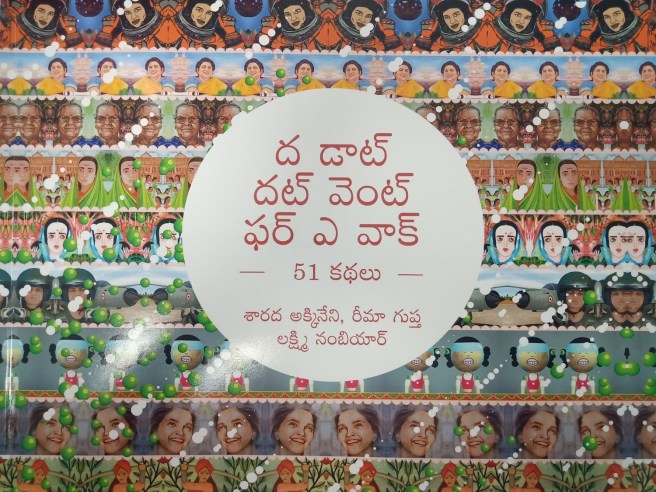
The dotEverything starts with a dot. On a mid-summer day, I got a call from Reema Gupta, who is the co-lead of the Women’s Leadership and Excellence Initiative at Indian School of Business, asking if I could translate the book she had co-authored along with her two friends. The book “The Dot that Went for a Walk” was written in English by Reema and her two friends Sarada Akkineni and Lakshmi Nambiar who have made it a mission to create social change and empower young girls through inspirational stories. Inspired by the quote of artist Paul Klee “A line is a Dot that went for a walk”, the book was titled “The dot that went for a walk”.  They wanted the book to be available in regional languages including Telugu.
She said they all were all first time writers and first time publishers. I said ‘And hence, you want a first time translator to do the translation?’ We laughed. And then I asked her how she how she had narrowed down to me as a potential translator. She said they had been searching for translators who are not only good at language but also somebody who shared their vision and would do the work with the same passion that they had. They approached a publishing house called Manchi Pustakam for suggestions, and the head of the publishing house had referred my name for this task. A dot connecting me to another dot J

The book features inspirational life stories of 51 Indian women. It starts with the story of Rani of Jhansi who fought the British, and ends with the story of Avani Chaturvedi, a MIG fighter pilot defending our country. Together they tell the story of the last 200 years of the country. The idea is that the young generation will connect with these role models, be inspired by them, think of career possibilities and fight harder against self-doubt.

I was excited and immediately said ‘yes’ without a second thought. In my area of work, I do interact with children and youth and I know how important it is to expose children to positive role models, especially in this digital age where children are exposed to lot of negative influences. I was not sure how much time and effort it would take for me to translate a book of about 150 pages. But still I committed, as I could see the influence that this book can have on the future of young children.

As a first time translator, it was quite exciting for me. I found translation as difficult as writing a book. At times I wanted to go beyond the ideas, thoughts and imagination of the author. But that was obviously not on. I found it also a great learning exercise. It improved my language skills in both English and Telugu. It helped me to get to know about some inspirational women whom I didn’t know about earlier. It took a lot of time, I had to put in so much effort. But it has been quite a satisfying journey.

The Telugu version was launched in November 2019 by the Missile Women of India Ms. Tessy Thomas, in Hyderabad.

The authors are going way beyond the printed word to get the message across effectively. They are organizing essay competitions, discussions around the book in the schools around Hyderabad to begin with. A content platform called ‘Dot Express’ is also being initiated where young generation can voice their opinions and interact with experts.

Even before it got published, sponsors came forward to distribute the book to 12000 children in govt. schools in Telangana. The journey of the dot has just begun. We have to see what patterns, masterpieces it will create in future.

Great job, Reema, Sarada, Lakshmi and Bharathi! We need many more books like this one! 


Mole of Memories, Table of Nostalgia

I saw in a dream a table where all elements fell into place as required. Awakening, I immediately wrote it down on a piece of paper, only in one place did a correction later seem necessary. Mendeleev

An appropriate year and time of year to remind myself of my all-but-forgotten Chemistry roots! It takes quite an effort to remind myself of the time four decades ago, when I was a student of Chemistry at Delhi University.

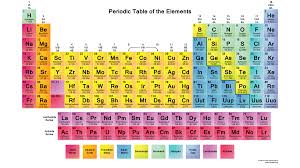
But reading about the declaration by the UN, of 2019 as peridic table.jpgYear of the Periodic Table of Chemical Elements, did bring back some memories.

Why is 2019 so marked? Well, because 1869 is considered as the year of the discovery of the Periodic system by Dmitri Mendeleev, the Russian physicist, and it commemorates 150 years of the Periodic Table.

The Periodic Table, if you can recall your school chemistry, is a table of the chemical elements arranged in the order of their atomic numbers, so that elements with similar atomic structure (and hence similar chemical properties) appear in vertical columns.

Chemistry is usually looked upon as a swot or ‘rattu’ subject. The introduction to the Periodic Table is the first time students get to understand the pattern and logic of chemistry. From being a random assortment of letters, elements and their properties being to make sense. It becomes possible to predict the types of chemical reactions that a particular element is likely to participate in. Without memorizing facts and figures about an element, students can, from looking at the position of an element in the table, understand about the reactivity of an element, whether it is likely to conduct electricity, whether it is hard or soft, and many other characteristics.

And hence a whole world opens up!

And coming to the Day. Oct 23 is Mole Day. Not MOLE as in the four-legged creature. But the MOLE that chemistry students struggle to understand. The definition of this mole, as the base unit of a substance having 6.02 x 10²³ particles is really confusing to begin with. Exploring another definition– mass of a substance that contains 6.023 x 10²³ particles of the substance—does not really help either. As a Masters’ student of Chemistry, I was expected to help younger kids in my colony with the subject. And how I struggled to explain this concept! (I shall not venture into such an attempt now, but I think those struggles helped me understand it better).

But at least Mole Day and Year of Periodic Table have reminded me of some claims I may make to be scientifically literate!

Happy double Chemistry Whammy!

–Meena

Celebrating the Teacher

September 5–Teacher’s Day in India is marked by awards, articles, and essays  remembering and honouring those who instruct and inspire.  Across the world, and across generations, there have been many who have left behind their legacy on the young minds and lives. Films and books have tried to capture some of this in their own small way.

A film that I saw recently was a new addition to this list of ‘must watch and must read’. Freedom Writers  tells the story of an idealistic young teacher confronted with the challenge of teaching ‘unteachable, at-risk’ students, and her non-conformist attempts at making meaningful connections.

The movie is based on the real experiences of Erin Gruwell that she documented in a book titled The Freedom Writers Diary: How a Teacher and 150 Teens Used Writing to Change Themselves and the World Around Them. The book was published in 1999.

Erin was a 23-year-old white American when she stepped into her classroom of a motley group of African American and Latino teenagers coming from a world of broken homes, violence, and every form of social, cultural and economic discrimination. Instead of giving up, and simply labelling her charges as ‘unteachable’, Erin realised that these young people were deprived of exposure, attention and respect. One way to open up their vision and world was to introduce them to writings that shared similar histories of discrimination, beginning with The Diary of Anne Frank, and Zlata’s Diary: A Child’s Life in Sarajevo, and including a visit to the Holocaust Museum of Tolerance in Los Angeles. Despite initial resistance, the students began to see the parallels between these books and events in history, and their own lives; they realised that they were not alone in their struggles. Erin then moved on to encouraging every student to keep a journal in which they recorded their thoughts and feelings about their past, present and future.

The students were so inspired by Anne Frank’s story that they organised a “Read-a-thon for Tolerance” and collected funds to invite Miep Gies, the Dutch woman who sheltered Anne Frank’s family, to visit them in California during the 1994/1995 school year. Miep declared that Erin Gruwell’s students were “the real heroes”. As a testament to Erin’s dauntless efforts, all 150 Freedom Writers graduated from high school and many went on to attend college—a hitherto unachieved triumph.

The book The Freedom Writers Diary is a compilation of the journals kept by these students. Its title The Freedom Writers is a tribute to the name of the 1960s US civil rights group called Freedom Riders. Erin’s book was a huge success. She went on to set up The Freedom Writers Foundation, which functions to promote Erin’s successful teaching methods.

The film brought to mind another path-breaking movie To Sir, With Love. Released in 1967, this is also based on an autobiographical novel by E.R. Braithwaite which recounts his experiences as a teacher in London. In this case, it was the challenge of a teacher of colour teaching a class of white, economically and socially-deprived teenagers in a working-class area of London. Facing similar challenges of teaching a set curriculum to semi-literate and disinterested, hostile students, Braithwaite took on the challenge by switching to unconventional teaching methods including visits to museums, and allowing students to discuss what was meaningful to them, in the class. Like Erin, he broke through the barriers, and succeeded where others had thrown up their hands in despair.

Inspiring films both. Also a reminder that, in any time and place, a single individual can make a big difference. A tribute to every teacher, who in his or her own way, touches countless minds and hearts, and changes lives.

–Mamata


ARE STUDENTS LEARNING?

The New Education Policy has gone through long debate and discussion. It is time to put it into action.  But the crucial issue is how will all the lofty ideas be translated into better learning?

It is essential to worry about this. Because what students seem to be learning in government schools today, or rather what they are not learning, is a matter of grave concern. This may seem to be a sweeping statement to make, but many of those concerned with school education would agree. A large number of studies, including the well-respected PROBE reports endorse this.

But sometimes, large numbers, averaged statistics, and thick, academic reports don’t really communicate effectively. So let us look at one small example. A test was administered to a group of 457 youth, of whom 7 were below SSC, 104 were SSC Pass, and the remaining were Inter Pass, Diploma, Graduates etc. Meaning, 346 of the candidates were at least Inter or Std 12 pass. The test consisted of a few basic math and science questions administered in the mother tongue, and a middle-school level comprehension passage also administered in the mother tongue. The test did not include anything beyond Std 8 competencies, and in fact, many of the questions should theoretically have been answered correctly by Std 4 students.

The questions and results are summarized below:

Observations for Math and Science Competencies


Question Level Question % of Students who have answered correctly
Math
1 What is the addition of the following numbers:    6578 + 9342 91.40
1 Multiply the following:  782 x 421 68.40
2 Solve 4 × 5 ÷ 2 + 7 =? 71.90
2 If you have got 763/800, what is your percentage? 63.00
2 What is the average of Average of 98 and 62? 63.20
2 You have Rs. 219. You give 2/3 to your brother. How much money are you left with? 52.90
3 Identify the ‘right angle’ triangle 84.00
3 What is the next number in the sequence 1 4 9 16? 51.60
3 What is the next number in this sequence 1 1 2 3 5? 55.10
Science
2 H2O is the chemical name of which common element? 68.90
2 What is the name of the satellite that revolves around Earth? 49.20
2 Approximately, how long does the Earth take to complete one orbit around the Sun? 64.70
3 If you have poor eye sight, you are likely to be suffering from the deficiency of which vitamin? 44.80
3 Name the process used by plants and other organisms to convert light energy into chemical energy? 75.40
Question Level
1 Class III-IV level questions
2 Class V-VI level questions
3 Class VII-VIII level questions


Observations for Reading Comprehension

  • Overall 41% of the total youth were able to answer all the questions correctly in Reading Comprehension and get a score of 100%
  • 9% students were not able to answer any question correctly and thus scored ‘0’ in Reading Comprehension


Admittedly this was not very scientific test, maybe not on a representative sample. There could many questions about the methodology and process. But to my mind, that still does not excuse the results!

What is wrong with our schools? We are revising curricula and re-writing textbooks; we are training teachers ad infinitum; we are giving grants for everything from school toilets to teaching-learning material. But at the end of the day, the proof of the pudding is in the eating. And this pudding doesn’t taste at all right!

Increasing the financial allocation for Education is the first big step. But this is the time to take a serious and hard look at how this money should be spent. Doing more of the same is not going to get us anywhere, because what we are doing is obviously not good enough. There needs to be a National Mission to ensure that our children learn—our future depends on this.

–Meena

Parenting an Instinct? Dangerous Assumption

Sanjeev 15 years old. Son of good friends. Committed suicide a few days before his Std 10 Board exams.

What would lead to a situation where a 15-year old is so defeated by life, or is in such despair that he takes his life?

Madhuri and Amar are wonderful people. They loved their two children and worked hard to give them the best of everything. Madhuri would get up at five every morning to cook breakfast and lunch, before coming to work. Amar would take them to the movies every alternate Sunday. They both worked hard to earn enough to give them the advantages they never got.

But were they good parents? I am not so sure.

Madhuri and Amar had married young—defying their parents to make a runaway match. Sanjeev came along before they knew what was happening. They coped with jobs, insufficient money, newly reconciled relatives, sleepless nights, and a fairly new marriage, as best they could. They couldn’t really draw upon any experienced parents, even if they wanted to.

But it was fairly obvious to many of us standing on the side and looking on, that though they were loving parents, they were not good parents.

Why do we assume that parenting comes naturally? That it is an instinct? That it requires no preparation, no conscious effort?

We have recognized the importance of telling young couples that the health of the mother and child are endangered if the mother is too young and her body too immature. But have we ever told them that the psychological and emotional well-being of the child are in danger if the parents are too immature to bring them up? Have we told the bride’s parents and the groom’s parents this?

We take the trouble to inform new parents what they must feed the child, what the symptoms of various illnesses are, when the infants must have their various shots, etc. But does anyone tell them how they must deal with their children? Give them a glimpse of child psychology and child behaviour?

Yes, my great-aunt had eight children, starting with her first one when she was 15. No. No one gave her lectures on child psychology. And all the children grew up quite well, thank you very much! Yes, true.

But surely the world today is a much more complex place than it was 75 years ago. Or 50 years ago. Or even 15 years ago. Were children then exposed to internet, Facebook, Instagram, Tik Tok, and all kinds of things I am not even aware of? Did they live in a world where a percentage point in Std 12 marks made the difference between making it into medicine or not? Did they live in a world where violence and sex were daily fare? Where corruption and cynicism were the order? Where possession or non-possession of branded shoes and jeans, or Facebook pics of exotic holidays, decided whether you belonged or didn’t? Where the family was two young adults who left in the morning and came back late in the evening?

The answer is obvious. We talk of education to cope with change. Then why do we not see that education for parenting is a–maybe the–most crucial part of this education? We know that data analysts need training; carpenters need training; engineers need training…. But we seem to think that we can take on the most important job in life—that of taking responsibility for another human life—without any training or education or preparation or even thought.

The increasing number of cases like Sanjeev’s that one sees reference to in the media clearly indicate that we need such education. But who is provide it? Where? When? How? Indian society must answer these questions. It is no longer enough to say that our traditional structures and family values are so strong that these things will get taken care of. It is obvious that the family and social structures are not being able to cope.

Someone has to act! This kind of education or sensitization hast to reach each and every young person. Reach them at a time when it is needed. Reach them in a way that it makes a difference. Is the Public Health Centre the venue? The anganwadi? The school? The college? TV the medium? Radio? All of these?

Whatever the answer, let us at least ask ourselves the questions. Believe me, a Sanjeev you know may break your heart.

–Meena


National Education Policy Awaits Your Inputs…

Ed Policy

The draft of the National Policy on Education (2019) is out.  The nine-person Committee under the chairmanship of Dr. K. Kasturirangan which put together the report (based on large public consultations), mentions that ‘the guiding principles of the policy are Quality, Affordability and Accountability’. The policy they say, attempts to look at education ‘in a single organic continuum from preschool to higher education and also touched on related sectors that form part of the larger picture’. The education of the next generation concerns all of us. This is an opportunity to give our inputs to strengthen it.


The 420+ page document can be seen on https://mhrd.gov.in/sites/upload_files/mhrd/files/Draft_NEP_2019_EN_Revised.pdf.

Comments can be given on https://innovate.mygov.in/new-education-policy-2019/.

To get into the reflective mood necessary to do this, here is a quick selection of thoughts and quotes from those in India who have thought deeply about education.

Hope this helps!

FROM TAGORE

The highest education is that which does not merely give us information but makes our life in harmony with all existence.

Education has its only meaning and object in freedom–freedom from ignorance about the laws of the universe, and freedom from passion and prejudice in our communication with the human world.

Education means enabling the mind to find out that ultimate truth which emancipates us from the bondage of dust and gives us wealth not of things but of inner light, not of power but of love. It is a process of enlightenment. It is divine wealth. It helps in realization of truth.

In education, the most inspiring atmosphere of creative activity is important. Primacy function of the institution must be constructive; scope must be for all kinds of intellectual exploration. teaching must be one withe culture, spiritual, intellectual, aesthetic, economic and social. True education is to realize at every step how our training and knowledge have an organic connection with our surroundings.

FROM MAHATMA GANDHI


An education which does not teach us to discriminate between good and bad, to assimilate the one and eschew the other, is a misnomer.

Unless the development of the mind and body goes hand in hand with a corresponding awakening of the soul, the former alone would prove to be a poor lop-sided affair.

Persistent questioning and healthy inquisitiveness are the first requisite for acquiring learning of any kind.

True education must correspond to the surrounding circumstances or it is not a healthy growth.

I believe that religious education must be the sole concern of religious associations.

A balanced intellect presupposes a harmonious growth of body, mind and soul.

The emphasis laid on the principle of spending every minute of one’s life usefully is the best education for citizenship.

FROM DR. S. RADHAKRISHNAN

Education aims at making us into civilized human beings, conscious of our moral and social obligations.

Education must develop democratic attitude. Educational institutions should train people for freedom, unity, and not localism, for democracy, not for dictatorship.

Education has for its aims not merely acquisition of information but the capacity for discernment.

FROM INDIAN EDUCATION COMMISSION (KOTHARI COMMISSION) REPORT, 1966

Of all factors which determine the quality of education and its contribution to national development, the teacher is undoubtedly the most important. It is on his personal qualities and character, his educational qualifications and professional competence that the success of all educational endeavour must ultimately depend. Teachers must, therefore, be accorded an honoured place in society.

The academic freedom of teachers to pursue and publish independent studies and researches and to speak and write about significant national and international issues should be protected.

Strenuous efforts should be made to equalize educational opportunity.

The school and the community should be brought closer through suitable programs of mutual service and support.

With a view to accelerating the growth of the national economy, science education and research should receive high priority.

A major goal of examination reforms should be to improve the reliability and validity of examinations and to make evaluation a continuous process aimed at helping the student to improve his level of achievement rather than at ‘certifying’ the quality of his performance at a given moment of time.

FROM JIDDU KRISHNAMURTHY

Education is not merely a matter of training the mind. Training makes for efficiency, but it does not bring about completeness. A mind that has merely been trained is the continuation of the past, and such a mind can never discover the new.

Education is not merely acquiring knowledge, gathering and correlating facts; it is to see the significance of life as a whole.

Conventional education makes independent thinking extremely difficult. Conformity leads to mediocrity.

The function of education is to create human beings who are integrated and therefore intelligent.

Education should help us to discover lasting values so that we do not merely cling to formulas or repeat slogans; it should help us to break down our national and social barriers, instead of emphasizing them, for they breed antagonism between man and man.


–Meena