It is common to mark the milestone centenary of a popular personality or a historical event, but not so common to celebrate a book and its fictional characters for reaching the hundredth birthday. This week, a centenary celebration marks the debut of a timeless favourite character Winnie-the-Pooh, and his motley band of friends, who have been delighting and comforting generations of children, as well as much older ‘children at heart’.
The little bear and his small gang of Hundred Acre Wood have captivated children’s imagination for a hundred years. Pooh, along with Tigger, Eeyore, Piglet, Rabbit, Kanga, Roo, Owl, and the little boy Christopher Robin were the literary creations of English writer AA Milne.
Alexander Alan Milne was born in London on 18 January 1882. He studied at Henley House School, a small independent school run by his father. One of the teachers at the school was HG Wells. After earning a degree in mathematics from Cambridge University, AA Milne moved back to London where we worked as assistant editor of the humour magazine Punch for eight years. Despite being a staunch pacifist he was drafted in World War 1 and served for the British army. He was injured in the Battle of Somme; and returned to England suffering from post-traumatic stress caused by his experience in the war. He could not take the busy life of London and moved his family to the countryside outside of East Sussex. As he slowly recovered, he spent a lot of time in the woods in the area with his only son Christopher Robin, nicknamed Billy Moon. These woods became the setting for the forthcoming adventures of the Hundred Acre Wood gang of friends.
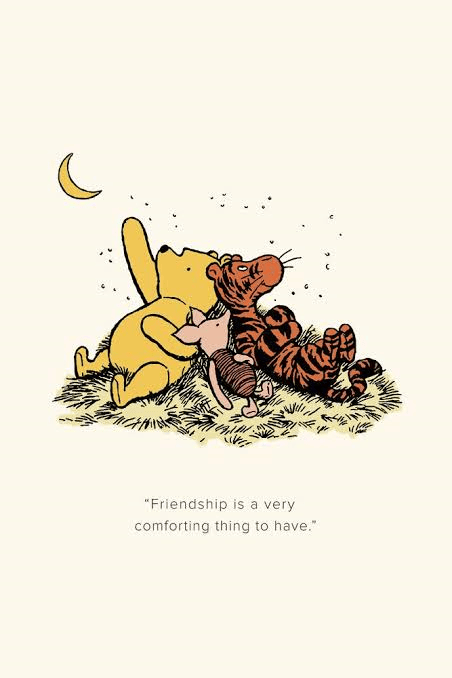
How did the woods become populated with these characters whose charm has remained undiminished for a hundred years? Christopher Robin himself was introduced by his father in a poem titled Vespers which was published in 1923. Another poem mentions a Mr Edward Bear, which was the name of the toy bear that Milne had given his son on his first birthday. But a visit to London Zoo where Christopher saw a black bear rescued from Winnipeg in Canada, led to the renaming of Edward the toy bear as Winnie. The christening was complete when Christopher told his father about a swan that he fed every morning, and how, if the swan did not come, Christopher would say “pooh” implying ‘I don’t care!’ Thus, on Christmas Eve 1925, AA Milne’s short story The Wrong Sort of Bees formally introduced Winnie-the-Pooh, the teddy bear often dragged down the stairs by his owner Christopher Robin. In no time, the big-hearted, but slightly slow-witted bear won the hearts of all children, and the child-at-heart. In the stories that followed, the little boy and his bear were joined in their woodland adventures by their equally quirky, but loving, furry and feathered friends.
The characters were brought to life by pencil illustrations by Ernest H Shepard. Milne and Shepard were old friends; they had also served together in World War I. The writer and illustrator continued their association through all the books.
Shepard based his drawings on some stuffed toys that Christopher played with in his childhood. However, Pooh bear was based on his own son’s teddy bear named Growler. The original stuffed toys that gave form to Tigger, Eeyore, Piglet, and Kanga are still preserved in the New York Public Library, a bit bedraggled over time, but still tugging at heartstrings.
The first collection of stories Winnie the Pooh was published on 14 October 1926. It was a huge success and helped to introduce the characters to audiences beyond England. The stories with their innate innocence, childhood joys, and idyllic countryside provided comfort in times that still echoed with the brutality of World War I. They also touched upon universal sentiments of friendship and bonding.
In the hundred years since, the books have sold millions of copies worldwide; the characters remain evergreen, and their stories embrace us in a warm reassuring hug. Why do they still tug at our hearts?
The characters are relatable. From the innocent simplicity of Pooh, to the melancholic realism of Eeyore; Piglet’s anxious loyalty, to Tigger’s boundless enthusiasm, we find ourselves comparing these with our own self, and our friends. Wouldn’t it be so boring if all our friends were exactly like us?!
Distinct personalities, each with their own quirks that can be so irksome! But wouldn’t it be so boring if all our friends were exactly like us?! That diversity is what makes the pot pourri so charming. Quibbles and squabbles, all part of life and times in the Hundred Acre Wood. And yet, despite the differences, these friends stand by each other through adventures and mishaps. The friend in need, indeed!
There is no one-upmanship, no one tries to be ambitious, or grand or perfect. The friends accept each other as they are. Cantankerous, timid, scared, anxious, pessimistic, scatterbrained…who is judging here? These traits are not highlighted or analysed, just accepted as an integral part of what makes your friend your friend.
Life in the Hundred Acre Wood may have its little moments of drama and adventure, but the real “high” for its residents comes from everyday joys—an impromptu picnic; sharing a jar of honey; a walk in the woods, or simply sitting in silence with a friend.
But, to get to this point does require effort. As Pooh reminds us, you cannot just wait in your corner of the forest for friends to come to you; you have to reach out.
Simple and timeless truths. These are being celebrated in different ways this week to remind us, and refresh us. The New York Public Library is hosting a special exhibition featuring the original illustrations by Shepard, the first editions of the 1926 book, and the original stuffed animals that inspired the characters in the stories. The Ashdown Forest in England which inspired the Hundred Acre Wood is planning walking trails and a redesigned visitor centre that looks like a life-sized pop-up book. Perhaps for those of us who have fond memories of Pooh and pals, it is a good time to revisit Winnie-the- Pooh, and savour once again the simple innocence of childhood.
The original books, published following the horrors of World War I, provided a much-needed solace in a time of great sadness, a connection to the innate wonder of childhood. Today as we are inundated with images of hundreds of thousands of children in the world’s many war-ravaged zones; children deprived not only of the basic necessities for survival, but the very innocence and joy of childhood, we need reminders of these very gifts that make life and living worthwhile.
–Mamata


