In India, it is shopping season round the year. It escalates in the month before Dusserah and reaches a peak at Diwali when every temptation is placed before the consumers to buy, buy, and buy. There is a slew of “offers” for every product imaginable, accompanied with the reminder that never again will such a “deal” come your way, and therefore this is the time to spend, spend and spend! As if our own festivals were not enough, in the last few years, we have embraced other festivals that have no bearing on our culture or traditions, except for the commercial aspect. From Valentine’s Day, to Halloween, and more recently Thanksgiving Day, these have added to the list of yet more days to tempt and entice consumers to engage in more ‘retail therapy’.
This week, which is Thanksgiving Week in the United States, our newspapers are full of ads for Black Friday Sales. Thanksgiving, in America, is celebrated on the last Thursday of November. The Friday immediately following it marks the unofficial start of the holiday shopping season which goes on through Xmas till the end of the year. On this first Friday after Thanksgiving, retailers offer massive discounts. Before the dominance of e-commerce, buyers used to queue up outside big stores from the night before the doors opened, and then there was a huge rush, even stampedes, as the crowds surged in to grab the discounts on offer. This mass frenzy of shopping led people, so swayed by the “offers” that, they ended up buying and spending irrespective of whether they actually needed what was on offer, or even if they could afford it.
The trend of overconsumption continues; not confined now to the richer nations and populations, but spread across the world. This overconsumption does not apply only to finished products, but also to the enormous resources including raw materials, water and energy used in production and transportation, and packaging, as well as disposal of the many products before they each they end of their useful life.
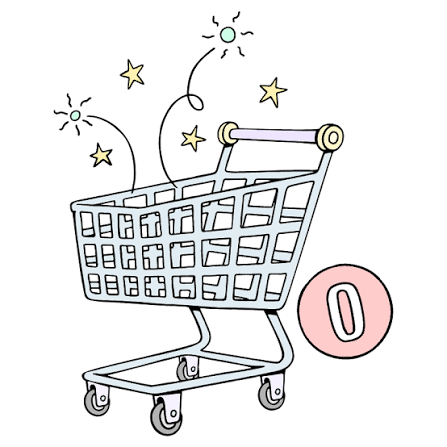
As a counter to this, there is a movement that advocates the need to “think before you buy”. And what better time to be reminded of this than Black Friday, the day after Thanksgiving? This is also the day that is marked as Buy Nothing Day. A day that advocates exactly what it says—Buy Nothing!
This day is not a recent reaction to the consumer patterns of the new millennium. It was started in 1992 in Canada by an artist Ted Dave. His idea of reducing consumption as a lifestyle choice was promoted by a magazine called Adbusters that saw a common cause in the concept. The magazine was started in 1989 by a former advertising industry executive and a group of anti-consumerists as an antidote to what they saw as corporate greed. While Ted had founded the day in September, by 1997, many countries had been attracted to the concept. It was felt that the Day would be more symbolic if it were shifted to Black Friday, the day after Thanksgiving which saw a frenzy of consumerism.
At its core, Buy Nothing Day is a protest against the consumerism the organizers felt was necessary in a world driven by the need to “have things”. Many countries adopted this as a day for society to assess the overconsumption problem. Over the years, many countries including the United States, the United Kingdom, Israel, Austria, Germany, New Zealand, Japan, the Netherlands, France, and Norway have taken on the campaign.
This day is marked as an international day of protest against overconsumption. It is also an opportunity to raise awareness about alternatives to mass consumerism, namely an economy that reduces waste, builds things to last, and uses sustainable materials. As Buy Nothing Day, states that the day “isn’t just about changing your habits for one day” but “about starting a lasting lifestyle commitment to consuming less and producing less waste.” And the first step towards this is to literally Buy Nothing for one day.
As consumers we are not really aware about the global impact of unsustainable consumerism. Scientists have attempted to quantify this impact, and have defined this a ‘the ecological footprint’. This is a method that determines how dependent human beings are on natural resources. It is a measure that indicates the amount of pressure that humans put on natural resources available to them in their surroundings.
While the “footprint” measures negative impact of resource consumption, there is a more recent concept that takes the Buy Nothing Day to a broader canvas, and embraces every aspect of our life and actions. This is the concept of the Handprint.
The Handprint helps in analyzing personal sustainable action. It asks every individual to review and assess their daily behaviours in terms of resource use, and lifestyle choices that could reverse these from unsustainable to sustainable use. This would include not just reduction, but also reuse, recycle, repurpose, recycle, repair and refuse. It encourages the spread of these habits from individuals to family, community and society at large, to embrace the planet. A Handprint thus represents constructive actions, lifestyle choices, and community projects that reduce human footprints and support sustainability.
The Handprint was launched by the Centre for Environment Education (CEE) on 27th November 2007 at UNESCO’s 4th International Conference on Environmental Education held at Ahmedabad, India. Since then, 27th November is being observed as Global Handprint Day gathering all the positive actions taken by the people around the globe towards sustainability.
The movement has grown into the Global Handprint Network (GHN) which invites and engages institutions, civil societies, corporate, organizations, business, firms and other stakeholders of society to share their positive actions. Handprint means commitment to achieve environmental sustainability, environmental leadership, gender parity, sustainable development, to curb social issues and lead to a healthy environment.
This year Buy Nothing Day as well as Global Handprint Day are being marked on 27 November. A positive reminder that every individual, and every action counts in the collaborative effort to achieve a more sustainable world.
–Mamata


