Rabindranath Tagore was the one who gave Gandhiji the title of Mahatma. Gandhi in turn called him ‘Gurudev’ in reverence to his wisdom and his learning, and saw him as a teacher to humanity.

Musings on Life and Times: Views, Reviews, Previews, Interviews..and Advice

India is currently in the process of introducing the New Educational Policy (NEP 2020). Exercises are ongoing to develop the curricula and frameworks for education at all levels, starting from Early Childhood Care and Education (ECCE). As per the Policy document: The overall aim of ECCE will be to attain optimal outcomes in the domains of physical and motor development, cognitive development, socio-emotional-ethical development, cultural/artistic development, and the development of communication and early language, literacy, and numeracy.
This vision for laying the strongest foundation for lifelong learning has its seeds in the thoughts and writing of many educationists and thinkers. It has a deep resonance with Gandhiji’s thoughts on education. In 1937, at a conference in Wardha, Maharashtra, Mahatma Gandhi seeded an important idea to revamp the educational system through Nai Talim or Basic Education.
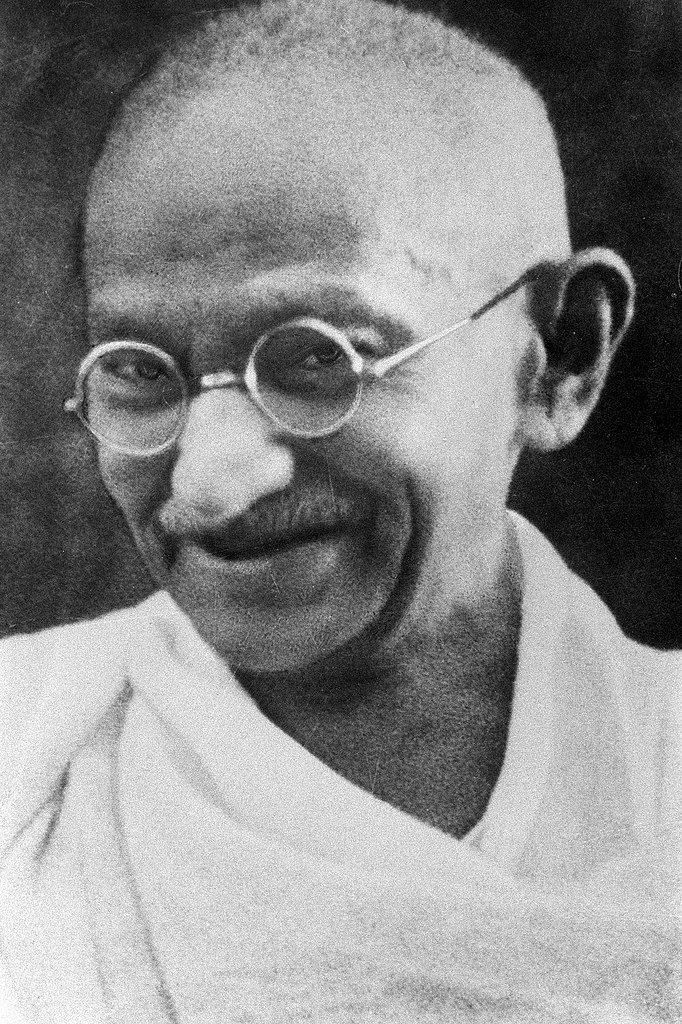
Gandhiji’s vision was that this new paradigm of education should prepare the young learners to become morally sound, individually independents, socially constructive, economically productive and responsible future citizens. The foundation for this was to be laid in early childhood. Gandhiji believed that education should develop all the capacities of the child so that he becomes a complete human being. “By education I mean all-round drawing out of the best in child’s and man’s body, mind and spirit. Literacy is neither the beginning nor the end of education. This is only a means through which man or woman can be educated.
In Gandhiji’s educational thoughts the integrated development of the personality of child is more important than mere literacy or knowledge of different subjects. Thus his vision was of life-centred as well as child-centred education. Besides learning of three R’s–Reading, Writing and Arithmetic in school, he insisted on development of the three H’s–Hand, Heart and Head.
While these thoughts took formal shape in the form of Nai Taleem in 1937, they had long been brewing in his mind. Over the years he was also assimilating the writing and educational philosophies of other thinkers and practitioners of alternate and innovative systems of teaching and learning. One of these was Madam Montessori.
The two had already met in spirit before they met in person. Gandhiji was in London to attend the Round Table Conference in October 1931. Maria Montessori was at the time holding one of the International Training Courses for teachers. Common friends brought them together. At their first meeting which was around 9 October 1931, the interaction was recorded thus:
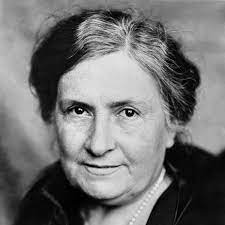
Gandhi greeting her said: “We are members of the same family”.
“I bring you the greetings of children” said Madam Montessori.
Gandhiji said: “If you have children I have children too. Friends in India ask me to imitate you. I say to them, no, I should not imitate you but should assimilate you and the fundamental truth underlying your method.”
Madam Montessori: “As I am asking my children to assimilate the heart of Gandhi. I know that feeling for me over there in your part of the world is deeper than here.”
Gandhiji: “Yes, you have the largest number of adherents in India outside Europe.”
On 28 October 1931 Gandhi gave a speech at the Montessori Training College in London wherein he traced his own Montessori journey.
Madam you have overwhelmed me with your words. [Madam Montessori had welcomed Gandhiji as “a soul rather than a man”.]
It was in 1915 when I reached India, that I first became acquainted with your activities. It was in a place called Amreli that I found there was a little school being conducted after the Montessori system. Your name had preceded that first acquaintance. I found no difficulty in finding out at once that this school was not carrying out the spirit of your teaching; the letter was there. But while there was an honest—more or less honest—effort being made, I saw too that there was a great deal of tinsel about it.
I came in touch, then with more such schools, and the more I came in touch, the more I began to understand that the foundation was good and splendid, if the children could be taught through the laws of nature—nature consistent with human dignity, not nature that governs the beast.
…I see the same thing here, and it was a matter of inexpressible joy to me that from childhood the children were brought to understand the virtue of silence. It and how in ,response to a whisper from their teacher, the children came forward one after another, in pin-drop silence. It gave me great joy to see all the beautiful rhythmic movements and as I was watching those movements of the children, my whole heart went out to the millions of the children of the semi-starved villages of India, and I asked myself as my heart went out even to those children, “Is it possible for me to give them these lessons and the training that are being given under your system, to those children?
It was this first meeting that inspired Mahatma Gandhi to visit Montessori schools in Rome on his way back. He declared there, his interest in promoting them in India. The two continued to be in touch. Just after the outbreak of the Second World War in 1939 when Maria Montessori came to India, Gandhiji was one of the first to send her message of welcome. They met and corresponded during the nearly 10 years that Montessori lived and worked in India. After Italy’s entry into the World War, restrictions were imposed on Montessori as she was being considered as an enemy-alien. Gandhiji expressed sympathy, and regret even, though he was under restrictions himself.
In March 1940 when Madam Montessori was in Ahmedabad she inaugurated the Bal Mandir (kindergarten) in the Sabarmati Ashram campus. Thus the long friendship between two visionaries took concrete form.
As we mark Maria Montessori’s birth anniversary on 31 August, it is a good time to revisit the close links between her and the Mahatma. In these turbulent times, we urgently need to remember their strong belief that to have real peace, we must begin with the children.
If we are to teach real peace in this world, and if we are to carry on a real war against war, we shall have to begin with the children. MK Gandhi
Averting war is the work of politicians; establishing peace is the work of education. Maria Montessori
–Mamata
One of the criticisms against academic institutions is that they are far removed from every day realities and seldom contribute in solving real-life challenges.
The Jawaja project undertaken by IIM Ahmedabad in partnership with the National Institute of Design (NID), Ahmedabad is an early exception.
It was in 1975 that Ravi Mathai, IIM-A’s legendary first fulltime director, set out on a journey to see how corporate management principles could be used to solve the major problem facing India-poverty. Ravi had stepped down as Director and could now devote time to such a project.
The decision was taken to work in Jawaja, a drought-prone district of Rajasthan, consisting of about 200 villages and 80,000 population. There seemed very little scope for development there, given the arid landscape and lack of water and other physical resources. But Prof Ravi Matthai had a different perspective, because he saw people as the biggest resource.
As they understood the area better, they found that the area had a 300-year tradition of leather-craft. The communities there were also skilled at weaving. And so they decided to build on these skills to develop sustainable livelihoods for the communities there. Prof. Mathai roped in NID to join hands with IIM-A, to work on livelihoods and empowerment of the communities in Jawaja. He and Ashoke Chatterjee, his counterpart in NID, started the journey which involved many faculty from both institutes.
The idea was to connect artisans with contemporary disciplines of management and design, and knowledge institutions which had this knowhow. There were some important basic principles underpinning the effort. The first and foremost was that the relationship was one of mutual respect and learning—after all, even as the communities learnt new skills, the faculty of the institutions were learning how their knowledge could be put to use in solving social problems. Another important aspect was to see how much of the value chain could be controlled by the artisans and communities themselves, so that their incomes could be enhanced. The idea was to innovate and design new products which would have new markets, so that the traditional value chains could be broken and the craftspeople could play a greater role in more areas. The focus was also on working in groups, to give greater resilience and strength to the efforts.

The process was by design a gradual one, moving from basic products which did not need very high quality—e.g, leather school bags and woven floor mats, to higher value ones like office supplies, more trendy bags, and high-end furnishings.
The challenges were of course many. Apart from the need to design new products which would use the old skills, technologies and equipment, another major concern was quality control.
With regard to production of new designs, a train-the trainer model was envisaged, which did not work quite as planned. With regard to quality control, the idea was that it would initially be done by external experts, and would then be taken over by the crafts groups themselves. This again went slower than foreseen. Funds and resources for developing new products and for procurement of raw material were always a constraint.
But the enduring success of the bold experiment is seen even today at several levels.
The first was the creation of self-reliant institution of crafts people– the Artisans’ Alliance of Jawaja and its associations. These started to manage all links of the value chain in Jawaja, from raw material procurement, finances, bank dealings, design and technology know how, and marketing processes. These are still active today and continue to innovate, produce and market these products which are highly valued.
The second is the impact of the project on the larger development scene. It was the learning from running this grassroots education and empowerment project that the idea of setting up a specialized institution for education in rural management came up, and the Institute of Rural Management (IRMA), Anand, was born. This was given shape by Prof Ravi Mathai and two other professors who had been with IIM-A—Dr.Kamala Chowdhary and Dr.Michael Halse.
The Jawaja experiment widespread legacy is that it influenced development sector thinking on how to approach community-based livelihood interventions in a spirit of mutual respect and learning.
It is an initiative which needs to be much more widely known, understood and discussed.
–Meena
As environmental educators, our most important task with children as well as adults was to awaken them to the wonders of the world around them. From this wonder of the variety of life and the intricate connections therein would come an intellectual curiosity to understand the world better, followed by a passion to do something about it. So the responsibility was to take people through the steps of Awareness, Appreciation, Skills, Knowledge and Action.
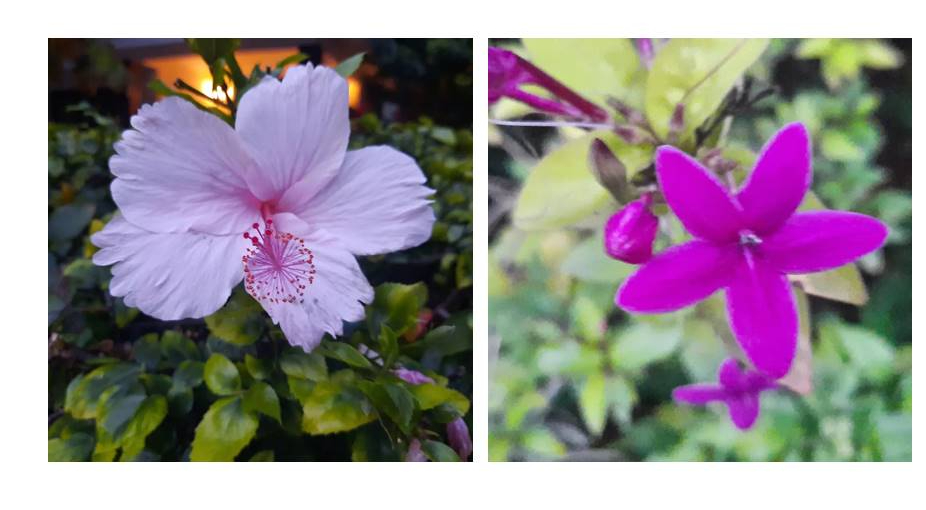
So the first step seeing and sensing the world. I remember some of the exercises we used to do in our workshops to help people do this:
Even the most cynical adult would get completely involved and excited, and the result would be a ‘Wow, who would have thought that there were so many shades of green; that soil smelt like this; that there were so many different types of sounds in nature!’
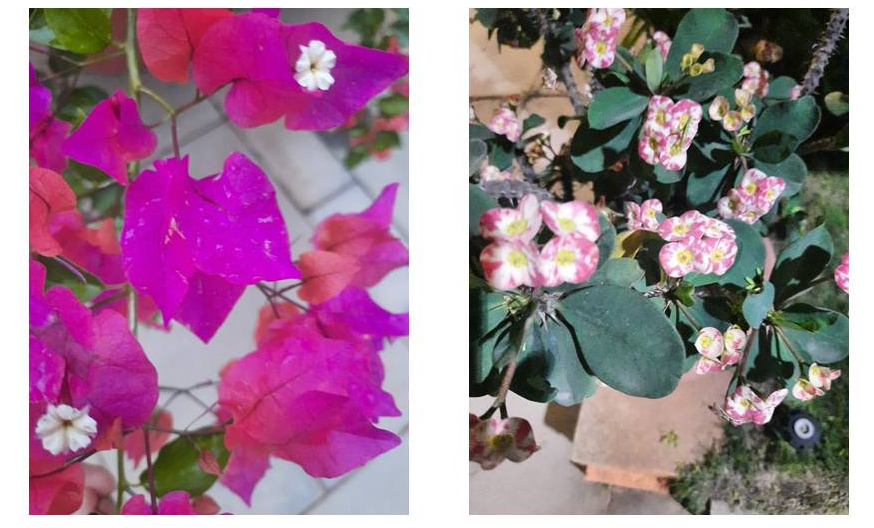
Roles got reversed when the world decided to environmentally educate me two days ago, as I was on my walk. The very same path that I follow every day, but I was out a little earlier than usual. So the light was different and everything stood out with a brightness and clarity that I did not get to see later in the evenings.
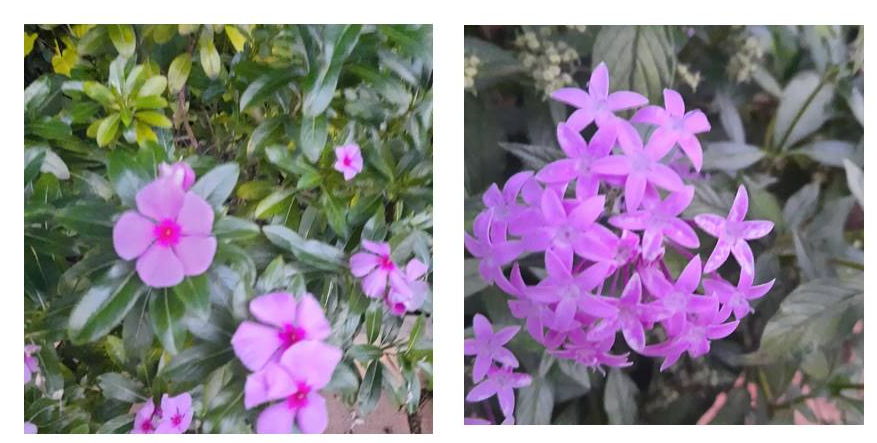
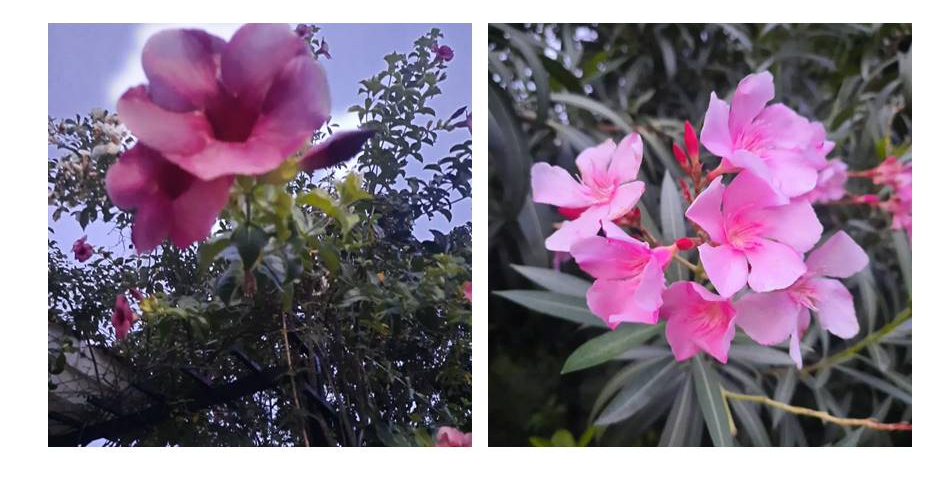
I saw one beautiful pink flower and decided to take a pic. I continued for 2 meters, and saw another one. And within the space of 10 minutes, I had 11 flowers in different shades of pink captured in my phone. I was wonder-struck!
I had obviously only been ‘looking’. I had forgotten to ‘see’. The difference, as Grant Scott, a famous photographer puts it: there is ‘.. a seriousness of intention that one of these words suggests, whilst the other gives the impression of a casual approach to perhaps what is the same thing. The word ‘see’ suggests a depth of visual engagement that allows the person ‘seeing’ to control the action and retain control of any further action that may take place after the initial seeing. To look suggests an observation of surface, it does not suggest any further depth than that. To look suggests both the beginning and end of the action, whereas to see suggests the beginning of a process of investigation.’
So while the popular adage is that we should take the time to smell the flowers, I would also urge that we take the time to see the flowers. And even more important, take the time to let a sense of wonder overtake us!
From this sense of wonder will come the sense of urgency to take care of our world!
–Meena
My generation grew up reading comics usually borrowed from lending libraries. Foreign comics were very expensive and there were few parents in our circles who allowed us to buy them often. Maybe once or twice a year.
These precious comics therefore, were read and re-read and savored cover to cover. The last few pages would often carry ads for a fascinating variety of knick-knacks and gimcracks, of which the most fascinating were the quirkily illustrated ads for ‘Sea monkeys.’ Just add the contents of the package to a tank of clean water the ads promised, and lo and behold, in a few seconds or minutes (I forget which), your tank would have these fascinating little creatures swimming around.

Digging a little deeper, I found that in fact sea-monkeys are in a way manmade creatures. They were ‘invented’ in the 1950s and are a hybrid breed of brine shrimp (Artemia NYOS, a hybrid of Artemia salina) created artificially by a person called Harold von Braunhut. Traditionally used as fish food, von Braunhut felt that brine shrimp could easily be maintained in home aquaria, and used to foster a love of nature among children and help them observe nature. He set about experimenting and found a way through which his hybrid shrimp could be preserved in dry conditions, and brought back to life when they came in contact with water. He patented the process, which is still a secret today. Sea monkeys are translucent and breathe through their feathery feet. They start life with one eye, and then in the course of time, develop two more. Von Braunhut named them ‘sea monkeys’ because of their monkey-like tails. Initially, these creatures lived only for a month or so, but with the help of marine-biology experts, he was able to create creatures which live up to two years.
Von Braunhut introduced them commercially in 1960 under the name ‘Instant Life’.
But marketing the concept and the product was not easy. No toy shops or pet shops would stock them. So von Braunhut came out with the idea of advertising them in comic books, to be bought directly from the company. Sales took off and never looked back! Generations of children in the US have kept sea-monkeys and become acquainted with the wonders of nature through observing them, caring for them and nurturing them. They are still very much an in-demand product.
Sea monkeys did not just find their way into homes and hearts. 400 million of them accompanied astronaut John Glenn to space. Sea monkeys even had their own TV show in the ‘90s revolving around the adventures of three microscopic sea monkeys which are enlarged to human size by a Professor. They have also featured in several TV shows and movies including The Simpsons. Needless to say, there are also several internet fora which discuss these creatures. Sea monkeys have their own Day too—May 16th is marked as National Sea Monkey Day in the US.
Sea monkeys continue to be ‘manufactured’ and sold, and are quite popular even today. They are available on the company site http://www.sea-monkeys.com/, as well as on Amazon, including in India. I am not sure if they are still advertised in comics though!
I have to confess that in my confused mind, for a long time I thought sea-monkeys and seahorses were the same. It was only many, many years later that I realized they were completely different. Sea horses are more bonafide– any of about 50 species of marine fishes allied to pipefishes.
Happy belated Sea Monkey Day!
–Meena
Image: Shutterstock
Exactly 80 years ago this April, ‘Academies and Societies’ which I suppose was a catalogue of learned scientific publications, listed ‘Modern Inorganic Chemistry’ (Tamil) by N. Ananthavaidyanathan, published by Annamalai University and priced modestly at Rs. 2-8.

A lot of family history behind this entry, as the afore-mentioned Ananthavaidyanathan was my grandfather. He was a Professor of Chemistry at Annamalai University having joined it in the mid-1920s, when it was still Sri Minakshi College, and he saw the growth of the College and its sister institutions into Annamalai University in 1929 .
The book was written in response to a competition organized by the University, to come out with the first Tamil under-graduate science textbooks in the country. My grandfather’s ‘Modern Inorganic Chemistry’ won the prize.
My grandmother told us tales of the days and nights and weeks and months of work that went into the book. With no precedents of modern scientific writing or references in regional languages, my grandfather had to coin several names for chemicals, for processes, for phenomena. Being the conscientious, old-school scholar he was, that involved a lot of research and consultation. With Tamil type-writing skills not easy to find, and moreover, the problems of typing chemical formulae in the typewriters of those days, it was a physical challenge as well as an intellectual one! My grandmother helped him proof-read draft after draft.
The hard work paid off, and his was the first college-level chemistry textbook in Tamil.
Annamalai University is an institution with a hoary past. Rajah Sir S. R. M. Annamalai Chettiar, In the early 1920s, set up three educational institutions– Sri Minakshi College, Sri Minakshi Tamil College and Sri Minakshi Sanskrit College—in the temple-town of Chidambaram, and these soon became intellectual centres. The purpose of setting up the educational institutions was to educate the poor, and to give a fillip to literature in Tamil. And I suppose it was in pursuit of the second aim that the competition was organized.
Sir Chettiar was an enlightened industrialist and banker with a deep interest in education. He contributed generously to philanthropic causes and set up institutions. He was one of the founders of Indian Bank. He counts Shri AC Muthaih (who served as the Chairman of SPIC and the President of Board of Cricket Control of India), and Shri PC Chidambaram (former Finance Minister of India) among his grandsons.
In 1928, Sir Annamalai agreed to hand over the group of educational institutions he had set up, to the local government to establish a University. On 1 Jan, 1929, Annamalai University was established under a State Act–India’s first private University.
In its time, the University has been the centre of Tamil, of intellectual debate, of students who questioned the status quo of their day, of strikes, of agitations and of academic excellence. Today it is one of the largest public residential universities in Asia
We are an ‘Annamalai University family’, with my grandfather having taught there for several decades. My father studied Physics there—he had to choose between studying Physics and Chemistry, but my grandfather would not let him join the Chemistry faculty because he was the Head of the Dept., and did not want any controversy about his son being a student in the same department. My brother studied Engineering there. My father and brother both served the Defence Research and Development Organization all their lives, and my brother was honoured with the Padma Shri for his contribution to Agni and Prithvi Missiles. So I suppose I have much to thank Annamalai University for!
–Meena
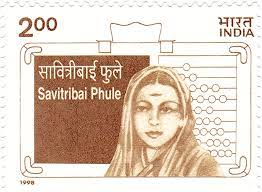
I have often written in this space about ‘women warriors’. Women who have dreamed, and have made their dreams a reality, even in the face of adversity and opposition. These remarkable women are to be found in every age, and in every part of the world. And they continue to inspire, as well as to remind that what we take for granted today, was fought for, and achieved, by someone before us. One of these is the right of girls to education. This is a good week to remember a woman who paved the path for this—Savitribai Phule.
On 3 January 1831, a girl child was born in Naigaon village in Maharashtra. She was named Savitri. Her parents Lakshmi and Khandoji Neveshe Patil were Malis (traditionally vegetable growers and sellers), an economically and socially backward community. A girl child in such a community meant that she was not sent to school. The story goes that one day her father caught her leafing through the pages of an English language book and he was incensed; believing that only upper class males had this privilege. But this planted the seeds of the resolve in the young girl that she would, one day, learn to read and write.
Savitri was married off at the age of nine. Her husband, Jyotirao Phule, also from the same community, was only 13 years old himself, and he was studying in class three. But fate may have decided that this couple would one day change the way of things.
Savitribai entered her husband’s house as an illiterate child. Jyotirao, a man ahead of his times, believed that girls had an equal right to education. He himself began teaching his young wife at home, in the face of great disapproval from the family and the community. His friends Keshav Bhavalkar and Sakharam Paranjpe also contributed to her education. Perhaps it is these early mentors who inspired in Savitri the resolve to become a teacher herself. Jyotirao supported Savitri’s journey from becoming literate to getting higher education outside the home. She enrolled for teacher training programmes, first in Ahmednagar in an institution run by Cynthia Farrar who was one of the first unmarried American women sent overseas as a missionary, and who lived and worked in India from 1827 until her death in 1862. Savitri also trained at the Normal School in Pune. She was now ready to embark on her life’s mission of educating and empowering girls.
After completing her training she started teaching girls in Maharwada Pune. Not long after that, in 1848, Jyotirao and Savitri, along with Sagunabai, a revolutionary social reformist, opened a school for lower-caste girls in Bhidewada in Pune. The curriculum included traditional western mathematics, social studies and science, as well as vocational training. Savitribai was the teacher. It is believed that she was the first Indian woman teacher. The school had only nine students to begin with, and it was a struggle to keep them in school. Savitribai offered stipends as incentive, and held parent teacher meetings to encourage and support the parents.
In a time when it was not at all common to send girls to school, this was in itself a bold step. Opening a school for lower-caste girls invited huge backlash, especially from orthodox high castes. The Phules were undeterred and determined. Over the next few years, they opened a series of schools in the Pune area for girls and for lower-caste boys and girls. This raised more hostility, which even manifested itself in throwing of stones and dung at Savitri as she walked to school. It is said that she used to carry with her two sarees, so as to change out of her soiled clothes after she reached school. Jyotirao and Savitri, who until 1849, had lived with Jyotirao’s father, had to move away due to the strong opposition from the local community. But the couple courageously continued with their mission; going on to set up 18 such schools in the region.
It is believed that when they had to leave their home, the young couple was given refuge in the home of Usman Sheikh. His sister Fatima held the same views on education as Savitri and had also studied at the same teacher training institute. She started teaching with Savitribai, and is believed to be the first Muslim woman teacher of the nineteenth century. She continued to teach at the Phule’s schools all her life. The two women shared a long friendship based on mutual respect and synergy.
Education was not the only cause that drove Savitribai. Supporting Jyotirao’s strong crusade against the practice of Sati, child marriage, untouchability and other social evils, she also worked tirelessly for freeing women of many of the social fetters that bound them. She spoke up against the practice of widows having to shave their head. The Phules opened a care centre for widows, rape victims and their children, and girls who escaped female infanticide and sati. The Balhatya Pratibandhak Griha provided a refuge for them to live, and raise their children, in safety and dignity. Later the Phules adopted a boy from here as their son.
Savitribai expressed her views not only by her actions but also through her words. She wrote poems extolling education as a means to a life of dignity. One of her poems in Marathi with the title Go, Get Education urges “Sit idle no more, go, get education, end the misery of the oppressed and forsaken. You’ve got a golden chance to learn, so learn and break the chains of caste.” Her first anthology of poems Kavya Phule was published in 1854.
In 1897 the bubonic plague broke out around Pune. Savitribai and her adopted son Yashwant set up a clinic to take care of affected patients. While tending to the patients, Savitribai herself caught the infection, and succumbed to it on March 1 1897.
Savitribai’s life was a tale of true grit and perseverance, and she was a pioneering crusader for equality and justice, especially for women. Today she is described as “India’s first feminist icon”. An article in the Oikos Worldviews Journal sums up her contribution thus ‘Indian women owe her. For in today’s world, whether an Indian school girl reading English, an Indian woman who reads, an Indian woman who is educated, or an educated international desi woman, her education as an Indian female grows from the garden planted by Savitribai Phule’.
–Mamata
India has always been a little ahead of the curve in its thinking about environmental issues. Four decades ago, it recognized that raising public awareness and educating key target groups as well the future generations on environmental issues, were key to a sustainable future. It designated a Centre of Excellence in this area way back in 1985–viz the Centre for Environment Education.
In 1986, the Ministry of Environment and Forests (as it was then) launched another unique initiative called the National Environmental Awareness Campaign (NEAC). The unique feature of this was that it called upon various types of organizations to plan their own Environmental Awareness programmes for their own local communities or other target groups, and implement them with the support of small grants from the Ministry.
Every year, NEAC started on Nov. 19th. Nov 19 to Dec 18 was marked as Environment Month in the old days in India—Nov 19 being Mrs. Indira Gandhi’s birthday, and she certainly had a big role in setting the environmental agenda for the country, and was a voice for developing countries on these issues at global forums.
NEAC was unique that it was conceived as a pan-national programme, at a time when there were not very many such. Even in the first year of its launch, it already touched almost every state and union territory. And it was unique in its proactive involvement of a variety of agencies as implementers. NGOs, educational institutions, professional associations, scientific bodies, community-based organizations—all were welcome to put in proposals, which were scrutinized and passed. There was a degree of trust which is not often seen.
And there were few constraints on media and methods for outreach—from street plays, to seminars to drawing competitions to films to essay-writing to teacher training to door-to-door campaigns to wall-painting to bringing out booklets and posters to….. The NEAC probably saw a flowering of outreach methods which was unique. And it reached every nook and corner of the country—from women in remote forest villages, to students in the Andamans; from famers in Assam to small industries in Gujarat.

The numbers were mind-boggling. From the involvement of 120 NGOs in the first year, it went to 9784 implementing agencies in 2006-2007. A total of 13,336 campaigns are reported to have been conducted in 2014-15. And each of these reached hundreds of people.
And the administrative backbone also evolved with the growing numbers. To begin with, there was one central Committee set up by the Ministry to scrutinize and pass the proposals. Slowly, the concept of Regional Resource Agencies (RRA) took root—reputed NGOs or academic institutions which were well networked in specific areas were given the responsibility to set up their own expert-committees and pass the proposals. Within 10 years of the programme starting, there were 27 such RRAs, making for very decentralized operations.
The amount of money involved was not high. Each implementing NGO got about Rs. 30,000 to implement the programme. But the energy, creativity and outreach it gave rise to were truly remarkable.
The NEAC has been more or less been given up in the last few years. Environment Minister Anil Madhav Dave in a written reply to Parliament said that the NEAC could not be conducted during 2015-16 and 2016-17 due to lack of funds.
Nov 19 is almost here. It does not seem that there is much action on this front this year either.
There were a lot of problems with NEAC, with the key ones being: Were the funds being utilized properly? Did the kind of awareness programmes being done make a difference?
Many evaluations of NEAC were done, the latest one being in around 2017. But the report of the evaluation is not exactly locatable. So has NEAC been dropped due to lack of funds? Because it was not making a difference? Because something else has taken its place? It is not clear.
The one thing that is clear is that with environmental crises looming, the need for environmental awareness and education have never been greater. OK, if the NEAC was not effective, let’s revamp it. Surely the evaluation report should tell us how to do it. But let’s not forget that building public opinion is critical to saving the world!
–Meena
There are the pioneers, and he was among them. Museology is not a widely-known or popular field of study even today. Way back in the 1950s, it was even less so. This is the time at which a young boy from Kerala, after finishing his B.Sc in Trivandrum, travelled all the way to Baroda to pursue his M.Sc in the subject, at the M.S. University. He went on to do research on the Bio-deterioration of Museum Materials, and was awarded the first Doctorate in Museology from M.S. University for this work.
Dr. Nair started his career as an academic, first teaching at his alma mater in Baroda, and then moving on to Department of Museum Studies, BITS Pilani.
Mrs. Indira Gandhi, then-PM, and a leader who took great interest in the environment, had been very impressed by the Natural History Museums she saw during her visits to Europe. She wanted to create similar ones in India. She conceived of a plan for one in New Delhi and one in Bhopal. She put together an eminent team of museum professionals and scientists to take this idea forward. One thing led to another, and Dr. SM Nair, only 37 years old at that time, was chosen as the Project Director for this initiative in 1974.
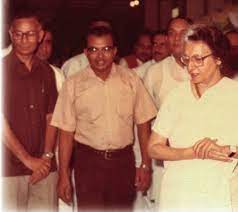
Four hectic years followed, when the conceptualization, planning and execution was done by a dedicated core team including Shri D.P.Singh, S.K. Saraswat, B. Venugopal and several others. Dr. Nair visited the best Natural History Museums around the world. He got several artists and model-makers trained at the best centres in the world. And the National Museum of Natural History opened its doors to the public on June 5, 1978 (Environment Day). Subsequently, Regional Museums of Natural History came up in Mysore, Bhopal and Bhubaneswar under Dr. Nair’s guidance.
The stuffed rhino that greeted one on the ground floor of the FICCI building where NMNH was housed, will surely be in the memories of many a Delhi school child. The rhino had died a natural death at the Delhi Zoo, and was stuffed and kept here.
The effort in NMNH was always to make the experience interactive for children. For those times, when most museums were static displays, this focus was unusual. The Museum also had a major thrust on outreach and extension. It had an active teacher training and orientation programme, which reached out to thousands of educators in its time.
Dr. Nair had a personal connect with every exhibit and activity at NMNH, and continued to take an interest in it even after his retirement in the late ‘90s. What he must have gone through on 26th April 2016, when the news of a fire breaking out in the museum and destroying the entire collection, can only be imagined.
Dr. Nair continued to be active in his mission of Environmental Education long after his retirement, working at WWF-India and Centre for Environment Education.
Not just at a national level, he was extremely respected internationally, serving as Chairman of Natural History Museum Committee of ICOM (international Council of Museums) and as
a Member of the Joint Museum Committee of the lndo-US Subcommission on Education and Culture.
Among his books are ‘Endangered Animals of India and their Conservation’, brought out by the National Book Trust, and ‘Bio-deterioration of Museum Materials’ by Agam Kala Prakashan.
We knew Dr. Nair since the mid-eighties, as one of the fathers of the Environmental Education movement an India.
He mentored us first as a member of the Governing Council of CEE, and then as a senior colleague. Even today, old-timers in CEE-VIKSAT recall his contribution to these institutions with great respect—when it was a struggling NGO, he spotted the potential of the team and gave them a project to develop labels and take-away materials for the NMNH exhibits. This not only paid salaries for a couple of months, but gave them their first project from a national-level, government institution. This project was a critical stepping-stone.
We have also known him as the father of a colleague, Meena, who was inspired by him to follow in his footsteps in a career in Environmental Education.
NMNH and other natural history museums excited the imagination and curiosity of generations of children. NMNH may no longer exist, but Dr. Nair’s legacy lives on.
Dr. Nair passed away last week. May his soul rest in peace.
Dr. SM Nair (1937-2021).
–Meena
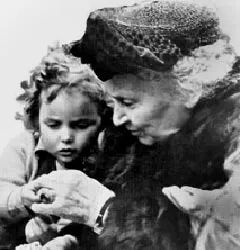
What do a young Jewish girl and her diary; and a young man and his online encyclopaedia have in common? What is the link between the Google Guys, one of the richest men in the world, and a Nobel Prize winning writer?
It is the name Maria Montessori!
All these renowned names, spanning different periods of time, began their education in a Montessori pre-school. And all of them attribute a large part of who they are, and what they achieved, to the strong roots of the philosophy and practice of the Montessori system of education.
Anne Frank is synonymous with her Diary. The young Jewish girl who penned her experiences and thoughts of two years of hiding from the Nazis in an attic in Amsterdam, died in a Nazi concentration camp in 1945. She was only 15 years old. Her diary remains one of the most poignant pieces of literature from World War II. It is in this diary that Anne recorded how her early education began. I started right away at the Montessori nursery school. I stayed there until I was six, at which time I started 1st grade (Montessori elementary). …My parents never worry about report cards, good or bad. As long as I am healthy and happy and don’t talk back too much they are satisfied. (But) I do not want to be a bad student. …I was supposed to stay in the seventh grade at the Montessori School, but Jewish children were required to go to Jewish schools…”
As a child Anne was always asking questions, and her father felt that the Montessori approach would give enough room for her curious mind to blossom. She attended the 6th Montessori School of Amsterdam from age 3 to 11. She then attended a year at the Montessori Lyceum (high school) until German authorities prohibited Jewish children from attending school with Christian children. Anne spent the rest of her short life in hiding, where the diary with the red checked cover that her father gave her, became her special secret. Maria Montessori once said: A child without a secret becomes and adult without a personality. Sadly Anne never attained adulthood, but her diary with her attention to detail, her observations and her honesty bears proof of her Montessori education.
What is the first place to check when one is looking for information? Wikipedia! The brain behind the online encyclopaedia is Jimmy Wales. Another curious child, Jimmy used to spend hours perusing the physical tomes of the Britannicas and World Book Encyclopaedias. This passion bloomed into Wikipedia. Jimmy credits his ability to think outside the box to the Montessori method that his school followed. Jimmy was a true example of an Absorbent Mind that Maria Montessori wrote about in her book of the same title.
Julia Child is known as the woman who popularised French cooking in America with her famous cookbook and her funny TV cookery shows. Julia Child worked at diverse occupations from being a copywriter, to being a research assistant for Secret Intelligence, until she discovered her passion for cooking.
Julia’s life and work was strongly influenced by her Montessori education. She always claimed that Montessori learning taught her to love working with her hands. Equally important was Montessori’s approach to making mistakes. “[Maria] Montessori wanted kids to develop ‘a friendly relationship to error,’ – to understand that mistakes are a normal part of learning, and that to learn, you must be willing to make mistakes, and then to move forward.”
Julia Child’s early Montessori experiences led her to endorse that involving children in the process of cooking did much more than teach them to cook. “Influenced, perhaps, by my early experience at a Montessori school, and surely by living in a clan full of carvers, painters, carpenters, and cooks of all ages, I am all for encouraging children to work productively with their hands. They learn to handle and care for equipment with respect… The small rituals, like the clean hands and clean apron before setting to work; the precision of gesture, like levelling off a cupful of flour; the charm of improvisation and making something new; the pride of mastery; and the gratification of offering something one has made — these have such value to a child. And where are they so easily to be obtained as in cooking?
If using her hands and learning from mistakes was Montessori’s lifelong lesson for Julia Child, it was the spirit of exploration that marked Montessori’s influence on Will Wright. Wright, one of the most famous video game designers in history, is best known for SimCity. His games rarely conclude with The End, rather they let the player tinker towards perfection, with each player defining that perfection.
Wright always claimed that his schooling until sixth grade in a Montessori school “was the high point of my education”. As he wrote “Montessori taught me the joy of discovery. It showed you can become interested in pretty complex theories, like Pythagorean theory, say, by playing with blocks. It’s all about learning on your terms, rather than a teacher explaining stuff to you. SimCity comes right out of Montessori — if you give people this model for building cities, they will abstract from it principles of urban design.”
Gabriel Garcia Marquez, best known for his book One Hundred Years of Solitude won the Nobel Prize for literature in 1982, “for his novels and short stories, in which the fantastic and the realistic are combined in a richly composed world of imagination, reflecting a continent’s life and conflicts.”
As a child he struggled to read, but when he joined a Montessori school his language skills were transformed by the phonetic way of learning. Marquez credited many of his successes to the Montessori form of education. As he said “I do not believe there is a method better than Montessori for making children sensitive to the beauties of the world and awakening their curiosity regarding the secrets of life.”
Montessori acknowledged that the only valid impulse to learn is self-motivation itself. She believed that children possess a natural motivation to learn and absorb knowledge without effort if given the right kind of activities, at the right time of their development.
Perhaps the most famous examples of the success of this approach is the story of Larry Page and Sergei Brin the co-founders of Google. Both have attributed their Montessori education as the foundation of their future professional life. We both went to Montessori school, and I think it was part of that training of not following rules and orders, being self-motivated, questioning what’s going on in the world, and doing things a little bit different that contributed to our success. They specifically credit the curriculum of self-directed learning where students follow their interests and decide for themselves what they want to learn that inspires students to become life-long learners with a love of education.
And last, but certainly not the least, one of the world’s richest men, Jeff Bezos could leap into space from a strong Montessori launch pad. He remembers: I went to Montessori school [for] about a year and a half, starting probably at age 2 1/2. … I have these very clear visual images of tracing out letters on sandpaper. I remember having a little special board that you can use to practice tying your shoes.
His mother remembers: He would get so engrossed in his activities as a Montessori pre-schooler that his teachers would literally have to pick him up out of his chair to go to the next task.
Bezos who started his amazing journey from a Montessori pre-school has come full circle by launching a $2 billion project called Day 1 Families that aims to bring quality early education to those who may not otherwise have access to it through supporting Montessori pre-schools in minority and low-income communities in America.
31 August marks the 151st birth anniversary of Maria Montessori. A century and a half later, her path-breaking philosophy and approach to education remain as relevant, if not more. The Montessori legacy lives on through the generations who have experienced the Montessori touch.
–Mamata

