Walking Stick: Symbol of Status, Symbol of Renunciation

The walking stick may be one of the most ancient tools ever invented (or should we say ‘discovered’??!!). I can imagine my ancient-ancestress in Africa, 300,000 years ago, stopping to cut a branch and smoothen it, to help her trek and clamber over hills and rocks.

Walking sticks obviously began as mobility aids, in that they help with balance and mobility issues; reduce the risk of falling; help those recovering from injuries and those who experience pain in their hips or knees. But of course, they were also used for self-defence. Having a two-in-one is always great–my ancient grandmother would have used hers to shoo away wolves or hyenas.

What began as a very functional item would soon have become a thing of beauty and pride– my ancestress-grandmother may have spent the evenings chipping at her stick and carving wonderful designs on it.

Down the ages, these sticks became a symbol of power, authority and status. Ancient images show kings, religious leaders and authority figures holding them.

But walking sticks really came into their own in the 17th and 18th centuries, when they became an essential part of the wardrobe of fashionable men in Europe. The cult is thought to have started with Louis XIV. This royal king was conscious of his height—he was 5’4”, and so used heels (red and high). And to help him balance, he used a walking stick. Heels and walking sticks became the rage in the French court, and then spread to the rest of Europe and to England. They became prized possessions  and an oft-exchanged gift between kings and courts.

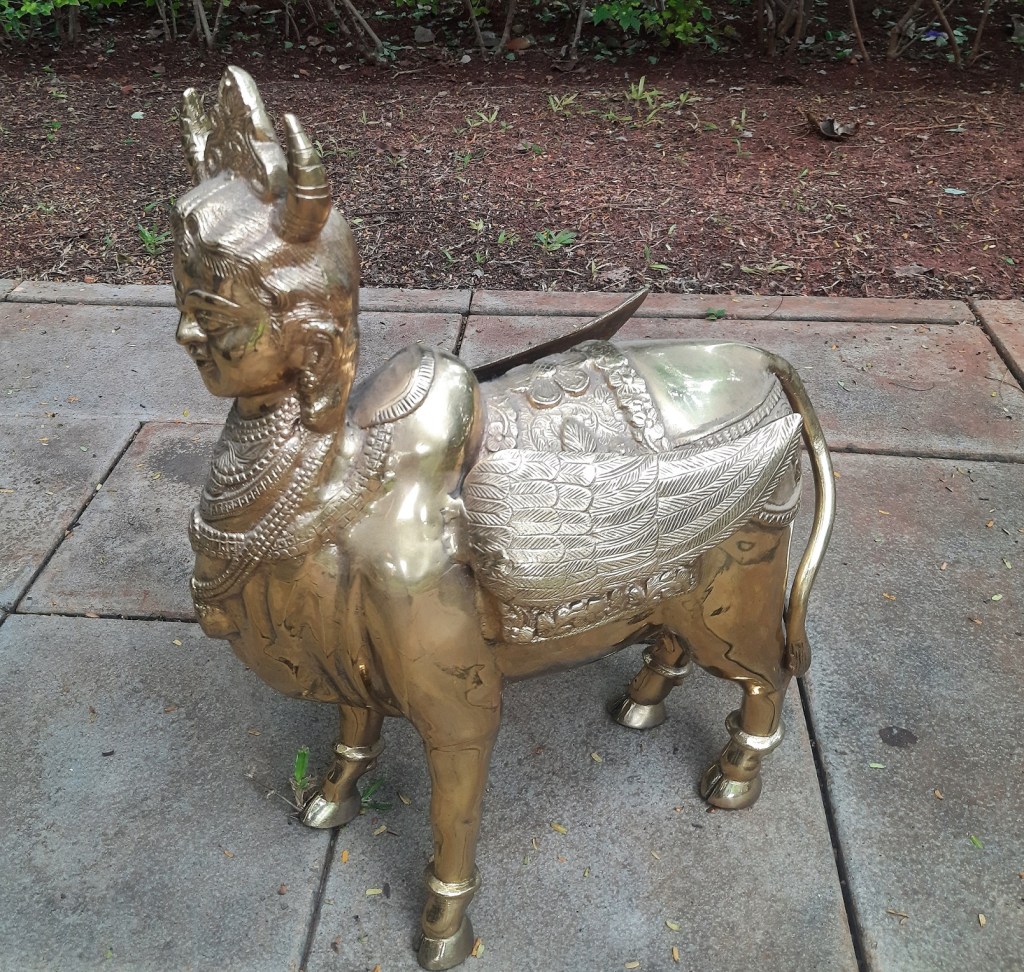
And of course, befitting the importance given to these objects, they began to be made of precious material and extravagantly decorated. The knobs or handles were carved individually, made of gold, silver, ivory, tortoise shell, or painted porcelain, and studded with precious stones or inlaid with mother of pearl. Shapes ranged from lions to dogs to rams to fantastical creatures. Louis XIV had a stick whose eagle knob was set with twenty-four diamonds!

And no one who could afford it was content to have just one.   Voltaire, the French philosopher-writer owned eighty sticks, though he considered himself a man who did not follow fashion.  Count Brühl of Dresden, owned three hundred canes to match his three hundred suits, and had a snuff-box to match each cane! Queen Victoria had a room full of canes, gifted to her from across the world, though she used only one–one of great historic value which had been presented to King Charles II. The head was made of “An idol which graced the temple of an ill-fated Indian prince… an exquisitely wrought affair in ivory… The eyes and forehead are jewelled and on the tongue is the rarest of rubies.”
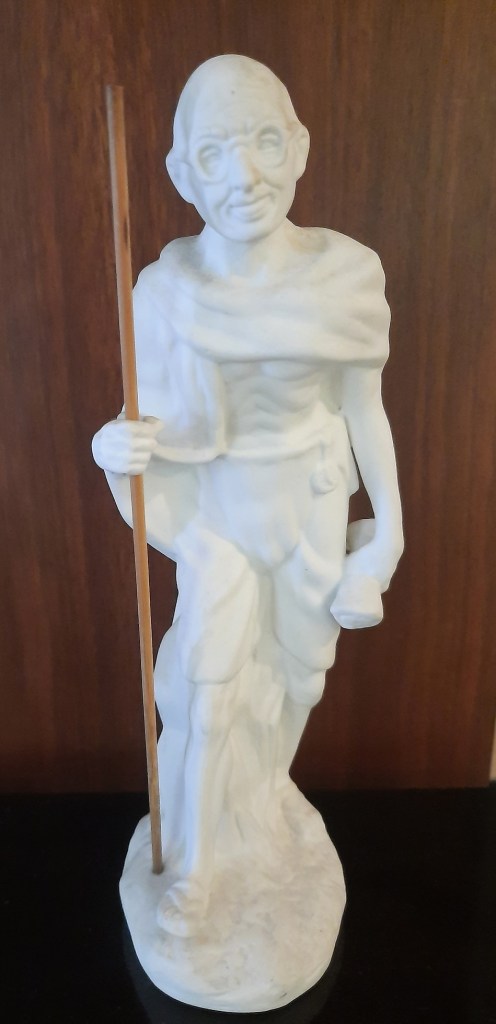
But if walking sticks were a symbol of worldly power, they were also the symbol of spirituality. They were among the few possessions of monks–Hindu, Jain and Buddhist.  A staff is part of our image of Swami Vivekananda. And of course Gandhiji! It was with the help of his lathi that Gandhi strode across the country, and walked 241 miles in 24 days to protest the British monopoly on salt in India.

There is a very interesting story about Gandhiji and his lathi. In the 1920s and 30s, Ghorghat village in Bihar made and supplied lathis all across north India, and these were essentially used by the British forces on protesting unarmed Indians. When Gandhiji visited Ghorghat in 1934, the villagers wanted to gift him a lathi. He agreed but put a condition—that they would not sell them to the British anymore. It is a symbol of those times and of Gandhiji’s influence that the villagers readily agreed to give up a means of their livelihood. Gandhi accepted their gift. Ever since, the village celebrates ‘lathi mahotsav’ to commemorate the gifting of a lathi to the Mahatma.

Walking sticks started losing their image as a fashion-accessory around the middle of the last century, but great are the advancements of walking sticks as mobility aids. So now it is about function and not art!

Well, we, especially men, may have lost a fashion accessory. But with better and more functional walking sticks on the market, senior-life is surely better!

–Meena
Grammarly yours…

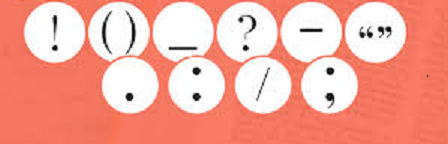
A title itself which will be grist to the mill for the “Grammar police”, a term for people who feel compelled to correct other people’s grammar, often in public. Of course, I would rather be pulled up by the grammar police than the “Grammar nazi”—a term which originated in the 1990s to describe someone who is overly critical of others’ grammar, spelling, typos, and other writing or speech errors.  Grammar nazis are obsessed with formal grammar rules. 

The world of grammar is a contentious one, with some debate or the other making the headlines. The latest is Germany’s outrage about the increasing influence of English on their grammar. The kerfuffle is about what is called the ‘idiot’s apostrophe’ (a translation from the German Deppenapostroph).

What is this intriguing thing? Well it stems from a basic difference between the grammar of the two languages. Unlike English, German does not traditionally use apostrophes to indicate the genitive case or possession. So in German, the correct form for a shop named after its owner, say Kareena or Paul, is ‘Kareenas Kirana’ or ‘Pauls Dry-cleaning’. And this is how it has been for centuries.

However in English, as we know, the correct form is ‘Kareena’s Kirana’ or Paul’s Dry-cleaning’. And for the last several years, thanks to the influence of English, slowly the general usage in Germany has shifted from ‘Kareenas Kirana’ to ‘Kareena’s Kirana’. Which was OK with the general public.

But now the new edition of the Council for German Orthography’s style guide—the official set of rules for the use of grammar has endorsed this shift, saying ‘Kareena’s Kirana’ is perfectly acceptable. Which has set the pedants and scholars up in arms, as they see it as a dilution of the rules of their language due the pernicious influence of a foreign tongue. The controversy continues to rage there!

We in India are rather free in our misuse of apostrophes, though not quite in this way. What we often see is what is called the English greengrocer’s apostrophe, when an apostrophe before an ‘s’ is mistakenly used to form the plural of a noun (e.g., “a kilo of potato’s”). Look closely at emails you receive, menus, or local ads, and you will find plenty of examples.

It is not just the apostrophe which is at the root of grammar-controversies. The Oxford comma is a case in point. The last comma in a list of three or more things is called the Oxford comma (or the serial comma). For example, in She bought peanuts, soap, and candles, there is a comma between each item listed. The comma before and is the Oxford comma. Not everyone agrees on whether to use the Oxford comma. In this case, the comma can be deleted without changing the sense of the sentence. But there are cases when things may get confusing without it. For example, in the sentence I love my dogs, chikko, and cheese, the Oxford comma makes it clear that all three items are separate. This one could be confusing if the Oxford comma were left out: I love my dogs, chikko and cheese, might mean that the speaker’s dogs are named Chikko and Cheese. Which would also of course imply that the writer is not strong with capitalization! But there is a point there, and doing away completely with Oxford commas does not seem a good idea.

Some people have proposed that we should have Grammar Czars–benevolent dictators who would hand down rulings on ambiguous grammatical rules. The GC’s decisions would be final. All would abide by the GC’s decisions, upon penalty of death (or being banned from social media for periods ranging from a month to a year!).

In the meantime, let us enjoy the creativity of grammatical mistakes, mis-spellings and confusions arising from misunderstanding of words.  I love my neighbourhood ‘Karim Puncher Shop’. But surely an ad for a new housing society which I saw some years ago in Hyderabad, which proudly called for subscribers for ‘Mildew Apartments’,  takes the cake!

–Meena

Counting cows…

We the people of India have been waiting to be counted for over four years now. The decadal census of people, which is supposed to be the basis of policy-making has been delayed since 2021, breaking a tradition after seven fairly on-time exercises.

Well, our four-legged co-inhabitants are luckier. The 21st Livestock Census started last week, and will take places over almost five months, from October 2024 to February 2025. It will cost about Rs. 200 crore, and around 1 lakh field officials–mostly veterinarians or para-veterinarians–will be involved in the enumeration process. Though 95.8% of livestock population is in rural areas, the census will cover both rural and urban areas.

Livestock is defined as ‘domesticated animals raised in an agricultural environment to produce labour and commodities such as meat, eggs, milk, fur, leather and wool’. This particular census will collect data on15 species of livestock– Cattle, Buffalo, Mithun, Yak, Sheep, Goat, Pig, Camel, Horse, Ponies, Mule, Donkey, Dog, Rabbit and Elephant, capturing data on 219 indigenous breeds of 16 species. Apart from livestock,the headcount of poultry birds — Fowl, Duck, Turkey, Geese, Quail, Gini Fowl, Ostrich and Emu — will also be taken. The age, sex and use of each individual animal will be documented.

The census will involve officials going from door-to-door to collect detailed data on domesticated animals and birds across the nation—including not just households (about 30 crore), but also household enterprises, non-households (private sector, cooperative sector, etc.) and institutions. Information about the animals will be collected, as also information on instruments and machinery used for animal husbandry. This census will leverage mobile technology for data collection and transmission and hopefully, this will enhance the accuracy and efficiency of data collection.

The Livestock Census has a hoary history in India, with the first one being conducted in 1919-1920. It is conducted every five years with the 20th Livestock Census taking place between October 1, 2018 and September 20, 2019. It put the total Livestock population at 536.76 million, showing an increase of 4.8% over Livestock Census-2012.  Total Bovine population (Cattle, Buffalo, Mithun, and Yak) was 302.79 million in 2019 which shows an increase of 1.0 per cent over the previous census.

The livestock sector is critical in our country given that it provides livelihoods to over 2.1 crore people. It contributes about 6 per cent to the total GDP, and 25 per cent to the Agricultural GDP. The share of livestock in agricultural sector GDP growth has been increasing faster than the crop sector. This is fuelled by rising incomes, a rising population and increased urbanization, which are all propelling demand for livestock products, and hence the rising importance of this sector. As per the 20th Livestock census, the total livestock population shows an increase of 4.6 per cent over the Livestock census 2012. India has the largest population of cattle of any country in the world, with about 33 per cent of the total number.

Worldwide, livestock make up almost 10 per cent of vertebrate biomass—more than human beings, wild birds and wild animals put together! While today cattle make up the largest livestock group worldwide, it was sheep which were among the first animals to be domesticated—probably as early as 10,000 bce.

While there is enormous potential for livestock to contribute to livelihoods of the poor especially women, there are many challenges in India—from disease, to lack of access to veterinary care, vaccination, insurance, fodder and clean water, to diminishing grazing lands,  to challenges in increasing productivity, to lack of organized markets which leads to the exploitation of the sellers, to tackling the contribution of this sector to climate change.

The Livestock census aims to provide data to frame policies and programmes which will hopefully improve the situation.

But as they count cows, maybe they need to count humans too. We too could do with better policies and programmes in many, many areas of life!

–Meena

The Moving Finger…

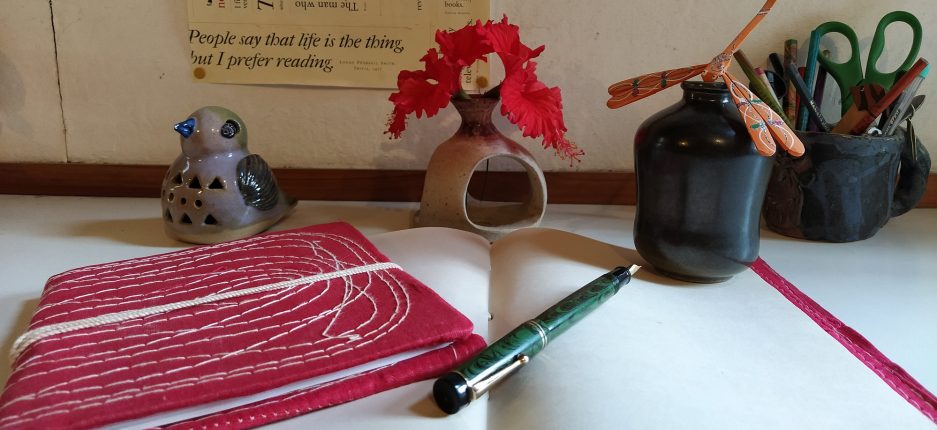
Last week was devoted to calligraphy, which we are assured by practitioners, is not handwriting at all. Rather, they aver, it is an art form.

Calligraphers are few and far between. But each and every one of us is a hand-writer. Children start doodling and scribbling by the age of two, and most write the alphabet before they are four. It might be one of the most universal of skills! And an essential one too, because research suggests that writing by hand enhances learning and memory. Brain patterns established during handwriting are important for memory formation and learning new information. And of course it improves fine motor skills. So hand writing practice is pretty important even for children who are digital natives and may not use the skill very much as grown-ups.

There are 12 characteristics on which quality of handwriting is evaluated: line quality, spacing, size consistency, pen lifts, connecting strokes, complete letters, cursive vs. print, pen pressure, slant, baselines, embellishments, and placements.

But it is a fact that the quality of penmanship has gone down with time. As we use the skill less, we get worse at it. In fact, there are times when I can’t decipher my own scribbled notes. Reports and records based on these notes are my only forays into fiction!

Which is why it is probably important to highlight and celebrate this skill.

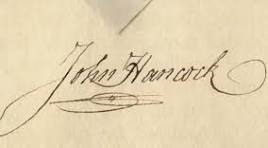
In the US, they observe National Handwriting Day on January 23rd. Why this date? Well, it is the birthday of John Hancock, the first signatory of the Declaration of Independence. Among the 56 signatures on the document, his large, flamboyant signature stood out. In fact, so prominent was it that “John Hancock” is an informal synonym for signature in the US!

The Day started to be observed in 1977, when educators were already beginning to feel that the art of handwriting was getting lost. The Writing Instrument Manufacturers Association came forward to do something about this (and of course at the same time, increase sales of pens, pencils, paper and writing instruments). They initiated National Handwriting Day.

(Incidentally, though we use handwriting and penmanship interchangeably, they are not quite the same. Handwriting is the act of writing out full words or sentences by hand on paper. Words may be written either legibly or illegibly. Penmanship is the art or skill of having excellent writing, and good penmanship makes the process of reading written work much easier.)

Lately, something called the World Handwriting Contest has been initiated. Each year, the World Handwriting Contest opens for entries between January 1 and June 30. There are eight age categories, starting from Children below age 7, right through –Teens, Teens, Adults and Seniors (age 65 up). And it is open to anyone, anywhere.

There are two styles for which prizes are given:

Functional Handwriting which strives for legibility, speed, and fluency without aiming at artistic effect. For this category, the judges will further separate entries as cursive, which joins 50% or more of its letters or manuscript printing, which joins fewer than half of its letters; and
Artistic handwriting which uses a monoline or calligraphy marker, pen, or brush along with decorative strokes, flourishes, and/or combinations of shading, hairlines and/or thick and thin strokes to create an artistic effect.

NRI domination over the Spelling Bee contests is well accepted. People of Asian origin now seem to dominate among winners of the Handwriting competition too, with Indians and Indian-origin names finding frequent mention (with stiff competition from Bangladesh!). Among Indians, Salil Jha of Bhopal has won a prize (above 65 category). Roslin Richard of Bangalore is first place winner in the Adult Category; Feba Sara Saji of Kerala is a winner in the Teens category. Keep it up people! May the moving finger keep writing beautifully!

–Meena

Frozen Poetry: The Art of Calligraphy

Though the term ‘calligraphy’ is Greek for ‘beautiful writing’, as the art form evolved, the word has taken on a larger meaning. 

Today, people think of calligraphy as:

‘… the art of forming beautiful symbols by hand and arranging them well.’
or
‘…a set of skills and techniques for positioning and inscribing words so they show integrity, harmony, some sort of ancestry, rhythm and creative fire.’

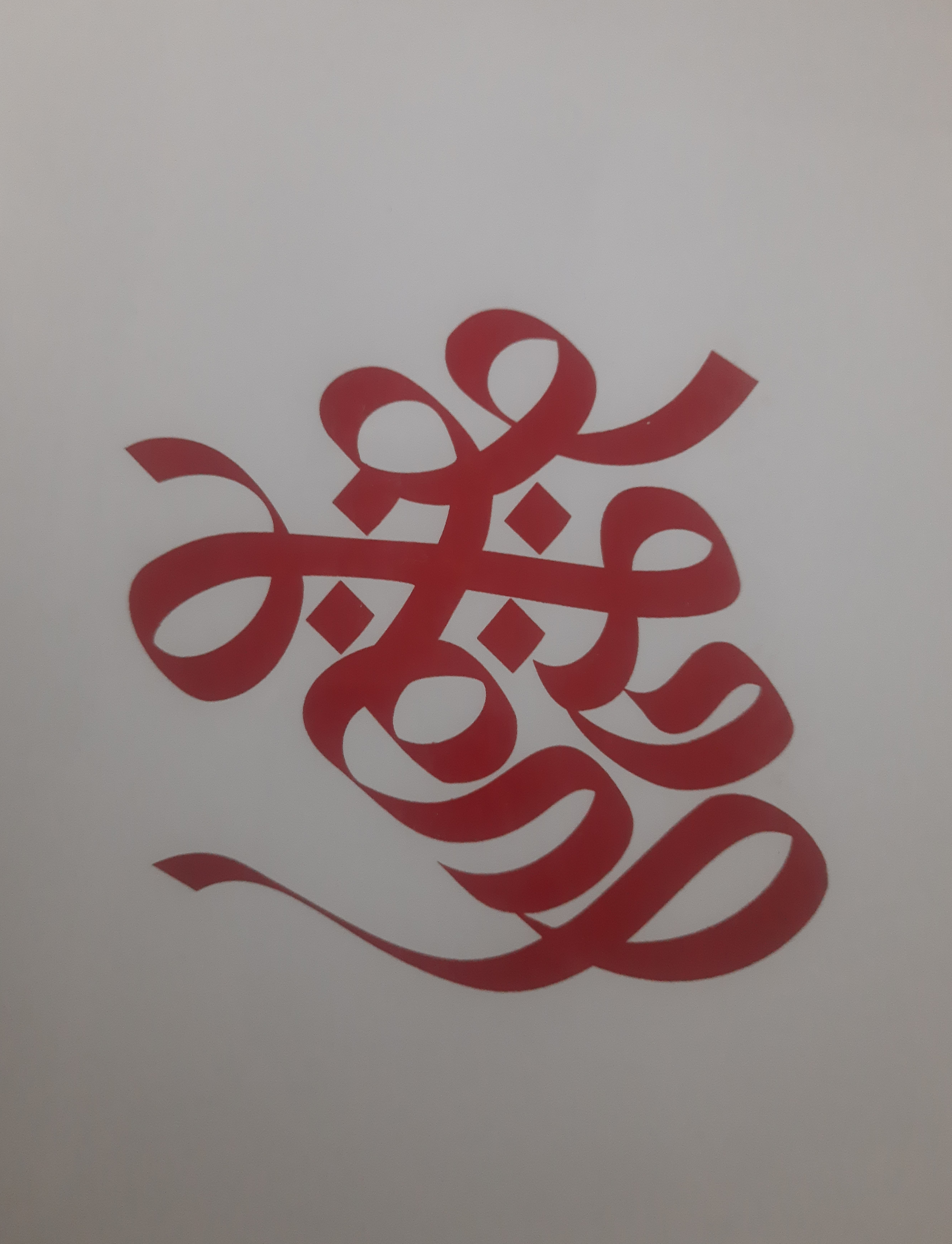
Calligraphers don’t like you to equate the form to ornamental decorated letters or to the use of letters as ornaments, insisting it is about symbols themselves being beautifully formed and arranged.

They say at some level, it is not handwriting at all, because the primary goals of handwriting are to be quickly and easily written and accurately read. In fact, beauty, personality and artistic impact are nowhere near as important in handwriting as clarity and speed (I wish someone had told my primary school teachers that!).

Calligraphy, they say, is ‘writing as an art form’ and not ‘artistic-looking handwriting’. So while handwriting aims to be read, calligraphy aims to produce an ‘art’ reaction.

Calligraphy is ‘a skill which involves touch, pressure, hand movement, unity, and that elusive quality we term “beauty.’ (V. Studley).

The art originated in ancient China, where characters were initially carved onto materials like animal bones and tortoise shells. Over time, this practice evolved into using ink brushes and writing on paper. From China, it moved to neighbouring countries, and slowly Westwards. The ancient Romans used reed or quill pens dipped in ink to write on long rolls of paper, while Christian churches later adopted western calligraphy to reproduce Biblical texts. Arabic calligraphy based on Arabic letters is also very well-developed, and an important part of art and architecture.

The tools used in calligraphy are all-important. While initially, the Chinese artists used ink brushes, the Romans started using reed or quill pens. Calligraphy was revolutionized with the invention of the steel nib. Different types of steel nibs—e.g., those with pointed tips and those with flat, broad edges being used for different calligraphy styles.

Calligrapher PP Raju’s work–both spiritual and meditative

The symbol of Indian Rupee adopted in 2010 is a great example of calligraphy. The symbol is an amalgam of Devanagari “Ra” and the Roman Capital “R”. It was conceptualised and designed by Udaya Kumar, an alumnus of the IDC School of Design of IIT Bombay.

The reason for this meander down calligraphy-lane is because only last week, Kochi hosted the second edition of the International Calligraphy Festival of Kerala (ICFK). The festival was organized by the Kerala Lalitha Kala Academy and the Thiruvananthapuram-based Kachatathapa Foundation, which is led by renowned calligraphy artist Narayana Bhattathiri. It brought together calligraphers from South Korea, France and Vietnam with Indian calligraphy experts like Achyut Palav, often referred to as the patriarch of Indian calligraphy, and D. Udaya Kumar, the creator of the Indian Rupee symbol. It was a priceless learning opportunity for students, teachers, advertising artists, art lovers and art enthusiasts from fine arts colleges, design institutes and design colleges in Kerala.

Apart from lectures, demonstrations and discussions on the subject, there were a range of activities including workshops, live demonstrations, an international calligraphy exhibition, and calligraphy quizzes.

What a beautiful event that must have been, for as someone said ‘Calligraphy is a kind of music not for the ears, but for the eyes.’

–Meena

I am a Little Teapot..

I suppose in today’s world, children don’t often see teapots. Fortunately, the poem ‘I am a teapot’, one of the cutest action-songs, is still a part of the pre-school repertoire. As the poem tells us, typically teapots have an opening with a lid on top, through which the dry tea and hot water are added; a handle for holding the vessel: and a spout through which the tea is served. And there may be a small air hole in the lid, though the poem does not mention it.

A teapot is basically a vessel used for steeping tea leaves  in boiling or very hot water, and then serving the resulting brew.  

Assassin Teapot: Essential Kitsch from China!

The teapot has a hoary history. It originated in China—of course! The first recorded one goes back to the end of the Sung dynasty (1271-1368). These were Yixing teapots which were red or purple-colored earthen vessels. These containers made in the city of Yixing are still produced today and still very popular and are considered the epitome of teapots.

The idea of the teapot spread to Europe after the East India Company introduced tea and teapots in the late 17th century. In the early 18th century, the Company used to commission Chinese artisans to make teapots as the quality of porcelain in China was better there than in Europe. But slowly Germany and then France got into the game, and started perfecting the art and science. In the mid-1800s, an English pharmacist William Cookworthy, after several experiments, finally hit upon a way to make porcelain similar to that made in China and set up a factory in Plymouth.  And from then on, English and tea and teapots became synonymous!

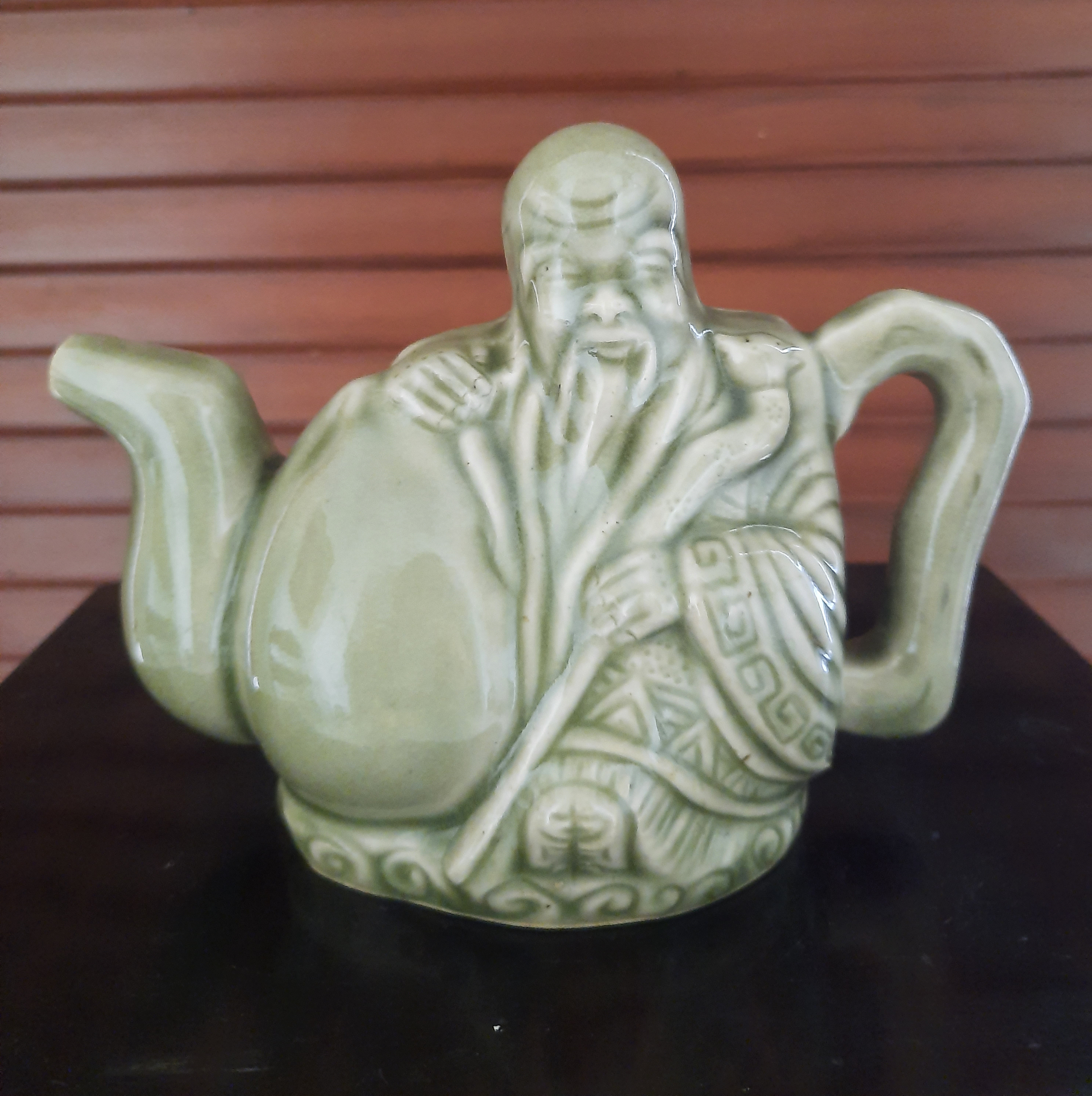
Many and fantastical are the shapes, sizes and colours in which teapots have been crafted down the centuries. It is a thing of beauty and elegance.

And it is this that the annual Sydney Teapot Show has been showcasing for over 30 years. This is an exhibition and competition where participants take up the challenge of making a unique teapot. Each year, there are specific themes, and this year’s categories are Australian Poets, Toy Story and The Natural World. There are also prizes for Best Pourer and Supreme Teapot – Best in Show. The Show celebrates craftsmanship at its best. As the organizers point out: ‘The skill of the clayworkers is employed in making a teapot – one of the more difficult tasks in ceramics – and their imagination and creativity is also evident in their response to the categories suggested’. The show started on 3 October, and is on for a month. Anyone lucky enough to be down under on these dates can catch the show.

Australia seems to particularly treasure teapots. The Bygone Beauties Museum there has over 5500 pieces! But it is not just in Australia that teapots are celebrated.  The Victoria and Albert Museum has a good collection. The National Museum of Asian Art at the Smithsonian has some special beauties.

There are also several private collectors and collections. Sonny and Gloria Kamm of Los Angeles have been collecting teapots for over 35 years, and have about 17,000 pieces. Sue and Keith Blazye have 8,450 teapots in their home in Kent, plus around another thousand duplicates in the loft,.

Of special interest is the Chitra Collection. It is private museum of historic teawares.  As the site explains, ‘In 2011 Nirmal Sethia, the Chairman of the luxury tea company, Newby Teas, set himself the task of acquiring the world’s greatest collection of teawares to record and preserve tea cultures of the past. Today, the collection, named in honour of his late wife, Chitra, totals almost 2000 objects and is already the world’s finest and most comprehensive of its kind.’  So if you are not able to make it to Sydney, check out https://chitracollection.com/collection/ for a teapot-treat!

As the weather turns balmy, it’s the perfect time to bring out your teapot and sip a refreshing cup, while reflecting on these teapot-related pieces of wisdom!

‘Disciples and devotees…what are most of them doing? Worshipping the teapot instead of drinking the tea!’ Wei Wu Wei (Theatre producer and philosopher)

‘A great idea should always be left to steep like loose tea leaves in a teapot for a while to make sure that the tea will be strong enough and that the idea truly is a great one.’ Phoebe Stone (Author and artist).

–Meena

Tragedy in a Paradise: Kuru Disease

Viewers of hospital serials like House become familiar with the names, symptoms and treatments for a variety of obscure diseases, from Wilson’s disease to Fulminating osteomyelitis to Ornithine Transcarbamylase Deficiency to Epstein Barr to Amyloidosis and Sarcoidosis.

But even to a hardened medical-series watcher like me, the most horrifying disease that I came across was in a news report. And the disease is Kuru.

Kuru is a prion disease. A prion is a type of protein that can trigger normal proteins in the brain to fold abnormally. Normal prion protein is found on the surface of many cells. Prion diseases occur when this protein becomes abnormal and clumps in the brain. It then causes brain damage. (https://www.hopkinsmedicine.org/)

This abnormal protein build-up in the brain can lead to memory problems, personality changes and trouble with movement. Symptoms include rapidly developing dementia, difficulty walking and changes in gait, jerking movements of the muscles, hallucinations, confusion etc. Death usually results within a year or two.

Experts still don’t know a lot about prion diseases. There are several of them, with the most common form of prion disease that affects humans being Creutzfeldt-Jakob disease (CJD). Others include Variably protease-sensitive prionopathy, Gerstmann-Sträussler-Scheinker disease etc.

These are sometimes spread to humans by infected meat products. In rare cases, the infection can spread through contaminated corneas or medical equipment.

But fortunately prion diseases are rare, with about 200 being reported in the US, because unfortunately these disorders are often fatal—there is just no cure.

Even among prion diseases, Kuru is particularly bizarre. It is caused by eating human brain tissue contaminated with infectious prions. But why would anyone eat human brain tissue? Well, it was a widely practiced funeral ritual among the Fore people of Papua New Guinea.

Papua New Guinea
Idyllic Papua New Guinea

The Fore people live in the Okapa District of the Eastern Highlands Province of PNG. Research in the 1950s indicated that the Fore tribe had a population of about 11,000 people. Of this small number, almost 200 people a year were dying of an unknown illness. As they started investigating this, they ruled out contaminants from the environment, common infections and the possibility of genetic inheritance. They narrowed it down to something in their practices. And then a study of their funerary rituals gave a clue. The Fore people would cannibalize their dead. The anthropologist  Hertz uncovered the reason for this—it sprang from love and respect for the deceased. ‘By this rite the living incorporate into their own being the vitality and the special qualities residing in the flesh of the deceased; if this flesh were allowed to dissolve, the community would lose strength to which it is entitled…. at the same time, endocannibalism spares the deceased the horror of a slow vile decomposition’, he wrote.

Children and women were usually more affected by Kuru  than men, probably because they consumed the brain as compared to the men who preferred muscles.

‘Kuru’ in Fore means shivering. It is also called the laughing disease because the affected would exhibit sporadic uncontrolled laughter.

The practice was banned in the 1960s by the PNG government. But sadly, the deaths continued for quite a while after that, since Kuru has a long incubation period—30 to even 50 years. So someone infected in the late sixties might have shown symptoms only in the late nineties. The last diagnosed case was in 2005.

Thank God, it is behind us!

Sorry if this has been a morbid and depressing piece. Blame it on the news item which triggered it!

–Meena

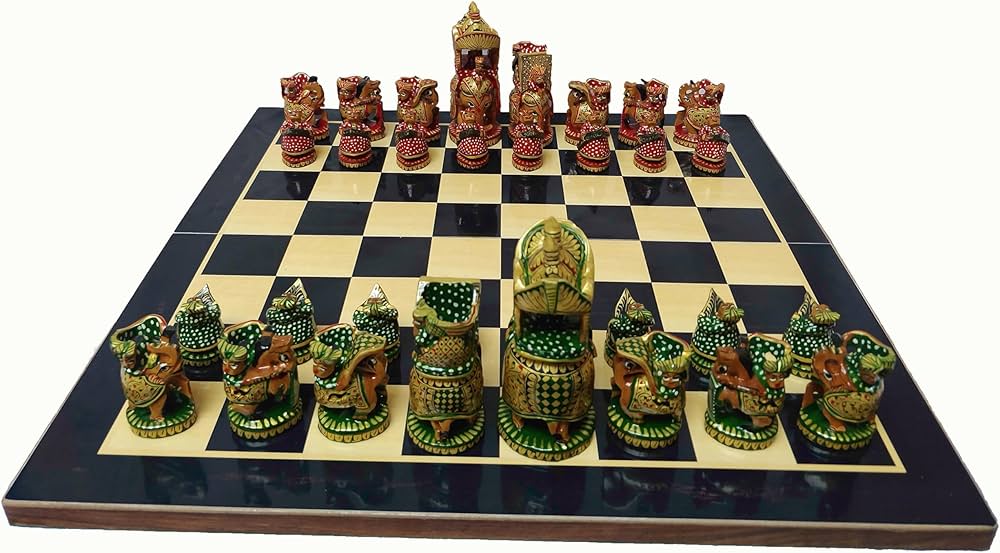
Check and Mate and Gold!

A few months ago, we had the opportunity to meet two greats of the chess world: Vishwanathan Anand and Gukesh. And today to see Gukesh and the rest of India’s young chess players as world champs is such an occasion of joy and pride.

Anand and Gukesh both spoke at an informal soiree.  Anand, older, a world citizen, soft, sophisticated, with wide interests and knowledge, and comfortable in his achievements. Someone you could picture in a corporate boardroom. Gukesh, young (he was short of his 18th birthday by a week at that time), still not quite able to believe where he had reached in such a short time. But several things bound them. Their humility, decency, utter dedication to their game. And the fact that they were Chennai lads!

Chess

Tamil Nadu, not without reason, is called India’s Grandmaster Factory. Manuel Aaron of Chennai became the country’s first International Master in 1961 and was a major force in domestic and international chess from the ‘60s to the ‘80s. He played a key role in popularization of chess in India and in bringing in international protocols and practices.

And then of course came Vishwanathan Anand, first grandmaster from India in the year 1988, five-time winner of the World Championship, and eight-time winner of the World Rapid championship. He has been Deputy President of the International Chess Federation which oversees all the chess federations in the world. India had seen cricketing heroes till then, and a few tennis and badminton champions. But Vishy was the first chessmaster who captured the imagination of the general public and the youth. Since then, chess has acquired a glamour.

Also from Chennai are Subbaraman Vijayalakshmi the first Indian woman to become International Master (IM) and Woman Grandmaster (WGM), and Koneru Humpy who became the youngest woman ever to achieve the title of Grandmaster (GM) at the age of 15 years, 1 month, 27 days—a record that stayed unbeaten for five years.

And the list goes on! About 35% of Indian Grandmasters among men are from Tamil Nadu, and 39% of women Grandmasters.

There have been quite a few game-watchers who have analysed why the state produces such a disproportionate number of champs. As always, it is not a simple answer, and there is really no hard proof. But some factors mentioned are:

  • Early start: The Tamil Nadu State Chess Asssociation, earlier known as Madras Chess Club was formed as early 26 April 1947 at Chennapuri Andhra Maha Sabha, Chennai with the intention to identify the upcoming chess players and make them into world-class professionals.
  • Early Role Models: With Manuel Aaron in the sixties making it to the world stage, followed by Vishy in the eighties, chess was already in the limelight in Tamil Nadu, much before it captured the imagination in other parts of the country.
  • Bringing world chess to the State: The State Govt hosted the World Chess Championship in 2013, which saw a thrilling match between Anand and Carlsen—boosting public visibility of the game.
  • Making it a part of the education system: Like Orissa is doing for hockey today, Tamil Nadu has been supporting chess in many ways for many decades. The government and the educational system have understood the role that the game can play in child-development and have always made space for it in the school system. In 2011, it was made an extra-curricula activity in schools. In 2013, a ‘Seven to Seventeen program’ was put in place under which each school coaches students from 7 to 17 age group to play chess.
  • Making coaching accessible: The Tamil Nadu government offers online and offline chess coaching by best coaches and grandmasters for students everywhere in the state, especially those in government schools.
  • Schools which go the extra mile: There are also schools in the state, like Velammal Vidyalaya,  where there are over a thousand students who take up chess coaching. Apart from high-level coaching, the school adjusts curricular schedules and reduces academic burden for students who show promise, and also provides financial help to those who need it.

Of course, more than anything, sportspeople at any level need the support of their families. In the case of Vishy, it was his mother who initiated him into the sport and supported his endeavours. In later years, his wife became his manager, travelled with him on punishing schedules, and was his pillar.

Gukesh’s doctor-father and microbiologist-mother gave up their careers to nurture his. It was not easy—both of them giving up their jobs put enormous financial pressure on the family. Gukesh was really young when he hit the international scene (he is barely past 18 now!), which meant one of them always had to travel with him. While contestants from richer countries with financial support and sponsorships would stay in fancy hotels near competition venues, Gukesh and his parents would stay in less-expensive accommodation far away. And hire cycles to make it there.

The story of most of the other players is not too different either. And it is against such odds that these young people fight and come out winners. Gukesh dropped out of formal schooling at Std. 4 and is essentially home-schooled, so that he can devote all his time to chess. When we asked him if he did not miss hanging out with friends and doing things that teenagers do, he gently replied that there is nothing he wants to do at this stage other than chess; that he does yoga to de-stress; and yes, he does party with the other players after the tournaments!

Thank you, Rameshbabu Praggnanandhaa, Arjun Erigaisi, Harika Dronavalli, Vaishali Rameshbabu, Divya Deshmukh, Vantika Agrawal, and Tania Sachdev, for your dedication and for doing us all proud!

–Meena

Thank you: https://www.chess.com/blog/JARVIS_SL/tamil-nadus-chess-legacy-the-grandmaster-factory-of-india

Fever Tree

Clay tablets from Mesopotamia mention this deadly disease. Indian writings of the Vedic period (1500 to 800 BC) call it the ‘king of diseases.’ Traces of the disease have been found in remains of bodies from Egypt dating from 3200 and 1304 BC. The 270 BC Chinese medical canon has documented the disease’s headaches, chills, fevers and periodicity. The Greek poet Homer (circa 750 BC) mentions it in The Iliad, as do Aristotle (384-322 BC), Plato (428-347 BC), and Sophocles (496-406 BC) in their works.

The disease? None other than malaria, a disease that has taken its toll on not only humans down the ages, but our Neanderthal ancestors too. In the 20th century alone, malaria claimed between 150 million and 300 million lives, accounting for 2 to 5 per cent of all deaths!

Many have been the scientists who spent their lives trying to understand malaria. Charles Louis Alphonse Laveran (1845-1922) a French army doctor during the Franco-Prussian played a key role. He as the first to postulate that malaria was not spread by bad air, but rather that ‘Swamp fevers are due to a germ’. He was also the earliest scientist to detect crescent-shaped bodies in the blood of affected individuals, and then the four stages of the development of the parasite in the blood. These findings were confirmed by Camillo Golgi. Dr. Charles Ross and India played a huge part in the unravelling of the whole cycle and Ross received the Nobel Prize for discovering the mosquito-stages of malaria.

The story of uncovering the cure for malaria has been dramatic too. For centuries, when no one had a clue what caused malaria, treatments included blood-letting, inducing vomiting, and drastic things like limb amputations, and boring holes in the skull. Herbal medicines like belladonna were used to provide symptomatic relief. 

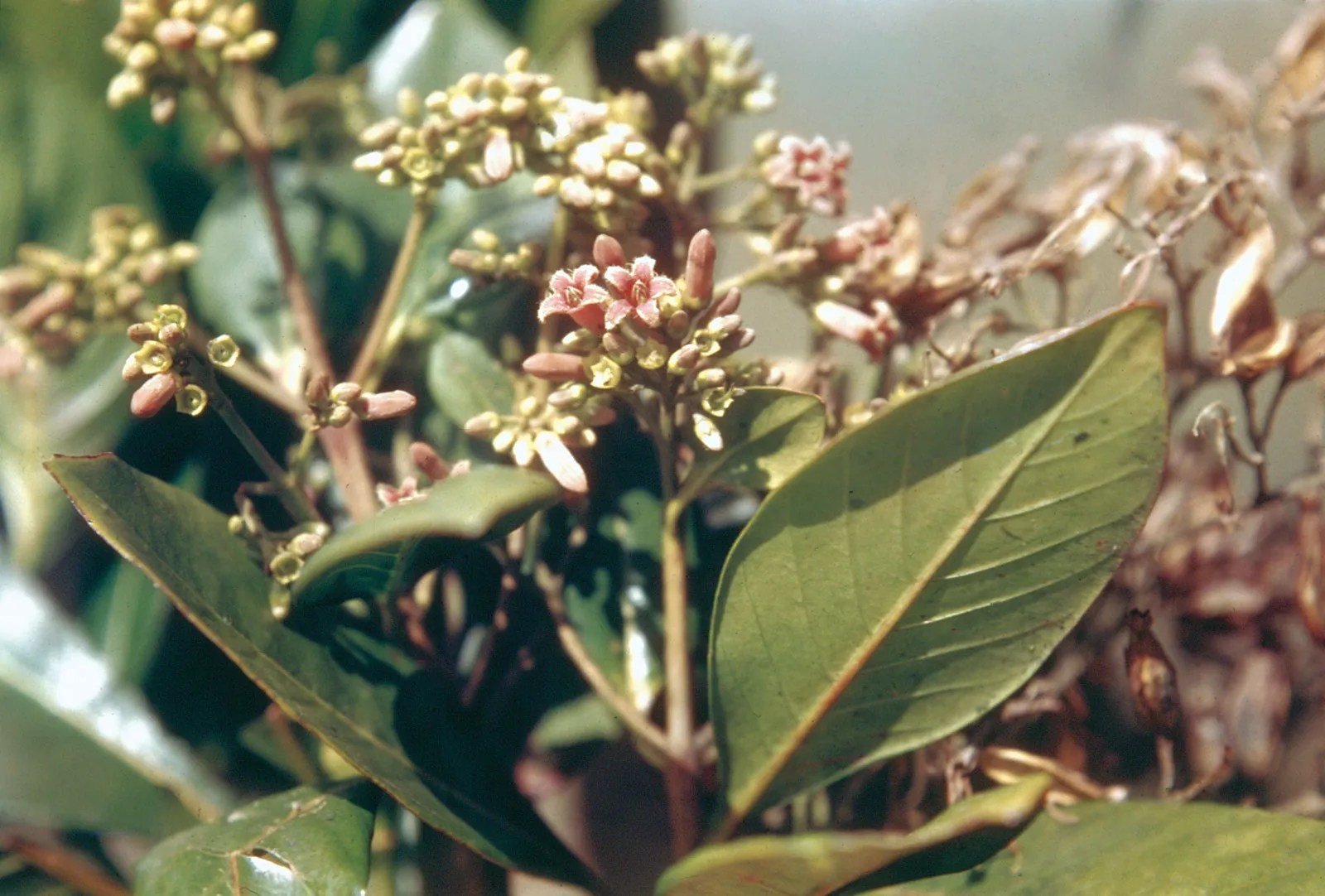
Cinchona-nitida-quinine
Cinchona Tree whose Bark yields Quinine

But the cure strangely came from South America—a region not originally plagued with the diease. It was probably brought from the outside around the 16th century. The native Indians were the first to discover the cure. The story goes that an Indian with a high fever was lost in the Andean jungles. Desperate with thirst as he wandered the jungles, he drank from a pool of stagnant water. The taste was bitter and he thought he had been poisoned. But miraculously, he found his fever going down. On observation, he found that the pool he had drunk from had been contaminated by the surrounding quina-quina trees. He put two and two together, and figured that the tree was the cure. He shared his serendipitous discovery with fellow villagers, who thereafter used extracts from the quina-quina bark to treat fever. The word spread widely among the locals.

It was from them that Spanish Jesuit missionaries in Peru learnt about the healing power of the bark between 1620 and 1630, when one of them was cured of malaria by the use of the bark. The story goes that the Jesuits used the bark to treat the Countess of Chinchon, the wife of the Viceroy who suffered an almost fatal attack. She was saved and made it her mission to popularize the bark as a treatment for malaria, taking vast quanitities back to Europe and distributing it to sufferers. And from then, the use of the powder spread far and wide. It is said that it was even used to treat King Louis XIV of France.

The tree from which the bark came was Cinchona, a genus of flowering plants in the family Rubiaceae which has at least 23 species of trees and shrubs. These are native to the tropical Andean forests. The genus was named so after the Countess of Chinchon, from the previous para. The bark of several species in the genus yield quinine and other alkaloids, and were the only known treatments against malaria for centuries, hence making them economically and politically important. It was only after 1944, when quinine started to be manufactured synthetically, that the pressure on the tree came down.

Not unusually, the tribe who actually discovered it is forgotten. The medicine came to be called “Jesuit Powder’ or ‘Chincona powder’ or “Peruvian powder’. Trees in the genus also came to be known as fever trees because they cured fever.

May the many indigenous community, their knowledge and their practices which are at the base of so many medicines today get their due recognition, credit and due.

–Meena  

Private Gardens for Public Pleasure

Last week, we delved into the making of the Butchart Garden in Victoria, Canada—a private garden which is completely open to the public. This is not common. For the most part, public gardens are public, and private gardens are private—open only to the enjoyment of the owners, their families and friends.

A public garden is defined by the American Public Gardens Association as: “An institution that maintains collections of plants for the purposes of public education and enjoyment, in addition to research, conservation, and higher learning. It must be open to the public and the garden’s resources and accommodations must be made to all visitors. Public gardens are staffed by professionals trained in their given areas of expertise and maintain active plant records systems.”

On the other hand, a private garden is ‘a type of Urban Green Spaces Areas in immediate vicinity of private (privately owned or rented) houses, cultivated mainly for ornamental purposes and/or non-commercial food production’ and is not usually open to the public.

While Jennie Butchart, creator of the Butchart Gardens was clear right from the start that she wanted as many people as possible to see and enjoy her gardens, not all owners have been so open. Or even if they wanted to, didn’t know how to go about it. But that would be such a loss, because some of these private gardens are spectacular.

And hence, the various initiatives in many parts of the world which try to make private gardens accessible to the public.

For instance, in the US, the Garden Conservancy organizes Open Day programmes. This institution is a nationwide community of gardeners and garden enthusiasts who teach and learn about gardens. Believing that there is no better way to improve as a gardener than by seeing and experiencing firsthand a wide range of gardens, they organize these Open Days, which since 1995, have seen ‘more than 1.4 million visitors into thousands of inspired private landscapes—from urban rooftops to organic farms, historic estates, to innovative suburban lots—in 41 states’. These events are curated and ticketed and open up some of America’s best private gardens to the public for a few days. The organization even brings out an annual publication—‘The Garden Conservancy’s Open Days Directory’ This is a yearly guide to hundreds of private gardens across the United States. The directory includes information on the gardens’ types, such as organic, scenic, or historic, and how and when they can be visited.

In the UK,  London Parks & Gardens organizes the Open Gardens London event every year, helping visitors enjoy hallowed private London gardens including roof gardens, city farms, allotments, spaces steeped in history, and much more. A ticket to the event gives visitors access to every garden on display across the whole weekend, with children under 12 allowed in for free!

Under the Open Gardens South Australia programme, garden owners generously open their gardens for a weekend. The NGO helps owners plan and promote their opening. Some of the ticket money is usually donated to a charity of the owner’s choice

In Ireland, the Gardens Open initiative of Garden.ie lists around 300 gardens open for visiting, some year-round, others by appointment.

Mughal Gadens

The Rashtrapati Bhavan gardens, previously known as the Mughal Gardens are not private. However, they are not open to the public all the time. Constructed by Sir Edwin Lutyens in 1917 in the traditional Persian Charbagh style the Gardens were renamed Amrit Udyan in 2023. The 12-acre beautifully cultivated gardens are open to visitors in Feb-March and Aug-Sept every year and a popular tourist spot in New Delhi.

India has some large public gardens, but no well-known large private gardens—certainly none open to the public. Maybe it is time for some people with the means and the green thumbs to create such green oasis in our crowded, polluted, frantic cities. That would be social responsibility indeed!

–Meena