Pachy Poop

Last week, on the occasion of World Elephant Day, Mamata recounted from memories of Dr. Raman Sukumar, India’s foremost elephant-researcher.

We continue on the pachyderm theme this week, but today we focus on……elephant dung! On World Elephant Day, we usually celebrate the things that make elephants magnificent—their intelligence, memory, extraordinary family bonds and sheer size. We talk about forests, wildlife corridors, poaching and the urgent need to protect these gentle giants. But there is another elephant story worth telling, and it begins, rather unglamorously, on the forest floor: with dung.

Long before humans filled compost bins, saved kitchen scraps and debated the perfect balance of “browns” and “greens”, elephants were already participating in one of nature’s most elegant recycling systems. An elephant eats a phenomenal amount of vegetation every day—grass, leaves, bark, roots, fruit and branches—and because not everything it consumes is completely digested, plenty of partially processed plant material eventually makes its way back into the environment. What we see as a pile of dung is, in ecological terms, a package of nutrients and organic matter ready to be put to work again.

Once elephant dung lands on the forest floor, an entire community of organisms gets involved. Dung beetles, flies, fungi, bacteria and other decomposers begin breaking down the material, while insects use it as a source of food and, in some cases, as a place to lay their eggs. As the dung decomposes, nutrients are gradually returned to the soil, helping to maintain the fertility and health of the ecosystem. What looks like the least glamorous part of an elephant’s daily routine is actually an important link in the larger cycle of life.

This is one of the reasons the idea of “waste” is so different in nature. In a healthy ecosystem, one organism’s leftovers can become another organism’s resource. There is no rubbish truck waiting at the edge of the forest and no landfill quietly filling up somewhere out of sight. Organic matter is continually broken down, transformed and returned to the system. Elephant dung is simply one particularly impressive example of this natural circular economy.

There is another role that makes elephant dung especially important: seed dispersal. Elephants consume huge quantities of fruit and vegetation, and many of the seeds they swallow can survive the journey through their digestive systems. Because elephants travel considerable distances in search of food and water, they can carry those seeds far from the parent plant before depositing them in their dung. In effect, the elephant becomes a very large and very mobile seed-distribution system, helping plants spread across the landscape.

And there is something rather clever about where those seeds arrive. They are not simply dropped onto the ground; they emerge surrounded by organic material that is already beginning to decompose. That dung can provide nutrients and moisture while insects and microorganisms continue breaking it down. In the right conditions, the seed may eventually germinate and become part of the next generation of vegetation. An elephant eats a fruit in one part of the landscape and, sometime later, may help establish a new plant somewhere else.

The forest gets a meal, a seed dispersal service and a dose of fertiliser, all from the same animal. This is why elephants are often described as ecosystem engineers. Their impact extends well beyond their own bodies. Their feeding habits can alter vegetation, their movements can open pathways through habitats, and their dung redistributes nutrients and seeds. When elephant populations decline, the consequences can therefore reach much further than simply having fewer elephants. The animals are part of a web of ecological processes that help keep their habitats functioning.

It is only when we understand this natural process that the idea of turning elephant dung into human-made compost becomes truly interesting. In sanctuaries, conservation centres and other managed settings where elephant dung is collected responsibly, it can be composted and transformed into a useful soil amendment. Through controlled decomposition, the organic material breaks down into a darker, more stable substance that can help improve soil structure and return nutrients to the ground.

Some organisations have taken this a step further by developing elephant-dung compost as a source of income that can support conservation and animal-care programmes. There is something wonderfully circular about the idea: an elephant eats plants, produces dung, that dung is composted, the compost helps plants grow, and those plants can once again become part of the landscape on which elephants and other animals depend.

On a recent visit to Kerala, I visited one such sanctuary (Panamkuzhy Elephant Sanctuary)), and my most treasured buy was a package of Elephant Dung Compost! But perhaps it is important not to let the human version of the story overshadow the original one. Elephant dung does not need us to make it valuable. In the wild, it already has an important ecological purpose. Composting it is simply our way of working with a process that nature has been running very successfully for thousands, perhaps millions, of years.

And maybe that is one of the quieter lessons we can take from elephants this World Elephant Day. We often think about what we can do for nature—what we should conserve, restore, recycle or protect—but elephants can remind us that nature is already remarkably good at managing resources when we allow its systems to function. What leaves one organism can nourish another; what appears to be waste can become food, habitat, nutrients or the beginning of new life.

So elephant dung is part of what the elephant gives back to the landscape: nutrients returned to soil, food for insects and microorganisms, and sometimes the very beginning of another tree. Reinforcing the message that every species has its place in the ecosystem. And nature has its own balance.We just have to let it be.

Happy Elephant Day!

–Meena
Vasco da Gama Lands in India

526 years ago to the day yesterday (May 20), the first European made it by the sea route to India. This was the Portuguese Vasco da Gama who landed in Kozhikode (Calicut), Kerala. And the history of globalization and the colonization of India by Europeans started.

The discovery of the sea route to India was a milestone in world affairs. It provided access to the spice trade, which otherwise happened overland—more time consuming, more risky and more expensive. Vasco da Gama first came to India via the Cape of Good Hope, and became the first to link Europe and Asia by an ocean route—one that traversed the Atlantic and the Indian oceans. This enabled Portugal to establish colonies all the way from Africa to Asia, and dominate the trade between Asia and Europe for decades. The Dutch, the English, the French and the Danish lagged by almost a century before they could challenge the Portuguese for supremacy in these seas.

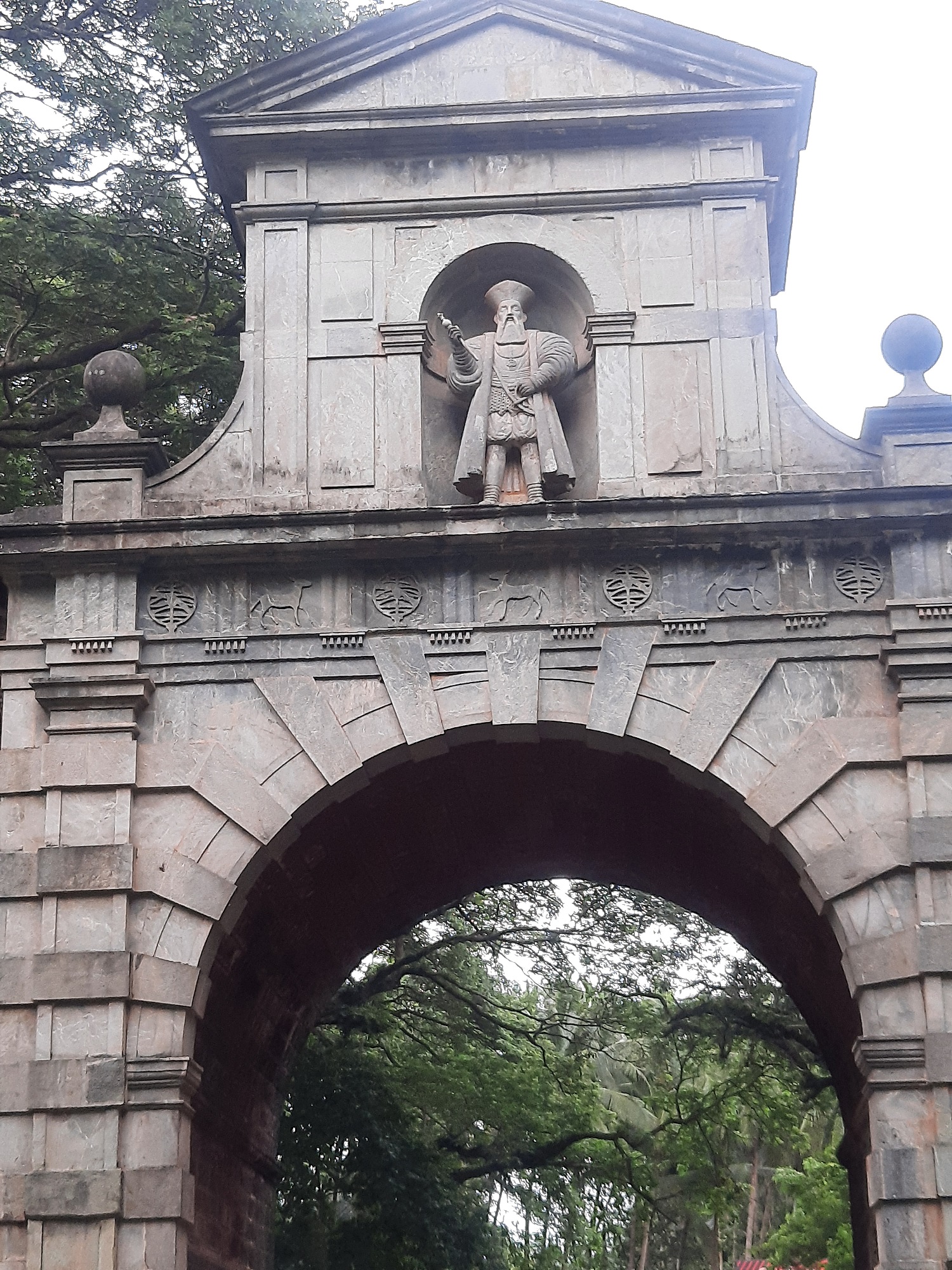
Vasco da Gama
Statue of Vasco da Gama, Viceroy’s Arch, Old Goa, Velha Goa

There can be no questions about da Gama’s courage, enterprise, skills and sheer sense of adventure in venturing out into unknown waters, and persisting for almost two years in the voyage to finally make it to India.

But even as one celebrates this spirit of human endeavor, it is necessary to question many of the motives and actions.

Da Gama, in his interactions with the Zamorin (ruler) of Calicut was always less than respectful. The Zomorin received da Gama with the respect due to a visitor from foreign shores, but da Gama had no clear answers to why he was visiting India, and gave the Zamorin such trivial gifts from the Portuguese king that no one would quite believe that da Gama was a royal ambassador and not some small-time merchant. This resulted in the Zomorin refusing Vasco da Gama’s request for permission to leave a representative behind to look after the merchandise he had not been able to sell. Further, local officials insisted on his paying customs duty like any other trader. This irritated the entitled da Gama, and he kidnapped and carried away some Nairs and sixteen fishermen when he left the shores.

But the most damning incident occurred during his next visit—the Second Armada. His ships reached India in October 1502. At the same time, a ship named Mirim carrying about 400 Muslim pilgrims including 50 women, had set out from Calicut for Mecca. Da Gama’s ships intercepted Mirim, looted the ship, locked in the passengers including the owner and an ambassador from Egypt, and burned them to death. Only about 20 children were spared on the condition that they would convert to Christianity. Da Gama watched the whole gory incident through the porthole of his ship.

Da Gama had come this time with the objective of signing a trade treaty with the Zamorin. After the pilgrim ship incident, the Zamorin hesitated to take on the Portuguese head-on and indicated his willingness to sign a treaty. But Da Gama had an atrocious condition—that the Hindu Zamorin expel all Muslims from his territory before negotiating the treaty. The Zamorin was appalled and refused. A very senior priest, Talappana Namboodri, known to both sides was sent to Da Gama to try to sort out things. But da Gama labelled him a spy, and had the priest’s lips and ears cut off. He had a pair of dog’s ears to his head before sending him away. But this was not the end of the matter. So infuriated was da Gama that he had the Portuguese fleet bombard the unfortified city of Calicut for nearly two days from the sea, severely damaging it. He also captured several ships, cut off the crew’s hands, ears and noses, dispatching them to the Zamorin with a note wherein he said that he would be happy to reset the relationship to a positive note once the Zamorin had paid for the items plundered well as the gunpowder and cannonballs used to bombard Calicut! Things escalated, and there was a sea battle which da Gama won. He also started trade with Cochin and Cannanore which were at war with Calicut.

Da Gama’s fortunes in Portugal declined for some decades after this journey, and he lay low. In 1594, with the new King’s blessings, he set out again for India, now with the title of Viceroy. This time he landed in Goa. He set out immediately to strengthen the Portuguese domination along the East Coast. However, it was not for long. He contracted malaria and died three months later in Kochi.

The Portuguese were the first Europeans to colonize India, and the last to leave! Vasco da Gama not only laid the foundation for this, but also for the ‘divide and rule’ strategy—turning one religion against another, one kingdom against another– which served future colonizers well.

Heroes in their time and country, leaving behind troubling legacies.

–Meena

The Storyteller Who Saved Silent Valley: A Tribute to Prof MK Prasad

For those of us who started working on environment-related issues in the ‘80s, ‘Silent Valley’ was one of the success stories which was held up to us as an example of how arguments based on good science, people’s power, and unrelenting campaigning could save the world. Or some part of it.

For those who have forgotten what this was about, hydroelectric dams were proposed on the River Kunthipuzha, which would have involved the submergence of the forests of Silent Valley, a biodiversity rich habitat, home to many, many unique species of flora and fauna, including the rare and unique lion-tailed macaque which is endemic to the Western Ghats.

Kerala Sasthra Sahithya Parishad (KSSP), a people’s science movement, led the campaign against the project under the leadership of Prof. MK Prasad. They published well researched techno-economic and socio-political assessment reports of the proposed project. The campaign by KSSP evoked a huge response from citizens at large, as well as eminent scientists and environmentalists like Romulus Whitaker of the Madras Snake Park, Dr. Salim Ali (who was probably the first to flag the issue), Dr. MS Swaminathan etc. The renowned poet Sugathakumari was at the forefront of the movement, and her poem “Marathinu Stuthi” (“Ode to a Tree”), was a rallying call for the people.

In an early and unique victory for the environmental movement in India, the then-PM, Mrs. Indira Gandhi finally weighed in, and the project was halted. Subsequently, the area was declared a National Park.

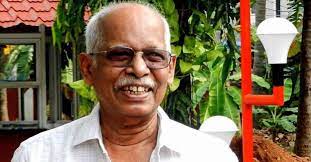
Prof MK Prasad
Prof MK Prasad

The story is one of the amazing dedication and hard work of a large number of people. But Prof. MK Prasad’s was a symbol of the movement. Prof MKP as he was fondly referred to, was a botanist who spent his life in academics. He taught botany, was Principal of Maharaja’s College, Eranakulam, and Pro-Vice Chancellor, Calicut University.

But he was not confined to classrooms, and believed passionately in taking science to the people. He was an environmental and science activist all his life, and a founding member of KSSP. His distinction as a scientist supported his environmental activism, which no one could dismiss as woolly-headed.

He was a member of the Governing Council of Centre for Environment Education for many decades and we at CEE were fortunate to have him as a teacher, guide, and mentor. Never for him the exalted distance of a Board Member. He was always interested in the minutest details of our projects and lives, and was happy to spend any length of time chatting with us. Prof Prasad passed away last week due to COVID. Here are a few poignant memories which bring him to life.

Prof Prasad, my mentor and a dear friend. It seems a little presumptuous to call this stalwart my friend, but as unassuming as he was, he truly was that. I’d scold him when he sat next to me during the Governing Board meetings, when lesser mortals like us were let in, because he would chatter away irreverently while serious matters were being discussed. He guided me through the challenge of trying to break into the ivory towers of higher education, and when things didn’t work, he’d say our efforts were “before their time”. That, always accompanied by his naughty smile, had become his code word. He also treated me as his unofficial research assistant, which I enjoyed.  He would call to ask me to find out about things that often I knew nothing about, and it was always great learning. Will miss you, Sir!

Kiran Chhokar.

When I think of Prof Prasad, I can see him walking down the corridors of ASCI where we held our Steering Committee meetings in Hyderabad. As always, he is dressed in a half-sleeved shirt, has no smile on his face – but his kind, sharp eyes are twinkling! I am immensely grateful for all his advice and guidance to the school environmental education project. But more importantly, I feel blessed to have spent some time with such a stalwart. His greatness and his humble demeanour co-existed so well! 

Something I found remarkable in him and so distinct from my generation is that he always gave a considered, detailed response to every request for advice. He never rushed to give an immediate response. Sometimes, he would respond the next day – probably after mulling over the issue. 

On one of his first visits to ASCI, I told him that there was a National Park (the KBR National Park) close by and he could probably take a stroll there in the evening. When I met him the next morning, he gave me a gentle, but proper scolding about my recommendation. I learnt my lesson – one does not present KBR as a ‘National Park’ to the person who saved the Silent Valley National Park! 

Kalyani Kandula

While I was working at the Centre for Environment Education (CEE), Ahmedabad,  I had the good fortune of knowing Professor Prasad. I have known him for many years now.  At Governing Council meetings held at CEE often I would sit next to him and would be very inspired by his valuable suggestions, critical comments and review of many projects CEE was handling. He would not mince his words. A gentle soul, very down to earth and a great inspiration to many. Professor Prasad in fact attended my sister’s wedding in Kerala. My father Dr.S.M.Nair and Professor Prasad shared a great professional and personal bond. 

Meena Nair

Some weeks after CEE’s office in Pune was started, Prof MKP dropped by. He was in Pune for some other work. Though it was a single person office and I a relatively junior staff member, Prof MKP was interested to see how I was settling in and getting on. When I told him that Amma (my mother in law) would have been happy to meet him, considering his association with KSSP, he just said that he would be happy to come over for coffee. So we did that, and Amma (and I) was very touched by the gesture. Later Prof Prasad and I went to meet Prof Pisharoty and I just felt blessed to listen to their conversation.

Sanskriti Menon

For me, he was the quintessential story teller. We would invite him to come and speak in various training programmes we organized—those for Forest Officers, for Environmental Educators from around South and Southeast Asia, for NGOs, for school and college teachers. Of course his sessions had to be around the Silent Valley Campaign. I must have sat through his sessions a dozen times if not more. But the passion, involvement and detail with which he told the story of the campaign inspired not only every new batch of trainees who had never heard it before, but equally, us the organizers who had heard it and read about it and discussed it ad-infinite. Such was the power of his passionate storytelling! And not just the Silent Valley–he had done so many interesting things, met so many interesting people, been so many interesting places–he could keep an audience engaged for hours!

Thank you Sir, for inspiring us. We are comforted by the knowledge that you are looking down at us with a twinkle in your eye!

–Meena

Another old piece on Dr. Pisharoty at : https://wordpress.com/post/millennialmatriarchs.com/43