Last year we visited Morocco. And of course, one of the highlights of the Marrakesh stay was a visit to the Jardins Majorelle. It is named after the person who created it–Jacques Majorelle, a famous French furniture designer who fell in love with Morocco in general and Marrakesh in particular, and spent most of his life there. He was inspired by the colours and designs of the country. He bought land on the outskirts, and commissioned a Cubist Villa to be built there, which he painted in a particular shade of blue which he developed inspired by the blue tiles widely used in that part of the country. The colour now carries his name, and is trademarked as Majorelle Blue. And as an afterthought, it is also called Moroccan Blue! (I wonder if Marrakesh craftspeople and tile makers whose ancestors must have developed the colour get any benefit from the use of the trademark?!?)
Another artist who added his name to blue was Yves Klein. Over ten years starting 1947, he created what is referred to as the purest blue. This ultramarine blue is called International Klein Blue.
There is something special about blue. It is invariably voted the most popular colour in American and European polls. It is an ancient colour, associated with the Gods (in India, Krishna and Rama are blue, and Shiva’s throat is blue), and with royalty in many parts of the world. But in many languages, it is one of the last colours to be named! Which seems strange, considering the sky and the seas are some of the vastest expanses human eyes see.
Blue is associated with feelings of calmness and relaxation, as well as stability and reliability. Of course, it is also associated with sadness, which is why we talk about ‘feeling blue.’ Offices are often done up in blue because research has shown that people are more productive and creative when working in blue rooms.In branding and advertising, blue is often used to market products and services which are associated with hygiene(sanitizers and disinfectants), air and sky (airlines and airports), water and sea (cruises, mineral water).
But it is supposed to be a very unappetizing colour! Blue is the least common one amongst the foods we eat. It is said to suppress the appetite, and some diets even recommend eating off blue plates when you are trying to reduce your food intake.
Blue is also a fairly uncommon colour in nature–even the few animals and plants that appear blue don’t actually contain the colour!.
In ancient times, this was one of the most expensive colours to produce, which is why only the royalty and the rich wore it. In India however, it has been in use for over 5000 years, thanks the blue dye derived from the Indigofera Tinctoria (Indigo). Our Indus Valley ancestors dyed their clothes with this.
This has also been one of the most costly pigments for painters and hence the colour was used only for important subjects. During the Renaissance, the Virgin Mary was the most important subject painted and most art from that time shows her wearing blue.
In pottery however, it has been a mainstay for centuries. Samples of pottery decorated with blue glazes going back to the ninth century are thought to have originated in Iran, developed by craftsmen of Basra. From here, it spread to China, where blue and white decoration was widely used in Chinese porcelain starting from the 14th century. All these glazes used cobalt to give the blue colour.
From here blue pottery spread to Europe, specially the Delft in the Netherlands. And of course, our very own Jaipur pottery is popular too.
At first glance the landscape looks like ‘waste land’. Miles of flat land with dry dusty soil punctuated only by the thorny bushes of Prosopis juliflora. The stubble of what seems to be dry remains of grass are barely noticeable. Ironically, we are driving through what is one of India’s unique ecosystems—the Banni grassland. Spread across almost 3000 sq km in the Kachchh district of Gujarat, it is believed that the land here was formed from sediments that were deposited by Indus and other rivers thousands of years ago. The rivers changed course, and the once fertile land gradually turned into a vast arid stretch. Today the region of Kachchh is usually associated with the word rann or desert. However this rann is far more than the textbook description of a desert. The Rann ecosystem of Kachchh is unique, with characteristic landforms, biogeography, flora, and fauna. And though the flat saline stretches are the predominant sight for a large part of the year, these conceal many natural depressions which are transformed into water bodies during and after the monsoon rains. It is these wetlands, within the arid land, that transform into ecosystems themselves, with their special features and creatures.
The local language of the region has four terms to describe these wetlands. The smallest waterbody is called kar, the one bigger than kar is called chhachh, the next bigger one is called thathh, and the biggest is called dhandh. The size of each of these seasonal freshwater wetlands during any given year depends on the amount of rainfall received in that year.
I recently had a chance to visit the largest of these seasonal wetlands called Chhari Dhandh. Spread over around 10 sq km, this water body plays host to tens of thousands of migratory birds who traverse many thousands of miles, as they journey from the frozen steppes of Siberia, crossing the mighty Himalaya, to spend the winter months here. The wetlands are located on the flyway of Palearctic migratory birds who arrive in late August and remain till March, using the ecosystem for foraging, roosting, resting and building reserves for the long return flight back to their summering grounds.
The water body hosts a huge concentration of water fowl. The drying of the soil due to evapotranspiration after the monsoon rains have receded, and the high salt content in the soil create a unique saline grassland ecosystem that supports a variety of grass species and shrubs that are a vital source of food for important bird species, as well as suitable roosting sites for a variety of birds including lapwings and coursers. The grasses also provide essential nutrients for the livestock of the Banni region, which is renowned for its milk and dairy products.
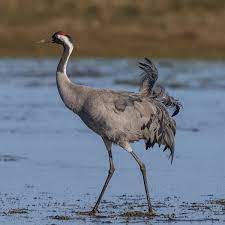
Visiting the wetland at what is almost the end of the season, we missed the flamingoes, but were rewarded with the sight of thousands of common cranes and hundreds of pelicans, as well as a number of raptors.
Two birds make their presence best felt in this wetland. The flocks of flamingoes that paint the landscape pink were no longer in residence, but the Common cranes were there in abundance. Their presence was evident all along the edges of the flats, well before the bumpy dusty track ended at the water body. As the vehicle made its dusty way along the track, the seemingly small conglomeration of tiny dots in the distance turned into swathes of smooth wings and tails as hundreds of birds rose as one graceful swoop into the air where they glided on to settle back to earth further on.
These are but short hops for the Common crane who undertakes a marathon flight from Central Asia and Mongolia to winter in the wetlands of Kachchh. The Common crane is a large slate-grey bird, with a long neck, beak and legs. The forehead and the region between the eye and the beak on the side of the head are blackish with a bare red crown and a distinct white streak extending from the eyes to the upper back. The neck, chin and throat are dark grey. The flight feathers are black, with the longest inner ones forming a drooping bushy cloak over the tail when the bird is standing.
This is a shy bird that takes off as soon as it senses that it is being approached. Before taking to the air it runs for a few metres with its wings spread out before it takes to the air. Once in the air, the birds often fly in V-formation with outstretched neck, and stiff wing beats. The flight is smooth and unhurried and makes for a beautiful moving picture high up in the sky. This bird has a wide repertoire of calls, including a loud trumpeting, which carry over long distances.
Common cranes live in large and small flocks. They spend the evening and night near the water body. They leave early in the morning to feed in the adjoining grasslands, and fields on tender shoots and roots, and insects, go back to the water at mid-day, and return in the afternoon to continue feeding until dusk. The feeding flock is always watchful, with a couple of designated ‘sentries’ that immediately alert them in case of any threat, whereupon they take flight. A spectacular flight indeed.
We were lucky to see this sight, along with flocks of pelicans at Chhari Dhandh. During a good rainfall year, the winter season in Chhari Dhandh sees up to 40,000 Common cranes and thousands of pelicans along with a number of other waterfowl, raptors and other birds which include about a dozen globally threatened species and a similar number of near-threatened species as per the IUCN. The area has been identified as an Important Birding Area in India.
Recognizing the conservation significance the wetland of Chhari Dhandh covering an area of 227 sq km was declared as a Conservation Reserve in 2008. The Government notification towards awarding this status noted that “given its ecological, faunal, floral, geomorphological, natural, and zoological significance, the aim of declaring Chhari Dhandh a conservation reserve is to protect, propagate, and develop wildlife and its environment”.This is the first Conservation Reserve in Gujarat.
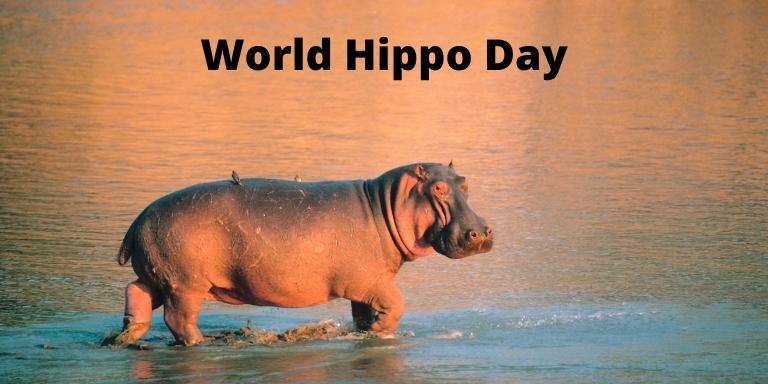
And come to think of it, why not? After all, hippos are the third largest land animals on Earth (after elephants white rhinos). Males can measure around 3.5m long and stand 1.5m tall, and weigh in at up to 3,200kg. That’s a weighty reason to allocate a day for them!
On Hippo Day, here is an interesting story.
Credit: Animalia Facts
A hippo can eat up to 35kg of grass in one night. And it is this ability to munch down herbage in quantities, and their very bulk, that led to a strange development in the US in the 1910s. Senator Robert F. Broussard, who represented Louisiana, brought a House Resolution for large-scale import of hippos to the US. No, not as a curiosity or to keep in zoos. But to solve two problems that America was facing at that time.
The first was the widespread proliferation of water hyacinth. First brought in as an ornamental water plant from the Amazon, the hyacinthspread madly, and within two decades, had overtaken waterways across the South of the US, threatening water trade routes. Several ways to get rid of the weed were tried—from breaking plants up, to dredging them, to setting them on fire. But nothing stopped the weed.
The second problem was the steeply rising prices of meat, making it unaffordable for many. The fundamental reason is not clear—it could have been the rising prices of grain, cattle shortages or profiteering by meatpacking companies. Or a combination of all of these. But there were people in the US who seriously feared that they would be forced into vegetarianism which they saw as a disaster. (It was a different time, wasn’t it?)
Senator Broussard and some friends came up with the completely out-of-the-box and bizarre idea of importing hippos to solve this twin crisis. Their claim was that the hippos would happily chomp their way through the hyacinths. And that their flesh would be a great source of meat and protein for the Americans!
And so they moved the “American Hippo Bill” in 1910! Ex-President Teddy Roosevelt was among its supporters.
The House Committee before which the Bill was presented asked some very sensible basic questions: Could hippos be domesticated? Could they be contained? Would they eat the water hyacinth? Is their meat edible? Broussard and his colleagues answered with a resounding ‘yes’ to all the questions.
But the answers, we know today, are ‘No’ in each and every case. Hippos are not domesticable. They are known to kill about 500 people every year. They are extremely strong and heavy, and it would be almost impossible to contain them with even the strongest fences. And they are very unlikely to have made water hyacinth a serious part of their diet. They feed mainly on grasses and would not have taken to this weed which is very low in nutritive value. And though hippo meat is eaten, it is not widely consumed.
There would have been other serious negative ecological impacts of introducing hippos into the waterways too—their heavy treading in water bodies would stir up the mud, and their poop would add to the organic load in the water, and would completely disturb the dynamics and lead to algal blooms and other problems.
Fortunately sense prevailed in the House Committee and they vetoed the Bill. Else, who knows what the American landscape would be like today!
And now for some Hippo Trivia to celebrate Hippo Day
We think of hippos as African animals, but nearly 5.9 million to 9,000 years ago, India was home to the hippopotamus. These entered Eurasia from Africa, and later diversified into South Asia before going extinct.
They can hold their breath and walk under water for up to 5 minutes.
Hippos may look bulky, but they are quite athletic, and run at speeds of up to 30kmph!
A group of hippos is called a bloat. Other terms for a hippo group include thunder, herd, sea, school, pod, dale, crash, and siege.
It is perhaps the most ancient cultivated tree in the world. Fossil evidence indicates that the date palm has been cultivated in the Middle East and North Africa for at least 5000 years. The tree has a place in mythology of several cultures. The Sumerians believed that the palm tree was the first tree ever created and that it was tended by a godly raven. In ancient Mesopotamia it was called the ‘road to the moon’ and associated with lunar worship. In Egyptian hieroglyphs the tree was used as symbol for year, and its frond as the symbol for a month. The Roman author and naturalist Pliny the Elder believed the tree to be the nesting site of the Phoenix, the self-resurrecting mythological bird.
There are several special botanical features that make the date palm unique among fruit trees. The height can exceed 20 m, and trees survive over a hundred years, and a tree can produce more than 70 kg of fruit a year. To grow and thrive, date palms require scorching dry summers, low humidity, no frost and ample sunshine. As a saying in the Middle East says: The date palm needs for its feet to be in running water and its head in the fires of the sky.
In practical terms, almost every part of the tree provided useful material for construction, roofing and ropes and baskets. Popularly referred to as the ‘tree of life’, ancient civilisations once looked to the date palm for life’s necessities.The soft wood, with its ability to withstand hot, dry conditions was useful for construction of houses, as well as certain parts of dhows, the traditional sailing vessels that carried out much of the maritime trade across the Indian Ocean. The fronds were used for roofing. The tree also inspired architectural elements. Capitals of columns were carved to resemble palm trees, the form features in artistic mosaics, weaves and embroideries in many ancient cultures.
And the fruit has long been recognized as a concentrated powerhouse of nutrients. The date has provided vital nourishment for generations living in the hot arid climes of the Middle East and North Africa. Dates are rich in vitamins, high in antioxidants and loaded with fibre. Dates are resilient to pests, do not rot when ripe and can be transported easily. Thus the old Arabic saying: The uses of dates are as many as the days of the year.
The date fruit itself gives the name to its parent tree the date palm—Phoenixdactylifera derived from the Phoenix (perhaps a reference to the mythical bird, as this tree can also regrow after a fire) and dactylifera meaning finger. The date’s English name comes from the Greek word dactulos meaning finger referring to its elongated shape and form.
Dates hold significance in major religions and cultures. In the Middle East and South Asia the fruits symbolize gratitude, generosity and good health and are served at weddings, religious ceremonies and festivals. The Jews considered dates as one of the seven holy fruits and paid special attention to it during their auspicious occasions and festivals. Dates are mentioned more than 50 times in the Bible. In the Holy Bible, palm trees are associated with symbols of prosperity and triumph. One legend says that the date palm was the tree of knowledge of good and evil and the date was the actual fruit (not the apple) that Eve offered to Adam in the Garden of Eden. In Islam the Prophet Muhammad considered dates to be a superior food and encouraged people to break their fasts with them. The date palm is mentioned 22 times in the Quran. Dates are considered a fruit, food, medicine, drink and sweetmeat. Their high sugar content makes them self-preserving and long-lasting. Dried dates can be stored for a long time, and transported easily across seas and deserts. They can be boiled and strained to produce a honey-like syrup, they can be fermented to make date wine. Desert nomads have used dates in traditional health remedies for thousands of years.
While not among the group of highest date growers, India grows 40-50 varieties of dates, both of the soft and dry type. One of the key date-producing regions in the country is Kuchchh in Gujarat. Date palms are believed to have been established in this region around 400-00 years ago. It is speculated that these grew from seeds thrown by pilgrims who visited the Middle East countries for Haj, and traders who also brought back these plants; or Arab gardeners working in the palaces of the local rulers who may have acquired and planted date seeds or shoots. Date varieties have been developed by thousands of years of selection of seedlings and only those possessing desirable characteristics have been propagated. Today there are believed to be around 1.7 million date palms in the area propagated from indigenous seedlings.
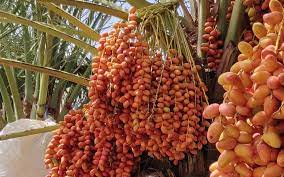
While the history of date cultivation here is not as old as that in other parts of the world,Kuchchh is probably the only place in the world where fresh dates are economically cultivated, marketed and consumed. The Kachchhi Kharek or Khalela as it is locally called is unique in that it is the fresh fruit that is eaten. While in most parts of the world dates are allowed to ripen until they become soft, and dark brown or black in colour, the Kuchchhi dates are harvested at the stage when the fruits have matured, accumulated sucrose, and have turned yellow or red, but are still crisp. This stage of harvesting is called the khalal stage. It is usually done just before the monsoon rains reach the region. The colour and crispness gives these dates a distinctive identity, and make for a delicious eating experience.
This identity has been formally recognized with the awarding of the GI Tag to this indigenous variety of dates—the Kuchchhi Kharek. The Geographical Indication Tag (GI Tag) is a sign assigned to products that have a specific geographical origin and possess intrinsic qualities due to said origin. This date is the second fruit from Gujarat to get a GI Tag, the first being the Gir Kesar mango grown in some districts of Saurashtra. The Kesar mango makes the intense heat of the summer bearable, while the Kuchchhi date adds energy and warmth to the nippy days of winter.
Makar Sankaranthi is linked to the solar calendar, and marks the beginning of the annual transit of the Sun from the Southern Hemisphere to the Northern Hemisphere. Sankaranthi is also called ‘Uttarayan’—deriving from ‘uttar’—North, and ‘aayan’—movement. The Sun moves from the Tropic of Cancer to the Tropic of Capricorn that day.
Makar Sankaranthi is celebrated across the country, but in different ways. In Tamilnadu, it is a harvest festival, and three days of Pongal celebrations mark worship of the sun, the rain and cattle—all fundamental to agricultural economies. It is a wonderful occasion to remind ourselves of how much we owe Nature, and that without the energy of the Sun, we can do nothing. ‘Pongal’ itself means overflowing, and the pot with rice, jaggery and milk is allowed to overflow to calls of ‘pongal-o-pongal’—welcoming abundance in the coming year.
The fundamental importance of the Sun has been recognized by many ancient cultures, and in many of them, kings ruled by the power of the sun and claimed descent from the sun.
In ancient Egypt, the sun god Re was dominant among the higher gods. The sun was not one entity– he sets out on his journey in the East as the young god Kheper; he appears at noon in the zenith as the full-grown sun, Re; and by the evening, when he is in the West he is in the shape of the old sun god, Atum. When the Pharaoh Akhnaton (husband of the famed Queen Nefertiti) reformed Egyptian religion somewhere around 1350 BC, he took Sun worship to the next level by making it the official religion and the sun’s qualities as creator and nourisher of the Earth and its inhabitants were worshipped.
As far as Roman history is concerned, sun worship became fairly important in the later period.
Both Sumerian and Akkadian religions put sun worship at the centre of their belief system, and in Iran, sun festivals were celebrated as a heritage from pre-Islamic times.
In North America, the Plains Indians followed a solar cult with the Sun Dance as an important ritual. In South America, especially Mexico and Peru, sun worship was widely prevalent. The ruler of Peru was believed to an incarnation of the sun god, Inti. The Aztecs worshipped Huitzilopochtli, the Sun God who was one of their most powerful and most revered gods. In fact, Aztec people considered themselves to be ‘the people of the sun’.
The sun goddess Amaterasu played an important role in ancient Japanese mythology and was considered to be the supreme ruler of the world and the guiding deity for the imperial rulers.
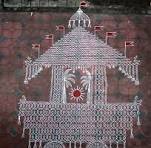
Sun Chariot Kolam
In many of these ancient traditions, the Sun God rides in a chariot drawn by horses. In Hindu mythology too, he rides chariot drawn by seven horses—which are said to stand for the seven colours of visible light or the seven days of the week. There are different versions of the names of the seven horses. In some traditions, they are named after the seven meters of Sanskrit poetry: Gayatri, Brihati, Ushnih, Jagati, Trishtubha, Anushtubha and Pankti. In others, they are called Jaya, Vijaya, Ajaya, Jitapraṇa, Jitasrama, Manojava and Jitakrodha , which are different phases of light transmission through the length of the day.
The most traditional rangoli or kolam made in Tamilnadu for Pongal is the Ratham or Sun’s chariot. While there are 5×5 dot ratham kolams for amateurs, these designs can become incredibly complex and set off a competitive spirit across streets!
So let us rejoice in the spirit of Sankaranthi, and pray for abundance, peace and prosperity in the coming year!
–Meena
PS: The beautiful kolam is from the Net. I can claim no credit!
George Mallory, when he was asked why he wanted to climb Mount Everest, is said to have replied: “Because it’s there”. Mallory was the only climber to take part in three of the British pioneering expeditions to climb Mount Everest in the 1920s. Mountains have always “been there” and have over centuries, challenged humans to ascend and ‘conquer’ them. Hundreds of books have been written about mountains, mostly by men. The books are characterised by the language of conquest and victory, and propelled by the goal of reaching the summit.
In the period when men were racing to scale and conquer the highest peaks, was a young woman who perceived, and described, mountains not in terms of heights but in terms of depths. This was Nan Shepherd, not only an explorer of mountains, but also one of the great early 20th century writers of nature, landscape and the Scottish mountains that she so loved.
Anna (she called herself Nan) Shepherd was born in February 1893 near Aberdeen on the North East coast of Scotland. Not long after she was born her family moved to Cults (now a suburb of Aberdeen). The hills of Deeside close by, were her natural playground, and her love for walking in the hills was encouraged by her father who was a keen hill walker. Nan was also an avid reader, and at the age of fourteen started filling notebooks with quotations and citations from her readings. She attended Aberdeen High School for Girls and studied at Aberdeen University, graduating with an MA in 1915. She went on to teach English literature at the Aberdeen Training Centre for Teachers (later the College of Education). She remained there for the next forty-one years, until her retirement in 1956, having become known as an inspiring teacher with a feminist slant to her work. Although she did travel extensively, she continued to live in her childhood home until she died in 1981.
Having explored the local hills almost from the time that she could walk, Nan ventured further afield, to the Cairngorms. These formidable mountains to the west of Aberdeen, are amongst the wildest landscapes in the British Isles. This was in June 1928, Nan was 35 years old. This first experience of the mountains was the start of a passion that came to define both her life and her writing. From then on, she would head for the Cairngorms whenever her job would allow, often alone, or occasionally with friends and fellow walkers.
For Nan, who conquered all six of the major peaks in the Cairngorms while still a young woman the goal was never to reach the summit of a mountain: it was not climbing up that excited her so much as “clambering down,” discovering all the hidden parts of the mountain that only an attentive walker would notice. It was this perspective of ‘looking within’ both at the mountain, and herself, that inspired Nan to also write copiously during the period between 1928 and 1933. During this time, she published three novels: The Quarry Wood, The Weatherhouse, and A Pass in the Grampians. As she said: “It simply must be written”. Shepherd drew inspiration from the places and people she knew well, setting her stories in the North East of Scotland, with a focus on country communities and the harsh way of life imposed by the landscape. Above all, what shone through was her deep love for the Scottish mountains and her knowledge of these through walking.
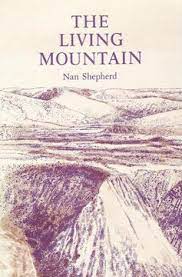
While Nan published these books, the book that was most inspired by these mountains, and her most inspirational piece of writing, was called The LivingMountain. The book, written in 1940, describes Nan’s explorations, as a walker and as a writer, of the Cairngorm Mountains. Nan sent her manuscript to a novelist and publisher friend Neil Gunn who appreciated it, but felt that it was not fit for publication unless she added photographs and a map. Nan put away the manuscript in a drawer and there it remained for over 30 years. It was finally published by the Aberdeen University Press in 1977.
The publication of The Living Mountain revealed Nan as one of the earliest ‘Nature writers’ who brilliantly captured the Cairngorms in their various seasonal moods. Her descriptions emerged out of her own immersion in the experience of walking in every kind of weather, swimming in the lochs, dipping in the streams, and camping under the sky. It also showed her incisive eye for detail, and her profound understanding not only of the geography and geology of the mountains, but equally of the living elements that made it a vibrant ecosystem. Long before ecology became a buzzword, Nan was acutely aware of the interconnections.
Shepherd was interested in the ‘essential nature’ of the mountain: in understanding it from all angles and in all seasons. She viewed the mountains not as looming objects of sublime terror, but as acquaintances. She wrote: Often the mountain gives itself most completely when I have no destination but have gone out merely to be with the mountain as one visits a friend, with no intention but to be with him.
The poetic descriptions of the routes are so vivid that the readers can literally walk these with Nan. But Nan Shepherd’s writing is not simply a description, it is equally an introspection. While most mountaineers think in terms of peaks, plateaus and cliffs, Nan looks within, “into” cracks in rocks, and the depths of lochs and rivers. Her prose is philosophical and often meditative: One does not look upwards to spectacular peaks but downwards from the peaks to spectacular chasms, for a mountain has an inside.
Although it was written nearly a century ago, The Living Mountain is today acclaimed as “one of the most brilliant works of modern landscape literature”. It is a lyrical memoir that combines field notes, natural history, and oral history. One of its most profound tenets is that we should not walk “up” a mountain but “into” mountains, thus exploring ourselves as well as them.
December 11 is celebrated as International Mountain Day. The theme for this year is Restoring Mountain Ecosystems. Nan Shepherd’s The Living Mountain is a reminder that healthy mountain ecosystems can restore us: in body and spirit.
The story of the Arab who kindly let his camel put his nose in the tent to keep it warm, and ended up with the entire camel inside, while the Arab was ousted into the cold is an old one. It is quoted as an example of “give an inch and they will take a mile”. While this is a fable, in reality there are several examples in Nature, of animal species, who, once invited or introduced, proceed to take over spaces, pushing out the original inhabitants. A case of invasive species.
Recently I wrote about some invasive plant species in India. This is about invasive animal species which have not only invaded spaces but which have posed serious threats to native species in several parts of the world. Ironically some of the most damaging invasive animal species were originally introduced either for sport, as pets, or as livestock and pack animals. Here are a few examples.
European rabbits. In 1859, Thomas Austin, a wealthy English settler in Australia, received 24 wild and domesticated European rabbits as a Christmas present from his brother in England. These were for hunting on his estate in Melbourne. The rabbits multiplied rapidly, producing more than four litters each year. They had no predators to keep their numbers in control. They also adapted easily to their new environment, and by burrowing beneath the soil, they spread far beyond the boundaries of the estate. In 50 years these rabbits spread across the entire continent. Their numbers became so large that they destroyed crops and land, leading to soil erosion. They also negatively affected agriculture and plants by overgrazing. Not only did the rabbits wreak havoc on Australian croplands, they contributed to the decline of native plant and animal species. Today Australia has over 200 million rabbits, the fastest colonization rate for an introduced mammal ever recorded. The control of this invasion continues to remain a huge challenge which has engaged Government researchers, biologists, farmers, and others. The colonization of Australia by the European rabbit is said to be one of the most iconic and devastating biological invasions in recorded history.
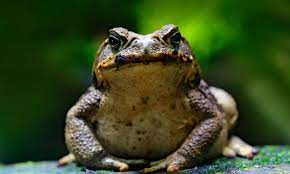
Cane toad: Another story from Australia. This one about a species that was introduced not for sport, but for biological pest control, and ended up being a major pest itself.
The Australian sugar industry began around 1862 when Captain Louis Hope succeeded in raising a viable sugarcane crop, and then established a sugar mill in Queensland. Establishing the sugar industry was difficult in the face of drought conditions. A bigger problem was that the roots of the plants were eaten by the larvae of native beetles which were collectively called cane beetles. In 1933, Australian sugarcane growers attending a conference in the Caribbean heard about a toad that was effective in destroying these beetles. Australia had no native toad species. The growers lobbied for the import of the cane toads to Australia in the hope that these would combat the crop-destroying cane beetles.
In early 1935, a box containing 102 toads arrived from Hawaii. The toads were kept in captivity where they rapidly multiplied. In July 1935 the toads were released into the fields. But not all was known about the toads by then. As it turned out, the toads could not jump high enough to eat the larvae of the beetles that lived largely on the upper stalks of the sugarcane plants. The voracious toads thus began to feed on whatever they could get at the lower level—insects, bird’ eggs and even native frogs. Would-be predators were killed by the poison that these toads secreted. Thus the original plan misfired disastrously, as the invited invaders laid ravage to the crops and native species. The cane toad continues to seriously impact the ecosystems of northern Australia even as they spread to other parts. Due to Australia’s geographic isolation and subsequently unique and fragile biodiversity, this is a grave issue. The Australian Government has stated that ‘There is unlikely to ever be a broad-scale method available to control cane toads across Australia’.
Photo source: Wikipedia
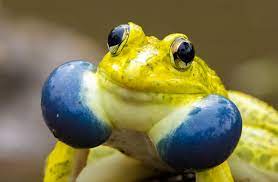
Indian Bullfrog. Closer to home both in terms of geography and history, is the relatively recent example of the spreading menace of the Indian bullfrog on the Andaman Islands. While the first report of its sighting was in October 2011, it is believed that the bullfrogs may have been introduced to the islands in early 2000s.The reason for the introduction is not clear. Some believe that the tadpoles may have come with fish food from mainland India. Or it may have been brought by farmers from West Bengal and released into rice fields for local consumption. But having arrived, these prolific breeders are beginning to make inroads. Of greatest concern is that their tadpoles are carnivorous, and eat tadpoles of other frog species, thus threatening the native species. The large-sized adult frogs also compete with native species for the same food.
As the frogs are spreading to more islands, the story of Australia’s invasion by alien species is beginning to play out again—introduction, naturalization, and expansion. The Andaman archipelago which consists of 300 islands has rare endemic species which are vulnerable to such invasions, and which eventually could lead to disturbing delicate ecological balances.
Common Myna. Once again, a twisted tale of transition from mainland to islands. This ubiquitous bird that we are so used to seeing around us, is not such a friendly neighbourhood bird in the Andaman islands. Of the 12 bird species that were introduced into the Andamans around the end of the 19th century, 6 have disappeared, but 5 are still found there. Of these, the common myna has been not only the most successful spreader and stayer, but also the biggest threat to native avian species. These birds are known to prey on the eggs and chicks of other bird species. They also compete with the local hole-nesting birds for nesting sites, slowly inching out the native inhabitants from their own habitats.
From the Andamans, all the way to Australia, the range of the common myna is increasing at a rapid pace, leading the IUCN Species Survival Commission to declare it as one of the world’s 100 worst invasive species that pose a threat to biodiversity, agriculture and human interests.
Like the camel that sidled its way into the well-meaning Arab’s tent, the process of incursion, expansion, dislodging of original inhabitants, and taking over, is the story of invasive plant and animal species. This process, together with habitat destruction, has had serious ecological costs, and has been a major cause of extinction of native species throughout the world in the past few hundred years.
In the last couple of weeks a previously unheard of name has been making news. This is Conocarpus, and the news is that the Government of Gujarat has imposed a ban on the plantation of Conocarpus trees in both forest and non-forest areas. This has come not long after there was praise for the lush greenery that lines the riverfront of the Sabarmati river in Ahmedabad which was made possible by the large-scale plantation of Conocarpus as part of the riverfront development plan. Similar plantations have been done in several cities of Gujarat in the past few years. This has also been the case in some other states. Several municipalities in Telangana planted these fast-growing trees on both sides as well as between the roads to increase greenery. The Pune Municipal Corporation planted these in some public parks. Conocarpus erectus trees have been a popular choice in recent years for beautification of public spaces, as well as residential societies. It is only more recently that researchers have drawn attention to the adverse health and environmental impacts of these trees, raising concerns.
Ironically these trees, which are greening urban landscapes are botanically mangrove plants that grow in tropical or coastal mangroves. They are not native to India, but are indigenous to North and South America, as well as parts of Africa. They began to be widely planted in urban areas because of their ability to grow quickly, and their thick foliage. Now research is indicating that there is more harm than good done. Conocarpus trees have a high-water demand, which is easily met in their natural habitat. But when these are planted in arid areas, their deep root systems compete with nearby plants for water, and also significantly impact local water resources. The roots can damage drainage systems and underground telecommunication lines. The non-indigenous species can outcompete native flora and disrupt natural ecosystems and local biodiversity. They are also a threat to human health as their pollen can trigger allergic reactions causing cough, cold and asthma.
And so the not-too long ago welcomed visitor is beginning to raise concerns. The story is not new. India has seen several examples of such ‘invited invaders’. Meet some of these, who have come to stay.
Prosopis juliflora a thorny, evergreen shrub/small tree which is native to northern South America and Central America, was introduced to India during the nineteenth century in order to halt the further expansion of the Thar Desert in north-western states and to meet the fuel wood crisis of peninsular India. Most of the Indian states and union territories introduced this species in their provinces in order to overcome the local fuel wood demands. This exotic cousin of local Prosopis species (especially Prosopis cineraria) quickly gained a roothold and spread rapidly wherever it grew, developing impenetrable shrubby thickets of thorny branches which could injure humans and domestic animals. The impact on local biodiversity was also evident in the Protected Areas where the plant was introduced, especially in Keoladeo Ghana and Ranthambore National Parks in Rajasthan, where the introduction turned into an invasion that drastically reduced the grassland habitat and threatened the continued survival of the grassland species of birds (especially the Great Indian Bustard) and other animals like the Desert fox. The spread of the shrub reduced the foraging area for wild and domestic animals, affecting the food pyramid all the way up to the tiger—the keystone species. By the time the deleterious effects of the well-intentioned introduction were realized, the alien invasion had become uncontrollable in scope and scale.
Parthenium hysterophorus is an erect fast-growing herbaceous plant native to the area surrounding the Gulf of Mexico, North, Central and South America and the West Indies. It is a weed commonly known as bitter weed, carrot weed, broom bush and, in India as congress grass.
It is believed that the seeds of the weed entered into India during the 1950s along with the wheat grains received from the United States under the US PL 480 scheme. Since its introduction, the weed has invaded different habitats in India including agricultural lands, bunds of wetland, watercourses, community land, urban areas, overgrazed pastures, industrial areas, playgrounds, sides of the road and railway tracks and the fringes of the reserve forests and other protected areas. Today it has spread over millions of hectares of land across the country. The invasion has been global as the weed has been reported from more than 20 countries across five continents.
Due to its harmful effects on humans, livestock and to biodiversity, P. hysterophorusis was declared as the most dangerous terrestrial weeds of our times. As it spreads, the weed releases chemicals that alter the natural chemical composition of the soil which affects the productivity of crop plants and other native plants. The weed also impacts human health causing respiratory problems including asthma and bronchitis, watering eyes, as well as skin inflammation and eczema.
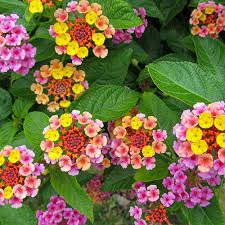
Lantana camara, popularly known as wild sage, is a thorny and multi-stemmed deciduous shrub, which produces clusters of small attractive tubular multi-coloured flowers. The plant is a native of South and Central America and the Caribbean islands. The plant was widely introduced in the 19th century in tropical parts of Africa, Asia and Oceania as an ornamental and hedge plant. In India Lantana was introduced around 1807 as an ornamental plant at the then Royal Botanical Garden in Kolkata. In due course of time, the noxious weed managed to escape from the introduced sites and invaded several thousand hectares, including protected areas such as national parks and sanctuaries. Today the plant is believed to have been naturalized in nearly 60 countries and several island nations.
Lantana: Pretty Spreader
Studies have established that the uncontrollable spread of Lantana has had harmful impacts on the ecosystem. It disturbs the natural succession cycle of native vegetation, altering the floral composition of the local ecosystem, leading to the gradual elimination of native floral diversity. Apart from wild flora, the biochemical properties of the plant also adversely affect cash crops such as coffee, cotton, tea, rice and sugarcane among others. Considering the vast impacts on the ecosystem, biodiversity and range extension ability, IUCN’s Invasive Species Specialist Group (ISSG) has declared the weed as one among 100 of the world’s worst invasive species
Water hyacinth (Eichhornia crassipes) is a floating aquatic invasive plant species native to Amazon basin of Brazil, which has drastically invaded into many tropical and subtropical countries of Latin America, Caribbean, Africa and Southeast Asia. Invasion of this species causes huge loss to aquatic biodiversity and provides home to several disease-causing vectors
The rapidly growing plant was introduced into several parts of the world, including India, at the end of the nineteenth century for ornamental purposes. In due course of time, water hyacinth found its way into natural inland water bodies such as lakes, rivers, reservoirs and rural ponds. In most of the wetlands of Africa and India, this species is still spreading even after a century of its initial introduction.
Invasion of this species causes huge loss to aquatic biodiversity. It spreads rapidly spread within a short period to form dense impenetrable mats across the water surface, preventing the entry of sunlight and also limiting water access for humans and wildlife. The proliferation of the weed in the wetlands slowly alters the density and diversity of the floating and submerged native aquatic plant species, ending in their extinction. The dense vegetation serves as a breeding ground for several vectors such as mosquitos, flies, and snails, which can transmit diseases like cholera, malaria, and filariasis. The invasion affects water transport, fishing, leads to disruption of hydroelectric operations, blockage of the natural water tributaries and irrigation and flooding systems causing flooding. Due to its vast impacts on the local economy, biodiversity and human health, the weed has been recognized as one of the 100 most dangerous invasive species, and the top ten worst weeds.
The IUCN defines invasive alien species as animals, plants or other organisms that are introduced by humans, either intentionally or accidentally, into places outside of their natural range, negatively impacting native biodiversity, ecosystem services or human economy and well-being. Today as the world faces numerous challenges from not just biological invasions, the threat of these invasions continues to grow as the movement of people and goods around the world increases opportunities to transport species to new environments. At the same time, climate change is making areas more hospitable to new species. Invasive alien species are one of the biggest drivers of biodiversity loss and species extinctions. Such invasions also put human health, food security and livelihoods at risk, as highlighted in the United Nations Sustainable Development Goal 15.
When there are myths and stories about the origins of an animal, tree, bird or anything in nature, we can be sure that the particular thing has played a huge part in human lives and society down the ages. The coconut is one such. There are stories from across the world about the origins of the coconut. Even in India, there are at least 4-5 popular stories about this. Not to mention stories from West Africa, China, Malaysia, etc.
Coconuts are an integral part of our lives in India—from the morning chutney for the idli, to the oil we swear by for hair growth, the refreshing and safe drink we give convalescents, to the coir mattresses we sleep on—they touch our lives in so many ways. Coconuts are a must for a visit to a temple, for a housewarming, a puja, or to launch a new vehicle.
I didn’t know till recently that there was a World Coconut Day, marked on Sept 2nd every year. Nor did I know that there was something as grand and formal as The International Coconut Community (ICC), an intergovernmental organization of coconut producing countries organized in 1969 under the aegis of the United Nations Economic and Social Commission for Asia and the Pacific (UN-ESCAP). Their mission is to ‘To promote, coordinate and harmonize all activities of the coconut industry which sustains the lives of millions of small farmers.as well as those engaged in production, processing and marketing of coconut products.’ The ICC Secretariat is located in Jakarta, Indonesia and is headed by an Executive Director. The ICC has 20 member-countries from Asia, the Pacific, Africa, South America and the Caribbean’s. India is of course one of them.
World Coconut Day commemorates the foundation of Asian and Pacific Coconut Community (APCC), an intergovernmental organization of coconut producing countries.
The coconut certainly deserves all this. It is a tree which provides food, fuel, medicine, cosmetics, building materials, and much more. In the South Seas, there is a saying that ‘he who plants a coconut tree plants food and drink, vessels and clothing, a heat source, habitation for himself, and a heritage for his children’. Importantly, it forms part of the livelihood basket of lakhs of small landholders—98 per cent of coconut holdings are with small and marginal farmers.
India is among the largest producers of coconuts in the world with Tamil Nadu, Kerala, Karnataka and Andhra Pradesh being the major contributors. We produce over 19 million nuts a year, accounting for over 31 per cent of the world’s production. We also account for 66 per cent of the world’s exports, and send our coconuts to over 140 countries.
There is also R&D going on into development of a range of new coconut-based medical products. In the world of healthcare, a number of products from sterilizing agents to fungicides to anti-itch products are being developed. The fashion industry too has taken to developing new products based on coconuts. There is also considerable research in the direction of developing several food-related products like coconut skimmed milk, coconut milk powder, coconut cream, coconut vinegar, coconut jaggery and palm sugar, and we may expect to see many such new products hitting the market soon. There is also on-going effort to make coconut shell charcoal and activated carbon.
So let’s join in the celebration of the ubiquitous coconut that we take so much for granted. Drink tender coconut-water, eat a coconut burfi, make a curry with a coconut gravy, or throw a coconut themed party. Just a way to say thank you to a tree that gives us so much—health, beauty, taste, shelter, sound sleep, and importantly, livelihoods to so many!
Several generations of children grew up with The Tale of Peter Rabbit. The author Beatrix Potter is a familiar name in children’s literature, but what is less known is that she was also a notable woman of science, in an age when this was almost unheard of.
Helen Beatrix Potter was born on July 28, 1866 in London in a family that enjoyed culture and the arts. Although Beatrix was educated at home by a governess, she and her brother spent all their free time in the woods around their home, observing the small creatures that lived there, and even bringing some, like hedgehogs and rabbits home. Beatrix was a quiet shy girl who expressed herself through paintings and drawings of wildlife, and in coded notes in a secret diary.
When an uncle who was a chemist gave her permission to use his microscope, a whole new world opened up for Beatrix who could minutely study plants, and insects and make detailed sketches. Her interest in natural history was further spurred when she used to visit the South Kensington Museum. She found herself drawn to the study of plants and fungi as well as insects.
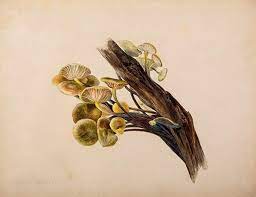
Beatrix’s interest in drawing and painting mushrooms, or fungi, began as a passion for painting beautiful specimens wherever she found them. As her biography says: She was drawn to fungi first by their ephemeral fairy qualities and then by the variety of their shape and colour and the challenge they posed to watercolour techniques.
In October 1892, on a family holiday in Scotland, Beatrix got to know Charles McIntosh, a local postman and self-educated naturalist who was also an expert on British fungi. McIntosh admired her pictures, sent her specimens to paint and advised her on scientific classification and microscope techniques. She sent him copies of her pictures in return. She would go on to produce some 350 highly accurate pictures of fungi, mosses and spores.
Beatrix also started hunting for rare varieties of mushrooms, and growing dozens of different species of fungi at home, in order to study their development. She was intrigued by their life cycle. By 1895, Beatrix Potter’s interest in fungi was becoming even more scientific. Following advice from McIntosh, she began to include cross sections of mushrooms in her illustrations to show their gills and used a microscope to draw their tiny spores. She speculated about whether these spores could germinate and the environments in which they might do so.
In May 1896 her uncle Sir Henry Roscoe, a prominent chemist, introduced her to the mycologist at Kew’s Royal Botanic Gardens. This led to a post at the Royal Botanic Gardens where she produced faithful, detailed renderings, largely of mushrooms and toadstools as seen through a microscope. In addition to her art, the scientist in her also began experimenting with germinating spores of various fungi on glass plates and measuring their growth under a microscope. Her close observations and experiments, as well as her drawings showed in great detail how lichens, a common type of fungi found on rocks and trees, were actually not one but two different organisms that lived together. Her studies showed that this was a union between an alga and a fungus. The two different organisms are able to live together, with each of them benefitting the other in some way. Beatrix thus was one of the earliest to study and hypothesize what would later become the science of symbiosis. However, the botanists she showed her work refused to discuss even discuss the drawings she made.
Beatrix prepared a paper on her findings and submitted her work to The Linnaean Society of British Scientists but was not allowed to read it herself because, at that time, only men were invited to their meetings. The all-male panel rejected her paper and refused to publish it. Potter withdrew the paper, presumably to make amendments. But it was never published; and no copy exists today. Thereafter Beatrix turned her full attention to drawing and writing.
There is today some controversy about how serious Beatrix Potter was as a mycologist. But there is no doubt about the accuracy and detailing of her drawings and paintings of fungi which remain unparalleled, and are referred to mycologists even today. As her biography says: Beatrix Potter never saw art and science as mutually exclusive activities, but recorded what she saw in nature primarily to evoke an aesthetic response.
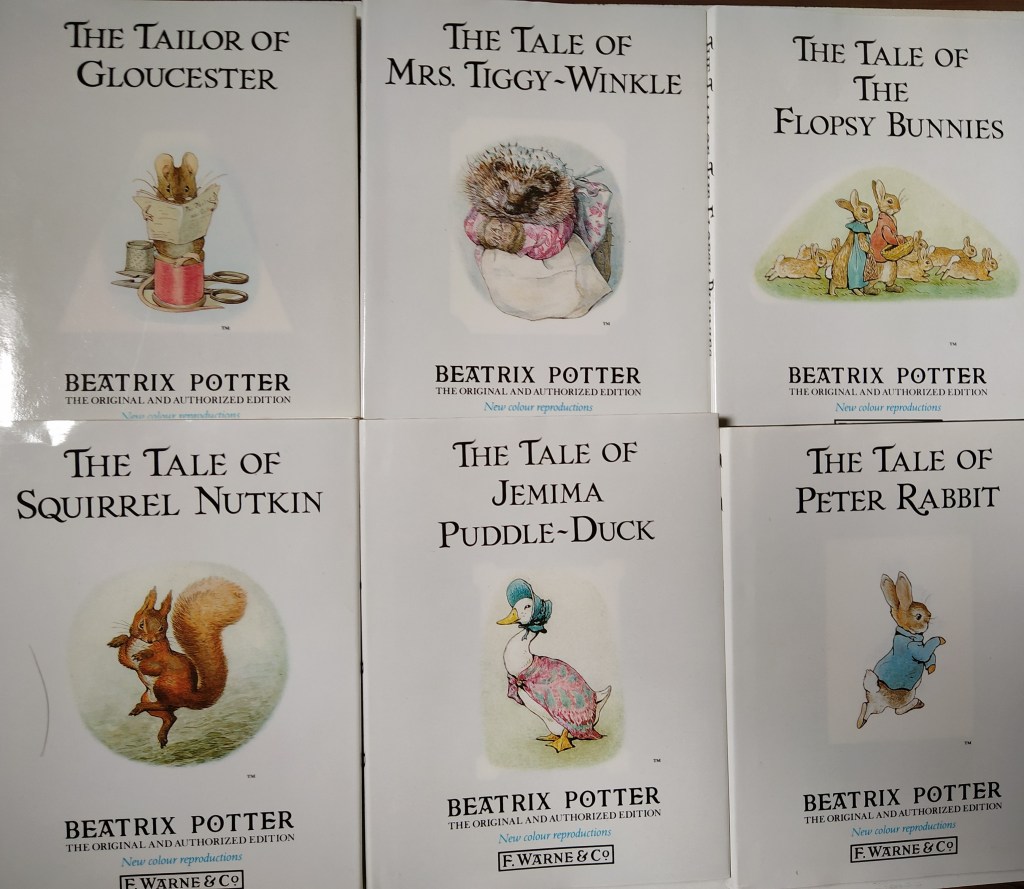
The name Beatrix Potter endures today as the author of well-loved children’s books. In 1893 she sent a letter with a picture story to a sick child of her old nanny which began with the words “I don’t know what to write to you, so I shall tell you a story about four little rabbits whose names were Flopsy, Mopsy, Cottontail and Peter.” Beatrix went on to create the loveable characters of Peter Rabbit, Benjamin Bunny and Jemima Puddle Duck, among others that had adventures in the 26 books that she published subsequently. Over 150 million copies of her books have been sold and have been translated into 35 different languages
As her books gained popularity, she channelled all the profits towards a large property called Hill Top which she purchased in 1905. Situated in England’s Lake District, this was her first farm. She enjoyed the quiet and solitude that the thirty-four-acre property brought her and this allowed her to work more efficiently. Aside from being a farmer and landowner, Beatrix also became recognized as a sheep breeder. She never lost her love for nature and became an advocate of traditional farming and the preservation of the wild environment surrounding the area. She continued buying patch after patch of land around her farm. By doing so, Beatrix hoped to further pursue her dream to provide land for the creatures that she had loved since her childhood.
Beatrix Potter died of bronchitis in 1943, aged 77, leaving behind a legacy across different fields of study. The British Natural Trust eventually became recipient to her donation of 4,000 acres of land. The property was named a UNESCO World Heritage Site in 2017, and is now open to the public. Beatrix Potter’s love for the land and all its creatures continues to provide a haven for all life.



 Millennial Matriarchs