Where Did They Come From?

Back to my favourite topic—Words and their quaint origins!

CLUE: Comes from an old English word meaning a ball of thread that could help you find your way through a maze. This, is turn, refers to the Greek myth of Theseus who found his way out of the Cretan labyrinth by unravelling a ball of thread. And, from there evolved the use of the word “clue” which refers to hints that help to solve a mystery (or a crossword!).

QUIZ: An invented word. The story goes that in 1780 Richard Daly a Dublin theatre manager made a bet that he would introduce a new word into the language in 24 hours. He sent street urchins to write “Quiz” (a word that he made up) in chalk upon every wall and bare surface in the city, and in a few hours everyone was discussing it. Since no one knew what it meant everyone thought that it was some kind of a test. It came to be used to mean ‘enquiry’.

BLURB: A blurb on the cover of a book may give us a clue about what is in the book.  The word blurb was coined in 1907 by American humorist Gelett Burgess. The cover of his 1906 book Are You a Bromide?  had the picture of a fictitious Miss Belinda Blurb in the act of “blurbing”,  proclaiming “Yes, this is a blurb.”  From then on covers of books used to carry text “blurbs” without the picture. The word blurb entered standard English in the 1920s.

BLOCKBUSTER: This was the British name in World War II for a super-large high-explosive bomb capable of destroying large areas. Within a few years of its use in military terminology the word blockbuster was used to describe other powerful things such as sports teams and hail storms. In 1954 the expression block-buster was used to describe movies that grossed over two million dollars. Today blockbuster is generally used for super-hit movies, but also to describe something that is powerful, exciting, immense and successful.

Surprisingly today we say that a movie “bombed” at the box office to mean just the opposite!

CARTOON: This is the age of blockbuster ‘cartoon’ or animated movies. Interestingly the word derives from the Latin charta meaning paper via the Italian form cartone (a big piece of paper). It originally referred, in the Middle Ages, to a preparatory sketch for a tapestry or other artwork. The modern usage emerged in around 1843 when Punch magazine used satirised drawings of the new Victorian Houses of Parliament, and continued to use humorous illustrations in its issues. In the early 20th century, it began to be used to refer to animated films which resembled print cartoons.

IGNORAMUS: This used to be a favourite word of mine when I was in my teens—just liked the sound of it, and had fun using it to describe people! The word has its origins in legalese. Grand Juries in England wrote “ignoramus” on the back of rejected proposals for indictment to mean “we have no knowledge of it.” The implications that they did not wish to hear anything of it may have led to its later use to describe someone who knows nothing of anything.

The more I read about words, the more I discover what an ignoramus I am!

–Mamata

ignoramus.jpg
Source: Google

ACT NOW!

5 June! The date conjures up so many memories! World Environment Day—a day to remind ourselves and the world of the fragile planet that we call our home, and how best we could do our bit to make it a better place to live. This day marks the anniversary of the Stockholm Conference on Human Environment held in Sweden in 1972 when the nations of the world gathered to share their concern over human progress at the expense of environment. Today nearly fifty years later, the world is sadly not a better place. A cause for grave concern, but not too late to act.

As young Environmental Educators with a passion, and sense of mission to spread this message, we worked in many ways. One of our lasting campaigns was Act Now—to share every-day tips to remind each person to do their bit. From the early 1990s, and through the next two decades Act Now remained the anthem for the Matriarchs.

We began our communications with a provocation: “Are you doing your bit to help save the planet?” “What can I do? I am not a scientist.” “Who me I am only a kid.” “It’s not my business. I don’t work in the government.” “No. I don’t really have time.” And then came the Act Now tips.

Sharing a few hacks (as they would be called now!).

Food for Thought: Get the family to eat together—its saves having to reheat food (thereby fuel) several times.

House Proud: You don’t have to tackle grease and dirt with hazardous chemicals. Mirrors, glass and windows can sparkle when washed with soap and water and rinsed with a solution of one part vinegar to four parts water, and dried with loosely crumples sheets of newspaper.

Grandmother’s Secrets: Remember the shining vessels and fragrant house? That did not come from a bottle. Copper scrubbed with tamarind really gleams. Brass shines when cleaned with a mixture of salt and flour, with a little vinegar added.

Every Drop Counts: Longing for a cool bath? Instead of letting the water run till it cools, why not fill a bucket and keep it to be used when needed?

Winter Warmth: Explore the possibility of installing a solar water heater for hot water needs.

Monsoon Measures: Place a few bricks under the rainwater outlets to prevent the soil from being washes away during a heavy downpour. Better still direct the rain water to storage tank or collect it in a large drum.

Water Wise: Rain water is pure, free and abundant. Store it and use it to water delicate plants with. Brass vessels washed in rain water retain their sheen for a longer time.

Bright Ideas: Cash in on nature’s power supply. Arrange your rooms so that work areas get best advantage of natural light. Why be cooped inside when you can use whatever outdoor space you have (even the steps) to read, sew, chop vegetables, or just chat.

Learn from the Banana: Consider the banana–neatly sealed in an attractive peel which keeps the flavours in and the germs out, and when discarded degrades to enrich the soil. Avoid over-packaged goods. Bring indirect pressure on the manufacturers by rejecting such products.

Take Stewardship: Look ahead using the wisdom of past experience and knowledge of current developments to explore innovative ways of ensuring the well-being of the earth. Let us do what we can, how we can, where we can. It can make a difference. Remember—There is no Planet B!

–Mamata

The Danseuse and the Turtles

May 23 is World Turtle Day. And this is my turtle tale!IMG_20190523_095146.jpg

It was an unlikely subject–not one that I would have volunteered for! Among the diverse subjects that I had an opportunity to learn about when I was developing a series called NatureScope India, Turtles happened to be the subject of the next issue. That was going to take some research on my part! As it turned out, I found out a lot about turtles, but also had the wonderful opportunity to meet someone extraordinary–Dr Priyambada Mohanty-Hejmadi.

Dr Priyambada was a member of our Governing Council in the early 2000s. Sarees being a greater passion for me than turtles, I always admired this elegant lady who used to wear the most beautiful handwoven sarees from Odisha. Then I found out that she was one of India’s foremost authorities on turtles! And that she was also one of the earliest and well-known proponents of the Odissi dance form. What an awesome combination!

Over 60 years ago, Priyambada was already learning Odissi, when as a student she represented Odisha at an Inter-University Youth Festival in New Delhi and gave a performance of Odissi. This was perhaps the first time that the dance was performed outside of Odisha. The audience was rapturous, and a review by a Hungarian dance critic, put Odissi on the pan-Indian map. Today this dance form has found a niche in the international arena.

Priyambada continued to dance, but also to pursue her studies in Zoology. She moved to the United States on a fellowship to pursue higher studies in Zoology. Though her dance workshops and learning continued, her academic work took precedence. Her research on marine turtles has been globally recognised.

Of the seven species of turtles in the world, five species are known to occur in Indian coastal waters—the Olive Ridley (the smallest), Hawksbill, Loggerhead, Green, and Leatherback (the largest). Sea turtle females come ashore to lay their eggs. Orissa is the only state in India which has three large rookeries or turtle nesting sites of which Gahirmatha is the world’s largest known sea turtle rookery.

Priyambadaji has been at the forefront of the efforts to protect the Olive Ridley Turtle. Not so long ago these turtles were endangered due to the disturbances in the areas where they nested.  With the active campaigns and efforts of a number of groups, and with inspiration and support from people like Priyambadaji, there is now a resurgence of nesting turtles. This February-March it is estimated that nearly four lakh turtles came ashore for Arribada—a Spanish term for mass nesting, to lay their eggs on beach at Gahirmatha that was declared a marine sanctuary in 1997 by the Odisha government.

Advocating policy changes, supporting local NGOs to create awareness, and guiding plans for protection, while also pursuing academic research and writing, Dr Priyambada has been an inspiring supporter of the Turtles.

Dr Priyambada’s work in science earned her a Padma Shri. Her academic excellence saw her as the Vice Chancellor of Sambalpur University. Her passion for, and life-long immersion in dance has led her to write a number of books and articles on Odissi and related subjects.

I feel honoured to have had the opportunity to have interacted with this inspiring lady, who so graciously took the time to give her comments and guidance on the draft of the NatureScope book on Turtles. Priyambadaji truly demonstrates an interweaving of Science and Art, as beautiful as the sarees she wears!

–Mamata


Something to Buzz About!

Today is World Bee Day, designated by none other than the United Nations!honey-311047__340.png

This would have gone unnoticed had I not been reading about Bees for a lesson I was writing for a textbook. Having discovered that there was an international day dedicated to this small creature made me dig deeper–and unearth some delightful nuggets of information.

How did this come about? This was proposed by Slovenia (find that on the map!) on the initiative of the Slovenian Bee Keepers Association, and supported by the Slovenian Government. Following three years of efforts at the international level, on 20 December 2017, the UN Member States unanimously approved Slovenia’s proposal, thus proclaiming 20 May as World Bee Day.

Why Slovenia? Slovenia has a long and rich tradition of beekeeping as a major agricultural activity. Known as a Nation of Beekeepers–one in 200 of its inhabitants is engaged in bee keeping, and there are many levels of Beekeepers Associations. It is known for its unique wooden painted beehive panels and traditional beehive architecture. Even today, most Slovenian beekeepers use a traditional beehive called the AŽ hive, which was created over one hundred years ago.

Why 20 May? This is the birth date of Anton Jansa (1734–1773), a Slovenian beekeeper, the pioneer of modern beekeeping and one of the greatest authorities on the subject of bees. Jansa wisely said “Amongst all God’s beings there are none so hard working and useful to man with so little attention needed for its keep as the bee.”

What’s so special about bees? For most of us it is ‘Think Bees Think Honey’. Besides honey, bees also produce high-quality food like royal jelly and pollen, as well as other products used in healthcare like beeswax and bee venom.

While bees are the only animals that produce food that is eaten by other animals, as well as humans, we do not realise that every third spoonful of all the food we eat depends on bees. It is bees and other pollinators that pollinate nearly three quarters of the plants that produce 90 per cent of the world’s food. When bees go, we lose much much more than a spoonful of honey.

Bees are vital for the preservation of ecological balance and biodiversity in nature. They also act as indicators of the state of the environment. Their presence, absence or quantity tells us when something is happening with the environment and that appropriate action is needed.

So why should we worry? The number of pollinators is in decline around the world. In some parts, this situation has become known as “the pollinator crisis”. New reports are raising the alarm about the rapid decline in bee species and numbers that will pose a direct threat to food production and food security. The time has come to heed the words of Albert Einstein “If the bee disappears from the surface of the earth, man would have no more than four years to live.”

What can we do? For those of us bitten by the honey bug, we could take up beekeeping.

In India Government organisations like the National Bee Board under the Agriculture Department, and Central Bee Research and Training Institute IMG_20190516_115618.jpg(CBRTI) of the Khadi and Village Industries Commission (KVIC) provide training to not just farmers or those who wish to commercially supply honey, but also to anyone who is interested in beekeeping. They can be contacted at cbrti.pune@kvic.gov.in.
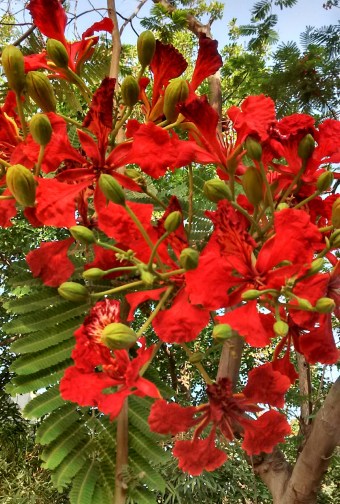
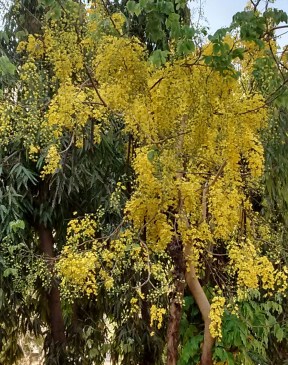
For the rest of us, we can do our bit by making bees welcome. We could provide fresh, pesticide-free drinking water; bees need to regularly drink water, especially in hot weather. We can also grow bee-friendly plants. Trees like gulmohar, champa and amaltas, and flowering plants like marigold, sunflower, rose, and hibiscus are ideal for attracting bees. Vegetable and fruit plants like ladies finger, onion, mustard, coriander, cauliflower, cabbage, carrot, brinjal, tomato, chilli, papaya, lemon, mango, guava and pomegranate are also good at attracting bees.

While we can’t all transform into a Slovenia, maybe it’s time that we saw that bee as more than just a passing buzz!

–Mamata

May 22 also marks the International Day for Biological Diversity. Let’s start the celebration with a Bee!


Our Life Our Story

The wonderful tradition of keeping diaries and journals is ages old. The exercise of recording one’s thoughts, memorable moments, and pouring out teen-age angst was pretty much a part of our growing up years. And now, many years down history as it were, revisiting these is a wonderful trip down memory lane. Sadly in this an age of instant communication (often only in limited characters) and fleeting memory, there seems to be no time to spend on recording what will, some day, be history—our own and that of the world we live in.

The recent engagement of the Matriarchs in developing textbooks for young children has brought us again and again to the challenge of ‘how do we instil in children a sense of history?’ Not history in terms of dates and names and events, but the idea that where each of us is today, is one point in the continuum of time and generations. In this age of small nuclear (and often single-child) families, the tradition of oral histories passed on through generations seems to be getting lost. Children need to know “where do we come from, what is our family like, what have we learnt from our family experiences and history?”

Well here is someone who is trying to address similar concerns in a new way through History Hive, the brainchild of Moon Moon Jetley, a historian and researcher, who looks beyond academia.

Moon Moon and I worked together on a project last year, and bonded over many shared interests, and love for cold coffee and French fries! I was excited when she told me about her project-in-making for trying to connect people with history in an innovative way.

This is now up and running as History Hive, with its first product My History Kit. The inspiration behind the kit is personal history and the necessity to record it. This is a hands-on creative history experience that helps its users to connect with, and record their personal history with family stories, experiences and milestones. The kit contains a journal, a map, a dice and a puzzle. The Journal is a space to write your own story, the dice is a writing prompt, the puzzle a fun element, and My History Map is a space to creatively recreate your story, not only in words but by sticking mementos of the moments—pictures, souvenirs and anything associated with the experience.

The kit can be used by a wide age group (15-95 years) and people from diverse professions–doctors, writers, lawyers, home makers, teachers, travellers, entrepreneurs, start up owners, actors, and just about anyone who wants to tell, and keep their own stories.

Make your own history! Check out https://www.historyhive.in/

–Mamata


What-a-Melon!

What is red and green and white,

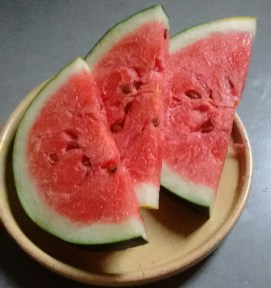
And a summer delight?watermelon slices.jpg

Watermelon!

This uncomplicated sweet and juicy fruit has always marked the onset of summer (prelude to the more sensuous, refined flavours of the mango!).

A recent family discussion on whether there was more to this melon than a lovely colour, sugar and water led me to explore. This is what I discovered!

Yes, it is 91.5% water, and thus a great antidote to dehydration; the juice is also full of good electrolytes which can even help prevent heat stroke.

But what else?

Watermelon is great for your health! It not just refreshes, a watermelon…

Is loaded with vitamin C and vitamin A, and contains essential minerals like potassium.

Has dietary fibre for digestive health.

Is bursting with lypocene which is considered to be a super antioxidant that prevents damage to cells and immune system.

Contains a natural substance called citrulline that is said to improved artery function and lower blood pressure, as well as protect against muscle pain. Watermelon juice before a gruelling workout may help reduce muscle soreness. But guess where citrulline is concentrated most? In the white flesh near the rind, which also has blood-building chlorophyll! So instead of throwing this away–try putting it in a blender with some lime for a healthy, refreshing treat.

And for something that tastes sinfully good, it is fat-free, and very low in sodium and calories.

Curiously the watermelon (Citrullus lanatus) wears a dual hat of being fruit as well as vegetable, belonging to the Cucurbitaceae family which includes cucumber and pumpkin.

It is believed to have originated in the Kalahari desert of South Africa. It may have been carried by seafaring merchants across the world–as far as China which is today said to be the highest producer of watermelons. It is believed that it reached the United States with the slaves from Africa.  Today watermelon is the most consumed melon in the United States, where July is celebrated as National Watermelon Month!

And we thought that it was our own special summer delight!

What-a-Melon! Supermelon!

–Mamata

Wordsmithery

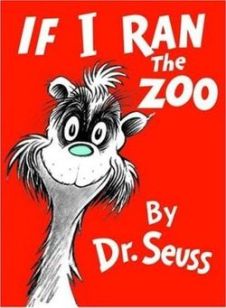
A crossword clue led me to this by chance. The clue was ‘word was first coined in the book If I Ran a Zoo by Dr Seuss’. The answer was Nerd! This immediately caught If-i-ran-the-zoo-cover (1).jpgmy attention because Dr Seuss is one of my all-time favourite children’s writers. I adored his books when I was young and tried to pass on the love to my children by reading out his quirky verses night after night, twisting our tongues over his wonderful, wacky invented words.

But it is only now I discovered that the word Nerd is thought to have been coined by none other than Dr Seuss in his book If I Ran a Zoo published in 1950! The book is about a boy named Gerald McGrew who, when visiting a zoo, finds that the exotic animals are “not good enough”. He says that if he ran the zoo, he would let all of the current animals free and find new, more bizarre and exotic ones. Among these fantastical animals is a critter called a Nerd! To quote directly: “And then, just to show them, I’ll sail to Ka-Troo/And bring back an It-Kutch, a Preep and a Proo/ A Nerkle, a Nerd, and a Seersucker too!”

One year later, in 1951, Newsweek magazine included the word in an article using it to define someone who is a “drip” or a “square”. Today the word ‘nerdy’ is used to describe someone who is not attractive, and awkward or socially embarrassing; or someone who is extremely interested in one subject, especially computers, and knowing a lot of facts.

A ‘word-nerd’ would tell you that when we use Twitter, and Tweet away today, it would be worth remembering that the word was coined by Geoffrey Chaucer, known as the father of English poetry, who died 620 years ago, to describe the continuous chirping of a bird.

And that, well before a search engine was named Yahoo, the Yahoos appeared as legendary creatures in Gulliver’s Travels published in 1726.

Surprisingly a number of words that we tend to believe are so ‘trending’ and ‘21st century’ were coined well over a hundred years ago. These can be attributed to 19th century authors, many of whom were creative wordsmiths–inventing, importing, adapting, and generally messing about with language!

The revered Bard, Shakespeare was one of the first to print words like Obscene and Eventful, as well as much-used phrases such as Bated Breath and Love is Blind.

And for those of us who plodded through Charles Dickens it is he, himself who coined the word Boredom! Writing in the early 1800s Dickens also coined very not-boring words like Abuzz, Flummox, and Devil-May-Care!

And to think that bureaucratic red tape is an affliction of modern times, Wait! The word Red Tape comes from the English practice of using red or pink tape to tie official documents and,  as early as 1851 Dickens coined the apt term ‘red tape’ as slang for “the collection or sequence of forms and procedures required to gain bureaucratic approval for something, especially when oppressively complex and time-consuming.” Thus according to the OED, a Red Tape-worm’ is “a person who adheres excessively to official rules and formalities.” Sounds like a breed we all know too well!?

For those of us who describe our calling as ‘Freelance’ writers, we may be interested to learn that in 1820 author Sir Walter Scott used the term free-lance to describe a mercenary soldier, one whose lance (a long spear) was not exclusively in the service of a single master, but was hired out along with its owner to those to needed, and paid for, the service.

Today the lance has replaced by the pen (or its electronic version) but the nature of service remains the same!

–Mamata