
March 3 is celebrated as United Nations World Wildl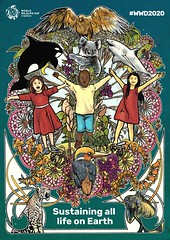 ife Day. This marks the day of signature of the Convention on International Trade in Endangered Species of Wild Fauna and Flora (CITES) in 1973. Every year on this day, events are held around the world to celebrate and raise awareness of the world’s wild animals and plants.
The theme of World Wildlife Day 2020 is “Sustaining all Life on Earth”. This celebrates the special place of wild plants and animals in their many varied and beautiful forms as a component of the world’s biological diversity.
India is a treasure house of biological diversity. It harbours 8% of the world’s biodiversity on just 2% of the earth’s surface. It is one of the 17 mega-diversity countries in the world with ten biogeographic zones, and an incredible diversity of habitats, flora and fauna.
Here is my small ode to this wild and wondrous land and its denizens.
I live in such a magical land
Of mountains and valleys, plateaus and sand.
Jungles and farmland, deserts, islands and seas,
Here’s to my land of biodiversity.
Biodiversity Biodiversity
It’s all about Life and Variety
In forests and fields, deserts and seas,
Animals and crops, microbes and trees.
Colours and patterns, functions and form,
To survive and thrive, adapt and transform.
Snow leopard and yak, and double-humped camels
The Himalayan cold desert is home to these mammals.
Shining blue lakes in the rugged landscape
Welcome winged visitors many coloured and shaped.
Biodiversity Biodiversity
Experience it, share it, enjoy it.
Where the mighty Ganga flows
River dolphins swim and gharials are found.
Proud tigers prowl, and deer abound
The fertile plains with bounteous yields
From forests and farmlands and fields.
Biodiversity Biodiversity
See it, taste it, smell it, feel it.
The North East is truly a garden of Eden
Full of priceless treasures, many still hidden.
Feathery ferns, bright orchids, bamboos tall
Where rhinos roam and Hoolock Gibbons call.
Biodiversity, Biodiversity
Appreciate it, savour it, explore it.
Discover that deserts are dry but alive,
Their dwellers have special tricks to survive
Store water, shed leaves, or burrow in the sand.
Why, even tigers and lions roar in this land.
Biodiversity, Biodiversity
Treasure it, enjoy it, study it.
In the Western Ghats meet a tahr, and a tiger too
Jumbos in jungles and a hornbill or two.
Colourful frogs that croak and call
Snakes and snails that slither and crawl.
Biodiversity Biodiversity
Learn from it, weave with it, heal with it.
Deccan highlands and grasslands, plateaux that soar
Dotted with buffalos, cows, goats and sheep galore
There grow seeds and cereals upon which we feast
And people who celebrate it all with their dancing feet.
Biodiversity Biodiversity
Plant it, grow it, cook it, eat it.
Deep in the seas meet clown fish and anemone in a coral jungle
Crabs, crocs and tigers in a mangrove tangle.
On islands in waters blue and green
See a megapode, a monitor, a Nicobar pigeon preen.
Biodiversity Biodiversity
Track it, live with it, delight in it!
Biodiversity Biodiversity
It’s all about Life and Variety.
Biodiversity Biodiversity
Celebrate it, protect it, conserve it!
–Mamata
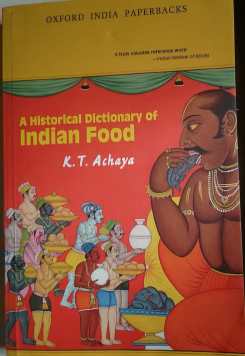 thoritative volume on the history of Indian food titled Indian Food: A Historical Companion. This led me to my bookshelf to pull out another book by this renowned authority on Indian food. This one, titled A Historical Dictionary of Indian Food followed his earlier ones. In this he attempts to bring together, in alphabetical order, material from his vast work on the subject. The book draws upon historical writing, archaeology, botany, genetics and ancient literature in Sanskrit, Pali, Tamil and Kannada to trace the gastronomic history and food ethos of India. The entries cover a wide range including recipes; narratives of visitors to India, starting with the Greeks in the fourth century; the etymological evolution of certain words, and the close links of food with ancient health systems such as Ayurveda. While this is a valuable scholarly work with meticulous and voluminous referencing, it is simply written, with a delightful menu–from A to Z–that one can dip into, and savour according to one’s own taste and appetite.
 he English dictionary and discover that the majority of the words listed there have their origins in a variety of other languages and cultures. Who would have thought that “ze leetle zee” would have such had such an adventurous history!
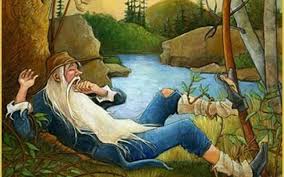 Imagine needing so much help to get a good night’s sleep! I have grown up in an age when mattresses had very different connotations. Mattresses were filled with cotton, and were usually of the same size and thickness. Often this cotton was carded by hand by itinerant carders who established camp at the house for a few days marked by the twang of their simple tools, and fluff-filled air. The cotton was filled in covers, stitched in with strong thread, and then beaten heartily with sticks to even out the lumps and bumps. All this done with dexterity and the long experience of a traditional occupation. With mechanisation, these occupations were replaced with neighbourhood shops where the same process was done by a simple machine. Now one took one’s old mattresses there to be opened and redone, with dire warnings that the cotton within was not to be mixed up with any other inferior variety!
