
Taking Stock in Stockholm

When I started my journey as an environmental educator in the mid-1980s, my orientation began with an introduction to the key milestones in the global environmental movement. The first milestone was the Stockholm Declaration which put forward a vision, as well as a set of principles on the way forward in the shared management of the global environment. The Declaration was promulgated at the conclusion of the United Nations Conference on the Human Environment held at Stockholm in June 1972, which became popularly known as the Stockholm Conference. 

Why was this conference such an important milestone? Among many other firsts this was the first-ever UN conference with the word “environment” in the title. The Stockholm Declaration provided the first agreed global set of principles for future work in the field of the human environment.

What was the road that led to this? The world had seen unprecedented scientific and technological progress since the end of World War II. But a fallout of the resulting development was the deterioration of the environment. In the 1960s, several scientists and thinkers began to express concern about the negative environmental and societal effects of the rapid industrialization. The shortcomings of the UN system to deal with the new developments were also becoming evident, but at the time environment was not high on the agenda of national and international politics. What was the way forward in a world polarised by the Cold War, and also the increasing gap between the ‘developed’ and the ‘developing’ countries?

It was a small Scandinavian country, Sweden who took the initiative. It urged that the time was ripe for a collective, substantive discussion at the global level about environmental problems. In 1967 it proposed to convene a UN conference on the human environment to increase awareness, and to identify environmental problems that needed international cooperation.

The response was unexpected. Despite Cold War politics, the Soviet Union and other members of the Eastern bloc joined the United States and most Western European countries in supporting the Swedish initiative. However many developing countries were uneasy that Northern interests would dominate the proposed conference and that “green issues” would be an excuse to restrict their national development. But by and large Sweden’s proposal was positively received.

In May 1968 Sweden sent an official request to the Secretary General of the UN making their case.  ‘Environmental issues … have not yet been given the prominence in the deliberations of the competent organs of the United Nations… Furthermore, as the problems of human environment grow more serious every day… there is, therefore, an indisputable need to create a basis for comprehensive consideration within the United Nations of the problems of human environment.’

In 1968 the United Nations General Assembly adopted a resolution which called for a conference on the relationships between environmental, social, and economic issues to be convened in 1972. The conditions were that the conference would not take decisions. Any recommendations arising from it would have to be formally adopted by the General Assembly. Maurice Strong, a businessman and, at the time, the head of the Canadian International Development Agency (CIDA), was appointed to be Secretary General of the Conference.

In May 1969, the United Nations accepted Sweden’s offer to host the conference in Stockholm. So it came about that in 1972, “For the first time nations came to consider the state of the planet Earth, habitually taken for granted, treated as an unchanging backdrop to human drama. For the first time we were integrating the scenery into the action of the play.” (Shridath Ramphal Commonwealth Secretary General)

The Stockholm Conference was held in the first week of June 1972. It saw the participation of the representatives of 114 of the UN’s 132 member states. The Soviet Bloc did not participate in the main event but took active part in the preparatory process. This was the first major international event in which the People’s Republic of China participated as a new member of the United Nations. In addition to government representation, 250 non-governmental organizations came to the conference—an unprecedented achievement at the time.

Only two heads of State attended–Mr Olaf Palme the Prime Minister of Sweden, and Mrs Indira Gandhi the then Prime Minister of India. Indira Gandhi emerged as a figurehead to represent developing countries’ fears and priorities, stressing the issues of war, poverty, and development. She made an impassioned plea “We do not wish to impoverish the environment any further and yet we cannot for a moment forget the grim poverty of large numbers of people. Are not poverty and need the greatest polluters?”  This has been a key point in international deliberations in the five decades since Stockholm.

The Stockholm Conference produced three major sets of decisions: The Stockholm Declaration which provided the first agreed global set of principles for future work in the field of the human environment. The second was the Stockholm Action Plan comprising 109 recommendations for governments and international organizations on international measures against environmental degradation. The third was a group of five resolutions. The resolutions called for: a ban on nuclear weapon tests that may lead to radioactive fallout; an international databank on environmental data; the need to address actions linked to development and environment; international organizational changes; and the creation of an environmental fund.

The Conference had several outcomes that we today take for granted. Environment ministries and agencies were established in more than 100 countries to implement the recommendations of the Conference. It also led to a great increase in non-governmental and intergovernmental organizations dedicated to environmental preservation.

The Conference was used as a model for a series of similar UN events to try and come to grips with interlinked cross-sectoral issues from gender to human rights.

The United Nations Environmental Programme (UNEP) was set up as mark of the UN’s commitment to carry forward the Action Plan of the Conference. It was headquartered at Nairobi in Kenya, the first UN body to be located outside of the industrialized world. 5 June was designated as World Environment Day.

The Stockholm Conference was indeed a milestone in many ways. It stressed that environmental issues are inherently political—not just scientific and technical, as many policymakers previously thought, and therefore need political negotiations and decision-making. The Stockholm Conference demonstrated how global cooperation could take place. It identified a theme that has been at the centre of international environmental discourse: Sustainable Development.

This week it is exactly fifty years since this vision for a sustainable future for mankind was discussed and deliberated in a spirit of international cooperation. In the half century since, our planet has seen changes—for good and the bad. We are far from achieving the vision. Rather our planet faces a looming triple threat from climate change, pollution and waste, and loss of nature and biodiversity. The alarm bells are growing louder and closer. 

Once again, this week, Stockholm will host concerned world leaders, and a wide range of stakeholders in the Stockholm+50 event—a high-level gathering convened by the United Nations, and hosted by Sweden with support from the government of Kenya. They will meet in an effort to take stock of the achievements and failures of the past five decades, as well as with the hope to accelerate a transformation that leads to sustainable and green economies, more jobs, and a healthy planet for all, where no one is left behind.

As citizens of Planet Earth this is a good time for each of us to take stock of our own lifestyle, and remind ourselves that a healthy planet for the prosperity of all is our collective responsibility, and our collective opportunity.

The fate of Planet Earth lies largely in our own hands and in the knowledge and intelligence we bring to bear in the decision making process. In the final analysis, however, man is unlikely to succeed in managing his relationship with nature unless in the course of it he learns to manage better the relations between man and man.

Opening statement by Maurice Strong, Secretary-General of the Stockholm Conference June 1972.

–Mamata
The Whispered Wisdom of Podcasts

I am slow to adopt most things new. And so it was with podcasts. I was pretty skeptical of the audio medium as a means of learning. Being fully old school, for me, the ‘read word’ was the major source of both learning and recreation.

My conversion to podcasts is fairly recent. The audio system that I was using during my walks to listen to music on broke down, and that was when I decided to explore podcasts. And what a world it has opened up to me! Not just walks, but also car-rides and flights have become much more enriching. But I have to admit, while my default state is to sit around the house with a book in my hands, I am not as yet able to sit around with a podcast plugged into my ears. I feel kind of guilty and unemployed. But I am sure the day will come…

While the raw beginnings of podcasting are traced back to the ‘90s, the medium really came into its own in the mid-2000s. The first steps were laid in 2004, by Adam Curry  a former MTV video jockey, along with a software developer Dave Winer, when they coded a program known as iPodder. This made it possible to download internet radio broadcasts to iPods. Within a year, commercial companies realized the potential and with Apple as the first mover with iTunes 4.9, started to offer support for podcasts. Politicians were not far behind—George Bush became the first President to have a weekly podcast as early as 2005. The speed with which the innovation caught on can be gauged by the fact that   “Podcast” was declared “Word of the Year” by the New Oxford American Dictionary.

Today tech-savvy India has the third-largest podcast listenership in the world. At  57.6 million listeners, it is behind only China and the US, and growing at a rapid 30+%.

I listen of course to the usual suspects, from Stuff You Should Know, to Ted Talks Daily, to BIC Talks, to The History of India Podcasts, to No Stupid Questions, and 99% Invisible.

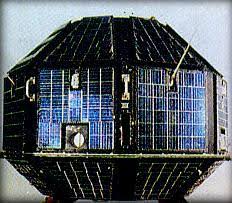
Aryabhatta, India’s first Satellite

But the podcast that moved me most, which inspired and fired me was MISSION ISRO. This series traces the history of India’s space programme, essentially through the work of Dr.Homi Bhabha and Dr.Vikram Sarabhai. These two men had not only the vision, but the scientific stature, the international standing and the conviction to overcome all barriers to make this dream a reality. How they convinced the decision-makers in the country that a newly-independent country like India, which was struggling to even feed its people, needed to invest in space, and how they convinced the world that India had the capacity to make this work, is a fascinating tale.  And the vision of the then-PM, Shri Jawaharlal Nehru, who believed in the use of science and technology for national development is what made this possible. The clarity of the philosophy of the Indian space programme set by the founding fathers—that it was not for warfare and aggression, but rather, to bring development to the remotest corners of India and to the poorest—is what sets our space programme apart even today.

The refusal of Dr. Sarabhai and Dr. Bhabha and their teams to be deterred by any obstacles– whether lack of equipment, permissions, know-how—is awe-inspiring. The innovative ways they found to get around challenges, to make do with the resources they had, to find supporters and partners, in order to accomplish Mission Impossible brings home the lesson that a clarity of purpose and the belief that it can be achieved will move mountains.

Researched and scripted by Archana Nathan, produced by Gaurav Vaz, Harsha Bogle’s voice brings the podcast to life. The enormous effort in getting interviews with key people who were involved in the space programme and hearing them relate the stories of those times is amazing. And hearing Dr. Vikram Sarabhai’s voice sent goose bumps down my spine!

Don’t miss it. It gives us an understanding of our history and achievements from times which today are dismissed so easily. It gives us an understanding of what visionary nation-building is and the mettle that visionary nation-builders are made of.

–Meena

A Beauty With Brains: Hedy Lamarr

From Hollywood to Bollywood, a beautiful face is what defines the world of cinema and glamour. And along with that, the clichéd belief that beauty and brains inhabit two different worlds, “and never the twain shall meet!”

I recently read about a movie superstar who combined a career in films with a lifelong passion for invention. This was Hedy Lamarr who was once known as the most beautiful woman in the world.

Hedwig Eva Maria Kiesler was born on 9 November 1914 in Vienna, in what was then Austria-Hungary. The First World War had just begun. Hedy was the only child of her Jewish parents. Her father was a Bank director, who adored his daughter and encouraged her curiosity. They often took long walks and he would discuss with her the working of different mechanical objects—from printing press to street cars. Hedy’s young mind was fascinated with the mysteries of machines. When she was five years old she took apart and reassembled her music box to find out how it worked. Her mother was a concert pianist who introduced her daughter to the arts; and she started ballet and piano lessons from a young age. Hedwig thus grew up in an environment that nurtured both her scientific as well as artistic temperament. She was also endowed with stunning looks.

Before the young girl could further explore her scientific interests, it was her beauty that attracted the attention of a film director Max Reinhardt who invited her to Berlin to study acting. She got her first small role in a German film when she was just 16 years old. In 1932, her role in a controversial film Ecstasy, drew wider attention to Hedy as an actress.

In 1933 she married Austrian munitions dealer Fritz Mandl. It was an unhappy alliance; Hedy felt trapped under her husband’s total control, and in her role as hostess to his circle of friends who included unscrupulous businessmen and members of the Nazi party. But even as she played the beautiful wife and hostess, Hedy’s sharp mind was following the dinner conversations and absorbing knowledge of arms and ammunitions.

Desperate to escape the stifling life, she managed to reach Paris, disguised as a maid, and then made her way to London in 1937. An introduction to Louis B Mayer of the famed MGM Studios was the stepping stone to Hollywood. Hedwig transformed into the European beauty Hedy Lamarr, who charmed American audiences with her accent, and mystical grace.

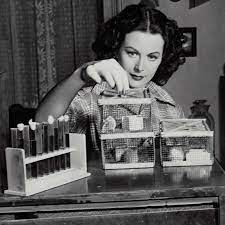
Hedy soon found herself in the famous Hollywood social circuit. Among the many illustrious people she met was Howard Hughes. Hughes was a high-flying American business magnate, investor, record-setting pilot, engineer, film director, and philanthropist. The two became good friends. Hedy’s attraction to Hughes was not so much for his wealth and name, but for his interest in innovation that appealed to her bottled-up inventive streak. Hughes took Hedy to see his airplane factories, showed her how the planes were built, and introduced her to the scientists behind process. He also recognised Hedy’s passion for the mechanical and encouraged her in this. He gifted her a set of equipment that she kept in her trailer on the film sets and tinkered with between takes. She continued to have her own ‘inventing table’ at home.  Hughes shared with Hedy his dream to make faster planes that he could sell to the US military. Hedy got deeply engaged in the project, researching fish fins and bird wings to understand how they were designed for maximum speed and efficiency, and she made engineering sketches for a new wing design for Hughes’ planes. Howard Hughes was very impressed with the designs, and called Hedy a “genius”.

Hedy Lamarr continued to live two parallel lives as it were. She was a celebrated Hollywood star in public, but was also a tinkerer and inventor who often spent evenings at home studying research texts and working at her drafting table to create inventions to improve current designs. She claimed that “improving things comes naturally to me”. Rather than star-studded parties she enjoyed being among a small group of friends discussing ideas.

It was at the start of the 1940s when the United States was on the brink of being pulled into World War II that Hedy felt the strong urge to put her innovative mind to work overtime. One story goes that her Jewish mother who had managed to escape from Austria to London was waiting to cross the Atlantic to the US, and at the time the American ships were in danger of being torpedoed by the enemy forces. Another version is that Hedy was deeply disturbed by the fact that children had perished in torpedo attacks while on board ships intended to take them to safety.

She knew that the Nazis were hacking the radio systems of the Allies ships so that they could track and attack them. Hedy drew upon her knowledge of war weapons to work on inventing a remote controlled torpedo, and develop a method to improve the United States’ weak torpedo guidance systems. She knew that radio frequencies were the key to the solution—but the single radio frequencies that were being employed for torpedo guidance at the time were ineffective in escaping Nazi surveillance. She worked to create ‘a secret communication system that could not be hacked’. The system utilized changing radio frequencies to prevent enemies from decoding messages. Multiple radio frequencies were used to broadcast a radio signal, which changed frequencies at split-second intervals in an apparently random manner. To anyone listening, it would just sound like noise. But the signal would be clear if both the sender and receiver hopped frequencies at the same time.

Hedy worked on this system with an unlikely partner. This was music composer George Antheil who was known for his experimental compositions. Antheil, like Hedy, was an inventor at heart. As the war loomed the two began sharing concerns, and once when playing the piano together, the idea of the extraordinary new communication system emerged. The torpedo and the guiding vessel would change radio frequencies very rapidly in an identical pattern, controlled by a device similar to a paper roll in a player piano. In this way, the vessels could communicate with each other in a secure manner that could not be intercepted by the enemy thereby allowing the torpedo to find its intended target. And thus Frequency Hopping Spread Spectrum Technology was born.

After its creation, Lamarr and Antheil sought a patent and military support for the invention. They were awarded a Patent in August 1942, but the US Navy decided against the implementation of the new system. The Patent remained  classified until 1981, and during that time was only used in military technology such as sonar or satellite communications. Lamarr was disappointed, but she continued to support the war efforts of her adopted country by using her celebrity status to sell war bonds. She became an American citizen in April 1953.

Hedy Lamarr continued with her passion for invention, and even till she passed away at the age of 85, she was inventing things: a fluorescent dog collar, modifications for the supersonic Concorde, and a new kind of traffic light, among many others.

It is believed that Lamarr’s Frequency Hopping innovation was the forerunner of today’s wi-fi technology and other wireless communications like GPS and Bluetooth. Difficult as it is to relate a famous movie star and acclaimed musician with the same technology that now brings movies and music to our very fingertips.

Hedy Lamarr’s name will always be primarily associated with her beauty on the silver screen. But so much more interesting and inspiring is her other side that illustrates that beauty and brains can coexist productively. As her son said after her death, “She would love to be remembered as someone who contributed to the well-being of humankind.”

–Mamata

Of Textbooks and More

Exactly 80 years ago this April, ‘Academies and Societies’ which I suppose was a catalogue of learned scientific publications, listed ‘Modern Inorganic Chemistry’ (Tamil) by N. Ananthavaidyanathan, published by Annamalai University and priced modestly at Rs. 2-8.

The Reference!

A lot of family history behind this entry, as the afore-mentioned Ananthavaidyanathan was my grandfather. He was a Professor of Chemistry at Annamalai University having joined it in the mid-1920s, when it was still Sri Minakshi College, and he saw the growth of the College and its sister institutions into Annamalai University in 1929 .

The book was written in response to a competition organized by the University, to come out with the first Tamil under-graduate science textbooks in the country. My grandfather’s ‘Modern Inorganic Chemistry’ won the prize.

My grandmother told us tales of the days and nights and weeks and months of work that went into the book. With no precedents of modern scientific writing or references in regional languages, my grandfather had to coin several names for chemicals, for processes, for phenomena. Being the conscientious, old-school scholar he was, that involved a lot of research and consultation. With Tamil type-writing skills not easy to find, and moreover, the problems of typing chemical formulae in the typewriters of those days, it was a physical challenge as well as an intellectual one! My grandmother helped him proof-read draft after draft.

The hard work paid off, and his was the first college-level chemistry textbook in Tamil.

Annamalai University is an institution with a hoary past. Rajah Sir S. R. M. Annamalai Chettiar, In the early 1920s, set up three educational institutions– Sri Minakshi College, Sri Minakshi Tamil College and Sri Minakshi Sanskrit College—in the temple-town of Chidambaram, and these soon became intellectual centres. The purpose of setting up the educational institutions was to educate the poor, and to give a fillip to literature in Tamil. And I suppose it was in pursuit of the second aim that the competition was organized.

Sir Chettiar was an enlightened industrialist and banker with a deep interest in education. He contributed generously to philanthropic causes and set up institutions. He was one of the founders of Indian Bank. He counts Shri AC Muthaih (who served as the Chairman of SPIC and the President of Board of Cricket Control of India), and Shri PC Chidambaram (former Finance Minister of India) among his grandsons.

In 1928, Sir Annamalai agreed to hand over the group of educational institutions he had set up, to the local government to establish a University. On 1 Jan, 1929, Annamalai University was established under a State Act–India’s first private University.

In its time, the University has been the centre of Tamil, of intellectual debate, of students who questioned the status quo of their day, of strikes, of agitations and of academic excellence. Today it is one of the largest public residential universities in Asia

We are an ‘Annamalai University family’, with my grandfather having taught there for several decades. My father studied Physics there—he had to choose between studying Physics and Chemistry, but my grandfather would not let him join the Chemistry faculty because he was the Head of the Dept., and did not want any controversy about his son being a student in the same department. My brother studied Engineering there. My father and brother both served the Defence Research and Development Organization all their lives, and my brother was honoured with the Padma Shri for his contribution to Agni and Prithvi Missiles. So I suppose I have much to thank Annamalai University for!

–Meena

Who Moved my Center?

It all started with an idle question. Where is the center of India? Most of us said Nagpur. Others thought not. So we decided to delve into the matter.

Nagpur pillar
Pillar marking the old center of India at Nagpur

We learnt that Nagpur used to be the center of India. The British, as a result of the Great Trigonometric survey, a project undertaken by the Survey of India in the 19th century, had fixed on Nagpur as the heart of the country. They erected a sandstone pillar here in 1907, marking the spot and giving distances to many major cities from here. The pillar still stands, though the centre has moved.

Sadly for the Orange City, the center has now shifted to a small farm in Karondi near Seoni in Madhya Pradesh.

Why did the center move? Good question. After partition in 1947, the boundaries of the country changed, and hence the center moved. And even though Karondi is designated as the center, it is not quite so. The geographic center actually falls at the coordinates 240 7’11’’ North and 770 41’ 49’’ East, which is in the middle of a jungle. Hence it was decided that Karondi, a small village close by, with a population of about 500, would be designated the center. Sadly, there is no particular monument or structure to mark this important place.


But what is the geographic center of a country? Well, apparently, there is no universally accepted definition. To simplify the matter, the physical centre of gravity is seen as the geographical centre. A geographical definition says ‘the centroid of the two-dimensional shape of a region of the Earth’s surface (projected radially to sea level or onto a geoid surface) is known as its geographic centre or geographical centre’ (Wikipedia).

There are also several ways to find the centre. For instance, at the simplest, you transfer the shape of a country on to a cardboard, cut it out and find the centre of gravity of this slice by pivoting it on a pinpoint. You can also simulate this process on a computer. It can also be found by averaging all of the longitude points and latitude points. Other more sophisticated methods involve the use of vector algebra and topological maps. The latest method which is most accurate involves: ‘(1) projecting regional boundary points using an azimuthal equidistant projection, (2) finding the geographic center of the projected two-dimensional region, and (3) then transforming this location back to a latitude and longitude.’ (A New Method for Finding Geographic Centers, with Application to U.S. States. Peter A. Rogerson). I am not sure I understand that, but maybe others will!

We have seen that India’s center moved because of changes in political boundaries. USA is another country where this has happened, but due to the addition of states. But in ancient times, ideologies influenced these decisions. For instance, in ancient times, because of religious and cultural mindset-overhangs, Jerusalem was considered the center of the world’s landmass. But as science strengthened its hold, this thinking had to change.

But that was not the only reason why the world’s center shifted. The increasing sophistication of calculation methods was another underlying reason. For instance, based on some calculations in the 1860s by Charles Smyth, Astronomer Royal of Scotland, the geographical center was thought to be in Egypt.  In recent decades, calculations located the center in Turkey. But even within Turkey, first it was located near the district of Kırşehir, Kırşehir Province. But in 2003, elaborate calculations by Holger Isenberg set it at 40°52′N 34°34′E, also in Turkey, near the district of İskilip, Çorum Province, approx. 200 km northeast of Ankara. This is today the accepted center.

There are also methodological issues on which experts cannot agree. For instance, whether to include offshore islands, the fact that erosion will cause borders to change over time, or rise in sea levels which will changes shoreline—all of these could confound the calculations.

Does the center have any significance or importance? Not really, except maybe for a quizzer or as a boost for tourism. Sadly in India, poor Karondi with no monument or structure to mark its centrality to the country, hasn’t even got this advantage!

–Meena


Doctor Without Borders: Jonathan Kaplan

Last week I wrote about a young doctor who chose to use his medical training to serve people in war situations. This was Dr Kotnis who worked with passion and dedication on the war front in China, almost a century ago. Every generation and every period of history has examples of such professionals who voluntarily choose to serve in some of the most difficult and dangerous situations.

Doctors without Borders

I recently read a fascinating account by such a doctor in our own times. This is Dr Jonathan Kaplan who began his medical career, as do all doctors, after long and intensive years of study. Dr Kaplan graduated from medical school in South Africa and spent the next ten years acquiring specialist qualifications and training as a general surgeon, and super-specialization in vascular surgery in hospitals in the UK and USA. This equipped him to move on to become a “consultant” with a comfortable and prosperous practice. In his own words:

Master of Surgery. The title had a ring of Zen about it, as though I was now a sage of some martial art, a mystic bladesman. I had trodden the path of professional dedication, served the necessary years at the required levels of experience and responsibility, paid all my dues to date. A consultant post—the reward for all this industry—lay ahead, with attendant success and security. But I found myself beset by an odd emptiness…

This sense of emptiness led Jonathan to choose otherwise. He became a “medical vagabond” as he describes himself. He spent many years as a volunteer surgeon in some of the world’s most dangerous war zones in the 1990s. He attended to the casualties of apartheid in Cape Town; worked on the front line treating Kurdish fighters during the uprising at the end of the Gulf War, and in a part of Burma’s Shan state under attack by the Burmese army; in Mozambique during the civil war, and in Eritrea at the time of the Ethiopian offensive in 2000.

Besides the blood, sweat and tears of the battlefield, the adventurous Jonathan Kaplan was always looking for new challenges. In his own words Working as a doctor in war zones was voluntary and unpaid. My hospital career looked increasingly uncertain—my curriculum vitae was a curious patchwork of jobs that shocked the sensibilities of staid consultants—and I was considering a full-time post in accident and emergency medicine where I hoped a varied resume might be less provocative to the interview committees.

But that was not to be. A variety of chance offers led to interesting stints where Dr Kaplan saw different sides to the realities of illness and emergency care. Among these was being an air ambulance doctor, and a resident doctor on a cruise liner. He also became deeply engaged in an investigation on the impacts of mercury poisoning in a part of Brazil.  

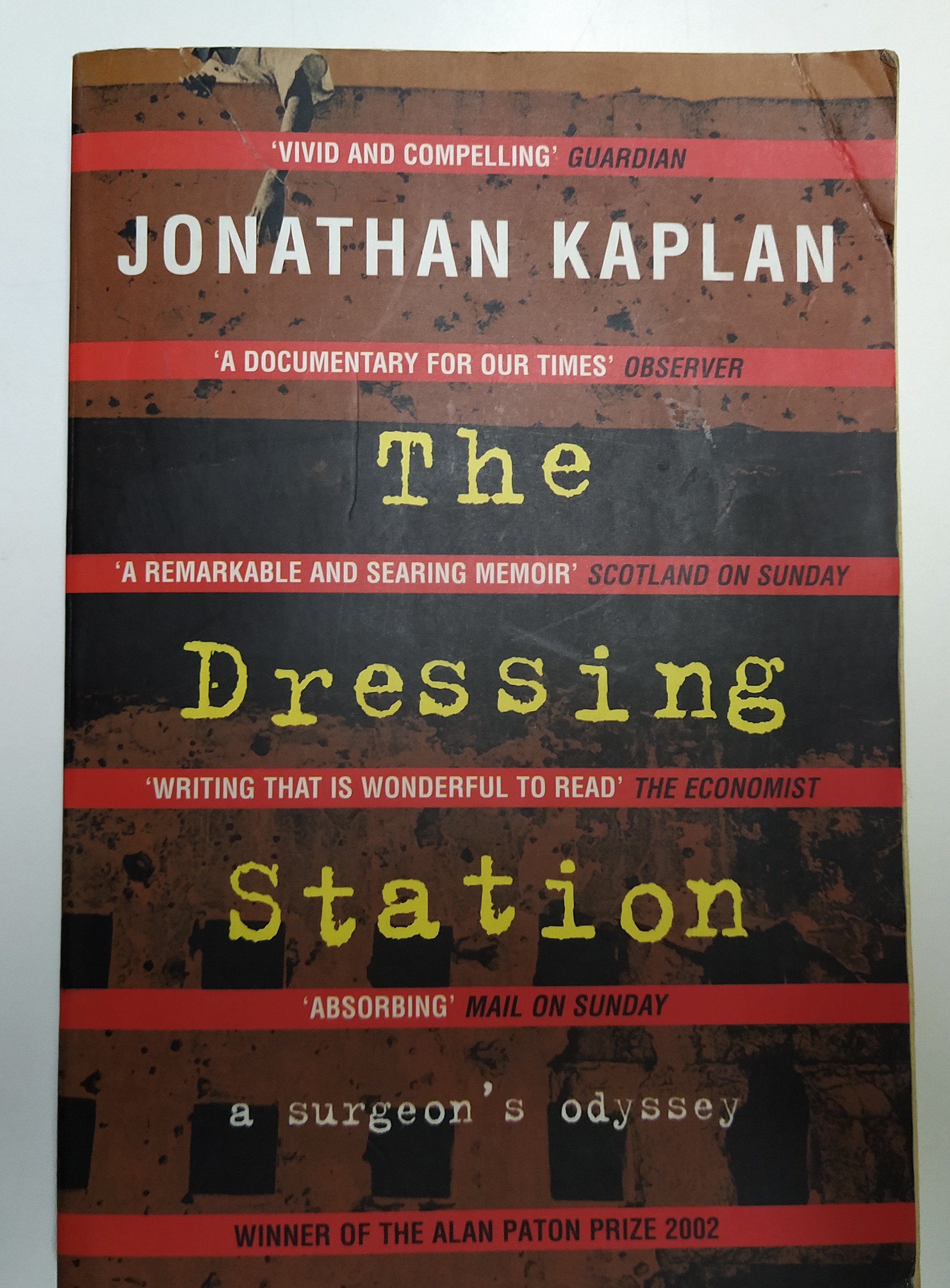
For most of his life Jonathan Kaplan worked tirelessly, and with minimal resources, amidst the most challenging conditions and heart-rending human tragedy, using every skill at his disposal to treat the wounded, and save lives. At the same time he also meticulously documented the politics, struggles, and universal human dilemmas. These have been published in a book titled The Dressing Station.

The book is a fascinating read, that vividly describes some of the most tragic and devastating impacts of war on human beings, alongside some highly technical details of surgery, and the contradictions of war-zone realities. But Jonathan is much more than a reporter. He also shares his angst and his internal struggles to maintain his humanity even under the most inhuman circumstances. He wonders about human life, and the role that doctors have to play in the human drama between birth and death. That is what makes his writing both eye-opening, as well as thought-provoking, not just for medical practitioners, but for every one of us who are on the other side of the ‘consulting table’.

As he shares: I have practised medicine in diverse fields: as a hospital surgeon, a flying doctor, a ship’s medical officer. I have operated on wounded straight off the battlefield, treated people with rich stains of tropical disease raging in their bloodstreams, and tried to help those affected by occupational illness from industrial toxins or work place stress. I have run research programmes funded by corporate finance—that met the needs of the shareholders before they benefitted any patients—and I’ve cared for children wasted by diseases of famine and war. Like most doctors I have seen my craft used and abused; been part of its successes and witnessed its failings. It is by the means of this unforgiving arena that we struggle to define ourselves.

He further ponders on his work and on life: No clinician can give an objective account of that work: the intersection between doctor and patient is mutual and intimate, and in the end comes down to something between us that is a fragile thing, as fragile as life. All we can do is the best we can in the war against death and against despair, including our own. For at its extreme the practice of medicine is a succession of front line, and each victory is only a temporary respite.

Dr Kaplan continues to take periodic assignments as a volunteer surgeon in conflict zones amidst UK hospital surgery, film-making, academic teaching, and working as a photographer, and as an advisor on medical TV dramas. He has also proposed, investigated, researched, produced and directed documentaries on health, development and environmental issues for several TV channels.

I picked up The Dressing Station by chance, not having earlier heard of Jonathan Kaplan. It was a gripping read. I look forward to reading his second book Contact Wounds.

–Mamata

A Doctor Abroad: Dr Kotnis

Much has been written in the past month about Indian medical students going to distant and relatively unfamiliar countries to pursue medical studies. Many of these young students have ambitions of making a successful and prosperous career after they obtain their degrees. Here is an unusual story about an Indian doctor who went abroad, over a century ago, not in the pursuit of name and money, but to use his education and skills in the service of those who needed them the most.  

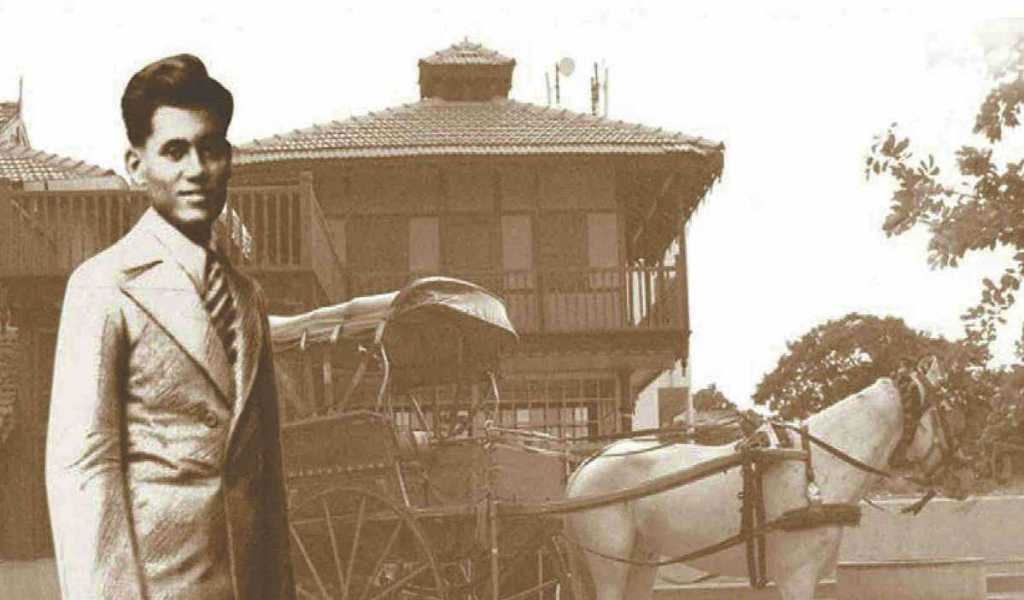
Dwarakanath Shantaram Kotnis was born on 1 October 1910 in a middle-class family in Sholapur, Maharashtra. He grew up as one of seven children in the family, and his father had to take loans to support his children’s education. Dwarakanath moved to Bombay to pursue medical studies at the Seth GS Medical College. Possibly unlike his fellow students at that time, the young Dwarakanath’s ambition was to practise medicine in a different part of the world. And as destiny would have it, his dream took on an unexpected form.

Dwarakanath acquired his medical degree in 1938. The world was already in the throes of conflicts that would escalate into World War II. China had been invaded by in the early 1930s by the Japanese who were seeking raw materials for their growing industries. By 1937 Japan controlled large sections of China, and war crimes against the Chinese became commonplace. There were large scale massacres of civilians, and the Chinese resistance army suffered heavy casualties. At the same time there was an acute shortage of doctors who could attend to the injured and the dying.

It was at this time that General Zhu De, a Chinese revolutionary had written to Jawaharlal Nehru with a plea to send doctors to save the lives of the soldiers. India was in the midst of its own movement of freedom from British rule. The Indian National Congress under the leadership of Netaji Subhash Chandra Bose decided to send a team of five doctors to China to show the solidarity of the people of India with the Chinese in their fight against the Japanese aggression.

There was a call for doctors to volunteer for this mission. Dwarakanath was one of those who volunteered. He was 28 years old; neither he nor his family knew much about China, but he felt an inner urge to venture beyond familiar territory to practice the subjects that he had studied, in challenging circumstances. This decision would prove to be a life-changing one.

Thus young Dr Kotnis joined the team of five Indian doctors headed for China. The other four members of the team were M Cholkar from Nagpur, BK Basu and Debesh Mukherjee from Calcutta, and M Atal from Allahabad.

Dr Kotnis in China Source: https://www.chinadaily.com

The young doctors, the first medical team from another Asian country who had volunteered help, were personally received by Mao Zedong and General Zhu De. They were plunged straight into the war zone in Northern China where mobile medical units were treating wounded soldiers. The situation was very stressful, physically and mentally. About 800 injured soldiers had to be attended to every day which meant that the doctors often worked round the clock without rest or sleep. The young doctors stood up to the challenge, saving hundreds of lives and treating thousands of wounded.

As the battle in the North subsided, the Indian team was free to return home, and four members did so. But Dr Kotnis was reluctant to return. He wanted to spend more time in a country that he was beginning to know and love, and continue to contribute to the war effort. He joined Mao-led Eighth Route Army in 1939. He continued to work tirelessly, performing operations for up to 72 hours without a break, and treating hundreds of patients, day and night. He did not return home even when he heard about his father’s death.

Years later he was remembered by the ordinary people as a kind doctor who not only helped ease their pain and suffering, but was also concerned about their basic needs. He learned to read and write Mandarin Chinese and was able to communicate with the people in their language. He became one of them. They in turn adopted him and called him Kedihua dai fu (Kedihua was Kotnis’ Chinese name and dai fu meaning doctor).  He was also nicknamed “Dr Thoughtful” and “Old Ke”.

Around this time he also met Guo Qinglan who had volunteered as a nurse in the Eighth Route Army. The couple got married in December 1941.They had a son who they aptly named Yinhua; the Chinese character for Yin meant India and Hua meant China.

In 1941 Dr Kotnis was appointed as director of the Bethune International Peace Hospital in Shijiazhuang named after the famous Canadian surgeon Norman Bethune. Bethune was a Canadian physician and social activist who had also moved to China in 1938-39 during the Second Sino-Japanese and volunteered as a medical advisor to the 8th Route Army. He was a brilliant surgeon who not only worked on battlefields, but also helped in training medical personnel, and setting up medical programmes and hospitals to reform the health care system in China. He was deeply committed to the welfare of the poor. Dr Bethune died on the frontline, of blood poisoning in 1939, and became a national hero.

Dr Kotnis was a fit choice to carry forward the legacy of the revered Dr Bethune, who had had a similar professional path. Dr Kotnis continued to work with the same intensity and passion as he had done on the battlefield. He was also teaching medical students. As there were no textbooks he started compiling them himself. But the unrelenting stress had taken a toll on the young doctor’s health. Only three months after the birth of his son, Dr Kotnis was struck by a series of epileptic seizures that cut short his life. Even as he was writing his second surgery textbook, he collapsed, and following a seizure, died on 9 December 1942. He was just 32 years old.  He was buried in the Heroes Courtyard in Nanquan village in China among the people he made his own.

While the work of Dr Kotnis is not as well documented or known in India, the name and legacy of Ke Dihua as he was fondly called, are still remembered and revered in China. The Shijiazhuang Ke Dihua Medical Science Secondary Specialized School been named after him; from which over 45000 medical professionals have graduated. There are memorials and statues of him in several towns in China.

7 April is marked as World Health Day. A good time to remember a doctor who lived his short life with complete commitment and passion for the health of all people.

–Mamata

Sacred Games. With No Apologies to any Eponymous Show

A recent visit to the phenomenal 12th century Amrutheshvara temple near Shimoga in Karnataka introduced me to sacred games— ancient innocent, fun, time-pass activities, not violence-filled convoluted storylines.

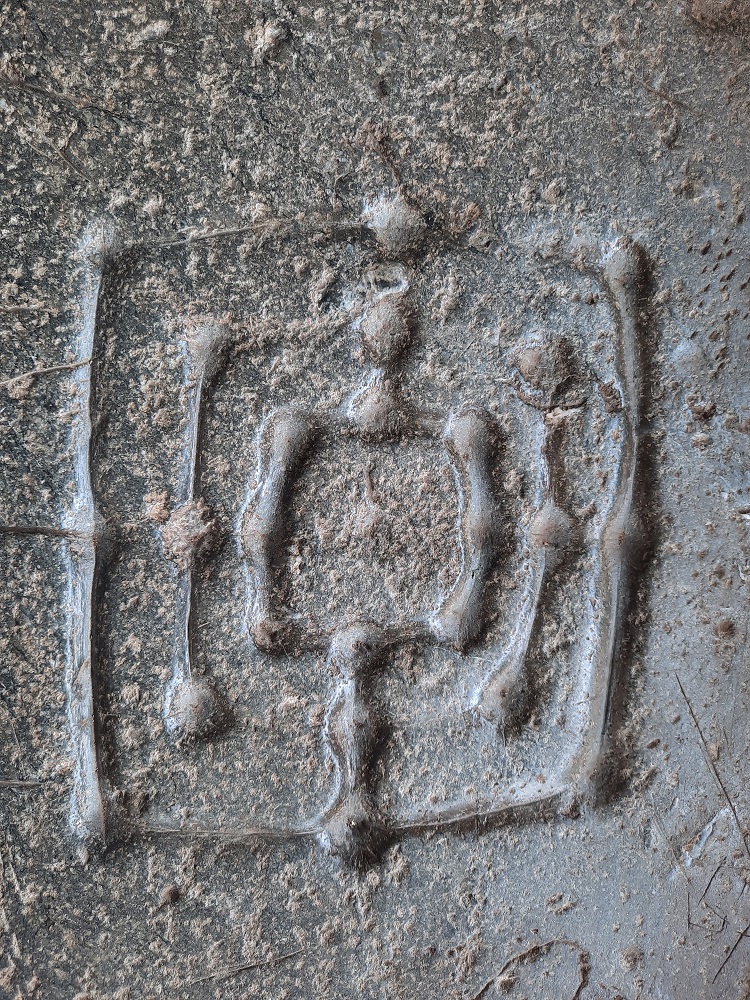
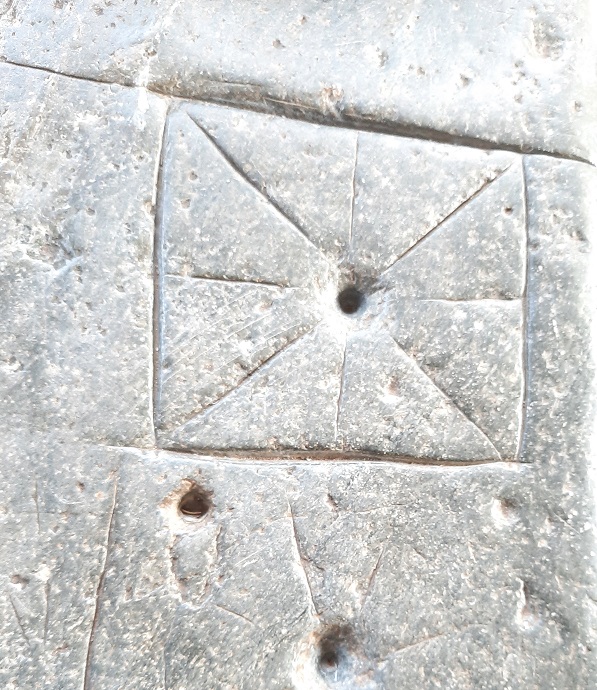
As we sat down on the stone benches after our round of the temple, we discovered strange-looking designs carved next to us. Considering we were a party of eight, we occupied quite a few benches, and each of us could see some carvings on our seats.

At first we thought they were random markings, but on closer examination, all of them turned out to be board games! Some of these we were vaguely familiar with, others not. Well, board games were popular in ancient India, with many of them, from chess to snakes and ladder having originated here. In fact, temple friezes often depict people absorbed in playing such games.

Temple games
Amruthesvara Temple, Karnataka

But this was the first time we had seen games put out for general edification in a public place. We got to wondering if these were really as ancient as the temple, or later-day graffiti. And considering that the temple was 800 years old, that was a lot of time for graffiti-workers to do their job.

But it would not have been easy to carve these elaborate games on the stone benches on the sly. So it seemed to us that it must have been an officially-sanctioned exercise, and one probably carried out before the stones were set in their places.

So did the temple-builders plan these games for the visitors? Seems likely. After all, visits to temples were a major outing for many; in fact, maybe the only outing for some.

Naturally, one got goggling on the subject after the visit. I discovered quite a few references to such games. Historian Chithra Madhavan and Vinita Sidhartha, founder of Kreeda say that such games are quite common in temples in South India, even being found in the Srirangam temple which is believed to be 2000 years old. They opine that it was not just for the devotees visiting the temples, but also to provide for the entertainment of those who worked in and around the temple—from maybe the pujaris, to the dancers, musicians and others involved in various aspects of running the temple.

Temple games

Such carvings have also been found in forts. There are a few groups, including Kreeda which are involved in research on this subject. Researchers R.G. Singh, Dharmendra and  Dr Dileep KCR Gowda, have documented 500 spaces with games across Tamil Nadu, Pondicherry, Telangana, Andhra Pradesh, Maharashtra, Rajasthan and Uttar Pradesh.Recently, a pair of researchers, Sojwal Sali and Rishi Rane, found 41 ancient carvings of board games of different sizes on rocks near Hinjawadi in Pune district of Maharasthra. These are on some hills, close to a temple, and the speculation is that they were used by pilgrims, travelers and traders who plied the route. This discovery is a treasure trove on games played in ancient times, and also the fact that one of these is huge–six feet long and six feet wide—sets it apart.

 It is not difficult to imagine an idyllic scene of a beautiful temple a thousand years ago, where in the midst of a buzz of activities, one can see groups of people playing their favourite game, with a few spectators standing around each group.

Were those more innocent times, when there was no betting on the outcomes? No loaded dice or fixed games? Well probably human nature was not very different, but one can hope they kept the temple games more sacred!

–Meena


Telltale Pencil

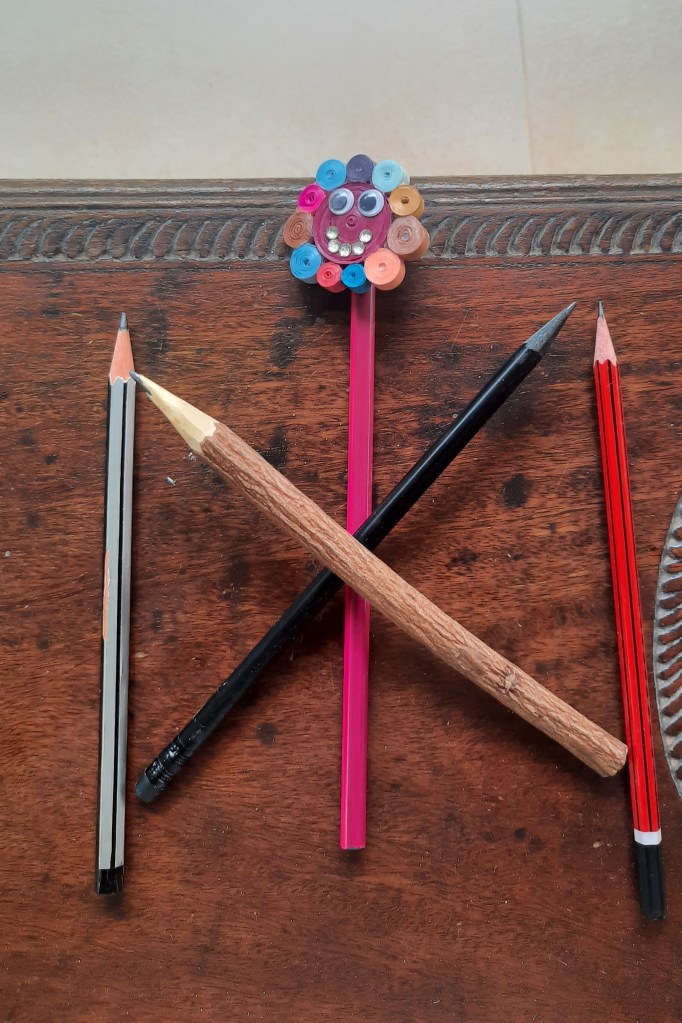
Every year, 30 March is marked as International Pencil Day. It is the anniversary of the day when the American Hymen L. Lipman received the patent for a pencil with an eraser attached to the end. This was in 1858.

But there is another patent which is even more fundamental to pencils as we know them today—the one obtained by Nicholas-Jacques Conte’ in 1795. This was for the clay-graphite lead in the pencil.

In the 1790s, France was at war with most countries in Europe. Countries and people, all faced the multiple woes that wars bring (and as we are experiencing today). But the specific problem that is relevant to our story today is the shortage of graphite that France faced. In those days, pure graphite was at the core of pencils, and pencils were critical in war times. For instance, if anyone needed to send a note on the go, pencils were needed, as it was difficult to deal with quill pens and ink. Sometimes, fortifications or battle formations had to be quickly sketched, and that was easily possible only with pencils. But in those days, graphite for pencils used to come from England or Prussia, both of which France was at war with. The French War Minister thought of calling upon Conte’, a brilliant inventor, to solve this problem, viz, how to minimize the use of graphite and make pencils which still wrote clearly and for long? Conte’ had to come up with an answer in a hurry. He applied himself to the problem day and night, and after many trails and errors, came up with the answer: mix graphite powder with clay, press the mixture into moulds, and fire it in a kiln. With this process, a relatively small amount of graphite yielded a large number of pencils. By varying the amount of clay, pencils of various ‘hardness’ could be made—i.e., the more the clay, the harder the pencil. It is such an efficient process that it is still used today to make pencils.  

The mention of Pencil Day also brought to my mind a poignant story my grandmother used to tell me. I don’t think it is the story of any particular girl, but definitely reflective of the fate of many young girls a century ago.

The story goes thus…

Gomati was the much-loved only daughter of a middle class family in rural Tamilnadu. Her’s was a joint family and the warm-hearted Gomati was everyone’s darling. She had been married at 9 to a boy from an important family who lived quite far away—7 or 8 hours by bullock cart. She was now 14 years old, and it was time for her to go to her husband’s house.

There was joy in her house, but also a lot of fear and apprehension. Those were the days when in-laws had a lot of power over daughters-in-law, and could be quite mean and cruel. How would the in-laws treat their gentle child? How would she cope? They were so far away, they would not be able to meet her too often. And anyway, the mother-in-law had made it clear that there was no need to visit quite often. They were particularly worried because after the wedding, they had heard that the groom’s family was quite arrogant.

Gomati’s mother and aunts and grandmother; her father and uncles and grandfather; her brothers and sisters-in-law, were all worried. How would they even get to know how they were treating her? How relieved they would be if they knew they were kind to her. And if she were not, maybe they could go and talk to the in-laws and try to improve the situation.

They knew that her mother-in-law would read any letter before it was sent. There was no way that Gomati would ever be able to write the truth if she were being mistreated. How then would they ever get to know?

And then one of Gomati’s uncles had an idea. ‘Gomati, you will have to write only good things about your in-laws, your husband and your life. But if these good things are true, then write with a pen. If they are untrue, write the letter with a pencil. We will then know what is happening.’

So it was decided. And Gomati went to her husband’s house.

Everyone at her parents’ house was anxious for the first letter to arrive. They watched for the postman ever day. Till at last the letter arrived. Everyone gathered around for the reading. And what a wave of joy went through the house, for they could see the letter was written with a pen!

The letter described how happy and busy Gomati was, how kind each and every in-law was, how attentive her husband was, how every meal was a gourmet meal, and how no one let her do any difficult or demanding chores.

The relief and the happiness increased with every line that was read out.

Till the last line, which said: ‘I have everything that the heart could wish for. If I lack anything in this household, it is that I cannot find a pencil.’

–Meena

Two Faces of War

As the world watches in despair at another meaningless war, amidst the dark and dismal narratives, it is the stories of hope and resilience that resonate the loudest. And unknown or forgotten connections are remembered anew.

For many of us, Ukraine was just another name on the map, and we imagined that it was far away geographically and personally. Until we read about the many many Indians who have been living, studying and working there. It got even closer with the media in Gujarat full of stories not only of the Gujarati students who were stranded there, but equally of the way other Gujaratis in neighbouring countries were offering overwhelming help and support to fellow countrymen in need. In Poland especially food and shelter is being given with open hearts and homes—helping to create a little India in a distant land.  

This link with Poland goes back many years, back to another war—World War II, and a reverse flow of displaced people. One of the heart-warming stories is about how the Maharaja of Jamnagar created a Little Poland in Gujarat.

In 1939 Poland was invaded by both Germany and Russia. There were mass arrests, massacres, grabbing of land and businesses, and large-scale deportations. Over two million Polish civilians were sent to camps in Siberia, and thousands died, even before they got there. Hundreds of Polish children were left orphaned or abandoned. In 1941 there was an international amnesty that allowed the destitute refugees to leave the Soviet Union. They undertook arduous and long journeys to distant lands that were offering them refuge.

India was at the time, still under British rule and the British government was not keen on accepting refugees. In the face of severe opposition by the British, Digvijaysinhji Ranjitsinhji Jadeja or “Jam Saheb” as he was called, the Maharaja of Nawanagar, a princely state in Gujarat was the first to offer the orphaned children from Poland refuge. The 46 year old king had developed a special interest in Polish culture ever since his meeting with Ignacy Padrewski, a Polish pianist that he had met in Switzerland. He was moved by the plight of the Polish orphans. Despite the official British refusal to accept these refugees, as the head of a princely state the Maharaja had some level of autonomy. He was determined to use it and take in the homeless children. 

In early 1942 the first group of 170 children who reached Bombay, and travelled on to Balachadi a small seashore town close to the maharaja’s capital Jamnagar. The maharaja welcomed them with the words “You are no longer orphans. From now on you are Nawanagarians and I am Bapu, father of all Nawanagarians, so I’m your father as well”.

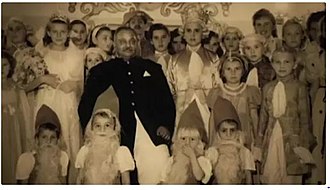
Bapu Jam Saheb and his Polish children at a Xmas show

Jam Saheb was true to his word. The children were initially put up in tented accommodation while the Balachadi camp was being built. The maharaja went to great lengths to ensure that Balachadi became a home away from home for these children who, at a young age, had experienced dislocation, loss of family and home, and the horrors of war. He built dormitories in which each child had a separate bed, and generously provided food, clothes and medical care. He converted the guest house of his Balachadi palace into a school, and even set up a special library with Polish books so that the children would not forget their mother tongue. He was concerned that they should not forget their own culture; he encouraged the children to put up shows including their songs and dances, and continued the country’s strong traditions of Scouts and the church. He encouraged children to play sports, and they were free to use his gardens, squash courts, and pool. He was concerned about their choice of food and would host special meals for the children. One of the children recalled, many years later, how the children did not like the way spinach was cooked and went on a ’spinach strike’. When the Jam Saheb heard about this he immediately ordered the cooks not to include spinach in the meals. 

Between 1942 and 1946 over 600 Polish children found a home in Little Poland thanks to the maharaja. When the war ended and the orphans had to return to Europe, both the children and the maharaja were heart-broken. The unusual bond that was formed remained strong, and played a crucial role in giving stability and hope to children who had lost everything.

The Maharaja died in 1966. His Polish “children” had spread across the world in countries where they started new lives after the end of the war. 76 years later, as a testimony to the enduring bonds, and to mark 100 years of Poland’s independence, in 2018, six of these “children” (now in their nineties) returned to Balachadi. They walked down memory lane, remembering the Bapu who not only gave them a home, but also their childhood.

Jam Saheb is remembered not only by his children, but is also considered a hero by the country that honours his generosity. He was posthumously awarded the Commander’s Cross of the Order of Merit. A city square in the heart of Warsaw is named Skwer Dobrego Maharadzy (The Square of the Good Maharaja). When he was alive the Maharaja had been asked how the Polish people could thank him for his generosity and he had replied that they could name a school after him. One of the city’s foremost private schools is named the Maharaja Jam Saheb Digvijaysinhji High School. A fitting tribute indeed.

Today, as another war rages, Poland is welcoming thousands of displaced women and children. Perhaps some of them will find refuge in the Square of the Good Maharaja, and history would have come full circle.

–Mamata.