
When I saw the name Sathyanaryanan Mundayoor on this year’s Padma Shri list, a recognition for playing a ‘seminal role’ in spreading
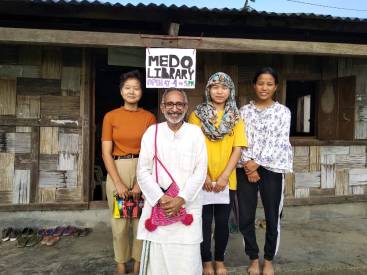
education in Arunachal Pradesh, I was delighted. He epitomises for me a true passion for books and reading, and an inspiring story of a lifetime devoted to this mission. I first heard of him and his library mission, over a decade ago, from my old colleague and friend Ambika Aiyadurai. I sent him some of the books that we had developed in CEE, and over the years we corresponded sporadically. I have not yet been able to meet him in person, but truly hope to do so sometime. In the meanwhile I feel that his work needed to be shared. What could be better than a first-hand account from Ambika who has known him and seen his work over the years.
Thank you Ambika for sharing this!
–Mamata
I first heard about Sathyanaryanan Mundayoor, way back in 2006 when I started my research work in Arunachal Pradesh. School teachers, students, engineers, administrators, doctors and local villagers in Lohit district of Arunachal Pradesh suggested I meet him. In Lohit and later Anjaw district, where I started my field research, every one fondly spoke of ‘Uncle Moosa’, a name that people of Arunachal had given him. It was only after two years, in 2008, that I had a chance to meet him at Wakro (Lohit district). My accommodation was in the Circuit House, and he had come there to meet someone. With a pleasant smile, a gentle, fragile-looking man greeted me with a ‘namashkaram’. What struck me was his dress. That evening, in the chill of October, all Uncle Moosa had over him was a sweater and shawl, and a cotton veshti. In fact, I have only seen him in a veshti all these years.
Uncle Moosa invited me to visit Bamboosa library the next day. The days were short, so I decided to visit the library at 3 p.m. A group of children was in the library, sitting on a carpet on the floor, reading books. Few sat on chairs placed along the wall. Soon, another set of students arrived. With an assortment of books neatly arranged on the shelves, this single room is a wealth for local children. Students were free to choose any book, read on their own, or in groups. This library in Wakro is a result of Uncle Moose’s mission to inculcate reading skills and promote a reading culture among children in Arunachal Pradesh. And he has spent the last 30-odd years on this mission to connect rural children of Arunachal Pradesh with books. Starting with the Bamboosa library in Tezu, followed by Apne library in Wakro, and Hutong library in Yatong in Anjaw district, by now 13 libraries have been set up in the state, as part of the youth library network.
Uncle Moosa’s first visit to Arunachal Pradesh was in the year 1979 as part of a Vivekananda Kendra Vidyalaya mission. He took this up after quitting his government job in the income tax department in Mumbai. Till 1996, he worked with VKV, dedicating his entire time to the library movement, and never went back to Mumbai nor to his home state of Kerala. In addition to running libraries, Uncle Moosa would invite scholars and other visitors to give a talk in the library and interact with the students. Uncle mentored senior students to become reader activists and there are several events organized during Gandhi Jayanti, World Environment Day and Independence Day where students affiliated with the library movement would perform plays, skits, reading sessions and poem recitals. Those who have known him for several years tell me that Uncle Moosa would carry books in small trunks and suitcases to remote villages to set up reading camps. Hopping onto state transportation buses, and in places with little road connectivity, he would walk for several kilometers to reach a village.
Not many know about Uncle Moosa’s frugal living. A small single room with a bed and a shelf was his accommodation in Wakro. His day begins at four in the morning by doing yoga and meditation. His favourite breakfast is upma, and he prepares his own food himself every day. Full of energy, and with a kind, ever-smiling face, talking with him is a joy. His dedication to the library movement and helping students with their education has earned him love and respect, both from adults and children. He continues to live in Arunachal Pradesh, and is now based in Roing. Many years have passed, and I have completed my PhD, but every time I go back to Arunachal Pradesh, I look forward to meeting Uncle Moosa!
Uncle Moosa has dedicated his life to promoting education and fostering a culture of reading in the remote areas of the North-Eastern state. May his tribe increase!
Ambika Aiyadurai
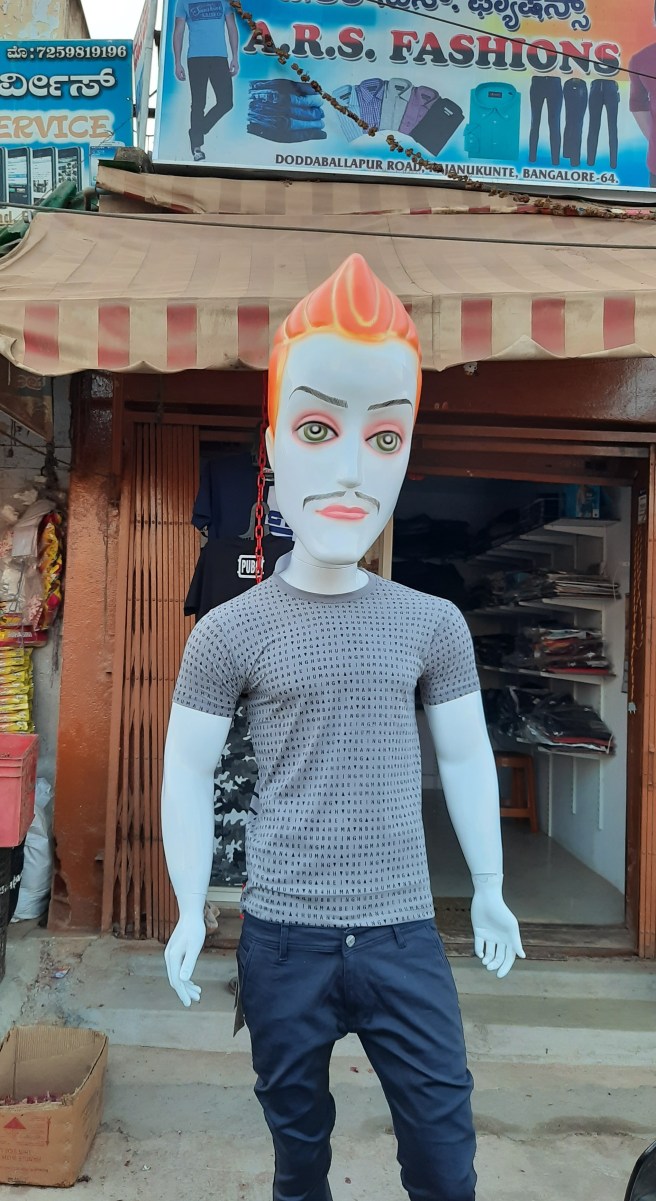 At 11.11 by the clock, on the 11th of November every year (pretty palindromic, isn’t it?), at Mainz Germany, the Fools’ Constitution is proclaimed from the balcony of the Osteiner Hotel. This marks the start of the City’s Carnival, which is characterized by people wearing oversized papier-mache heads roaming around the crowds. It seems that this practice started about 80 years ago, but I could not find references as to why “schwellköpp” or ‘swollen-heads’ are an integral part of the festivities.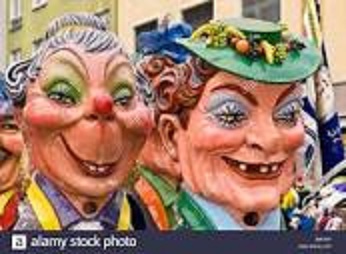
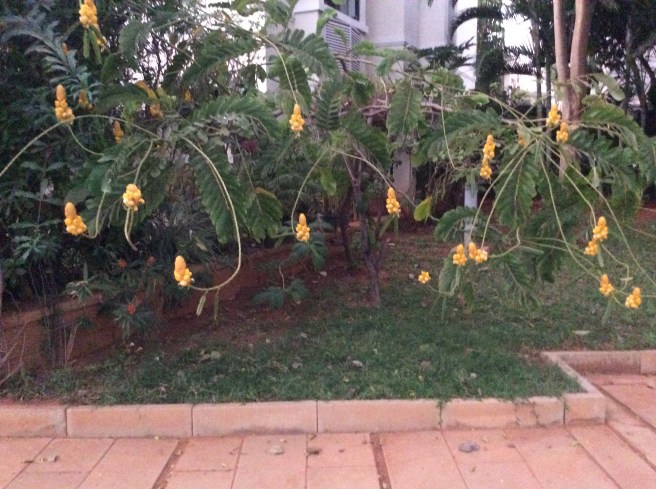 Basant Panchami went by last week. The mustard fields of Punjab must have been a riot of yellow, but my own little shrub was beautiful too!
 he English dictionary and discover that the majority of the words listed there have their origins in a variety of other languages and cultures. Who would have thought that “ze leetle zee” would have such had such an adventurous history!
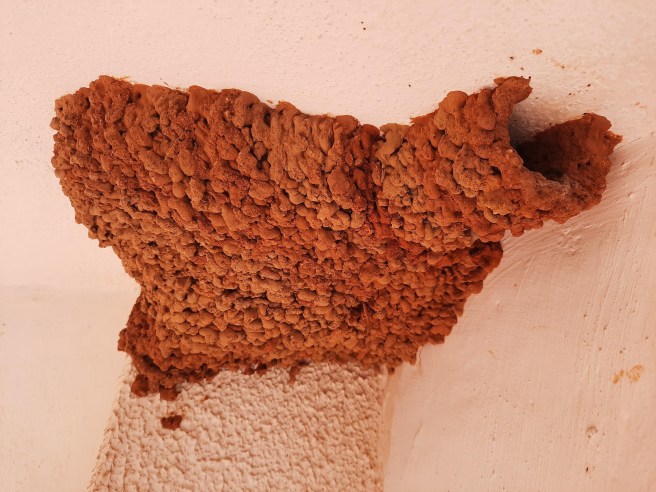 Two weeks ago that I looked up from the road, I saw a largish structure on my roof. Intrigued, I went up to try to figure out what this large mud structure was. I first thought it was the hive of some kind of wasp. But looking at the parapet below the nest, I noticed some bird droppings. And it did not take too much mental work from there on to figure out it was a bird’s nest.
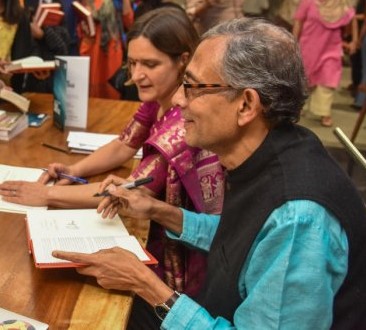 January 4 was also the day when Profs Abhijit Banerji and Esther Duflo were in conversation with Manish Sabarwal at the Bangalore International Center, and demystified RCTs, or Randomized Control Trials, the body of work which got them their newly minted Nobels. RCTs are an experimental method to do research on developmental issues like education and poverty, to find what can really be effective to solve the problems, and hence can help policy making.
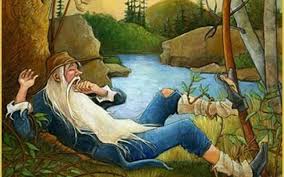 Imagine needing so much help to get a good night’s sleep! I have grown up in an age when mattresses had very different connotations. Mattresses were filled with cotton, and were usually of the same size and thickness. Often this cotton was carded by hand by itinerant carders who established camp at the house for a few days marked by the twang of their simple tools, and fluff-filled air. The cotton was filled in covers, stitched in with strong thread, and then beaten heartily with sticks to even out the lumps and bumps. All this done with dexterity and the long experience of a traditional occupation. With mechanisation, these occupations were replaced with neighbourhood shops where the same process was done by a simple machine. Now one took one’s old mattresses there to be opened and redone, with dire warnings that the cotton within was not to be mixed up with any other inferior variety!
