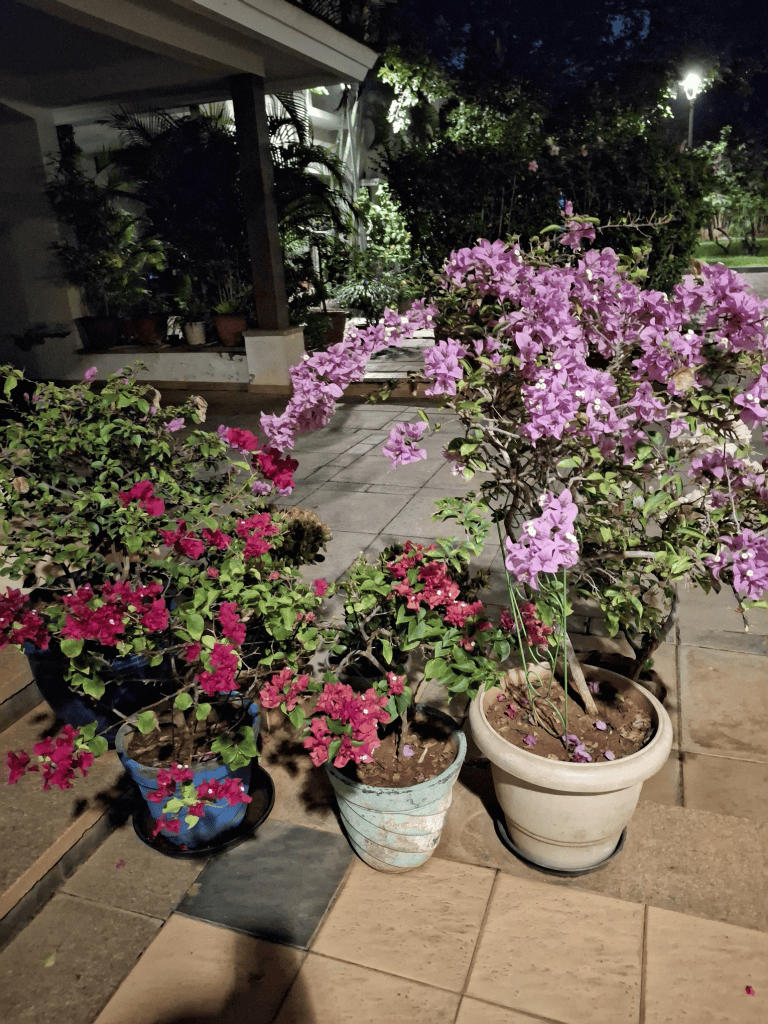
Most of us in India knew only the flower–the bougainvillea spilling over compound walls, climbing gates and brightening our roadsides is such a familiar sight that we rarely wonder where its name comes from. But now Bougainville is appearing in our newspapers for an entirely different reason: a people’s struggle for independence.
What connects the two? An explorer. There cannot be many explorers whose names have endured in such different forms: attached to a flowering plant that brightens gardens across the world, and to a Pacific island whose political future remains unresolved. The story takes us from eighteenth-century France to Brazil, across the Pacific, and into a history of colonialism, mineral wealth and a people’s determination to shape their own future.
The explorer and the flower
Louis Antoine de Bougainville was born in Paris in 1729. A mathematician, soldier and French naval officer, he led a French expedition around the world between 1766 and 1769. Among those accompanying him were naturalist Philibert Commerson and Commerson’s assistant, Jeanne Baret.
During a stop in Rio de Janeiro, Brazil, Commerson documented a striking climbing plant. It was later named Bougainvillea in honour of the expedition’s commander. Native to South America, the plant eventually travelled across the tropics, becoming a favourite in gardens far from its homeland.
There is a remarkable footnote to this voyage. Baret had disguised herself as a man to join the expedition, since women were not permitted aboard French naval ships. She is now recognised as the first woman known to have circumnavigated the globe (and probably documented our flower as well).
And those brilliant pink, purple, orange and red displays we admire? They are principally papery bracts surrounding tiny, inconspicuous flowers.
The island behind the name
The same commander also gave his name to an island. In 1768, Bougainville sailed through the southwestern Pacific, and the island now known as Bougainville was named in his honour. But the island was not waiting to be discovered. Its Indigenous peoples had lived there for thousands of years, with their own languages, cultures and relationships with their ancestral lands. The European name records an explorer’s passage, not the beginning of the island’s history.
Bougainville lies east of Papua New Guinea, north of Australia, amid volcanic mountains, tropical forests and beautiful coastlines. Its people have a strong cultural identity and a long-standing connection to their land. One culturally significant Indigenous term is Me’ekamui, associated with sacred land in the Nasioi language, though it is not a universally used name for the entire island.
It is currently an autonomous region of Papua New Guinea, although its people voted overwhelmingly for independence in 2019.
The island’s natural wealth, however, has brought its own troubles.
The mine and the conflict
Panguna is a town on the island of Bougainville in Papua New Guinea. It is the location of the famous Panguna copper and gold mine, which played a central role in the conflict that began in 1988. Developed during Australian colonial administration, it became a major mining operation. Yet many local people felt they received too little of the revenue while bearing the environmental and social costs. Grievances over land, compensation and the distribution of wealth deepened.
In 1988, tensions erupted into armed conflict. The conflict was about much more than mining. At its heart lay questions of who controlled the island’s resources, whose interests they served, and whether Bougainvilleans should determine their own political future. Bougainville’s desire for independence stems from a combination of cultural identity, economic grievances and a long history of political frustration. Its people have cultural and historical links with the nearby Solomon Islands, and many have felt distinct from the people of mainland Papua New Guinea. These differences were sharpened by the mine: while the mine generated considerable wealth, many local people felt they received too little of the benefit while bearing the costs of environmental destruction, damage to their land and disruption to their communities.
The mine closed, and fighting between separatists and Papua New Guinea’s security forces devastated communities. The Bougainville Crisis lasted for years, causing thousands of deaths and immense suffering.
A peace agreement in 2001 established a framework for autonomy and a future referendum on independence. Bougainville acquired its own autonomous government in 2005, while remaining part of Papua New Guinea.
An overwhelming vote, and a long wait
In 2019, Bougainvilleans finally voted on their political future. The result was remarkable: 97.7 per cent voted for independence rather than greater autonomy.
Yet the referendum was non-binding, and its result required consideration by Papua New Guinea’s national parliament. A strong popular mandate, in other words, did not automatically create a new country.
The parliamentary process is now central to Bougainville’s future. Its leaders have proposed independence by 2030, but this remains a proposed timeline, not a settled outcome.
Even independence would bring difficult questions. A new country would need functioning institutions, reliable revenues and the capacity to provide healthcare, education and infrastructure. The future of the Panguna mine will be important, but so will environmental repair, land rights and the fair sharing of benefits.
More than a flower
It is remarkable how one name can connect such different worlds. A French explorer lends his name to a South American plant that finds its way into Indian gardens, and to a Pacific island whose people are still negotiating their future.
The next time a bougainvillea spills over a compound wall, perhaps we might look beyond its cheerful colours. Behind its name lies a history of exploration and the movement of plants across continents. Behind the island’s name lies a different, unfinished story of land, identity and self-determination.
We knew only the flower. Now we know the place, its people, and the story that continues to unfold.

