
6 August 1945. World War II was raging across Europe and new fronts were opening across the world every day. But this day witnessed perhaps the most devastating demonstration of the scourge. One that continues to haunt even today.
At 8:15 a.m. an American bomber called the Enola Gay dropped an atomic bomb on the Japanese city of Hiroshima. The city was instantly levelled to rubble, and 80,000 people died in the first few minutes. Thousands would die later from the effects of radiation.
2-year old Sadako Sasaki who lived not far from where the bomb fell, miraculously survived. She grew into an enthusiastic, energetic, athletic girl. The impact of the of the A-Bomb began to reveal itself a decade later. Starting with minor ailments, Sadako began to feel progressively weaker until she was unable to get up. Medical tests indicated that she had leukaemia, that was commonly called the ‘A-bomb disease’—a fall-out from exposure to radiation. She was admitted to hospital, but the chances of surviving this disease were slim.
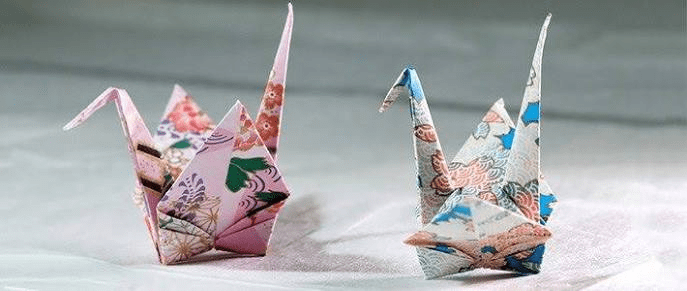
Sadako’s best friend used to visit her in hospital, and she brought with her some origami paper. In Japanese culture the crane is a mystical creature believed to live for 1000 years. It is believed that if someone folds 1000 paper cranes, they will be granted good fortune, healing from illness, or a single special wish. Sadako decided that she would fold 1000 paper cranes with the wish that she get well again; and she continued with her folding, even through periods of great pain and discomfort. Sadako died on October 25, 1955, ten years after bombing of Hiroshima. While one version of her story claims that she completed folding 1000 cranes before she passed away, another one claims that she was able to finish 644 and the remaining 356 were folded by her friends and loved ones.
Sadako’s classmates who had lost many of their friends to the A-bomb disease decided to form a unity club to honor their friend, and stay in touch after they all left school. The movement grew. The simple act of folding a crane started by Sadako and her classmates turned into a national, then an international, children’s peace movement. This developed into a plan to build a monument to recognize the many children who lost their lives because of the bomb. This is now known as the Children’s Peace Monument and is located in the center of Hiroshima Peace Park, close to the spot where the atomic bomb was dropped. Children from all over the world still send folded paper cranes to be placed beneath Sadako’s statue in the park. In so doing, they fulfill the wish engraved on the base of the statue: This is our cry, This is our prayer, Peace in the world.
Sadako’s story continues to be a reminder of the long-reaching and devastating effects of nuclear war, and the 1000 paper cranes have come to symbolize the hope for peace and health. ‘1000 cranes’ is translated in Japanese as Senbazuru. This traditional practice is now universally associated with peace and good health. The cranes represent prayers for peace and the end of conflict; as also wellness wishes for the ill or injured. Unlike the legend, they do not have to be completed by one person alone, they are often collaborative efforts, of classes of school children, or families.
While the “unforgettable fire” of the atomic bomb annihilated tens of thousands of lives, those who survived had to live with the many dreadful effects of exposure to radiation. They not only suffered from ill health, but also discrimination, as it was rumored that they could infect others. These survivors are referred to in Japanese as Hibakusha or “bomb-affected people”. The word is still used to describe any person exposed to radiation from the nuclear fuel trajectory through the use, production and testing of nuclear weapons, as well as the processes that create and produce nuclear power, and nuclear waste.
The Nihon Hidankyo (the Confederation of A and H Bomb Sufferers) was formed in 1956 to fight for justice for the victims. Even though not many original hibakusha are alive today, the organization continues its mission which was recognized and honoured with the 2024 Nobel Peace Prize.
Hibakusha Stories is an offshoot which works to facilitate the sharing of stories, not only of survivors of Hiroshima and Nagasaki; but all individuals and communities who have been exposed to radioactive fallout and contamination from atmospheric nuclear weapons testing or nuclear production facilities, as well as Indigenous Peoples, nuclear test survivors and other affected communities to take action for disarmament.
The stories of the hibakusha teach courage in the face of threat, conviction that nuclear weapons are the ultimate crime against life; compassion and humanity, and above all, the urgent call to take action for disarmament.
In a world which is perilously close to exploding, thanks to the war-thirsty egotists and power brokers, and the threat of use of nuclear weapons looms like an ominously low-hanging storm cloud, these voices are almost drowned out. Maybe we need a reminder of Hiroshima and Nagasaki to jolt us to some semblance of sanity.
May the legend of Senbazuru bring a glimmer of hope for peace and health.
–Mamata

