
Last week, on the occasion of World Elephant Day, Mamata recounted from memories of Dr. Raman Sukumar, India’s foremost elephant-researcher.
We continue on the pachyderm theme this week, but today we focus on……elephant dung! On World Elephant Day, we usually celebrate the things that make elephants magnificent—their intelligence, memory, extraordinary family bonds and sheer size. We talk about forests, wildlife corridors, poaching and the urgent need to protect these gentle giants. But there is another elephant story worth telling, and it begins, rather unglamorously, on the forest floor: with dung.
Long before humans filled compost bins, saved kitchen scraps and debated the perfect balance of “browns” and “greens”, elephants were already participating in one of nature’s most elegant recycling systems. An elephant eats a phenomenal amount of vegetation every day—grass, leaves, bark, roots, fruit and branches—and because not everything it consumes is completely digested, plenty of partially processed plant material eventually makes its way back into the environment. What we see as a pile of dung is, in ecological terms, a package of nutrients and organic matter ready to be put to work again.
Once elephant dung lands on the forest floor, an entire community of organisms gets involved. Dung beetles, flies, fungi, bacteria and other decomposers begin breaking down the material, while insects use it as a source of food and, in some cases, as a place to lay their eggs. As the dung decomposes, nutrients are gradually returned to the soil, helping to maintain the fertility and health of the ecosystem. What looks like the least glamorous part of an elephant’s daily routine is actually an important link in the larger cycle of life.
This is one of the reasons the idea of “waste” is so different in nature. In a healthy ecosystem, one organism’s leftovers can become another organism’s resource. There is no rubbish truck waiting at the edge of the forest and no landfill quietly filling up somewhere out of sight. Organic matter is continually broken down, transformed and returned to the system. Elephant dung is simply one particularly impressive example of this natural circular economy.
There is another role that makes elephant dung especially important: seed dispersal. Elephants consume huge quantities of fruit and vegetation, and many of the seeds they swallow can survive the journey through their digestive systems. Because elephants travel considerable distances in search of food and water, they can carry those seeds far from the parent plant before depositing them in their dung. In effect, the elephant becomes a very large and very mobile seed-distribution system, helping plants spread across the landscape.
And there is something rather clever about where those seeds arrive. They are not simply dropped onto the ground; they emerge surrounded by organic material that is already beginning to decompose. That dung can provide nutrients and moisture while insects and microorganisms continue breaking it down. In the right conditions, the seed may eventually germinate and become part of the next generation of vegetation. An elephant eats a fruit in one part of the landscape and, sometime later, may help establish a new plant somewhere else.
The forest gets a meal, a seed dispersal service and a dose of fertiliser, all from the same animal. This is why elephants are often described as ecosystem engineers. Their impact extends well beyond their own bodies. Their feeding habits can alter vegetation, their movements can open pathways through habitats, and their dung redistributes nutrients and seeds. When elephant populations decline, the consequences can therefore reach much further than simply having fewer elephants. The animals are part of a web of ecological processes that help keep their habitats functioning.
It is only when we understand this natural process that the idea of turning elephant dung into human-made compost becomes truly interesting. In sanctuaries, conservation centres and other managed settings where elephant dung is collected responsibly, it can be composted and transformed into a useful soil amendment. Through controlled decomposition, the organic material breaks down into a darker, more stable substance that can help improve soil structure and return nutrients to the ground.

Some organisations have taken this a step further by developing elephant-dung compost as a source of income that can support conservation and animal-care programmes. There is something wonderfully circular about the idea: an elephant eats plants, produces dung, that dung is composted, the compost helps plants grow, and those plants can once again become part of the landscape on which elephants and other animals depend.
On a recent visit to Kerala, I visited one such sanctuary (Panamkuzhy Elephant Sanctuary)), and my most treasured buy was a package of Elephant Dung Compost! But perhaps it is important not to let the human version of the story overshadow the original one. Elephant dung does not need us to make it valuable. In the wild, it already has an important ecological purpose. Composting it is simply our way of working with a process that nature has been running very successfully for thousands, perhaps millions, of years.
And maybe that is one of the quieter lessons we can take from elephants this World Elephant Day. We often think about what we can do for nature—what we should conserve, restore, recycle or protect—but elephants can remind us that nature is already remarkably good at managing resources when we allow its systems to function. What leaves one organism can nourish another; what appears to be waste can become food, habitat, nutrients or the beginning of new life.
So elephant dung is part of what the elephant gives back to the landscape: nutrients returned to soil, food for insects and microorganisms, and sometimes the very beginning of another tree. Reinforcing the message that every species has its place in the ecosystem. And nature has its own balance.We just have to let it be.
Happy Elephant Day!
–Meena
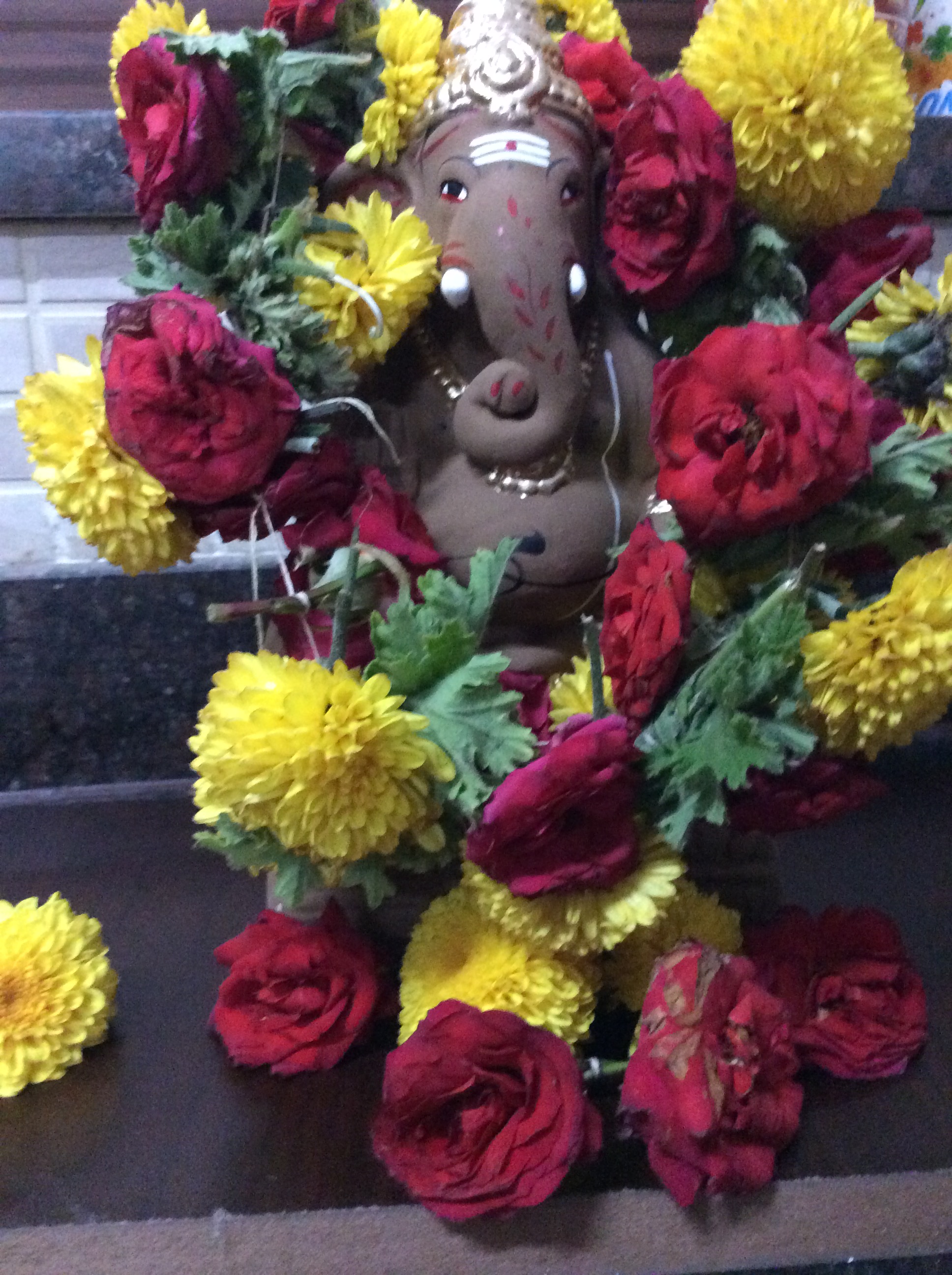 Who can have a problem with someone whose mission is to remove obstacles from your path? No wonder then, that Ganesha is a God whom all love. Wise, witty, with a sense of fun, he is quite the favourite.
