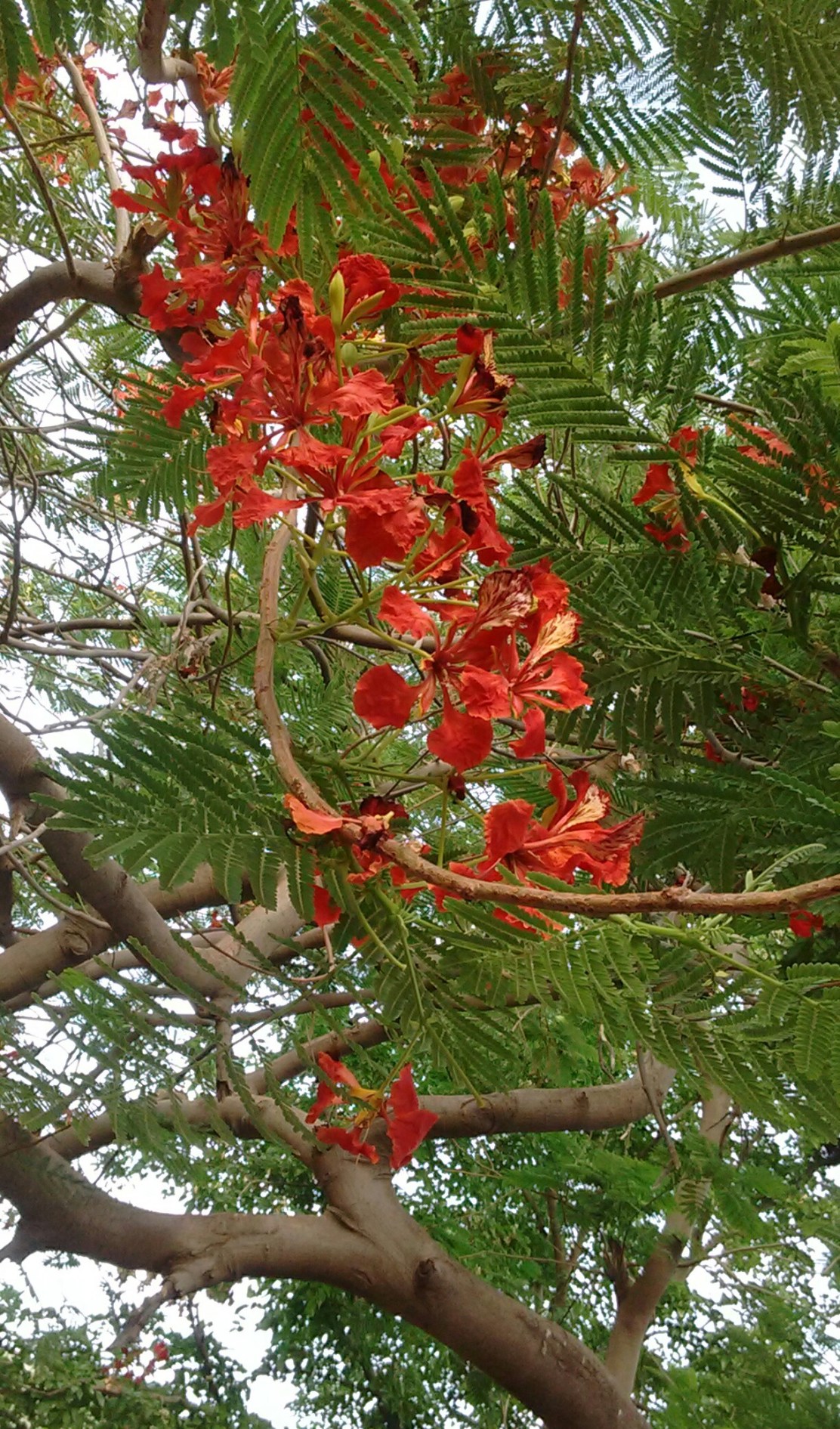
A couple of months after the lockdown started there was a spurt of pieces and pictures about different aspects of the natural world that people had started noticing around them—the variety of birds and insects; the hues of the sunsets and sunrises; the vegetation with its changing cycles; the diverse sounds of nature, and much more. True that these became more evident as the relentless activity and cacophony of urban life became more muted. But perhaps, more likely, it was the fact that we humans have had more time to ‘stop and stare’ as it were.
If we were to stop a moment and think about it, we are always ‘looking’ at things but how often are we really ‘seeing’ something? We use our eyes, but our gaze is glancing, merely considering the objects, people and scenes that pass before our eyes. Things appear as they are at first glance, and we move on, not stopping to take in the image in all its dimensions and depths.
The dictionary says that to look means to direct your eyes in a particular direction, while in order to see, you must notice or become aware of someone or something. Seeing is not only noticing that something is, but understanding it, attending to it, and looking past the obvious to enjoy its more subtle nuances. It means noticing not only the details but also how those details are part of a whole.
Thus seeing is not just a function of the eyes but rather a combined effort of the eyes and the brain, which work together to sort out visual input and arrange it into meaningful images, within a context, and with significance to detail.
How do an artist and a scientist ‘look at’ and ‘see’ the same thing? Two beautiful passages bring these together on the same canvas.
Georgia O’Keeffe a 20th-century American painter and pioneer of American modernism best known for her canvases depicting enlarged flowers explained why she did this: A flower is relatively small. Everyone has many associations with a flower–the idea of flowers. You put out your hand to touch the flower–lean forward to smell it–maybe touch it with your lips almost without thinking–or give it to someone to please them. Still–in a way–nobody sees a flower—really–it is so small–we haven’t time– and to see takes time, like to have a friend takes time. If I could paint the flower exactly as I see it no one would see what I see because I would paint it small like the flower is small. So I said to myself–I’ll paint what I see–what the flower is to me but I’ll paint it big and they will be surprised into taking time to look at it–I will make even busy New-Yorkers take time to see what I see of flowers.
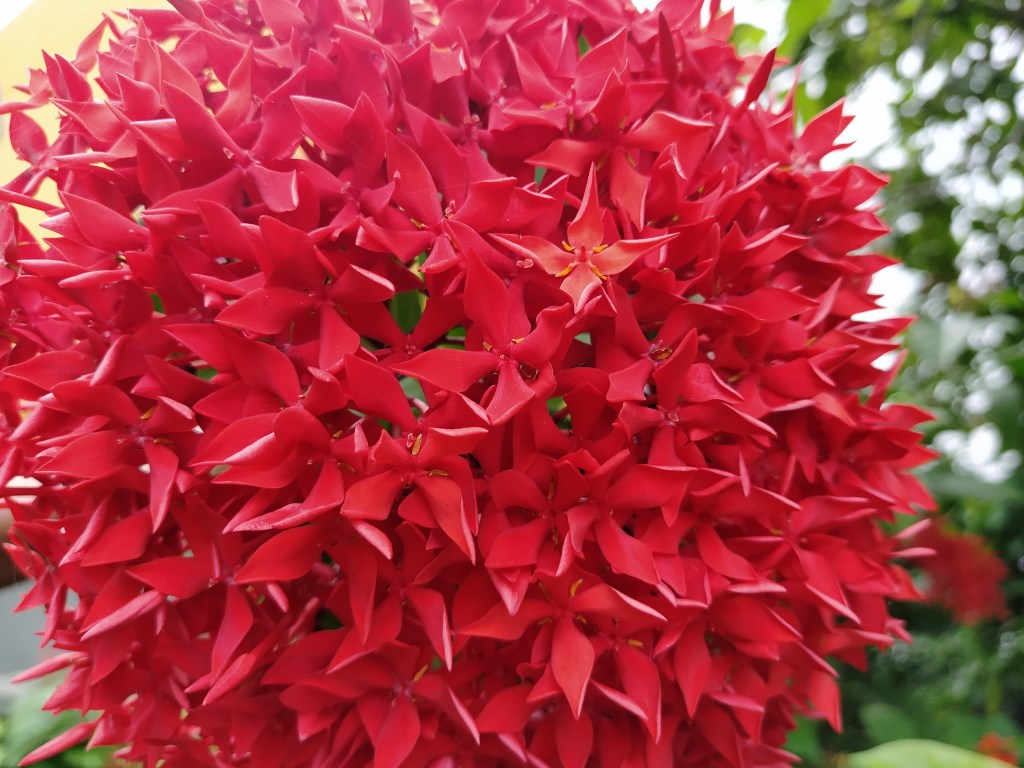
Nobel-winning physicist Richard Feynman sees more than the aesthetic. As he said: I have a friend who’s an artist and has sometimes taken a view which I don’t agree with very well. He’ll hold up a flower and say “look how beautiful it is,” and I’ll agree. Then he says “I as an artist can see how beautiful this is but you as a scientist take this all apart and it becomes a dull thing,” and I think that he’s kind of nutty. First of all, the beauty that he sees is available to other people and to me too, I believe…
I can appreciate the beauty of a flower. At the same time, I see much more about the flower than he sees. I could imagine the cells in there, the complicated actions inside, which also have a beauty. I mean it’s not just beauty at this dimension, at one centimeter; there’s also beauty at smaller dimensions, the inner structure, also the processes. The fact that the colors in the flower evolved in order to attract insects to pollinate it is interesting; it means that insects can see the color. It adds a question: does this aesthetic sense also exist in the lower forms? Why is it aesthetic? All kinds of interesting questions which the science knowledge only adds to the excitement, the mystery and the awe of a flower. It only adds. I don’t understand how it subtracts.
As the great French novelist, playwright, essayist, and filmmaker Marguerite Duras said “The art of seeing has to be learned”. This takes time, patience, and attention. And having learnt it, a skill that continually needs to be honed.
Today we are inundated with fast moving visual images that grab our eyeballs as they flash across our screens. But our attention spans are continually decreasing, as is our attention to detail. We do spend most of our times with our eyes wide open, but how much of that time do we spend in seeing? What better time than now, to start practicing the art of seeing?
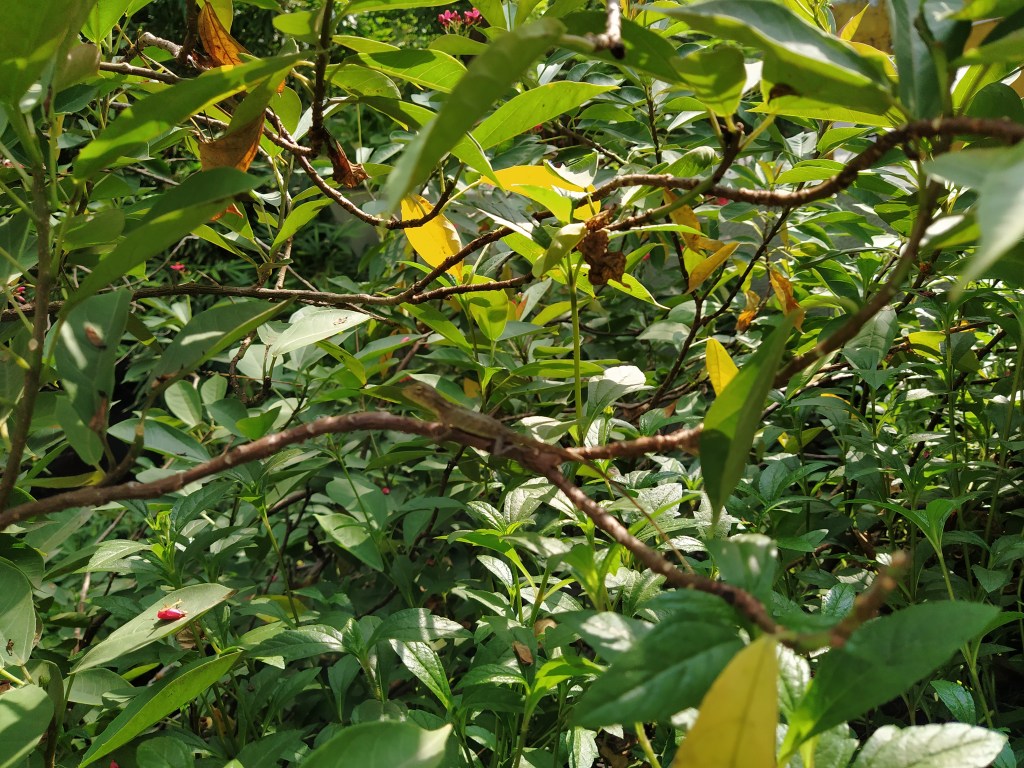
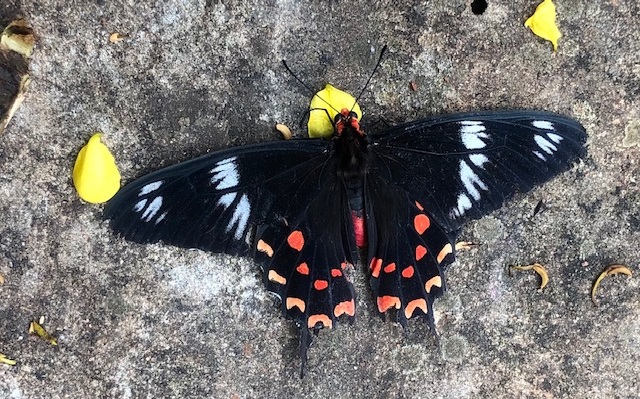
As I look at my little garden blooming after the rains, aflutter with multi coloured butterflies, and vibrant with the hum of the bees, I rejoice in ‘seeing’ it with new eyes each day.
–Mamata

 y for an environmental educator whose work and mantra for over three decades had been ‘connecting children with nature’. Environmental education as we believed was learning in the environment, learning through the environment, and for the environment. More than anything else, this was true for nature education. Based on this conviction we worked with passion and imagination to create hands-on teaching-learning experiences–from stepping outside the classroom to observe a single tree, to a camping experience of immersion in natural surroundings. These were experiences that engaged not just the head, but all the five senses—seeing, hearing, smelling, tasting and feeling—and thence the heart. We believed that it was the heart and not the head which would create a new generation of sensitive, informed and able champions of the environment.
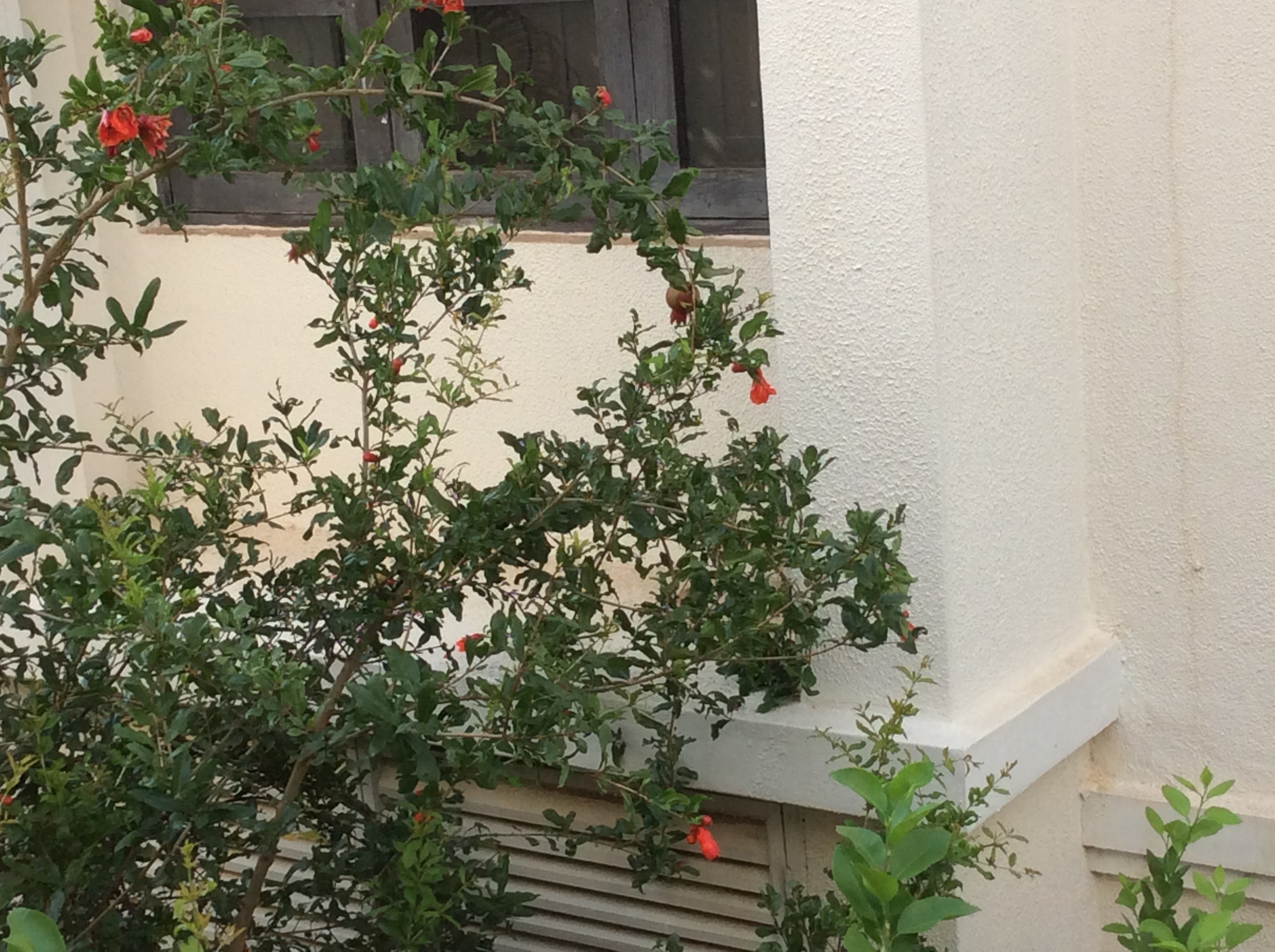 Lockdown has certainly make us more observant and has given us new ways of looking at things. There is a pomegranate tree whose top I can see from my window—and considering I spend eight or nine hours working in that room, it is very central to my vision! It is currently flowering, abuzz with bees, and fruits have started forming.
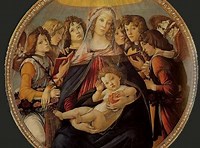 The pomegranate is a symbol of resurrection and life everlasting in Christian art, and the pomegranate is often found in devotional statues and paintings of the Virgin and Child, as in Bottecelli’s ‘Madonna of the Pomegranate’ shown here.