Talk Time

All through school and college, one of the best parts was the ‘night-spend’ (before it was called ‘sleep-over’!) at a friend’s place. The high point of this was staying awake till very late, sometimes even till dawn, simply nattering the hours away. Though well past our school and college days, for myself and my friends, this continues to be so, even today!

We never seemed to run out of conversation. Conversation was comfort, it was catharsis, it was heart-to-heart and tête-à-tête, and more. Conversation was face-to-face communication.

It was not just with friends–face-to-face communication was a way of life. Families caught up with doings and happenings/news over daily meals, and at family get-togethers; colleagues exchanged views over a cup of tea; housewives met at the corner for a chinwag to exchange neighbourhood gossip, and senior citizens bemoaned the state of the world as they took their constitutional in the park. We communicated daily with the shopkeepers, the domestic help, the essential service providers like the milkman, the presswalla, the newspaper supplier, and the auto drivers.

Today we are told that the world is “connected” like never before. We are in constant communication, as it were…Through the press of a button we can order our groceries and daily requirements; we can book tickets for movies or order in food; we can upload pictures of our latest travels; we can stream live the family wedding from the exotic destination; we can open our hearts to the BFF through Twitter and Instagram…and we can even text our children in their bedroom to say that dinner is ready!

The world is “connected” 24/7. Time saving, effort saving, technological marvels we say.  But somewhere in all this, have we not lost something precious? Something that is a basic human need–Face-to-face communication, an ancient and abiding human gift? Are we losing a vital connection?

“When you speak a word to a listener, the speaking is an act. …Listening is not a reaction, it is a connection. …And it is a mutual act: the listener’s listening enables the speaker’s speaking. It is a shared event, intersubjective: the listener and speaker entrain with each other.  …When you can and do entrain, you are synchronising with the people you’re talking with, physically getting in time and tune with them. No wonder speech is so strong a bond, so powerful in forming community.” (Ursula K. Le Guin in a piece titled Telling Is Listening.)

Perhaps the next time, before we sign up for “Unlimited Talk Time” offers, let us see if we can make real Time for Talk.

–Mamata

Justifications Believers Could Give

In the old days, it seems from all reports,

That Gods of all faiths performed many, many miracles


THEY would save believers from the jaws of death

THEY would heal lepers and give sight to the blind

THEY would grant riches and victory to the righteous

And take the time to wipe the tears of widows and orphans


But it seems THEY are slipping up badly these days

I can see no miracles around me

In fact, THEY are performing ‘Below Expectation’ (a term from my appraisal process!)

Even in their core function

Which is to reward the good and punish the bad


Well, when you think about it

I can find some excuses for THEM

How do you expect THEM to cope

With the kind of rise in population

The world has seen from the good old days?

So many billions of souls

Calling out to them for

Miracles big and small


Agreed THEY are Gods

But even THEY, surely

Must be stressed and over-worked

Poverty, hunger, AIDS

Terrorist attacks, the War on Terror

Nuclear proliferation

Stock market booms and busts

Dictators and trolls

Floods, droughts, tsunamis

Child trafficking, porn sites

Violence against women


In between sorting out all this

Do you seriously expect THEM

To make the time

For a personal miracle for you?


Get real!


–Meena


Things That Got Our Teachers’ Goats

A few weeks ago, I wrote about something that had our teachers and school management paranoid—so called ‘contraband books’. We had a well-stocked school library, but obviously we had an urge to read something beyond—like comics and M&Bs! Which our teachers and the nuns were determined to stop us from doing. One of the things that used to happen irregularly regularly were surprise checks. Suddenly about four teachers would walk into the classroom, and order us to open our desks and bags, and would riffle through them. Anyone caught with any book other than textbooks or school library books was sent off to the Principal, and had the book confiscated.

I marvel at those days of innocence, considering that as far as I know, no one was ever caught with anything more wicked than an Archie comic. Or yes, a Barbara Cartland. While Georgette Heyers were completely kosher and in fact, in the school library lists, and even M&Bs were tolerated (which meant we were not too nervous if a teacher heard us mention them), for some reason BCs really got the teachers paranoid.

They were also paranoid about what our hair was fastened with. It had to be black ribbons. Rubber bands, even black ones, got them. What to talk of ‘love in Tokyos’!

And socks. They had to be plain white, and NO DESIGN! The faintest sprays of flowers or creepers, even white on white, would get them on a trip.

Skirts had to be just above the knee. Anything shorter and there would be consequences. The girls with more oomph and guts found their way around this. They used to roll up the waist band of the skirt two or even three times, so that the skirts were at a daring mid-thigh. And roll them down, oh so innocently, when any strict teacher happened by.

All this was at Carmel Convent Delhi. But I am sure that readers of my generation would all relate to this.

I thank my teachers for the discipline they dinned into us. For the values they made a part of our lives. For the seriousness with which they taught us. For how earnestly they took their mission of making something of us.

–Meena

Starry, Starry Village

Last week, I was in interior Andhra Pradesh. We were felicitating high-performing Std. 10 students from government schools of villages in our project area.

All was routine, till they announced one of the winners as Keerthi Chawla. I wasn’t sure I had heard right. It was too North-Indian a name for a village in AP. So I asked again what the child’s name was, and she reiterated that it was Keerthi Chawla. And she was speaking Telugu. I asked her if she belonged to those parts or her family had moved there. She told me she was very much from Dosari village. And also told me her full name, which was Vangapudi Keerthi Chawla.

I couldn’t wait for the function to finish to catch hold of my colleagues to ask what this was about. They told me that the trend in Dosari village was to name children after film stars. That is not an unusual trend—we all know that many a Rajesh or Dilip or Aishwarya were named about the eponymous stars. What was unusual of course was the adoption of the name—lock, stock and surname!

We thought we should get a little more into it. A very quick count in the primary school and Bala Badi in the village threw up 81 children who were named after stars: from Trishas to Tamannas to Anushas (these ladies don’t use surnames, I think). From among those who do use surnames, we found apart from Keerthi Chawla, also a Vidya Balan. Among the boys there were Nageswar Raos, Ram Charans and Prabhas.

(I have met many a Jhansi, Jhansi Rani and Jhansi Lakshmi from AP/Telangana. Not sure why these names are so popular here.)

I thought mine was my Keerthi Chawla was the most exciting find. But I was deflated when my colleague told me that in her previous job, where they used to provide education support for children from Tamilnadu slums, they had one child called David Beckham (Muthu David Beckham).

With what dreams do parents name their children?

How we look up to the stars!

Do they know?

–Meena

The Sounds of Silence

When we were children and started becoming overly excited or noisy, our aunt would say “OK time for Shantini Ramat!”(the game of silence). All we had to do was to close our eyes and stay still and silent. This was not in the form of a “fingers on lips” punishment, but rather always had the most calming effect. Even as young children it made us aware of the many sounds that even silence was made up of, and sensitized us to the power of Quiet.

Many years later, as environmental educators, one of the exercises we often did in our workshops, with teachers or children, was to ask everyone to close their eyes and sit silently for just 5 minutes. After that we would ask them what sounds they heard / how they felt. It was interesting to note that they found this hard to describe or pinpoint. They were so unused to distinguishing individual sounds—even if they were obvious and strident like the honking of horns, the rumble traffic, the hum of the fan; or less obvious like the chirping of birds or squirrels.

We all live in a continual clutter of noise. Most often our ears are so tuned out of the subtle sounds around us, we can hear only the loudest, glaringly harshest and strident noises. We no longer know what silence sounds like. In fact we are almost afraid of the Quiet. Yet there is much to hear in silence. Even amidst the clamour of urban life, there are sounds that we can hear if we really listen—the early morning call of the lone bird, the rustling of leaves in the breeze, the buzz of the bee, the plop plop of the first raindrops and the steady gush of a downpour.

There is magic in silence, in being quiet. There is great power, beauty and creativity in silence.

This is beautifully captured in The Book of Quiet, a wonderfully sensitive children’s book by Deborah Underwood. Each page, lovingly illustrated by Renata Liwska, is dedicated to a different Quiet moment, beginning with “first one awake Quiet” and ending with “sound asleep Quiet.”

Some excerpts

ALL KINDS OF QUIETITUDES

Best friends don’t need to talk Quiet (Comfortable)

Trying not to hiccup Quiet (Embarrassed)

Last one to get picked from school Quiet (Nervous)

Sleeping sister Quiet (Tender)

First look at new hairstyle Quiet (Shocked)

“Silence is itself the stuff of substance; the moments it fills are not the in-betweenery of life but life itself — rich and nuanced and irrepressibly, if quietly, alive.” (Maria Popova)

–Mamata


A Magical Walk

I remember it well—a mere 400 metre walk on our office campus in Ahmedabad. That day we were walking along the path that all of us took regularly; walking along with us was Professor HY Mohan Ram, a member of our Governing Council, who was there for the Council meeting. As we walked, Professor Mohan Ram talked—gently, softly, but with passion and excitement, pointing out plants that we saw every day, but, as we realised, we never really ‘looked at’.

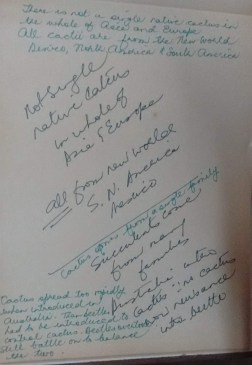
“Look at this one”, he pointed at a plant, “this is Aduso. Its botanical name is Adhatoda vasika which means ‘that which the goat will not touch’. This is what is used for making medicines for cough and cold.” Going just two steps ahead, “You know the cactus, but did you know that there is not a single native cactus in the whole of Asia and Europe? All cactii are from the New World—Mexico, North America and South America.” ”Look at this magnificent neem tree.  Its botanical name Azadirachta indica comes from the Arabic for azad meaning ‘free’ and drakhta meaning ‘tree’. This is thought to be a tree indigenous to India, but there is some doubt if it is originally Indian. It may have originated on the Burma border and come to Bangladesh from there.” “Did you know that Lutyens, when planning the landscaping of Delhi’s roads, planted only native species. Each avenue was planted with one species of fruit tree.” Three steps ahead, we come to the white flower commonly called Chandni. Professor tells us, “Have you noted carefully the arrangement of petals of flowers? Most flower petals are usually in multiples of 3 or 5 (except in the case of the mustard flower).” “Many high school students know this as the shoe flower that they got for dissection in the exams. But why the name shoe flower? Because it is used to polish shoes! Its other name is hibiscus, and is believed to have originated in China.”

IMG_20170822_090553807.jpg

Professor HYM had a fascinating story for every step that we took, drawing attention to the tiniest of flowers that we carelessly trampled underfoot, to the towering culms of bamboo. The path that took us 5-7 minutes to traverse became a magical mystery tour that took close to two hours. Through his eyes the blur of vegetation turned into a veritable treasure trove, with each plant glowing with its own special attributes.

Not long after this visit, Meena and I invited Professor HYM to contribute to a collection of tales of ‘Nature Heroes’ that we were putting together. He graciously agreed, and shared with us some of his journey, experiences and inspirations in a piece titled Reflections of a Botanist.  He writes “I have not pursued any single course. I have done what interests me and not what is in style. I have a deep interest in Indian classical music and photography.”

He concludes the piece with this, “What enlightenment have I received as a student of plant biology? I wish I could be like a tree: deep-rooted and firmly fixed, bearing a lofty bole and a broad canopy, continuously absorbing, synthesizing and renewing, unmindful of stresses and insults, resilient to changes and perpetually giving.”

In the passing away of Professor HY Mohan Ram the world has lost not only a botanist par excellence, but a much loved and respected teacher, researcher, and writer. For us, the Matriarchs, Professor Mohan Ram will always be remembered as a gentle, unassuming guide with a twinkle in his eyes, and a life-long inspiration whose visits to the Centre were like the Open Sesame to a fascinating world of flora.

A page from my notes on the Walk!  (Date 22 August 1998)

IMG_20180620_115125823.jpg


–Mamata

Cacophony

Just about fifteen years ago, as I lay in bed at night, I could hear the howling of jackals, the rhythmic beat of the distant train, hoots of owls, and the chorus of frogs after the first rains. I would waken to the call of the Sarus cranes, and the meowing cry of the Jacanas in the open ground across from my house.

Today I lie awake all night to the rattling, shattering clangour of the monstrous mechanical cranes and concrete mixers as they dig deep into the soil where the Sarus sang and Jacanas nested, and from where rise the gigantic metal skeletons of multi-storey towers. On the weekends I can no longer listen to the music that used to be a part of our evenings, over the incessant honking, beeping, screeching and yelling from the traffic jams outside my gate, as a noisy, rambunctious crowd heads for the ‘happening’ mall that looms in neon-lit glory, where once the buffalo wallowed and the froggies sang.

Our lives are so cluttered with noise, we do not know silence any more. We are almost afraid of the quiet. We get anxious if we are not continuously reassured by the hum, buzz or ringtone of our phone…Why no calls, no messages, no alerts?? Does nobody ‘like’ us anymore? We feel unmoored without the 24/7 din around us. Is there a moment in our day when we can hear simply silence?

On a visit to Bali last year I learned about Nyepi–the Day of Silence. This day falls (usually in March) on the day after the dark moon of the spring equinox when the day and night are of approximately equal duration. It marks the start of “Caka” year – Balinese New Year – which is celebrated over six days. The first two days are marked by parades, noise and revelry, and Nyepi falls on day 3. The observance of the Day of Silence is based on an ancient myth that, after the boisterous and active celebrations of day 1 and day 2, the Island goes into hiding to protect itself from the evil spirits, fooling them to believe that Bali, enveloped in an atmosphere of complete tranquility and peace, is a deserted Island.

The quietest day of the year is guided by the four precepts:
No fire or light, including no electricity.
No form of physical working other than that which is dedicated to spiritual cleansing and renewal.
No movement or traveling.
Fasting and no revelry/entertainment or general merrymaking.

Everyone stays indoors, engaged in fasting, prayer, meditation, reflection and introspection—erasing the clamour, and cleansing the body and spirit. What a wonderful tradition and even more, how wonderful that it is so well honoured and celebrated in spirit and deed, even today.

If only we could all disconnect from the din, and connect within.

STOP PRESS!

This year for Nyepi all phone companies on the island of Bali agreed to shut down the mobile internet for 24 hours. Imagine a day without internet, Facebook and Instagram and instant messaging apps! And this, on one of the world’s most popular and busy tourist destinations! Yes, they did it, and survived!

–Mamata


Matchmaker, Matchmaker….

Shared memories are probably what define a community or nation or any grouping.

And one indelible memory shared by millions of Indians is seeing miles and miles of walls painted with:

‘Rishtey hi rishtey

Prof. Arora

Mil to lein’.

Prof. Arora rocked social media before social media was invented!

But this piece is not so much about the ‘world-famous in India’ professor, as about how matches were and are made.

Detail from ‘Matchmaker’: A painting by Nilofer Suleman

1FC2B36C-B161-48B1-8E85-4B144E33018D


When we were young (and for centuries before that, I would imagine), it was about

Pushy pishis

Mission-mode mamas

Chatty chachis

Anxious ammammas

Each activating their network of relatives, friends, acquaintances; chatting up people chance-met at weddings or house warmings or whatever; reaching out to guests of their neighbours, sisters in law of their cousins, whoever. But the fundamental strategy was ‘pass the word, pass the word’.

And boy, did it work! Everyone (except the resolutely resistant), did end up getting married.

‘Matchmaker’: Nilofer Suleman

1EBC476B-FA84-4731-AD93-0D1C690EB499


And then came a generation where it was considered OK to put up a matrimonial ad in TOI or Hindu or whatever the local dominant newspaper was. This seemed to work fairly OK too.

Today, with so-called efficient networks and all manner of specialized networking sites, that doesn’t seem to be the case anymore. I meet so many 30+ people who are not married. It could be that they don’t want to get married. But I know at least half of them do want to. But they never seem to find the right person. The trick seems to be to find a soulmate in school or college. It seems to get increasingly difficult afterwards.

Then parents come into the picture. And they are pretty clueless!

Which makes me think that we have to find some other means to fix matches. Have no idea what, but maybe go back to real-live human beings as intermediaries, rather than just bits and bytes of information floating in the ether?

—Meena

The Upside-Down Tree

A Tree-Tale on the occasion of World Environment Day

I first saw a Baobab tree in Tsavo National Park, on safari in Kenya. With a huge bulging trunk and branches that looked like roots spreading in a wide canopy, it was unlike any tree I had seen. I was intrigued. As I read more about Africa I found that this tree, which was native to Africa, Madagascar, and Australia, played a significant role not only in the ecology, but equally the folklore of these regions.

Across Africa, there seem to be many stories passed on from generation to generation, that explain why the Baboab looks the way it does. One of the most popular, and my favourite one, goes like this.

The first Baobab grew near a small lake, along with many other trees. One day it saw its reflection in the water, and it was shocked. It saw a huge fat trunk covered in bark that looked like the wrinkled hide of an old elephant; small leaves and pale flowers.

Now this Baobob was a complainer. “Why did you make me so ugly?” it asked the Creator. “Why did you make me so big and fat? Why can’t I be tall and slender like the Palm tree?” “Why is my bark so rough and tough? Why can’t I have a smooth trunk like the Mahogany tree?” “And such insignificant flowers, why not bright ones like those of the Tulip tree?”

And the Baobab went on whining and complaining, comparing itself to every other tree, and feeling short-changed in every aspect. Until finally the Creator had enough! In a fit of exasperation, he came down and yanked the Baobab up from its roots, and replanted it upside down! No longer could the Baobab see its reflection, and no longer could it compare and contrast!

But the Creator could not be heartless. The vain whiner had to be taught a lesson, but after all this too was one of his own creations! So the Creator gave the Baobab some special features that would make it one of the most valued of trees for countless other living beings, including humans.

This Tree of Life, as it is called by some tribes in Africa, creates its own ecosystem, as it supports the life of countless creatures, from the giant elephants to the thousands of tiny creatures scurrying in and out of its crevices. Weaver birds nest in its branches and owls and Hornbills roost in its hollows; baboons and warthogs devour the seedpods and the fruit; bush babies and fruit bats drink the nectar and pollinate the flowers. The tree can store hundreds of litres of water in its trunk, an adaptation to the harsh drought conditions of its environment. This water is tapped in dry periods by elephants and Bushmen.

P1130244.JPGEvery part of the tree is valuable for the local communities; its lumber is used for storage, its bark is pounded to make rope, fishnets, mats, baskets, paper and cloth. More recently, its fruit has joined the ranks of international Superfoods–it is known to contain six times as much vitamin C as oranges, twice as much calcium as milk, and plenty of B vitamins, magnesium, iron, phosphorous, and antioxidants.

Baobabs can reach up to 75 feet in height, and the trunk can grow more than 60 feet wide. Humans have used the hollowed trunks for a variety of purposes—from a post office, to a jail, and even a pub!

Baobabs are some of the longest living of trees, believed to live for more than 2000 years!  When they do die, they simply rot from the inside and suddenly collapse, leaving a heap of fibres, and so the local belief is that they do not die at all, but simply disappear!  No wonder the Bushmen call it the Magic tree!

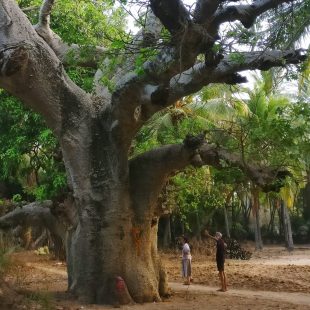
Some years after I returned from Kenya, we visited Diu, an island just off the coast of Gujarat. As we walked around, we were astonished to come across a Baobab tree! Solidly ensconced in majestic, solitary splendour among the Hoka palms and green fields, it brought back memories of our Safari days!  No one seemed to know when and how it came to be there. Thereafter, on our annual Diu trip with the children, we all eagerly looked forward to spending a morning exploring the Baobab. Over the years, as the children grew, it remained a reassuring and comforting presence. This year, the Baobab was introduced by my now-grown daughter to her husband, as an old friend!
IMG-20180519-WA0003.jpg

Happy World Environment Day!

–Mamata

Average is Normal

It is that time of the year again. It is the season of Superlatives. Exam results with Beyond Belief percentages, pictures of the Highest Scorers in the papers, magazines listing the Best Colleges, coaching classes advertising Record-breaking Achievers. So many wonder-kids? Are there no ‘average’ children anymore?

Even several years ago, I remember meeting my children’s classmates’ mothers when we were summoned to meet the teachers after the exam results were given. I heard exchanges about the achievements of the respective prodigy—prizes for painting, dancing, skating, swimming and more. Class toppers, school leaders all. I wondered, if every child is so brilliant, are there any simply ordinary children in the class?

I began to have doubts about my own parenting responsibilities and skills. Well, I did try to get the children to go for swimming coaching, largely because their cousins were going too (50% success—my daughter picked it up, and my son did not), dance lessons (my daughter did last a couple of years, but never made it till an arangetram!), and karate (my daughter made it till the first camp, my son till the white-one belt!).  Neither they, nor I, seemed to have the endurance run the gauntlet and emerge a Winner every time!

As parents who followed a relatively laissez-faire style of parenting, our considerations were mainly that the children were given the space to simply be, and blossom as they will. But as they grew, it became increasingly difficult to cope with the expectations of a competitive system. Still we thought that we were managing ok within the larger environment. We got a jolt one fine morning, when our son was denied readmission into Class 11 in the same school he had studied in for 10 years, because he missed the “cut off” by a couple of marks. Imagine the devastation for a fifteen year old. The experience that followed is a story in itself. One of the outcomes was that we decided that we did not wish our daughter (who was even less equipped to cope with a mindlessly competitive system) to go through this. Despite being told that “this is the system, your children and you will need to learn to swim with the tide, or sink”, we actively explored alternatives….and found them.

The children made it through! Today they are in the ‘system’ as it were, without being sucked into its vortex. They may not meet the generally accepted norms of Mainstream Success. (“Settled” so to speak, with six-figure earnings, car and apartment, designation, the skills to compete ruthlessly …and burn out at 35). They are following somewhat unconventional paths; they continue to explore, and discover new passions, new horizons, and new accomplishments. They are rich in experience, life skills, and relationships. They have the confidence to be themselves, and “not just another brick in the wall”.

Perhaps the greatest freedom we can offer our children is to allow them to think differently, and more importantly, to act differently.  Gunter Pauli

peanuts flaws

From Peanuts by Charles Schulz