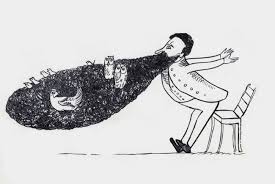
Browser
*a person who looks casually through publications or at goods for sale
*a software application used to locate, retrieve and display content on the World Wide Web, including web pages, images, video and other files
*an animal which feeds mainly on high-growing vegetation
I fall firmly in the first category. I am an old-fashioned browser of books. For me, the two pleasures greater than actually buying a book are the delicious anticipation of a visit to a bookstore or library, and the time spent there browsing the books on display before making a selection.
Fortunately, as I see it now, I grew up in a time when physical books, and places where books were kept were an integral part of life. Birthday and other presents for oneself and others were always books. Going to a bookstore was the most pleasurable pastime, initially accompanied by parents and later, with friends or by oneself. A library membership card was a precious possession. And having the time to spend just wandering around and looking through the books on the shelves was the ultimate indulgence.
This has remained true for me through all the phases of my life. The childhood summer vacation treat of visiting the small bookshop in our hometown to choose from the few English language books, or the hole-in-the-wall neighbourhood lending library which provided a selection of well-thumbed Mills and Boons. The membership of the Children’s Book Trust library with its colourful colours and cool interior where one discovered Shankar and Children’s World (that I later wrote for myself); and later that of the American Library where one was introduced to contemporary authors and literature. My years as a high school and college student in Delhi were highlighted by long stopovers at the legendary Galgotia and Sons in Connaught Place with its high ceilings, dusty tomes and old-fashioned shelves (replaced in the last decade by the brightly lit steel and glass façade of H&M). And later, by the just-must-go-to bookstores in Khan Market and South Extension which exuded a comforting familiarity even as stores on both sides became more and more glitzy.
One did not go walk in and out of these shops, or librar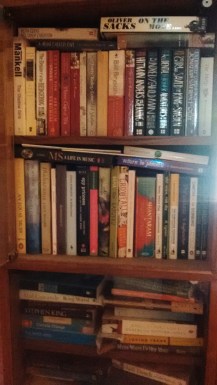 ies, just to pick up a book. One went to feast on the shelves lined with books, to run one’s eye across and up and down, pulling out a familiar name, or a new unfamiliar one; to peruse the blurbs on the cover to get a taste of what was within. One went in, sometimes with the certainty of coming out with a specific title, but equally the expectation of discovering new authors, or new works by familiar authors. It was the exploration that was the real fun, not so much the final selection.
And then, there were the book fairs and book sales. A veritable paradise for a bibliophile like me. The joys of wandering in Pragati Maidan in the mild winter sun, rubbing shoulders with hundreds of fellow book browsers created a sense of community like no other. Here the excitement of exploration and discovery was multiplied many times. Even today, in another time and place, I get the same frisson of excitement when I read of a bumper book sale. It is hard work, sorting through literally mounds of pre-owned books, sweating in the airless hall; but worth it all to stagger out with a sackful of bargain books. And the ultimate thrill of uncovering some classic authors and titles at a throwaway price. The right rewards of patient browsing.
Sadly over the last decade bookstores are closing everywhere. People now ‘browse’ the internet, and order books online. Why, they no longer need physical books as they can store a thousand on a slim Kindle. Now the last straw—social distancing. No crowds, no touch, no wander—no browse. Read what you get on your Smart phone. What a loss; what we are missing! What will a future without book browsing be like? What will it mean for humankind?
“And if anyone wants to try to enclose in a small space, in a single house or a single room, the history of the human spirit and to make it his own, he can only do this in the form of a collection of books.” Herman Hesse
–Mamata
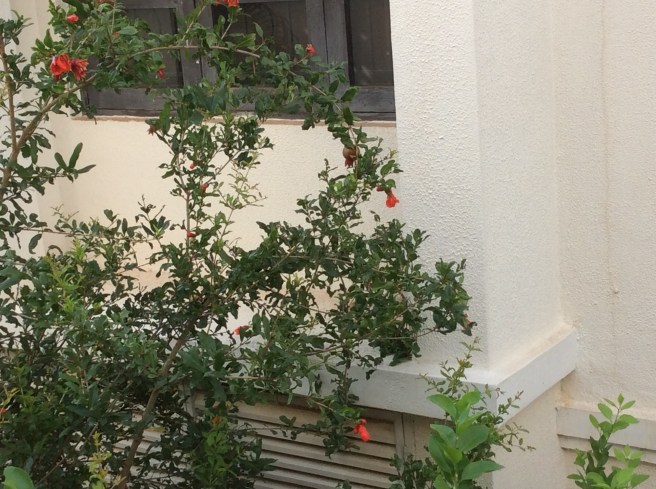 Lockdown has certainly make us more observant and has given us new ways of looking at things. There is a pomegranate tree whose top I can see from my window—and considering I spend eight or nine hours working in that room, it is very central to my vision! It is currently flowering, abuzz with bees, and fruits have started forming.
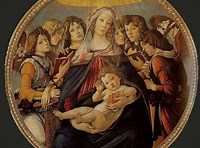 The pomegranate is a symbol of resurrection and life everlasting in Christian art, and the pomegranate is often found in devotional statues and paintings of the Virgin and Child, as in Bottecelli’s ‘Madonna of the Pomegranate’ shown here.
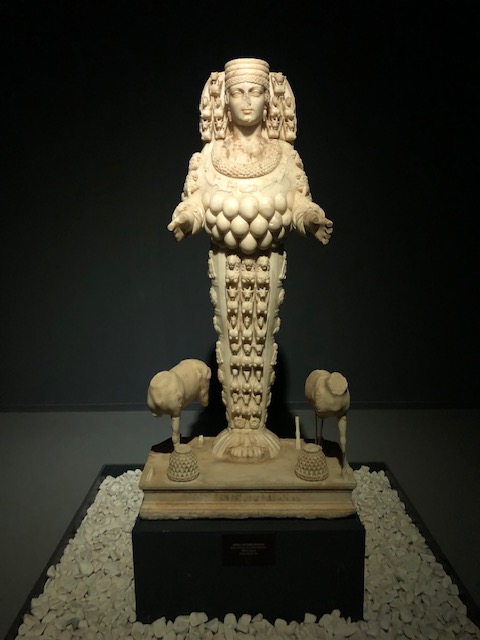 Why the sudden question? Well, because May 18th is International Museum Day—observed as such since since 1977. The idea is that on this day, museums engage with their stakeholders and highlight the importance of the role of museums as institutions and the role they play in society.
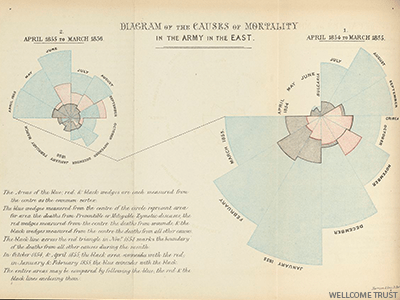 Florence was also one who shook up systems and brought in systemic changes. She battled with entrenched bureaucracies most of her working life, in order to bring about these changes. She was aware that it would be difficult to convince decision makers of the need for change, and maybe out of this requirement was born what is today counted as her major contribution to statistics—the first infographics ever made. The best-known of the infographics she invented are what are called the “coxcomb” diagrams, understandable by even the public. ‘The coxcomb is similar to a pie chart, but more intricate. In a pie chart the size of the ‘slices’ represent a proportion of data, while in a coxcomb the length which the slice extends radially from the center-point, represents the first layer of data. The specific organization of Nightingale’s chart allowed her to represent more complex information layered in a single space. In her coxcomb during the Crimean War, the chart was divided evenly into 12 slices representing months of the year, with the shaded area of each month’s slice proportional to the death rate that month. Her color-coding shading indicated the cause of death in each area of the diagram.’*