
 In the case of demarcation of COVID zones in India, Orange is the New Freedom! Lucky enough to fall into this zone, I can now do some things I could not last week. But since my neighbouring zone 5 kms away is Red, there is nothing very exciting I can do. But I suppose it is all in the mind.
But as promised, this blog is not going to be Corona-obsessed. So moving on, it is about traffic lights—where the COVID classification zones in India seem to have had their origin.
Traffic lights were actually invented much before automobiles., to control the movement of horse carriages. (Tongas, camel carts etc. in India sometimes follow traffic lights and sometimes do not. I have never quite figured out if the same rules and fines apply to them as to cars and scooters. But maybe not, for after all, such things come under the Motor Vehicles Act!)
On Dec 10, 1868, the first traffic lights were installed outside the Houses of Parliament in London—red for ‘Stop’, and green for ‘Go’. The idea itself was borrowed from the railways, which had been using lights for its traffic control for quite some time.
The very first traffic lights were gas-fuelled, and were manually controlled by a policeman. But being gas-fuelled, though they prevented road accidents, there were incidences when the traffic lights themselves exploding. It is not known if this led to fatalities, but considering that horse-traffic accidents themselves may not have led to too many fatalities, it may have been a close-run competition.
The early 1900s saw the invention of automobiles and a significant uptick in road traffic, and the need for better systems of traffic management was becoming clear. It was in 1912 that an American policeman Lester Wire, came up with the idea of electric traffic lights, and the first one, based on his design, was installed in Cleveland, Ohio in 1914.
The very first electric traffic lights, like their gas-fuelled predecessors, had only the red and green. Some of them had a buzzer sound in place of the amber light to indicate that the signal was going to change soon.
It was in 1920 that another American policeman William Potts invented the first three-coloured traffic lights and Detroit became the first city to implement them.
But why Red, Green and Orange (or Amber)?
RED: This colour is probably used to symbolize STOP because in many cultures, red symbolizes danger. It makes a lot of sense scientifically also, because Red has the longest wavelength of any colour in the visible spectrum and hence can be seen from a greater distance than any other colour.
GREEN: Originally, in the railways, White was used for the all-clear signal, but train mistook the light of the moon or stars for the “all clear”. This led to derailments and train collisions. And hence, a change was required from White. It seems that it was decided that now Green (which till then used for ‘Caution’) would be used for GO. Also, the green wavelength is next to yellow on the visible spectrum, meaning it’s still easier to see than any colour other than red and yellow.
YELLOW/AMBER/ORANGE: When the Green switched over to mean GO, then it was decided that yellow would be used for caution. Also, yellow is very distinct from the other two colours and hence suitable.
Here is wishing all a rapid move to GREEN and SAFETY!
–Meena

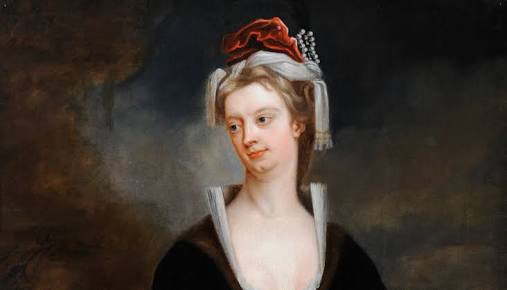
 Polio was a dreaded disease in the early 20th century. It left death in its wake, but even more, it paralysed. Till date, there is no cure for polio, and the only defence is vaccination. Jonas Salk rightly deserves the credit for the polio vaccine, but there were two women, without whose work things would not have happened as they happened, when they happened. One was Dr. Isabel Morgan of Johns Hopkins University, whose work was a turning point in understanding host immunity to polio and on use of killed-virus (vs. live-virus) as the basis of vaccines for this disease. The other was Dr. Dorothy Horstmann of Yale and her team, whose work is said to have paved the way for oral polio vaccines.
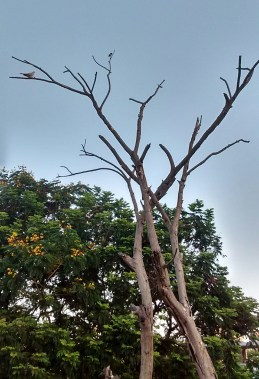
 hile these are great to reach out to other humans, they are also a wonderful opportunity to be inside looking out, at nature. One does not have to be in the countryside to see Nature. Even in the midst of the urban jungle, look from the same balcony or window, and you will discover—a bird, a butterfly a bumblebee, a spider. A patch of sky and a puff of cloud. The branches of a tree with fresh green leaves, a bird call, a shaft of sunlight on a wall, or the stars on a clear night.
 But that is not the subject of the blog today. April 25th is marked as World Penguin Day, and that is the occasion of the blog. This day coincides with the annual northern migration of Adelie penguins.
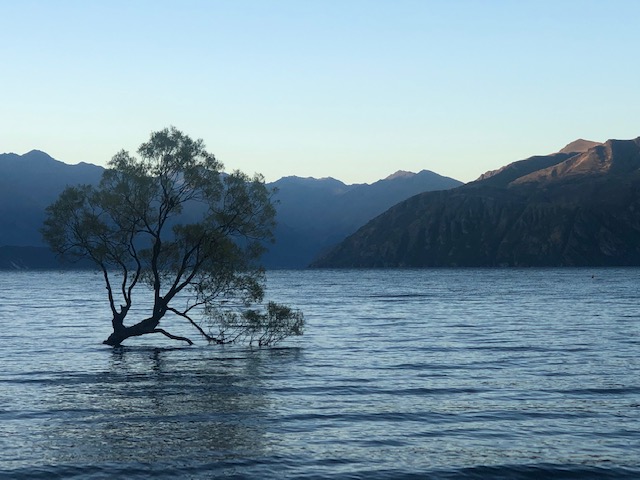 The connection is a tree that is reputed to be the most instagrammed tree in New Zealand, almost a symbol of NZ tourism. On a recent trip there, we were urged to set aside time to see the tree, specifically around sunset. So we worked around our program to ensure we got to the spot—a stretch of a beach—well ahead. We drove past a few times, keenly looking at the beach. We could see some people, but nothing special in the way of trees. We asked natives and tourists alike, and they all pointed us to the same area which our GPS had shown us, and which we had passed, looking in vain for a landmark. We decided to make our way down to the beach anyway. Lo and behold, there were many, many people there, jostling for some spot (we could not figure out what the spot was for), all setting up professional looking camera equipment. It came to a pass when we had to ask a friendly-looking lady what everyone was waiting to photograph, where the famous tree was, and what it was about. She kindly pointed to this spindly willow tree, standing a few feet into the waters of the beautiful Wanaka Lake, against a beautiful background of majestic mountains. But the tree itself? In my mind, this will forever define and exemplify ‘under-whelming’. ‘Why is the tree famous’, we asked many around us in bewilderment. While there was some story of how it was part of a fence and had survived in the water for several years, the general consensus was that it was famous because it was famous! So famous , it even has its own insta handle #ThatWanakaTree.
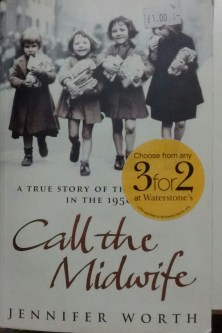 d midwife spent in the poor slums of the East End of London. 23 years old and newly qualified she lived and trained as a midwife with a dedicated group of nuns St Raymond Nonnatus.
 ay of Hans Christian Anderson one of the best known children’s writer who was born on 2 April 1805 in Denmark.
