“Early childhood care and education (ECCE) is more than preparation for primary school. It aims at the holistic development of a child’s social, emotional, cognitive and physical needs in order to build a solid and broad foundation for lifelong learning and wellbeing. ECCE has the possibility to nurture caring, capable and responsible future citizens.” UNESCO
ECCE—particularly among disadvantaged children—improves not only cognitive abilities, but also critical behavioral traits like sociability, motivation and self-esteem.
The National Education Policy 2020 that India has just approved is, like all other policies, very broad, very noble. And also of course, parts of it are controversial. But however comprehensive and noble, obviously, a policy is only as good as its implementation, and how exactly this is going to happen, including the structural reforms needed, will be seen in the coming years.
Leaving aside the debates, the most significant thrust that could make a fundamental difference to our children, is the recognition of the importance of Early Childhood Education and the statement that ‘the responsibility for ECCE curriculum and pedagogy will lie with MHRD’. Hitherto, the Anganwadi system, under the Ministry of Women and Child Development, catered to children of this age, and there was no systemic coordination with the Ministry of Human Resource Development, and while education was on the charter, it was just one of the many responsibilities of the Anganwadies. There was no specific focus education, pedagogies or the continuity from Anganwadis to schools. The NEP takes children from age 3 upwards into the fold of education, and advocates coordination among various Ministries towards this.
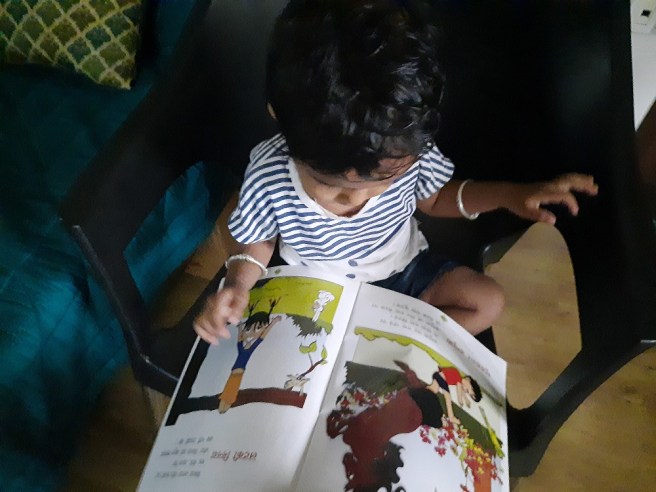 But I think this puts a greater and different responsibility on the Ministry of Women and Child Development—viz, the responsibility of educational inputs in the home environment for children below the age of 3. Ages 0-3 is when a baby’s brain grows to 80% of its adult size and is twice as active as adults. Research in developed countries has shown that at age 2, toddlers from low-income families are already 6 months behind in their language processing skills. Without greater investment in the first 3 years, many children will miss the opportunity to reach their full potential. And inputs and influences at this age come mainly from the home environment.
The Ministry of Women and Child Development would do well to educate young parents on how to create a stimulating, nurturing and learning home environment for their infants and toddlers. Intensive training and sensitization of parents-to-be and parents of these children, along with ongoing hand-holding and support would probably be the way. This would pave the way for the entry of the children into the educational phase at age 3. An imaginative system involving NGOs, educationists and community-based organizations needs to be created.
So NEP, thank you for taking the responsibility for the education of for 3+ers. Now powers-that-be, please do something about ages 0-3!
–Meena


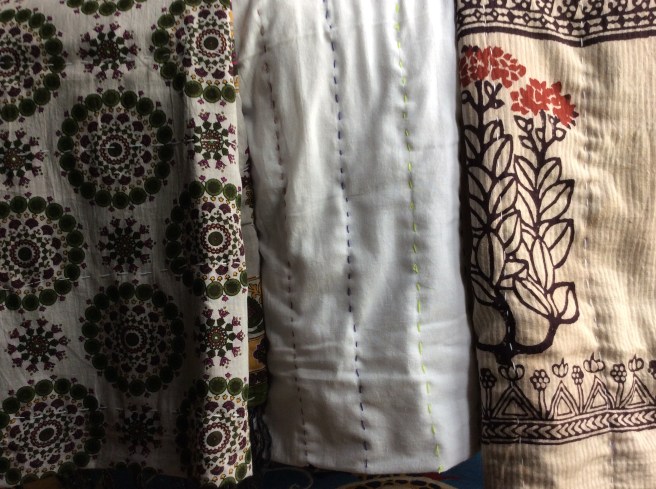 So I thought I would turn these into baby quilts. My interpretation of
 next few days the hype will build up. There will be a marketing blitz reminding us that Friendship Day nears, and that the best way to be friends is by buying and gifting for each other, and that the proof of friendship is the number of cards and presents that one gets.
 Today, All India Radio is the largest radio network in the world, and one of the largest broadcasters i in terms of the number of languages broadcast (23 languages and 179 dialects!), and the range of audiences it serves. This is done through 420 stations located across the country, reaching nearly 92% of the country’s area and 99.19% of the population. AIR also operates close to 25 FM stations.
 The programs were broadcast for a few hours a day, and hundreds of