Six years ago, what now seems to be another time and another place, I transitioned from full-time paid employment to ‘independent freelance worker from home’. Today WFH is the new buzzword! For someone who had gotten up and out to go to work for over three decades this was a big change. The most obvious was the change in the mental and physical routine. Rushing back and forth between work and home, often hugely stressful, one developed the skills of keeping the domestic and professional arenas distinct, while still maintaining a suitable balance between the two. My new phase of WFH demanded equal skills to keep the two domains separate within the same physical setting. Over time, with some practical planning, some experimentation, some creativity, and a sense of mission I got myself into a suitable groove. Today when I see a barrage of ‘tips and hacks’ on WFH, I cannot help but be amused, with a sense of ‘been there, done that.’
What is new for me however, is the technological take-over. And here I feel “Haven’t been there, don’t want to do that.” Neither my long professional Work From Office life nor my WFH years have been entirely ‘remote working’ experiences in any way. They were not marked by day after day of zoom rooms and virtual meetings. My teaching-learning experiences have not been ‘online’ through artificial screens. My conferences have not been video-linked. My DIY instructions have not been over YouTube. My news has not come from the mobile phone, and my entertainment has not been watching plays, films and concerts on my laptop. I have (barring the last two months) regularly browsed for books in a physical library or bookstore.
For this I am so very grateful; and about this I am now greatly concerned. What is life going to be like in the days to come?
How much will be lost in terms of simple human contact? When I see members of zoom rooms, each with their own coffee mugs in their own physical rooms; when I see news anchors casually sipping from teacups as they analyse another day of gloom and doom, I can almost taste the consistently undrinkable tea that I sipped with my colleagues, rubbing shoulders across a small office table. This is what I most acutely missed, and continue to do, in my WFH life.
Two years ago in this space, I described this simple but invaluable ritual thus:
‘Twice a day, as the footsteps heralded the bearer of the teas, it was literally and (later) figuratively ‘pens down’. Time to cluster around, a time for sharing—news and views, happenings and unhappenings (propah English not mandatory, and language khichdi quite delicious!), cribbings and crabbings–and above all, energising. There were snacks too—“hey taste what I baked yesterday,” “oh great, banana chips all the way from home state”, “guess what, I discovered this new naasta shop with 50 flavours of khakhra….”
Tea table became the venue for easing in the newcomers; teasing and ribbing the old-timers; there were no hierarchies and no bosses. The agenda was whatever the mood of the table—sharing, admonishing, admiring, agonising and venting, and yes, laughing a lot.
It was an important support system in so many ways. After just 15 minutes, one returned to one’s desk feeling much better. You weren’t the only one who struggled to keep going as you juggled work and home; your child’s behaviour was not as worrisome as you imagined it was; and yes, in-laws happened to the best of us!’
The world going the way it is, such memories will remain just that—ancient history of another era. This is only one of the many simple joys of physical interaction with fellow humans that we took for granted. Others included the delicious anticipation of meeting friends for coffee; choosing the restaurant for the next birthday lunch; dressing up for an evening of theatre or music; wandering and jostling in a crowded market, and walking amidst fellow human beings on a busy street.
For many like me, the new normal is sadly so abnormal. To live in a virtual world is bereft of meaning, of everything that makes us what we are and what keeps us going. They say that people will get used to this. They say that we must adapt or perish. I am not sure how much I can adapt, so perish I must!
–Mamata

Why the sudden question? Well, because May 18th is International Museum Day—observed as such since since 1977. The idea is that on this day, museums engage with their stakeholders and highlight the importance of the role of museums as institutions and the role they play in society.
Florence was also one who shook up systems and brought in systemic changes. She battled with entrenched bureaucracies most of her working life, in order to bring about these changes. She was aware that it would be difficult to convince decision makers of the need for change, and maybe out of this requirement was born what is today counted as her major contribution to statistics—the first infographics ever made. The best-known of the infographics she invented are what are called the “coxcomb” diagrams, understandable by even the public. ‘The coxcomb is similar to a pie chart, but more intricate. In a pie chart the size of the ‘slices’ represent a proportion of data, while in a coxcomb the length which the slice extends radially from the center-point, represents the first layer of data. The specific organization of Nightingale’s chart allowed her to represent more complex information layered in a single space. In her coxcomb during the Crimean War, the chart was divided evenly into 12 slices representing months of the year, with the shaded area of each month’s slice proportional to the death rate that month. Her color-coding shading indicated the cause of death in each area of the diagram.’*

In the case of demarcation of COVID zones in India, Orange is the New Freedom! Lucky enough to fall into this zone, I can now do some things I could not last week. But since my neighbouring zone 5 kms away is Red, there is nothing very exciting I can do. But I suppose it is all in the mind.


Polio was a dreaded disease in the early 20th century. It left death in its wake, but even more, it paralysed. Till date, there is no cure for polio, and the only defence is vaccination. Jonas Salk rightly deserves the credit for the polio vaccine, but there were two women, without whose work things would not have happened as they happened, when they happened. One was Dr. Isabel Morgan of Johns Hopkins University, whose work was a turning point in understanding host immunity to polio and on use of killed-virus (vs. live-virus) as the basis of vaccines for this disease. The other was Dr. Dorothy Horstmann of Yale and her team, whose work is said to have paved the way for oral polio vaccines.
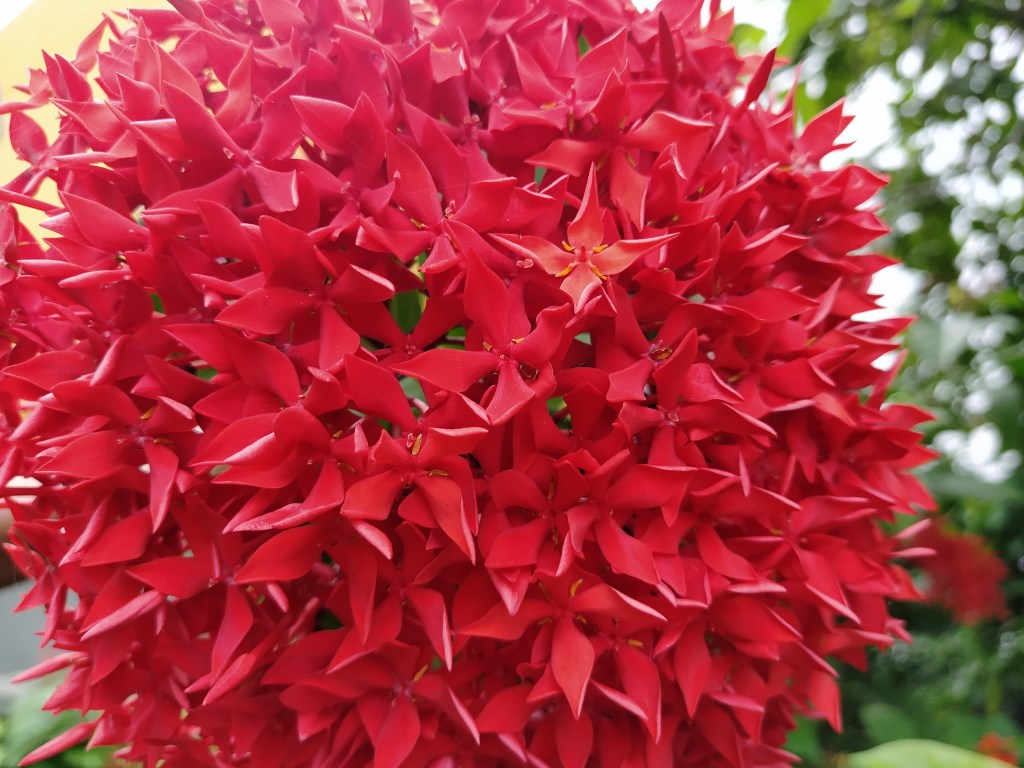
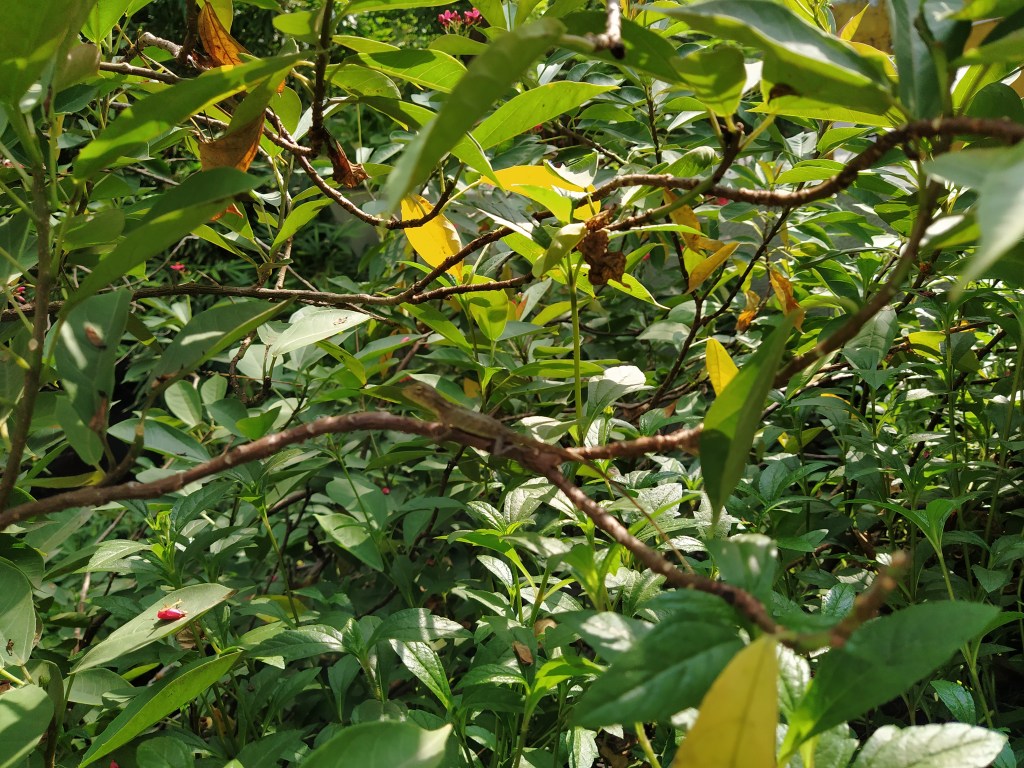
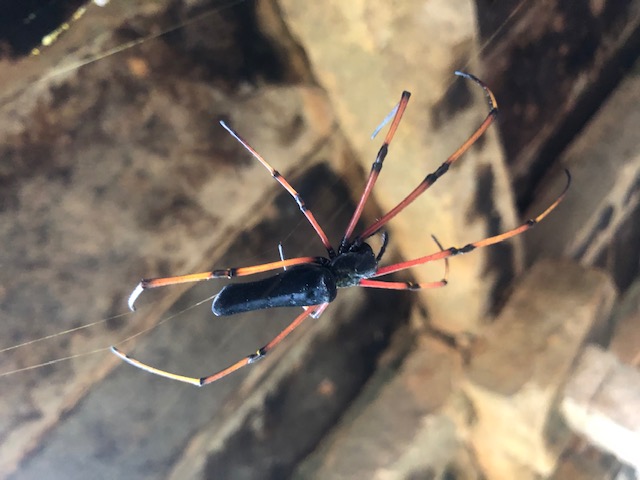
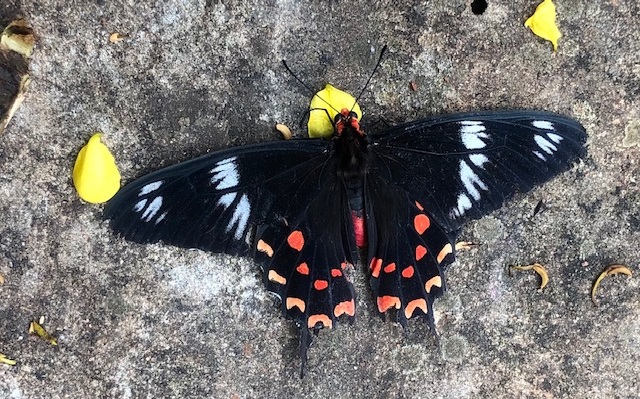
hile these are great to reach out to other humans, they are also a wonderful opportunity to be inside looking out, at nature. One does not have to be in the countryside to see Nature. Even in the midst of the urban jungle, look from the same balcony or window, and you will discover—a bird, a butterfly a bumblebee, a spider. A patch of sky and a puff of cloud. The branches of a tree with fresh green leaves, a bird call, a shaft of sunlight on a wall, or the stars on a clear night.