Of Fireflies and Glowworms

When we were young, we used to see fireflies in the garden a few weeks in a year. What a magical experience it was! Like the stars had come down to visit us.

After that, I did not see them for many decades. Either I did not live in the right place, or I was not lucky enough to spot them in the short window that they glowed. But in the last few years, since we moved to Bangalore, I have been sighting a few. Year after year, the same two spots in our community hosted them—shrubby areas on the periphery. This year, for some reason, I am seeing many more . Each spot has only a couple, but from two, the number of spots has risen to six or so. That definitely sounds like good news!

But what are fireflies? Sorry if this takes the magic and romance away, but they are a type of beetle!  There are over 2,000 species of firefly spread across the world on every continent except Antarctica. However, in India, we have only eight. They are generally seen in the pre-monsoon season.

Why do fireflies twinkle? As is usually the reason for most beauty in the natural world, it is to attract a mate and reproduce! Fireflies use flashes as mating signals and the flashes we see are generally from males looking for females. They flash a specific pattern while they fly. If a female waiting in the greenery nearby is in the mood, she responds back with a flash. They will continue this flashy exchange till the male locates the female and they mate. Each species has its own pattern so that males and females of the same species can identify each other.

And how do they twinkle? Through a phenomenon called bioluminescence. At the risk of taking away even more romance, it is when two chemicals found in their bodies, luciferin and luciferase, lead to a reaction in the presence of oxygen, adenosine triphosphate  and other compounds, that they twinkle. The light they produce is called ‘cold light’– that is no heat is produced during the reaction. Which is a good thing, as otherwise not only would it waste energy, but also burn the poor creature.

This year was a lucky year, as I am seeing so many fireflies. Firefly populations are rapidly decreasing because of habitat degradation, light pollution, pesticide use, poor water quality, climate change, invasive species, and over-collection. In India, pesticide use may be the most significant cause of the falling numbers.

I was lucky enough to see another ‘glowing phenomenon’ — the glow worms of New Zealand. Of all my nature-travel experiences, I would count this as THE top! In an experience like no other, boats take groups of tourists through a waterway in an intricate web of caves. It gets darker and darker, till you are in the darkest-dark you will ever experience. The boat-captain guides the boat by pulling along ropes tied on the sides of the cave. Just as you start to wonder whether the sight you will see is worth the risk of being toppled into a water course of unknown depth in pitch dark which will make rescue impossible, you are rewarded with flashes of light which grow in intensity as you proceed. And then you know it is worth it as you see constellations of twinkling glow worms on the roof and sides of the cave!

These are glow worms—again, not actually worms, but in the case of those found in Australia and New Zealand, the larvae of fungus gnats, an insect that looks like a mosquito. Their bioluminescence works much the same way as that of fireflies, and they emit light from an organ near their tails that is similar to a human kidney. However, in their case, the glow is mainly used to attract prey. Smaller insects and flies are drawn to the light and fly towards it.

These special sparklers and their habitats are fragile. We don’t know what human actions can push them over the brink. We need to take care that our carelessness does not take the glow from our lives.

-Meena

Elizabeth Garrett Anderson: Path-breaking Victorian

This past week I was reading about the grand Platinum Jubilee celebrations to mark 70 years on the throne of Queen Elizabeth II of the United Kingdom. This is the longest reign of a monarch of Great Britain; the closest being the rule of Queen Victoria who reigned for 64 years—a period called the Victorian Era.

Coincidentally the same week I read two accounts about women in the Victorian Era, and could not help but wonder how much things have changed. The first was fiction–a ‘murder mystery’ which featured some women who attempted to defy the existing norms,  and the other was the true story of a woman who was a pathbreaker in changing how the role and status of women was perceived in that era. 

The reign of Queen Victoria was an extended period of peace, prosperity, progress, and essential social reforms for Britain; however, it was also characterized by widespread poverty, injustice, and social discrimination. There was a very strictly defined ‘class system’ that determined every aspect of social life.

There was also a very strong perception (and application) of gender roles. A woman’s place was clearly considered to be in the home, and domesticity and motherhood were considered by society at large to be a sufficient emotional fulfilment for females. Even the upper class women who were educated to some degree by private tutors were not encouraged to use their minds in any way that would distract them from their assigned roles. A telling paragraph in the novel: “Did you read it in a newspaper?” “Oh no” she lied immediately. She had not yet forgotten that ladies of good society would not do such a thing. Reading the newspaper overheated the blood; it as considered bad for health to excite the mind so much, not to mention, bad for the morals.

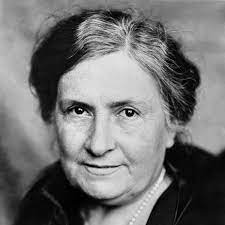
The rights which the women enjoyed were similar to those which were enjoyed by young children whereby they were not allowed to vote, sue or even own property. But these rights were to be questioned, and changes demanded by a group of women who pioneered the suffrage movement. Among these was Elizabeth Garrett Anderson, who broke many glass ceilings in her day.

Elizabeth Garrett was born on 9 June 1836 in Whitechapel, London, to Newson Garrett and his wife Louisa; the second of twelve children. Her father was originally a pawn broker who went on to become a successful businessman. The family moved to Aldeburgh in Suffolk when Elizabeth was very young. As a child, Elizabeth got her basic education from her mother and a governess. When she was 13 she was sent to a private boarding school near London where she was taught languages and literature, but not sciences and math. Unusual for the time, her parents encouraged their daughters to travel and pursue their ambitions. After completing school Elizabeth, although engaged in domestic duties, continued to study Latin and arithmetic, and read widely. It was accepted that she would marry and live the life of a lady.

When she was 22, a group of women started a magazine for women, English Woman’s Journal. Among these women was one Emily Davies, who became a dear friend. She invited Elizabeth to hear a lecture given by Elizabeth Blackwell, the first American woman physician. Elizabeth was so inspired by her namesake and her lecture that she decided that she wanted to become a doctor. A female studying medicine was unheard of at that time. But her father was supportive. She was denied admission in any medical school, so she enrolled as a nursing student at Middlesex Hospital and attended classes intended for male doctors. She also employed a tutor to study anatomy and physiology. But after complaints from the other students she was barred from the hospital; however Elizabeth continued to study on her own. She was determined to secure a qualifying diploma that could entitle her to put her name on the Medical Register. Unless a person’s name was listed on the Medical Register, that person could not legally practice medicine in England.

Elizabeth found a loophole: she registered to pursue a degree of Licentiate of the Society of Apothecaries which did not specifically forbid women from taking their examinations. In 1865 she passed their exams and gained a certificate which enabled her to practise as a doctor. This was a shocking step; the Society subsequently changed its rules to prevent other women entering the profession this way. However Elizabeth obtained her licence to practise medicine in 1869; the first woman in Britain qualified to do so.

Even though she now had a licence, Elizabeth still could not get a medical post in any hospital. With her father’s financial backing, in 1866 she opened her own practice in London. A little later, towards her goal to establish a hospital for women staffed by women, Elizabeth set up St. Mary’s Dispensary for Women and Children. Initially people were reluctant to consult a female physician, but an outbreak of cholera saw patients teeming to her clinic.

It was during this period that Elizabeth was also getting engaged with the issue of women’s rights. Her younger sister Millicent Fawcett was active in this growing movement; the two sisters with a group of like-minded women set up a discussion group that strongly influenced the battle for women’s education and empowerment.

Although Elizabeth had already obtained many ‘firsts’ she was still determined to achieve her original dream of a formal degree in medicine. So she taught herself French and successfully earned her MD degree from the University of Paris in 1870. The British Medical Register refused to recognize her qualification.

In 1870 Elizabeth became Visiting Medical Officer for the East London Hospital for Children. In 1872 Elizabeth transformed the St Mary’s Dispensary for Women and Children into the New Hospital for Women in London. The hospital specialised in women’s health and all of the staff were women. It was renamed the Elizabeth Garrett Anderson Hospital in 1918 and continued to appoint only female staff until the 1980s. Elizabeth also co-founded the London School of Medicine for Women, the first place in Britain specifically intended to train women as doctors.

In 1871 Elizabeth married a businessman James Anderson, in a  wedding ceremony in which she did not take a ‘vow of obedience’;  she continued with her pioneering work even as she ran her own household and brought up her three children. 

Elizabeth’s determination paved the way for other women.  In 1876 an act was passed permitting women to enter the medical professions and the Medical Register. Today over 48 per cent of licenced doctors in UK are women.

Elizabeth continued to lecture at the London School of Medicine for Women for 23 years, and from 1883 she was also the School’s Dean. She was Senior Physician of the New Hospital of Women for 24 years and in 1896–97 she was President of the East Anglian branch of the British Medical Association. She also found time to write on medical topics, including a textbook for students.

In 1902, Elizabeth retired from her medical career and moved to the town of Aldeburgh in Suffolk. In 1908, at the age of 72, she became the Mayor of Aldeburgh; she was the first female mayor in England. In her final years, Elizabeth was a prominent member of the women’s movement and campaigned for equal rights for women. Elizabeth Garrett Anderson died in Aldeburgh on 17 December 1917 at the age of 81, just two months before the Representation of People Act extended the right to vote to women over 30.

Elizabeth Garrett Anderson, with quiet determination and persistence, opened many doors, and paved the path that women take for granted today. 

–Mamata

Gandhi and the Environment: A Tribute for World Environment Day

Mrs. Indira Gandhi was the only Head of State at the United Nations Conference on the Human Environment held at Stockholm in 1972, apart from the host Prime Minister Olaf Palme, who was the host. The speech she gave at the Conference, linking human development, poverty and peace to environmental conservation is definitely one of the first steps towards the articulation of sustainable development. i.e., ‘meeting the needs of present generations without compromising the ability of future generations to meet their own needs’.

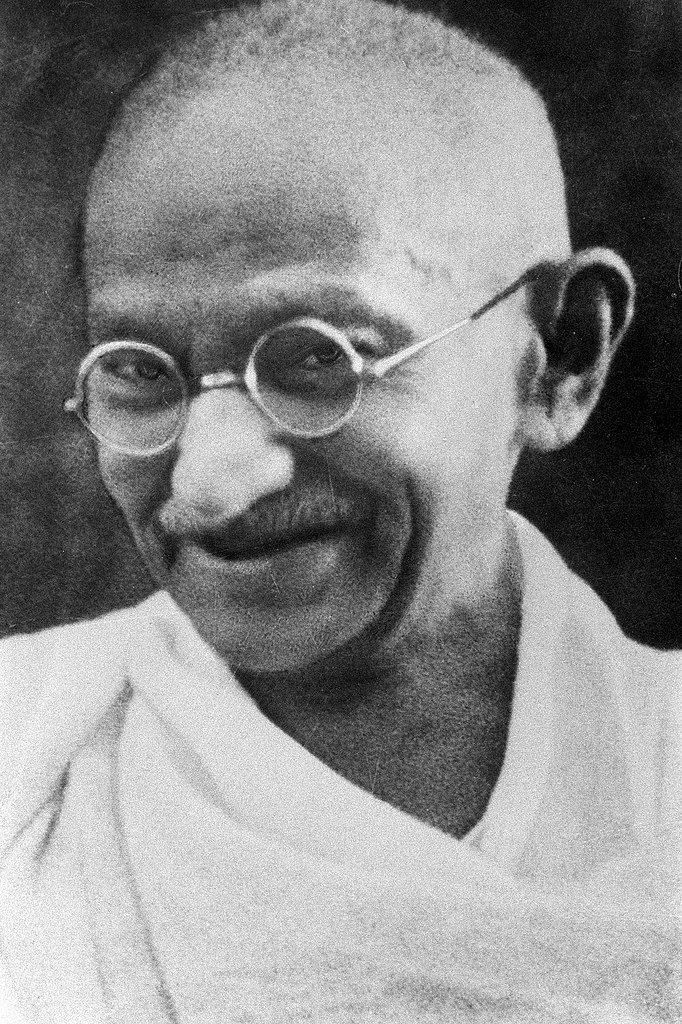
But long before this Gandhi, there was another Gandhi who was calling the world’s attention to these issues. Who else but Mahatma Gandhi!

chipko
Hug the Trees!

Gandhiji may not have articulated his thoughts on the environment in terms that we use today. But his whole philosophy was deeply rooted in concepts of what we now call sustainability: taking only what one needs from the environment, simplifying wants, equity, non-violence towards all life forms, and a caution against mindless pursuit of ‘development’. Many environmental movements like Chipko or Narmada Bachao Andolan are in fact inspired by Gandhiji.

On the occasion of Stockholm+50 and WED, here are some quotations from the Mahatma, which mark him as a very early spokesperson for environment and sustainable development.

‘I suggest that we are thieves in a way. If I take anything that I do not need for my immediate use, and keep it, I thieve it from someone else. I venture to suggest that it is the fundamental law of Nature, without exception, that Nature produces enough for our wants from day-to-day, and if only everybody took enough for himself and nothing more, there would be no pauperism in the world, there would be no man dying of starvation in the world.’

Speech on ‘Ashram Vows’ at YMCA, Madras. 16 Feb, 1916. CWMG Vol 13, 230-231.

‘Earth provides enough to satisfy every man’s need, but not every man’s greed.’

Quotation popularized by Gandhi.

‘We cannot have ecological movement unless the principle of non-violence becomes central to the ethics of human nature.’

Mohan-mala. A Gandhian Rosary. Ahmedabad. Navajivan Publishing House. 1997. 93-94.

‘God forbid that India should ever take to industrialization after the manner of the West. The economic imperialism of a single island kingdom (England) is today keeping the world in chains. If an entire nation of 300 million took to similar economic exploitation, it would strip the world bare like locusts.’

Young India. 12 Dec 1928. CWMG Vol. 38. 243.

If it is man’s privilege to be independent, it is equally his duty to be inter-dependent.

http://www.selfimprovementpath.com.mahatmagandhi.

‘In the modern rush, the chief use we have for our rivers is to empty our gutters in them and navigate our cargo vessels, and in the process make them dirtier still.’

Young India, 23 December, 1926.

‘Civilization, in the real sense of the term, consists not in the multiplication, but in the deliberate and voluntary reduction of wants.’

Yeravada Mandir. Navjivan Publishing House, Ahmedabad.  

‘We cannot have ecological movement unless the principle of non-violences becomes central to the ethics of human nature.’

Mohan-mala. A Gandhian Rosary. Navjivan Publishing House.

–Meena

Credit: Centre for Environment Education put together a collection of Gandhiji’s thoughts to mark the 10th anniversary of the Earth Charter, in a publication called ‘Earth Charter & Gandhi: Towards a Sustainable World.’ Compiled by Karikeya Sarabhai, Meena Raghunathan, Amishal Modi. These quotations are taken from there.

Taking Stock in Stockholm

When I started my journey as an environmental educator in the mid-1980s, my orientation began with an introduction to the key milestones in the global environmental movement. The first milestone was the Stockholm Declaration which put forward a vision, as well as a set of principles on the way forward in the shared management of the global environment. The Declaration was promulgated at the conclusion of the United Nations Conference on the Human Environment held at Stockholm in June 1972, which became popularly known as the Stockholm Conference. 

Why was this conference such an important milestone? Among many other firsts this was the first-ever UN conference with the word “environment” in the title. The Stockholm Declaration provided the first agreed global set of principles for future work in the field of the human environment.

What was the road that led to this? The world had seen unprecedented scientific and technological progress since the end of World War II. But a fallout of the resulting development was the deterioration of the environment. In the 1960s, several scientists and thinkers began to express concern about the negative environmental and societal effects of the rapid industrialization. The shortcomings of the UN system to deal with the new developments were also becoming evident, but at the time environment was not high on the agenda of national and international politics. What was the way forward in a world polarised by the Cold War, and also the increasing gap between the ‘developed’ and the ‘developing’ countries?

It was a small Scandinavian country, Sweden who took the initiative. It urged that the time was ripe for a collective, substantive discussion at the global level about environmental problems. In 1967 it proposed to convene a UN conference on the human environment to increase awareness, and to identify environmental problems that needed international cooperation.

The response was unexpected. Despite Cold War politics, the Soviet Union and other members of the Eastern bloc joined the United States and most Western European countries in supporting the Swedish initiative. However many developing countries were uneasy that Northern interests would dominate the proposed conference and that “green issues” would be an excuse to restrict their national development. But by and large Sweden’s proposal was positively received.

In May 1968 Sweden sent an official request to the Secretary General of the UN making their case.  ‘Environmental issues … have not yet been given the prominence in the deliberations of the competent organs of the United Nations… Furthermore, as the problems of human environment grow more serious every day… there is, therefore, an indisputable need to create a basis for comprehensive consideration within the United Nations of the problems of human environment.’

In 1968 the United Nations General Assembly adopted a resolution which called for a conference on the relationships between environmental, social, and economic issues to be convened in 1972. The conditions were that the conference would not take decisions. Any recommendations arising from it would have to be formally adopted by the General Assembly. Maurice Strong, a businessman and, at the time, the head of the Canadian International Development Agency (CIDA), was appointed to be Secretary General of the Conference.

In May 1969, the United Nations accepted Sweden’s offer to host the conference in Stockholm. So it came about that in 1972, “For the first time nations came to consider the state of the planet Earth, habitually taken for granted, treated as an unchanging backdrop to human drama. For the first time we were integrating the scenery into the action of the play.” (Shridath Ramphal Commonwealth Secretary General)

The Stockholm Conference was held in the first week of June 1972. It saw the participation of the representatives of 114 of the UN’s 132 member states. The Soviet Bloc did not participate in the main event but took active part in the preparatory process. This was the first major international event in which the People’s Republic of China participated as a new member of the United Nations. In addition to government representation, 250 non-governmental organizations came to the conference—an unprecedented achievement at the time.

Only two heads of State attended–Mr Olaf Palme the Prime Minister of Sweden, and Mrs Indira Gandhi the then Prime Minister of India. Indira Gandhi emerged as a figurehead to represent developing countries’ fears and priorities, stressing the issues of war, poverty, and development. She made an impassioned plea “We do not wish to impoverish the environment any further and yet we cannot for a moment forget the grim poverty of large numbers of people. Are not poverty and need the greatest polluters?”  This has been a key point in international deliberations in the five decades since Stockholm.

The Stockholm Conference produced three major sets of decisions: The Stockholm Declaration which provided the first agreed global set of principles for future work in the field of the human environment. The second was the Stockholm Action Plan comprising 109 recommendations for governments and international organizations on international measures against environmental degradation. The third was a group of five resolutions. The resolutions called for: a ban on nuclear weapon tests that may lead to radioactive fallout; an international databank on environmental data; the need to address actions linked to development and environment; international organizational changes; and the creation of an environmental fund.

The Conference had several outcomes that we today take for granted. Environment ministries and agencies were established in more than 100 countries to implement the recommendations of the Conference. It also led to a great increase in non-governmental and intergovernmental organizations dedicated to environmental preservation.

The Conference was used as a model for a series of similar UN events to try and come to grips with interlinked cross-sectoral issues from gender to human rights.

The United Nations Environmental Programme (UNEP) was set up as mark of the UN’s commitment to carry forward the Action Plan of the Conference. It was headquartered at Nairobi in Kenya, the first UN body to be located outside of the industrialized world. 5 June was designated as World Environment Day.

The Stockholm Conference was indeed a milestone in many ways. It stressed that environmental issues are inherently political—not just scientific and technical, as many policymakers previously thought, and therefore need political negotiations and decision-making. The Stockholm Conference demonstrated how global cooperation could take place. It identified a theme that has been at the centre of international environmental discourse: Sustainable Development.

This week it is exactly fifty years since this vision for a sustainable future for mankind was discussed and deliberated in a spirit of international cooperation. In the half century since, our planet has seen changes—for good and the bad. We are far from achieving the vision. Rather our planet faces a looming triple threat from climate change, pollution and waste, and loss of nature and biodiversity. The alarm bells are growing louder and closer. 

Once again, this week, Stockholm will host concerned world leaders, and a wide range of stakeholders in the Stockholm+50 event—a high-level gathering convened by the United Nations, and hosted by Sweden with support from the government of Kenya. They will meet in an effort to take stock of the achievements and failures of the past five decades, as well as with the hope to accelerate a transformation that leads to sustainable and green economies, more jobs, and a healthy planet for all, where no one is left behind.

As citizens of Planet Earth this is a good time for each of us to take stock of our own lifestyle, and remind ourselves that a healthy planet for the prosperity of all is our collective responsibility, and our collective opportunity.

The fate of Planet Earth lies largely in our own hands and in the knowledge and intelligence we bring to bear in the decision making process. In the final analysis, however, man is unlikely to succeed in managing his relationship with nature unless in the course of it he learns to manage better the relations between man and man.

Opening statement by Maurice Strong, Secretary-General of the Stockholm Conference June 1972.

–Mamata

Pithy Craft

A ‘pithy comment’ is one which is terse and full of substance and meaning. The origin of the word pithy is from the Old English piþa “central cylinder of the stems of plants,” and therefore signifying “essential part, quintessence, condensed substance.”

Here is a tale of a pithy craft (not an official term!). This is the pith-work done using the innards of Aeschynomene Indica or Aeschynomene Aspera , a herbaceous plant of the bean family which grows in marshy waterlogged areas which is the basis of a craft both in South and East India. Shola pith as it is called, is the inside of the plant, and ranges from soft, smooth, white (good quality) to hard, brittle, reddish (poor quality).

In South India, this craft-form is traditionally practiced in the Tanjore area. The most popular products are replicas of the Brihadeshvara Temple, Tanjore, the Meenakshi Temple of Madurai, the Malai Kovil of Trichy, etc. Taj Mahals and churches are popular too. While the proportions of the temple pieces would vary with the architecture of the original, typically, a pith-piece may be about 6”x10” wide and about 6-8” in height. They used to be a fairly common decorative item in Tamil homes a generation ago.

The pieces are made by first removing the outer brown skin of the plant by cutting it off with a sharp knife. The inner soft white portion of the stem is used to make the art pieces. The pith, known in Tamil as Netti, is cut into fine pieces of different designs and shapes as per the design, using a long knife for basic carving, and a tiny carving knife for detailing.  The carved pieces of pith are stuck together with adhesive to create the products, based on blue prints of the design or photos.  The completed piece is stuck on a piece of plywood and covered in a glass case.

netti work
Commemorating the Craft

Thanjavur Netti work has Geographical Indicator tagging. GI tagging is a sign used on products that have a specific geographical origin and possess qualities or a reputation that are due to that origin. The application for GI for Netti Work was filed by the Tamil Nadu Handicrafts Development Corporation (Poompuhar) in 2013, but the process of awarding the tag took seven years and came through only in 2020.

Pith work is popular in West Bengal and Orissa too. Bengali brides and grooms wear elaborate head-gear made from pith. Durga Puja pandals have pith idols, backdrops and decorations. Ornaments and dresses for idols are often made of pith. Shola is also used by the puppeteers of Nadia district, West Bengal to make traditional string puppets. 

The use of shola is widespread in Orissa and ranges from the headgear worn by Lord Jagannath and his siblings during the Rathayatra, to symbolic boats made for Boita Bandana or the Bali Yatra festivals.

The difference between pith-work of the South and East seems to be that the temple-pieces and idols made in the South are items which are made to last for years and decades, whereas  the decorations and other items made in the East are more ephemeral in nature.

As with traditional crafts and materials, of course there are any number of stories and myths about shola. Here is one: Lord Shiva, as he was making his preparations for his wedding with Parvati, asked Vishwakarma, the divine architect and master-craftsman, to make him a pure white crown and garland for the occasion. But Vishwarma could not deliver. So Shiva plucked a lock of his hair and threw it into a pond. Lo and behold, there sprang up a special type of reed.  But Vishwakarma could not figure out how to fashion the crown and garland from the reed. Shiva then plucked out a hair from his arm and threw it into the pond. This transformed into a young man, who was smart enough and skilled enough to use the pure-white pith of the reed to make the required crown and garland.  Shiva named the youth ‘malakar’ or the garland maker, a name that traditional shola craftsmen of the East are still known by. (Shiva must have been in a benign mood indeed, for Vishwakarma  to have come out of the incident unharmed. I would have expected a pile of ashes!).

Incidentally, the pith helmets beloved to the British Empire has its origins in traditional Filipino sun hats. Though referred to as pith helmets, they may be made of pith, cork, bamboo, rattan etc.  These made their appearance in India in the 1840s, and were extensively used in military campaigns thereafter. They evolved into a distinctive shape which came to be known as the British Colonial pattern.

I have no idea what set off this pithy-wandering in my mind. We did have a Trichy Malai Kottai Temple netti piece in our house when I was growing up, and maybe I saw the story of GI tag for netti work. At any rate, an interesting meander!

–Meena

It’s a Dog’s Life!

At the outset let me start with a disclaimer. I have nothing against dogs. In fact I love dogs and my family has had pet dogs right through my childhood and adolescence. And thus any dog-related story catches my eye. The most recent one was a story in my local newspaper that perhaps really takes the cake.

The story that covered several column inches mourned the passing away of a Saint Bernard dog who had been purchased at a premium price, and translocated from the alpine heights to a home in arid Gujarat. The tiled floors of the home had been replaced with wooden floors for the ease of walking of the big dog. The much pampered ‘son’ of the family was fed on milk, curd and paneer from the best Gir cows, as well as seasonal fruits like papaya and melon. The dog was also celibate, which the owners claimed added 4 extra years to his life [sic]. The dog’s recent passing away was marked with full Vedic rites.   

As an avid (physical) newspaper reader it is the news that does not make the headlines that attracts my attention, and provides me not only with wonder and amusement, but also in some ways, provides a window into ‘trends’, as it were.

Prominent among these has been the increasing amount of space being taken up by pet stories, with particular reference to dogs. In the past one usually found a small news item about the annual dog show, with a few pictures of prize winning dogs with their proud owners. Then came dog trainers, followed by dog sitters and dog walkers; these were usually found through word of mouth, or were duties of the domestic help or the children who had a roster of turns to take the dog for its little ‘routine’.  

In the last couple of years one has been seeing from a quarter to a half page of glossy newsprint with dog-related information. This is in the form of advice and tips for “pet parents”. This includes not just diet and grooming, but also a gamut of psychiatric support (which grew exponentially during the pandemic). These can make up a best-selling Dr Spock for canines!  How to handle ‘sibling’ jealousy when your (human) baby is born; How to handle separation anxiety when you return to office after a long stretch of WFH; How to keep your dog from joining the zoom call (without making it feel left out!). There is a whole new profession of pet therapists, psychiatrists, and even ‘pet psychics’ who claim to have telepathic powers to communicate with pets to understand what they are going through and offer support on mental health issues.  

Then of course there are grooming tips galore. Starting with exclusive brands to pamper your pet; these are offered through “pawsome” spa treatments which include luxurious shampoo and bath, hair trimming and styling, and nail clipping, but also offer services like aromatherapy and acupressure massages. One such service even claims: “We offer a unique microbubble spa therapy, with high-density ozone bubbles for cleaning the pets’ coats. Apart from being an absolute fun session for them, it helps deal with rashes and irritation. We also have an automatic pet cabin dryer for noiseless and quick drying,” Bow Wow Wow!

I remember well the weekly struggle I had to put up with to just quickly pour one bucket of water over my very recalcitrant dog. And I still have a scar from when he bit me on a particularly difficult bath day! It will take a wild jump of fantasy to imagine my Bosky wallowing in microbubbles!  I marvel at the ‘new age’ canines who presumably sink gracefully into a bubble bath as they politely extend their paws for a perfect ‘pawdicure’.

But why stop at an afternoon at a Spa? In the highly stressed world that they inhabit, don’t dogs need some ‘time out’ too? Well the travel and leisure industry is all set to make this happen. There are dog resorts, and even luxury hotels for staycations and weekend getaways. Making news is Critterati a luxury pet hotel in Gurugram India which offers ‘air conditioned room; premium beds with luxury bedding, soft padded floors that are easy on paws, three meals for small buddies, and two meals for medium, large and X-large buddies; four times potty break; a nightcap treat before bedtime; TV lounge access; pampering sessions; socializing, vet visit, daily hair brushing to improve blood circulation.’ I kid you not! Check out their website.

Between vacations, for the occasional ‘doggy dine out’ there are dog cafes in many cities that offer a wide menu for the discerning pooch palates—from specially brewed beer to designer dishes. For the more politically correct canines there are sustainable vegan and gluten free options. For a change from the urban jungle there are pet event planners that offer ‘bespoke’ picnic experiences amidst nature.  

I think back to my dogs who lived a middle-class life as did we, doing very well thank you, on roti and milk. The highlight of my Bosky’s gourmet experience was being indulged by my old aunts with the traditional Gujarati snack of ganthia!

From food to accessories the race is on to offer something new, different, unique, and basically ‘pawsome’! A recent half page article in my newspaper described how to help pets beat the heat an array of cool accessories. These included a dog umbrella, a self-filling water bowl and a water bowl that keeps water cool, cooling collars and cooling mats.

With millennials as pet parents it sure is not a dog’s life anymore!

No wonder then that the pet care market is booming as never before. While it has been on the upswing in other countries, India is fast catching up. It is the world’s fastest-growing market, expanding at around 17% annually and is expected to be valued at around $500 million by the end of 2022. Among the growing affluent  generation of aspirational millennials who have the means to indulge their pets as they do themselves, there are also enterprising millennials who are smartly cashing in on the rapidly growing demand by creating and offering a tantalising menu of pet services and products.

If every dog has his day, this indeed is the day and age for every dog!

–Mamata

The Whispered Wisdom of Podcasts

I am slow to adopt most things new. And so it was with podcasts. I was pretty skeptical of the audio medium as a means of learning. Being fully old school, for me, the ‘read word’ was the major source of both learning and recreation.

My conversion to podcasts is fairly recent. The audio system that I was using during my walks to listen to music on broke down, and that was when I decided to explore podcasts. And what a world it has opened up to me! Not just walks, but also car-rides and flights have become much more enriching. But I have to admit, while my default state is to sit around the house with a book in my hands, I am not as yet able to sit around with a podcast plugged into my ears. I feel kind of guilty and unemployed. But I am sure the day will come…

While the raw beginnings of podcasting are traced back to the ‘90s, the medium really came into its own in the mid-2000s. The first steps were laid in 2004, by Adam Curry  a former MTV video jockey, along with a software developer Dave Winer, when they coded a program known as iPodder. This made it possible to download internet radio broadcasts to iPods. Within a year, commercial companies realized the potential and with Apple as the first mover with iTunes 4.9, started to offer support for podcasts. Politicians were not far behind—George Bush became the first President to have a weekly podcast as early as 2005. The speed with which the innovation caught on can be gauged by the fact that   “Podcast” was declared “Word of the Year” by the New Oxford American Dictionary.

Today tech-savvy India has the third-largest podcast listenership in the world. At  57.6 million listeners, it is behind only China and the US, and growing at a rapid 30+%.

I listen of course to the usual suspects, from Stuff You Should Know, to Ted Talks Daily, to BIC Talks, to The History of India Podcasts, to No Stupid Questions, and 99% Invisible.

Aryabhatta, India’s first Satellite

But the podcast that moved me most, which inspired and fired me was MISSION ISRO. This series traces the history of India’s space programme, essentially through the work of Dr.Homi Bhabha and Dr.Vikram Sarabhai. These two men had not only the vision, but the scientific stature, the international standing and the conviction to overcome all barriers to make this dream a reality. How they convinced the decision-makers in the country that a newly-independent country like India, which was struggling to even feed its people, needed to invest in space, and how they convinced the world that India had the capacity to make this work, is a fascinating tale.  And the vision of the then-PM, Shri Jawaharlal Nehru, who believed in the use of science and technology for national development is what made this possible. The clarity of the philosophy of the Indian space programme set by the founding fathers—that it was not for warfare and aggression, but rather, to bring development to the remotest corners of India and to the poorest—is what sets our space programme apart even today.

The refusal of Dr. Sarabhai and Dr. Bhabha and their teams to be deterred by any obstacles– whether lack of equipment, permissions, know-how—is awe-inspiring. The innovative ways they found to get around challenges, to make do with the resources they had, to find supporters and partners, in order to accomplish Mission Impossible brings home the lesson that a clarity of purpose and the belief that it can be achieved will move mountains.

Researched and scripted by Archana Nathan, produced by Gaurav Vaz, Harsha Bogle’s voice brings the podcast to life. The enormous effort in getting interviews with key people who were involved in the space programme and hearing them relate the stories of those times is amazing. And hearing Dr. Vikram Sarabhai’s voice sent goose bumps down my spine!

Don’t miss it. It gives us an understanding of our history and achievements from times which today are dismissed so easily. It gives us an understanding of what visionary nation-building is and the mettle that visionary nation-builders are made of.

–Meena

A Dolls House

At a recent get together with my sisters we were reminiscing about how we used to spend our childhood summer holidays in Delhi. In addition the many simple DIY activities that we devised, one of the highlights was the visit to the BC Roy Memorial Children’s Reading Room and Library. In an age when reading and books were the main pastime, this exclusive library for children, with its wide selection of books, and a welcoming ambience was a perfect place to be.

The library was housed in the building of the Children’s Book Trust. One summer, when we used the library we also discovered another fascinating display in the same building. This was the Dolls Museum which became not only our favourite destination, but also an essential visit for friends and relatives who visited Delhi.

All the three unique institutions were the brainchild of Keshav Shankar Pillai, popularly known as Shankar, who was India’s most celebrated political cartoonist before and after India’s Independence. The Children’s Book Trust which he founded in 1957, was among the pioneer publishers of children’s books in independent India. CBT continues even today with its mission to promote the production of well-written, well-illustrated and well-designed books for children at prices within the reach of the average Indian child. The BC Roy Library which was set up in 1967 was to become the largest library exclusively for children.

From books to dolls—how did that happen? The story has earlier roots. Shankar used to publish a political satire magazine called Shankar’s Weekly. In 1949, under the auspices of the magazine Shankar announced a competition inviting paintings and writings from children across India. It got an overwhelming response. The following year the competition was thrown open to children from all over the world. It was called Shankar’s International Children’s Competition. Today, the competition receives about 160,000 entries from over 160 countries. The entries are judged by an international jury.

In the early 1950s Shankar received a doll from the Hungarian Ambassador to be given away as a prize for this competition. Shankar with his childlike fascination for unusual things fell in love with the doll which was dressed in a traditional Hungarian costume. He asked the Ambassador if he could keep the doll for himself. The little doll triggered in Shankar the itch to collect more costume dolls. As a journalist who often accompanied the then Prime Minister Jawaharlal Nehru on his trips abroad, Shankar had the opportunity to visit many countries where he began to pick up dolls in the traditional national and regional costumes, made by local craftsmen.

Shankar’s collection grew rapidly and soon he had a collection of nearly 500 dolls. He decided to exhibit these dolls in different parts of India along with the children’s paintings from the competitions. The frequent packing and unpacking began to damage the dolls; this worried and upset Shankar. An exhibition put up in Delhi was visited by Prime Minister Jawaharlal Nehru and his daughter Indira Gandhi. As they appreciated the collection, Shankar also shared his concern about the frequent moving of the displayed dolls. Indira Gandhi suggested that the exhibition should have a space of its own. The most natural place for it was in the building then being put up for the Children’s Book Trust in Delhi. And there the dolls found their permanent home. The International Dolls Museum as it became known was inaugurated on 30 November 1965 by the then President of India Dr S Radhakrishnan.

The Museum opened with a collection of a thousand dolls. Between 1965 and 1987 another 5000 were added, a vast majority coming as gifts. Today the Museum has a display of 7000 exhibits from almost eighty-five countries, giving it a truly international character. One section has exhibits from European countries, the U.K., the U.S.A, Australia, New Zealand, and the Commonwealth of Independent States, and the other from Asian countries, the Middle East, Africa and India. The dolls cover a wide range, both geographical and historical. The oldest exhibit is of a Swiss woman lying in bed dating back to 1781. There are dolls from the Queen of England’s Collection, Samurai and Kabuki dolls from Japan, Spanish flamenco dancers, ballet characters from South Korea, and nomadic singer dolls from Turkmenistan, among many others spanning the globe.  In addition to Shankar’s original collection, the collection has grown mainly from dolls gifted by dignitaries from different countries visiting India, as well as ambassadors of different countries to India. The dolls stay on as continuing little ambassadors of their countries, each telling its own story.

The section on Indian costume dolls showcases the incredible diversity of culture, heritage and traditions of our country. The dolls are meticulously handcrafted based on research that focuses on an accurate representation of physical attributes, dress, ornaments, and accessories like farming equipment, musical instruments, baskets and bags. There is a collection of bride and groom dolls depicting wedding traditions of different parts of India, and one of dolls in different dance costumes. Some of the dolls are arranged as group installations depicting markets, farming activities, household and festival scenes which demonstrate a sense of community.

The Indian dolls are made at a workshop attached to the museum. In addition to display the dolls are given in exchange for gifts to the museum from other countries, or sold to collectors. Apart from this workshop, there is also a ‘clinic’ where damaged dolls are repaired and restored.

Unlike other museums that one usually associates with ancient relics and artefacts, the Dolls Museum is a vibrant and living experience. It provides a rich panorama of the incredible diversity of the human race and cultures; it sparks imagination and curiosity; it transports the child into a ‘doll-filled’ world of its dreams, and the adult back to the innocent joys of childhood.   

Although my association with the Children’s Book Trust has continued over the years—from reader to contributing writer, it is many years since I visited the Dolls Museum. But as we mark International Museum Day on 18 May, it is a good time to remember and celebrate this special museum. As an educator now, I see the tremendous potential of this museum to help children explore, discover, and celebrate the diversity of cultures. As the International Council of Museums puts it “Museums are important means of cultural exchange, enrichment of cultures and development of mutual understanding, cooperation and peace among peoples.”

–Mamata

Statues for Cities

Lock from collection of V. Raghunathan

The Manneken Pis or little pissing man, is arguably the most-visited public statue in the world. The symbol of Belgium and Brussels, this 2-foot bronze statue has, for some reason, caught the imagination of the world and is the center of attraction for the thousands of tourists who visit the ciy. The statue, which pisses into a fountain, has been stolen about seven times, often having to be restored at the end of such misadventures. What stands at the site which we visit– the junction of the Rue du Chêne/Eikstraat and Rue de l’Étuve/Stoofstraa– is not the original   by the sculptor Jérôme Duquesnoy the Elder and put in place in 1618 or 1619. The original (with all the restorations) is kept in the Brussels City Museum and the  statue we see is a replica which dates from 1965. The statue has around 1000 costumes, and his dress is changed very few days, according to a published schedule. There is no doubt the little boy adds a lot to the revenue of his host city!

There are several, several public sculptures across the world, which characterize the city they stand in, or give it character, including:

Fearless Girl probably the best known of contemporary public statues, this 4’2” little girl stands defiantly, arms akimbo, across from New York’s Stock Exchange Building. A fitting symbol of women empowerment, the chutzpah of the girl does not even need the slogan below which says ‘Know the power of women in leadership. SHE makes a difference.’ Her stance and expression say it all!

Singing Ringing Tree, a 10-foot-tall sculpture made of galvanized steel  pipes which resembles a tree and is placed in such a way that when the wind moves through it, a song is produced. Located in the Pennine hill range, England, the sculpture was designed by Mike Tonkin and Anna Liu.

Bridge Over Tree located in New York’s Brooklyn Bridge Park, is made up of a 91-foot-long bridge and a set of stairs at the sculpture’s midpoint. The stairs go over a small evergreen tree, and visitors are forced to interact and cooperate as they pass over it. It was designed by the artist Siah Armajani.

Ayrton Senna  in Barcelona, Spain commemorates  Formula-1 driver Ayrton Senna who was killed during a 1994 race in Italy. Created by Paul Oz, the statue was unveiled on May 8, 2019, the 25th anniversary of Senna’s death.

My city, Bangalore, has its share of public installations too. They run the gamut from whimsical to arty to cute to ghastly.

Lock 1
Lock from collection of V. Raghunathan

Here are a few:

On the perimeter of the Kotak Mahindra Bank’s main office overlooking MG Road stand seven bronze re-creations of ancient Indian locks, complete with their intricate carved details. An unusual subject for street art, it makes sense as locks and banks both stand for safety and security. With the metro line passing overhead and the heavy traffic, the visibility of these is also not as good as it could be. Maybe raising the height of the pedestals would give the commuters a pleasant sight.

Commissioned by Café Coffee Day and set up outside their outlet on Lavelle Road, this is an arrangement of five men and a small boy. One man holds and umbrella, a second carries and briefcase, a third holds a cup of coffee. There is a fountain too, which drenches the sculptures when it is on.  Very squat, it is not always visible to commuters on this busy road, but surely gives a lot of character to the square.

The recently commissioned installation of cars (appropriately dubbed ‘car-kebab’ by a friend) at Yelahanka is a stack of several colourful old cars. An small amphitheatre has been built opposite. Though one is not quite sure why this installation here, or whether there is a risk of rusting and bending if there are strong rains and winds , there is no doubt it adds a pop of colour.

But sadly, the statue put up by BBMP (Bruhat Bengaluru Mahanagara Palike) at the prominent Windsor Manor Circle, which is part of a major beautification drive and supposed to symbolize ‘Make in India’, is not something that is going to put Bangalore on the map of cities with statues to boast about. It is a poorly executed lion which 22 feet in length, 10 feet in height and weighs 1,000 kg. It appears to be made of cogs and gears, and stands on a rotating elliptical platform (which some say is the Titanic!). Lights and water fountains play around it. If ever there was a piece of ugly municipal art, But unfortunately it is this.

But let us not lose hope! Who knows what tomorrow will bring?

–Meena

LABURNUM: MOLTEN SUNSHINE

As the late April heat intensifies and the scorching sun begins to wilt and melt all that it beats down upon, it is time for the golden showers. The Indian laburnum or Golden Shower tree is in bloom. Its masses of yellow blossoms cascade from the tree like waterfalls of molten gold. Indian summer is really here!

laburnum

Indian laburnum or Cassia fistula gets its genus name from the word Kasia which was given by an ancient Greek botanist Pedanius Dioscurides, and its species name fistula meaning pipe, which refers to its tube-like pods.  

C. fistula is widely grown as an ornamental plant in tropical and subtropical areas. It is native to Southeast Asia and is found in Sri Lanka, Nepal, Bhutan, South and SW China, Myanmar, Malaysia, Indonesia, Pakistan and other tropical Asian countries, some parts of Australia and tropical Africa.

The Amaltas as it is commonly called in Hindi, is one of the most widespread of Indian trees and occurs throughout the country including the Andamans, and thus it has a vernacular name in all Indian languages. Many of the names refer to the long stick-like pods which appear almost alongside the blooms.

The Indian Laburnum is the common English name of this moderate-sized, deciduous tree. Its bark is greenish-grey and smooth on young trees, but with age it becomes brown and rough. This is not a tree that attracts attention for the large part of the year. It has a nondescript branching pattern and scant foliage. Between February and May the leaves get dull and ragged and many of them fall. New leaves are a beautiful fresh green sometimes tinged with pink, or a rich copper colour, and covered with a soft down; they remain folded and hang loosely downwards until they are fully grown.  It is with the onset of the summer that the laburnum bursts into full glory with sprays of golden flowers. It is the profuse mass of colour that attracts immediate attention. But a closer look reveals the delicate distinct beauty of the individual flowers that make up the mass. Each flower has five spoon-shaped petals of unequal size and ten yellow stamens of which three are long and curve gracefully upwards, the next four are shorter and curve the opposite way, while the remaining three are even shorter and straight. All are crowned with large, brown anthers where pollen is produced.

Around the same time, the long hanging cylindrical pods that give the tree some of its common names like Pudding Pipe tree appear in large numbers, making a striking picture of brown with yellow. At first the pods are green and soft, then they turn brown, and eventually become black and very hard. The pods contain large numbers of shiny brown seeds arranged in small compartments surrounded by a sticky brown pulp. 

In the scorching sun, the blooming flowers are a magnet for a wide range of insects and birds, which in turn creates dynamic ecological interactions. Bees and butterflies are important pollinating agents. The laburnum is specially connected to the Carpenter bees; the vibrations generated by the bees as they hover near the flowers cause the pollen grains to break out of the stamens, and attach to the bee’s body, and therefrom travel far and wide. Weaver Ants lurk around the flowers to pounce and prey on pollinators that visit the flowers. While flowers are the star attraction, the leaves too play important supporting roles. Greater Short-nosed Fruit Bats consume the leaves of the Golden Shower Tree, which are rich in protein and calcium. Butterflies like Mottled Emigrant, Common Emigrant and Common Grass Yellow, lay eggs on the leaves, which also provide the first food for the caterpillars as they emerge from the eggs. The ripe pods also attract mammals like monkeys, jackals, bears and pigs who break these open to eat the pulp, thereby helping to scatter the seeds that lie within, either directly or through their ingestion and excretion.

For humans, the Indian Laburnum also provides much more than sheer aesthetic pleasure. Its leaves, fruits and flowers are known to have medicinal relevance in Ayurveda and other traditional systems of medicine. In fact, in Sanskrit, the tree is revered as Aragvadha or ‘disease killer’. The fruit pulp is known to have laxative properties, while its flowers are used in certain folk remedies. The leaves have also been used as fodder to supplement the diets of domestic cattle, sheep, and goats, and as green manure. The flowers are also eaten by some tribal communities, and more recently, new age chefs are creating innovative ‘Amaltas’ recipes of teas, chutneys, jams, and salads using the flowers.

As with most indigenous trees, the Amaltas finds a place in culture and tradition. The tree finds mention in literature from the epics like the Ramayana and Mahabharata, to folk literature, and is depicted in paintings and pictures. The Indian Postal Department issued a stamp in its honour, and some cities in India have beautiful avenues of Laburnum trees, original planted by the British.

In Kerala, the Kondrai or Kannikona flower as it is locally known has great cultural and religious significance. According to traditional belief it is very auspicious to have a first sighting of the flowering tree at dawn on Vishu, the New Year’s Day. The Vishukanni (literally the first sight on the day of Vishu) ritual includes an offering of all the ‘golden items of seasonal harvest’ like jackfruit, golden cucumber, mangoes and cashews, on this day. In fact the Kannikona flower is the state flower of Kerala.

Several countries of South East Asia also honour this beautiful tree. The golden hues of the Laburnum flowers signify royalty in Thailand where this has been designated as the national flower, and there is an annual flower festival is named after this tree.  In Sri Lanka where it is called Ehela, this tree is planted around Buddhist temples. In Laos the blooming flowers known as Dok Khuan are also associated with their new year when the flowers are offered at temples and also hung in homes in the belief that they will bring happiness and good luck to the house and family.

As I look out from my window at the glorious golden cascade of the Amaltas, I too wish that the auspicious sighting will bring the same to my home.

–Mamata