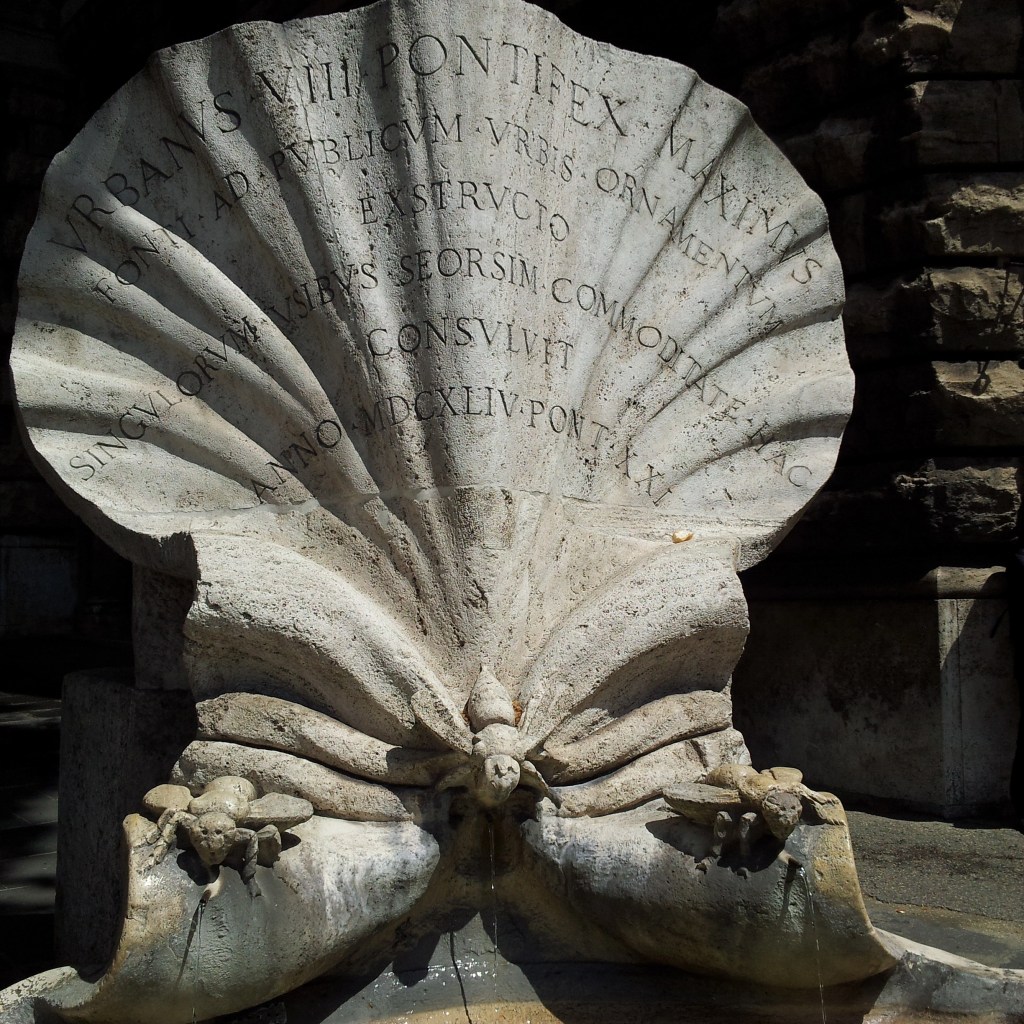
They range from one-fifth the thickness of a strand of your hair, to the 30 ft longgiant squid.
These are the invertebrates—animals without a backbone. Why backbones, in fact, invertebrates don’t any bones at all! Invertebrates include ants, spiders, worms, snails, bees, butterflies, corals, lobsters, crabs…they are the spineless majority!
As the famous biologist EO Wilson put it, ‘Invertebrates don’t need us, we need invertebrates’. Critically, they pollinate flowers, hence allowing plants to propagate so that there is food for all. They are at the base of all food-chains. Humans also eat invertebrates—think crabs, lobsters etc. They maintain the ecological balance by eating each other and being eaten! Earthworms and some related creatures help dig up and aerate the soil, and make it fertile. They are important in another way too—most parasites are invertebrates!
All invertebrates are cold-blooded and about 80 per cent of them are terrestrial. Most of them undergo metamorphosis.
They fall into nine phyla, compared to vertebrates which all belong to one phylum.
In spite of their ubiquitous presence and the role they play in our lives, we don’t pay enough attention to these co-inhabitants of our world. For instance, while most countries have national animals or birds, few have national invertebrates. Exceptions include Denmark, which lists the Small Tortoiseshell as its national butterfly; Estonia which lists the Swallowtail; Finland which lists the Seven-spot Ladybird as its national insect and Latvia which has the Two-spot Ladybird for its. Several US states have State Insects, as does Karnataka (the honeybee). Many Indian states also have State Butterflies.
India is unique in that it has named a National Microbe—the Lactobacillus bulgaricus. This was done in 2012, based on a nation-wide completion. It was selected based on its importance in making yogurt or curd. Some US states also have State Microbes. The first state to declare an Official State Microbe was Oregon which chose brewer’s or baker’s yeast as the Official Microbe because of its importance to the craft beer industry there.
Designating such national and state symbols is important, given that we don’t focus enough on these creatures which make up about 95 per cent of all species on earth. Creating a buzz brings attention to them, hopefully leading to more studies and research, ensuring their well-being which is so critical to ours.
In order to increase awareness about invertebrates, last year the well-known British newspaper The Guardian started an ‘Invertebrate of the Year’ contest. This was confined to the UK. This year’s competition, the second of the series, has gone international. So any of us can send in a nomination for an invertebrate, along with reasons why we favour this particular one.
To give you an idea, last year’s winner was the earthworm, which was voted in with 38 per cent of the total votes. The least number of votes was garnered by the invasive Asian or yellow-legged hornet.
A recent mention of World Thinking Day to be marked on 22 February set me thinking! This was the first time I had heard about such a day, and I was curious about what lay behind it. There I discovered an unusual link to a collective that was very much a part of my life in my primary school days. This was the Scouts and Guides.
The history of this global movement goes back more than a hundred years. Robert Baden-Powell a military officer who had been in the Boer War organized an experimental camp in 1907 on Brownsea Island off the southern coast of England. The idea was to immerse young boys in activities aimed at developing in them various outdoor skills, chivalrous behavior and good citizenship. This was inspired by the military “scouts” in the army who were sent out to gather information, learn survival skills, and be prepared to help others.
Baden-Powell’s idea was that boys should organize themselves into small natural sub-groups of six or seven under a boy leader. They would be trained in all skills that would be required in camping–tracking and reconnaissance, mapping, signalling, knotting, and first aid.
The camp was a success. Following this, and based on his ideas for training boys, Baden-Powell published a book Scouting for Boys. The book became one of the bestsellers of the twentieth century. Thousands of boys began to join the Boy Scouts movement. To become a scout, a boy would promise to be loyal to his country, help other people, and in general obey the scout law, which was a simple code of chivalrous behaviour.
In 1909 Baden-Powell organized a Boy Scout rally in London. It was here that a small group of girls ‘gate crashed’! The girls had been secretly following the activities that their brothers did, and they demanded that there be something similar for girls. This was radical in a period when girls were expected to be docilely engaged in domestic tasks and ‘ladylike’ activities such as needlework and art. Baden-Powell was encouraging. He asked his sister, Agnes Baden-Powell, to help him with a girls’ organization and she became the first President of the Girl Guides. Working together, the two outlined programme ideas for girls, and later produced The Handbook for Girl Guides. Visitors to Britain were impressed by this and took the idea back to their own countries. By 1910 Guiding had started in Canada, Denmark, Finland and South Africa. Within the next two years it spread to Ireland, Holland, Sweden and the United States. The movement continued to spread across the world. The girls who joined acquired many skills. During World War I they made important contributions to war efforts including growing food, working in hospitals, factories and soup kitchens.
The First World Conference held in England, in 1920 was a historic occasion that gave representatives of the Girl Guiding and Girl Scouting world the opportunity to meet and exchange ideas and experiences and shape the future and direction of the Guiding and Scouting World. As the Movement grew and expanded, country representatives began to feel that it was time to create something more solid and binding and the idea of forming a world association was proposed after the 4th World Conference in 1926. The delegates from across the world also decided to create a special day for guides and girl scouts. They selected the joint birthday of Lord Baden-Powell, the founder of the scout and guide movement, and his wife Olave as appropriate to mark such a day. This was 22 February, and the day was to be called Thinking Day.
The World Association of Girl Guides and Girl Scouts (WAGGGS), was formed when Delegates from 26 countries met at the Fifth International Conference in Hungary in 1928. Its Secretariat was to be located in London.
The World Association of Girl Guides and Girl Scouts grew to become the largest voluntary Movement dedicated to girls and young women in the world, representing millions of girls and young women from 152 countries. Through innovative non-formal education programmes, leadership development, advocacy work and community action, the movement has empowered girls and young women to develop the skills and confidence needed to make positive changes in their lives, in their communities and countries.
India was not far behind in this movement. The Girl Guiding Movement was started by Dr Cullen in 1911. The Boy Scouts had been established in 1910. But at the time India was under colonial rule, and no Indian boys and girls were included in the movement till 1916. A number of different Guiding and scouting Associations were formed in the following years. In 1928 the All India Girl Guide Association was admitted as a founding member of the World Association of Girl Guides and Girl Scouts (WAGGGS). 1951 On 15 August 1951, the All India Girl Guide Association merged with the Bharat Scouts and Guides. Following the merger, the Girl Guide Association ceased to be a member of WAGGGS.
In the 1960s and 1970s Girl Guides and Boy Scouts were part of the extra-curricular school activities. I clearly remember that as a Bulbul (as the younger guides were called in India) I struggled with learning how to tie different kinds of knots. My dark-blue Bulbul uniform with epaulets, scarf, and a brown leather belt stayed with me for many years. I am not sure if Bulbuls still have a place in the myriad of extra-curricular activities that schools offer. Today the educational system advertises that it trains children in ‘life-skills’ and ‘global citizenship’. To my mind, Girl Guiding introduced these a century ago, along with the attributes of being a good human being. The essence of these are encapsulated in its Motto: Be Prepared. And elaborated in the nine points of Guide Law: A Guide is trustworthy; A Guide is loyal; A Guide is a friend to all and a sister to every other guide; A Guide is courteous; A Guide is a friend to animals and loves nature; A Guide is disciplined and protects public property; A Guide is courageous; A Guide is thrifty; A Guide is pure in thought, word and deed.
As we approach the centenary of World Thinking Day, 22 February is a good day to reflect on these simple but powerful tenets. It is also a day to celebrate friendship, sisterhood, and empowerment, as also to take action to speak out for the millions of girls who, even today, do not have an equal voice, nor the opportunity to Be Prepared.
The town of Kumbakonam in Tamilnadu has a hoary history. It is supposed to be the cradle of life of this yug, namely the Kali Yug. Each yug ends with a pralayam or flood which leads to the destruction of all living beings on the earth. When the last yug was about to end, Brahma put the seeds of all living organisms as well as the Vedas and Puranas, in a pot called the Amrita Kalasam or Kumbham (pot of nectar).
The pot was befittingly decorated with flowers, leaves, ausipicious cloth, sandalwood paste and a sacred thread. The Kumbham’s mouth was stopped with a coconut and it was placed on the top of mount Meru.
When the floods came, they destroyed all creatures on earth. The Kumbham prepared by Brahma was displaced, and floated on the flood waters for years and years. Finally, it settled at a spot considered to be present-day Kumbakonam.
But the seeds had to be released in order for life to start again on earth. Siva, in the guise of a hunter, discharged an arrow from His bow, breaking open the pot. The seeds of life and the Vedas and puranas in the pot were scattered around, and thus life on earth re-started.
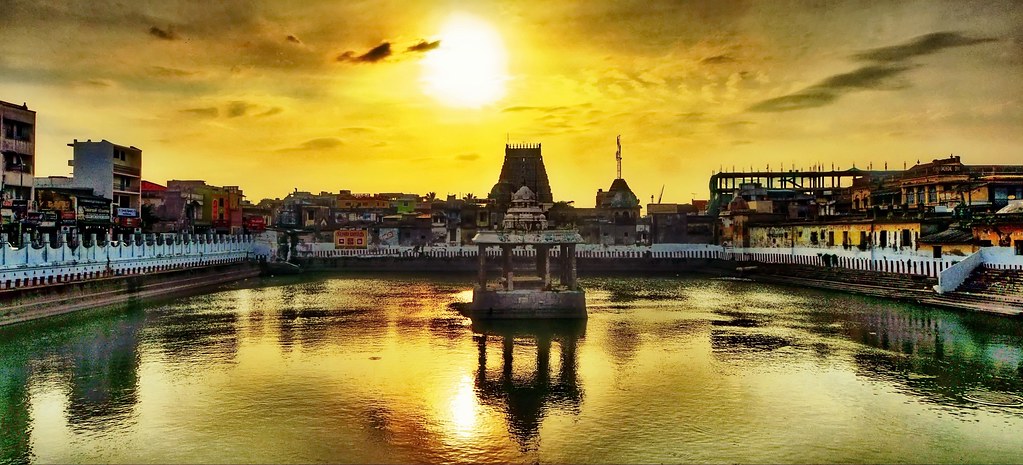
And this spot is the site of the other great Kumbh festival. The place where the pot broke and the contents flowed out–Mahamaham kulam (tank) is where the Mahamaham festival is celebrated.
While Masimaham is an annual event that occurs and thousands of people gather for a dip during this time, it takes on special significance once in twelve years. For it is believed that every 12 years, when Jupiter passes over Leo, the waters of all of India’s holiest rivers, including the Ganges, flow into the tank, and it is at this time that the Kumbh mela of South India is celebrated at the Mahamaham tank. Since it is believed that all the rivers of India meet at the tank on this day, a bath here is considered equal to the combined dips in all the holy rivers of India! Over 10 lakh people congregate here for the event.
Kumbakonam, meaning ‘pot’s corner’ to remind us of where the pot-of-life landed, is considered a very holy place. There are any number of ancient temples in and around the town—there is a temple wherever any shard of the pot landed. In all, there are around 188 temples within the municipal limits of Kumbakonam!
The region around Kumbakonam was inhabited as early as the Sangam Age (third century BC to third century AD), and it has played its role in the history of the region.
Down the passage of time, Kumbakonam has been a major learning center. During the British times, it was referred to as the “Cambridge of the South” with several institutions of repute, the most notable of them being the Government Arts College, considered one of the oldest colleges in Tamil Nadu. The town is home to many libraries and is considered the hub of modern Tamil writing.
Kumbakonam, relative to its size, is associated with more than its share of great achievers, including:
Srinivasa Ramanujam, the world-famous mathematician was born here and studied here. After a stint in Chennai, he went to Cambridge where he shook the world of mathematics with his uncanny understanding of numbers.
MS Swaminathan, the agricultural scientist who saved India from food-crisis and laid the foundation for food-security in our country.
Indira Parthasarathy, a Padma Shri awardee and reputed Tamil novelist whose works have been translated into many world languages.
Srinivasa Sastry, dubbed the Silver Tounged Orator of the British Empire by Winston Churchill, who played a prominent role in the Independence struggle and was an educator and administrator of repute.
2028 will see the next Mahamagam in Kumbakonam. Over 20 lakh people are expected to participate. But don’t wait till then to visit this town—it has so much to offer.
-Meena
Dedicated to Malathi Athai, whose house in Kumabakonam is the site of the most cherished memories of summer vacations.
It has dominated the news for the last month or more. It has broken records. The numbers are counted not in thousands, but in crores. It is the headline-making event of a century and a half…It is the Mahakumbh Mela.
The many records being broken may also include the media coverage which breathlessly recounts every VIP visit and holy dip that has become a “must do must show” part of every itinerary.
Over a hundred years ago, another newsmaker also visited the Kumbh. And as was his wont, wrote about the experience in his own words. This was Mohandas Karamchand Gandhi.
Gandhi had returned to India in January 1915 after spending almost a quarter century in South Africa. After spending a few days in Mumbai, he proceeded to Pune to meet Gopal Krishna Gokhale who he considered as his mentor. Gokhale advised that if Gandhi were to plan to remain in India and work for the people of this country, he first needed to acquaint himself better, first hand, with the country and its people. It was decided that this orientation would be through a journey across India by train, travelling by third class, as the common people did. Gandhi did indeed embark upon such a journey after a short visit to Calcutta, Shantiniketan and Burma.
In his own words: I, having been out of India for so long, have no business to form any definite conclusions on matters essentially Indian, and that I should pass some time here as an observer and a student. This I have promised to do, and I hope to carry out my promise.
Early in these travels Gandhi visited the Kumbh Mela at Haridwar. He recounts his experiences and impressions in his autobiography. Some excerpts:
This year – 1915 – was the year of the Kumbha fair, which is held at Hardvar once every 12 years. I was by no means eager to attend the fair, but I was anxious to meet Mahatma Munshiramji who was in his Gurukul. Gokhale’s Society had sent a big volunteer corps for service at the Kumbha. Pandit Hridayanath Kunzru was at the head, and the late Dr. Dev was the medical officer. I was invited to send the Phoenix party to assist them, and so Maganlal Gandhi had already preceded me. On my return from Rangoon, I joined the band.
Our stay in Shantiniketan had taught us that the scavenger’s work would be our special function in India. Now for the volunteers in Hardvar tents had been pitched in a dharmashala, and Dr. Dev had dug some pits to be used as latrines. He had to depend on paid scavengers for looking after these. Here was work for the Phoenix party. We offered to cover up the excreta with earth and to see to their disposal, and Dr. Dev gladly accepted our offer. The offer was naturally made by me, but it was Maganlal Gandhi who had to execute it. My business was mostly to keep sitting in the tent giving darshan and holding religious and other discussions with numerous pilgrims who called on me. This left me not a minute which I could call my own. I was followed even to the bathing ghat by these darshan-seekers, nor did they leave me alone whilst I was having my meals. Thus it was in Hardvar that I realized what a deep impression my humble services in South Africa had made throughout the whole of India.
But this was no enviable position to be in. I felt as though I was between the devil and the deep sea. Where no one recognized me, I had to put up with the hardships that fall to the lot of the millions in this land, e.g., in railway travelling. Where I was surrounded by people who had heard of me I was the victim of their craze for darshan. Which of the two conditions was more pitiable, I have often been at a loss to determine. This at least I know that the darshanvalas’ blind love has often made me angry, and more often sore at heart. Whereas travelling, though often trying, has been uplifting and has hardly ever roused me to anger.
I was in those days strong enough to roam about a lot, and was fortunately not so known as not to be able to go in the streets without creating much fuss. During these roamings I came to observe more of the pilgrims’ absent mindedness, hypocrisy and slovenliness, than of their piety. The swarm of sadhus, who had descended there, seemed to have been born to enjoy the good things of life.
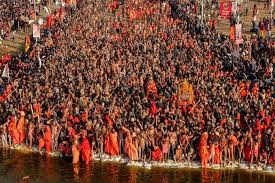
The day of the fair was now upon us. It proved a red letter day for me. I had not gone to Hardvar with the sentiments of a pilgrim. I have never thought of frequenting places of pilgrimage in search of piety. But the seventeen lakhs of men that were reported to be there could not all be hypocrites or mere sight-seers. I had no doubt that countless people amongst them had gone there to earn merit and for self-purification. It is difficult, if not impossible, to say to what extent this kind of faith uplifts the soul.
I therefore passed the whole night immersed in deep thought. There were those pious souls in the midst of the hypocrisy that surrounded them. They would be free of guilt before their Maker. If the visit to Hardvar was in itself a sin, I must publicly protest against it, and leave Hardvar on the day of Kumbha. If the pilgrimage to Hardvar and to the Kumbha fair was not sinful, I must impose some act of self-denial on myself in atonement for the iniquity prevailing there and purify myself. This was quite natural for me. My life is based on disciplinary resolutions.
So I pledged myself never whilst in India to take more than five articles in twenty-four hours, and never to eat after dark. I gave the fullest thought to the difficulties I might have to face. But I wanted to leave no loophole. I rehearsed to myself what would happen during an illness, if I counted medicine among the five articles, and made no exception in favour of special articles of diet. I finally decided that there should be no exception on any account whatsoever.
But the Hardvar experiences proved for me to be of inestimable value. They helped me in no small way to decide where I was to live and what I was to do.
Just over a century later, how much has changed, and yet, how much remains the same? Food for thought!
Queasy stomachs have plagued humanity since ancient times. Many have been the remedies, each with its own followers and detractors. For instanc, in India, ginger, omam (ajwain), jeera, curd are all popular.
Somewhere in ancient times, probably in Egypt, wine infused with herbs became a popular remedy for uneasy stomachs. The popularity of such infusions, called bitters, was high till even a hundred years ago.
Bitters are ‘liquid aromatic alcohol-based infusions of bittering botanicals and flavoring agents’. They are extracts of seeds, herbs, roots, bark, leaves, flowers, and fruit liquid from various plants. While they started out as medicines, soon another use was found for bitters.
Today, we have two types of bitters: Digestive bitters and Cocktail bitters. Digestive bitters aid in the digestion of food and are usually sipped straight, on the rocks, after a meal and are popular in Europe. Cocktail bitters are made from a tincture of water and alcohol, containing spices and plant-based components. They are too strong to be had neat, and are added to cocktails to elevate the taste and add a dash of sophistication.
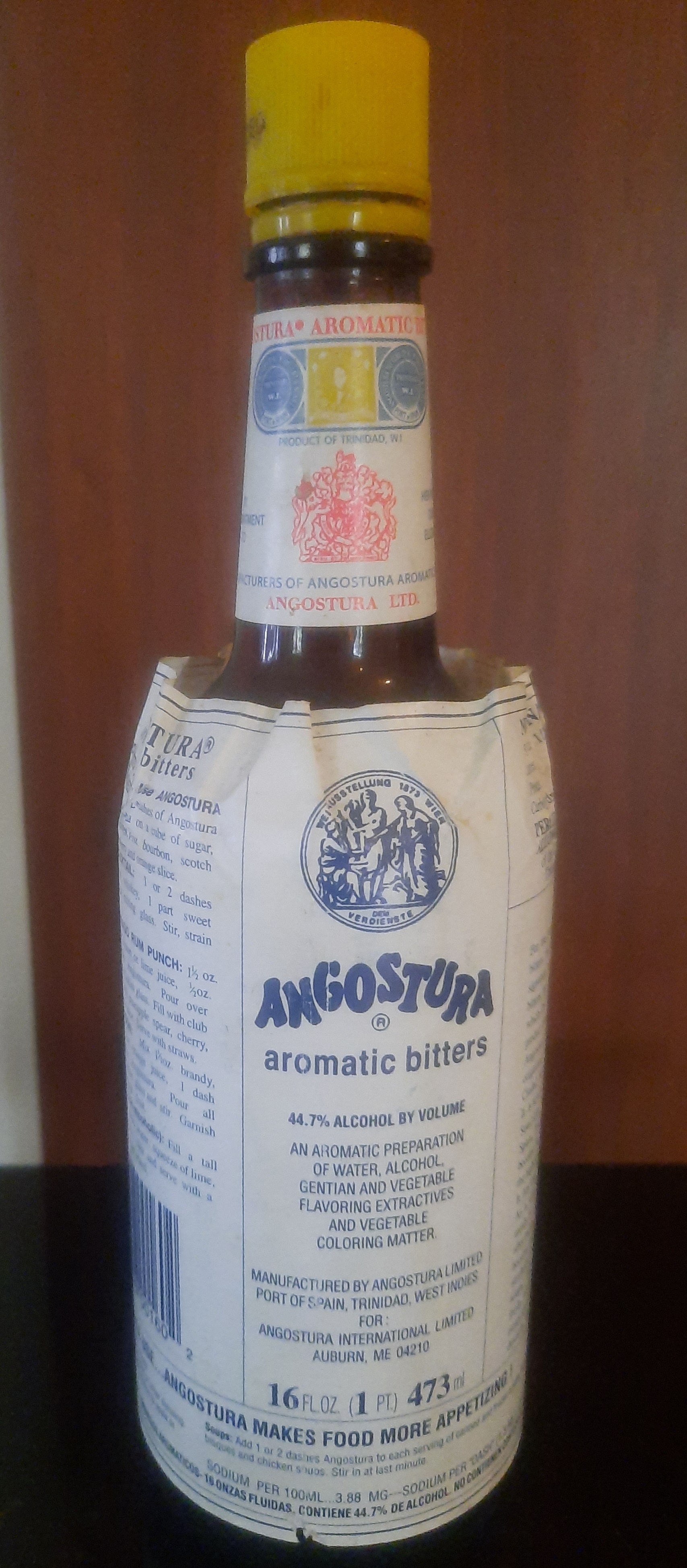
Of all the bitters, Angostura Bitters are probably the best known, and are a staple for every bartender and cocktail-mixer, and are used in classic cocktails like the Old Fashioned and Manhattan. More than that, they are in every kitchen cupboard in Trinidad and Tobago where they are made, as a home remedy for stomach problems. They are also an important ingredient in many local dishes.
Angostura is a tree native to South America, but strangely, the famous bitters are not made from the bark of this tree. Rather, they get their name from the town of Angostura in Venezuela, where they were invented. (The name of the town was changed subsequently, and it is now known as Ciduad Bolivar).
They were first concocted in 1824 as a medicine for the army of Simon Bolivar by a German army surgeon called Johann Siegert in the town of Angostura. He called it ‘Amargo Aromatico’. Dr. Siegert started exporting this to Europe, USA and the Caribbean. Apart from its use as a medicine, this product caught the fancy of bartenders at a time when cocktails were just becoming popular. Demand boomed.
The Siegert family migrated to Trinidad in the mid-19th century and started manufacturing the tincture in Port of Spain, the capital. And the company flourished.
Angostura Bitters were something one had vaguely read about. It definitely did not loom large in our lives. Till we visited family in Trinidad. Then we realized how big a thing it was!
A tour of the Bitters factory was of course on the essential itinerary. It was an overwhelming experience, especially to the nose! The pervasive smell of alcohol and herbs and tinctures almost made one dizzy.
All the processes of making the Bitters were on display. But the critical part is a secret—the mix and proportions of the herbs which go into making the product! It is apparently one of the world’s longest-held culinary mysteries, and no one has been able to replicate it exactly! Apparently only five people are privy to the secret.
Another part of the myth and legend of Angostura Bitters is the over-sized labels on the bottles. Apparently, in the late 1800s, Siegert’s sons decided to re-brand the product. As a part of a competition, one brother designed the new bottle, while another designed the new label. But they did not discuss their designs with each till it was too late. So the labels that had been printed were too big for the bottles they made! Though the Siegerts lost the competition, one savvy judge advised them to keep the design as it was. He said that this would help the packaging stand out among the competition. And that is exactly what has happened! The oversize labels area distinctive feature even today.
I remembered my bottle of Angostura Bitters from our trip to Port of Spain trip when I recently had a stomach upset. Whether thanks to this or some of the other home remedies I tried, I was better soon!
They are at the heart of every meal; they come in many colours, shapes and sizes; they can be used in a large range of permutations and combinations. They are the pulses that are an integral part of all cuisines in India. In a country with such immense diversity in culinary traditions, food habits, and meals, pulses are the one common as well as essential element. Our daily meal is incomplete with a dish made from a pulse, and many of our favourite snacks would not be what they are without pulses. Yet there is much that we have never stopped to really think about.
Technically pulses are the edible seeds obtained from the cultivation of leguminous plants for both food and feed. India has an immense diversity of pulses at the genetic and species level, as well as their uses at the culinary level. What makes pulses the original ‘wonder food’?
These seeds are a rich source of nutrients, mainly proteins, that are crucial for a healthy and balanced diet. It is estimated that 100 grams of dry lentils contain about 25 grams of protein. Thus pulses can become a backbone of a vegan diet.
They are naturally low in fat and contain no cholesterol, reducing the risk of cardiovascular diseases. They are also low in sodium chloride or salt which is a contributor to hypertension. They are high in potassium which plays an important role for digestive and muscular functions.
Pulses are a good source of iron and a great answer to address iron deficiency. The iron in pulses is best absorbed in the body by combining them with foods containing vitamin C. They are an excellent source of folate, a B-vitamin essential for nervous system function. They have a low glycaemic index, which makes them suitable for people with diabetes. They are naturally gluten-free, making them an ideal option for those who are gluten intolerant.
They can be stored for a long time and can be used even when fresh seasonal fruits and vegetables are not available. Their long shelf-life prevents food loss and wastage.
Pulses are incredibly versatile and can be used in an endless variety of cuisines and dishes in numerous forms.
That is so far as human health goes, and most people are, at some level, aware of these attributes of pulses (a lot of which is passed down through generations by family recipes and ‘granny’s words of wisdom’). But there is not as much awareness about the fact that pulses are as important for environmental health as they are for human health.
Pulses play a vital role in soil health by providing essential nutrients, maintaining soil biodiversity, and enhancing soil structure. They improve soil health by hosting helpful bacteria, called rhizobia, in their roots. These bacteria convert nitrogen from the air into fertilizers in the soil. Additionally, other bacteria and fungi help release phosphorus in the soil, providing essential nutrients for plants and promoting soil diversity. The fertilizers produced by pulses benefit not only the pulses, but also other crops grown alongside them, reducing the need for chemical fertilizers. This makes pulses ideal for sustainable farming practices like intercropping or crop rotation. Additionally, pulses and their by-products are utilized as animal feed.
The benefits are not limited to soil alone. Pulses also perform other ecosystem services. Many pulse species are drought tolerant and resilient to adverse climate, such as drought and heat. Their cultivation optimizes fertilizer use, thus reducing greenhouse gas emissions.
Pulse crops have a lower carbon footprint than most foods because they require a small amount of fertilizer to grow. They also have a low water footprint as they are adapted to semi-arid conditions and can tolerate drought stress.
Despite their immense value for human and environmental health, pulses are not generally ‘stars’; they are often undervalued and under-recognized. In an effort to highlight the importance, as well as potential, of pulses as a global food the United Nations declared 2016 to be the International Year of Pulses. As the then UN Secretary General Mr Ban-ki-Moon said: “The International Year can help overcome this lack of knowledge. Much work needs to be done to end hunger and provide food security and nutrition for all. One concrete, promising opportunity lies with pulses. Let us join forces to raise awareness of the benefits of pulses”.
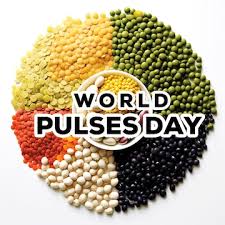
As the world was embarking on efforts to achieve the newly-adopted Sustainable Development Goals it was hoped that this International Year would help raise awareness of the benefits of pulses globally. The year-long celebration was implemented by the Food and Agriculture Organization (FAO), a specialized agency of the United Nations. The year was a success, and recognizing the potential of pulses in further achieving the Sustainable Development Goals, since 2019 the United Nations General Assembly has designated 10 February as World Pulses Day to be celebrated every year.
This celebration is a recognition of the decisive role that pulses can play in achieving the comprehensive, far-reaching and people-centred set of universal and transformative goals and targets of the United Nations’ 2030 Agenda for Sustainable Development.
The World Pulses Day celebrations are an opportunity to raise public awareness about pulses and the fundamental role they play in the transformation to more efficient, inclusive, resilient and sustainable agrifood systems for better production, better nutrition, a better environment, and a better life, leaving no one behind.
This is a good day to look more closely at our own meal! What is the original colour of the pulse on your plate? Green, yellow, red, brown, orange, black, white…
In what form are you eating your pulses? As a Dal (sweet Gujarati or Punjabi tadka?) Rajma-chaval or chana puri? As a part of your idli-sambar? As the partner to rice in khichadi? As the coating on your pakodas? As the sweet moong dal halva or payasam? Each platter will have a different version of pulses!
Whatever the form and whatever the taste, pulses rule our plates and palates!
Watchers of ‘House MD’, the popular American medical serial would, unlike the general public, be very familiar with the term ‘Guillain–Barré syndrome’. GBS is a rare neurological autoimmune disorder in which a person’s immune system mistakenly attacks part of their own peripheral nervous system—the network of nerves which carry signals from the brain and spinal cord to the rest of the body. This can result in muscle weakness, loss of sensation in the legs and/or arms, and problems swallowing or breathing. Symptoms typically last a few weeks, with most individuals recovering without long-term, severe neurological complications.
The cause of GBS is not fully understood, but most cases follow after a viral or bacterial infection. Infection with the bacteria Campylobacter jejuni, which causes gastroenteritis (including symptoms of nausea, vomiting and diarrhoea), is one of the most common risk factors for GBS. People could also develop GBS after having the flu or other viral infections including cytomegalovirus, Epstein-Barr virus, and the Zika virus.
GBS is rare, affecting about 1 in 78,000 people across the world each year. But in the last few weeks, over 150 cases have been detected in India, especially in and around Pune and Maharashtra. Of concern is that a case has been detected as far away as Assam. A few deaths have also resulted.
Authorities are fully alert and taking action—both to ensure detection and treatment, but also importantly, prevention. Pune Municipal Corporation is promoting public health interventions – food and hand hygiene, and safe water — for disease management.
But getting back to ‘House MD’, so influential was the serial, that there is actually an academic paper titled ‘The usefulness of TV medical dramas for teaching clinical pharmacology: A content analysis of House M.D’, in a respected medical journal ‘Educacion Medica’!
Of course such serials often have patients misdiagnosing themselves with all kinds of exotic diseases, and generally being a pain in the neck for doctors, and a waste of resources. But in the case of one patient, Alexandria Ostrem, it was a tale stranger than fiction. Way back in 2008, when Alexandria was a teenager and an avid watcher of House. she suddenly developed trouble walking. Remembering the symptoms of GBS from all her TV-viewing, she rushed to the emergency room and insisted that the doctors test her for the syndrome. However, the results came back negative.
Her symptoms continued to worsen, and she was tested several times for GBS. But nothing positive showed up. There came a stage when she was paralyzed nearly everywhere except for some use of her arms. At this point, doctors told her they agreed with her self-diagnosis, and started treating her for GBS. She responded and got well!
In the serial House MD, the doctor and his team are super-specialists in rare diseases, and when diagnosing, they tend to think in terms of unusual and exotic diseases. Such diagnosticians are called ‘zebra hunters’, a term for someone who foolishly chooses to seek out the rarest of diseases. In the normal course of things, doctors are trained to do the opposite– summed up by the adage, “If you hear hoof-beats, think horses, not zebras.”
We are fortunate that the doctors in our health system listened to the hoof-beats carefully, and identified the zebras! Thank you all healthcare givers for all that you do for us.
Leonhard, S.E., Mandarakas, M.R., Gondim, F.A.A. et al. Diagnosis and management of Guillain–Barré syndrome in ten steps. Nat Rev Neurol 15, 671–683 (2019). https://doi.org/10.1038/s41582-019-0250-9
And here is praying that all those who have contracted GBS may recover quickly.
–Meena
The author is a laymen. All information is quoted from sources perceived to be authentic, and should not be a basis for action.
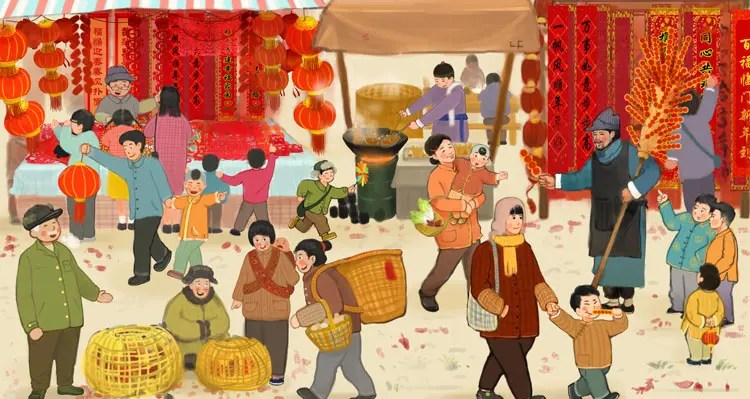
As most are surfacing after celebrations that ushered in a new calendar year 2025, it is continuing celebrations for a large population to welcome another new year. This is the Chinese New Year which begins on 29 January this year. This follows the lunar calendar which is based on the 28-day cycle of the moon. The New Year is calculated according to the second new moon after the winter solstice, and this year it fell on 29 January. The New Year day is, in fact, the start of a fifteen-day celebration which is known as the Spring Festival in China. The festival traditionally begins on the first day of the first lunar month in the Chinese calendar and ends on the 15th day. Each day has a special significance and is marked with its set of traditional rituals, lore, and celebration which involve the whole families.
New Year shopping in a traditional Chinese market
For some families, the preparations for the longer festival begin even earlier, on the eighth day of the 12th month of the lunar calendar, with a festival called Laba. The name is derived from the Chinese words for the 12th month (La) and 8 (Ba). Traditionally the festival also marked the start of the agricultural calendar. On this day prayers are offered to ancestors and gods for fortune and a good harvest. Laba congee, a porridge containing different types of rice, beans, dried nuts, bean curd and meat is eaten.
This marks the beginning of the preparations for the lunar New Year which include cleaning the house by “sweeping away the dust”, shopping for food, new clothes, buying fireworks, preparing gifts and decorations, and prayers to the stove god.
The decorations include red lanterns, paper cuttings, and red spring couplets. The couplets are complementary poetic lines which adhere to certain rules. The spring couplets are written in black ink on red paper, one half affixed vertically on each side of a door, and usually express best wishes for the coming year. Putting up those decorations is thought to keep evil away, and a prayer for blessing, longevity, health, and peace.
Finally it is New Year’s Eve. This is considered as, if not more important than, New Year’s day. The highlight is the family reunion dinner which includes several generations, many who travel long distances to be together for this family gathering. Before they eat, the family makes offerings including food, wine, joss sticks and joss paper to their ancestors.
The dinner menu includes dishes which have symbolic meaning including whole fish, dumplings, sticky rice cake, and spring rolls. After dinner, parents usually give their children money in red envelopes. This is believed to bring good luck, and carry wishes for health, growth, and good studies in the coming year. The family stays up until midnight to usher in the New Year, a tradition called shousui (to keep watch over the year). The start of the New Year is announced with firecrackers and fireworks. It is believed that the louder the firecrackers, the better and luckier it will be for business and farming in the coming year.
Then it is officially the New Year, which marks the start of the 15-day Spring Festival. Each day has its own significance and associated traditions; some customs may vary between regions and groups.
Day 1: People put on new clothes and wish each other with the greeting ”gongxi” meaning “respectful joy.” It is a day of visits. The oldest and most senior members are visited, as well as other relatives and friends. Guests are welcomed with tea and sweet treats, such as sugared fruits which are supposed to sweeten one’s upcoming year. Sweets and fruits are served on a round or octagonal tray – the form resembling togetherness. Most likely the amount of sweets will be arranged in eight units, as the number eight symbolises luck. The visitor also carries a small gift for the hosts–usually oranges, tangerines, or mandarins, as the fruit symbolises gold, hence wealth and good fortune.
In some traditions it is believed that abstaining from meat on this day will enhance longevity. A traditional Buddhist vegetarian dish is prepared using eighteen different ingredients, each of which has a symbolic meaning. Eighteen is believed to be a lucky number signifying wealth and prosperity. There are also temple fairs and activities in parks such as Lion dances and Dragon dances, which are enjoyed by families.
Day 2: This is the day when married women visit their parents, accompanied by their husbands, with gifts and red envelopes for the family.
On this day, people offer sacrifices to the God of Wealth, wishing for a luckier and more prosperous year. People say that after being offered sacrifices, the God of Wealth, leaves for heaven on this day.
Day 3: This is not considered as an auspicious day as it is believed that evil spirits roam around. People avoid visiting friends and relatives and stay at home. Traditionally the house is not swept on the first two days of the New Year so as not to sweep away the good luck accrued by the litter of firecrackers, red paper, wrappers, and other evidence of celebration on the floor. This is the day when the house is swept after New Year’s Eve. There is also a legend that this is the day when rats get married, so people leave some rice in the kitchen as gifts, and sleep early so as not to disturb rats. In return the rats would not disturb the family for the whole year.
Day 4, 5 and 6: People resume visits to friends, relatives and temples. Different regions of China have some variations in the traditions associated with these days. The fourth day is one to honour the God of the Kitchen with the prayer to continue watching over the kitchen. Day five honours the God of Wealth for good fortune. People usually stay at home in case they are visited by the God on this day. It is also the day to light firecrackers to drive away the five bad lucks: of intelligence, learning ability, literacy, life, and relationships.
Day 7: According to a legend, Nuwa the goddess created the world. It is believed that she spent the first six days creating animals. Each day of the festival is also believed to be the birthday of the different animals that she is believed to have created in sequence. On the seventh day she created humans. Thus this is the birthday of humans. The day is celebrated with certain foods. The ingredients of the dishes are healthy and have a symbolic meaning.
Day 8: People normally return to work on the eighth day. As eight is the luckiest number in China, most businesses like to reopen on day 8 of the New Year.
Day 9: This is the birthday of Jade Emperor, said to be the God of all Heavens. People go to ponds and rivers to pray to the gods with offerings of fragrant flower candles.
Day 10: God of Stone’s birthday and also the birthday of Earth Mother celebrated with sweet pastries.
Day 11: A day for fathers to treat their sons-in-law
Day 12, 13 14: These are quieter days, marking a respite from feasting on rich food, but preparing for the first full moon of the year which marks the Lantern festival.
15th day: Lantern festival or the “first night of the full moon” sees lanterns being put and lit everywhere. People often post riddles on the lanterns. Dumplings, with sweet fillings, resembling the shape of the full moon are traditionally eaten on this day. There is usually another family dinner that marks the close of the two-week celebrations, and the official start of the New Year.
According to the Chinese calendar this is the Year of the Snake and much is being written about it. May the spirit of celebrations that mark this day, continue to brighten every day of the year ahead.
In this week of Republic Day, the tune of our national anthem and other patriotic songs are all around us. Without them, the mood cannot be built. Singing the national anthem together with neighbours, community, colleagues, fellow-students—there is nothing more symbolic of our oneness.
Anthems in general are rallying cries, rousing or uplifting songs identified with a country, section, cause etc. A national anthem is a solemn patriotic song officially adopted by a country as an expression of national identity.
These songs are our identity. But just as in so much else, should they change as contexts and realities change?
Well, five countries have taken the bold step of changing their anthems in recent years.
Australia: On Jan 1, 2021, Australia’s national anthem, “Advance Australia Fair,” underwent a significant change. The phrase “For we are young and free” in the second line was changed to “For we are one and free.” This is an effort to respect the Aboriginal and Torres Strait Islander peoples, recognizing that Australia’s history precedes European settlers tens of thousands of years. It is a symbol of Australia’s commitment to unity and reconciliation with Indigenous population.
Austria: Austria’s national anthem is “Land der Berge, Land am Strome” (Land of Mountains, Land by the River). The language was reviewed and modified to promote gender inclusivity in 2021 . The original lyrics which referred to “great sons,” was changed to “great daughters and sons.”
Canada: In 2018, Canada made a significant and widely-welcomed change to its national anthem “O Canada” in 2018. The line “in all thy sons command” was changed to “in all of us command.” was changed to “in all of us command”, again an effort for gender-inclusivity.
South Africa: Like the nation itself, South Africa’s national anthem is unique. It combines lines from several different languages and songs, including the hymn “Nkosi Sikelel’ iAfrika” and the former anthem “Die Stem van Suid-Afrika.” In recent times, small changes have been made to the anthem with the purpose to ensure proper pronunciation and inclusion of all languages and honour the linguistic heritage of all its people.
New Zealand: In 1977, the Government announced that New Zealand would have two national anthems — the traditional anthem ‘God Save The Queen’ and the poem ‘God Defend New Zealand’. Since then, both the anthems have had equal status. Following the accession of King Charles III to the throne in 2022, the words of the first anthem changed to ‘God Save the King’.
The latest change in a national anthem is not for a change of words but of the tune. In January 2025, Saudi Arabia has asked Hans Zimmer (Oscar-winning composer of the Lion King, Dune etc.) to create a new version of its national anthem, Aash Al Malik (Long live the King)!
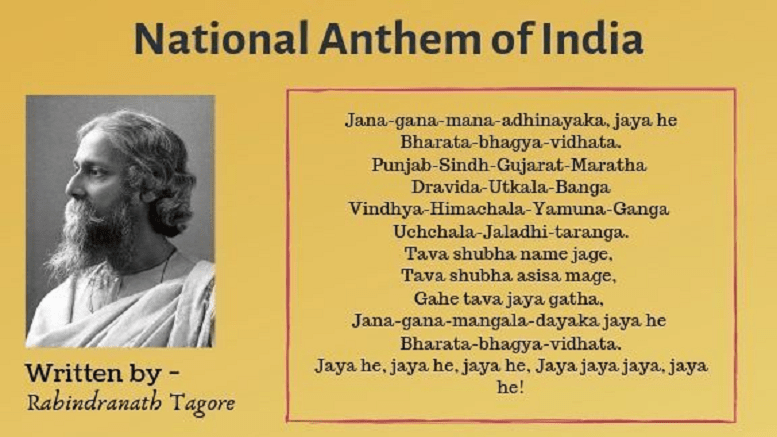
Our anthem Jana Gana Mana (‘[Ruler of] the minds of the people’) was composed as “Bharato Bhagya Bidhata” in Bengali by Rabindranath Tagore on 11 December 1911. The first stanza of the song was adopted by the Constituent Assembly of India as the National Anthem on 24 January 1950, the same day as the Indian Constitution was signed. (Mamata has dwelt on this at length in post last week).
There have been a few proposals to change/add/delete words and phrases. For instance, to add the name ‘Kamrup’ to make the anthem inclusive of the Northeast; or remove the name ‘Sind’ because it is no longer in India. The word “Adhinayak” has also been controversial, because it was used to praise King George V in 1911. In 2019, there was a bill moved in the Rajya Sabha, to modify the third line to ‘Punjab Sindh Uttarpurv Gujarat Maratha’, to bring in the Northeast. However, the Supreme Court has struck down all of these.
While tampering with sacred traditions is always fraught, there does seem to be sense in these suggestions, and maybe we need a debate on this. After all, the essence of democracy is debate, and this seems a worthwhile one!
This week the Indian nation will stand proudly as we salute our national flag and celebrate the 76th Republic Day, and the air reverberates with the chorus of Jana Gana Mana. This is the refrain of the national anthem that unites every citizen of the country.
From the time children are in school, the anthem, played and sung on important national days, becomes deeply engrained, often learned by sheer repetition, without really going into what the words mean, and how they came to be conferred the status of a national anthem.
While Jana Gana Mana was declared as the National Anthem of free India on 24 January 1950, its history goes way back. The hymn was originally composed in Bengali, by Rabindranath Tagore, India’s first Nobel laureate, on 11 December 1911. Titled Bharoto Bhagyo Bidhata, it consisted of five stanzas. It was first published in a journal called Tatwabodhini Patrika in 1912 under the title Bharat Bidhata. However, it was first sung on Day 2 of the annual session of the Indian National Congress on 27 December 1911, by Saraladevi Chowdhrani along with a group of school students.
The fact that the date of the composition of the hymn coincided with the eve of the coronation of King George V led to rumours that the song was written to honour the British king. This was mainly due to misreporting in the press that confused this song with another song in Hindi Badshah Hamara, which was sung on the same occasion and, in fact, was in praise of the monarch.
Years later, Tagore himself clarified in a letter dated 10 November 1937, that this was never the case; the song was a tribute to the greatness of India. In his own words (originally in Bengali): A certain high official in His Majesty’s service, who was also my friend, had requested that I write a song of felicitation towards the Emperor. The request simply amazed me. It caused a great stir in my heart.
In response to that great mental turmoil, I pronounced the victory in Jana Gana Mana of that Bhagyo Bidhata [ed. God of Destiny] of India who has from age after age held steadfast the reins of India’s chariot through rise and fall, through the straight path and the curved. That Lord of Destiny, that Reader of the Collective Mind of India, that Perennial Guide, could never be George V, George VI, or any other George.
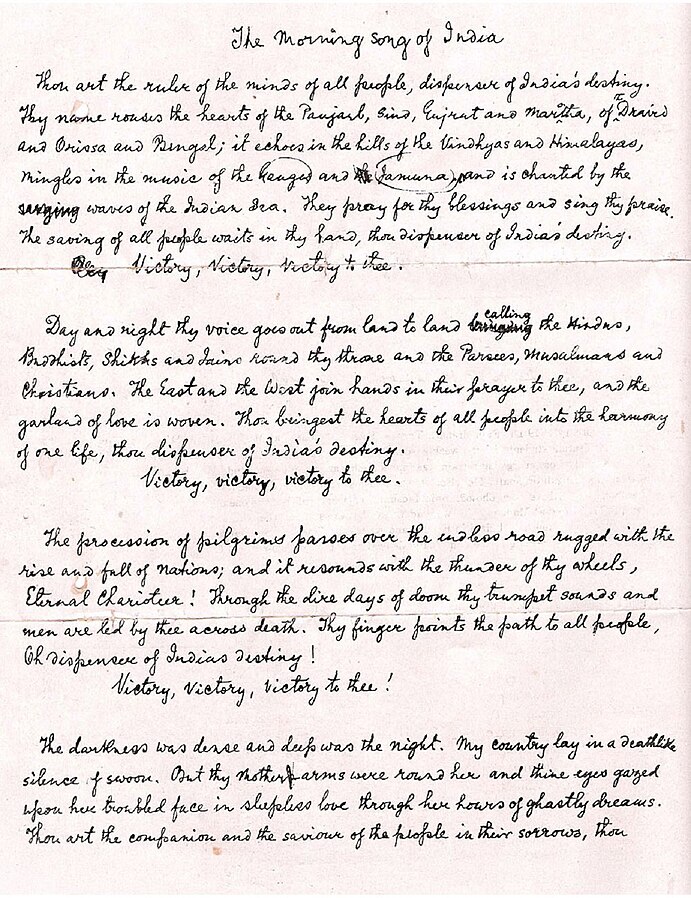
For the next few years the song continued to be sung on different occasions, but with many regional variations. It still did not have a uniform tune. In February 1919, while on a tour of South India, Tagore took a break to rest at the Theosophical College in Madanapalle, in Andhra Pradesh. Started by Dr Annie Besant, the college was headed by educationist and poet James Cousins. James and his wife, Margaret Cousins who was Vice Principal, used to have informal singing sessions with the college community, every Wednesday night. Tagore also joined the session and asked if he could sing one of his poems in Bengali. This was the first time Tagore himself sang his poem. Margaret Cousins was enthralled, especially with the refrain, Jaya hai, Jaya hai, Jaya hai, Jaya Jaya Jaya Jaya hai. Sherequested Tagore for an English translation, which Tagore did, on the same day, 2 February 1919, while still at the college. He titled it The Morning Song of India. The translated version of the first stanza read: “Thou art the ruler of the minds of all people, dispenser of India’s destiny. Thy name rouses the hearts of the Punjab, Sindh, Gujarat and Maratha, of the Dravida, Orissa and Bengal. It echoes in the hills of the Vindhyas and Himalayas, mingles in the music of the Yamuna and Ganges and is chanted by the waves of the Indian Ocean. They pray for thy blessings and sing thy praise. The saving of all people waits in thy hand, thou dispenser of India’s destiny. Victory, Victory, Victory to thee.’
Margaret Cousins was very taken by the words. Herself a trained musician, she set down the musical notations, and rendered the song with musical instruments, sung by the students. Tagore appreciated the melody, and the efforts in composing it. The college adopted the English version as their prayer song which is sung even today. And from then on, the musical form of the Bengali song also became the tune that we are familiar with today.
While India was still in the struggle for Independence from British rule, Netaji Subhashchandra Bose, who was in Germany, at the founding meeting of the German-Indian Society selected Jana Gana Mana to be played as the national anthem of independent India. It was performed (not sung) by the Hamburg Radio Symphony Orchestra on 11 September 1942.
On the midnight of August 14, 1947, India the Indian Constituent Assembly assembled for the first time as a sovereign body. The session ended with a performance of Jana Gana Mana. The members of the Indian Delegation to the General Assembly of the United Nations held at New York in 1947 gave a recording of Jana Gana Mana as the country’s national anthem. The song was played by the house orchestra in front of a gathering consisting of representatives from all over the world.
The first stanza of Jana Gana Mana was officially adopted as India’s National Anthem by the Constituent Assembly of India on January 24, 1950. The formal rendition of the anthem takes approximately 52 seconds to complete.
There is a protocol to be followed in the performance of the anthem as laid down by the Government of India which includes instructions on the correct versions of the anthem; the occasions on which it can be sung or played; the need for paying respect to the anthem by observing proper decorum on such occasion. It is mandated by the Supreme Court of India that all must stand up with properrespect when the National Anthem is being rendered.
This Republic Day, as we stand and honour the anthem, let us also bow in respect to the rich history that has enabled us to stand as proud citizens of a proud nation today.