The Bee’s Knees and Other Curious Creatures of Language

Language is a strange and wonderful thing.

Every day, we use expressions that roll effortlessly off the tongue without pausing to think about what they actually mean. We wish people the “best of luck,” promise to “keep an eye on things,” and complain when life becomes “a rat race.” Most of the time, these phrases do their job so well that we never stop to examine them.

But every now and then, an expression invites a second look.

Take the phrase “the bee’s knees.”

If someone describes a new restaurant, a favourite book, or a clever invention as the bee’s knees, they mean it is excellent—something special, perhaps even the best. Yet the moment one stops to think about it, a question arises.

Why a bee?

And why its knees?

Bees are many things. They are hardworking pollinators, builders of intricate hives, and producers of honey. But their knees do not seem especially famous. No one admires a bee and immediately thinks, “What magnificent knees!”
Yet for more than a century, English speakers have happily used the phrase without demanding an explanation.

The story begins in the United States during the roaring 1920s. It was an age that loved novelty. Jazz filled dance halls, fashions changed rapidly, and language became a playground for creativity. People delighted in inventing colourful slang. Something impressive might be called “the cat’s pajamas,” “the eel’s ankle,” “the monkey’s eyebrows,” or “the bee’s knees.”

These expressions were not meant to be logical. In fact, their appeal often came from their absurdity. The more unlikely the combination, the more amusing it sounded.

Most of these phrases disappeared as fashions changed. Yet a few survived. The bee’s knees buzzed on while many of its companions faded into obscurity.

Perhaps it endured because bees themselves occupy a special place in the human imagination.

Across cultures, bees have long been symbols of industry, cooperation, and diligence. Ancient Egyptians kept bees. Greek philosophers admired their organisation. Medieval monasteries prized beeswax for candles. Farmers depended on pollination long before anyone fully understood the science behind it.

Today, we know that bees are among the most important creatures on the planet. Their daily work helps pollinate crops, wildflowers, fruit trees, and countless other plants. A world without bees would be a poorer and less colourful place.

And in an amusing twist, bees do have something noteworthy on their legs. Worker bees collect pollen in specialised structures on their hind legs known as pollen baskets. If you have ever seen a bee carrying bright yellow clumps of pollen, you have witnessed one of nature’s most efficient collection systems at work.

So while the phrase was probably invented as nonsense, modern biology has accidentally given it a touch of credibility.

The bee’s knees are, in their own way, quite remarkable.

The phrase also reminds us of something larger: language is filled with animals.

Consider how often creatures appear in everyday speech.

When we hear information directly from the original source, we get it “straight from the horse’s mouth.” The expression likely comes from horse traders, who could estimate a horse’s age by examining its teeth.

When someone raises a false alarm repeatedly, we say they “cry wolf.” The phrase traces its roots to one of Aesop’s famous fables, in which a shepherd boy repeatedly tricks villagers into believing a wolf is attacking his flock. When a wolf finally appears, no one believes him.

If a person sends us on a pointless errand, we call it “a wild goose chase.” The expression was popularised by Shakespeare, who used it in Romeo and Juliet. Today, it describes any pursuit that is unlikely to succeed.

Then there is the curious warning not to “look a gift horse in the mouth.” Once again, horses are involved. Since age and health could be judged from a horse’s teeth, examining the mouth of a horse that had been freely given was considered ungrateful.

Some animal expressions are easier to understand.

Someone who is “busy as a bee” needs little explanation. A person with “eagle eyes” sees details others miss. A “social butterfly” moves easily from one conversation to another.

Others are delightfully baffling.

Why do we have “ants in our pants” when we are restless? Why are secretive people said to be “as sly as a fox”? Why do difficult situations become a “dog’s breakfast” in some parts of the English-speaking world?

The answer often lies in history. These phrases are linguistic fossils, preserving traces of old occupations, folk tales, observations of nature, and forgotten jokes. Long after the original context disappears, the expression remains.

In this way, language resembles an attic filled with heirlooms. We continue to use objects whose stories have been partly forgotten. Their meanings survive even when their origins grow hazy.

That may be why expressions such as “the bee’s knees” continue to charm us. They remind us that language is not merely a tool for communication. It is also a record of human imagination.

Generations of speakers have played with words, invented absurd images, borrowed ideas from animals, and passed them on. Most vanished. A few endured.

And among those survivors is a tiny insect whose unlikely knees have become a symbol of excellence.

Not bad for a creature that was probably never consulted on the matter.

The next time someone describes a book, a meal, a holiday, or a grandchild as “the bee’s knees,” spare a thought for the strange journey of that phrase. It has travelled through jazz-age slang, survived changing fashions, outlived dozens of rival expressions, and settled comfortably into modern English.

That, one might say, is the bee’s knees of linguistic success.

–Meena

Spineless!

Fountain of Bees, Rome

They make up over 90 per cent of life on earth.

There are about 1.3 million species of them.

They are found in every part of the world.

They range from one-fifth the thickness of a strand of your hair, to the 30 ft long giant squid.

These are the invertebrates—animals without a backbone. Why backbones, in fact, invertebrates don’t any bones at all! Invertebrates include ants, spiders, worms, snails, bees, butterflies, corals, lobsters, crabs…they are the spineless majority!

As the famous biologist EO Wilson put it, ‘Invertebrates don’t need us, we need invertebrates’.  Critically, they pollinate flowers, hence allowing plants to propagate so that there is food for all. They are at the base of all food-chains.  Humans also eat invertebrates—think crabs, lobsters etc. They maintain the ecological balance by eating each other and being eaten! Earthworms and some related creatures help dig up and aerate the soil, and make it fertile. They are important in another way too—most parasites are invertebrates!

All invertebrates are cold-blooded and about 80 per cent of them are terrestrial. Most of them undergo metamorphosis.

They fall into nine phyla, compared to vertebrates which all belong to one phylum.

In spite of their ubiquitous presence and the role they play in our lives, we don’t pay enough attention to these co-inhabitants of our world. For instance, while most countries have national animals or birds, few have national invertebrates. Exceptions include Denmark, which lists the Small Tortoiseshell as its national butterfly; Estonia which lists the Swallowtail; Finland which lists the Seven-spot Ladybird as its national insect and Latvia which has the Two-spot Ladybird for its. Several US states have State Insects, as does Karnataka (the honeybee). Many Indian states also have State Butterflies.

India is unique in that it has named a National Microbe—the Lactobacillus bulgaricus. This was done in 2012, based on a nation-wide completion. It was selected based on its importance in making yogurt or curd. Some US states also have State Microbes. The first state to declare an Official State Microbe was Oregon which chose brewer’s or baker’s yeast as the Official Microbe because of its importance to the craft beer industry there.

Designating such national and state symbols is important, given that we don’t focus enough on these creatures which make up about 95 per cent of all species on earth. Creating a buzz brings attention to them, hopefully leading to more studies and research, ensuring their well-being which is so critical to ours.

In order to increase awareness about invertebrates, last year the well-known British newspaper The Guardian started an ‘Invertebrate of the Year’ contest. This was confined to the UK. This year’s competition, the second of the series, has gone international. So any of us can send in a nomination for an invertebrate, along with reasons why we favour this particular one.

To give you an idea, last year’s winner was the earthworm, which was voted in with 38 per cent of the total votes. The least number of votes was garnered by the invasive Asian or yellow-legged hornet.

Surely you have an invertebrate you love or hate. This is your chance to put it on the world map. Submit your entries at https://www.theguardian.com/environment/2025/feb/12/nominate-your-invertebrate-species-of-the-year by midnight (GMT) on Tuesday 4 March.

–Meena

Something to Buzz About!

Today is World Bee Day, designated by none other than the United Nations!honey-311047__340.png

This would have gone unnoticed had I not been reading about Bees for a lesson I was writing for a textbook. Having discovered that there was an international day dedicated to this small creature made me dig deeper–and unearth some delightful nuggets of information.

How did this come about? This was proposed by Slovenia (find that on the map!) on the initiative of the Slovenian Bee Keepers Association, and supported by the Slovenian Government. Following three years of efforts at the international level, on 20 December 2017, the UN Member States unanimously approved Slovenia’s proposal, thus proclaiming 20 May as World Bee Day.

Why Slovenia? Slovenia has a long and rich tradition of beekeeping as a major agricultural activity. Known as a Nation of Beekeepers–one in 200 of its inhabitants is engaged in bee keeping, and there are many levels of Beekeepers Associations. It is known for its unique wooden painted beehive panels and traditional beehive architecture. Even today, most Slovenian beekeepers use a traditional beehive called the AŽ hive, which was created over one hundred years ago.

Why 20 May? This is the birth date of Anton Jansa (1734–1773), a Slovenian beekeeper, the pioneer of modern beekeeping and one of the greatest authorities on the subject of bees. Jansa wisely said “Amongst all God’s beings there are none so hard working and useful to man with so little attention needed for its keep as the bee.”

What’s so special about bees? For most of us it is ‘Think Bees Think Honey’. Besides honey, bees also produce high-quality food like royal jelly and pollen, as well as other products used in healthcare like beeswax and bee venom.

While bees are the only animals that produce food that is eaten by other animals, as well as humans, we do not realise that every third spoonful of all the food we eat depends on bees. It is bees and other pollinators that pollinate nearly three quarters of the plants that produce 90 per cent of the world’s food. When bees go, we lose much much more than a spoonful of honey.

Bees are vital for the preservation of ecological balance and biodiversity in nature. They also act as indicators of the state of the environment. Their presence, absence or quantity tells us when something is happening with the environment and that appropriate action is needed.

So why should we worry? The number of pollinators is in decline around the world. In some parts, this situation has become known as “the pollinator crisis”. New reports are raising the alarm about the rapid decline in bee species and numbers that will pose a direct threat to food production and food security. The time has come to heed the words of Albert Einstein “If the bee disappears from the surface of the earth, man would have no more than four years to live.”

What can we do? For those of us bitten by the honey bug, we could take up beekeeping.

In India Government organisations like the National Bee Board under the Agriculture Department, and Central Bee Research and Training Institute IMG_20190516_115618.jpg(CBRTI) of the Khadi and Village Industries Commission (KVIC) provide training to not just farmers or those who wish to commercially supply honey, but also to anyone who is interested in beekeeping. They can be contacted at cbrti.pune@kvic.gov.in.

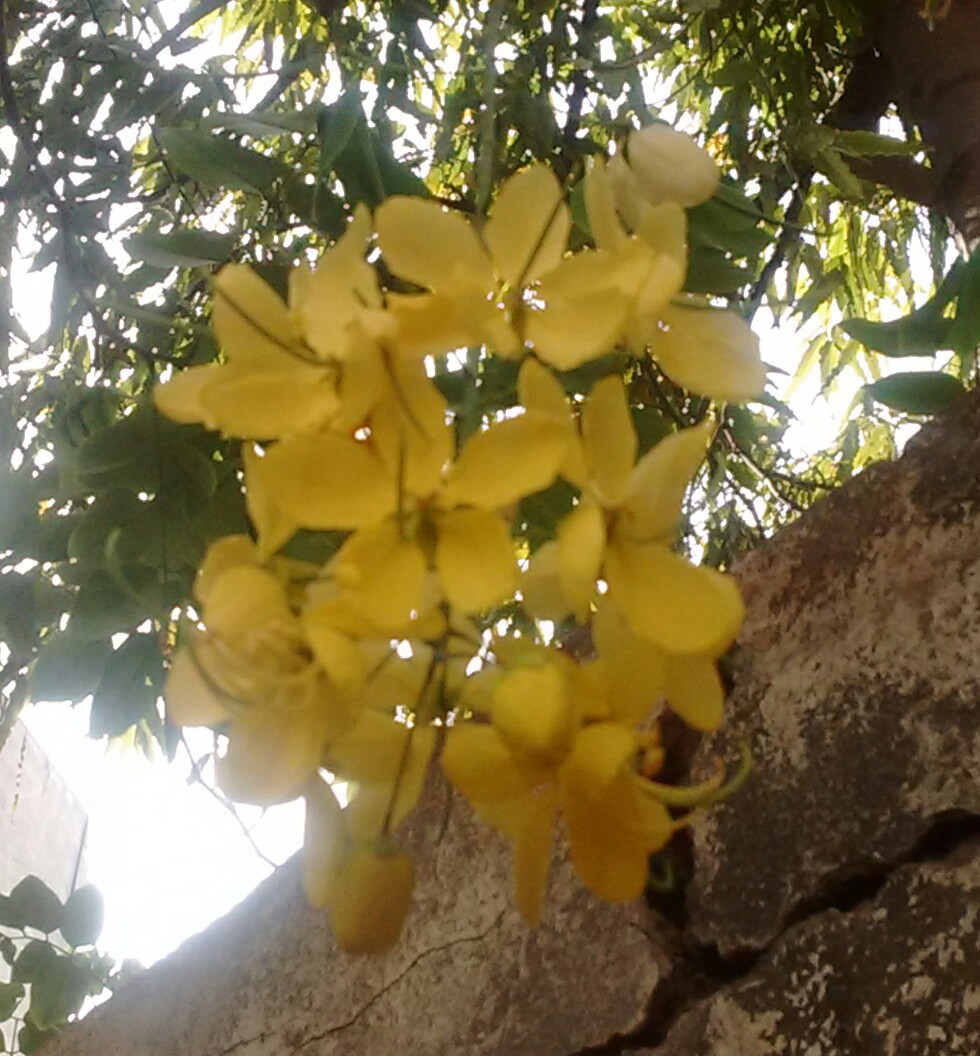
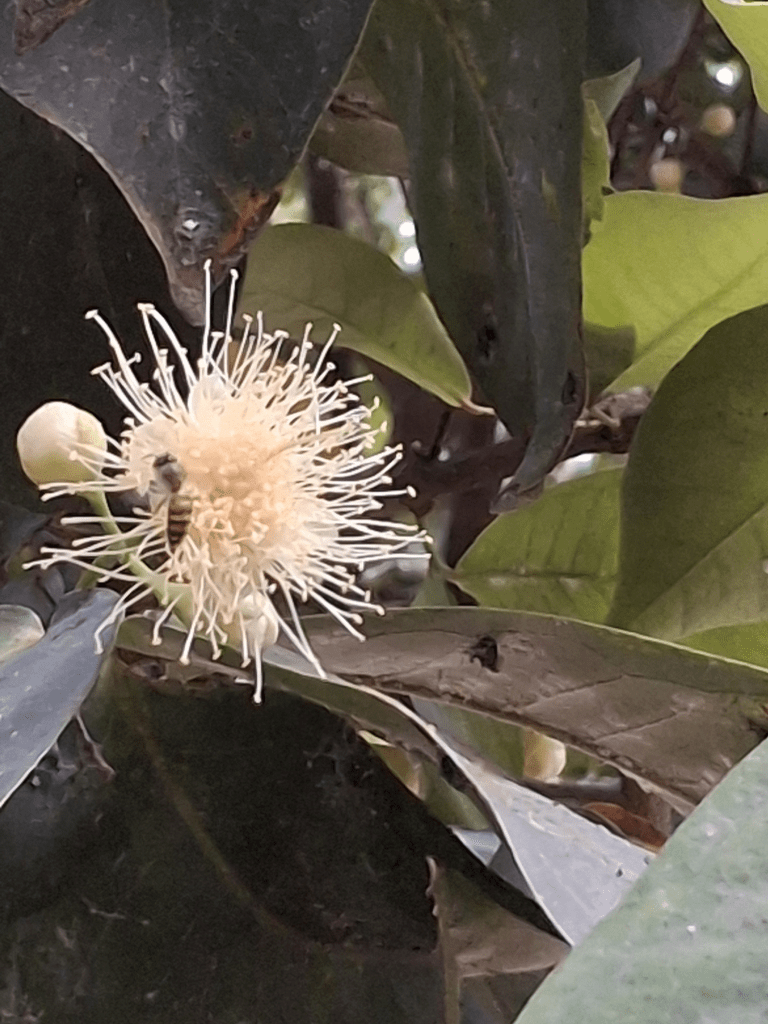
For the rest of us, we can do our bit by making bees welcome. We could provide fresh, pesticide-free drinking water; bees need to regularly drink water, especially in hot weather. We can also grow bee-friendly plants. Trees like gulmohar, champa and amaltas, and flowering plants like marigold, sunflower, rose, and hibiscus are ideal for attracting bees. Vegetable and fruit plants like ladies finger, onion, mustard, coriander, cauliflower, cabbage, carrot, brinjal, tomato, chilli, papaya, lemon, mango, guava and pomegranate are also good at attracting bees.

While we can’t all transform into a Slovenia, maybe it’s time that we saw that bee as more than just a passing buzz!

–Mamata

May 22 also marks the International Day for Biological Diversity. Let’s start the celebration with a Bee!