The Bee’s Knees and Other Curious Creatures of Language

Language is a strange and wonderful thing.

Every day, we use expressions that roll effortlessly off the tongue without pausing to think about what they actually mean. We wish people the “best of luck,” promise to “keep an eye on things,” and complain when life becomes “a rat race.” Most of the time, these phrases do their job so well that we never stop to examine them.

But every now and then, an expression invites a second look.

Take the phrase “the bee’s knees.”

If someone describes a new restaurant, a favourite book, or a clever invention as the bee’s knees, they mean it is excellent—something special, perhaps even the best. Yet the moment one stops to think about it, a question arises.

Why a bee?

And why its knees?

Bees are many things. They are hardworking pollinators, builders of intricate hives, and producers of honey. But their knees do not seem especially famous. No one admires a bee and immediately thinks, “What magnificent knees!”
Yet for more than a century, English speakers have happily used the phrase without demanding an explanation.

The story begins in the United States during the roaring 1920s. It was an age that loved novelty. Jazz filled dance halls, fashions changed rapidly, and language became a playground for creativity. People delighted in inventing colourful slang. Something impressive might be called “the cat’s pajamas,” “the eel’s ankle,” “the monkey’s eyebrows,” or “the bee’s knees.”

These expressions were not meant to be logical. In fact, their appeal often came from their absurdity. The more unlikely the combination, the more amusing it sounded.

Most of these phrases disappeared as fashions changed. Yet a few survived. The bee’s knees buzzed on while many of its companions faded into obscurity.

Perhaps it endured because bees themselves occupy a special place in the human imagination.

Across cultures, bees have long been symbols of industry, cooperation, and diligence. Ancient Egyptians kept bees. Greek philosophers admired their organisation. Medieval monasteries prized beeswax for candles. Farmers depended on pollination long before anyone fully understood the science behind it.

Today, we know that bees are among the most important creatures on the planet. Their daily work helps pollinate crops, wildflowers, fruit trees, and countless other plants. A world without bees would be a poorer and less colourful place.

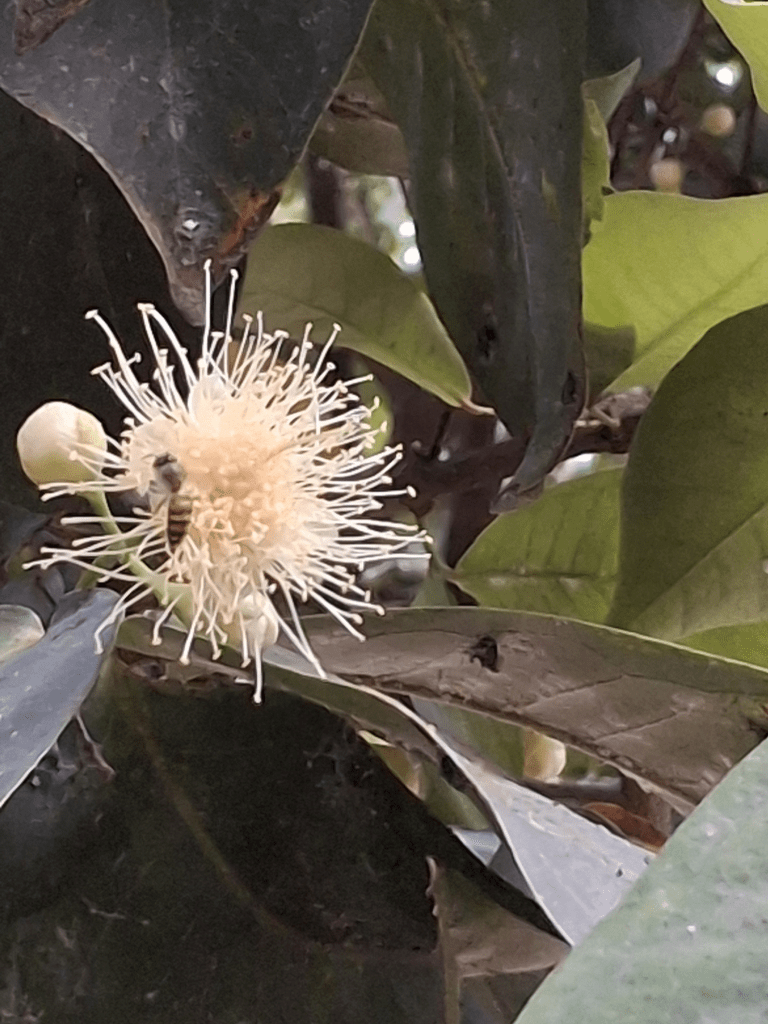
And in an amusing twist, bees do have something noteworthy on their legs. Worker bees collect pollen in specialised structures on their hind legs known as pollen baskets. If you have ever seen a bee carrying bright yellow clumps of pollen, you have witnessed one of nature’s most efficient collection systems at work.

So while the phrase was probably invented as nonsense, modern biology has accidentally given it a touch of credibility.

The bee’s knees are, in their own way, quite remarkable.

The phrase also reminds us of something larger: language is filled with animals.

Consider how often creatures appear in everyday speech.

When we hear information directly from the original source, we get it “straight from the horse’s mouth.” The expression likely comes from horse traders, who could estimate a horse’s age by examining its teeth.

When someone raises a false alarm repeatedly, we say they “cry wolf.” The phrase traces its roots to one of Aesop’s famous fables, in which a shepherd boy repeatedly tricks villagers into believing a wolf is attacking his flock. When a wolf finally appears, no one believes him.

If a person sends us on a pointless errand, we call it “a wild goose chase.” The expression was popularised by Shakespeare, who used it in Romeo and Juliet. Today, it describes any pursuit that is unlikely to succeed.

Then there is the curious warning not to “look a gift horse in the mouth.” Once again, horses are involved. Since age and health could be judged from a horse’s teeth, examining the mouth of a horse that had been freely given was considered ungrateful.

Some animal expressions are easier to understand.

Someone who is “busy as a bee” needs little explanation. A person with “eagle eyes” sees details others miss. A “social butterfly” moves easily from one conversation to another.

Others are delightfully baffling.

Why do we have “ants in our pants” when we are restless? Why are secretive people said to be “as sly as a fox”? Why do difficult situations become a “dog’s breakfast” in some parts of the English-speaking world?

The answer often lies in history. These phrases are linguistic fossils, preserving traces of old occupations, folk tales, observations of nature, and forgotten jokes. Long after the original context disappears, the expression remains.

In this way, language resembles an attic filled with heirlooms. We continue to use objects whose stories have been partly forgotten. Their meanings survive even when their origins grow hazy.

That may be why expressions such as “the bee’s knees” continue to charm us. They remind us that language is not merely a tool for communication. It is also a record of human imagination.

Generations of speakers have played with words, invented absurd images, borrowed ideas from animals, and passed them on. Most vanished. A few endured.

And among those survivors is a tiny insect whose unlikely knees have become a symbol of excellence.

Not bad for a creature that was probably never consulted on the matter.

The next time someone describes a book, a meal, a holiday, or a grandchild as “the bee’s knees,” spare a thought for the strange journey of that phrase. It has travelled through jazz-age slang, survived changing fashions, outlived dozens of rival expressions, and settled comfortably into modern English.

That, one might say, is the bee’s knees of linguistic success.

–Meena
Nature’s Rule-Breakers: Flora and Fauna That Refuse to Behave “Normally”

When we are children, nature is explained to us in neat categories. Birds fly. Fish swim. Spiders spin webs. Plants make food from sunlight and quietly stay rooted in place. Mammals give birth to live young.

And then, slowly, nature begins to reveal its mischievous side.

A spider hunts like a tiger instead of spinning a web. A fish walks on land. A plant eats insects. A mammal lays eggs. A mushroom traps worms. The more one studies biology, the more one realises that evolution has very little respect for the tidy boxes humans create.

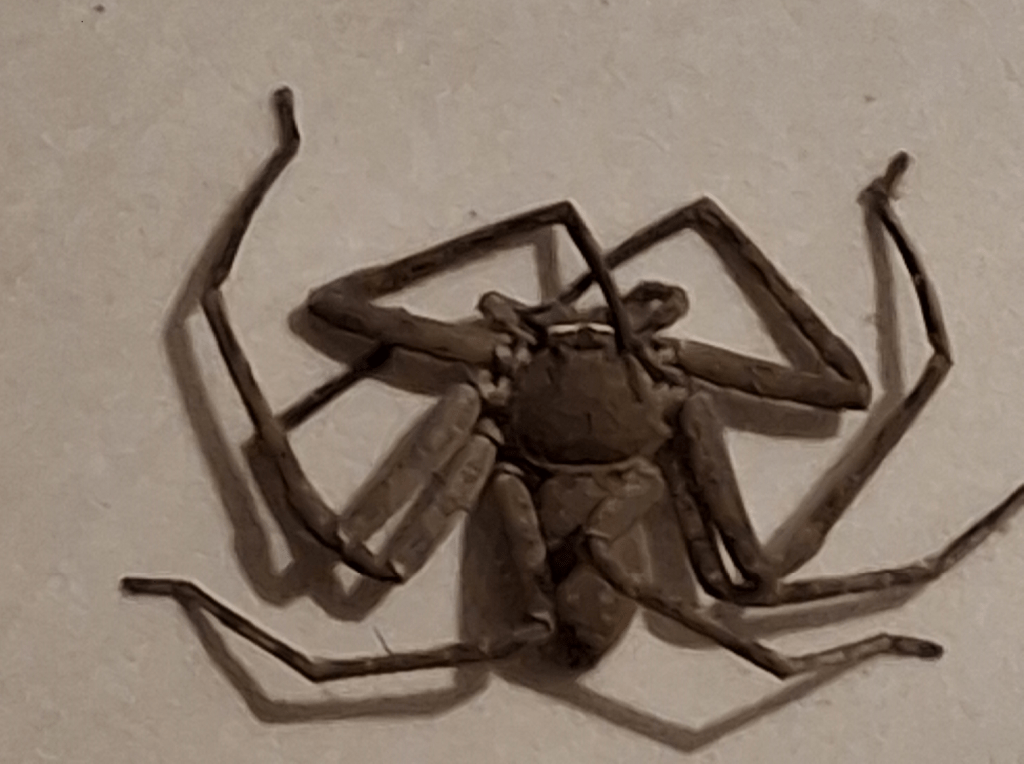
Take the Huntsman spider, for instance. Most of us imagine spiders as patient architects sitting in intricate webs, waiting for prey to blunder in. The huntsman spider does something entirely different. It stalks and ambushes prey, relying on speed and agility rather than silken traps. In many ways, it behaves more like a tiny leopard than a conventional spider.

It is not alone.

The Jumping spider has remarkably sharp vision and leaps onto prey with astonishing precision. The Wolf spider actively chases its victims across the ground. The Trapdoor spider lives in underground burrows and springs out like an ambush attacker in a war film.

These creatures remind us that even within a single group, evolution can produce wildly different lifestyles.

Then there are mammals — supposedly the most familiar class of animals to humans. Mammals, we are taught, give birth to live young. Except some do not.

The Platypus looks as though it was assembled from spare parts: duck bill, otter feet, beaver tail — and it lays eggs, and it is a mammal! The male even has venomous spurs. Its cousin, the Short-beaked echidna, also lays eggs despite being a mammal covered in fur.These monotremes are evolutionary oddities, survivors from a far older branch of mammalian history. If they were discovered as fossils rather than living creatures, many scientists might have assumed them to be fictional hybrids.

Birds, too, refuse to follow the script.

We instinctively associate birds with flight, yet the Ostrich abandoned the skies to become the world’s fastest running bird. The Penguin transformed wings into underwater flippers and effectively “flies” through the sea instead of air. The Kiwi of New Zealand behaves almost like a nocturnal mammal, shuffling through forests at night with a powerful sense of smell.

And some creatures seem unable to decide whether they belong on land or in water. The Mudskipper spends large amounts of time outside water, “walking” across mudflats using its fins. The Walking catfish can wriggle across land between ponds. The Climbing perch survives out of water for surprisingly long periods.

Plants provide perhaps the most startling examples of all because we rarely think of them as active or predatory. The Venus flytrap snaps shut on insects with startling speed. Pitcher plant species lure prey into liquid-filled traps where victims drown and decompose. The Sundew uses sticky tentacles to ensnare insects. The underwater Bladderwort employs tiny vacuum traps. These carnivorous plants evolved in nutrient-poor soils where ordinary plant life struggled. Instead of relying solely on the earth for nourishment, they turned to meat.

Some plants go further still and become outright thieves. The parasitic Dodder wraps itself around other plants and steals nutrients directly from them. The Indian pipe is ghostly white because it lacks chlorophyll almost entirely.

Even fungi refuse to stay within expectations. Certain fungi trap microscopic worms using tiny snares and digest them alive. The common Oyster mushroom can behave like a microscopic predator. Ophiocordyceps unilateralis goes a step further, infecting ants and manipulating their behaviour before killing them in locations ideal for fungal growth.

Nature’s rebels are not limited to these. The Electric eel generates electricity powerful enough to stun prey. The Leaf sheep, a tiny sea slug, steals chloroplasts from algae and briefly becomes “solar-powered.” The New Caledonian crow manufactures tools, while the Naked mole-rat lives in colonies resembling ant societies, complete with a queen.

The deeper one looks into nature, the clearer it becomes that “normal” is mostly a human invention. Evolution does not work toward ideals or categories. It experiments endlessly. If a strange adaptation improves survival — whether that means a spider abandoning webs, a fish walking on land, or a plant eating insects — nature keeps it.

In fact, these biological rebels may teach us the most important lesson of all: survival often belongs not to the strongest or fastest, but to the adaptable, the unconventional, and the creatures willing to break the rules.

–Meena

Pic: Hunstman spider, Meena Raghunathan

The Water Bear Goes to Space Again

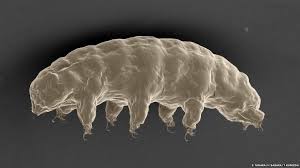
Now what is this creature who is undertaking so many space odysseys? We don’t recall seeing a bear of any kind suited up and entering a space vehicle. And what is a water bear anyway—we’ve heard of polar bears, sloth bears, brown bears, black bears and several others; but never a water bear.

Well water bears or tardigrades are microscopic eight-legged animals. Because they look like bears under the microscope, they have been dubbed water bears. However, they don’t necessarily live in water, though they need a coating of water around themselves to prevent dehydration. They live in all kinds of places, from deep seas and hot springs to sand dunes! They also like to live in the moist environment provided by mosses and lichens and hence are also called moss piglets.

The German scientist Johann Goeze first described these creatures in 1773, and called them Kleiner Wasserbär in German, which translates to ‘little water bear’. In 1776, the Italian biologist Lazzaro Spallanzani named the phylum Tardigrada, meaning ‘slow walkers’. Today, about 1500 species of tardigrades have been documented.

They are generally about 0.5 mm in length when fully grown, short and plump, with four pairs of legs, each ending in claws or sticky pads. They are visible under low-power microscopes, so can be viewed easily even at schools or homes.

But it is not all this that makes tardigrades creatures of special interest. What sets them apart scientifically is that they belong to an elite category of animals known as extremophiles. They can survive extreme environments that most animals can’t.

For instance, tardigrades can go up to 30 years without food or a water supply. They can live even at absolute zero, and can survive above boiling temperatures. They can take pressures six times greater than the ocean’s deepest trenches, and exist in the vacuum of space. They have survived five mass extinctions!

One reason for their resilience is a unique protein in their body which protects their DNA from harmful radiation which is present all around us.  A strategy they employ in dry environments is to push all water out of their body, pull in their head and limbs, and roll up into a small ball. They go into a deep sleep until conditions improve

Tardigrade biology is unique, and scientists study tardigrades to understand their indestructibility, to transfer these learnings to many fields.  

The idea of sending tardigrades to space was first proposed in 1964. Actual experiments began in 2007 when they went up with NASA’s FOTON-M3 mission, where they were exposed to space’s vacuum for 10 days, and reanimated just by rehydration, back on Earth.

Then, in 2011, tardigrades were on board the International Space Station, and in 2019, a capsule containing tardigrades was sent on board the Israeli lunar lander Beresheet which crashed on the Moon. SpaceX-22 Commercial Resupply Services mission on June 3, 2021 also carried tardigrades to do an experiment to identify the genes involved in their ability to survive and adapt to high-stress environments, including the one astronauts experience in space. NASA hopes the findings can help guide research into protecting humans from the stresses of long-duration space travel, and ultimately help in setting up sustainable colonies on the Moon and Mars.

These space-veterans are also part of Group Captain Shubanshu Shukla’s crew! He and his fellow Polish astronaut Uzanaski-Wisniewski will study several aspects of tardigrades duing their 2-week trip–their revival, survival, and reproduction; they will count the number of eggs laid and hatched duringthe mission; compare the gene expression patterns of the astronaut-tardigrades with  those of ground populations; and identify molecular mechanisms of resilience

Thank you, Grp Captain Shukla and your brave mates on Axiom 4. Wishing you a safe journey and that you extend the boundaries of space and knowledge.

–Meena

PIC: From BBC