Living Your Dreams: Calvin and Hobbes

I am an unapologetic follower of comic strips. This is the section of the newspaper I save up to savour after reading all the gloom and doom news. One of my all-time favourites is Calvin and Hobbes.  

The creator of these iconic characters–six-year-old Calvin named after the Protestant reformer John Calvin, and his imaginary stuffed tiger friend Hobbes named after the philosopher Thomas Hobbes, is Bill Watterson.

Watterson graduated from Kenyon College, a liberal arts college in Ohio, with a degree in Political Science in 1980. He started working as a political cartoonist for a local newspaper soon after he graduated, but was fired after three months. He then worked for a company creating ads to sell products, something that he hated. All the while he continued drawing, with the idea of creating a syndicated comic strip. It was five years before his dream could be realized.

The first Calvin and Hobbes strip appeared in a newspaper in November 1985. The characters and their adventures and ruminations were much deeper than just “comical”. They reflected the universal quest to accept the impossible and to embrace the irrationality of the moment. As Watterson once described it “My strip is about private realities, the magic of imagination, and the specialness of certain friendships”. Watterson’s daily strip became an icon for all these elements and was syndicated to over 2,000 newspapers. Bill’s new ‘job’ was to come up with 365 ideas a year. For this he said he had to create a kind of mental playfulness. He sustained this for ten years. The last Calvin and Hobbes strip was published on 31 December 1995.

Despite the huge success of the characters, and in the face of intense pressure to allow related merchandise, Watterson never succumbed to what would have been a billion dollar industry. He believed that by doing so “Creativity would become work for pay. Art would turn into commerce. Selling out is usually more a matter of buying in. Sell out, and you’re really buying into someone else’s system of values, rules and rewards. I’m not interested in removing all the subtlety from my work to condense it for a product…Note pads and coffee mugs just aren’t appropriate vehicles for what I’m trying to do here.”

In 1990 Bill Watterson was invited back to Kenyon College to give a commencement address to the graduating students. His deeply personal and candid talk urges young people to follow their dreams even in the face of numerous challenges.

This month, as thousands of graduates across many parts of the world step out of the security of academic institutions and enter, with excitement and some apprehension, the vast, hitherto unknown world of work, Bill Watterson’s words offer encouragement, support and inspiration.

Sharing some excerpts.

At school, new ideas are thrust at you every day. Out in the world, you’ll have to find the inner motivation to search for new ideas on your own. With any luck at all, you’ll never need to take an idea and squeeze a punchline out of it, but as bright, creative people, you’ll be called upon to generate ideas and solutions all your lives. Letting your mind play is the best way to solve problems

You may be surprised to find how quickly daily routine and the demands of “just getting by” absorb your waking hours. You may be surprised to find how quickly you start to see your life in terms of other people’s expectations rather than issues. You may be surprised to find out how quickly reading a good book sounds like a luxury.

We’re not really taught how to recreate constructively. We need to do more than find diversions; we need to restore and expand ourselves. Our idea of relaxing is all too often to plop down in front of the television set and let its pandering idiocy liquefy our brains. Shutting off the thought process is not rejuvenating; the mind is like a car battery–it recharges by running.

A playful mind is inquisitive, and learning is fun. If you indulge your natural curiosity and retain a sense of fun in new experience, I think you’ll find it functions as a sort of shock absorber for the bumpy road ahead.

For years I got nothing but rejection letters, and I was forced to accept a real job. A REAL job is a job you hate. I designed car ads and grocery ads in the windowless basement of a convenience store, and I hated every single minute of the 4-1/2 million minutes I worked there. My fellow prisoners at work were basically concerned about how to punch the time clock at the perfect second where they would earn another 20 cents without doing any work for it.

I tell you all this because it’s worth recognizing that there is no such thing as an overnight success. You will do well to cultivate the resources in yourself that bring you happiness outside of success or failure. The truth is, most of us discover where we are headed when we arrive. At that time, we turn around and say, yes, this is obviously where I was going all along. It’s a good idea to try to enjoy the

To endure five years of rejection to get a job requires either a faith in oneself that borders on delusion, or a love of the work. I loved the work. Drawing comic strips for five years without pay drove home the point that the fun of cartooning wasn’t in the money; it was in the work. This turned out to be an important realization when my break finally came.

You will find your own ethical dilemmas in all parts of your lives, both personal and professional. We all have different desires and needs, but if we don’t discover what we want from ourselves and what we stand for, we will live passively and unfulfilled. Sooner or later, we are all asked to compromise ourselves and the things we care about. We define ourselves by our actions. With each decision, we tell ourselves and the world who we are. Think about what you want out of this life, and recognize that there are many kinds of success.
But having an enviable career is one thing, and being a happy person is another.

Creating a life that reflects your values and satisfies your soul is a rare achievement. In a culture that relentlessly promotes avarice and excess as the good life, a person happy doing his own work is usually considered an eccentric, if not a subversive. Ambition is only understood if it’s to rise to the top of some imaginary ladder of success. Someone who takes an undemanding job because it affords him the time to pursue other interests and activities is considered a flake. A person who abandons a career in order to stay home and raise children is considered not to be living up to his potential-as if a job title and salary are the sole measure of human worth.

Cultivate that interest, and you may find a deeper meaning in your life that feeds your soul and spirit. Your preparation for the real world is not in the answers you’ve learned, but in the questions you’ve learned how to ask yourself.

–Mamata

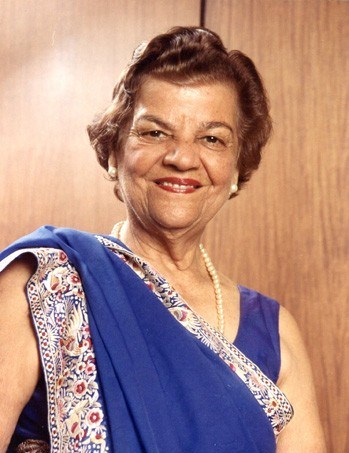
Gracious, graceful, generous: Shobita Punja

Those are my memories of Shobita Punja, who passed away last week. She joined the Governing Council of Centre for Environment Education (CEE) when I was a rookie-professional there. And from then on, for the decades that followed, we would have the privilege of meeting with her twice a year when she came for the meetings, and then again at workshops and seminars. And over the years, she went from advisor to friend.

Shobita Punja
Shobita Punja. Photo: Jaipur Virasat Foundation.

And in every interaction, she was indeed gracious and generous—taking the time to talk to each one of us, enquiring about our projects, and giving her inputs gently and generously. Most conversations gave us a new perspective to the way we were looking at things.

And of course she was graceful. Her lovely cotton saries; her low, loose bun; her warm smile.

We all wished we could be half as erudite and elegant as her. Or even a quarter would do!

When we first met, she was heading the Centre for Cultural Resources and Training (CCRT), and they were bringing out innovative teaching materials to ignite the love of our history and culture in school kids, and supporting that with teacher training to ensure that the material was used in the right way in the schools. There was much to learn and share, for she was doing for the cultural environment what we at CEE were doing mainly for the natural environment. Both CEE and CCRT were pioneers in introducing experiential learning pedagogies, in getting children to look up from textbooks at the real world, and in trying to question and contextualize their experiences; analyze and synthesize their learnings. And these were revolutionary thoughts for the ‘80s! (Today, the ideas are not new, but how effectively they are put into practice in their real spirit is still a question mark).

 She was truly a pioneer! She did her BA in Art History when it was definitely not seen as a subject with any great career openings, at least not in our part of the world.  This was followed by a Master’s in Ancient History from JNU and another Master’s in Art Education from Stanford. She was awarded a Ph.D. for her contribution to Art Education.

From CCRT, Shobita moved to INTACH, and established a Heritage Education and Communication Service there. She was the moving force behind the restoration of the Chowmohalla Palace and Museum at Hyderabad. As an erstwhile resident of that historical city, I can aver to how authentically it was done and how proudly we used to be to show it off to our visitors. The restoration won the coveted UNESCO Asia-Pacific Heritage Award, apart from many other accolades. Chowmohallah after its restoration was the site for many beautiful music and dance performances, made even more beautiful by the settings. Shobita was also behind the restoration of the Jai Vilas Palace Museum, Jaipur and Reis Magos Fort, Goa.

She was a prolific writer, with over 20 books to her credit, ranging from one as recent as the 2023 co-authored ‘A New History of India: From Its Origins to the Twenty First Century’, through scholarly books on Khajuraho and Banaras, to children’s books including ‘Listen to the Animals’ A Fabulous Collection Of Takes For Children,Illustrated by Mario Miranda.

But maybe her most seminal work was her first book, ‘Illustrated Guide to Museums of India’. Nothing like this had been done before for our heritage collections, and it set a benchmark. What is wonderful is that it is available to all free online, thanks to the UNESCO archives. All you have to do is click on: https://archive.org/details/in.gov.ignca.84193/page/n17/mode/2up.

Shobita, you have left us, but your contributions and the memories of your grace and presence will live on!

May your soul Rest in Peace.

–Meena

Purnima Devi: Saviour of the Storks

Purnima was only five years old when she had to go and live with her grandmother. The little girl missed her parents and siblings, but her grandmother who had a small farm on the banks of the Brahmaputra river in Assam started taking her to the nearby paddy fields and water bodies, and showing her and telling her about the different birds that could be seen in large numbers. She also taught her traditional bird songs that described not only the beauty but the importance of birds in people’s lives and culture.

The seeds that were planted in those fields took deep roots. Purnima not only fell in love with birds, but would also go on to devote her professional life to studying and protecting birds. After her Master’s degree in Zoology, Purnima decided that she wanted to focus on a bird species that she had grown up seeing, but whose numbers seemed to be on the decline. This was the Greater adjutant storks—large majestic birds named for their stiff-legged, almost military gait. These carnivorous birds are “cleaners of the ecosystem” and play a significant role in the food chain in terms of nutrient cycling and ecosystem regulation,

Purnima started her doctoral research on Greater Adjutants in 2007. As she studied their nesting behaviour, Purnima realized that the birds needed tall trees where they could make their platform nests. But with rapid disappearance of natural forests and wetlands, these birds had to seek nesting trees wherever they could find them. The only remaining large trees were in the villages, close to the homes of villagers. But these birds were far from welcome there.

Hargila (which means ‘bone swallower’) as the storks are locally called are scavengers and bring bones and dead animals to their nests, these often drop to the ground. Along with the birds’ foul-smelling droppings, these birds are not the most pleasant of neighbours to have. Villagers even cut down huge old trees in their backyards to prevent these birds from nesting. The birds were also perceived as bad omens or disease carriers. With the declining natural tree cover, and the hostility of the villagers, the survival of Adjutant storks was in jeopardy.

In 2007, while she was still a researcher, Purnima was present when a large tree was cut down, bringing down the nest along with nine chicks. Her attempts to explain to the villagers about the ecological significance of such scavenger birds, were met with ridicule by the local people. One local resident even scoffed her saying that she should work in his house to clean up the storks’ stinking messes. Rather than being put off by this, Purnima chose to abandon her academic research and to focus instead on working with the local communities to change their perceptions towards this bird.

Purnima decided to start by reaching out to the women, who did not often have a voice, but who could potentially influence the entire family. Her first step was to gain access to the nests which were often in trees on family land. This was initially by getting close to the individual women who were the homemakers. Purnima then started to get the women together through common events such as cooking competitions. She began by appealing to their maternal instincts by stressing the importance of safe nesting sites for the birds, while also discussing their ecological importance. She told them that when our children are young they also make a mess at home, but we still love and protect them. More and more women started coming to these meetings, and joined in the efforts to protect nesting sites and rehabilitate chicks that had fallen from the nests. They organised ‘baby showers’ to celebrate newly-hatched chicks; they revived the traditional songs, poems, festivals and plays that featured these birds.

Purnima realized that for sustained community engagement they needed to take ownership. She helped to provide the women with weaving looms and yarn so that they could create and sell textiles with motifs of the hargila. This initiative provided livelihood options, supported women to become entrepreneurs, and boosted their sense of pride and ownership, as well as raising the profile of the stork. Today the “Hargila Army” consists of over 10,000 women. The Hargila army members call their leader Purnima hargila baideu, or stork sister. The power of community conservation is evident. This has also led to the involvement of the local government departments to recognize, and in some ways support the community efforts.

Since Purnima Devi Burman started her conservation programme, the number of nests in the three villages of Kamrup district in Assam, where she first started her efforts have risen from 28 to more than 250, making this the largest breeding colony of Greater adjutant storks in the world. In 2017, Barman began building tall bamboo nesting platforms for the endangered birds to hatch their eggs. Her efforts were rewarded a couple of years later when the first Greater adjutant stork chicks were hatched on these experimental platforms.

Safeguarding single nests is not enough, the storks’ habitats also need to be restored. The Hargila Army has helped communities to plant tens of thousands of saplings near stork nesting trees and wetland areas in the hope they will support future stork populations.

The Greater adjutant stork is the second-rarest stork species in the world. It is also listed as ‘Endangered’ as per the IUCN Red List which notes that there are only about 1200 of these storks remaining in the world. The dramatic decline in their population has been partly driven by the destruction of their natural habitats, especially wetlands, and the ruthless destruction of their nesting trees. Assam in India is home to the largest population (around 1000) of these birds. This is in no small measure due to the efforts of Purnima Devi Burman and her Hargila Army. 

Purnima Devi’s efforts have also received wider recognition. She has received several awards. She was the recipient of the 2022 UNEP Award for Champion of the Earth for Entrepreneurial Vision. The annual awards are the highest environmental honour that the UNEP confers on individuals and organisations whose actions have a “transformative impact” on the environment.

Purnima Devi was recognized for “pioneering conservation work that empowered thousands of women, creating entrepreneurs and improving livelihoods while bringing the Greater adjutant stork back from the brink of extinction. Her work has shown that conflict between humans and wildlife can be resolved to the benefit of all. By highlighting the damaging impact that the loss of wetlands has had on the species who feed and breed on them, she reminds us of the importance of protecting and restoring ecosystems.”

As we mark Earth Day on 22 April, this is a good time to celebrate such Champions of the Earth who have made it their life’s mission to Protect and Conserve.

–Mamata

Communications Research: Pioneering Work of Dr. Binod Agrawal in SITE

Last week, another of our gurus passed away. Dr. Binod C. Agrawal wore many hats in his life, and it is impossible in a short piece to do justice to his work . But we knew him as a kind and generous mentor, who never stinted in sharing his time, advice, wisdom and wit with the young rookie educators we were when we first met him.

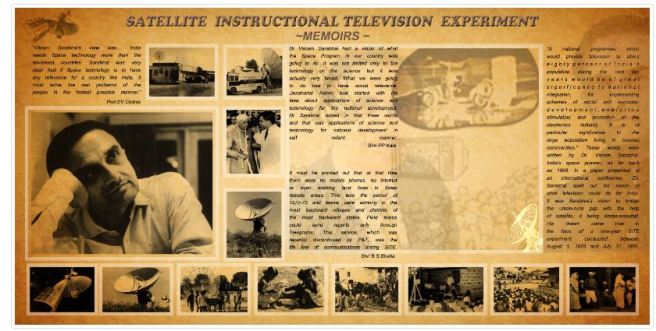
He was then at the Development Communications Education Unit of ISRO. In the communications sector, he was legendary. He had after all been part of the historic SITE (Satellite Instructional Television Experiment), termed by some as the greatest communication experiment in history. SITE was an experimental satellite communications project designed jointly by NASA and the Indian Space Research Organization (ISRO) which made available informational television programmes to rural India. It broadcast programmes to over 2500 villages across 6 states in India, in 1975-76. Dr. Vikram Sarabhai’s dream of India using technology to reach the most deprived was the basis of the experiment.

Everything about the project was unique—the vision, the audacity of the dream, the technological challenges, the operational challenges, and the challenge of making a difference to people’s life.

The last is where Dr. BA’s contribution came in. The contours of the programme were clear. It would broadcast (a) educational television (ETV) school children in the age group of 5-12 years and (b) instructional television (ITV) for adult audiences, primarily designed for neo-literates and illiterates. ETV programme was focussed to make education more interesting, creative, purposive and stimulating and also to create an awareness in the changing society. The ITV for adult viewers was to cover incidents of national importance, improved practices in agriculture, health, hygiene, family planning, nutrition, etc. and some recreation programmes.  

The purpose of the project was to provide information that was useful, relevant and actionable by the target audiences—the people in these most remote, deprived villages. But what did the people there need and want to know? This was the first question that Dr BA and others in the team had to grapple with. What were the information gaps? Without a proper understanding of that, the programme would not really be useful. Hitherto, such studies used to depend essentially on survey methods. Dr. BA, with his background in anthropology, for the first time deployed qualitative studies, to supplement and complement traditional methods. Through innovative research design and large field teams spending time in the target villages, SITE programming could answer the real questions and concerns that people had.

Dr. BA’s work did not stop there. At the instance of the Planning Commission, the impact of SITE was thoroughly evaluated—through a Bench-Mark Survey during July, 1975, a Concurrent Observation, and Repeat Survey in 1976. He was involved in these as well.

The evaluation validated the needs assessment done by the communications research team. 78% of the development programmes were rated as good and over 90% as relevant to the local situations. About three-fourth of the respondents felt that the development programmes were, on the whole, useful and conformed to the local conditions. Over one-fourth of the viewers could acquire detailed knowledge of the new practices shown on the television.

Dr. Agrawal’s contribution to communications research through his involvement with SITE and agriculture research before that, is summed up in a paper by his long-time associates Dr. Arbind Sinha and Dr. Sudhakar Rao: ‘..it is Binod C. Agrawal, trained in cultural anthropology, who devoted his time for conducting communication research using anthropological methods at the Indian Agriculture Research Institute, New Delhi during the early 1970s. A major boost to this field came with his engagement with the now iconic Satellite Instructional Television Experiment (SITE) of Indian Space Research Organization (ISRO) in the mid-1970s..that has brought anthropology in close relationship with development and communication, especially, in the rural context. It helped make communication an integral part of the discipline of anthropology.’

Dr. Binod Agrawal

Dr. BA was not one to sit in an office and design research protocols. How deeply he and his team were involved in the field during SITE can be gauged from a report by the Resident Representative of NASA in India, Dr. Howard Galloway: ‘Just checked with Dr. Binod Agrawal, Chief of the Research and Evaluation Cell (REC). He gave me the following information. All of his staff take evaluation very seriously. When their DRS has trouble, they get immediate help. Example: Recently Dr. Binod was in a village when the TV cut off. Within five minutes his staff had borrowed a motor bike and set off for the subcluster maintenance center (SCM). Returning shortly, he brought the needed part and put the set back into operation. Because it is so much effort for a service man to get to the village to replace a fuse as a circuit card, the REC staff has relieved his burden. They carry fuses and set right the TV sets at once. On his recent trip, Binod saw a villager from a nearby village come furiously pedalling to an REC village, His TV was out. The REC staffer, riding on the back of the bike, went to the sick set, replaced the fuse and restored peace in the village.

It was this commitment and passion shared by the SITE team which made the project an international landmark in space experiments. Talking to Dr. BA more than a decade after these experiences, we could still feel the excitement.

Dr. Agrawal was Founder Director of Mudra Institute of Communications Ahmedabad (MICA), which is one of the most respected communications institutions in the country. He was also Founder Vice Chancellor of Himgiri Zee University, and till recently Professor of Eminence and Director General TALEEM Research Foundation.

He taught so many of us so much.
May his soul rest in peace.

–Meena

To Shruti, his daughter who was a dear colleague.

And thanks to Dr. Arbind Sinha his colleague and another doyen in the world of development communications, for the chat which helped develop this article.

International Day of Action for Rivers: A Detour to Dawki

Pollution, mining, deforestation, physical impediments created by man—a host of challenges confront India’s rivers. But a bright spot in all this is the Dawki or Umngot River in Megalaya. In the 2021 listing of the cleanest rivers of the world, Dawki made it to Number 4, behind only the Thames (England), Tara River (Montenegro-Bosnia Herzegovina), and St. Croix (USA). An incredible achievement by any standards.

Dawki river

I had the good fortune to visit Megalaya recently and Dawki was an essential part of the itinerary. Reality is not far from the numerous idyllic pictures on the internet (one from the Meghalaya Tourism site reproduced here!). It is indeed glass-like, a clear green to greeny-blue, with visibility right to the bottom of the river, going down to about 50 feet in parts. The boat-ride on the river was one of the most soothing experiences.

Pic: https://www.meghalayatourism.in/

Much of what is good in the Northeast, including how well the Dawki is maintained, can be attributed to community participation in the safegaurding and nurture of community resources. If only these mindsets and practices could be replicated in other parts of the country! (But actually, I am more worried about the wrong mindsets and practices from other parts of the country reaching the Northeast!).

An interesting part of the experience was that the ghat from where one takes the boat-ride is bang on the Indo- Bangladesh border. In fact, only a line of small stones separates the two countries! There is active commerce between the two sides, with hands reaching out to take goods and receive money (Indian currency acceptable). I tasted a number of pickles from a vendor on the other side. And of course the photo-op of the place is pics of people straddling the border or line of stones! The border is manned by the BSF on our side, who keep a sharp lookout  for cross-border movement especially as evening falls.

But getting back to rivers and river quality.  Water quality can be defined as the physical, chemical and biological characteristics of water. Parameters that are frequently sampled or monitored for water quality include temperature, dissolved oxygen, pH, conductivity, Oxidation-Reduction Potential, and turbidity.

Of these, dissolved oxygen or DO is considered the most important indicator of water quality of rivers, lakes etc. The higher the DO, the better the water quality. Lower Dissolved Oxygen means that there is not enough oxygen in the water to support fish and other aquatic life. Low DO is a result of excess growth of algae in water. Such growth happens where there is an excess of phosphorus and nitrogen going into the water. These chemicals come into the waterbodies through discharges from wastewater treatment, agricultural run-off (from the use of pesticides and fertilizers) and storm water runoff.

Rivers are our lifelines, and quality of the waters in our rivers is an area of major concern both in India and across the world. It is to focus attention on this that an International Day of Action for Rivers was declared in 1997. This was at the initiative of International Rivers Network, Narmada Bachao Andolan (India), and Biobio Action Group (Chile), and is marked on March 14 every year.

On this day dedicated to saving, celebrating, and creating awareness about the importance of rivers, let’s think about our rivers and how our actions impact them. What will it take to have some more Indian rivers join a lonely Dawki on the list of the cleanest rivers of the world?

–Meena

Celebrating the Third Sector: World NGO Day

Ponder this…

Helpage India runs 152 Mobile Health Units which travel to 1920 community locations spread over 22 states, and has provided 3 million treatments to vulnerable seniors at their doorsteps.

The Association for the Mentally Challenged, Bangalore was founded in 1960, and since then has been supporting children, adolescents and adults with intellectual disabilities, with the aim to educate, train and rehabilitate them.

Association for Democratic Reform works to improve voter knowledge by disseminating information on candidates contesting local and national elections through all media across the country.

Akshaya Patra Foundation strives to eliminate classroom hunger by implementing the Mid-Day Meal Scheme in the government schools and government-aided schools. Today it is serving meals to 1.8 million children across India.

Pratham focuses on high-quality, low-cost and replicable interventions to address gaps in the education system. Working  directly with children and youth as well as through large-scale collaborations with government systems, Pratham programs touch millions of lives every year.

Give India, itself an NGO, is the largest and the most trusted giving platform in India. It enables individuals and organizations to raise and donate funds conveniently to any cause they care about.

Goonj aims to build an equitable relationship of strength, sustenance and dignity between the cities and villages using the under-utilized urban material as a tool to trigger development with dignity, across the country.

Centre for Environment Education has been working across the country for the last 40 years, to increase awareness about the environment and sustainable development, working with schools, higher educational institutions, policy makers and reaching out to youth and the general community.

The Bombay Natural History Society (BNHS), a pan-India wildlife research organization, has been promoting the cause of nature conservation since 1883. Its mission is Conservation of nature, primarily biological diversity through action based on research, education and public awareness.

Sulabh International Social Service Organisation developed a two-pit pour-flush using ecological compost toilet technology. Sulabh flush is based on a simple design that is eco-friendly and uses just around 1.5 litres of water to flush. Over 1.5 million such toilets have been constructed across 492 districts of India.

All the organizations mentioned above belong to what is called the ‘third sector’. It is common to refer to three sectors of society, viz Government, Business, and the Non-Profit sectors. The academic Maciariello. J (2005) explains it thus: ‘First, there are public sector organizations through which the work of government is carried out. Then there are private organizations, organizations established to meet the economic needs and wants of society. And finally there are social sector organizations to care for those welfare needs of citizens that are not met fully either by public or private sector organizations.’

World NGO Day

The relationships among these three are complex and dynamic. They may be complementary, supplementary or antagonistic.  For instance, government looks to business to produce goods and services that people want, provide jobs and underpin the economic growth of the country. At the same time, it regulates how business functions. Similarly, governments and businesses look to NGOs to provide last-mile services to communities. At the same time, governments regulate NGOs; both the others sectors fund them; and both government and business are sometimes sceptical about them. There are also NGOs and activist organizations which bring to light the misdoings or shortcomings of governments and businesses, and speak up for the interests of society, especially those who do not have a voice—the under privileged, the environment, etc., and hence are on the opposite side to the other two. But what we need to understand and accept is that each of these has its own responsibilities and tasks in a well-functioning society.

As per the definition in India, NGOs are Non-Governmental Organizations working towards various causes or charitable purposes, i.e., activities which are carried out for relief of the poor, education, yoga, medical relief, preservation of environment (including watersheds, forests and wildlife) and preservation of monuments or places or objects of artistic or historic interest, and the advancement of any other object of general public utility’. (Section 2(15) of the Income Tax Act, 1961). These organizations aim to do good for society, and not generate profits. Hence, NGOs are legally not allowed to distribute the income from their working to their members. According to some reports, there are over 30 lakh NGOs in India. However, it is difficult to be quite sure of the number of working, functional NGOs.

In terms of legal structure, NGOs can be registered as Societies under Societies Registration Act (1860); Trusts under Indian Trusts Act (1882); or Non-profit company (Section 8 Company) under Companies Act (2013). There is no difference in status among these forms (though there is a lot of difference in terms of disclosure, transparency and governance requirements, with Section 25 companies required the most stringent compliances), and it depends on the context of the organization as to how it chooses to constitute itself.

NGOs differ greatly in the scope of their work, the nature of their work, size, objectives, mission, thrust areas etc. Some may have only a few staff members, while others may have employees running into hundreds. Some may work in a single village, town or community, while others may work across geographies, even internationally. Some may work on a single theme like girl child education, while others may work on holistic rural development or variety of issues from health to environment to sanitation. Some may be involved in grassroots work and delivery of services, while others may be involved in capacity building, or advocacy, innovating and creating new models of delivery of public goods and services, or policy work or funding.

Often, NGOs are accused of financial mis-governance, programme mismanagement, or not making an impact. But there are as many bad apples in every basket! Who has not encountered a bribe-seeking babu or a governmental system which needs to be oiled? How many times a month do we wake up to headlines about the shenanigans of bad corporates which cost the nation in the hundreds of crores? There is no particular reason to point fingers at the Third Sector, who for the most part work with a great deal of commitment and passion, in difficult circumstances and with less rewards.

The need is for society to understand the important role that NGOs play, the value they add, the key role they play in social development and building a just and more equitable world, and not stereotype them—either as impractical do-gooders or a self-serving bunch.

That’s a resolve for World NGO Day, marked on the 27th of February every year!

–Meena

A House for Mr. Narayan

Generations of Indians have grown up on RK Narayan’s writings. If you have not read his novels, maybe you have seen ‘Guide’, starring Dev Anand and Waheeda Rehman? Or the charming TV series ‘Malgudi Days’? Well, suggest you visit or re-visit all of the above!

RK Narayan was one of the first Indian authors to gain international recognition. His first novel, Swami and Friends, which he wrote in 1930 did not find a publisher for many years. But sometime in 1933, his friends in Oxford to whom he had sent the manuscript, showed it to the famous author Graham Greene. The senior author liked it so much that he recommended it to his publishers and the book saw the light of day in 1935. It got good reviews across the world. RKN followed this up with The English Teacher and The Dark Room, which also won appreciation. From then, it was a steady stream of novels, short stories and articles.

Narayan created the fictional town of Malgudi as the setting for his novels. So authentic was it to his readers that many even today believe it is a real place.

But why the sudden piece on RK Narayan, one might ask.

Well, it has been triggered by a visit to his house in Mysuru. Just last week, when I was there, I was lucky to get to visit this house. RKN spent many years in Mysore (as it was spelt then)—some of his growing up years, as well as his adult life when he accepted a commission in the State of Mysore.

It was in the second stint that he built a house which I visited. Set in the quiet area of Yadavagiri, it is a beautiful house typical of the 1950s, full of light and air, with red oxide floors and a beautiful balcony.

It was indeed gratifying to see the house so well preserved. Especially after we heard the story of how it was almost demolished. The author passed away in 2001. All of his family had left Mysuru by then. The house was falling to rack and ruin, when a builder wanted to pick it up and re-develop it. It was at this time that Mysuru woke up to this legacy. Led by a journalist, the people of the city protested. Finally in 2011, the city corporation bought the house and restored it.  

And we must be thankful for this! For not only is the house in good shape, it seems to have been restored fairly faithfully. There is also an exhibition of several artifacts, including his awards, personal items etc., many photographs, as well panels of text for those who have the patience to read them.

But…

And it is a very big BUT!

When one thinks of the potential that the house has for the students, literature lovers and citizens of Mysuru, not to mention the thousands of tourists the city attracts, it is a tragedy to leave it to routine care-taking and not very imaginative management.

As we reflected on our visit, we could come up with more than 10 ideas in less than 5 minutes:

  • Have a lively permanent exhibition, along with special temporary exhibitions to explore specific themes: maybe selected books; his relationship and collaboration with his brother, the famous RK Laxman, who illustrated so many of his books; maybe the process of turning his books into movies or TV (he is said to have hated the movie Guide), RK Narayan compared to comtempory Indian writers, etc., etc.
  • Sell RKN’s books (no, unbelievably, they don’t!)
  • Make it the hub for meetings of book-clubs
  • Make it a venue for book-launches
  • Host lit fests
  • Have literary events for children
  • Have screenings and discussions of movie and TV shows based on his books
  • Have an author-in-residence programme
  • Develop an archive related to his life and work
  • Create and sell souvenirs based on Malgudi
  • Start a café in the lovely little garden space around the house, and serve his favourite dishes
  • Make it a wifi café, so young people hang out
  • And charge a small fee for entrance (the Corporation has kept entry free..generous but it would be more sustainable to charge something).

Ideas are of course easy. Execution is difficult. But do this for RK Narayan’s house we must. He is a very important part of Indian writing in English.

While India does not have a great tradition of making author’s houses into educational and enjoyable experiences, there are more than enough international experiences to learn from: Shakespeare’s birthplace; Mark Twain’s house; Emily Dickenson’s House; Jane Austen’s House; Milton’s House are among the many which are successfully keeping the legacy of these authors alive.

Maybe RK Narayan House can set the example for homes of other Indian authors?

–Meena

Janakidevi Bajaj: Embodying Gandhian Values

Jamnalal Bajaj was considered Gandhiji’s fifth son, and adopted all his values—from Ahimsa to his dedication to the poor, to his commitment to locally made goods and his patriotic spirit. He was an active member of the Congress Party, and gave up the Rai Bahadur title conferred on him by the British Government, and joined the non-cooperation movement.

Importantly, Jamnalalji, in line with the trusteeship concept propounded by Gandhi, felt that inherited wealth was a sacred trust to be used for the benefit of the people and dedicated most of his wealth for the poor and under-privileged.

It was a stupendous level of sacrifice. Would it have been easy to accomplish without the support of his family? Probably not. But Jamnalal Bajaj was lucky in his life’s companion, Janakidevi Bajaj, who not only supported his ideals, but was a freedom fighter and social activist in her own right.

Janakidevi was just eight years old when she married the 12-year old Jamnalal. Both of them were highly influenced by Gandhiji. When Jamnalal took to the Gandhian way of life, Janakidevi was not far behind.

In letter and spirit, she willingly and happily gave up the comfortable lifestyle of a successful industrialist’s wife. At the age of 24, answering the Mahatma’s call, she gave up all her gold ornaments. To her dying day, she never wore any gold again. At the age of 28, she took the vow to give up foreign clothes, and to wear only Kadhi. She burnt all the foreign clothes they had in the house at the central chowk of Wardha. These included expensive saris, silks, suits, woollens and even tapestries depicting Gods. She spun khadhi and encouraged others to take up the vocation. She also gave up purdah in 1919, and motivated other women to do the same, striking a blow for freeing women.

Jamnalal and Janakidevi lived by every ideal they professed. With a deep desire to abolish untouchability, they were the first to open the doors of a temple to Harijans. On 17th July, 1928, the couple threw upon the doors of their family temple in Wardha to Harijans. This was a revolutionary move. Going further, she also hired a Dalit as part of her household staff to serve food to the family.

Throughout the years of the freedom movement, she travelled across the country and addressed and inspired thousands with her message of Swaraj, of the need to boycott foreign goods, of the importance of spinning cloth, the need to eradicate the evil of untouchability, and for social reform.

Janakidevi Bajaj

After 1947 when the country became free, she continued her social work. She was an ardent follower of Vinobha Bhave and worked tirelessly in the Bhoodhan movement. She came out with the innovative idea of ‘koopdaan’, the donation of wells, and collected resources with the ambition that every household could have a well. She also worked for education of women, and espoused the cause of gau-seva.

She was a respected and inspiring figure for those working in the development sector in India, and was awarded the Padma Vibhushan in 1956, in recognition of a lifetime of service.

It was men and women such as these who kept the spirit of Gandhiji and his ideals alive. As we mark the Mahatma’s martyrdom day, it is an appropriate time to remind ourselves of these ideals—non-violence, brotherhood, a burning desire to correct social and economic wrongs, tolerance, and goodwill towards all.

–Meena

STRIKING TIMES

On 15 December 2022 an estimated 100,000 nurses went on strike across hospitals in the UK, marking the first-ever nationwide walkout in the history of the nursing union in the country. This is probably the culmination of a year that has seen a great deal of labour unrest across Britain which has manifested in a series of strikes. From British Rail workers, to postal workers, bus drivers and baggage handlers at airports, and NHS nurses, several essential services have been disrupted and daily activities affected by these.

Labour unions have had a long history in Britain. It is interesting that one of the earliest examples of labour militancy, was in 1888, and was sparked off by young girls who worked in appalling conditions in a match factory. The Match Girls’ Strike as it came to be known was a key moment in British history and a milestone in the labour movement.

This historic development dates back to the late-nineteenth century in London’s East End, an area inhabited by the very poor, with unsanitary living conditions and rife with disease and malnourishment. This area also provided cheap labour for the nearby factories. Among these was the Byrant and May Match Company. The company employed young girls (starting as early as age 13) who worked, standing on their feet, for 14 hours a day, for very meagre wages from which they had to also feed, clothe and house themselves. Their earnings were further cut by fines and deductions for small mistakes such as leaving a match on the work bench. The girls who were forced to work as they came from large and poor families, had hardly anything left to take home. The girls also suffered abuse at the hands of the foremen. Over and above the economic exploitation, was the hazardous work environment.  

The production of match sticks involved dipping the sticks, made from poplar or pine wood, into a solution made up of many ingredients including phosphorus, antimony sulphide and potassium chlorate. Within this mixture, it was the white phosphorus that was extremely hazardous for bones and lungs. Inhaling it would cause toothaches, and in the long run, a condition called “phossy jaw” an extremely painful type of bone cancer leading to horrendous disfiguration of the face.

Matchgirls strike work!

The Company employed around 1400 such women and made huge profits, even as they managed to circumvent some of the basic labour rules of the time. It was fully aware of the impact of phossy jaw but if anyone complained, they simply instructed them to have the tooth extracted. While discontent simmered within the workers, there was little that the girls could do to change the situation; but the glowing embers were getting hotter; until a spark ignited the matches.

Henry Burrows a social activist and Theosophist, and a close friend of Annie Besant, had heard rumours about the work conditions in the match factory. He first made contact with some of the girls who worked in the factory, and Annie Besant met many of them and heard from them about their appalling work conditions. This prompted her to write an article about this titled White Slavery in London. The article was published on 23 June 1888 in a weekly magazine called The Link which was published by Annie Besant.  

The powerful matchstick industry had never been challenged like this before, it was outraged, and promptly denied everything. Bryant and May threatened to sue Annie Besant for libel and demanded that their employees sign a statement claiming that  the article was untrue. They refused. The company retaliated by sacking one of the workers who they accused of being ring leader. This was the final straw for the Match girls. And so it was that on 5th July 1888, 200 girls and women downed their tools walked out. They marched to the office of The Link and their representatives met Annie Besant. Mrs Besant did not agree with the strike action in principle but she agreed to help them. Her leadership helped to give the girls direction and organization. The ripples spread quickly, and soon about 1,400 workers had walked out in sympathy. 50 girls visited Parliament, to describe their grievances to MPs “in their own words”.

Besant and Burrows proved crucial in organising the campaign which led the women through the streets whilst setting out their demands for an increase in pay and better working conditions. Such a display of defiance against a powerful industrial lobby was met with great public sympathy, and donations for the cause started pouring in. The empathy demonstrated for the plight of working women was also a sign of changing times.

The factory management saw that the bad publicity could harm their interests and they had no choice but to offer improvements in wages and working conditions. This agreement represented a resounding success for the Match girls, who returned to work the next day. Although it would not be until 1908 that the House of Commons finally passed an act prohibiting the use of the deadly white phosphorous in matches.

An important outcome of the Match girls’ strike was the creation of a union for the women to join; this was extremely rare as female workers did not tend to be unionised even into the next century. The Union of Women Matchmakers, which lasted until 1903, was extremely significant, considering that even as late as 1914, less than 10 per cent of female workers were unionised. It also meant that the organisation of the workers did not just disappear after the strike, as had been the case previously.


The Match girls’ success gave the working class a new awareness of their power, and unions sprang up in industries where unskilled workers had previously remained unorganized. As The Link wrote on 4 August 1888 the strike “put new heart into all who are struggling for liberty and justice”. The next year saw the Great Dock Strike, where many of the dock workers were male members of the families of the Match girls. Ultimately, these two strikes led to the formation and growth of the labour movement and Labour Party itself. 

–Mamata

Kindness Day

Yes indeed, there is a World Day for Kindness! It is marked on 13 November, and the idea is to promote kindness. Initiated in 1998 by a group of NGOs, it ‘aims to promote kindness throughout the world and presents us with the opportunity to reflect upon one of the most important and unifying human principles. It is a day devoted to the positive potential of both large and small acts of kindness, trying to promote and diffuse this crucial quality that brings people of every kind together.’ 

Kindness Day
Kindness Day

Kindness is defined as ‘the quality of being friendly, generous, and considerate’. Kindness is obviously not to be confined to one day. But this Day is designated to prompt us to think consciously about kindness, and to make resolutions to help us practice kindness every day

It sounds simplistic. Why on earth should anyone be reminded to be kind? But when we look around us, we find there is indeed need to do so. Why look ‘around us’? We will find the same thing when we look into ourselves. Did we say a smiling thank you to someone who was nice to us? When was the last time we did anything for anyone? Do we show basic courtesies in queues, on the roads, in public places?

In a world where people are growing increasingly disconnected, and it’s all about ME, ME, ME, it definitely seems that these behaviours we used to take for granted are disappearing. Never was the need for an initiative like Kindness Day greater.

A measurable proxy for kindness is an attribute called ‘Social Mindfulness’. This refers to being thoughtful of others and considering their needs before making decisions. Social mindfulness is related personality traits of honesty, humility, empathy, agreeableness and pro-social value orientation.

There have been international studies to understand social mindfulness and associated behaviours. One of the best known studies in recent times is the one by Neils Doesum and his associates, who carried out research across 31 countries to understand differences in social mindfulness among the countries. They studied most common, everyday acts of cooperation which require very little effort– for example, stepping to a side to let someone pass on a sidewalk.

Alas, India came up near the bottom of the pack! Japanese scored the highest—they made socially mindful decisions– decisions which kept the well-being of others in mind–72% of the time. Austrians and Mexicans were also towards the top of the list. People in Indonesia were at the bottom, making such co-operative, unselfish decisions only 46% of the time. But India at 50% was not much better.

So obviously, we Indians need to be more aware of this trait, and if at all there is an occasion to be marked with earnestness, it is World Kindness Day.

And remember, it is not about some earth-shaking decisions or major actions. It is about our everyday interactions with people around us—can we make their lives more better, less difficult, more pleasant?  The simplest way to start being more kind and socially mindful would probably be with the old adage ‘Do unto others what you would have them do unto you.’

Specific steps would include:

  • Being conscious of the needs, feelings and thoughts of others.
  • Taking these into consideration before making decisions.
  • Not restricting choices available to other people by being selfish.
  • Being grateful for the kindness of others, and expressing that gratitude.
  • Taking a moment to help someone in need, or to make someone’s life easier.
  • Making it a habit to do random acts of kindness, however small.
  • Resolving to bring a smile to someone’s face, everyday.

Let’s take the occasion of World Kindness Day 2022 to start the personal journey to a more kind, caring and socially mindful world.

Go on, make your resolutions today.

–Meena