Forts, forts, forts…

A visit to Rajasthan leaves one with a head swimming with visions of elephants and camels, turbans and bandhini saries, sweets and more sweets .  And of course forts and palaces. I spent last week at Rajasthan, and so obviously these grandiose structures are very much on my mind.

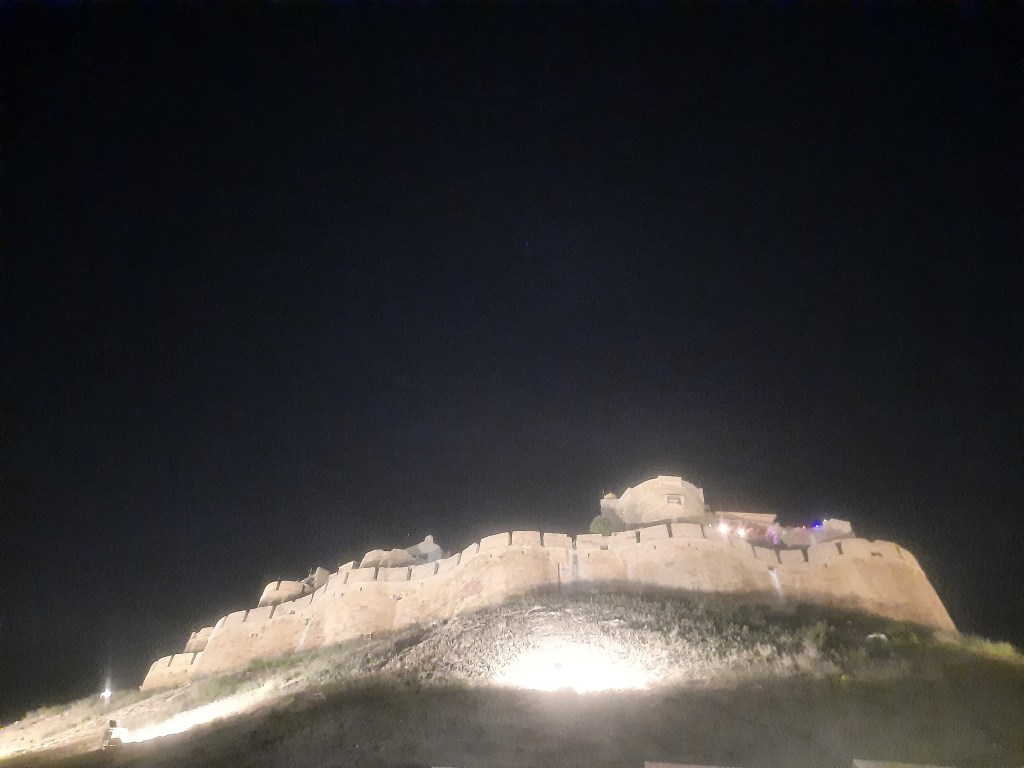
Jaisalmer Fort by Night

Which got me wandering: what are forts vs. fortresses vs. castles vs. palaces,? Well, here we go:

A fort is not a residence, but rather a military fortification. These structures were built specifically for war situations, and used to defend specific territories. A fortress is similar, but it is a larger fortified area than a fort.

A palace is primarily a residential place, occupied by royalty, heads of state, or very rich and important people. They are not fortified against attacks, but rather designed for comfort and elegance, and are often status symbols. 

Castles are large residences or a group of large buildings that have been constructed with strong walls to protect against attacks. Basically, castles are fortified residences. 

Apparently, there are about a thousand forts in India. Going strictly by the book, most forts in India are either fortresses or castles. But the British when classifying them, used the conventional British system and called them all forts.  The oldest surviving fort is thought to be the Qila Mubarak in Bathinda, Punjab, whose origins go back to the period 90-110 AD. This Qila was built by Raja Deb, a Rajput king.

That is a pretty ancient fort! But the thinking about forts goes back to even earlier times. Kautilya, the man who wrote prodigiously on all aspects of governing kingdoms, as far as the 3rd Century BC, had discussed various types of forts and fortifications.

‘On all the four quarters of the boundaries of the kingdom, defensive fortifications against an enemy in war shall be constructed on grounds best fitted for the purpose: a water-fortification (audaka) such as an island in the midst of a river, or a plain surrounded by low ground; a mountainous fortification (párvata) such as a rocky tract or a cave; a desert (dhánvana) such as a wild tract devoid of water and overgrown with thicket growing in barren soil; or a forest fortification (vanadurga) full of wagtail (khajana), water and thickets.’ he says in Book II of the Arthashastra in a section which elaborates “The Duties of Government Superintendents”. He goes into great detail not only about the construction of the fort, ramparts, towers, turrets, gates  and staircases, but even to the extent of specifying the width of various types of roads within the forts which would make for easy movement in war and peace. He details out how the spaces within the fort should be planned, and where which facility should be set up.`

However strongly fortified a fort, the danger of sieges was always present. It was for this reason that Chanakya laid down that: ‘There shall be a water-well for every ten houses. Oils, grains, sugar, salt, medicinal articles, dry or fresh vegetables, meadow grass, dried flesh, haystock, firewood, metals, skins, charcoal, tendons (snáyu), poison, horns, bamboo, fibrous garments, strong timber, weapons, armour, and stones shall also be stored (in the fort) in such quantities as can be enjoyed for years together without feeling any want. Of such collection, old things shall be replaced by new ones when received.’

Well, I suppose all this detailing could possibly have been done by any conscientious bureaucrat. What really gives the Chanakya twist to the discussion on forts is Book XIII, “Strategic Means to Capture a Fortress”. It mentions such tactics as: Sowing the Seeds Of Dissension; Enticement Of Kings By Secret Contrivances; The Work Of Spies in a Siege; The Operation of a Siege; etc.!

Wow! India not only has the most amazing forts, it probably has the oldest document guiding their conception!

–Meena

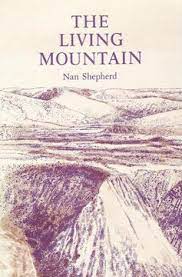
Nan Shepherd and The Living Mountain

George Mallory, when he was asked why he wanted to climb Mount Everest, is said to have replied: “Because it’s there”. Mallory was the only climber to take part in three of the British pioneering expeditions to climb Mount Everest in the 1920s. Mountains have always “been there” and have over centuries, challenged humans to ascend and ‘conquer’ them. Hundreds of books have been written about mountains, mostly by men. The books are characterised by the language of conquest and victory, and propelled by the goal of reaching the summit.

In the period when men were racing to scale and conquer the highest peaks, was a young woman who perceived, and described, mountains not in terms of heights but in terms of depths. This was Nan Shepherd, not only an explorer of mountains, but also one of the great early 20th century writers of nature, landscape and the Scottish mountains that she so loved.

 Anna (she called herself Nan) Shepherd was born in February 1893 near Aberdeen on the North East coast of Scotland. Not long after she was born her family moved to Cults (now a suburb of Aberdeen). The hills of Deeside close by, were her natural playground, and her love for walking in the hills was encouraged by her father who was a keen hill walker. Nan was also an avid reader, and at the age of fourteen started filling notebooks with quotations and citations from her readings. She attended Aberdeen High School for Girls and studied at Aberdeen University, graduating with an MA in 1915. She went on to teach English literature at the Aberdeen Training Centre for Teachers (later the College of Education). She remained there for the next forty-one years, until her retirement in 1956, having become known as an inspiring teacher with a feminist slant to her work. Although she did travel extensively, she continued to live in her childhood home until she died in 1981.

Having explored the local hills almost from the time that she could walk, Nan ventured further afield, to the Cairngorms. These formidable mountains to the west of Aberdeen, are amongst the wildest landscapes in the British Isles. This was in June 1928, Nan was 35 years old. This first experience of the mountains was the start of a passion that came to define both her life and her writing. From then on, she would head for the Cairngorms whenever her job would allow, often alone, or occasionally with friends and fellow walkers.

For Nan, who conquered all six of the major peaks in the Cairngorms while still a young woman the goal was never to reach the summit of a mountain: it was not climbing up that excited her so much as “clambering down,” discovering all the hidden parts of the mountain that only an attentive walker would notice. It was this perspective of ‘looking within’ both at the mountain, and herself, that inspired Nan to also write copiously during the period between 1928 and 1933. During this time, she published three novels: The Quarry Wood, The Weatherhouse, and A Pass in the Grampians. As she said: “It simply must be written”. Shepherd drew inspiration from the places and people she knew well, setting her stories in the North East of Scotland, with a focus on country communities and the harsh way of life imposed by the landscape. Above all, what shone through was her deep love for the Scottish mountains and her knowledge of these through walking. 

While Nan published these books, the book that was most inspired by these mountains, and her most inspirational piece of writing, was called The Living Mountain. The book, written in 1940, describes Nan’s explorations, as a walker and as a writer, of the Cairngorm Mountains. Nan sent her manuscript to a novelist and publisher friend Neil Gunn who appreciated it, but felt that it was not fit for publication unless she added photographs and a map. Nan put away the manuscript in a drawer and there it remained for over 30 years. It was finally published by the Aberdeen University Press in 1977.

The publication of The Living Mountain revealed Nan as one of the earliest ‘Nature writers’ who brilliantly captured the Cairngorms in their various seasonal moods. Her descriptions emerged out of her own immersion in the experience of walking in every kind of weather, swimming in the lochs, dipping in the streams, and camping under the sky. It also showed her incisive eye for detail, and her profound understanding not only of the geography and geology of the mountains, but equally of the living elements that made it a vibrant ecosystem. Long before ecology became a buzzword, Nan was acutely aware of the interconnections. 

Shepherd was interested in the ‘essential nature’ of the mountain: in understanding it from all angles and in all seasons. She viewed the mountains not as looming objects of sublime terror, but as acquaintances. She wrote: Often the mountain gives itself most completely when I have no destination but have gone out merely to be with the mountain as one visits a friend, with no intention but to be with him.

The poetic descriptions of the routes are so vivid that the readers can literally walk these with Nan. But Nan Shepherd’s writing is not simply a description, it is equally an introspection. While most mountaineers think in terms of peaks, plateaus and cliffs, Nan looks within, “into” cracks in rocks, and the depths of lochs and rivers. Her prose is philosophical and often meditative: One does not look upwards to spectacular peaks but downwards from the peaks to spectacular chasms, for a mountain has an inside.

Although it was written nearly a century ago, The Living Mountain is today acclaimed as “one of the most brilliant works of modern landscape literature”. It is a lyrical memoir that combines field notes, natural history, and oral history. One of its most profound tenets is that we should not walk “up” a mountain but “into” mountains, thus exploring ourselves as well as them.

December 11 is celebrated as International Mountain Day. The theme for this year is Restoring Mountain Ecosystems. Nan Shepherd’s The Living Mountain is a reminder that healthy mountain ecosystems can restore us: in body and spirit.

–Mamata

Getting Serious about Play!

Last week, we talked about the International Dolls’ Museum in Delhi.  And we lamented about its not keeping up with the times and re-inventing itself.

A model from which it could draw inspiration is The Strong National Museum of Play, Rochester, New York, USA. It was established in 1969 based on the collection of one individual, Margaret Woodbury Strong, who by that point in time has collected over 27,000 dolls. Like Shankar who set up the Dolls’ Museum, she started by exhibiting parts of her collection and later added two wings to her palatial house to exhibit to select visitors. Over time, she started thinking about setting up a museum for the public.   Margaret Strong died in 1969, leaving her collection and her wealth for a museum, which was finally opened to the public in 1982.

The Museum’s display of the collection of dolls is only a small part of what it does. It is ‘a highly interactive, collections-based museum, devoted to the history and exploration of play’ and sees itself as ‘the ultimate play destination of all ages’. To meet this mission, it has interactive exhibits in a space of 1,50,000 sft, online exhibits, the World Video Game Hall of Fame, a Play Lab which is a maker-space, and a Skyline Climb. The Strong Museum takes the effort to ensure that the experiences are accessible for people of all abilities. Many of the exhibits on the online museum are viewable to all of us on Google Arts and Crafts.

A very interesting initiative of the Museum is the National Toy Hall of Fame. Every year, the Hall of Fame recognizes and inducts toys that have ‘inspired creative play and enjoyed popularity over a sustained period’. The public (I think only those who live in America) are invited to nominate their favorite toys based on the following criteria:

  • ‘Icon-status: the toy is widely recognized, respected, and remembered.
  • Longevity: the toy is more than a passing fad and has enjoyed popularity over multiple generations.
  • Discovery: the toy fosters learning, creativity, or discovery through play.
  • Innovation: the toy profoundly changed play or toy design. A toy may be inducted on the basis of this criterion without necessarily having met all of the first three.’

What a wonderful way to engage with the community at large! The toys in the Hall of Fame include everyday objects, like sand which is one of the most popular materials for children to play with; blankets which children can make into anything from tents to disguises; to cardboard boxes which as we know are more interesting to kids than the most expensive toy packed inside. The list of course includes items created to be played with—from balls, playing cards, rubber ducks, girl-dolls, hoola-hoops, jump-ropes and  jigsaw puzzles to Rubik’s Cube and Nintendo.

Games and toys

The Museum has the core philosophy that ‘Play sharpens minds and boosts creativity. When children play, they learn to solve problems, make decisions, express ideas and recognize boundaries’, the Museum focuses attention on educators, with special grade-related exhibits and lesson-plans for teachers.

The Museum plays a very serious role in research too. The Strong’s Brian Sutton-Smith Library and Archives of Play is devoted to the intellectual, social, and cultural history of play and is a 230,000-volume research library and archives of primary and secondary sources, including scholarly works, professional journals, periodicals, trade catalogues, children’s books, comic books, manuscripts, personal papers, business records, and more.

Another important collection is The International Centre for the History of Electronic Games which has 60,000 artefacts and thousands of archival material on the history of video games.

A third collection is The National Archives of Game Show History which ‘preserves the history of game shows—from the earliest panel shows and quiz scandals, to the games and puzzles of the 1970s, to the big money network series and the classic games now in primetime’.

So efforts on every front to be relevant to a wide audience, and to keep up with the times.

A lesson or two or three, our museums can learn?

–Meena

A Prime Minister, A Cartoonist, and A Dolls’ Museum : Marking Children’s Day

We celebrate November 14th, the birth anniversary of our first Prime Minister Pandit Jawaharlal Nehru, as Children’s Day. This is because not only did he love children, but children loved him right back! They called him ‘Chacha’—a name that stuck even with adults.

Nehru understood children and the need for loving and carefully nurturing them, as also their importance to the future of the nation.  ‘Children are like buds in a garden and should be carefully and lovingly nurtured as they are the future of the nation and citizens of tomorrow. The children of today will make the citizens of tomorrow. The way we bring them up will determine the future of the country’ he said. He also had a clear vision on the purpose and role of education: ‘The object of education is to produce a desire to serve the community as a whole and to apply the knowledge gained not only for personal but for public welfare.’

A contemporary who also loved and valued children was Shankaran Pillai, India’s first political cartoonist. Shankar, as he was called, and Nehru, enjoyed a great friendship, though the cartoonist featured the PM in over 4000 cartoons, many of which were merciless. Nehru was a tall leader—not only could he laugh at himself but he also appreciated the need to do this: ‘It is good to have the veil of our conceit torn occasionally’. He urged the cartoonist on, saying ‘Don’t spare me Shankar.’ Nehru even used to enclose Shankar’s cartoons in his letters to his daughter Indira Gandhi when he was in prison.  

Those were different times, those were different people!

Shankar founded the Children’s Book Trust (CBT) in 1957 to ‘to promote the production of well written, well illustrated and well designed books for children.’ CBT has been bringing out high-quality books in English and Indian languages and these are highly subsidized, to make them widely accessible. In 1968, CBT started a magazine called Children’s World. An International Children’s Competition for Painting and Writing has been on-going since 1951. These were pioneering initiatives.

Shankars Dolls Museum

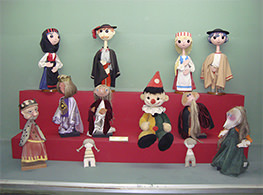
But maybe the most innovative idea was The Shankar’s International Dolls Museum, which has now grown into one of the largest collections of costume dolls anywhere in the world, housing over 7500 dolls from 85+ countries. And it all started with a single doll—sometime in the ‘fifties, the Hungarian Ambassador gave Shankar a typical doll from his country, to give away as one of the prizes in the International Children’s Competition. So fascinated did Shankar become with this doll that he started collecting costume-dolls whenever he travelled.

He did not just do this for his own enjoyment. He often held exhibitions so that children of all strata could see and enjoy them. Pandit Nehru and Indira Gandhi visited one such event, and Indira Gandhi suggested then that Shankar should set up a permanent museum of these dolls. The idea slowly crystallized, and the Museum was inaugurated in 1965. The building where it was housed was appropriately named Nehru House. Nehru gifted a large number of dolls to the Museum and these were the core around which the collection was built. Subsequent PMs as well as Ambassadors and visiting dignitaries from various countries also added special and unique dolls from their nations.  And thereby, a landmark institution was created.

While these were pioneering ideas in their times, the question that needs to be asked is how can the Museum be made relevant for today? How can modern understanding of museums and collections be brought in to revitalize the display and hold the attention of today’s children? The collection is unique ,and the rich collection of artefacts would be a dream for many a researcher to delve into –how can that be facilitated?

We are sitting on a treasure-trove. If we respect the legacy left by Pandit Nehru and Shankar, we have a duty to use this better.

Happy Children’s Day!

–Meena

Pic from https://www.childrensbooktrust.com/dollsmuseum.html

Washoku: The Harmony of Food

Continuing with the theme of food that Meena introduced this week. She urged gratitude for those who produce the food that sustains us all, and that we ponder on our relationship with food. Nothing expresses this sentiment better than the Japanese word kansha which refers to appreciation toward those who cultivate, harvest, and prepare food.

And nothing encapsulates the intricate relationship with food than the Japanese concept of washoku: the harmony of food.

My first introduction to the importance of balance in diet was through the classic book Totto Chan, an engaging memoir that tells about an ideal school in Tokyo during World War II, which combined learning with fun, freedom, and love. In the story the headmaster asks the parents to include in their children’s lunch boxes “something from the ocean and something from the hills.” This meant food from the sea (fish and seaweed) and food from the land (meat, grain and vegetables). This simple guideline ensured a nutritious and balanced diet that could be put together economically and easily in Japan.

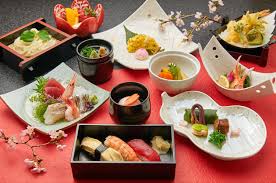
Many years later when I visited Japan, the first thing that struck me about Japanese food was the delicacy and aesthetic with which it was presented. This was a visual demonstration of the principle of balance and harmony as small portions of each item were arranged so as to create a perfect composition of colour and form on the equally beautiful serving plates. The act of partaking from this palette of shades and forms was in itself a reverential and delicately synchronised process, which respected as well as celebrated the gift of food.

It was only some years later that I discovered that this harmony in Japanese cuisine is created by the nuanced combination of five essential elements: Goshiki (five colours), Go-Ho (five cooking methods), Gomi (five flavours), and Gokan (five senses).

Goshiki: Every meal should include each of the five colour groups. These are: Red (aka) which include tones of orange, purple, crimson etc., and Yellow (kii) including golden and ochre tones. These are warming colours said to stimulate the appetite. Green (ao) also includes blue, which is said to refresh. White (shiro) which includes tones of silver or ivory provides a sense of cleanliness. Black (kuro) including very dark tones like eggplant skin or shiitake mushrooms. A serving of a Japanese meal will include components that provide these colours, which are further enhanced with decorative leaves and flowers. The colours help give visual cues to the different nutrients included in the meal and including each colour group ensures nutritional diversity.

Go-Ho: In an earlier time when the ordinary Japanese people had limited food resources for daily meals, they brought variety by cooking the same ingredients in different ways.The tradition continued to become a principle of a Japanese meal which would include five modes of cooking.

Simmering (niru) anything cooked in a boiling liquid

Steaming (musu) any steamed dish, most often rice.

Grilling (yaku) including broiling, searing, roasting to create layers of flavours.

Frying (ageru) food is deep fried in oil

Cutting (nama) is a very important element especially in food that is eaten raw (sashimi or pickles). This requires skillful knife control and adroit fingers.

Gomi: The Japanese believe that by including five flavours in each meal, the craving for any one flavour is minimized through the balance. The flavours are: Sweetness, Sourness, Saltiness, Bitterness and Umami. While it is known that the human tongue can distinguish the first four flavours, the fifth, umami, is difficult to explain. It comes from the umami component of kelp (glutamic acid) and was discovered by Japanese scientists more than a hundred years ago. The word was coined in 1908 by Japanese chemist Kikunae Ikeda from the words umai (delicious) and mi (taste). In 2002 it was scientifically proven that our taste buds has receptors for umami, that translates from the Japanese as a ‘’pleasant savoury taste’.

These five flavours are provided largely by the five staple ingredients of every Japanese kitchen: Sato (salt), Shi (sugar), Su (rice vinegar), Se (soy sauce), and So (miso).

Gokan: The Japanese believe that in order to truly savour the five flavours, it is not just the tongue, but all five senses that come into play. Thus eating is not just a taste experience. It must begin with the sense of sight that takes in the attractive presentation of the food; the sense of sound which takes in the sounds from the surroundings (preferably nature) and evokes anticipation of the experience. The sense of smell enhances the gustatory experience, and the sense of touch does justice to the variety of textures that one puts in the mouth.

Food for the Japanese is thus as much about experience as it is about sustenance. The emphasis on simplicity of ingredients and cooking techniques, and seasonality of ingredients also makes the food nutritionally balanced. Washoku has been one of included in UNESCO’s Representative List of the Intangible Cultural Heritage of Humanity. It is described as a social practice based on a set of skills, knowledge, practice and traditions related to the production, processing, preparation and consumption of food. It is associated with an essential spirit of respect for nature that is closely related to the sustainable use of natural resources. 

The recently popular series of documentaries on Blue Zones, the five places in the world where people live the longest, healthiest lives, included the Okinawan diet of Japan. While the segment did not go into the depths of the many principles of Five that make the Japanese cuisine what it is, it did add another interesting principle of hara hachi bu, an ancient mantra that reminds people to stop eating when their stomachs are 80% full. A gentle reminder that moderation and mindfulness are also key to the healthy consumption of food.

Japanese food has gained popularity in India in the last few years. This surprises me as this is so different from most Indian cuisine which is usually a rich mixture of multiple spices and flavours. However for most people here, Japanese food usually means Sushi. Perhaps it is time to learn more about, and appreciate the breadth and depth of this Oriental cuisine.

–Mamata

With Gratitude for Every Morsel of Food…

The recurrent theme in the last few days has been FOOD.

First, the passing away of Dr. MS Swaminathan, the father of India’s Green Revolution at the age of 98. Today, we have forgotten the first few decades after Independence, when hunger was a reality for many in our country. At Independence, hardly 15 percent of agriculture was under irrigation. The food grain production was 50.8 million tonnes. Agricultural methods, tools and equipment, were centuries if not millennia old, and were grossly insufficient to feed the country’s growing population. On top of that, the vagaries of nature, which saw floods and droughts disrupting cultivation. Food insecurity and shortages were common, and two severe droughts 1964–65 and 1965–66 led to major food shortages and famines. We were dependent on food imports to feed our people, and many people doubted the survival of us as a nation, when we could not even fulfil this basic need.

It is this dismal scenario that pushed people to look for solutions that would make us food secure and food sufficient. And the hero of the hour was Dr. MS Swaminathan. Swaminathan, a student of zoology, who was a witness to the tragedy of the Bengal Famine of 1943 and frequent food shortages, decided to devote his life to improving this situation. And that is what he went on to do just this. He joined the Indian Agricultural Research Institute soon after Independence, and from there went on to do research and post-doctoral work in the subject. At IARI, he learnt about the work of Dr. Norman Borlaug in Mexico, where he had developed a dwarf variety of wheat which yielded more grain, and at the same time had stalks strong enough to hold the weight of the grains. Dr MS saw this as a beacon of hope and worked with Dr. Borlaug to develop improved crop varieties suitable for India. He also worked on fertilizers suitable for our conditions, as well as more efficient farming techniques. This laid the foundation for our Green Revolution, and paved the way for India not only to becoming self-sufficient in food, but becoming a grain basket for the world. Today, our food grain production is estimated at a record 330.5 million tonnes (MT).

The Green Revolution though the saviour, was however not without its flip-side. It needed increased amounts of chemical pesticides and fertilizers thus reducing the soil fertility and quality in the medium term; these crops needed more water; and it led to monocultures based on specific crops and varieties, leading to erosion of agri-biodiversity. Dr. Swaminathan recognized these issues, and for many years led the movement for what he termed ‘the Evergreen Revolution’ which focussed on more environmentally sustainable ways of increasing productivity of the land.

As a part of Centre for Environment Education, we were fortunate to have opportunities to meet and interact with this giant. He came to our campus maybe a few times a year, as Chairman of our sister-institution VIKSAT, and also as guide and mentor to many of our projects and initiatives. I had the good luck to work under his guidance when CEE was putting together Government of India’s official submissions to the World Summit on Sustainable Development, and he was one of the advisors to the process.

And coming to the other food-related events:

Oct 2 marks the birthday of Gandhiji, who believed that farmers, farming and rural India had to be at the core of any development in India. He summed it up with his statement: “To forget how to dig the earth and tend the soil is to forget ourselves. “

It also marks the birth anniversary of Lal Bahadur Shastri, our second Prime Minister, who gave the nation the slogan ‘Jai Jawan, Jai Kisan’, seeing soldiers and farmers at the same level when it comes to ensuring the nation’s security.

And Sept 29 also marks the observance of UN’s International Day of Awareness of Food Loss and Waste. The goal of this day is to raise awareness on the importance of the problem and its possible solutions, and to promote global efforts and collective action towards meeting

And Sept 29 also marks the observance of UN’s International Day of Awareness of Food Loss and Waste. The goal of this day is to raise awareness on the importance of the problem and its possible solutions, and to promote global efforts and collective action towards meeting Sustainable Development Goal Target 12.3, which aims to halve per capita global food waste at the retail and consumer level by 2030, and reduce food losses along the food production and supply chains.

No more appropriate time to ponder on our relationship to food, those who produce it, and how we interact with it. And lets not forget: the prevalence of undernourishment–the share of people who lack regular access to sufficient calories– is increasing, with as many as 828 million people undernourished in 2021.

With gratitude to all the farmers and farm workers; the policy-makers who understand their importance and respect them for their contribution; those who work on the science of it; and those who cook it.

We owe every mouthful to you all. And may we never forget it.

–Meena

Health Activist: Banoo Coyaji

Among the recently announced Magsaysay Awards is Dr Ravi Kannan, an Indian surgical oncologist who has revolutionized cancer treatment in Assam through people-centered health care. 

The citation for the award lauds the doctor’s ‘devotion to his profession’s highest ideals of public service, his combination of skill, commitment, and compassion in pushing the boundaries of people-centered, pro-poor health care and cancer care, and for having built, without expectation of reward, a beacon of hope for millions in the Indian state of Assam, thus setting a shining example for all.’

The Ramon Magsaysay Award, Asia’s premier prize and highest honour, recognizes greatness of spirit shown in selfless service to the peoples of Asia.

Thirty years ago this award was conferred upon another Indian doctor whose life and work reflected the same spirit that the above citation lauded. She was Dr. Banoo Jehangir Coyaji who was not only a medical practitioner, but an activist who used her profession and passion to change the lives of thousands of women in remote geographical areas.

Banoo Coyaji was born on 7 September 1917 in Bombay. She was the only child of Pestonji, a civil engineer, and Bapamai Kapadia. She spent her early childhood with her parents, but when she started schooling, her mother sent her to live with her grandparents in Pune, where she attended the Convent of Jesus and Mary. Thus Banoo grew up in a large loving household among aunts, uncles and cousins; while the family was affluent, the children were brought up to be disciplined. While many Parsis of the day were supportive of the British, Banoo’s family was nationalistic. Banoo herself was deeply influenced by Gandhiji and his philosophy.  

One of the big influences in Banoo’s life was the family doctor Edulji Coyaji who was known in Pune for treating the poor as well as the rich. It is he who encouraged the young school graduate Banoo to study medicine. Sixteen-year old Banoo joined St. Xavier’s College in Bombay for pre-medical studies, following which she pursued medical studies at Grant Medical College in Bombay, completing her MD degree in 1940. In the meanwhile she met Jehangir Coyaji, her mentor Edulji’s younger brother, and an engineer. The two married in 1941 after Banoo completed her degree. In 1943, she moved back to Pune where Jehangir worked, to set up house. Although she had an MD in gynaecology, Banoo joined Dr Edulji in his general practice. One day Dr Edulji told her that she was to go to KEM Hospital, as they were in urgent need of a doctor.

KEM was a private charity hospital that had been founded in 1912 by Pune’s leading citizens. When Banoo entered the hospital in May 1944 it had only forty beds. Primarily a maternity hospital, most of the patients were poor women, many who came from remote areas when their medical condition had reached a critical stage. The women also came with other medical issues so the small staff had to be prepared to treat any emergency. The workload was relentless and they worked over 18 hours a day. Banoo and her husband moved into a flat above the hospital so that she was able to attend to her young son, as well as her patients.

In 1947 Banoo and her husband were among the millions who witnessed India’s tryst with destiny as we became an independent nation. Around this time Banoo also made her first major intervention at KEM hospital. Having treated, over the years, women whose health had suffered due to child bearing issues (too many children, too early or late pregnancies, and the toll of unattended childbirth) Banoo opened Pune’s first birth control clinic. She was joined by Shakuntala Paranjpe a social worker and family-planning advocate who helped her reach out to women and promoted birth control classes for local women. This was a revolutionary initiative for the time.  

This was the start of many new developments that took KEM hospital from being a small maternity hospital to become a full-fledged general hospital, and one of the leading charitable institutions in Pune. To achieve this Banoo had to be continually fund-raising, adding new equipment and wards as and when she got funds. All the while she took no pay from the hospital.

Working tirelessly to maintain and grow the hospital, Banoo had no time to attend to something that had always been at the back of her mind. This was the question of what was happening in the villages from where patients often came with serious health conditions. In the late 1960s Banoo felt that it was important that the medical services should reach the villagers before the villagers needed to come to the city for treatment. She began exploring how KEM’s services could provide this outreach. Her team started by identifying a poor rural drought-prone area in Vadu Block, about 40 km from Pune. She approached the Health Secretary of Maharashtra government with the offer that the hospital run the block’s Primary Health Centre. This was agreed upon. In 1972, KEM set up a small outpatient clinic in Vadu. Maternal and child care, and family planning were the early priorities of the programme. From the beginning, KEM had emphasized the importance of research linked to its ongoing medical and public health programmes. In 1972, Banoo Coyaji seized an opportunity to establish a research society at the hospital.

While the first step to outreach had been achieved, Banoo felt that this was still a treatment service to those who came to the clinic. She felt that it was preventive care which could make a real difference, which addressed not the symptoms but the causes—sanitation, clean water, nutrition, and antenatal care. She felt that this would be best done by the local people themselves. Thus she asked each village to recommend a man and a woman who could be trained to serve as part-time health volunteers. The newly recruited volunteers underwent a comprehensive three-week training with a holistic approach to health and a healthy environment. The volunteers returned to their villages as community health guides, forming the grassroots base of a pyramid of healthcare services connecting their villages with KEM hospital at the top.

As the experiment showed results, there were suggestions that it be scaled up. In 1980 the model was introduced into the adjacent blocks of Kendur and Nhavra, where the village panchayats had passed a resolution inviting them to come. But the implementation had numerous challenges. However by the mid-1980s, Banoo Coyaji’s multifaceted interventions in Vadu were bringing about a quiet transformation, not just in human health but in the health of the local environment, and in the capacity and confidence-building of the local population, especially the women. 

By 1987, many elements of the Vadu model were accepted by Maharashtra state. These included KEM’s process for selecting and training village health guides, its insistence upon retraining middle-level health officers and on continuing education for its field staff, and its effective patient referral and grassroots record-keeping systems. This model was later used in many developing countries.

In 1988, with the help of the Indian Council of Medical Research, Coyaji launched the Young Women’s Health and Development Project to support an experimental training programme for girls. Aside from lessons in health, hygiene, personal development, and family life, the girls also studied population issues, the status of women, and the importance of education for girls. A second component of the programme involved learning vocational skills such as sewing, knitting, embroidery, crochet, and making costume jewellery and decorative items.

Thus Banoo Coyaji’s vision and the work of the KEM-trained volunteers went well beyond health and family planning to encompass literacy, livelihood options, legal advice, and even the support to question social issues like dowry. It was always a challenge, but as Banoo said All social change is slow. And very profound social changes indeed are needed before India’s women can achieve their full potential.

Dr Banoo Coyaji continued to work for the causes dear to her heart till she passed away on 15 July 2004. In addition to the Magsaysay Award she received many national and international awards, including the Padma Bhushan.  

–Mamata

More Than Just a Library

Recently there was an article about heritage libraries in India and how some of these are in the process of being restored, renovated, and upgraded so that the rich history and legacy could be shared with a new generation of bibliophiles. Among these is Mumbai’s David Sassoon Library established in 1870 and the National Library in Kolkata the roots of which can be traced back to 1836.

Coincidentally, around the same time I was reading a novel called The Paris Library. While the story and the two main protagonists are fictional, the library around which it revolves, and most of the other characters that are part of the story are based on real people and places. This was the American Library in Paris or ALP as it was called.

As a curious bookworm I was intrigued by this and decided to investigate further into the ALP. I discovered a fascinating history.  

The seeds were sown during World War I. This was when thousands of young Americans were fighting with the Allies on the battlefronts in Europe. At this time when the main supply to the front was in the form of arms or medical equipment, the American Library Association felt that the troops needed something to engage them mentally in the midst of their grueling physical existence. So it collected books and periodicals donated by American Libraries and personal collections and shipped these to France to the Library War Service from where they were sent to military bases, training camps and hospitals where American soldiers were fighting. It is estimated that around 2 million books and five millions periodicals were shared in this way with American soldiers fighting the war far from home. One of the centres which housed part of the collection was also in Paris.

When the war ended, there was a discussion about what to do with the books that that been an important support all through the war, not just for American servicemen. During this period the citizens of Paris had also become fond of browsing through the collection of English language books in open stacks (an uncommon feature of European libraries at the time), and international newspapers and periodicals in the Paris centre. Thus although there was no plan to establish a permanent library in Paris this idea seemed to evolve and slowly take root. The thinking was that the library could also serve as a functional model to demonstrate American library methods, especially the use of the Dewey decimal system and open stacks.

Thus the decision was taken not to ship the books back but to establish a permanent library in Paris in the spirit of Atrum post bellum, ex libris lux: After the darkness of war, the light of books. This also became its motto. There was however the question of funds needed to establish and run the library, but the idea had many advocates, and contributors from all walks of life, in America and in Paris united to pledge every kind of support. This was probably an early example of crowd funding.

As a result the American Library in Paris was founded in 1920 by the American Library Association and the Library of Congress with a core collection of those wartime books. Its charter promised to bring the best of American literature, culture, and library science, to readers in France.

Having been established, there was a continuous struggle to keep it not only running but also to enhance its collections and also serve as a cultural hub. The library constantly innovated to keep itself up and running. The Library worked with sixty-five leading publishers in the United States, who sent free copies of newly published works which the Library displayed in a dedicated exhibition space. Over a thousand new books per year were acquired through this channel. Meanwhile, the Library staff, wrote widely published literary reviews of the new titles, and in 1924, they launched their own literary journal called Ex Libris, to which Ernest Hemingway and Gertrude Stein contributed. The library also formed relationships with other libraries through inter-library loans and other social organisations. The American Library in Paris quickly became a vital hub of reference services and educational outreach. Within just three years of existence, the library’s reference room was visited by 35,000 users. It founded its own children’s section in 1928 and had Story Hours for children. The library had highly qualified and dedicated staff as it invited librarians from some of the best libraries in the USA to come on sabbaticals. Some of these stayed on.

The library which grew out of World War I played a critical role during World War II. Once again it sent thousands of books to the troops fighting at the front in Europe. The library became a refuge for its habitués (regular subscribers) not just providing the comfort of books, but companionship, solidarity and solace. As one of the characters in the book puts it: Libraries are lungs, books the fresh air breathed in to keep the heart beating, to keep the brain imagining, to keep hope alive.

The library remained open even during the dark days of the Nazi occupation of Paris. Many of the American staff including its doughty librarian Dorothy Reeder stood firm, until they were forced to evacuate the country, but a handful of local staff bravely continued to run it. They themselves faced great personal risks in delivering books to the homes of some of the regular Jewish subscribers who were no longer permitted in public spaces. The library was also subject to “inspections” to check if they were harbouring any forbidden literature.

The book The Paris Library tells the story of the library and its habitués during the period of World War II. It is a heart-warming tale of the manifold power of books and the unique bonds that books create between people. As the library director Dorothy Reeder says in the book: Because I believe in the power of books—we do important work, by making sure knowledge is available and by creating community.

The story reflects that the original motto of the library: After the darkness of (another) war, the light of books.

The American Library in Paris celebrated 100 years of its founding in 2020. Even in an age where there is a deluge of information at the fingertips this library serves over five thousand members from sixty countries. It holds the largest collection of English language materials on the European continent, and is wholly community supported. It is now as much a community and cultural centre as it is a library, and its users are as diverse as its collections.

–Mamata

Living On…

August is a Month of Days! Well, I know all months are made up of days, but August is made up of many significant Days—from Independence Day to International Youth Day to Quit India Movement Day to World Mosquito Day, to….

In the process, even media seems to get overwhelmed and is not cover many of the issues adequately.  One such day is World Organ Donation Day, marked globally on 13 August every year, to raise awareness on the need for organ donations, and to clear misconceptions around the issue.

For a quick overview: There are two major types of donations– deceased donation which is the process of giving an organ or a part of an organ after death, for the purpose of transplantation to another person; and living donation, wherein a donor can give part of certain organs to another person. (The other two types of organ donations are Vascularized Composite Allografts (VCAs) which involves the transplantation of multiple structures including skin, bone, muscles, nerves, connective tissue etc.; and Paediatric donations.)

In India, Deceased Organ Donation is usually done only from a person who has been declared brain-stem dead by a team of authorized doctors at a hospital. A person is said to be brain-stem dead when there is an irreversible loss of consciousness, absence of brain stem reflexes and irreversible loss of the capacity to breathe. These are often accident victims and others who have suffered fatal injuries to the head or have had brain haemorrhage. Organ donations after cardiac death are rare in our country. 

Sadly, the deceased donation rate in India is dismally low—it stands at under one donor per million population, and no upward trend has been seen for a decade now. It is estimated that 20 people die each day in our country waiting for an organ donation. Experts estimate that 65 donations per million population are needed to fill the gap.

Considering that we won’t need our organs after death, it would seem that this would be the easiest kind of donation! But in a country where charity and giving are a deep-rooted part of the culture, organ donation meets many barriers. A study published in a prominent medical journal regarding reasons why the figure is so low in India says: ‘Lack of awareness (80.1%), religious beliefs and superstitions (63.4%), and lack of faith in the healthcare system (40.3%) were cited as the three most probable reasons for poor deceased organ donation rates in India. Fear of disfigurement (29.5%), lack of government sponsored incentives (27.6%), fear of procedural delays (27%), and inappropriate counselling for deceased donation (26.4%) were also commonly cited reasons for poor organ donation rate.’ (J Clin Exp Hepatol. 2016 Jun; 6(2): 81–86.).

From the above, it seems that creating awareness and proper counselling are the urgent needs. Most of us don’t know that one deceased organ donor can save up to eight lives. He or she can contribute two kidneys to two people; two lungs to two people; one liver which can be divided among two people; one pancreas and one heart which can save one life each. Apart from this, eyes can give sight and donated tissue can help as many as 75 people. Increasing awareness and appealing to the inherent giving instinct could be critical factor in increasing donations. This is borne out by the fact that in the study mentioned above, people said that the ‘the thought of saving someone’s life’, as well as a ‘feeling of improved sense of humanity’ were motivators for such donations.

You can register your intent to donate organs with the National Organ & Tissue Transplant Organisation (NOTTO). Such a pledge does not carry legal weight as the consent of family is necessary for the donation of organs of deceased people, but it is a clear signal of the wish of the deceased. And if during life the donor discusses his or her wish with family members, they will surely do it, in respect of the loved one’s last wishes. Afterall, what can be more satisfying that their loved one lives on!

So go ahead and visit https://notto.mohfw.gov.in/ today!

–Meena

Sisters-in-Arms: Pritilata Waddedar and Kalpana Dutta

This Independence Day week there have been many pieces celebrating the numerous freedom fighters who were part of the nationwide movement for independence. The movement was unique in that it took the path of non-violence to achieve this goal.

Whilst many of the names are part of history textbooks, there were thousands of people who played their part in the fight for freedom. Not all of these are as well remembered. Among these, there were also some who were driven by the same aims but who chose to take another path of showing resistance to the colonial rule.

This is a story of two feisty young women who chose the path of direct resistance, and who dedicated their life to the cause. They are Pritilata Waddedar and Kalpana Dutta.

Pritilata Waddedar

Pritilata Waddedar was born on 5 May 1911 into a middle-class family in a village of Chittagong, now in Bangladesh. She did her schooling in her hometown and then moved to Dhaka for high school studies at Eden College. It is here that the young Pritilata came in contact with other women who were strong anti-colonialists and who were inspired by revolutionary ideas. The spark was ignited. Pritilata then moved to Bethune College in Calcutta to pursue a higher degree in Philosophy. On completion of her course, Pritilata’s degree was held back by the British authorities at Calcutta University because of her anti-British activities. The seeds of rebellion were firmly sown. Pritilata returned to Chittagong in 1932 where she joined as a teacher in a school and went on to become the headmistress.

It was during this period that Pritilata was introduced to Surya Sen who led an underground revolutionary group. Pritilata approached Master Da as Sen was called by his followers with a request to join his group. Initially Sen as well as his comrades were hesitant to include a women in the group, but Pritilata’s revolutionary passion and steely resolve to overthrow the British, as well as her abilities to carry out risky assignments gave her entry into the group.

Comrade Pritilata was a key member of the group that planned and strategized armed attacks on railway lines, telegraph office, the armoury, as well as the famous Chittagong Uprising—the raid on the armoury of police and auxiliary forces that cut Chittagong off from the rest of the country. Pritilata played an important role in supplying explosives to the revolutionaries. The raiders managed to escape but the British authorities tracked them down in the Jalalabad hills near Chittagong. Several thousand troops ambushed the rebels and many of them (some merely teenagers) were killed in the encounter. Sen’s depleted band had to reorganize and re-strategize.

They decided to avenge the Jalalabad massacre by burning down the Pahartali European Club. This club was targeted because, among other white supremacy symbols, it also had a sign at the entrance which declared that ‘Dogs and Indians are not allowed.’ Pritilata was the leader of the eight-member team. The team prepared by intensive training in the use of firearms. As in any military formation the leader was to be the first to attack and the last to return after the rest of the team had moved to safety.

On the night of 23 November 1932 Pritilata and her team, dressed as Sikh men laid siege to the club and set fire to it. British troops were quick to retaliate. Pritilata and her team were chased and ambushed with little hope of escaping alive. Nevertheless Pritilata tried to divert the gunfire to give her comrades a chance to escape. In the process she was shot in the leg. Rather than die under British arrest, the wounded Pritilata swallowed cyanide and ended her life. She was 21 years old. The police found her body early next morning and were surprised to discover that the leader of the attack was a young woman.

Kalpana Dutta

A lot of what we know about Pritilata is thanks to the memoirs of Kalpana Dutta which describe in detail the Chittagong Uprising. Inspired by Pritilata, Kalpana became a fellow comrade, and was also one of the few women members of Surya Sen’s underground group of revolutionaries. Kalpana often travelled disguised as a man, to transport explosives and other supplies to the group. She also became an expert in preparing gun cotton, an explosive agent.

Born on July 27, 1913 in Sreepur village in Chittagong, (now Bangladesh), Kalpana Dutta was fond of listening to adventurous stories since childhood. While studying in high school, she read many biographies and stories of freedom fighters, which inspired her with the passion to join the struggle for freedom. She joined a semi-revolutionary student organisation called the Chhatri Sangha and became one of its most active members. It was here that she met Pritilata, and the two became close friends. It was Pritilata who introduced her to Surya Sen.

Following the Jalalabad massacre, both Pritilata and Kalpana were designated as the key executors of the arson attack on Pahartali Club. Just a week before the attack, while she was on a reconnaissance trip of the area, Kalpana was detained by the British. She was released on bail, she immediately went underground to ensure that the plan would continue without any obstacles. Pritilata became the sole leader of the team. As we know, the team was ambushed and the wounded Pritilata took her own life rather than die in the hands of the enemy. 

Kalpana remained underground, even when the British finally managed to locate and capture Surya Sen in 1933. Three months later, she was eventually arrested and sentenced to life in the second supplementary trial case of the Chittagong Armoury Raid incident. She was released after six years of imprisonment. After her release from prison, she completed her studies and graduated from Calcutta University in 1940. Following independence, she led a relatively quiet life until her death in February1995. She wrote her autobiography in Bengali which was translated into English as Chittagong Armory Raiders: Reminiscence.

The note left by 21-year-old Pritilata when she died sums up the spirit of these two fearless young women who broke many stereotypes of the time.

There may yet be many among my dear countrymen who would question [women being fighters]. Nursed in the high ideal of Indian womanhood they may ask, how can a woman engage in such ferocious task of murdering and killing people?

I am pained at the distinction being made between a man and woman in the struggle for freedom of the country. Today if our brothers can enlist in the war of independence, we too the women should be allowed to do the same and why not?

–Mamata