Gandhiji’s Wisdom on Education

As we approach Gandhi Jayanti with the New Education Policy (NEP) now a reality, it is an appropriate time to re-visit Gandhiji’s philosophy of education as encapsulated in his Nai Talim (New Education)—Basic Education for All.

The fundamental premise of Nai Talim is that basic education is a holistic process, where all aspects of the individual—intellectual, physical, social, and spiritual—are given opportunity for development.  The curriculum seeks to impart learning through hands-on skill-based work that prepares young people for the real world, rather than creating islands where education has nothing to do with the surrounding community. The centrality of skills aims to reinforce the dignity of labor, the value of self-sufficiency, and strengthen local culture. In this approach to education, craft-skill serves as the center of the holistic development of the student. Other skills such as literacy and mathematics are learned in the context of their craft, and subjects are taught in an interdisciplinary way and never separated from their practical application in the world.

Some other perspectives that under-pinned Gandhiji’s thinking on education were:

  • That education should include a “reverent study of all religions.”
  • Education meant lifelong learning
  • And a re-definition of the role of the teacher, which is summed up by him as : “A teacher who establishes rapport with the taught, becomes one with them, learns more from them than he teaches them. He who learns nothing from his disciples is, in my opinion, worthless. ..In this way, a true teacher regards himself as a student of his students.”

A national education conference held at Wardha on 22–23 October 1937 wherein Gandhiji shared his vision of education led to the setting up of two model schools at Wardha and nearby Segaon.  A few years ago, I was in Wardha and sadly, it did not seem that the school was doing too well, or that it was at the forefront of educational innovation. It would seem that it is not easy to implement the philosophy of Nai Talim in a way that is relevant to today’s world.

They say the NEP has some influences from Nai Talim. How far these elements are implementable or how seriously they will be implemented is yet to be seen. My feeling is that it will take very creative re-interpretation of the philosophy of Nai Talim, if we want the spirit of it to infuse our education system. And as of now, I am not aware of any exciting experiments in this direction.  

I often find myself returning to these two quotes from Gandhiji after discussions and debates on education. To me, they are the touchstone by which any educational initiative must be evaluated:

“By education I mean an all-round drawing out of the best in child and man–body, mind and spirit. Literacy is not the end of education nor even the beginning. It is only one of the means by which man and woman can be educated. Literacy in itself is no education.’

“The real difficulty is that people have no idea of what education truly is. We assess the value of education in the same manner as we assess the value of land or of shares in the stock-exchange market. We want to provide only such education as would enable the student to earn more. We hardly give any thought to the improvement of the character of the educated.’


–Meena

Look Around for the Butterflies!

September is observed as Butterfly Month in India. We have about 1400 species of butterflies–from the 190 mm wingspan Southern Birdwing, to the tiny Grass Jewel with a 15 mm wingspan. And we are yet to discover all the species there are—in the last few years, 77 species have been discovered in just the Matheran Hills near Mumbai.

Citizen-scientists who sight, record and report their findings are critical in any exercise of species monitoring. So here is a list of some popular guides to Indian butterflies which can get you started on your butterfly journey. Who knows, you may discover a new one, or help to expand the understanding of range or behavior! Good luck!

Common Rose Butterfly. Bangalore. August 2020. Photo credit V. Raghunathan
  1. Butterflies of India. Thomas Gay, Isaac Khemikar and JC Puneetha. WWF/Oxford University Press.
  2. A Naturalist’s Guide to the Butterflies of India, Pakistan, Nepal, Bhutan,  Bangladesh and Sri Lanka. Peter Smetacek.
  3. Identification of Indian Butterflies. J.H. Evans. BNHS.
  4. Butterflies of the Indian Region. MA Wynter-Blyth. BNHS.
  5. Butterflies of India. Arun Pratap Singh. Om Books International.

There are several excellent region-specific guides too, including:

  1. Butterflies of the Western Ghats. H. Gaonkar.
  2. Butterflies of Peninsular India. K. Kunthe, G. Madhav.
  3. Butterflies of Sikkim. Meena Haribal. Nature Conservation Foundation.
  4. Butterflies of Delhi. Peter Smetack. Kalpavriksh.

(Unapologetically non-conforming to  APA or any other referencing  style!)

And a few tips to help butterflies along:

  1. Butterfly gardening is a great way to provide a hospitable environment. Butterflies need different plants for different stages of their life-cycles. So planting a garden with many different types of flowering plants (or having pots with different kinds of plants) is a good first step. On the whole, plants like hibiscus, shankpushpi, sunflower, chrysanthemum, marigold, mint etc. are among those preferred by butterflies.
  2. Wherever you live, see if you can have some small areas which are left wild, with local species of wild plants. This will help butterflies, as these are probably their preferred vegetation.
  3. Stop use of chemical pesticides in your garden. These can cause serious harm to the butterfly  at the various stages of its development.

–Meena

How Montessori Came to India

The year was 1911. A young man set up practice as a District Pleader in Vadhwan Camp, in the erstwhile princely state of Bhavnagar in Saurashtra. His practice was doing well, he was gaining a name and earning too, but his heart was not in the machinations of legal matters.

In 1913, he became a father to a son. The advent of the child Narendra triggered the life mission which would launch him into a new role. The man was Gijubhai Badheka and his mission was to bring about a revolution in the field of child development and education.

Indian education during that time was a curious mixture of the Macaulayism as practised by the English rulers and the traditional “spare the rod and spoil the child” tenet. Narendra’s parents saw the sorry state of the local schools and were apprehensive about the kind of education their son would get. Gijubhai yearned for something different for his child, but was not able to visualise what this could be. So he started reading whatever he could find about education and educators. He also started sharing his anxiety and dilemmas with his friends.

One of these was friends was Darbarshri Gopaldas Desai, who visited Vadhwan Camp often. He told Gijubhai “If you want to read literature about children’s education, and see a new kind of school, go to Vaso and meet Motibhai Amin”. This was when the door opened for him. Gijubhai went to Vaso, met Motibhai and saw his school. He came back with many books; among which was a book describing the Montessori Method of education. This was Gijubhai’s introduction to the thinking of Maria Montessori, and her writing.

The more he read, the more deeply he started thinking about children and child development, and about putting the theory to practice. He also started experimenting with young Narendra, and sharing his observations with his friends, as also the ideas of Montessori. As his desire to spend more time and energy into this new challenge grew, the further he drifted from his legal practice.

IMG_20200826_100613.jpg
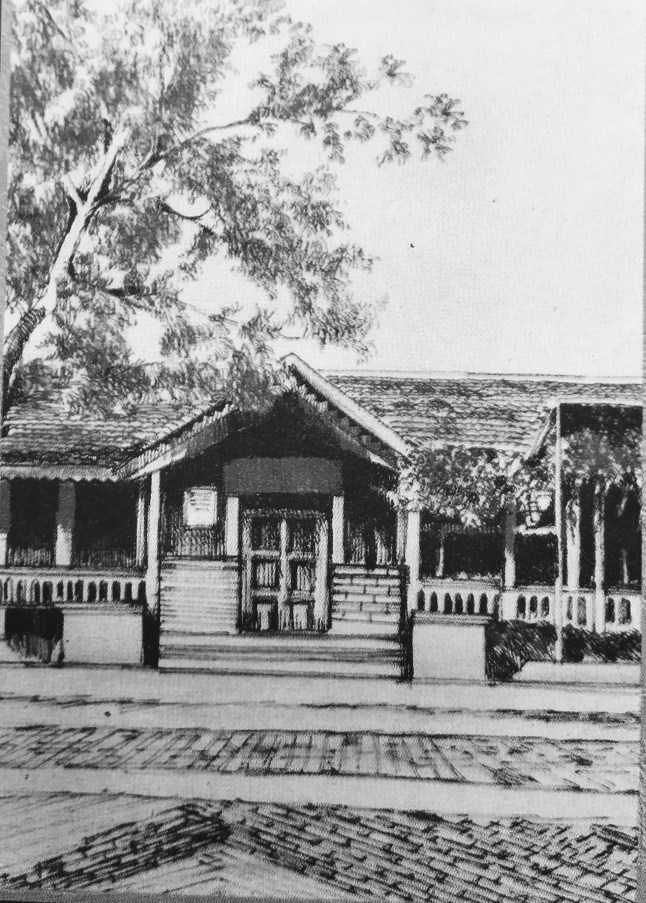
Dakshinamurti Balmandir

That is where serendipity stepped in. In 1915, Gijubhai helped to frame the constitution of an educational institution in Bhavnagar called Dakshinamurti. Its founders were kindred spirits, all grappling with dilemmas about education, as well as reading the works of Montessori. This was the turning point. In 1916, at the age of 32, Gijubhai quit his legal practice, and joined Dakshinamurti, initially as Assistant Warden of the student’s hostel, and teaching in the High School. His direct interactions with students reinforced his conviction that if real change had to happen it was critical to start from early childhood. He put forth a proposal to the Board to start an experimental pre-school (Balmandir). His wish was granted and in 1920 the Dakshinamurti Balmandir started. This became Gijubhai’s karmabhoomi (the land where one works). And this is where he applied the Montessori philosophy and method, drawing upon the core beliefs and tenets about child development, while adapting the methods and techniques to suit the local realities.

In 1925 Gijubhai took on three major initiatives that created a revolution in the thinking and practice of children’s education across Gujarat.

He set up a formal Adhyapan Mandir to train young people in the philosophy and practice of pre-school education.

To spread the thinking and to attract larger interest in children’s education, the first Montessori Sammelan (Conference) was held at Dakshinamurti. It was chaired by Saraladevi Sarabhai, who had personal experience in using the Montessori system in educating her own children, and who had tremendous belief in this philosophy. The Sammelan concluded with the setting up of the Nutan Bal Shikshan Sangh, headed by Saraladevi Sarabhai to take the work ahead.

Gijubhai invited all citizens interested in the new children’s education approach to join. The enthusiastic support of these members helped spread the new wave not only across Gujarat, but also other parts of the country. The Sangh became a platform to carry this forward. It was proposed to publish a monthly Shikshan Patrika to give voice to the movement.

In 1926, the second Montessori Sammelan was held at Ahmedabad, presided by Gijubhai. Educationists came from all parts of India and carried back the Montessori message.

In the short period from 1920 when he embarked on his mission, till his death in 1939 at the age of 54 years Gijubhai not only pursued his passion for, and practice of his vision of pre-school education, but wrote prolifically for children, teachers and parents.

He combined the scientific perspective of an experimenter, the desire to do something new, the insight to draw out some light from the doldrums that the educational system was in, and faith. This was supported by the revelations from the writing of Madame Montessori.

Sadly the two great like-minded people never met in person. Madam Montessori first came to India in 1939, the year that Gijubhai passed away, at the invitation of Theosophical Society of India. She was then 69 years old. She made Adayar, Chennai her home and lived there along with her son, Mario till 1946.

By then seeds that her writing had sown had already taken root and spread, and Gijubhai was the gardener that nurtured the early shoots, and encouraged the branches to spread far and wide.

The Dakshinamurti Balmandir continues to function today, in its original building, one hundred years after it was first established.

It is necessary for the teacher to guide the child without letting him feel the pressure too much, so that she may be always ready to supply the desired help but may never be the obstacle between the child and his experience.

If we could say: “We are respectful and courteous in our dealings with children, we treat them as we would like to be treated ourselves” we should certainly have mastered a great educational principle and undoubtedly be setting an example for good education.

Dr. Montessori’s Own Handbook (1914)

A teacher’s work is like flowing water. …If we do not understand those who have to be educated; do not think about what they like and what they do not, then our work and theirs will go in vain. The fulfilment of the work of education is not in teaching one or two subjects nor preparing for a certain class, or passing matric or BA. Real education lies in making humans aware about their own unending strengths. It is to reveal the secret of how to animate these and how to use them. To do this requires that the strengths are respected. Their individual development needs to be given first place. Rather than being taught, they need to be guided onto the path of self-knowledge. This is the work of education today.

Gijubhai Badheka  Note to Teachers circa 1920.

–Mamata


War and Peace

6 August 2020 marks 75 years since one of the most devastating events in the history of warfare took place. On this day, in 1945, an American bomber plane called Enola Gay dropped a 4000+ kilo uranium bomb named ‘Little Boy’ on the Japanese city of Hiroshima.

It was as if the city was struck by a blinding flash; the bomb exploded, and a giant mushroom-shaped cloud rose to the sky. The blast flattened the city and killed nearly 100,000 people; tens of thousands were injured. Three days later, on 9 August, the Americans dropped another nuclear bomb on the Japanese city of Nagasaki. On 15 August 1945 World War II ended.

But for the survivors of the nuclear blasts the battles had just begun. Within a month of Little Boy hitting Hiroshima, radiation exposure is thought to have caused the deaths of at least 6,000 people who survived the blast. And the long-term effects of radiation exposure, physical and psychological, continued to reveal themselves for the next decades. There was a documented rise in cancer, especially, in leukaemia cases. In the years following the attacks, the survivors became known as the hibakusha (the explosion-affected people) and were subjected to widespread discrimination as it was believed that they were carriers of a contagious disease. And for years the ugly spectre of the after-effects kept raising itself.

Amidst all this, there were still some stories of hope and resilience. One of the classic stories that beautifully captures this is that of Sadako and the Thousand Paper Cranes by Eleanor Coerr. This is based on the life of a real little girl named Sadako who lived in Hiroshima from 1943 to 1955. Sadako Sasaki was a baby when the bomb devastated Hiroshima. Her grandmother died in the explosion. The story opens ten years later when Sadako is a lively girl who dreams of becoming a runner. One of the annual outings of Sadako and her family is on 6 August to what was called the Peace Park to commemorate those who lost their lives on that fateful day in 1945, and to pray for peace and good luck.

Sadako loves her family, her friends and her school. One day as she is practicing for a big race, she feels dizzy. Quickly, and without any obvious causes, the dizziness and weakness continue to worsen. After some tests at the Red Cross Hospital, the doctors’ worst fears are confirmed: Sadako has leukemia, the dreaded “atom bomb disease”. The cheerful little girl’s world is turned upside down.

Sadako needs to stay on in hospital. One day, Sadako’s best friend Chizuko comes to visit her in hospital. Chizuko has brought with her some golden paper, and she folds this to make a crane. She tells Sadako: Don’t you remember that old story about the crane? It’s supposed to live for a thousand years. If a sick person folds one thousand paper cranes, the gods will grant her wish and make her healthy again. She handed the crane to Sadako. “Here’s your first one”.

This gives Sadako hope and cheer. She spends the next few weeks folding as many orizuru or paper cranes as she can, even as she is getting weaker and sicker. Soon everyone becomes a part of the project. 

Everyone saved paper for Sadako’s good luck cranes. Chizuko brought colored paper from the bamboo class. Father saved every scrap from the barbershop. Even Nurse Yasunaga gave Sadako the wrappings from packages of medicine. And Masahiro hung every one of the birds, as he had promised. Sometimes he strung many on one thread. The biggest cranes flew alone. 

Sadako channels all her fast depleting energy into painstakingly folding paper crane after paper crane, making a wish with the completion of each one, and determined to reach the magic number of 1000 paper cranes.   

She never complained about the shots and almost constant pain. A bigger pain was growing deep inside of her. It was the fear of dying. She had to fight it as well as the disease. The golden crane helped. It reminded Sadako that there was always hope.

 Against all odds, Sadako manages to complete 644 cranes before she slowly sinks into a peaceful death.

She looked at her flock hanging from the ceiling. As she watched, a light autumn breeze made the birds rustle and sway. They seemed to be alive and flying out through the open window. How beautiful and free they were! Sadako sighed and closed her eyes. She never woke up.  

Sadako died on October 25, 1955. Her classmates folded the remaining 356 cranes, and all 1000 paper cranes were buried with her. Her classmates also collected her letters and journal and published them in a book. The book reached young people across Japan, and they all came to know the story of the courageous Sadako and her cranes.

Sadako’s classmates resolved to honour the memory of their friend in as many ways as possible. Their efforts sparked a children’s peace movement that swept through Japan, and then the world. This transformed the origami paper crane into an international symbol of peace. Their fundraising campaign led to the establishment of the Children’s Peace Monument in the centre of Hiroshima’s Peace Memorial Park. Here stands a statue of Sadako holding aloft a golden crane.

Today millions of paper cranes, reach here from all corners of the globe, symbolizing the universal value of peace and the preciousness of life. In Japan a popular tradition is to fold 1000 cranes and string these together, usually 25 strings of 40 cranes each, which are given as gifts called senbazuru which literally means, ‘one-thousand cranes’.

On 6 August every year, people still place folded paper cranes at Sadako’s statue, and reiterate the same wish that is engraved at the base of the statue:origami crane.jpg

This is our cry,

this is our prayer;

peace in the world. 

Today the long and complex history of the World War II is just that—history. But more than ever before, the unleashed peril of a nuclear explosion continues to keep the entire world on tenterhooks. Hiroshima is a reminder of the horrific legacy of nuclear warfare, but the Peace Memorial is a reminder that there can be another legacy—one of peace.

–Mamata


And Long Before E-Education, there was SITE…

In the education space, stakeholders in India ( at least private
schools and ’learning solution providers’) have moved to E-learning. An estimate is that overall, technology adoption has been accelerated by upto two decades,
thanks to COVID.

Two things stand out. We would not have done it, if we did not have to
do it! While online tutoring had caught on in a big way, educational
institutions were definitely not leveraging technology to the extent
it should have happened—till COVID. The other, more heartbreaking, is
that this is adding to the already stark inequity in educational
access. The point is not to deny access to some because it cannot be
universal. The point is rather to go on a mission to make it
universal!

In contrast—SITE (Satellite Instructional Television Experiment)
undertaken by India in 1975, was a proactive effort to use technology
for education and development communication for the most-unreached.
Imagine 1975, when TVs were hardly seen even in urban households. Here
was an unimaginably bold initiative to take TV to 2400 of India’s most
backward villages in 6 states.

There were questions even apart from our technical ability to do this—was such an experiment necessary for a country at our level of poverty and problems? Surely, there were more pressing problems and more immediate use for the scarce resources? But the conviction of a team led by Dr. Vikram Sarabhai, that technology-leapfrogging was critical to solve India’s development challenges,
ensured that the topmost decision makers saw the advantages and they
could make  it happen. (‘Technology-leapfrogging occurs when
decision-makers choose to adopt leading-edge technology, skipping one
or more technology generations’).

This was a NASA-ISRO partnership with the objective of using technology for the education of communities in the most deprived and unreached parts of the country . A NASA broadcasting satellite was used. In the first-ever Indo-US space collaboration, it was positioned over India for the
duration of the experiment (August 1, 1975 to July 1976). The
deeply-researched content on critical issues faced by the community,
from agriculture and health, to culture to short films promoting
scientific temper, the production was done mainly by All India Radio,
with social research and evaluation done by a special team from ISRO,
and with the involvement of experts from a range of the most
significant institutions of India-Tata Institute of Social Sciences, to NCERT. Apart from community programs, there was a rich variety of special educational programs for schools as also massive teacher training.

AA930C61-3377-476F-B4AC-6E6DE5EAB179The programs were broadcast for a few hours a day, and hundreds of
people would gather in the village community hall or wherever the
village had installed the TV. In villages which did not have
electricity, truck or car batteries were used to power the viewing.
People in remote Bihar were watching television while many in Delhi
had never seen one!

SITE was a resounding success in proving that technology had a huge
role to play in solving the real development challenges of the
country. It helped ISRO develop its capabilities in operational
satellite systems and contributed to a sound platform for the Indian
National Satellite System (INSAT). It helped us develop an
understanding of educational software programming, from social
research to production to evaluation. And it helped develop managerial
capacities. It was probably also the first time in India that a very
young group (mainly in their 20s) formed the core of the team taking
responsibility for such a complex task of national importance.

Well-known science fiction writer Arthur C. Clarke called SITE ‘the
greatest communication experiment in history’.

So even as education (for some) moves online, here is a Hurrah for the vision of the
giants on whose shoulders we stand! Can that infuse us once again?

And a Hurrah from the Millennial Matriarchs for some of the amazing
people who were part of SITE, whom we have had a chance to interact
with—Prof. Yashpal, Kiran Karnik, BS Bhatia, Binod Agarwal,
Vishwanath, Mira Aghi—to name just a few. We are thankful to life for
giving us these opportunities.

–Meena

Much in Little

It is almost six months since the world as we knew it, changed. For many, this period of lockdown has also been one of unlocking some simple joys of life and living.

IMG_20200626_093148.jpg

A reprieve from the frenetic activities of modern life has given Nature a new lease of life. And humans, from behind their glass windows, are discovering the wonders of the world that we share with millions of other living beings. People are noticing plants, birds and insects in their immediate surroundings; they are hearing bird song and rain symphonies which had been drowned out by incessant urban cacophony and pollution. Locked inside, humans are rediscovering nature.

Humans are also rediscovering that it is possible, even satisfying, to live with what one has; that life can go on without 24/7 doings and happenings, extravagant shopping sprees, dining out, and other self-indulgences. That the quality of life is not dependent entirely on the quantum of material resources.

But this is not the first time in history. Almost 200 years ago Henry David Thoreau took a break from the often numbing routine of daily life which was driven by the need to earn a living. As he put it “the mass of men lead lives of quiet desperation.” He wondered, “Was it possible to lead a different kind of life?”

Thoreau spent two years, two months and two days living by himself in a basic wooden cabin that he built himself, on the shore of Walden Pond, near Concord, Massachusetts in America. He wanted to answer for himself the question “how simple can a life be and still be a good one?”, and to illustrate his belief of “much in little.”

As he wrote, “I went to the woods because I wished to live deliberately, to front only the essential facts of life, and see if I could not learn what it had to teach, and not, when I came to die, discover that I had not lived. I did not wish to live what was not life, living is so dear; nor did I wish to practice resignation, unless it was quite necessary.”

Even while at Walden Pond, Thoreau did not live a life of seclusion. He had visitors, and walked to the nearby village often. His experiment was more to prove that one does not have to go far in any physical sense to “get away from it all.”

During this period in 1845-46, he observed, enjoyed and recorded his observations of the natural world around him. These were to be published as Walden, one of his best known works. It also earned him the moniker Father of Environmentalism.

Thoreau was however much more than a nature writer. He wore many hats–social reformer, naturalist, philosopher, transcendentalist, scientist, and conscientious objector.

Born on July 12, 1817 in New England, USA in a middle class family, he graduated from Harvard following which he spent some years teaching in school, and also working in his father’s pencil factory. The young Thoreau was greatly influenced by Ralph Waldo Emerson who became his close friend and mentor. He began to publish essays that reflected his deeply-felt political views which were considered radical in those times. He was an outspoken abolitionist and was arrested (and jailed for one day) for resisting to pay poll tax to a government that supported slavery. This experience led him to write one of his best-known and most influential essays titled Civil Disobedience. He made a strong case for acting on one’s individual conscience and not blindly following laws and government policy. “The only obligation which I have a right to assume is to do at any time what I think right,” he wrote.

Thoreau’s non-violent approach to social and political resistance greatly influenced Mahatma Gandhi who adopted many of his thoughts while developing his concept of Satyagraha.

Following his Walden experiment Thoreau wrote extensively, although a lot of his writing was published and became well-known only after he died. He continued his daily afternoon walks in the Concord woods and kept a journal of his nature observations and ideas. He travelled and lectured, living on a modest income, till he died of tuberculosis in 1862, at the age of 45.

Thoreau, a man of simple tastes and high thinking, was indeed an original thinker of his times. The lesson he taught himself and that he tried to teach others, was summed up in the word “simplify”. That meant simplify the outer circumstances of your life, simplify your needs and your ambitions; learn to delight in simple pleasures which the world of nature affords. It meant also scorn public opinion, refuse to accept the common definition of success, refuse to be moved by the judgement of others. And unlike most who advocate such attitudes, he put them into practice.

A few years ago on a trip to the United States I had the opportunity to retrace Thoreau’s footsteps on a walk around Walden Pond, and see the modest shack where he penned his notes on nature. At that time I knew him mainly as an evocative nature writer. Today I find that his philosophy of life and living is more relevant than perhaps ever before. And Walden is so much more than a nature lover’s diary—it is an inspiring guide to changing the way we view ourselves and the life we want to live, especially in these times when we are feeling lost, and the times that will follow.

Our life is frittered away by detail. Simplify, simplify. Henry David Thoreau

–Mamata

The Book of Joy

This week, 6 July, marked the 85th birthday of His Holiness the Dalai Lama. Five years ago, in 2015, to celebrate the Dalai Lama’s 80th birthday, a unique meeting took place. The Dalai Lama’s close friend the Archbishop Desmond Tutu came to Dharamshala to visit his “kindred spirit”. Both great spiritual masters and moral leaders of our time, and Nobel Prize winners, the two spent a week together—sharing their thoughts and vision, exchanging memories, and reveling in the simple joys of being together, laughing, and teasing each other.

Interestingly, four years before this meeting, when Desmond Tutu turned 80, a similar meeting between the two had been planned in Cape Town, South Africa. But the Dalai Lama was denied a visa by the South African government, bowing to pressure from the Chinese government.IMG_20200709_102817_BURST1.jpg

The Dharamshala meeting was, thus, more than special, and its purpose even more so. They took this rare occasion as a chance to sit down together, and evaluate one of life’s most important questions: how do we find joy in the face of life’s inevitable suffering? The outcome was The Book of Joy.

As the facilitator of the dialogues, and editor of the book, Douglas Abrams explains, ‘From the beginning the book was envisioned as a three-layer birthday cake: their own stories and teachings about joy, the most recent findings in the science of deep happiness, and the daily practices that anchor their own emotional and spiritual lives.’

The book documents the interactions between the two great minds through daily dialogues  over seven days, starting with identifying the obstacles to joy: fear, stress, anxiety, anger, sadness, grief, loneliness, envy, suffering and adversity, illness and fear of death.

From there the dialogues move on to explore the paths to experiencing Joy. Both the great minds emphasise that joy and happiness are by-products that spring from one’s attitudes and actions, and the cultivation of certain qualities.

What are these positive qualities that allow us to experience more joy? Four are qualities of the mind: perspective, humility, humour and acceptance. Four are qualities of the heart: forgiveness, gratitude, compassion mind: and generosity. These are the eight pillars of Joy. Each of these is discussed at length in the book.

Five years ago, the two gurus talked about the untold horrors, tragedies and suffering that the world was facing, and how to find joy whilst accepting, and yet transcending these. Today, in addition to these, the world is facing an all-encompassing and overwhelming new challenge. More than ever before, their words of wisdom may be the one’s to guide humanity through the pandemic that has been the greatest equaliser of all.

Perhaps the key to coping with the immense stress, anxiety, frustration and anger that all of us are facing during this period is Perspective. I cannot help but share some excerpts which are so relevant today.

“Yes there are many things that can depress us. But there are also are very many things that are fantastic about our world. Unfortunately the media do not report on this because they are not seen as news. …When bad things happen they become news, and it is easy to feel that our basic human nature is to kill or rape, or to be corrupt. Then we can feel that there is no hope for the future. …No doubt there are very negative things, but at the same time there are many more positive things happening in our world. We must have a sense of proportion and a wider perspective. Then we will not feel despair when we see sad things.”

“For every event in life there are many different angles. When you look at the same event from a wider perspective, your sense of worry and anxiety reduces, and you have greater joy. …If you look from one angle, you feel, Oh how bad, how sad. But if you look from another angle at the same tragedy, that same event, you see it gives me new opportunities.”

“The wider perspective leads to serenity and equanimity. It does not mean that we do not have the strength to confront a problem, but we can confront it with creativity and compassion rather than reactivity and rigidity. We are able to recognise that we do not control all aspects of any situation. This leads to a greater sense of humility, humour and acceptance.”

“The way we see the world is the way we experience the world. Changing the way we see the world in turn changes the way we feel and the way we act, which changes the world itself. A healthy perspective is really the foundation of joy and happiness.”

The book records the thoughts of the two thinkers not just through their words but also by their body language—the mischievous tugging and patting of arms, the heartfelt clasping of fingers, the respectful folding of hands and bowing, and above all the twinkling of eyes and the easy laughter of two dear friends sharing jokes, and enjoying their pudding! No wonder they are they are also known for being among the most infectiously happy people on the planet!

I myself have felt engulfed in this childlike exuberance and humour both times that I have had the privilege of attending a talk by the Dalai Lama, even as one of an audience of hundreds.

The Book of Joy has been on my bookshelf the last couple of years, but I was not in the right frame of mind to start reading it.  It is only last week that I felt the urge to read it.  I intensely related to it, and it put a lot of things in perspective.  Every word in the book is thought-provoking and profound. I know that I will go back to these again and again. Perhaps there is a time and place for everything indeed.

But, there is always time and space for Joy.

–Mamata


How to be a Parent

The last three months of lockdowns across the world have, among other things, put the spotlight on parenting. With children and parents in continuous and close confinement, both have been tearing their hair out in frustration. The challenge of keeping children ‘occupied’; the careful negotiation of time and space that respects personal and physical boundaries; the sharing of responsibilities amidst the constantly looming uncertainty of when and where the virus could strike, has put everyone on tenterhooks.

This has led to a proliferation of Advice Columns. From counsellors to therapists, psychologists to agony aunts, there seems to be an overdose on ‘good parenting’ tips. In our zeal to do the best for our children we sometimes tend to forget the most basic and simple guidelines that are based on the fundamental premise of mutual respect.

These were offered almost a hundred years ago by Gijubhai Badheka one of the pioneers of the Montessori system of education in India, lifelong advocate of children and their rights, and creator of some of the best loved and popular children’s literature in Gujarati.  Gijubhai believed that every child has its own distinct personality. We as adults need to recognise and respect this. He urged parents to convert to the faith of trust, respect, freedom and love for children. Starting with these five fundamental tenets.

If You Really Want ToIMG_20200625_114247.jpg

If you would like to do just one thing for children…

What could you do?

Do not hit children.


If you would like to do two things; what could you do?

Do not scold children

Do not insult them.


If you would like to do three things; what could you do?

Do not scare children

Do not bribe them to do something

Do not overindulge them.


If you would like to do four things for children; what would these be?

Do not preach to children

Do not blow hot and cold

Do not keep finding fault

Do not exercise authority all the time.


If you are keen to do five things; what will you do?

Do not do whatever the child demands; teach it to do for itself.

Let the child do what it desires to do.

Do not take a child’s work lightly.

Do not interfere into a child’s work.

Do not take away a child’s work.

In a world that has changed dramatically in the last 100 years, these timeless tenets remain as, if not more, true today.

Gijubhai Badheka passed away on 23 June in 1939, at the early age of 54 years leaving behind a prodigious legacy of writing for children, parents and teachers.

Gijubhai was my grandfather. In my small way, I try to carry forward his legacy by sharing and translating his works from the original Gujarati into English.

–Mamata


Turtle Man

This is a week of Days—international days to mark events, or create awareness about different themes and issues. 22 May is the International Day for Biological Diversity, and 23 May celebrates Turtles–one of the millions of species

IMG_20200521_113758
Illustration CEE’s NatureScope India Turtles in Trouble 

that are part of the incredible tapestry of biodiversity.

This took me to revisit some of the teaching-learning material on these themes that we developed in CEE, among them, an Educator’s Manual on Turtles. Going through it I rediscovered the inspiring story of Archie Carr–the Turtle Man.

Archie Fairly Carr Jr., was an American zoologist whose studies unraveled many mysteries about giant sea turtles, and whose writings and conservation efforts have helped to save sea turtles from near extinction.

Archie Carr was born on June 16, 1909, in Alabama, where his father was a Presbyterian minister and his mother a piano teacher. It was his father who instilled in him his love for nature. The backyard of their home was filled with cages of snakes, frogs, lizards, and turtles that the young Archie collected. As a child he also developed a keen ear for language and music. In later years he further developed these language skills which led him to master several languages, and his work in collecting dialects from the Caribbean area and east Africa where he travelled and worked.

Archie Carr originally went to the University of Florida to study English but was diverted to biology by a professor who recognised the young student’s love for nature. In 1937 he became the first to be granted a PhD in zoology by the University.  And it was his alma mater that became his lifelong academic home; he was associated with the University for more than fifty years.

Carr was a true, and early, ecologist of his times. While his early training was in taxonomy and evolutionary biology, he combined this with his wide knowledge of zoology, botany, soils, geology, history, and cultural anthropology, and he showed his students the need to weave together all of these disciplines to begin to understand the subject matter of ecology. This breadth of understanding and perspective also permeated his writings which beautifully combined the different strands.

Above all, Archie Carr was a great biologist. His early descriptive studies of turtles set the standard of quality in the field of natural history. He published his first paper on sea turtles in 1942, but it was not until he wrote his classic Handbook of Turtles (1952) that he began to focus his research on sea turtles.  He described his early discoveries about the plight of sea turtles in his book The Windward Road particularly in his chapter The Passing of the Fleet, which was a call to arms and resulted in global efforts to conserve sea turtles from extinction

As he focused on sea turtles, Carr moved toward ecology and behaviour, although his work always retained a taxonomic and evolutionary perspective. His decades-long research at the research station at Tortuguero in Costa Rica, enabled him to initiate one of the longest lasting and most intensive studies of an animal population that has ever been done. Almost all of these studies have significance for conservation; Archie Carr was a conservation biologist long before the field was recognized.

Carr’s book The Windward Road published in 1959 deeply touched a newspaperman Joshua Powers. He sent copies of the book to twenty friends with an invitation to join a new organisation called The Brotherhood of the Green Turtle; this grew into The Caribbean Conservation Corporation, and later the Sea Turtle Conservancy, which became an international force for the preservation of sea turtles.

Like many of his generation Carr was at one time an avid hunter, but he gave this up after his travels in Africa. This change he described in his book Ulendo: Travels of a Naturalist in and out of Africa, in 1964. And also, like many hunters turned conservationists, such as Jim Corbett in India, Carr wrote extensively and evocatively about wildlife and nature. ”It was the lion song, and I sat quiet to learn it, as you learn the trill of a tree toad, or how an alligator goes. And though there may have been little real song in the sound, it came in strong and lonely through the whisper of the mist; and to me, at the time, it seemed to tell of an age being lost forever.

He was far from the stereotype of a ‘scientist’ whose highly technical and academic language could be understood only be a select band of fellow scientists. He combined his original academic interest in English, and his love for the language, with his passion for biology by writing 11 books, several of which won top awards were a model of authoritative yet lively scientific writing.

His colleagues remember him for his sense of humour that often included practical jokes, and which peeped through his writing. I like the look of frogs, and their outlook, and especially the way they get together in wet places on warm nights and sing about sex”.

His wife once jokingly told him “You’ve done a lot for turtles.” To which he replied “They’ve done a lot for me too.”

Professor Carr, died at his home on May 21, 1987. At the time of his death, he was the world’s leading authority on sea turtles.

The world that Archie Carr explored and wrote about has changed a lot today. Yet the sea turtles remain, thanks to the painstaking pioneering work,  passion and life-long mission of this brilliant scientist and inspiring human being.

Today is a good day to remember his words, “For most of the wild things on earth, the future must depend on the conscience of mankind.

–Mamata


The Lady with the Graph

As we celebrate the 200th birth anniversary of Florence Nightingale this week, it is time to let go of our romantic notions of a do-gooder with a lamp in one hand, soothing the fevered brows of soldiers with the other—a visual firmly ingrained in most of our heads, thanks to illustrations from our textbooks.

Of course she did that! She was very hands-on and did make rounds of the soldiers’ wards night and day, to care for them.

But she was much more.

She was a statistician par excellence, and in 1860, was elected the first woman Fellow of the Statistical Society.

Her meticulous approach to collecting data and analysing it, at a time when even deaths were not properly tallied in the war hospital where she worked, led to a better understanding of the situation and to reducing deaths. For instance, analysis by her and statisticians appointed by the British Government led to the conclusion that 16,000 of the 18,000 deaths in her hospital were not due to battle wounds but to preventable diseases, spread by poor sanitation. By using applied statistical methods, she effectively made the case for bringing in better hygiene practices, and thus saving lives. (Early example of evidence based policies, which won the Noble Prize this year!)

AB931E80-8551-4152-98DC-257E5EE9C79FFlorence was also one who shook up systems and brought in systemic changes. She battled with entrenched bureaucracies most of her working life, in order to bring about these changes. She was aware that it would be difficult to convince decision makers of the need for change, and maybe out of this requirement was born what is today counted as her major contribution to statistics—the first infographics ever made. The best-known of the infographics she invented are what are called the “coxcomb” diagrams, understandable by even the public. ‘The coxcomb is similar to a pie chart, but more intricate. In a pie chart the size of the ‘slices’ represent a proportion of data, while in a coxcomb the length which the slice extends radially from the center-point, represents the first layer of data. The specific organization of Nightingale’s chart allowed her to represent more complex information layered in a single space. In her coxcomb during the Crimean War, the chart was divided evenly into 12 slices representing months of the year, with the shaded area of each month’s slice proportional to the death rate that month. Her color-coding shading indicated the cause of death in each area of the diagram.’*

There are many who believe that if she were around today, she would have brought very strong statistical analysis of The COVID situation to bear on policy making, and advocated for solutions based on pure, hard evidence (the implication obviously being that today’s solutions are not fully there!). But it is the duty of the present generation to ‘stand on the shoulders of giants’ and do the needful! No point in wishful thinking.

We in this country also have to thank her for her campaign for clean drinking water, famine relief and sanitary conditions in India—based on statistics and data she collected.

–Meena

*https://thisisstatistics.org/florence-nightingale-the-lady-with-the-data/