
The media has been bringing to our homes never-ending images of different parts of the world which are in the throes of war. The world is on the brink of what could well be the third world war. At some level people are becoming dangerously inured to the horrors through the never-ending barrage of images and reports that have almost become a part of daily sights and sounds. This in itself is frightening; are we accepting that violence (and its consequences) are an inescapable part of life? And while the world is led by egoistic power-hungry leaders, there is a rapidly declining number of people who feel helpless, even hopeless at the situation as it spirals towards a possibly irrevocable conclusion. Amidst the clamour of belligerent war cries, are some who lament that there are, today, so few voices of reason to remind the world of the precipitous path that we seem to be treading.
What does war achieve? And why do we need to seek peace?
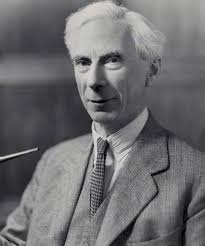
Questions that have been asked since millennia. And answered in different ways in different periods of history. Perhaps one of the most pertinent answers came over a century ago, at a time when the sparks of what became the First World War were just beginning to fan the fire that would rage for the next four years. This was an essay titled The Ethics of War, written by Bertrand Russell in 1915. This was first published in the International Journal of Ethics 25, in January 1915.
Bertrand Russell is considered as one of the greatest philosophers of the twentieth century. He was actively engaged in numerous social and political issues controversies of his time. A mathematician, educator, social critic, pacifist and political activist, Russell authored over 70 books and thousands of essays and letters addressing a wide range of subjects. He was awarded the Nobel Prize for Literature in 1950 in “recognition of his varied and significant writings in which he champions humanitarian ideals and freedom of thought. Bertrand Russell died in 1970 at the age of 97. Till the end of his life he supported free thought in religion and morals, he opposed war, nationalism and political persecution.
Bertrand Russell’s thoughts on all of the above are beautifully articulated in the essay The Ethics of War. Here are some excerpts:
The question whether war is ever justified, and if so under what circumstances, is one which has been forcing itself upon the attention of all thoughtful men. On this question I find myself in the somewhat painful position of holding that no single one of the combatants is justified in the present war, while not taking the extreme Tolstoyan view that war is under all circumstances a crime. Opinions on such a subject as war are the outcome of feeling rather than of thought: given a man’s emotional temperament, his convictions, both on war in general and on any particular war which may occur during his lifetime, can be predicted with tolerable certainty. The arguments used will be mere reinforcements to convictions otherwise reached. The fundamental facts in this as in all ethical questions are feelings; all that thought can do is to clarify and systematize the expressions of those feelings, and it is such clarifying and systematizing of my own feelings that I wish to attempt in the present article.
At the beginning of a war each nation, under the influence of what is called patriotism, believes that its own victory is both certain and of great importance to mankind. By concentrating attention upon the supposed advantages of victory of our own side, we become more or less blind to the evils inseparable from war and equally certain whichever side may ultimately prove victorious. Yet so long as these are not fully realized, it is impossible to judge justly whether a war is or is not likely to be beneficial to the human race. Although the theme is trite, it is necessary therefore to briefly remind ourselves what the evils of war really are.
To begin with the most obvious evil: large numbers of young men, the most courageous and the most physically fit in their respective nations, are killed, bringing great sorrow to their friends, loss to the community and gain only to themselves. Many others are maimed for life, some go mad, and others become nervous wrecks. Of those who survive many will be brutalized and morally degraded by the fierce business of killing, which however much it may be a soldier’s duty, must shock and often destroy more humane instincts.
The evils which war produces outside the area of military operations are perhaps even more serious, for though less intense they are far more widespread. …The extent and consequences of the economic injury inflicted by war are much greater than is usually realized. …Thus war, and the fear of war, has a double-effect in retarding social progress: it diminishes the resources available for improving the condition of the wage-earning classes, and it distracts men’s minds from the need and possibility of general improvement by persuading them that the way to better themselves is to injure their comrades in some other country.
Of all the evils of war the greatest, in my opinion, is the purely spiritual evil: the hatred, the injustice, the repudiation of truth, the artificial conflict, where if once the blindness of atavistic instincts and sinister influence of anti-social interests, such as those of armaments with their subservient press, could be overcome, it would seem that there is a real consonance of interest and essential identity of human nature, and every reason to replace hatred by love.
It has been over a century since this impassioned plea by Bertrand Russell. Much has changed since then, but much remains the same. Let us remind ourselves of the futility of mindless violence. Let us Give Peace a Chance.
–Mamata

 Millennial Matriarchs