Every year, World Environment Day arrives with familiar images — children planting saplings, speeches about sustainability, green logos replacing corporate blue for a day, and social media flooded with pictures of forests, oceans, and endangered animals.
And then, by the next morning, the world goes back to business as usual.

Factories continue to pollute rivers. Wetlands quietly disappear under concrete. Species vanish before most people even learn their names. Cities expand. Forests shrink. Temperatures rise.
Which raises an uncomfortable question: if every country claims to care about nature, who is actually doing a good job?
Surprisingly, the world has no single official answer.
There is no universally accepted “Nature Conservation Score” for countries. No equivalent of a cricket points table or Olympic medal tally for ecological responsibility. Instead, scientists, universities, conservation groups, and international organisations have created different systems to measure different aspects of environmental performance.
One of the best-known systems is the Environmental Performance Index (EPI), developed by Yale Center for Environmental Law & Policy and Columbia University. The EPI attempts to rank countries using indicators such as air quality, climate policies, biodiversity protection, water management, pollution control, and ecosystem vitality. In essence, it asks a broad question: How seriously is a country managing its environmental responsibilities?
The rankings often produce interesting results. Countries celebrated for economic growth may perform poorly environmentally. Others, less visible on the global stage, emerge as ecological leaders because of stronger conservation policies or lower environmental damage.
But the EPI is only one lens.
More recently, researchers introduced a more focused Nature Conservation Index (NCI) — an attempt to specifically measure how well countries protect biodiversity and ecosystems. Unlike broader environmental rankings, the NCI looks more directly at habitat conservation, threats to species, land-use pressures, governance systems, and future ecological risks.
This distinction matters. A country may have good urban pollution control but still destroy forests. Another may generate renewable energy while severely damaging wetlands. Environmental protection is a complex web of interconnected systems.
Then there is the Living Planet Index, produced by World Wildlife Fund. This index does not mainly rank countries. Instead, it tracks wildlife populations across the planet. And its findings are sobering. Many species populations worldwide have shown dramatic declines over the past decades. The Living Planet Index functions almost like a planetary pulse monitor. It asks: Is life itself becoming richer or poorer?
Another globally influential system comes from the International Union for Conservation of Nature — better known through its famous Red List of threatened species. The Red List categorises plants and animals according to extinction risk: vulnerable, endangered, critically endangered, and so on. When a species enters those categories, it becomes more than a scientific statistic. It becomes a warning signal about collapsing ecosystems.
Meanwhile, the Convention on Biological Diversity, linked to the United Nations, tracks biodiversity targets globally. Countries commit to goals involving protected areas, restoration, invasive species control, and ecosystem protection. These are not rankings in the conventional sense, but they form a vast international attempt to monitor humanity’s relationship with nature.
Why do all these measurements matter?
Because societies pay attention to what they measure.
Governments obsess over GDP growth because GDP is measured constantly. Investors track stock indices daily. Universities chase rankings. Sports teams live by points tables.
Environmental indicators attempt to bring the same discipline to ecological survival.
Without measurement, environmental destruction easily hides behind rhetoric. Governments can announce “green missions” while rivers die quietly. Corporations can advertise sustainability while their activities may lead ecosystems to degrade invisibly. Numbers are imperfect, but they create accountability.
And they also expose an uncomfortable truth: economic success and ecological wisdom are not always the same thing In fact, they are usually contrary..
Modern economies often reward extraction more than preservation. A forest cut down for mining can increase GDP immediately. A wetland converted into real estate may generate investment and jobs. Yet the ecological loss — biodiversity, groundwater recharge, carbon storage, flood protection — rarely appears in economic accounting.
India illustrates the challenge vividly. Few countries possess India’s ecological diversity — Himalayan ecosystems, rainforests, mangroves, coral reefs, deserts, grasslands, and rich wildlife habitats. At the same time, India faces immense developmental pressures: urbanisation, infrastructure expansion, industrialisation, mining, and rising consumption.
This creates difficult questions with no easy answers.
How much forest should be sacrificed for highways?
Can renewable energy projects damage fragile ecosystems?
How should tourism be balanced against biodiversity protection?
Every country now faces versions of these dilemmas.
That is why World Environment Day should perhaps evolve beyond symbolic tree-planting ceremonies and recycled slogans. The real environmental challenge is not whether humanity loves nature in theory. It is whether nations are willing to measure honestly what they are destroying, preserving, or restoring.
Nature conservation measures try to correct this blindness. Because ultimately, these indices are not really judging forests or rivers. They are judging us. They ask whether humanity is behaving like a responsible custodian of the planet — or merely a temporary consumer exhausting an inheritance built over millions of years.
And perhaps the most unsettling reality is this:
Nature does not care about our speeches, campaigns, or hashtags.
It responds only to actions.
–Meena
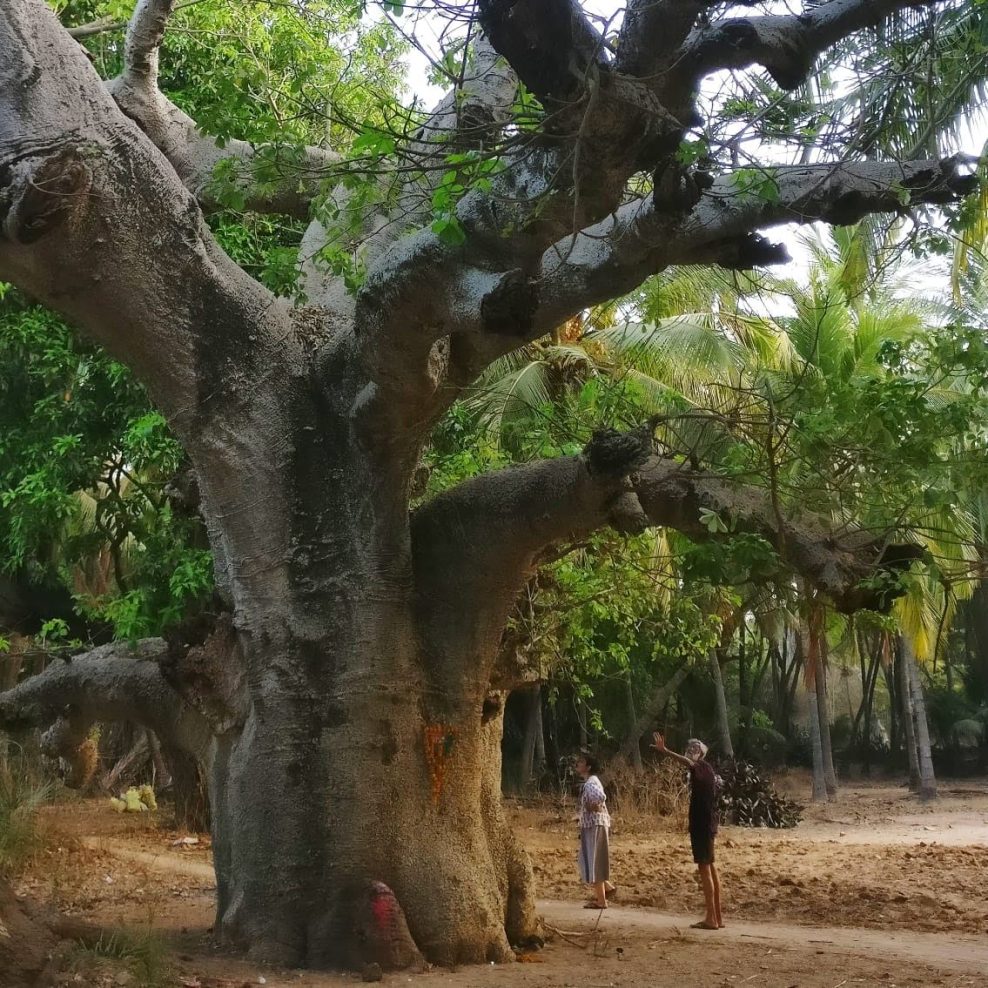
 Every part of the tree is valuable for the local communities; its lumber is used for storage, its bark is pounded to make rope, fishnets, mats, baskets, paper and cloth. More recently, its fruit has joined the ranks of international Superfoods–it is known to contain six times as much vitamin C as oranges, twice as much calcium as milk, and plenty of B vitamins, magnesium, iron, phosphorous, and antioxidants.