
As we get ready to celebrate one more World Environment Day, for a few days, positive stories about actions to ‘save’ the environment will share space with the daily dose of gloom and doom that have become our daily fare. This week Meena wrote about how Governments are trying to make an impact, or measure the impact of global and national efforts to mitigate the overwhelming consequences of so many wrong steps.
While these are large-scale projects undertaken on large scales, throughout the history of environmental efforts, there have also been heart-warming stories of smaller efforts by small groups, communities, and even individuals, who have taken up causes and worked relentlessly for these. Most of these do not make the headlines, but they do make a difference in their own time and space. And some of these receive recognition.
One of these recognitions is The Goldman Environmental Prize. It was founded in 1989 by San Francisco civic leaders and philanthropists Richard and Rhoda Goldman as a way to demonstrate the international nature of environmental problems and draw public attention to the global need for action.
The Goldman Prize recognizes grassroots environmental champions for significant efforts to protect and restore the natural environment. It considers those leading campaigns locally, and effecting positive change through community participation as ‘grassroots leaders’. It is a recognition of “People of ordinary backgrounds doing extraordinary things to save our Earth”.
The Prize believes that a strong environmental movement requires diverse talents, perspectives, and leadership. Often referred to as the Green Nobel, the awards are conferred every year to outstanding environmental advocates from each of the world’s six inhabited geographic regions: Africa, Asia, Europe, Islands and Island nations, North America, South and Central America.
The 2026 Goldman Environmental Prizes were announced on Earth Day this year. A unique feature of this year’s prizes is that all the six winners are women!
Let us celebrate these women this month. Starting with Asia, and young blood
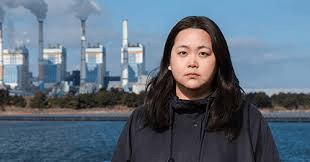
BORIS KIM
Activist Boris Kim and her organization Youth 4 Climate Change won the first youth-led climate litigation in Asia.
It was the summer of 2018, and South Korea was in the throes of a record-breaking heat wave. Borim Kim had just graduated from college and was working on energy conservation in a self-sufficient community in Seoul. The heat wave took a heavy toll as people struggled in buildings with no air conditioning. Borim realized that people, as individuals, could not escape the impacts of climate change. In her search for a way to become safer in the face of climate crisis, Borim found that many young people had similar concerns, but no solutions. This led her to start Youth 4 Climate Action (Y4CA).
Y4CA wanted to move the conversation away from individual solutions to the crisis, and work toward a fundamental transformation in society. The group started by organizing climate strikes and setting up meetings with decision-makers, including South Korea’s minister of education and minister of climate, energy, and environment. But the group soon realized that that just by demanding change, their safety in the face of the climate crisis was not guaranteed.
So in 2020, Borim decided to turn to the judiciary, which could require the legislature to act. Along with Y4CA, she organized a group of 19 youth who sued the South Korean government in the country’s constitutional court. Their suit, the first of its kind in Asia, made the case that the government was violating young people’s fundamental right to live in a clean environment by failing to adequately act on the climate crisis. Specifically, the plaintiffs contended that the government’s existing emissions reductions targets at the time — which sought to reduce emissions to 30 percent below 2020 levels by 2030 — were too weak. They argued that the absence of any additional planning past 2030 left future generations vulnerable. (Borim was not among the initial 19 plaintiffs, but she later joined the case, along with more than 200 others.)
In 2024, in a groundbreaking victory for the youth, the court agreed that the right to a clean environment includes protection from harms related to climate change. On that basis, it found that the government was violating youths’ rights by failing set emissions reductions targets for 2031 through 2049, in line with an existing national pledge to meet net-zero emissions by 2050. It ordered the Korean National Assembly to set such targets by February 2026.
Though the case represented the first youth-led national level climate victory outside of Europe, the plaintiffs didn’t win on all of their claims. Also due to political instability and inertia, the set targets were not achieved.
While the specific goal could not be achieved, the youth movement and the response from the judiciary were milestones in themselves. It was an affirmation that South Korean citizens had a basic right to “exist safely in the face of climate change”. As Borim Kim said, Ultimately, it created a red line from which the country’s climate policies would not go backwards.
Borim Kim continues to work to ensure that climate action moves forward in South Korea. Y4CA is also sharing lessons learned with other youth-led groups across Asia, including a group from Japan that is bringing a constitutional climate claim there. And she’s continuing to build the climate movement in South Korea. That includes making sure that youth and those who most directly face the inequalities of climate change have a voice in decision-making.
Borim Kim is the face of the future for the new generation that must bear the heavy brunt of climate change. A true ‘grassroots leader’ and deserving winner of the Goldman Environmental Prize.
Happy World Environment Day 2026.
–Mamata

