
When we are children, nature is explained to us in neat categories. Birds fly. Fish swim. Spiders spin webs. Plants make food from sunlight and quietly stay rooted in place. Mammals give birth to live young.
And then, slowly, nature begins to reveal its mischievous side.
A spider hunts like a tiger instead of spinning a web. A fish walks on land. A plant eats insects. A mammal lays eggs. A mushroom traps worms. The more one studies biology, the more one realises that evolution has very little respect for the tidy boxes humans create.
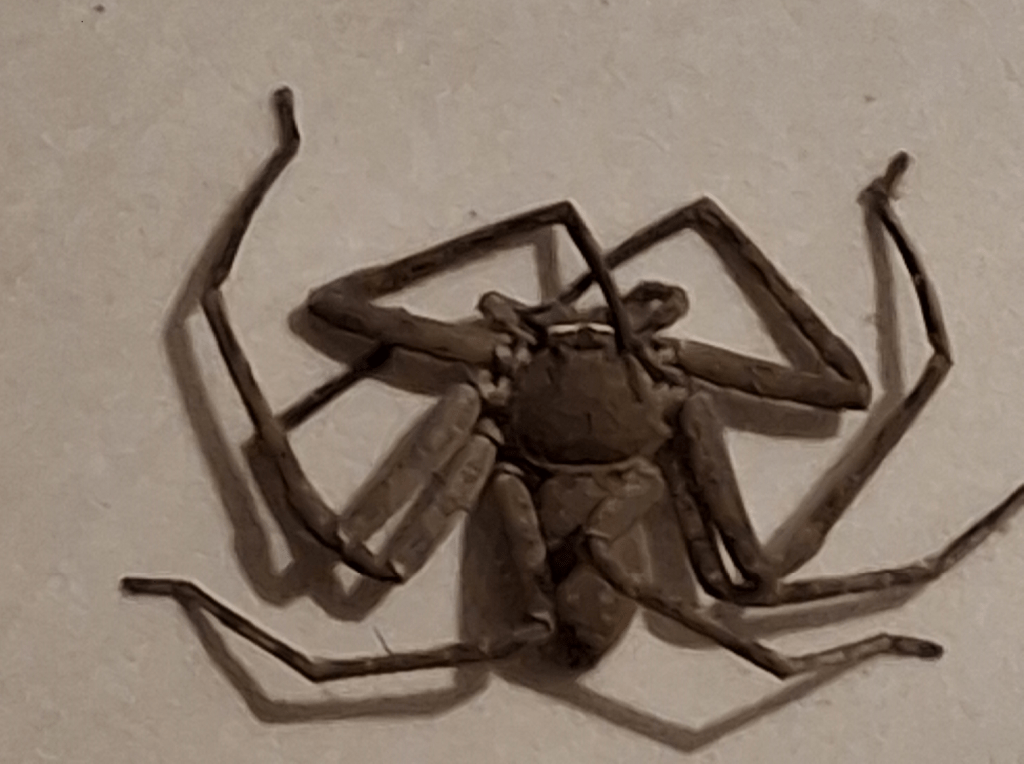
Take the Huntsman spider, for instance. Most of us imagine spiders as patient architects sitting in intricate webs, waiting for prey to blunder in. The huntsman spider does something entirely different. It stalks and ambushes prey, relying on speed and agility rather than silken traps. In many ways, it behaves more like a tiny leopard than a conventional spider.
It is not alone.
The Jumping spider has remarkably sharp vision and leaps onto prey with astonishing precision. The Wolf spider actively chases its victims across the ground. The Trapdoor spider lives in underground burrows and springs out like an ambush attacker in a war film.
These creatures remind us that even within a single group, evolution can produce wildly different lifestyles.
Then there are mammals — supposedly the most familiar class of animals to humans. Mammals, we are taught, give birth to live young. Except some do not.
The Platypus looks as though it was assembled from spare parts: duck bill, otter feet, beaver tail — and it lays eggs, and it is a mammal! The male even has venomous spurs. Its cousin, the Short-beaked echidna, also lays eggs despite being a mammal covered in fur.These monotremes are evolutionary oddities, survivors from a far older branch of mammalian history. If they were discovered as fossils rather than living creatures, many scientists might have assumed them to be fictional hybrids.
Birds, too, refuse to follow the script.
We instinctively associate birds with flight, yet the Ostrich abandoned the skies to become the world’s fastest running bird. The Penguin transformed wings into underwater flippers and effectively “flies” through the sea instead of air. The Kiwi of New Zealand behaves almost like a nocturnal mammal, shuffling through forests at night with a powerful sense of smell.
And some creatures seem unable to decide whether they belong on land or in water. The Mudskipper spends large amounts of time outside water, “walking” across mudflats using its fins. The Walking catfish can wriggle across land between ponds. The Climbing perch survives out of water for surprisingly long periods.
Plants provide perhaps the most startling examples of all because we rarely think of them as active or predatory. The Venus flytrap snaps shut on insects with startling speed. Pitcher plant species lure prey into liquid-filled traps where victims drown and decompose. The Sundew uses sticky tentacles to ensnare insects. The underwater Bladderwort employs tiny vacuum traps. These carnivorous plants evolved in nutrient-poor soils where ordinary plant life struggled. Instead of relying solely on the earth for nourishment, they turned to meat.
Some plants go further still and become outright thieves. The parasitic Dodder wraps itself around other plants and steals nutrients directly from them. The Indian pipe is ghostly white because it lacks chlorophyll almost entirely.
Even fungi refuse to stay within expectations. Certain fungi trap microscopic worms using tiny snares and digest them alive. The common Oyster mushroom can behave like a microscopic predator. Ophiocordyceps unilateralis goes a step further, infecting ants and manipulating their behaviour before killing them in locations ideal for fungal growth.
Nature’s rebels are not limited to these. The Electric eel generates electricity powerful enough to stun prey. The Leaf sheep, a tiny sea slug, steals chloroplasts from algae and briefly becomes “solar-powered.” The New Caledonian crow manufactures tools, while the Naked mole-rat lives in colonies resembling ant societies, complete with a queen.
The deeper one looks into nature, the clearer it becomes that “normal” is mostly a human invention. Evolution does not work toward ideals or categories. It experiments endlessly. If a strange adaptation improves survival — whether that means a spider abandoning webs, a fish walking on land, or a plant eating insects — nature keeps it.
In fact, these biological rebels may teach us the most important lesson of all: survival often belongs not to the strongest or fastest, but to the adaptable, the unconventional, and the creatures willing to break the rules.
–Meena
Pic: Hunstman spider, Meena Raghunathan

