
Right through the last three months of lockdown the one ‘unlocking’ that I was looking forward to, was that of my local British library. The once-a-month visit to the library was an outing that I enjoyed, with its comfortable ritual of collecting the books to return; the short trip to reach the library; the leisurely browsing of shelves to select the next batch to issue, and the spending of some quiet time among fellow readers perusing the newspapers and magazines.
A couple of weeks ago I got a mail that this library was shutting down it physical space and transactions, and turning completely digital. Among the many changes that the world is seeing, and will see, in the age of Corona, this was one of the most upsetting changes for me.
As I have often shared in these columns (lately A Browser Laments) libraries and bookshops have sustained the bibliophile in me all through my life. These have been integral parts of my learning and becoming, and much more than a collection of books. As E B White, described much more eloquently than I can:

“A library is many things. It’s a place to go, to get in out of the rain. It’s a place to go if you want to sit and think. But particularly it is a place where books live, and where you can get in touch with other people, and other thoughts, through books… A library is a good place to go when you feel bewildered or undecided, for there, in a book, you may have your questions answered. Books are good company, in sad times and happy times, for books are people — people who have managed to stay alive by hiding between the covers of a book.”
A library is not only a sanctuary, it is also an invitation to explorations that lead to serendipitous discoveries of new authors and titles. It is a place where the solid physicality of books creates the intellectual space to freely roam across historical ages, geographical boundaries, and labels of colour, language and identity.
The library has been the mainstay, the beacon, the support, and the sustenance for readers through history. Yet today, libraries themselves are in danger of becoming history. We are told that the library is being reinvented in the face of budget cuts, new technology, and changing needs. The age of internet has brought unimagined sources of information and knowledge at our fingertips. There is an increasing transformation to digital libraries. To ‘browse’ has taken on an entirely new connotation. The voyage of discovery is now marked by keywords–we reach for what we know to reach for. More than anything else this has transformed the library experience which was marked by a special sense of community into an individual and isolated exercise.
I mourn for these losses, as I apprehensively search for replacements.
–Mamata
 y for an environmental educator whose work and mantra for over three decades had been ‘connecting children with nature’. Environmental education as we believed was learning in the environment, learning through the environment, and for the environment. More than anything else, this was true for nature education. Based on this conviction we worked with passion and imagination to create hands-on teaching-learning experiences–from stepping outside the classroom to observe a single tree, to a camping experience of immersion in natural surroundings. These were experiences that engaged not just the head, but all the five senses—seeing, hearing, smelling, tasting and feeling—and thence the heart. We believed that it was the heart and not the head which would create a new generation of sensitive, informed and able champions of the environment.
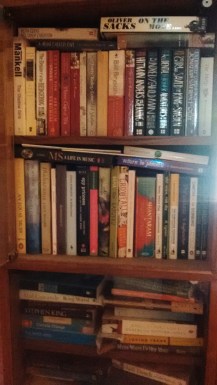 ies, just to pick up a book. One went to feast on the shelves lined with books, to run one’s eye across and up and down, pulling out a familiar name, or a new unfamiliar one; to peruse the blurbs on the cover to get a taste of what was within. One went in, sometimes with the certainty of coming out with a specific title, but equally the expectation of discovering new authors, or new works by familiar authors. It was the exploration that was the real fun, not so much the final selection.

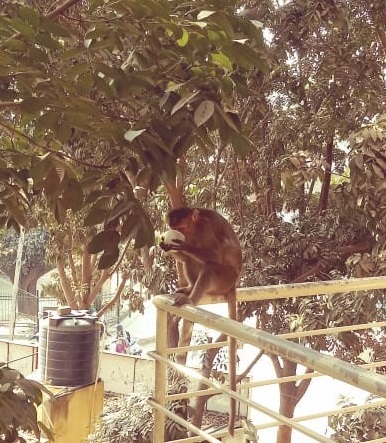 Anyway, to get to the matter on hand. For the last month or so, a group of Rhesus Macaques has been visiting our small office in Bangalore every once in a few days. The first reactions were of course ‘so cute’, and ‘shall we give them biscuits’. But as days went by, and the visits became a regular feature, they became bolder. They sat outside the door and snarled when we went to shoo them away. Several times they entered the office. And a few days ago, one of them snatched a tiffin box, went out, enjoyed the contents, and threw away the box.
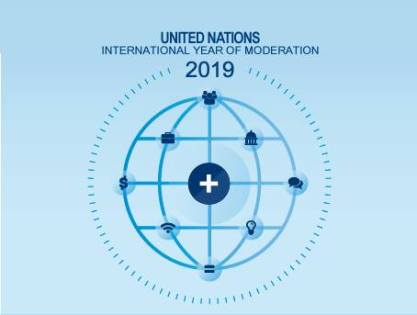 he Year of Moderation was declared in “an effort to amplify the voices of moderation through the promotion of dialogue, tolerance, understanding and cooperation.” The resolution did not pass without huge amount of discussion, debate and dissension. Even at the end, it was not passed unanimously. There were two votes against.
