Fun and Games

Play is something the young of many species indulge in. Play is of course a part of the life of young humans, but we also see puppies, kittens, the young of many mammals and even some birds play.

The study of play is however, a serious matter, as can be seen from this definition: ’ play is repeated, seemingly non-functional behavior differing from more adaptive versions structurally, contextually, or developmentally, and initiated when the animal is in a relaxed, un-stimulating, or low stress setting’ (Burghardt, 2014).

If that sounds a bit complex, here is a breakdown of the behaviours associated with play, i.e. play should

‘*be incompletely functional in the context in which it appears;

*be spontaneous, pleasurable, rewarding, or voluntary;

*be different from other more serious behaviors in form (for example, be exaggerated) or timing (for example, occur early in life, before the more serious version is needed);

* be repeated, but not in abnormal and unvarying stereotypic form (for example, rocking or pacing); and

* be initiated in the absence of severe stress.’

Till a few decades ago, it used to be believed that only the young of warm-blooded animals and birds played. But research is showing that many other creatures play too, including the young of some fish, frogs, lizards, turtles and even Komodo dragons. Coming from a human perspective, we may not recognize this as play. But going by the definition and framework above, many of the activities of the young of these species fall in the category.

Play is of critical importance in the development of all species who indulge in it. In the case of human children, it helps in the development of cognitive, physical, social, and emotional well-being. It helps children learn about themselves and the world, and through play they learn many life-skills like confidence, resilience, cooperation, team spirit, coping with challenging situations etc.

Play itself can be of different types: Physical Play, which helps in physical development and skills like coordination; Social Play which helps children develop the skills of how to interact with others, taking turns, cooperation, etc.; Constructive Play, wherein children create things—arts and crafts including drawing, painting, building things, etc.; Fantasy Play, that is using the imagination to create situations and enacting parts; and Games with Rules, which helps the child develop cognitively and learn how to follow instructions and rules.

If the topic of the conversation is play, can toys be far behind? Toys too date back to ancient times– archaeologists excavating the ancient city of Kültepe Kaniş-Karum in Turkey discovered a 4,000 year old ceramic rattle, which is believed to be the oldest children’s toy yet uncovered.

Toys
Photocredit: Harini M.

Today toys and games are a highly sophisticated market with several categories including puzzles, dolls, soft toys, fidget toys, modelling clay and related products, movable vehicles, construction toys, constructed toys, board games etc. 

It is also a huge market–in 2022, this market generated total revenue of US$122.90 billion. India is a tiny part of this—with the Indian toys market size reaching $ 1.5 billion last year, with barely $ 1.14 per capita spend on toys. Which means most of our children don’t have access to toys, or have too few toys—which is definitely disadvantages their development. Not that I am saying that store-bought toys are the only way to go. We know that children show enormous ingenuity in making anything into a toy–kitchen vessels, sticks and stones, boxes and cartons. And creative parents and teachers can make toys at no or low-cost. (For ideas, you can visit https://arvindguptatoys.com/, the website of Padma Shri awardee Shri Arvind Gupta, who has spent his life developing and advocating for the use of no- and low-cost toys with educational value). But having said that, I do believe that every child has the right to a new, shiny toy once in a while. So not only must we manufacture more toys, but low-cost, innovative ones which don’t compormise on safety.

Equally important are innovative ideas like toy libraries so each child does not have to buy every toy and less-advantaged children can get access too; toy hospitals so toys can be mended and their life extended;  and NGOs which collect, refurbish and re-distribute toys. Another complex challenge is how to keep toys from reaching solid waste dumps—how to recycle them safely and cost-effectively?

So toys may be fun and games, but it’s definitely not all child’s ply!

–Meena

PS: The image is from a storybook Harini and I created using toys as charecters. ‘My Sunday with Daadu and Deedu’ available on Amazon. The Telugu version by Manchi Pustakam is available on their site.


Pothole Patcher: Ememem

This morning’s newspaper tells me that the city Municipal Corporation is on the move to fill up potholes in the city’s roads as a Diwali gift to citizens. While this is indeed a noble announcement, it is a bit ironic as the sorry state of the roads needs much more than a superficial patching up of random ruts and depressions on the road, with more of the substandard material and workmanship that causes the potholes in the first place. In fact on many roads across the city, there are more ragged and rough patches than there are even surfaces. These make headlines a couple of times a year, especially during the monsoon when there are accidents, sometimes serious, caused by two-wheelers and pedestrians slipping and falling into waterlogged potholes. Potholes are not only dangerous, they are also a major source of frustration and inconvenience for commuters. This receives a few days of media coverage where questions of quality and responsibility are raised, and a few contractors are taken to task and fined, before returning to ‘business as usual.’

While I had not given it any thought, for the first time I wondered why these depressions are called ‘potholes’? The origin of the word is not clear. From the purely linguistic angle it could be the literal meaning of the word ‘pot’ that meant a ‘deep hole’, or referred to deep cooking vessels; and the word ‘hole’ being self-explanatory. There is a more interesting version. In 15th and 16th century England wagons and coaches with heavy wooden wheels were the main form of transportation. As they traversed the roads, the wheels gouged deep ruts in the soil. Pottery makers would take advantage of these ruts to dig deeper to reach the clay deposits beneath to make their clay pots. Those driving wagons and coaches over those roads knew who and what caused these holes, and referred to them as ‘potholes’.

Whatever the origins of the word, potholes are a feature of roads in almost all parts of the world. Potholes are caused by a variety of factors, including poor quality of construction materials and labour, lack of proper maintenance and repair, heavy rainfall, and high traffic volume. In cold climates the expansion by freezing of water that has seeped into the crevasses and depressions in the road surface also causes cracks which expand to become ruts and potholes.

Civic authorities in cities around the world do their bit to repair potholes, and are usually far behind in their reach. However, there is one man in Europe who has taken it upon himself to turn potholes into works of art!

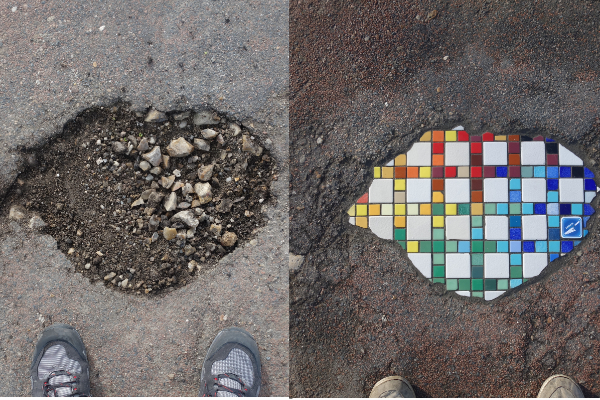
While the artist’s work is in the public domain, the artist himself remains anonymous and enigmatic. His true name or identity are not known. He simply goes by the name Ememem. He gave himself this name as he felt that it sounded like his moped does when he sets off for his pothole repair mission. He does not give interviews, nor allow himself to be photographed; he prefers his work, rather than himself, to be seen, as he feels that he is not good at social interactions.

What he does interact with, are the roads that he walks along, absorbing the noises of city life as he looks, and absorbs. What grabs his attention are potholes on the roads. As he claims ‘some of these vibrate and some don’t.’ When he comes across a pothole that “speaks to him” he takes stock of its size and shape. This inspires him to put together pieces of colourful tiles, majolica (glazed earthenware with bright metallic oxides), and ceramics (mainly from waste material) to create artworks that fill or repair the pothole. For obvious reasons, (including that what he does is not strictly legal), he works at night when the roads are relatively less busy, and so that he can work without interruption, or identification. The on-site exercise is preceded by a study of his ‘canvas’, as he describes potholes, cutting the tiles to perfectly fit the space while creating an artwork, and using quick-drying glue to paste them in place. His pothole ‘makeover’ could take from one hour to six hours depending on the condition of the hole, the weather, and the time it takes for the creation to dry.

Ememem has coined the word ‘flacking’ to describe his technique. It is derived from the French word flaque which means puddle. The term is also used used figuratively to refer to an area that looks entirely different from its surrounding. And Ememem’s vibrant colourful designs certainly stand out in stretches of dull grey pavements.

Street art, a form of artwork that is displayed in public on surrounding buildings, streets, trains and other publicly viewed surfaces, is today regarded as one of the largest art movements. Much of this art (which includes graffiti) often reflects social and political issues. It is often also regarded as a form of vandalism.

Ememem does not see himself as an artist with a particular message, or a mission to change the world. Rather he says that his art focuses on the ‘art of healing the street’. He feels that he could just as well be called ‘bitumen mender’ or ‘poet of the asphalt’. In his hometown Lyon, Ememem is described as a “pavement surgeon” who heals fractures in the streets and gives them a new look. Fortunately the civic authorities in most of the places where his ‘operations’ take place let the art remain, to be appreciated by both the residents as well as visitors.

Today his healing works can be seen not only in France, but in many European cities including Paris, Barcelona, Madrid, Milan, and Oslo and Aberdeen.  He continues to keep his identity a secret, but displays his work on Instagram where he has a huge following.

As we prepare for Diwali with the beautiful floor art of rangoli, would it not be magical to wake up to see Ememem’s colourful mosaics brightening up our roads? One can only dream!

–Mamata

New Master Craftsmen

Last week Meena wrote about Master Craftsmen. From Vishwakarma, the  legendary master architect and craftsman and an era when manual skills were highly respected and valued, to the present day when such skills are not as highly valued, as a result of which skilled craftspeople are increasing hard to come by.  

In an age when manual work, with attention to the minutest detail and quest for perfection is often eclipsed by industrialized mass production, there is a small and surprising band of new-age Vishwakarmas. This is the league of Lego enthusiasts who spend hours and days (and considerable manual dexterity) putting together little blocks to create mind-boggling structures.

Nathan Sawaya is considered to be the first artist to use Lego bricks in fine art. A high-powered attorney, he would come home and build with Lego bricks as a way to relax. Eventually he gave up his law career to dedicate himself to Lego art. Today his sculptures which range from a 20-foot-long Tyrannosaurus Rex skeleton to a tiny tree consisting of one brown piece on the bottom and one green piece on the top, are exhibited in galleries.

A Chinese artist Ai Weiwei recreates classic paintings using Lego bricks. Among these is the famous painting by French painter Claude Monet called Water Lilies. Weiwei has recreated this as a 15-metre-long art piece using 650,000 Lego blocks.

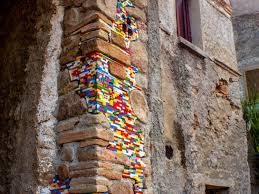
Other artists around the world have used Lego blocks on many occasions to pass a message of social awareness, or simply to entertain the imagination. Street artist Jan Vormann fills in cracks and crevices in damaged walls with Lego building blocks. He calls this ‘art meets functionality approach to repairs’ Dispatchwork. Today there is a worldwide network of people inspired by him who contribute to this creative repair approach.

Lego is usually associated with a children’s hobby kit. It is considered the epitome of an educational toy, and Lego sets have long gained a place at the top of the list of the world’s most popular toys. 

Interestingly the simple interlocking block-shaped toys that we know today as Lego bricks were the invention of a Danish master carpenter and joiner named Ole Kirk Christiansen. In 1932 when Europe was in the throes of the Great Depression, Christiansen opened a small woodworking shop in the village of Billund, with his son Godtfred who was just 12 years old, to manufacture stepladders, and ironing boards from left-over wood. They soon expanded their products to include wooden toys like simple yo-yos, trucks and ducks on wheels, made out of birch wood. In 1934 they gave their business the name Lego, a contraction of the Danish words leg godt meaning ‘play well’.

The company soon built its reputation as a high-quality toy manufacturer and business spread. The company itself grew from only six employees in 1934 to forty in 1942. The product line also expanded to include clothes hangers, a plastic ball for babies, and some wooden blocks.

It was in 1947 that the company made the move that would define its future.  Lego bought a plastic injection-moulding machine, which could mass produce plastic toys. By 1949, Lego was using this machine to produce about 200 different kinds of toys, which included a plastic fish, a plastic sailor, and small plastic bricks which had pegs on top and hollow bottoms, allowing children to lock the bricks together and create structures which simple wooden blocks could not. The ‘automatic binding bricks’ as they were called, were the predecessors of the Lego toys of today. In 1953, the automatic binding bricks were renamed Lego bricks. In 1957, the interlocking principle of Lego bricks was born. But these bricks were not too sturdy, and they did not stick firmly to each other.

In the meanwhile Lego had been working on a stud-and-tube design that facilitated the bricks to snap together firmly. They obtained a patent for this in 1958. This was the game-changer. The new system gave children the chance to build something sturdy, without it wobbling, or coming undone. Lego also made sure that new bricks were always compatible with old ones. In fact Lego has not changed the design of its bricks since 1958 when they got a patent for what is called the “universal system” so that each piece is compatible with all other pieces, regardless of the year or set it belongs to.

As the interlocking blocks grew in popularity, it was observed that children used the bricks in innumerable different ways to create more than just single structures. This led to the Lego Sets which had additional components like vehicles, street signs, bushes etc. to create streets and cities. The landmark addition of the wheel (around brick with a rubber tyre) in the 1960s brought in numerous new possibilities. With the production of 300 million tiny wheels per year, Lego out-manufactures the world’s biggest tyre manufacturers! The younger children were roped in to Lego-land with the launch of the larger Duplo bricks for pre-schoolers. 

The 1970s saw more additions to Lego sets–miniature figures (referred to as a minifig) with moveable arms and feet to populate the Lego towns; castles and knights to create a medieval world; pirates to sail on high seas, and astronauts to ride into space, and almost everywhere that a child’s imagination could take it.

The introduction of the immensely popular themes like Star Wars and Harry Potter contributed to the soaring sales, making this a multi-billion dollar industry. However it is heartening to find out that Lego has a strict policy regarding military models. They do not make products that promote or encourage violence. According to the company “Weapon-like elements in a Lego set are part of a fantasy/imaginary setting, and not a realistic daily-life scenario.”

Despite the scale and volume of production, there is no compromise on quality. The process used to mould the bricks is so accurate that only 18 out of one million bricks fails to meet quality standards. The original founder Ole Christiansen believed strongly in the values of creativity, individuality and, above all, quality. The Lego Group’s motto, “Only the best is good enough” was created in 1936, and is still used today.

Today there is a large international AFOL (Adult Fan of Lego) community. One of the challenges in the Lego world is to become a “master builder”. Coincidentally one of the most expensive Lego items is the Taj Mahal set which has over 6000 pieces to construct the Taj Mahal. Where centuries ago master craftsmen toiled with slabs of marble to create this magnificent timeless edifice, today the new master craftsmen work with plastic bricks to create its replicas.

–Mamata

Rubik’s Magic Cube

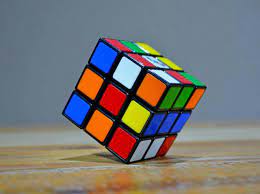
It was all the rage in the 1980s. Every house had one, and it was fought over by adults and children. It was in everyone’s hands that were never still; it sparked contests and competition across the world. It was the Rubik’s Cube.

At first glance, the cube seems deceptively simple, featuring nine coloured squares on each side. In its starting state, each side has a uniform colour — red, green, yellow, orange, blue, or white. To solve the puzzle, you must twist the cubes so that eventually each side returns to its original colour. Easier said than done! To master the cube, you must learn a sequence of movements that can be performed in successive order. Mathematicians have calculated that there are 43,252,003,274,489,856,000 possible combinations or ways to arrange the squares, but just one of those combinations is correct.

The creator of the puzzle cube was an unassuming Hungarian architecture professor named Erno Rubik. Erno Rubik was born on July 13, 1944, towards the end of World War II in the basement of a Budapest hospital that had become an air-raid shelter. His father was an engineer who designed aerial gliders.

As Erno described his childhood: I was an ordinary boy, wanting to do everything possible—and not possible. I climbed trees and had fun in other ways that weren’t allowed but were exciting to me. And I was curious and tried to make things. Nothing special. He love to draw, paint and sculpt, and went on to study architecture at Budapest University of Technology because he felt it combined the practical with the aesthetic. He went on to teach architecture and taught a class called “descriptive geometry” where he encouraged students to use two-dimensional images to solve three-dimensional problems

In 1974, 29 year old Rubik was tinkering in his bedroom which had lots of odds and ends, including cubes made from paper and wood.  He tried to put together eight wooden cubes so that they could stick together but also move around, exchanging places. The object quickly fell apart. Erno kept at it, taking it as a challenge. After much trial and error, he figured out a unique design that allowed him to build a solid, static object that was also fluid. He then decided to add 54 colourful stickers to the cube, with each side sporting a different colour – yellow, red, blue, orange, white and green. That way the movement of the pieces was visible and trackable. Erno was lost in the colourful maze, but with no clue how to navigate it. It took many weeks of twisting and turning before he could finally get the colours to align.

Once he found that the cube could be restored to its original state Erno Rubik submitted an application at the Hungarian Patent Office for a ‘three-dimensional logical toy’. Rubik now looked for a company who was willing to produce the cube commercially. It was not easy as no one believed that people would ‘play’ with such a toy. Finally in 1977 a small company that manufactured chess sets and toys agreed to manufacture 5,000 such cubes. The toy entered toy shops with the name Buvos Kocka or ‘Magic Cube’.  By 1979, 300,000 cubes had sold in Hungary.

As the popularity of the cube grew and spread, even beyond Hungary, Rubik felt that taking it beyond Hungary needed an international collaboration, but that was the period of the Cold War when geopolitical tensions restricted collaboration with the so-called Western Bloc.

So Erno Rubik started to take his creation to international toy fairs where it met with lukewarm response. In 1980, at the Nuremberg Toy Fair, a marketer named Tom Kremer spotted the Magic Cube. He thought it was fascinating and made a deal to take it to America. Rubik got a contract at an American company, Ideal Toy, which wanted one million cubes to sell overseas. But due to copyright issues, they suggested that the name be changed. And so, Rubik’s Cube made its debut at a New York toy fair in 1980. Erno Rubik himself was invited to launch the cube. The shy professor with not very fluent English, was not the best of salesmen, but he was the only one who could demonstrate that the puzzle could be solved! The rest is history.

Rubik’s Cube became a craze. More than 100 million Cubes were sold over the next three years. Rubik initially believed the cube would appeal to those with science, math, or engineering backgrounds. He was shocked when, as he wrote, It found its way to people whom nobody would ever have thought might be attracted to it.

The Rubik’s Cube went on to become ‘one of the most enduring, beguiling, maddening and absorbing puzzles ever created’. More than 450 million cubes have sold globally, (not counting the many more imitations) making it the best-selling toy in history. It became much more than a puzzle. It has been described as ‘an ingenious mechanical invention, a pastime, a learning tool, a source of metaphors, and an inspiration.’ It has spawned speed-cubing competitions and an assortment of record breaking feats. But as Rubik once said, for him it is not the speed that is of essence; “the elegant solution, the quality of the solution, is much more important than timing.”

The educator in Rubik believes Arts should be an integral part of STEM education. He feels that the Cube demonstrates this fusion. The Cube has become a universal symbol of everything I believe education should be about: fostering curiosity, the rewards of problem-solving, and the joys of finding your own solution.

Even as the Rubik’s Cube became a global sensation, Erno Rubik remained a publicity-shy professor, continuing his “tinkering”. He started his own design studio in Hungary and began to work on new projects and revive abandoned ones, including puzzles called the Snake and Rubik’s Tangle. In an interview he said: I never planned to achieve this peak and had no idea that I would. And, after it, I had no thought that I’d like to do better. My only goal is to do well. I’m not thinking about whether people will like it or not. I need to love it and meet my targets, nothing else. What happens after that depends not on me but others. The Cube created the strongest connection with people—which is harder than being popular—maybe because it taught them that they could solve difficult problems and rely on no one but themselves to succeed. It has meaning, and that’s enough for me.

–Mamata

Cycle Away!

It has been a long ride for the bicycle. The simple two-wheeled means of transportation that does not burn fossil fuels, causes no pollution, is easy to maneuver and nifty to park, with the added nobility of having numerous health benefits has been around for almost two centuries.

The earliest avatar was in the form of a contraption called the ‘draisine’ invented by a German baron Karl von Draisin 1817. It was a “running machine” which had two wheels but no pedals, and no steering mechanism, and needed to be propelled by the rider pushing his feet against the ground.

But the bicycle as we know it began to evolve several years later. In 1861 French inventors Pierre Lallement, Pierre Michaux, and Ernest Michaux worked on creating a bicycle with pedals, but still no brakes. This was called a velocipede.

1870 saw the invention of the Penny Farthing bicycle. The name came from the design in which the wheels resembled two coins–the penny and the farthing, with the front “penny” being significantly larger than the rear “farthing”. The pedals were on the front wheel and the saddle was four feet high, making for a rather risky ride.

It was in 1885 that John Kemp Starley, an Englishman, perfected the design for a “safety bicycle” with equal-sized wheels and a chain drive. New developments in brakes and tires followed shortly, establishing a basic template for what would become the modern bicycle.

The bicycle became a symbol of affluence, especially in America. Bicycles were expensive, and cycling became a leisure activity for the rich. In fact it was the cyclists who initiated the Good Roads movement in America, especially in the countryside where roads used for horse carriages were rutted and not conducive to a smooth bike ride.

Interestingly, there was not a big time gap between the introduction of the “safety bicycle” and the development of the first automobiles. And the early German inventors like Gottlieb and Daimler used not only cycle technology, but also several components of the bicycle in the manufacture of the automobile. Soon cycle manufacturers became automobile manufacturers in France, Germany, and the U.K. They drew upon and further developed, products, production techniques, materials, innovations, and tooling originally developed specifically for cycles.

Today bicycles are seen as relics of a less-technologically advanced era, but in fact they were at the cutting edge of industrial design in the last quarter of the nineteenth-century. But while innovations continued in the field of motor cars, the bicycle receded in the background. Cars became the new status symbol and cycling came to be seen as a proletariat activity, something you did if you couldn’t afford a car.

The bicycle also played a significant part in the early days of the Women’s Movement. In the late 1880s women took to cycling, an activity that gave them freedom of mobility, independence and self-reliance in a period when they were largely housebound.

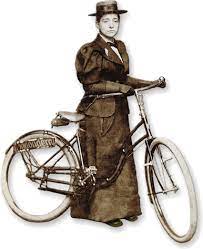
Nothing personifies this sense of liberation better than the story of Annie Londonderry.

Source: annielondonderry.com

Annie Cohen Kopchovsky, a Latvian immigrant who had married and settled in Boston, announced on June 25 1894, that she was going to ride around the world on a bicycle. She was 23 years old, and the mother of three small children. Her husband was a devout Orthodox Jew. Annie had ridden a bicycle for the first time just a few days before her announcement.

Furthermore she informed that she was doing this to win a bet for $10,000. The bet was between two Boston merchants that no woman could circumnavigate the globe on a bicycle.  Annie said that she would cycle around the world in 15 months, starting with no money in her pockets. She would not only earn her way, but also return with $5000 in her pocket.

Annie turned every Victorian notion of women’s roles on its head. Not only did she abandon, temporarily, her role of wife and mother, but for most of the journey she rode a man’s bicycle attired in a man’s riding suit, and carrying a small revolver.

Annie was a complete antithesis of the coy domesticated female. She was a shrewd self-promoter, and master of public relations. She even adopted the name Annie Londonderry when The Londonderry Lithia Spring Water Company of Nashua, New Hampshire became the first sponsor, by giving $100 for her journey. Annie continued to cash in on the glamour and novelty of her journey by renting space on her body and bicycle to advertisers, selling photographs of herself, and making guest appearances in stores along the way signing souvenirs, delivering lectures and giving newspaper interviews which she embellished with colourful tales of her adventures.

Annie’s trip had its share of detractors and disbelievers. There was speculation about how much truth there was to all her colourful tales. Annie returned to Chicago on 12 September 1895, 15 months after she had set off. She came back with $3000 dollars that she made on her travels. The newspapers described her global adventure as “the most extraordinary journey ever undertaken by a woman.”

For Annie the journey was more than a test of a woman’s ability to fend for herself. The bicycle was literally her vehicle to the fame, freedom and material wealth that she that craved. For the emerging women’s movement, Annie as well as the bicycle became a symbol of emancipation.

Today the uniqueness, longevity and versatility of the bicycle, which has been in use for two centuries, is being celebrated once again. In recent times, when the world is literally choking from exhausts from fossil fuel and traffic congestion from motorised transport, the bicycle is being promoted as a simple, affordable, reliable, clean and environmentally fit sustainable means of transportation, fostering environmental stewardship and health.

The return to the bicycle movement was started by Leszek Sibilski in 2018 by a sociology professor and cycling and physical education activist who lobbied to bring the importance of the bicycle to the international stage and pushed for a day that could highlight this. Sibilski also advocated for integrating cycling into public transportation for sustainable development resolutions.

In response to the growing momentum of the movement in 2018, the United Nations General Assembly, declared 3 June to be celebrated as World Bicycle Day.

The day encourages stakeholders to emphasize and advance the use of the bicycle as a means of fostering sustainable development, strengthening education, including physical education, for children and young people, promoting health, preventing disease, promoting tolerance, mutual understanding and respect and facilitating social inclusion and a culture of peace.

In an age of the power of social media to promote such days, this is a good time to remember how, in a much earlier time, Annie Londonderry single-handedly “promoted” the bicycle. She would have been a perfect “Influencer” for World Bicycle Day!

–Mamata

The Long Cold Drink

While the summer has been relatively mild, there is still that hot day when after a foray outdoors, one would give anything for a long, cold drink.

But which one?

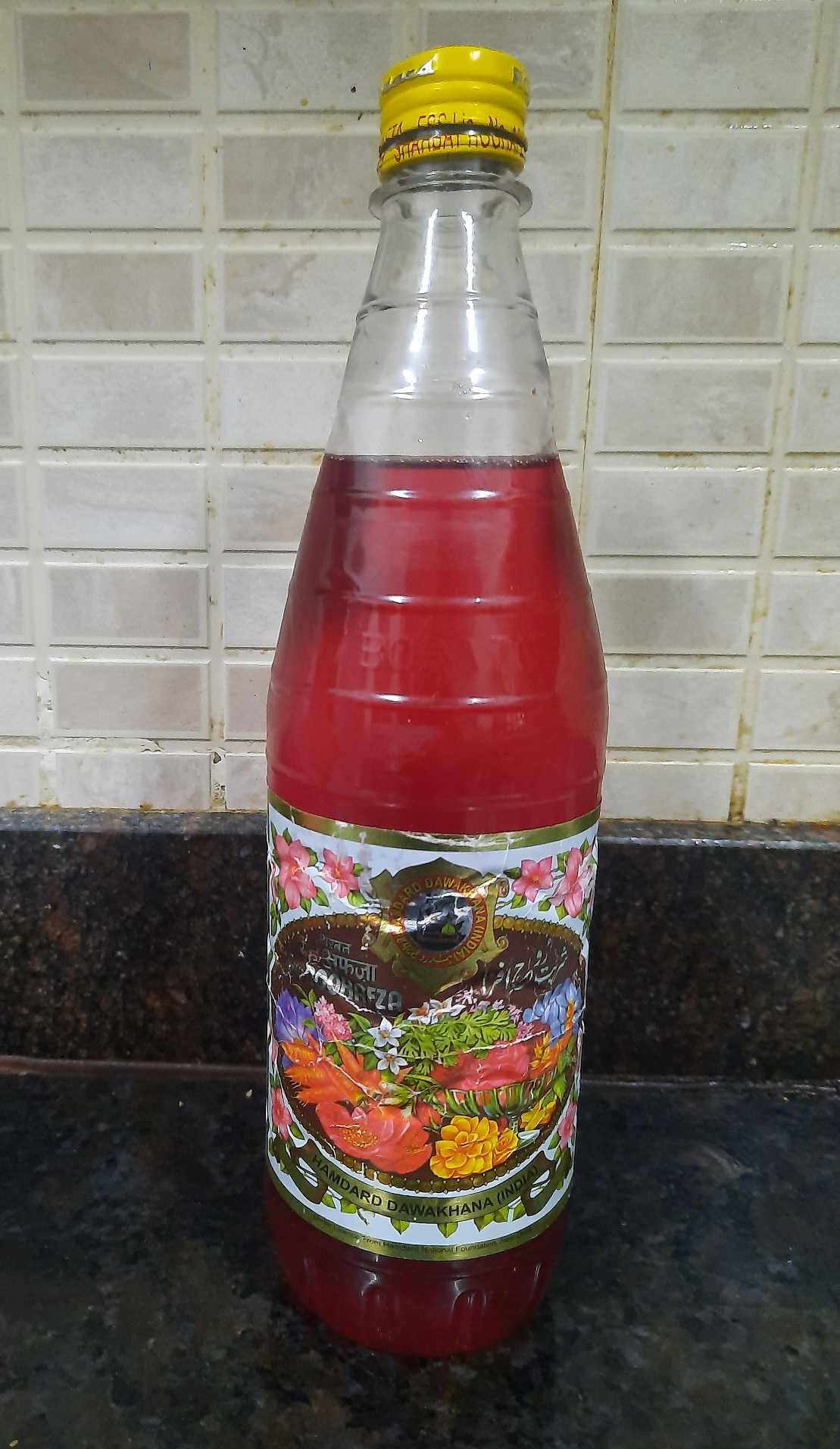
Rooh Afza

A sharbat? Often called the world’s first soft drink (there are references from as far back as the 12th century), the sharbat probably has its origins in Persia. At least the word itself does, and means a sugar and water drink. It is made by combining fruit juices or extracts from flowers or herbs with sugar and water. India’s favourite sharbat is of course Rooh Afza which means ‘refresher of the soul’. It was formulated in 1906 by Hakim Hafiz Abdul Majeed based on a Unani formula, and contains cooling ingredients like rose. Manufactured by Hamdard (in India, Pakistan and Bangladesh!), this is had with either water or milk, and also poured on falooda and other summer-special sweets.

If you are in Tamilnadu, you can also sample a sharbat unique to those parts—the nanaari sharbat. This is made from the nannari root (Indian Sarsaparilla) which is an Ayurvedic herb. This too is supposed to have cooling properties and helps to prevent dehydration. It is not a taste everyone likes, but for those who do, it is summer’s nectar.

Or how about a squash? Kissan orange squash used to be the staple of our childhoods, a treat that usually was served when guests came around. Also available was lemon squash, and I think pineapple. Basically, a squash is a non-alcoholic drink, made from fruit juice (usually citrus fruits), water and sugar. Sometimes, food colouring and flavouring are added. Squashes are mixed with water or soda before drinking, or even with alcoholic beverages to make cocktails.

Kissan also used to have a lime cordial drink, which for some reason was more rarely bought by my mother. So of course it was something we all hankered after! But now I learn that there is no difference at all between the two! The term squash is used more in the UK, and cordial in the US. However, cordial can sometimes be used to denote an alcoholic beverage like a liqueur, while a squash is always non-alcoholic.

But as age catches up, sharbats and squashers which are super-high on sugar are something that one has to keep away from.

Well, juices I suppose can take their place. Juice can be freshly squeezed or out of bottles or cans. The latter variety may just be the juice canned in liquid form, or made from concentrate. Juice from concentrates is made from fresh fruits, only the water is removed from the fruit pulp. It is easier to transport, and when it reaches its destination, it is reconstituted with the same amount of water that was removed, and canned.

‘To juice or not to juice’ is an eternal controversy. Medical opinion holds that juicing is no healthier than eating whole fruits or veggies, as it is not easier to absorb nutrients from juices than the whole fruits. It is also not significantly less healthy, as most of the vitamins, minerals and plant chemicals come into the juice as well. The only loss may be of fiber, which is lost in the process. So you can guiltlessly drink juice and count it against your fruit/veggie quota, and feel cooler (pun intended) in the process.

And of course the ever-favourite desi options, of which lassi and buttermilk or chaas lead the pack. Lassi, popular in the North, is thick and hearty, and made by blending yogurt with sugar, flavourings, nuts etc. There is also of course the salted version. The ‘malai marke’ version can be a meal in itself!

The ‘chaash’ or ‘mooru’ popular in the West and South is the liquid left after churning butter. It is light and invariably salted, and seasoned with cumin, curry leaves, hing etc. It can be consumed by the gallons!

Nimbu shikanji is Indianized lemonade. It is like a lemonade but with the mandatory addition of shikanji masala which has roasted cumin powder, chaat masala, etc.

Then there is the Aam Panna made from raw green mangoes, sugar, and spices. Again a bit dicey for the amount of sugar needed (and no, substitutes don’t taste as good!).

Another delecious drink is panagam, popular in Tamilnadu. Made of jaggery and lemon juice, and seasoned with cardomom, it is traditionally made for Rama Navami. Sadly, it is forgotten for the rest of summer.

And how can I end without a reference to jigarthanda, the drink of the city of my birth, Madurai? It means something like ‘cool heart’ and obviously is an import from the North. It is made of milk, almond gum, sarsaparilla root,  sugar and ice cream.  Madurai has much to offer visitors, from temples to bazaars. But a visit, especially in summer, would not be complete without a jigarthanda from one of several stalls, all of which of course claim to be the ‘original’!

Whatever your choice, stay cool!

–Meena

Shinrin-yoku: Forest Bathing

International Day of Forests is marked on 21 March every year to highlight the importance and significance of forests and raise awareness about forest restoration. Much has been written about the ecosystem services that forests provide. They purify the water, clean the air, protect the soil, help sequester carbon to fight climate change, and provide food and medicines. Healthy forests are vital for all aspects of a healthy planet, from livelihoods and nutrition to biodiversity and the environment.

Every year the United Nations declares a theme for the International Day of Forests that addresses one of these many aspects of the important role of forests. The theme for 2023 is Forests and Health. This highlights the many connections between human health and forests—from providing food and other life-sustaining resources, including life-saving medicines. 

The contribution of forests on physical health have been well documented, but perhaps not as well-known are the therapeutic effects on mental health. This area has been the field of study of Dr Qing Li who has researched and documented what intuition and common sense have long believed: that being among trees is healthy; it can have positive effects on sleep, energy levels, immune function, and cardiovascular and metabolic health.

This research is well known in Japan and the idea has become popular under the name Shinrin-yoku or Forest bathing.  Forest Bathing is described as the art of plunging oneself in nature to revitalise and enliven the mind, body, energy and to trigger the therapeutic elements of nature.

Forest bathing or therapy originated in Japan in 1980s. Dr. Qing Li is considered to be the founder of this therapy. Dr Qing Li was born in a small village in China and grew up surrounded by nature. He came to Japan in 1988 to study advanced medicine where he was focusing on the effects of environmental chemicals, stress, and lifestyle on immune function and human health. During this period he spent a week camping on a thickly wooded island with his friends. This visit had a profound impact on him, not just personally, but also changing the direction of his professional life.

Experiencing the feeling of well-being amidst the trees, and since it is well-known that stress inhibits immune function, Dr Qing Li developed the hypothesis that immersion in the forest may have a beneficial effect on the immune system by reducing stress. He tested this hypothesis by conducting many experiments on patients with physical as well as mental health issues. He looked at the effects of walking in forests and of phytoncides (the scents that trees give off) on immune cells, stress hormones, blood pressure and heart rate. He compared the effects on mood and mental state (anxiety, depression, anger, fatigue, and confusion) of walking in forests versus walking on treeless city streets.

He focussed his research on what he calls ‘forest medicine’. As he describes this: Some people study medicine, some people study forests; I study forest medicine to find out all the ways in which walking in the forest can improve our well-being.

Forest medicine which encompasses the effects of forest environments on human health is recognized as a new interdisciplinary science, belonging to the categories of alternative medicine, environmental medicine, and preventive medicine.

The terms Shinrin-yoku (literally Forest (Shinrin) bathing (yoku) in English) were first defined in a paper he wrote in 2007.

In his research, Qing Li has found that forest bathing had a healing effect on the mind as well as the body. It reduced blood pressure, reduced stress, improved mood, increased ability to focus, even in children with ADHD, accelerated recovery from surgery or illness, increased energy level, improved sleep, boosted immune system functioning, with an increase in the count of the body’s Natural Killer (NK) cells.

As an outcome of Dr Qing Li’s research, the government of Japan established Shinrin-yoku as a formal practice. This was not only to encourage city-dwelling people to connect with nature. The idea was also part of a campaign to protect the forests: If people were encouraged to visit forests for their health, they would be more likely to want to protect and look after them. The Japanese government invested a lot of money in forest bathing with the goals of protecting the forests, promoting human health, and preventing lifestyle-related diseases.

So what exactly is Forest bathing? This is not exercise, or hiking, or jogging. It is simply being in nature, moving slowly, and connecting with it through all our senses: sight (colours), hearing (forest sounds), taste (fruits and herbs), smell (fragrances from different plants) and touch (feeling textures of leaves and barks). So Shinrin-yokuis the entire experience of immersion in the forest atmosphere, or taking in the forest through all our senses.

The idea behind Shinrin-yoku is very simple: it is the belief that if a person visits a natural area and explores it in a relaxed way, they can achieve physical and mental benefits that are healthy and restorative. It is a form of preventative health care that can be incorporated in nature settings anywhere. You don’t necessarily have to travel to a forest to experience the effects of Shinrin-yoku. Even half an hour in a small park can work its magic. As Dr Li reminds us:

The best way to deal with stress at work is to go for a forest bath. I go for shinrin-yoku every lunchtime. You don’t need a forest; any small green space will do. Leave your cup of coffee and your phone behind and just walk slowly. You don’t need to exercise, you just need to open your senses to nature. It will improve your mood, reduce tension and anxiety, and help you focus and concentrate for the rest of the day.

Today, world over, we have become an increasingly urban and indoor species, focussing solely on screens for a large part of our waking hours. All aspects of our life and lifestyles have led to an escalation of stress, anxiety and depression. Before we sink further into these morasses, let’s take a few minutes to heal ourselves in nature.   

Forests and Health: the theme of International Day of Forests this year is best captured in the words of the guru of Shinrin-yoku:

Forests reduce our stress, boost our immune system and help us to live longer, better and happier lives. Our health and the health of the forest go hand in hand. When trees die, we die. If our forests are unhealthy, then so are we. You can’t have a healthy population without healthy forests.

–Mamata

Bangarpet? Chaat?

What is the connection between the two?

If you live in Bangalore, you wouldn’t ask that question, because every other chaat-cart and every third chaat-shop labels itself as a purveyor of Bangarpet Chaats.

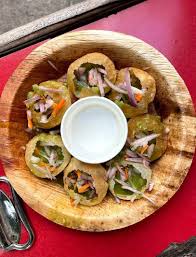
Seems a bit unlikely when we all know that chaats, especially gol-guppas (or pani-puris or puchkas) are not part of the street-food tradition of South India. Tradition places the origin of gol-gappas squarely in North India—most probably Uttar Pradesh.

It is a dish of ancient origins, though how old is of course difficult to say, given our mix of mythology, history and folk tales. According to an interesting Mahabharata-linked story,  Kunti wanted to give Draupadi a test when she first came home. To check whether the new princess-bride would be able to cope with the family circumstance—they were then living in exile in the forests—she gave her some leftover vegetable dishes and enough dough to make one puri. She asked her to cook something for the whole family with this. Draupadi came out with a brilliant innovation, the pani-puri! Kunti was very happy and blessed her. And she also blessed the dish with immortality! (Definitely not fair that Kunti should give her a test, but the usually spunky Draupadi does not seem to have protested. Imagine if Meghan Markle had been in Draupadi’s place—how many TV shows and books would this incident have been worth!).

More historical accounts are divided between two origins—either the Mughals brought the dish with them, or it was made in ancient times in temples as a prasad (I like this God!).

Whether Kunti’s blessing or some other factor, I for one am so grateful that pani-puris in all their variations are ubiquitous today.

Which brings us back to the Bangarpet Chaats and pani puris. Bangarpet is a town in the Kolar district of Karnataka, which came into existence because it was at a useful junction between the Kolar gold fields and the city of Bangalore. It has a population of about 45,000. But for the Bangarpet chaat, the town would be one more obscure dot on the map.

So what is special about the chaats from here? The ‘pani’ of the ‘pani-puri’.  Pani-puris from here are called white pani-puris, for the colour of the water. Usually, the pani is a brown-green, thanks to tamarind and pudina being major ingredients. The Bangarpet pani is not so much white as clear. The secret is not different ingredients, but rather that many of the usual ingredients–cumin, green chillies, ginger, lemon etc.–are all ground together and steeped in the water. The resultant water is then  trained leaving behind a tangy, spicy clear liquid. The innovation came from the heir of a chaat shop. R. Panduranga Setty had been running a chaat shop for many years. When his son Ramesh took over, he wanted to give his own special signature twist, and after much experimentation, came out with this variation which become very popular very quickly. Ramesh Chit Chat at Bangarpet still serves the best version of these, though the popularity has spread far and wide, and we can see Bangarpet chaat shops all over South India—each one asserting that it is the original!

But honestly, who cares where the dish originated? As long as I get my fix of this and all the other variations!

–Meena

Wrap it up!

On Saturday, our 4 year-old neighbour celebrated his birthday. I was my foster grandchild’s ‘plus one’.

It was a lovely affair—games, fun, frolic and yummy kiddy-eats.

And of course gifts of various sizes and shapes. What united them all was that they were beautifully wrapped in metres of gift paper—shiny, animal printed, cartoon printed, etc. etc.

And the birthday boy, as would any 4-year old, quickly ripped open the packages eager to see what was inside. And the sad pile of paper at his side grew and grew and grew.

Which got me wondering about the waste the practice of gift-wrapping produces.

I fully appreciate how beautiful wrapping adds to the allure and attraction of the gift. How a well-wrapped gift is elegance itself. In fact, countries like Italy and Japan have taken this to the level of a fine art, so that one would rather look at the gift and not open it at all!

But…

….the waste!

Wikipedia informs us that ‘In Britain, it is estimated that 226,800 miles of wrapping paper is thrown away annually at Christmas. In Canada, 6 million rolls of tape are used and discarded yearly for gift wrapping at Christmas.’ There are no statistics that I could easily find for other countries, but of course, with the US being the largest consumer of wrapping paper, the waste there must be in multiples of these figures.

The global market for wrapping paper is estimated at about $ 17.3 billion and growing at a compounded rate of 7.4%. It makes up 2-3% of the world’s paper and paper board market. India and other countries with growing middle classes are expected to be high-growth markets for this product. It is estimated that total sales of gift paper in India will reach about $ 443 billion in 10 years.

I am not sure how much paper all this translates into, but surely sounds like a lot. And most of it is thrown out with the garbage the morning after.

We are assured by many industry sites that gift wrapping paper is sustainable, being made of recycled paper. But making recycled paper in beautiful colours and printing complex designs on them, embossing them, adding gold and silver touches—all of these take energy and release pollutants. And then they go straight into the dustbin. And let’s not forget the increasing trend of shiny, metallic and plastic wrapping paper which are surely not environmentally benign either in the production or disposal. Not to talk about the tape, ribbons, decorative flowers and bows that we put on the gifts.

As we worry about our climate goals and Sustainable Development Goals, this, to my mind, must find a place in our worrying. It’s not as big and visible as fashion and clothing to catch international attention and set off movements towards sector-sustainability. But it surely warrants some thought.

Environmentally conscious people do use alternatives, from unwrapping gifts carefully so as to reuse the paper, to getting creative and making beautiful wraps with newspapers or waste papers, to using bottles and jars for some items, to popping them into a reusable gift bags without wrapping them, to deploying reusable decorative boxes. The Japanese tradition of furoshiki stands out in this—it is the art of using reusable fabric to create beautiful gift wrapping.

But I think society itself has to change its attitude. If it continues to place more value on style than substance, the trend of increasingly fancy wrapping will continue upwards, as disposable incomes increase and societal norms of what is expected grow more and more elaborate.

It is quite the thing these days to say ‘No gifts please’ on invites. But that’s not always possible. No child wants a gift-less birthday party!* Maybe we could make a start by saying ‘No gift-wrapping please’?

–Meena

* My friend Alka did try this once. She specified that kids should not bring gifts for her son’s birthday. Only to get a call from an anxious 10-year old, enquiring if no-gifts also meant no return-gifts! She assured him it did not, and the attendance at the party was 100%.

Tea and Biscuits

One has always associated the typical English cuppa with a snack of biscuits. A recent news item reported that the new trend in England, especially among the younger generation, is the popularity of samosas as the preferred snack with tea. This is indeed a total reversal of the traditional colonial notion of appropriate accompaniments to tea.

The English connection between biscuits and tea saw two different aspects during the two World Wars. Huntley & Palmers, the first officially designated biscuit manufacturers in England set up a factory in Reading in 1846. By 1874 it was producing tens of thousands of tonnes of biscuits, becoming the world’s largest biscuit manufacturer. When World War I started in 1914 it received a substantial order from the War Office to manufacture biscuits for the British army. The company manufactured Army Biscuits Number 4 and 9. The ‘Service’ biscuits as they were called, were about four inches square, and were made of whole wheat flour, without sugar. The biscuits provided sustenance, but were very hard and could only be eaten when soaked in tea or water. The fact that some of the biscuits survived intact for a hundred years attests to their durability!

Biscuits and tea found a different connection during World War II in England. By then sweet tea was favoured by the British working class. During the war, tea as well as sugar were severely rationed; there were complaints that tea was not sweet enough. So biscuit manufacturers stepped in by supplying the canteens for civilian war volunteers and other services with biscuits which would add a touch of sweetness with the tea. By the end of the war, it became a reflex for many to have biscuits with their tea. This English tea habit also took roots in what were then colonies of the British Empire.

In India, for many of a certain generation, the words ‘Britannia biscuits’ were almost synonymous. The history of these is interesting. Britannia Industries is one of India’s oldest existing companies. It was founded as a small operation in 1892 by a British businessman, with an investment of Rs 295/-.The first biscuits were manufactured in a small house in what was then central Calcutta. In 1897, the outfit was acquired by four Indian brothers, the Gupta brothers, and was called VS Brothers. In 1918 Charles Holmes, an English building contractor and friend of the Gupta family became a partner in the business. Holmes had a construction firm called Britannia Construction Co. and thus VS Brothers the biscuit manufacturer was renamed by him as Britannia Biscuit Company Ltd.

World War 1 (1914-1919) provided a huge boost for the newly-named company Britannia which was contracted by British colonial government in India to supply specially made biscuits for its soldiers on the frontlines. Thus Britannia joined Huntley & Palmer as suppliers of Service biscuits.

Britannia became the first biscuit maker in India to mechanize production, and the first one east of the Suez Canal to use gas ovens, which it imported in 1921.

In the early 1920s the two most successful biscuit manufacturers in the UK Peek Freens and Huntley & Palmers merged to create a company called Associated Biscuit Manufacturer’s Ltd. This led to world-wide expansion. Britannia merged with this larger company in 1924, and set up a factory in Bombay to meet with the growing demand. The company began establishing a reputation for quality and value. It further strengthened its position by expanding the factories at Calcutta and Mumbai.

During the Second World War, once again the company was contracted to produce Service biscuits, and from 1939-45 almost 95% of its total production capacity was used for this war-time effort. 

In 1952 the Calcutta Factory was shifted to spacious grounds at Taratola Road in the suburbs of Calcutta. During the same year automatic plants were installed there, and later in Mumbai in 1954. The same year the company began production of high-quality sliced and wrapped bread in India. This was first manufactured in a new factory set up in Delhi and first sold there. In 1955 the company launched the all-time favourite Bourbon biscuit in India, followed by Britannia cakes in 1963. In 1978, the Indian shareholding in the company crossed 60%. The Company was re-christened from Britannia Biscuit Company Limited to Britannia Industries Limited with effect from 3rd October 1979. By 1994 the annual production crossed one lakh tonne of biscuits. In 1995 Britannia made it a mission to make every third Indian a Britannia consumer and changed its corporate identity to “Eat Healthy, Think Better”. Since then the company has grown from strength to strength, introducing new brands that rapidly became household names. The company sells its Britannia and Tiger brands of biscuits, breads and dairy products throughout India and in more than 60 countries across the world.

While Britannia is one of the oldest biscuit manufacturing companies in India, today there are several companies that offer choices of sweet or salty biscuits. From Parle G, the world’s largest selling biscuit brand in 2021, to the cream or chocolate-filled cookies, to a host of “healthy, low-carb hi-fibre” options. These are not necessarily ‘tea biscuits’. They are multi-place, multi-use snacks, easy to carry, quick to unwrap and fun to savour even on their own. Even while crunching and munching on biscuits, Indians also continue to enjoy the traditional teatime snacks and savouries of which every state and even every household have their own specialties and favourites—from ganthiya in Gujarat, to murukku in south India, to regional varieties of vadas and pakoras. And of course, the transnational favourite samosa. 

Now it looks like we have come full circle—from Indians adopting English biscuits with chai, to the English adopting samosa with tea!

–Mamata