Carl Linnaeus: Giver of Names

May 22 marked the celebration of the International Day for Biological Diversity. What exactly does this term, or word Biodiversity mean? At the broadest level it refers to the variety among life forms. It describes not only the number but also the types and variety of living things. While there is a huge variety of sizes, structures and functions among living things, there are also sufficient similarities to permit their grouping together into orderly patterns.

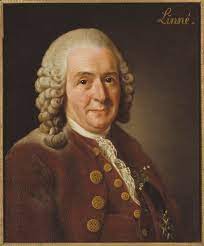
This grouping is called classification. The science of classifying organisms is called taxonomy. When talking about taxonomy, the name that immediately comes to mind is that of Carl Linnaeus, who is most famous for creating a system of naming plants and animals—a system we still use today. But Carl Linnaeus was much more than just the ‘father of modern taxonomy’. He was a renowned botanist, physician and zoologist; a pioneer in the study of ecology, and one of the most influential scientists in history.

Carl Linnaeus was born on May 23, 1707, the eldest of five children, in a town called Råshult, in Sweden. His father Nils, was a minister and keen gardener. From the time Carl was very young, his father used to take him to the garden and teach him about plants. Carl observed his father in the garden, and was soon as excited and interested in plants. He began growing plants and by the age of five had his own little patch in the family’s large garden.

His father believed that the best thing he could offer his children was a solid education and, in addition to botany, he taught Carl Latin, as well as about religion at an early age. Nils also realized that his son was exceptionally bright, and engaged a private tutor for him; but the boy found the tutor very dull as compared to his own explorations in the garden and countryside. This aversion to formal education continued when he joined school at the age of ten, and Carl was an indifferent student. The teachers ignored his immense knowledge and interest in Botany because it was not considered a ‘proper’ subject, and as he was not interested in subjects like Hebrew, mathematics and theology, they advised that he was not bright enough to go to University. Only one of his teachers saw his potential and advised his father that the boy should apply for admission to medical school. He also coached him in anatomy and physiology.    

At the age of 21 Carl enrolled in Lund University under the Latin form of his name Carolus Linnaeus. This was a common practice for students in Europe at that time. After a year he switched to Uppsala University as he was told that the medical and botany courses there were better. While he was there Carl wrote up some of his observations on reproduction in plants which were of such a high standard that he was offered a post of Botany lecturer at the University. In 1731 Carl began teaching botany, at the age of 23. He was a good teacher and his lectures were popular with students. As he continued his own botanical studies, Carl found that the way in which plants were classified was not satisfactory. He started jotting down ideas about how this could be improved. Linnaeus realized that he needed a cataloguing system that was easily expandable and easy to reorganize; for this he started using cards, thereby inventing index cards!

In 1732 Carl got funding for a botanical expedition to Lapland, in the far north of Sweden. For 6 months he travelled 2000 km across Lapland making notes on the native plants and birds. At this time it occurred to him that there could be another way of naming plants. He replaced some very lengthy plant names with logical, much shorter, two-part names which consisted of a genus and a species name. The genus describes a larger grouping of organisms with certain common characteristics, while the species name describes only one, unique particular organism grouped within that genus, or larger classification. The names were in Latin because at that time, Latin was the language of science. Highly educated people of the period could all read and write in Latin which enabled them to share scientific information, regardless of their native tongue.  

Carl Linnaeus described his observations of plants along with the newly-coined names in a book called Flora Lapponica, including his new discoveries. He also realized that he could use his new system to name animals as well as plants.

In 1735, at the age of 28 Linnaeus was awarded a doctoral degree in medicine for his thesis on malaria and its causes from a University in the Netherlands. While he was there he showed his continuing work on the classification and renaming of plants to a Dutch botanist who was very excited by its potential to transform botany. He supported the publication of Carl’s work which was published in 1737 under the title Systema Naturae (System of Nature). The first edition had 12 outsize pages.

Over the years, Linnaeus continued to develop his ideas and add new species. In the tenth edition of Systema Naturae published in 1758, Linnaeus classified all the animal kingdom into genera and gave all the species two-part names. The twelfth edition had 2400 pages. During his career, Linnaeus named about 13,000 life forms and classified them into suitable categories such as mammals, birds, fish, primates, canines, etc.

Linnaeus returned to Sweden in 1738, becoming a physician in the nation’s capital city, Stockholm. He helped found the Royal Swedish Academy of Science and became its first president. In 1741, aged 34, Linnaeus returned to Uppsala University and became a full professor of medicine, taking control of botany, natural history and the university’s botanical garden. He also revived his childhood passion by taking his students on walking trips in the countryside searching for plants. In 1750, at the age of 43, Linnaeus was appointed as Uppsala University’s rector. Carolus Linnaeus was knighted by the King of Sweden in 1761 and took the nobleman’s name of Carl von Linné. He died at the age of 70, on 10 January 1778, after suffering a stroke.

Linnaeus was the first person to place humans in the primate family and to describe bats as mammals rather than birds. He did this with the same reasoning he used to categorize all life, which was based on similarities he identified between species. Human beings are also among the thousands of species that were given a name by Carl Linnaeus—Homo sapiens meaning ‘thinking man or wise man’!

Today as the world sees a steady decline in the numbers of species and a severe threat to global Biodiversity due to anthropogenic factors, one wonders if Carl Linnaeus would regret giving humans the title of ‘wise’!

–Mamata

Focus on Citizen Science

April is marked as Citizen Science Month—not in India, but in the US. But it can only be to the good to take best practices from anywhere at all, and adapt them for our use, right? And an acceleration of the citizen science movement is something that is definitely a crying need in our country!

What is citizen science? The term probably appeared first in 1989, in an issue of the MIT Technology Review 1989, but till today, there is apparently no consensus on a single definition–one paper cites 34! But a working definition we could go by is the one given by the National Geographic Society: ‘Citizen science is the practice of public participation and collaboration in scientific research to increase scientific knowledge.’ The benefits of such initiatives are manifold: large public participation in scientific pursuits; raising scientific awareness and knowledge; democratization of science; ability to pull in indigenous and community knowledge, etc. In fact, without wide-spread involvement of a large number of people, many projects would be very difficult to do—nationwide bird counts, butterfly counts, monitoring water quality across large areas, weather monitoring, space watch, etc. 

India has its share of action on this front. The Indian Biodiversity Portal launched in 2008 is a prime example. It ‘aims to aggregate data through public participation and provide open and free access to biodiversity information’ and invites the public to participate in gathering and documenting such knowledge. It currently has 1.54 million observations on 58.3 thousand species. It is an invaluable resource, which would have been difficult to put together without the participation from people across the country.

Another interesting initiative is by the CitSci (Citizen Science for Biodiversity) India–they organize an annual Citizen Science of Biodiversity Conference. Their site also shares useful information on on-going biodiversity and conservation related citizen science projects undertaken by a host of NGOs, like the Citizen Sparrow initiative, which is ‘a public participatory project to which all members of the public are invited to contribute. ‘

It is not just conservation. There are projects in various other scientific research areas as well. The Pune Knowledge Cluster develops research projects where citizens from all walks for life can participate to help analyse big data from various scientific streams including astronomy. Yet another organization in this area is the Centre for Citizen Science (a Pune based organization with the explicit objective of promoting citizen science) whose ‘Project Meghdoot’ aims to study the phenomenon for monsoon across the country.

River Quality Monitoring, CEE
River Quality Monitoring, CEE (Joy of Learning II)

Nor is this a recent phenomenon. I recall in the 1990s, when I was working at Centre for Environment Education (CEE), we had a project wherein school children, as part of the Ganga Pollution Awareness programme, were monitoring and reporting the water quality in the river in their stretch. Similarly, we had green-cover mapping and biodiversity census by college students in Karnataka, which was then correlated to remote sensing data.

The initiatives for spreading scientific knowledge, a necessary precursor of citizen science, have a hoary history in India, and several institutions have been committed to doing this for decades now. Two of the oldest are VASCSC and KSSP. Dr. Vikram Sarabhai, in the ‘60s, created an institution, today called the Vikram A. Sarabhai Community Science Centre (VASCSC), one of whose objectives is to encourage scientific thinking. The Kerala Sastra Sahitya Parishad (KSSP) is a People’s Science Movement of Kerala, India, founded in 1962 has over 1200 units spread all over Kerala.

In fact, the recognition of the importance of science for national development is enshrined in the Constitution as a Fundamental Duty of every citizen! This section explicitly states that ‘It shall be the duty of every citizen of India.. to develop the scientific temper, humanism and the spirit of inquiry and reform.’

From here to citizen science should not be too long a distance to traverse. But it questionable if we have even achieved the scientific temper, so earnestly endorsed by Pandit Nehru as ‘the scientific approach, the adventurous and yet critical temper of science, the search for truth and new knowledge, the refusal to accept anything without testing and trial, the capacity to change previous conclusions in the face of new evidence, the reliance on observed fact and not on pre-conceived theory, the hard discipline of the mind—all this is necessary, not merely for the application of science but for life itself and the solution of its many problems.’

Even with such strong foundations and a bunch of dedicated organizations, neither scientific temper nor citizen science is very widespread in India today. While there is much talk of the importance of STEM, it is yet a theoretical approach aimed at cracking exams, and not an effort to inculcate scientific thinking and the spirit of science as a part of how we live, think and take decisions.

Maybe we should pause to ponder on this now—because it is Citizen Science Month somewhere in the world!

–Meena

For anyone who wants to explore the subject more, ‘Citizen Science in India: Introduction, Challenges and Way Forward’, a paper by Suryesh Namdeo and Moumita Koley provides a contemporary overview of the subject.

Communications Research: Pioneering Work of Dr. Binod Agrawal in SITE

Last week, another of our gurus passed away. Dr. Binod C. Agrawal wore many hats in his life, and it is impossible in a short piece to do justice to his work . But we knew him as a kind and generous mentor, who never stinted in sharing his time, advice, wisdom and wit with the young rookie educators we were when we first met him.

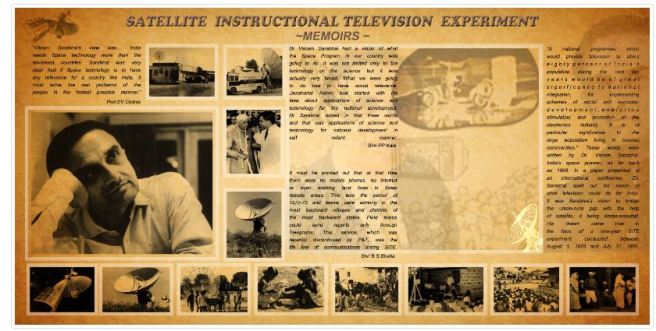
He was then at the Development Communications Education Unit of ISRO. In the communications sector, he was legendary. He had after all been part of the historic SITE (Satellite Instructional Television Experiment), termed by some as the greatest communication experiment in history. SITE was an experimental satellite communications project designed jointly by NASA and the Indian Space Research Organization (ISRO) which made available informational television programmes to rural India. It broadcast programmes to over 2500 villages across 6 states in India, in 1975-76. Dr. Vikram Sarabhai’s dream of India using technology to reach the most deprived was the basis of the experiment.

Everything about the project was unique—the vision, the audacity of the dream, the technological challenges, the operational challenges, and the challenge of making a difference to people’s life.

The last is where Dr. BA’s contribution came in. The contours of the programme were clear. It would broadcast (a) educational television (ETV) school children in the age group of 5-12 years and (b) instructional television (ITV) for adult audiences, primarily designed for neo-literates and illiterates. ETV programme was focussed to make education more interesting, creative, purposive and stimulating and also to create an awareness in the changing society. The ITV for adult viewers was to cover incidents of national importance, improved practices in agriculture, health, hygiene, family planning, nutrition, etc. and some recreation programmes.  

The purpose of the project was to provide information that was useful, relevant and actionable by the target audiences—the people in these most remote, deprived villages. But what did the people there need and want to know? This was the first question that Dr BA and others in the team had to grapple with. What were the information gaps? Without a proper understanding of that, the programme would not really be useful. Hitherto, such studies used to depend essentially on survey methods. Dr. BA, with his background in anthropology, for the first time deployed qualitative studies, to supplement and complement traditional methods. Through innovative research design and large field teams spending time in the target villages, SITE programming could answer the real questions and concerns that people had.

Dr. BA’s work did not stop there. At the instance of the Planning Commission, the impact of SITE was thoroughly evaluated—through a Bench-Mark Survey during July, 1975, a Concurrent Observation, and Repeat Survey in 1976. He was involved in these as well.

The evaluation validated the needs assessment done by the communications research team. 78% of the development programmes were rated as good and over 90% as relevant to the local situations. About three-fourth of the respondents felt that the development programmes were, on the whole, useful and conformed to the local conditions. Over one-fourth of the viewers could acquire detailed knowledge of the new practices shown on the television.

Dr. Agrawal’s contribution to communications research through his involvement with SITE and agriculture research before that, is summed up in a paper by his long-time associates Dr. Arbind Sinha and Dr. Sudhakar Rao: ‘..it is Binod C. Agrawal, trained in cultural anthropology, who devoted his time for conducting communication research using anthropological methods at the Indian Agriculture Research Institute, New Delhi during the early 1970s. A major boost to this field came with his engagement with the now iconic Satellite Instructional Television Experiment (SITE) of Indian Space Research Organization (ISRO) in the mid-1970s..that has brought anthropology in close relationship with development and communication, especially, in the rural context. It helped make communication an integral part of the discipline of anthropology.’

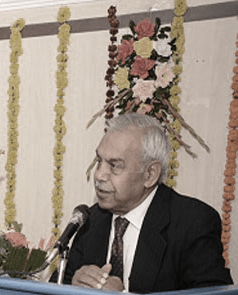
Dr. Binod Agrawal

Dr. BA was not one to sit in an office and design research protocols. How deeply he and his team were involved in the field during SITE can be gauged from a report by the Resident Representative of NASA in India, Dr. Howard Galloway: ‘Just checked with Dr. Binod Agrawal, Chief of the Research and Evaluation Cell (REC). He gave me the following information. All of his staff take evaluation very seriously. When their DRS has trouble, they get immediate help. Example: Recently Dr. Binod was in a village when the TV cut off. Within five minutes his staff had borrowed a motor bike and set off for the subcluster maintenance center (SCM). Returning shortly, he brought the needed part and put the set back into operation. Because it is so much effort for a service man to get to the village to replace a fuse as a circuit card, the REC staff has relieved his burden. They carry fuses and set right the TV sets at once. On his recent trip, Binod saw a villager from a nearby village come furiously pedalling to an REC village, His TV was out. The REC staffer, riding on the back of the bike, went to the sick set, replaced the fuse and restored peace in the village.

It was this commitment and passion shared by the SITE team which made the project an international landmark in space experiments. Talking to Dr. BA more than a decade after these experiences, we could still feel the excitement.

Dr. Agrawal was Founder Director of Mudra Institute of Communications Ahmedabad (MICA), which is one of the most respected communications institutions in the country. He was also Founder Vice Chancellor of Himgiri Zee University, and till recently Professor of Eminence and Director General TALEEM Research Foundation.

He taught so many of us so much.
May his soul rest in peace.

–Meena

To Shruti, his daughter who was a dear colleague.

And thanks to Dr. Arbind Sinha his colleague and another doyen in the world of development communications, for the chat which helped develop this article.

Lumps and Bumps

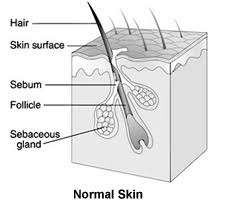
Skin

I was just thinking about the amount of time we spend worrying about lumps and bumps on our skin and other surfaces, those seen and those unseen. Parents worry about rashes, boils, sties and other sundry outbreaks on their children’s skin. Teen years are spent worrying about acne, pimples, blackheads, whiteheads. Tumours, cysts and polyps occupy significant mindspace in old age. And through all our living years, moles and warts are a part of life.

What on earth are these things? Here is a quick overview.

Rashes are any area of irritated or swollen skin. They involve changes in colour, feeling or texture of the skin.  They are often itchy and painful and can appear red, purple, grey, or white.

Boils are painful, pus-filled bumps that form under the skin when bacteria infect and inflame hair follicles. They usually start out start as reddish or purplish, tender bumps. The bumps quickly fill up with pus, growing larger and more painful until they rupture and drain. If that sounds bad, a carbuncle is worse. Carbuncles are a cluster of boils that form a connected area of infection under the skin.

A stye is an  inflamed oil gland on the edge of the eyelid, where the eyelash meets the lid. It appears as a red, swollen bump that looks like a pimple, and is often tender to the touch.

And here are the ones which trouble us during adolescence.

Acne is when hair follicles under the skin become clogged. Sebum—oil that helps keep skin from drying out—and dead skin cells plug the pores. Most often, the outbreaks occur on the face but can also appear on the back, chest, and shoulders. Acne is the generic name which includes pimples, zits, etc.  

To be specific, pimples are small pustules which develop when the oil glands become clogged and infected, leading to swollen, red lesions filled with pus.

Blackheads are also a type of acne, but different from pimples. They are open bumps on the skin that fill with excess oil and dead skin. They look as if dirt is in the bump, but it is irregular light reflection off the clogged follicle that causes the dark spots.

Whiteheads too are acne and occur when oil and dead skin close off hair follicles or oil glands. But they form closed bumps on the skin.  

Moving on from teen-woes, here are lumps and bumps we worry about as we grow older:

Tumours are solid masses of tissue that form when abnormal cells group together. Tumours can affect bones, skin, tissue, organs and glands. Many of them are not cancer but they still may need treatment. 

Polyps are tissue growths that most often look like small, flat bumps or tiny mushroom-like stalks. Most polyps are small and less than half an inch wide. A polyp can be flat, raised or on a stalk. Uterine and colon polyps are the most common, but it is also possible to develop polyps in the stomach, ear canal, nose, etc.

Another type of lump is a cyst which is a small pocket of tissue filled with air, fluid or other substances. Cyst maybe caused by genetics, inflammation, infection or other issues.

And the ones that are age-agnostic:

Warts are small, noncancerous growths which appear when the skin is infected with one of the many viruses of the human papillomavirus (HPV) family. The virus triggers extra cell growth, which makes the outer layer of skin thick and hard in that spot.

Moles are small dark brown spots and are caused by clusters of pigment-forming cells (melanocytes). Most people have 10 to 40 moles that appear during childhood and adolescence and may change in appearance or fade over time.

That was a yucky one! But yucky is part of life!

–Meena

It Takes Guts!

‘Gut Ecology’ is the name of a book brought out by the St. Marks Academic Institute which is dedicated to ‘advancing scientific knowledge of colorectal disorders’. I think the book, which features topics like ‘The gut microflora: traditional and molecular identification techniques’, and ‘The ‘unculturables’’ deserves to be a bestseller. Not that I would understand the contents, but I have to admire the dedication and scientific spirit it takes to spend a lifetime researching and writing on such topics! Guts indeed!

But what exactly would the book be about? Let’s break it down. Ecology is the study of organisms and how they interact with the environment around them. An ecologist studies the relationship between living things and their habitats. ‘Gut’ is commonly used to refer to the stomach, entrails, parts or the whole of the digestive tract. So a ‘gut ecologist’ would study the insides of our digestive tract to understand the micro-organisms (collectively referred to as gut microbiota) that live there, and how they interact in our digestive system.

For very long, the presence and role of micro-organisms in our body was not known. It was in the 1670s and ‘80s when Antoine van Leeuwenhoek started using his newly developed handcrafted microscopes that scientists started studying them. Leeuwenhoek described and illustrated five different kinds of bacteria present in his own mouth and that of others, in a letter he wrote to the Royal Society of London in 1683. He later also compared his own oral and faecal microbiota, and proved that there are differences in micro-organisms in body sites. (See why I say it takes guts to be in this field!)

Gut bacteria
Gut bacteria

Now we know that the human gastrointestinal tract—from mouth to anus– is divided into sections, and each provides a different environment and different kinds of micro-organisms thrive in each section. In all, about 100 trillion micro-organisms (most of them bacteria, but also viruses, fungi, and protozoa) exist in the human gastrointestinal tract. In fact, the colon contains the highest microbial density recorded in any habitat on Earth, representing between 300 and 1000 different species. There are actually about as many bacterial cells in our bodies as there are human cells, and they contribute over a kilogram to our weight! So Stewart Brand, the American writer, environmentalist and editor of the highly influential Whole Earth Catalogue was right when he said, ‘If you don’t like bacteria, you’re on the wrong planet.’

These organisms are such an integral part of the functioning of the human body that they are sometimes called ‘the forgotten organ’.

A foetus has no bacteria at all in the system. Through the process of birth, it picks up a good number, and then in the first few years of its life, the child picks up a huge number of different bacteria from its environment. Fascinatingly, like fingerprints, a person’s gut microbiota composition is unique to each individual.

These micro-organisms influence our energy metabolism and many other areas of human health, from immunity and the progress of diseases, to appetite, to nutrition uptake, and even personality! They therefore greatly influence our health, well-being, weight etc.

External factors influence the composition of these micro-biota but by changing our diet or fasting can change the composition of these life-forms in our systems, in a matter of days or weeks, and this is why it is important to pay attention to what we eat. This is also the reason why medical science is increasing focus on  prebiotics and probiotics. If like me, you are confused about the two terms, here are simple definitions:

* Probiotics are foods or supplements that contain live microorganisms intended to maintain or improve the “good” bacteria (normal microflora) in the body.

* Prebiotics are foods (typically high-fiber foods) that act as food for human microflora. Prebiotics are used with the intention of improving the balance of these microorganisms.

Kudos to the scientists who work so hard to help us understand our bodies and their functioning, ready to spend their lives poring over microscopes to figure out how we can live healthier and better!

–Meena

Bridge-building Women

The recent tragedy of the collapse of the suspension bridge in Morbi in Gujarat has brought into focus a lot of information on bridges and news reports are filled with engineering terms related to bridges.   

While the blame game is on about who was at fault—engineers, contractors, civic authorities, or just the uncontrollable rush of holiday makers, it is perhaps a good week to go back and understand a little about early bridges and bridge builders. And to discover that one of the first patents for a chain-suspended bridge in England was filed in 1811 by a woman! This was Sarah Guppy an engineer, inventor, campaigner, designer, reformer, writer, environmentalist and business woman, in a period when it was unthinkable that women could be anything except wives, homemakers and mothers.

Sarah was born in 1770 in a wealthy merchant family of Birmingham. It was a period when the industrial revolution was shifting the largely agrarian economy of England towards mechanized manufacture. In 1795 Sarah married Samuel Guppy, a rich Bristol merchant fifteen years older to her and settled into family life in Bristol.    

As per the societal norms of the time, women were expected to keep house and raise children. Sarah largely conformed to her role (she went on to have six children), but she was far from docile and dull. Sarah was exceptionally well-read, talented and creative; she and her husband were part of a Bristol social set that included mercantile and innovative people. Among their friends were Thomas Telford a road and tunnel engineer, and the family of Isambard Kingdom Brunel. Brunel was one of the most versatile engineers of the 19th century, responsible for the design of tunnels, bridges, railway lines and ships. He is best remembered for his construction of a network of tunnels, bridges and viaducts for the Great Western Railway (GWR). Coming into contact with such people sparked Sarah’s interest in the science and craft of engineering, and triggered in her creative mind the desire to herself invent engineering solutions.

Sarah was an early advocate of a suspension bridge in Clifton, and was engaged in preparing models of a bridge that could span the river Avon, a project that had long been debated and discussed. Her idea was to work on a way of piling foundations to create a new type of suspension bridge, and she made drawings for the same. Her son Thomas was GWR’s principal engineer, and she gave the design and plans for her bridge over the Avon to Brunel.

When her youngest daughter was just a year old, Sarah applied for a patent for a way of piling foundations to create a new type of suspension bridge. In March 1811, she obtained a patent for ‘erecting and constructing bridges and rail-roads without arches or sterlings, whereby the danger of being washed away by floods is avoided’.  What was noteworthy was that Sarah became the first woman ever to patent a bridge. Even more noteworthy that this was in a period when married women could not even own property in their own name. This included patents which were considered to be intellectual property which could have some value.

The patent had no drawings and no detailed information as to how the bridge was actually to be built. However her designs provided the blueprints for Brunel’s Clifton Suspension Bridge and Thomas Telford’s Menai Bridge. When Telford approached her for permission to use her patented invention, she reportedly waived the fees, but managed to claim credit for its design.

Sarah’s inventive mind did not stop with that. She developed a devise to prevent barnacles forming on boat hulls, and sold the contract to the British Navy. She also put forward a scheme to prevent soil erosion on railway embankments by planting willow and poplar trees. Even as she played her role as homemaker, she came up with innovations. She designed a bed that could also be used as a gym with steps and bars for exercising; and a coffee urn whose steam could be used to boil an egg and at the same time keep the toast warm. An all-in-one breakfast hotplate! She was even granted a patent for this in 1812. In all Sarah took out ten patents, a remarkable achievement.in the late Georgian and early Victorian period.  

Sarah was not just ahead of her times in her engineering prowess. She wrote and presented schemes for a wide range of issues including animal welfare, education, agriculture and horticulture. She also wrote a book for children, and founded a charity school for girls. 

Bridging the span across continents, and across nearly a century, this is a good time to remember Shakuntala A. Bhagat—India’s first woman civil engineer. Shakuntala was born on 6 February 1933. Her father S.B. Joshi is regarded as the Father of Bridge Engineering in India. She was just 20 years old when she got her civil engineering degree from VJTI in Mumbai, the first woman in India to do so. From 1954-1956 she went to West Germany and UK for practical training, and went on to get her master’s degree in civil engineering from the University of Pennsylvania. She returned to India to join IIT Mumbai as assistant professor in 1960. She went on to become Head of the Heavy Structures Laboratory at IIT.

Shakuntala was more than an academic. She pioneered many innovative structural designs, especially for bridges. She and her husband designed and patented an innovative prefabricated modular system known today as the Quadricon Modular Bridge System. This is a series of prefabricated mass-produced modular bridge steel parts, small and lightweight enough to make transport easier for builders. They can be used in different types of bridges, different spans, traffic widths, and loads, all they had to do was change the combination of the assemblies.

Shakuntala Bhagat was awarded the Woman Engineer of the Year Award in 1993.  She passed away in 2012, a century after the first patent for a bridge was awarded to Sarah Guppy. She left behind a lasting legacy of over 200 Quadricon bridges around the world (including 69 in India) in terrains that challenge engineers even today.

Recently the Government of India announced the establishment of the Indian bridge management system to collect information on bridges. This would certainly be enriched by adding information on the pioneers who designed and built bridges.   

–Mamata

Spider Art and Science

In India this is the time of year when “spring cleaning” takes place. In the run up to Diwali, homes are thoroughly aired, dusted and cleaned, and every nook and corner cleared of dirt and cobwebs. Just as this frenzy of cleaning activity has begun, I read a news item that in one of the most famous art museums in the world, the Rijksmuseum in Amsterdam, the cleaning crew had been given an  order “No vacuum cleaners and no dusters”. They had been given special instructions not to clear, or even slightly disturb, a single cobweb inside the gallery for the last three months. In fact, the Museum Curator takes a round every week to check that all crevices and corners have adequate cobwebs!

This preparation has been the prelude to an exhibition titled “Clara and Crawly Creatures” which will open to the public from 30 September 2022. The exhibition explores how perceptions of insects in art and science have changed over the centuries. In the Middle Ages, lizards, insects, and spiders were associated with death, and with the devil in European culture, but the exhibition notes that in the 16th and 17th centuries there was a re-imagining of the role of insects after the microscope allowed artists and scientists to appreciate beauty that wasn’t always so obvious.

The exhibition prominently displays Albrecht Dürer’s 1505 painting of a stag beetle, its pincers raised. The exhibits take one through the history of how insects have been perceived over the centuries by artists and scientists who have been fascinated by the beauty and ingenuity of these small creatures. The culmination and the highlight of the exhibition is a dark room which has a huge installation by artist Tomas Saraceno– made from silk woven by four spider species that he houses in his studio in Berlin. In fact Saraceno emphasizes that it is not him, but the spiders who should be recognized as the artists.

Attention is also drawn to the uncleared cobwebs in the rest of the gallery by An Open Letter for Invertebrate Rights, written by Saraceno and placed next to one of the webs in which he makes a strong case for coexisting with creepy-crawlies rather than viewing them as pests. Saraceno, who allows spiders to thrive in his own home, suggests that it is humans who are living in the spiders’ world rather than the other way round. As he puts it: “Spiders have been on the planet almost 280 million years and we humans only 300,000. With this letter on invertebrate rights, we say: ‘Hey look, spiders have the right also to come to the museum, spiders are around you’.”

Tomas Saraceno, the person, also breaks all the traditional perceptions of ‘artist’ and ‘scientist’. Trained both as an architect and a visual artist Saraceno’s works demonstrate a stunning intermeshing of art, physics, biology, astronomy and engineering. Saraceno is also an environmental activist who is constantly exploring   new, sustainable ways to inhabit and sense the environment. In 2015, he achieved the world record for the first and longest certified fully-solar manned flight. In the quest for more sustainable ways of living he has worked closely with indigenous people as well as with renowned scientific and technological institutions.

Among all his other passions and accomplishments, Saraceno is an ardent ‘arachnophile’—an advocate for spiders and their ingenious airborne lifestyle, and spiders’ webs that inspire a lot of his work!  As he often reminds us: “Somehow, when people talk about spiders, they forget that some spiders weave webs; [in fact,] they’re very dependent upon their multifunctional webs that provide shelter, protection, food and, when vibrated, a means of communication.”

The multi-functionality of the web, as well its unique structure, can be attributed to the incredible spider silk which it produces and uses not only to spin its web but which has multiple functions. Any individual spider can make up to seven different types of silk, but most generally make four to five kinds. This is produced in internal glands, moving from a soluble form to a hardened form, and then spun into fibre by the spinnerets on the spider’s abdomen.

The sticky silk prevents the prey from slipping off the web, and is useful to wrap and immobilize the prey once it is caught. The spider used the long strands or draglines as a safety line, to keep itself connected to the web; these are also used for parachuting or ballooning to help the young to disperse and find new areas as food sources; they also act as shelter for the spider. The chemical properties of the silk make it tough, elastic and waterproof. Each strand which is finer than the human hair is believed to be five times stronger by weight than steel of the same diameter, and thus has an incredible tensile strength. No wonder then, that Tomas Saraceno can use it for his installations!

Spiders are master engineers, gifted with amazing planning skills and a material that allows them to precisely design functional webs, which they create in a mind-boggling variety of patterns. Saraceno sees the web as vital for the life of a spider. “The web is a tool for a spider to sense what’s around them—it’s part of their body, almost. Some spiders are blind, or some spiders have eyes but their vision is very bad. They also don’t have ears—they can’t hear. They feel vibrations on their web to understand what’s going on around them. I wanted to build something that allowed a human to be inside the mind of a spider.”

It is this that drove his first major show in the United States called Particular Matter(s). This included a giant spider web installation that enabled humans to experience (in a dark room) the vibrations around them, as a spider would.  

Saraceno was born in Argentina but currently lives and works in Berlin, and exhibits in different parts of the world. He is much more than an artist. He is a passionate social and environmental justice warrior. His mission, he feels, is simply to get humans to understand that they are not the top of a pyramid of power in what is called the Anthropocene era, but exist on a horizontal plane with all non-humans, to which they should be sensitized and from which they have plenty to learn. He advocates for what he prefers to call the Aerocene era in which interspecies-cooperation and clean air are required.

The exhibition that opens this week is yet another reminder of this message and its urgency. In India the first week of October is celebrated as Wildlife Week when the spotlight is usually on the more charismatic and larger mammals and birds. Tomas Saraceno’s mission to celebrate the less visible but vital members that make up the much larger proportion of ‘wildlife’ is a timely reminder that in the web of life, each and every strand is critical.

–Mamata

Engineering Woman Power: A. Lalitha

15 September is celebrated as Engineering Day in India to mark the birth anniversary of M Visvesvaraya, one of India’s greatest engineers who made a vital contribution to the field of engineering and education. Visvesvaraya is best known for designing one of India’s first flood protection systems, construction of dams and reservoirs, and setting up one of the first engineering institutes in the country, the Government Engineering College, now called University Visvesvaraya College of Engineering, Bengaluru.

Today there are hundreds of engineering colleges in India and tens of thousands of students, both boys and girls, compete to gain places in the best of these colleges. While the idea of a woman pursuing engineering is not uncommon today, the way had been paved by spunky pioneers who took on numerous challenges in a different time and circumstances. This is a good day to remember one of these women—A. Lalitha.

Lalitha was born on 27 August 1919 in a middle class Telugu family, one of seven siblings. Her father was himself an engineer, and fairly broad-minded, but societal norms and expectations took precedence over personal beliefs. Thus, as was the norm in those days, while Lalitha’s brothers were supported in pursuing higher studies, the girls in the family were educated only till the primary level, and then married off. Lalitha herself was married at the age of 15. But her father ensured that even in her new life she could continue to study till she completed class 10.

Sadly Lalitha’s married life was short-lived. Her husband passed away when she was just 18 years old. Lalitha had recently become a mother to a baby girl. Now she was a young widow with a four-month-old daughter, living in a society where widows were shunned and relegated to a life of isolation and austerity. This is where Lalitha’s fighting spirit led her to quietly start breaking the first of many barriers.

She moved back to her father’s house with a strong resolve to study and get a professional degree so that in future she could become self-reliant. Her father supported her decision, and Lalitha cleared the intermediate exam from Queen Mary’s College in Madras. This was the first step to moving ahead.

At the time there were women who were studying medicine. But Lalitha felt that a career in medicine would not leave her sufficient time and attention for her young daughter, who was her priority. Living in a family of engineers, this was an option that came to her mind. At that time technical education was itself in a nascent stage in India, and the idea of women entering this field was unheard of. No institute was admitting women. Once again, her father Pappu Subbarao helped to open a door for his daughter. He was a professor of electrical engineering in the College of Engineering (CEG) in Guindy, and he put up a special request to the then Principal of CEG Dr KC Chacko, that his daughter be permitted to take up an engineering course. He also put forward the appeal to the Director of Public Instruction, RM Statham. Luckily, both these officials were forward thinking and were agreeable to opening admission for a woman for the first time in the history of CEG. Lalitha applied for the electrical engineering course.

Thus Lalitha became the only girl in a college with hundreds of boys. But as accounts go, she never felt uncomfortable there. Accommodation in a separate hostel was arranged for her, while her daughter was looked after by her brother’s family; Lalitha visited her every weekend. While Lalitha was comfortable and happy in her classes, she missed having company in the hostel. Once again her father encouraged the authorities to open admissions for more women. In response to the advertisement two more women—Leelamma George and PK Thresia joined in the civil engineering course the following year.

As per the government rule then, engineering students had to put in four years of academic work and one year of practical training before they could graduate. Lalitha completed her practical training with a one-year apprenticeship at the Jamalpur Railway Workshop, a major repair and overhaul facility. 

Lalitha received her Bachelor of Engineering degree in 1943. Although they were technically junior, the three women engineers graduated together. Interestingly, the degree certificate of CEG had to replace the word He with She for their first three women graduates! 

Having already crossed several hurdles, Lalitha was ready to start a new phase of life as a professional. However she continued to give priority to her daughter Shyamala and looked for work opportunities which would not compromise her care. She accepted a job offer as an engineering assistant at the Central Standards Organisations of India, Simla. This was suitable as she was able to live with her brother’s family which offered support and care to her daughter. After two years in this job, she moved to Chennai work with her father helping him with his research which had led to several patents. This was intellectually stimulating, but financial pressures led Lalitha to find other work. She moved to Calcutta to work in the engineering department of Associated Electrical Industries. Once more her second brother and his family provided a home for her daughter. 

Lalitha got the opportunity to put all her education to practice, and gained experience and expertise. She worked on large projects, including the upcoming Bhakra Nangal Dam, which was then to be the biggest dam in India. Her tasks included the designing of transmission lines, substation layouts, and protective gear. Her brilliance and abilities began to gain national and international attention.

In 1953, the London-based Council of Electrical Engineers invited her to be an associate member. Visiting a British factory as an Indian woman dressed in a sari attracted a lot of press attention. She later became a full member. In 1964 she was invited to the First International Conference of Engineers and Scientists in New York. She was the first Indian woman engineer to attend. Lalitha subsequently became involved in several international organisations for women engineers. In 1965 she became a member of the Women’s Engineering Society of London.

Lalitha continued to work with Associated Electrical Associates (later taken over by General Electric Company) until she retired in 1977. She also lived with her sister-in-law in the same house in Calcutta for 35 years.  Throughout her career she championed the idea of women in STEM careers. Her daughter Shyamala followed in her mother’s footsteps by studying science and maths, and making a career in teaching maths. In an interview her daughter summed up the essence of her mother’s work and life: “What I take from her life is her extreme patience towards people and the quality of doing instead of just talking. She believed that people come into your life for a reason and leave when the purpose is over.”

Not long after retirement Lalitha suffered from a brain aneurysm and passed away at the age of 60, in 1979. Today as many girls take up engineering as a career, most would not know about the grit and determination of a woman who helped pave the way. A. Lalitha—a young widow, dedicated single mother, a brilliant student, a path-breaking professional clad in a sari, who did not need to wear power suits to break the glass ceiling. 

–Mamata

The Whispered Wisdom of Podcasts

I am slow to adopt most things new. And so it was with podcasts. I was pretty skeptical of the audio medium as a means of learning. Being fully old school, for me, the ‘read word’ was the major source of both learning and recreation.

My conversion to podcasts is fairly recent. The audio system that I was using during my walks to listen to music on broke down, and that was when I decided to explore podcasts. And what a world it has opened up to me! Not just walks, but also car-rides and flights have become much more enriching. But I have to admit, while my default state is to sit around the house with a book in my hands, I am not as yet able to sit around with a podcast plugged into my ears. I feel kind of guilty and unemployed. But I am sure the day will come…

While the raw beginnings of podcasting are traced back to the ‘90s, the medium really came into its own in the mid-2000s. The first steps were laid in 2004, by Adam Curry  a former MTV video jockey, along with a software developer Dave Winer, when they coded a program known as iPodder. This made it possible to download internet radio broadcasts to iPods. Within a year, commercial companies realized the potential and with Apple as the first mover with iTunes 4.9, started to offer support for podcasts. Politicians were not far behind—George Bush became the first President to have a weekly podcast as early as 2005. The speed with which the innovation caught on can be gauged by the fact that   “Podcast” was declared “Word of the Year” by the New Oxford American Dictionary.

Today tech-savvy India has the third-largest podcast listenership in the world. At  57.6 million listeners, it is behind only China and the US, and growing at a rapid 30+%.

I listen of course to the usual suspects, from Stuff You Should Know, to Ted Talks Daily, to BIC Talks, to The History of India Podcasts, to No Stupid Questions, and 99% Invisible.

Aryabhatta, India’s first Satellite

But the podcast that moved me most, which inspired and fired me was MISSION ISRO. This series traces the history of India’s space programme, essentially through the work of Dr.Homi Bhabha and Dr.Vikram Sarabhai. These two men had not only the vision, but the scientific stature, the international standing and the conviction to overcome all barriers to make this dream a reality. How they convinced the decision-makers in the country that a newly-independent country like India, which was struggling to even feed its people, needed to invest in space, and how they convinced the world that India had the capacity to make this work, is a fascinating tale.  And the vision of the then-PM, Shri Jawaharlal Nehru, who believed in the use of science and technology for national development is what made this possible. The clarity of the philosophy of the Indian space programme set by the founding fathers—that it was not for warfare and aggression, but rather, to bring development to the remotest corners of India and to the poorest—is what sets our space programme apart even today.

The refusal of Dr. Sarabhai and Dr. Bhabha and their teams to be deterred by any obstacles– whether lack of equipment, permissions, know-how—is awe-inspiring. The innovative ways they found to get around challenges, to make do with the resources they had, to find supporters and partners, in order to accomplish Mission Impossible brings home the lesson that a clarity of purpose and the belief that it can be achieved will move mountains.

Researched and scripted by Archana Nathan, produced by Gaurav Vaz, Harsha Bogle’s voice brings the podcast to life. The enormous effort in getting interviews with key people who were involved in the space programme and hearing them relate the stories of those times is amazing. And hearing Dr. Vikram Sarabhai’s voice sent goose bumps down my spine!

Don’t miss it. It gives us an understanding of our history and achievements from times which today are dismissed so easily. It gives us an understanding of what visionary nation-building is and the mettle that visionary nation-builders are made of.

–Meena

A Beauty With Brains: Hedy Lamarr

From Hollywood to Bollywood, a beautiful face is what defines the world of cinema and glamour. And along with that, the clichéd belief that beauty and brains inhabit two different worlds, “and never the twain shall meet!”

I recently read about a movie superstar who combined a career in films with a lifelong passion for invention. This was Hedy Lamarr who was once known as the most beautiful woman in the world.

Hedwig Eva Maria Kiesler was born on 9 November 1914 in Vienna, in what was then Austria-Hungary. The First World War had just begun. Hedy was the only child of her Jewish parents. Her father was a Bank director, who adored his daughter and encouraged her curiosity. They often took long walks and he would discuss with her the working of different mechanical objects—from printing press to street cars. Hedy’s young mind was fascinated with the mysteries of machines. When she was five years old she took apart and reassembled her music box to find out how it worked. Her mother was a concert pianist who introduced her daughter to the arts; and she started ballet and piano lessons from a young age. Hedwig thus grew up in an environment that nurtured both her scientific as well as artistic temperament. She was also endowed with stunning looks.

Before the young girl could further explore her scientific interests, it was her beauty that attracted the attention of a film director Max Reinhardt who invited her to Berlin to study acting. She got her first small role in a German film when she was just 16 years old. In 1932, her role in a controversial film Ecstasy, drew wider attention to Hedy as an actress.

In 1933 she married Austrian munitions dealer Fritz Mandl. It was an unhappy alliance; Hedy felt trapped under her husband’s total control, and in her role as hostess to his circle of friends who included unscrupulous businessmen and members of the Nazi party. But even as she played the beautiful wife and hostess, Hedy’s sharp mind was following the dinner conversations and absorbing knowledge of arms and ammunitions.

Desperate to escape the stifling life, she managed to reach Paris, disguised as a maid, and then made her way to London in 1937. An introduction to Louis B Mayer of the famed MGM Studios was the stepping stone to Hollywood. Hedwig transformed into the European beauty Hedy Lamarr, who charmed American audiences with her accent, and mystical grace.

Hedy soon found herself in the famous Hollywood social circuit. Among the many illustrious people she met was Howard Hughes. Hughes was a high-flying American business magnate, investor, record-setting pilot, engineer, film director, and philanthropist. The two became good friends. Hedy’s attraction to Hughes was not so much for his wealth and name, but for his interest in innovation that appealed to her bottled-up inventive streak. Hughes took Hedy to see his airplane factories, showed her how the planes were built, and introduced her to the scientists behind process. He also recognised Hedy’s passion for the mechanical and encouraged her in this. He gifted her a set of equipment that she kept in her trailer on the film sets and tinkered with between takes. She continued to have her own ‘inventing table’ at home.  Hughes shared with Hedy his dream to make faster planes that he could sell to the US military. Hedy got deeply engaged in the project, researching fish fins and bird wings to understand how they were designed for maximum speed and efficiency, and she made engineering sketches for a new wing design for Hughes’ planes. Howard Hughes was very impressed with the designs, and called Hedy a “genius”.

Hedy Lamarr continued to live two parallel lives as it were. She was a celebrated Hollywood star in public, but was also a tinkerer and inventor who often spent evenings at home studying research texts and working at her drafting table to create inventions to improve current designs. She claimed that “improving things comes naturally to me”. Rather than star-studded parties she enjoyed being among a small group of friends discussing ideas.

It was at the start of the 1940s when the United States was on the brink of being pulled into World War II that Hedy felt the strong urge to put her innovative mind to work overtime. One story goes that her Jewish mother who had managed to escape from Austria to London was waiting to cross the Atlantic to the US, and at the time the American ships were in danger of being torpedoed by the enemy forces. Another version is that Hedy was deeply disturbed by the fact that children had perished in torpedo attacks while on board ships intended to take them to safety.

She knew that the Nazis were hacking the radio systems of the Allies ships so that they could track and attack them. Hedy drew upon her knowledge of war weapons to work on inventing a remote controlled torpedo, and develop a method to improve the United States’ weak torpedo guidance systems. She knew that radio frequencies were the key to the solution—but the single radio frequencies that were being employed for torpedo guidance at the time were ineffective in escaping Nazi surveillance. She worked to create ‘a secret communication system that could not be hacked’. The system utilized changing radio frequencies to prevent enemies from decoding messages. Multiple radio frequencies were used to broadcast a radio signal, which changed frequencies at split-second intervals in an apparently random manner. To anyone listening, it would just sound like noise. But the signal would be clear if both the sender and receiver hopped frequencies at the same time.

Hedy worked on this system with an unlikely partner. This was music composer George Antheil who was known for his experimental compositions. Antheil, like Hedy, was an inventor at heart. As the war loomed the two began sharing concerns, and once when playing the piano together, the idea of the extraordinary new communication system emerged. The torpedo and the guiding vessel would change radio frequencies very rapidly in an identical pattern, controlled by a device similar to a paper roll in a player piano. In this way, the vessels could communicate with each other in a secure manner that could not be intercepted by the enemy thereby allowing the torpedo to find its intended target. And thus Frequency Hopping Spread Spectrum Technology was born.

After its creation, Lamarr and Antheil sought a patent and military support for the invention. They were awarded a Patent in August 1942, but the US Navy decided against the implementation of the new system. The Patent remained  classified until 1981, and during that time was only used in military technology such as sonar or satellite communications. Lamarr was disappointed, but she continued to support the war efforts of her adopted country by using her celebrity status to sell war bonds. She became an American citizen in April 1953.

Hedy Lamarr continued with her passion for invention, and even till she passed away at the age of 85, she was inventing things: a fluorescent dog collar, modifications for the supersonic Concorde, and a new kind of traffic light, among many others.

It is believed that Lamarr’s Frequency Hopping innovation was the forerunner of today’s wi-fi technology and other wireless communications like GPS and Bluetooth. Difficult as it is to relate a famous movie star and acclaimed musician with the same technology that now brings movies and music to our very fingertips.

Hedy Lamarr’s name will always be primarily associated with her beauty on the silver screen. But so much more interesting and inspiring is her other side that illustrates that beauty and brains can coexist productively. As her son said after her death, “She would love to be remembered as someone who contributed to the well-being of humankind.”

–Mamata