Nature’s Libraries: Where the Wild Data Lives

National Librarian’s Day is celebrated on August 12th every year to commemorate the birth anniversary of Dr. S.R. Ranganathan, the “Father of Library Science in India”.

When we say “library,” most people imagine rows of books, a quiet reading room, and perhaps a stern librarian at the desk. But in the language of library science, a “library” is defined less by its shelves and more by its functions — acquiring, organising, preserving, and making knowledge accessible.

By that definition, the world is full of libraries that hold no books at all. Some store bird calls. Others archive satellite images. Some collect DNA sequences. In fact, they are not physical spaces at all. Many are vast online repositories where scientists and citizens alike can deposit, discover, and use data.

On this Librarians’ Day, let’s explore how these nature and biodiversity depositories perform the same core functions as traditional libraries — only their collections are wild, living, and often invisible to the naked eye.


Acquisition: Gathering the Wild

Libraries begin by collecting materials. In biodiversity repositories, this might mean researchers uploading recordings to Macaulay Library (Cornell Lab of Ornithology) or Xeno-canto, which crowdsource bird calls from around the world.

  • Example: iNaturalist “acquires” photographs and species observations from millions of contributors.
  • Example: GBIF (Global Biodiversity Information Facility) harvests species occurrence data from institutions and citizen scientists alike.

Just as a public library acquires books from publishers and donors, these nature libraries acquire data from field biologists, monitoring equipment, and enthusiastic amateurs.


Organisation: Making Sense of the Collection

Without organisation, a library is just a warehouse. And hence the focus on developing classification systems. Dr. S.R. Ranganathan primarily used and developed the Colon Classification (CC) system. The Dewey Decimal system is the widely prevalent one used in most libraries across the world.

Biodiversity data portals however are based on the Linnaean system of classification and organize living organisms based on evolutionary relationships. This involves classifying organisms into hierarchical groups like kingdom, phylum, class, order, family, genus, and species. This is.

  •  Example: BOLD (Barcode of Life Data System) and GenBank organise genetic sequences by species, geography, and collection method.
  • Example: ITIS (Integrated Taxonomic Information System) standardises names so scientists worldwide speak the same language.

The result? You can search for a frog by its Latin name, its genetic barcode, or the location where it was found — just like you can search for a book by title, author, or subject.


Preservation: Guarding the Record

One of a library’s noblest duties is preservation — ensuring the information remains available for future generations. In biodiversity repositories, this may involve:

  • Storing acoustic recordings (bat calls, whale songs) in durable digital formats.
  • Archiving satellite imagery in systems like NASA Earthdata and Global Forest Watch for long-term environmental monitoring.
  • Keeping herbarium records in Tropicos and long-term forest data in ForestGEO.

Like rare manuscripts in acid-free folders, these data are preserved against loss, decay, and obsolescence.


Access: Opening the Doors

Libraries thrive when they are accessible. Many biodiversity repositories are open access — anyone can explore them. And importantly, contribute to them.

  • eBird lets birdwatchers view migration patterns and personal checklists.
  • FishBase offers species profiles for students, fishers, and marine scientists alike.
  • OBIS (Ocean Biogeographic Information System) gives marine biologists open access to ocean species occurrence data.
  • Merlin helps users identify birds by their calls.

Some repositories, like Wildlife Insights or certain ethnobotanical databases, may have restricted access for sensitive data — similar to a library’s rare books section.


Dissemination: Spreading Knowledge

A library doesn’t just keep information — it shares it. Biodiversity repositories publish datasets for conservation planning, scientific research, and education.

  • Movebank shares animal movement data for migration studies.
  • TRY Plant Trait Database supports climate change modelling.
  • The Digital Himalaya Project disseminates ethnographic and ecological knowledge, bridging science and tradition.

Why These Libraries Matter

By meeting the same functional standards as a traditional library — acquisition, organisation, preservation, access, and dissemination — biodiversity depositories are not just “like” libraries, they are libraries. Their collections may be recordings instead of novels, or genetic codes instead of encyclopaedias, but the principles are identical.

In a time of rapid environmental change, these libraries are our collective memory-keepers for life on Earth. They store the songs of rare birds, the paths of migrating whales, the genetic fingerprints of endangered plants, and the traditional wisdom of communities who have lived with nature for centuries.

So this Librarians’ Day, remember: the guardians of knowledge are not only in buildings with books. They are also in digital sound archives, genetic databases, satellite imagery vaults, and underwater biodiversity surveys. Wherever knowledge is collected, cared for, and shared — there, you will find a library. Dr. Ranganathan, I am sure,  would have been excited to explore the new realms of libraries and library science!

–Meena

There are a wide range of data depositories and libraries related to nature and biodiversity across different domains—ranging from sounds (like bat and bird calls) to genetics, species observations, satellite imagery, and more. Here is a list of some of these depositories, which Chat GPT has been kind enough to put together!


🦇 Acoustic and Sound Libraries

  1. Bat Call Library – Region-specific databases like EchoBank or ChiroVox.
  2. Macaulay Library (Cornell Lab of Ornithology) – Massive archive of bird sounds, videos, and photos.
  3. Xeno-canto – Open-access database of bird calls and songs from across the world.
  4. AmphibiaWeb – Includes some amphibian vocalization data.
  5. BLB (British Library Sound Archive – Wildlife Section) – Historical and contemporary recordings of animals.

🌍 Species Observations and Biodiversity Portals

  1. GBIF (Global Biodiversity Information Facility) – Gigantic open-access database of species occurrence data from around the world.
  2. iNaturalist – Crowdsourced species observations with photos, locations, and identification support.
  3. India Biodiversity Portal – India-specific citizen science portal on biodiversity with species pages, maps, and observations.
  4. eBird – Global birdwatching database with detailed observation checklists and trends.
  5. OBIS (Ocean Biogeographic Information System) – Marine species occurrence data.

🧬 Genetics and Taxonomy

  1. BOLD (Barcode of Life Data System) – DNA barcoding records of species.
  2. GenBank – Nucleotide sequences, often used for genetic identification of species.
  3. Encyclopedia of Life (EOL) – Species information including taxonomy, distribution, and media.
  4. ITIS (Integrated Taxonomic Information System) – Authoritative taxonomic info, mainly for North America.

🛰️ Remote Sensing and Environmental Data

  1. MODIS / NASA Earthdata – Satellite data on vegetation, land cover, fires, etc.
  2. Global Forest Watch – Forest cover, loss, and gain data based on satellite imagery.
  3. NOAA Climate Data Records – Atmospheric, oceanic, and climate-related datasets.

🐾 Camera Trap and Movement Data

  1. Movebank – Open-access database for animal movement (GPS collar) data.
  2. Wildlife Insights – Global camera trap image database, AI-assisted.
  3. PanTHERIA – Ecological and life-history data of mammals.

🌿 Botanical and Ecological Datasets

  1. TRY Plant Trait Database – Global plant trait data.
  2. Tropicos (Missouri Botanical Garden) – Botanical information with herbarium specimen records.
  3. ForestGEO (Smithsonian) – Long-term forest monitoring data across the globe.

🌊 Marine and Aquatic Life

  1. FishBase – Comprehensive fish species database.
  2. SeaLifeBase – Same as FishBase but for all non-fish aquatic life.
  3. Reef Life Survey – Citizen science marine biodiversity data.

📚 Literature and Traditional Knowledge

  1. Digital Himalaya Project – Ethnographic and ecological archives.
  2. Ethnobotanical Database – Plant use in indigenous and traditional medicine.

PIC: wildlifedata.org/

Farmers of Our Forests: Hornbills

Last week saw the launch of India’s first Centre of Excellence for Hornbill Conservation. This is hosted by the Anamalai Tiger Reserve in Tamil Nadu, and will be dedicated to the long-term study and conservation of this threatened species.

Great Hornbill

What are hornbills, and why are they threatened?

Hornbills get their name from the casque—a horn-like projection on the top of their long and downward-curving beak. While this is their defining feature, bright skin around their eyes and long eyelashes, and a brilliantly-coloured pouch of loose skin at their throat add to their striking appearance. They also have distinctive calls. Hornbills are giants among the forest birds in many ways.

There are 62 hornbill species worldwide, with 32 found in Asia and 30 in Africa. India is home to nine species. Among these: The Great Indian Hornbill or the Great Pied Hornbill is the largest among the hornbills found in India. The Malabar Pied Hornbill is endemic to tropical forests in India and Sri Lanka. The Rufous-necked Hornbill which is the most endangered, and the least studied of the nine hornbill species is found in the North-eastern parts of India.  The Narcondam Hornbill is only found in a 12 sq. km stretch in the tropical forest of the Narcondam Island in the Andaman Sea. The Malabar Grey Hornbill is endemic to the Western Ghats. The Indian Grey Hornbill is the most commonly seen hornbill species in India, and is sometimes spotted even in cities. 

Whatever the species, hornbills play a vital role in forest ecosystems as dispersers of seeds of forest plants, aiding the regeneration of forests. Hornbills are among the very few birds that can feed on fruits with large seeds. They digest only the fleshy parts of fruits that they swallow and then regurgitate the seeds, spitting them out, or defecating the seeds intact. As the hornbill flies from tree to tree, or during the nesting season flies back and forth over long distances to search for and carry food for its mate, the regurgitated cleaned seeds are dropped far and wide, enabling them to grow into trees far from the original trees from which they originated. The Namdapha National Park in Arunachal Pradesh has the highest density of hornbills across Asia. Studies have indicated that hornbills here disperse seeds at the rate of 11,000 seeds per day per sq. km! 

Thus hornbills are critical in keeping the forest alive. If we lose hornbills, many forest trees that depend on them to spread their seeds may eventually disappear from the forest too. Hornbills symbolise not only the health of a forest, but also a key to their continued survival.

Hornbills in turn, depend on a healthy tree density in the forest for their own survival. All hornbills are cavity nesters. While they cannot build their own nests or dig cavities, they use existing holes in a variety of trees to make their nest. The process begins during a month-long courtship when the male presents the female with food. As they embark on playful behaviour the pair also check out tree cavities to select their nesting site. Having done this, the two prepare the nest by cleaning it, creating the wall lining, and undertaking repair work. Once the nest is ready, the female prepares to confine herself in the nest while the male continues to provide for her needs by bringing food and nesting material. The female then seals the nest entrance with her own faeces, food and bark fragments, and mud pellets brought by the male. Only her beak protrudes out from the sealed nest. This helps to protect the eggs and chicks from predators. She lays her clutch of between two and five eggs and incubates them for over 20 days. Throughout this period the male diligently flies back and forth, feeding his mate through her protruding beak. The mother emerges from the nest shortly before the chicks themselves are ready to fly, and the chicks once again seal the nest from the inside, even as they continue to be fed. Now both the parents share in providing food and caring for the chicks. One of Nature’s many marvellous examples of nurturing the young.

This unique nesting habit of hornbills has also, in recent times, become a threat to the very existence of these birds. The fact that they use the same nests over the years makes it important to protect their nesting trees, and the habitats where they grow. The destruction of forests by habitat fragmentation, deforestation and clearance of forest areas for agriculture and dams is depriving these birds of places to nest and breed. The loss of native trees also affects their diet, posing a significant threat to their survival. Adding to these human-made threats is the impact of climate change which disrupts flowering and fruiting patterns critical to hornbill feeding and breeding. Thus it is imperative that the trees that they use, and the trees and forests that that provide them food and shelter to breed be protected. Sadly these are being rapidly depleted, thus endangering the birds

The rapidly increasing threat to these magnificent birds calls for urgent action at all levels, from the government measures to people’s efforts.

The Hornbill has great cultural symbolism among many tribes of North East India, especially in Nagaland and Arunachal Pradesh. A unique community-based initiative to protect nesting trees of hornbills is the Hornbill Nest Adoption Programme spearheaded by the Nyishi tribe in the Pakke Tiger Reserve in Arunachal Pradesh. The tribe which traditionally hunted hornbills for their casque which were a symbol of their tribal identity have become active partners in protecting and conserving the hornbill nesting areas. The programme invites donors across the world to become ‘hornbill parents’ by adopting hornbill nests. The donations help pay salaries to the local community nest protectors who patrol the area, and ensure that the habitat continues to invite these birds. What an appropriate way to celebrate a bird that is, in its unique way, a diligent nest protector and parent.

A great People’s Science initiative is Hornbill Watch, a website where anybody can share details of a hornbill sighting from anywhere in India. This user-friendly website can be accessed by people from all backgrounds to share their hornbill sightings; being a wildlife conservationist or photographer, or even an avid birder, is not a necessity. The website has information on Asian hornbills in general, and detailed descriptions of the nine species found in India, as well as photographs submitted by contributors. Over time the data collected would help in identifying and prioritizing sites for hornbill conservation.

Now the setting up of a dedicated Centre of Excellence for Hornbill Conservation is another important step. The Centre will focus on the four species that are found in the Western Ghats which is a globally recognized Biodiversity Hotspot. The four are: the Great hornbill, Malabar grey hornbill, the Malabar pied hornbill, and the Indian grey hornbill. The great hornbill and Malabar grey hornbill are categorised as vulnerable, while the Malabar pied hornbill is near threatened as per IUCN. The Centre will monitor hornbill populations, study their breeding habits, map their nesting sites and food sources, and track their movements using GPS or satellite telemetry techniques. The Centre will also engage with the local communities to work for habitat restoration and nest protection. 

The initiative looks beyond monitoring the species to protecting entire forest ecosystems upon which the hornbills depend for their survival, and which in turn are kept vibrant with help from their farmers—the Hornbills.

–Mamata

Waxing Moon? Waning Moon?

We usually think we know what we need to about the Moon. After all, we see it almost every night—peeking between clouds, trailing us on evening walks, or gleaming quietly over exam-season all-nighters. But ask most adults how to tell if the Moon is waxing or waning, or what phase it is in, and you’re likely to get a sheepish shrug.

Moon Day (July 20) is a good time to find out more—because the Moon is more than just a pretty face.

The Moon’s Phases

As we know, the Moon doesn’t shine on its own. What we see is sunlight reflecting off its surface. As the Moon orbits Earth once every 27.3 days, the portion we see illuminated changes depending on the relative positions of the Sun, Earth, and Moon.

But because Earth is also moving around the Sun, the complete lunar cycle (from New Moon back to New Moon) takes about 29.5 days. This is called a synodic month.

During this period, the Moon goes through eight distinct phases:

  1. New Moon – The Moon is between Earth and Sun; its illuminated side faces away from us.
  2. Waxing Crescent – A sliver appears on the right side (Northern Hemisphere). “Waxing” means it’s growing.
  3. First Quarter – Half of the Moon is visible—right half lit.
  4. Waxing Gibbous – More than half is lit, increasing toward full.
  5. Full Moon – The entire face is illuminated. Earth is between the Sun and Moon.
  6. Waning Gibbous – The light begins to shrink; left side remains lit.
  7. Last Quarter – Half again, but this time the left half.
  8. Waning Crescent – Only a small sliver remains on the left.

And then the cycle begins again.

What Does “Gibbous” Mean?

“Gibbous” comes from the Latin gibbosus, meaning hump-backed or bulging. It refers to the Moon when it’s more than half but not fully illuminated. A nearly full Moon—either on its way there (waxing) or just past (waning). So:

  • Waxing Gibbous = swelling toward full.
  • Waning Gibbous = shrinking after full.

Waxing or Waning?

If you are following the progress of the moon night after night, you will know if it is waxing of waning. But would you know if you just happened to glance up one night? Indeed there are ways to tell. In the Northern Hemisphere:

  • If the right side is lit, the Moon is waxing.
  • If the left side is lit, the Moon is waning.

This holds true whether you’re looking from a balcony in Bengaluru or walking through a park in Boston. But here’s where it gets interesting:

The Moon is Universal—but Not Identical

The same Moon is seen all over the world—but not always in the same orientation. If you’re in the Southern Hemisphere, everything flips:

  • Waxing appears with left side lit.
  • Waning shows up with right side lit.

In fact, a person in the Southern Hemisphere sees the Moon “upside down” compared to someone in the Northern Hemisphere. For example:

  • When it’s a First Quarter Moon in India, the right half of the Moon is illuminated.
    In Australia, it’s still the First Quarter—but they see the left half lit.
  • When it’s a Waxing Crescent in New Delhi, it appears on the right side.
    In Cape Town, that same sliver appears on the left side.

It’s the same phase, same Moon—but reality shifts, depending on where you stand!

Once we learn to read the Moon, it becomes a kind of nightly compass. It connects us to the rhythm of the Earth, of time itself. And yes, it’s also fun to casually identify a “waning gibbous” and enjoy the raised eyebrows from unsuspecting friends.

So the next time someone asks, “Is it waxing or waning?”—you’ll know. And if you’re feeling generous, you might just pass on that little rhyme:

🌒 “Right is bright, it’s waxing with might.”
🌘 “Left is lit, it’s waning a bit.”

–Meena

Picture source: https://spectrumnews1.com/wi/milwaukee/

Space Seeds to Moon Trees

It is Moon Week! Meena wrote about the different facets of the moon, in fact and fantasy. Just a couple of days ago, the Axiom 4 mission returned from its space sojourn with Grp. Captain Shubhanshu Shukla being a proud Indian member of the team. Much has been in the news about the experiments that the team carried out while on the International Space Station (ISS). One of these experiments was to sprout methi and moong seeds in petri dishes and then storing these sprouts in a storage freezer on the ISS. This experiment was part of the Sprouts project, designed to study how spaceflight affects food germination and plant development. Insights from this project could transform space agriculture to enable it to support a reliable supply of food for future space travelers. Some of the seeds will also be brought back to earth, and cultivated over several generations while research is carried out on the genetic, microbial and nutritional changes in these space-returned seeds. Today, astronauts on the International Space Station (ISS) regularly eat salad grown on board. Future long-duration exploration of the Moon and Mars depends on being able to grow fresh food in deep space.

Seeds have been travelling to space since 1971 when the Apollo 14 mission was launched. The mission put two astronauts Alan Shepard and Edgar Mitchell on the moon. As they walked on the moon the third astronaut Stuart Roosa continued to orbit above in the command module. Stuart Roosa was a former US Forest Service smoke jumper (a fire-fighter who parachutes to the site of a forest fire), before becoming a military aviator and astronaut.

When Roosa was selected for the moon mission he was entrusted with another important mission—to carry hundreds of seeds of trees with him. This was part of a joint experiment of NASA and the US Forest Service which selected seeds from five different types of trees. The seeds were x-rayed, sorted and classified, and sealed in small plastic bags stored in a metal canister. Roosa, the official ‘seed ambassador’ for the project carried the canister with more than 2000 seeds in a small canvas pouch as part of his personal belongings. This was the first time that seeds were being sent into deep space and it was an experiment to study how this would affect the seeds’ health, viability and long-term genetics. The seeds under Roosa’s care successfully completed the mission to the moon, but following their return the seed bags burst open during the decontamination process, leading to fears that the experiment’s environment had been contaminated and the seeds would not be viable. Nevertheless they were sent to the Forest Service offices in several places to see if they would germinate. In fact, many did germinate and grew into viable saplings. These 450 saplings were gifted to schools, universities, parks and government offices across the United States, in suitable locations in terms of climate and soil.

The saplings grew into trees which came to be known as ‘Moon Trees’. These were planted alongside their Earth-bound counterparts in order to compare the two. Fifty years later both grew into mature trees with no discernable difference.

Subsequently the collaboration between NASA and US Forest Service has continued with more seeds traveling to space with different missions. Upon their return the space seeds have been planted, and the next generation of Moon Trees are taking root and growing in multiple places. While the seeds in space have contributed to science, the Moon Trees are playing an important role in sparking curiosity about space, fostering a deeper understanding of NASA’s missions among the new generations of students, and nurturing community connections where they thrive.

Today there is a Moon Tree Foundation which aspires to unite, inspire, and conserve by planting a Moon Tree in every corner of the world. Its mission is to inspire interest in education, science, space, conservation and peace for all mankind. Moon trees serve as a reminder to take care of our planet for future generations as “we are under the same sky, looking at the same moon.”

–Mamata

The Curious Case of Poop-Eating Plants

Poop. Not a subject of polite conversation. But with a six-year-old granddaughter, this is an integral part of my daily discussions—stories and jokes which feature poop, farts, and belches, and I thought nothing could get me.

But poop-eating plants did! This is one of those bizarrely strange tales from the natural world that makes me marvel at how much we don’t know.

The next time someone tells you that plants only need sunshine, nutrients from the soil and water, its time to pop out the word coprophagy. That’s the term for poop-eating. Most often it’s associated with animals—rabbits, dung beetles, and sometimes dogs. But it turns out that some plants may also be participants in this less-than-dainty buffet. Not many, mind you. It’s an exclusive club.

The pitcher plant (genus Nepenthes) is a frontrunner in this strange category. While most carnivorous plants are famous for trapping insects, some tropical species of Nepenthes have found an alternative nutrient source—bat poop. In places like Borneo, bats roost conveniently above the pitchers, and their droppings fall right in. Scientists call it a “nutritional mutualism.” The bats get shelter; the plant gets dinner. Apart from bat-poop, plants are known to eat the poop of tree shrews, lizards, and even of birds. These flowers even resemble toilets—all the better to catch the poop as it falls.

These plants don’t actually chomp up poop. Rather, they have evolved to extract nutrients from faeces, often via mechanisms like sticky leaves, enzymes, and old-fashioned decomposition. Some even form alliances with fungi or microbes to get the job done.

But why on earth would a plant choose poop? It’s a matter of efficiency. Poop, especially from animals like bats and tree shrews, is rich in nitrogen and phosphorus—two nutrients that are vital for plant growth but maybe in short supply in nutrient-poor soils where many of these carnivorous plants grow. Insects provide these too, but poop is like a ready-made fertilizer packet, no hunting required. Poop offers a shortcut—already digested, already broken down. Though the comparitive nutritive values have not been rigourously tested, it is believed that poop is more nutritious.The bats roost above the pitchers, do their business, and the plant simply absorbs the nutrients through specialized enzymes or microbes that help break things down. Also, insects are scarce on tropical peaks above 2,200 meters, so poop provides a good alternative source.  In fact, scientists are finding that some carnivorous plants are evolving from eating bugs to eating poop! Some pitcher plants have even evolved shapes and scents to attract the animals specifically for their droppings!

Are there any Indian coprophagic plants?

Yes indeed! North East India is home to several species of pitcher plants or Nepenthes. Recent studies suggest that some species in the Nepenthes family (including those found in Southeast Asia) are more than happy to lap up the occasional faecal nutrient.

The Western Ghats, another biodiversity hotspot, also hosts a variety of unusual plants, including some that partner with fungi to decompose animal droppings in the soil. While not technically “eating” poop in the way a pitcher plant might, these interactions are still part of the larger cycle of nutrient recycling—with poop part of this circle of life.

So, the next time you see a lovely green pitcher in a botanical garden or on a damp forest trek in the North East, give it a respectful nod. It might be doing more than just sitting pretty. It might be part of a brilliant, bat-poop-powered system we’re only just beginning to understand.

Well, I know that after this story, Botany is definitely going to be my granddaughter’s favourite subject! Who knew botany could be this…entertainingly gross?

–Meena

Picture: http://www.kew.org/read-and-watch/poo-plants

Wandering Violin Mantis

Recently my son shared a photo and asked us to guess what it was. At first glance it seems like a lovely composition of dried leaves and twigs. But a closer look revealed that this did not seem to be a random coming together of bits and pieces but a cleverly designed creature of nature. While our guesses revolved around thinking it to be some kind of stick insect, I, as usual wanted to probe deeper! To start with I asked Aditya to tell where and how he came upon this intriguing creature.

This is what Aditya shared.

The other day I was stepping out to see if the laundry was dry. As I stepped into the afternoon sunshine, over the narrow water channel circling the house — ostensibly keeping ants away but long defeated by the garden’s branches and vines that reached over and served as bridges, for not only ants but squirrels and civets too — I did a double-take of the bench by the door. This is where we spend a quiet hour every morning drinking tea and slowly waking up; by the bench is an abandoned wooden drawer set on its side, now a teapoy. From its corner hung a couple of dry leaves on a twig — the overnight cobwebs must have caught them. 

But something had made me turn and look closer, though I couldn’t say what. Perhaps it was the way the leaves dangled, defying gravity, or their neatly stacked arrangement, or simply that their brown was striking against the blue-painted face of the drawer. It took another moment, and then it was clear these were no leaves, though the disguise was commendable. The twig bobbed up and down, took a few steps along the edge of the drawer, and made for the bench. 

I recognised this bug — I had been mesmerised by it a few years before when I had encountered it just as unexpectedly in a friend’s outdoor kitchen. That’s when I had found out what it was called — the Wandering Violin Mantis — and this had tickled me especially because the kitchen belonged to a luthier and violinist, whom I was house-sitting for as he was away wandering the world. 

I called out to my partner and she rushed downstairs to see. In turns, as one of us took pictures, the other attempted to invite the mantis onto our hand. After a quick survey of the landscape with its beady eyes and a few of its legs, it climbed on. Then it was on its way, making long strides up our arms, slightly prickly and very tickly as one felt the weightless but saw-toothed limbs on the skin. The attentive head kept looking around and exploring its changing geography, as we kept twisting and turning, and giggling and marvelling at the lanky visitor. We deposited him back on the bench, where he stayed a while longer before wandering off somewhere else.

Wow! Close encounters with a Wandering Violin Mantis! While I had missed out on this first-hand experience I turned to secondary sources to find out more.

To start with my guess that it was a stick insect proved wrong. This was a mantis, which belonged to a different order (Mantodea). The name ‘mantis’ is derived from Greek, meaning ‘prophet’ or ‘diviner’, and the Wandering Violin Mantis is known scientifically as Gongylus gongylodes. Gongylus is derived from the Greek word gongylos meaning round which may refer to the shape of its appendages. This unique creature was first described by Carl Linnaeus, also known as the father of modern taxonomy.

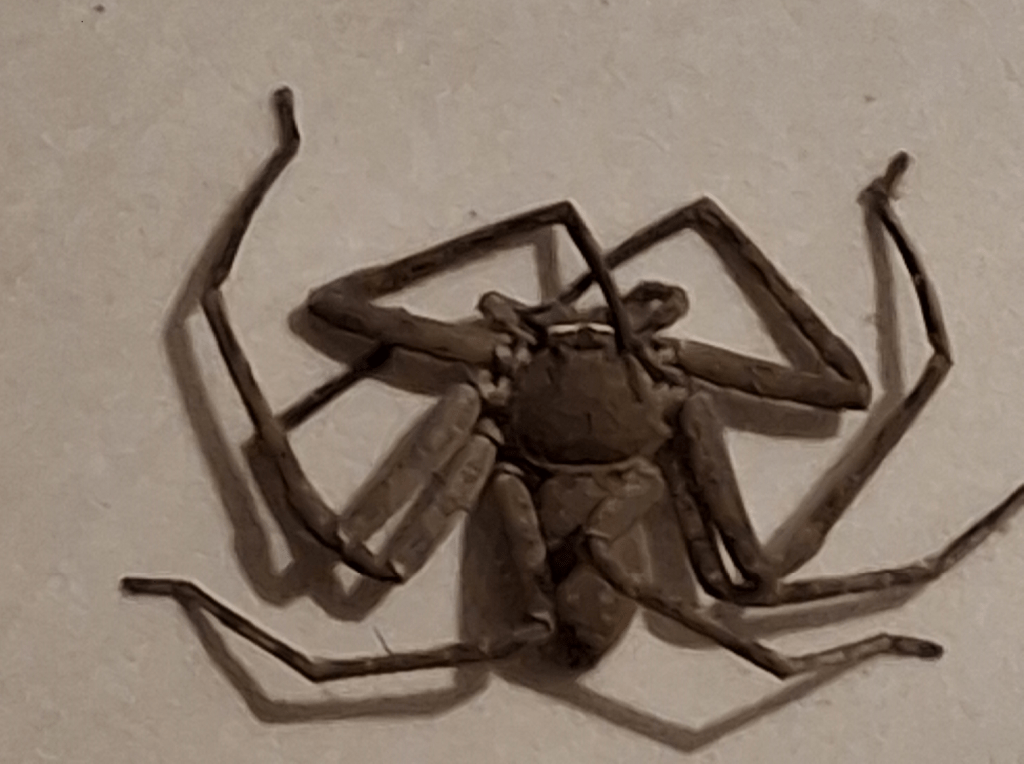
Its common name is Wandering Violin Mantis, and it is also known as Indian Rose Mantis, Dead Leaf Mantis and Ornate Mantis. The most intriguing of the names is the first one. Look closely and one will see very long spindly legs that support the wide thorax which is shaped like the soundboard of a violin, while the long neck that ends in an arrow-shaped head resembles the neck of the violin. The thin legs that resemble dry sticks, end in large appendages. The mantis usually walks on its mid and hind legs, keeping its strong forelegs raised. Thus the moniker Violin Mantis. (I cannot find any reference to why the addition of the prefix ‘Wandering’.)

A close up of its face with its biting-chewing mouth parts demonstrates its predatory instincts. This mantid feeds exclusively on flying insects, but it is not an active hunter. The insect find a spot where it is perfectly camouflaged as dry twigs and leaves, and sits and waits for an insect to fly by, or to land nearby. With the ability to rotate its head a full 180 degrees, the mantis has a panoramic view of its surroundings. To further enhance their disguise, mantids often adopt a unique pose, tilting their body sideways and lifting their front legs. Remaining motionless, stealthily hanging upside down from a stem or sitting erect they easily pass for a twig swaying in the breeze.

In case of a flier-by, the mantis grabs it right out of the air, using its fast reflexes and remarkable accuracy to snatch its prey from mid-air. In case of an unsuspecting one that lands on a flower in search of nectar, it is efficiently snatched up by the predator. The raptorial front legs are perfect for grasping and holding the unwary prey. The mantis selects its prey wisely, avoiding insects that are too large to easily capture.

In turn the Wandering Violin Mantis is preyed upon by a variety of animals including birds, bats, spiders and lizards. I wonder how useful their camouflage is in protecting them from being spotted by these predators. I am sure that many a mantis has escaped the beady eyes looking for a meal by passing off as a sprig of dry leaves! And in case it is spotted, the mantis makes a last attempt to escape by spreading out its wings to display the brightly-coloured underside that may startle the hunter.

These masters of camouflage can be found in diverse habitats including forests, grasslands and even gardens. They are found is several parts of South and Southeast Asia, especially South India Sri Lanka, Myanmar, Thailand and Java.

Curiously these gentle and non-aggressive insects are popular as pets in the US and some other countries. Unlike other mantis species the males and females can live together (without eating each other up!). However their enclosures would require to create and maintain the temperature and humidity of their natural habitats, plenty of climbing space with foliage and sticks, and a diet of flying insects. Judging from the number of websites with tips on how to cage and keep this mantis, this seems to be a popular insect pet.

I feel sad about this confinement. Why not celebrate this fascinating creature of nature where it belongs? And feel the excitement when one has the WoW! (Wonder of Wildlife) moment of making the acquaintance of the Wandering Violin Mantis! 

— Mamata

Libraries Take Wing

How often we randomly pick up a feather as we walk along. And wonder which bird it could belong to.

A feather library is where we can turn to for help in such a situation. These are digital or physical collections of bird feathers, used for research and education. They are an invaluable resource for understanding bird species, identifying feathers, and gathering data on bird health and natural history. These libraries are important tools for the study and conservation of bird species, offering insights into bird morphology and helping in the identification of feathers found in the wild.

There are not too many across the world. Some of the established ones include:

1. The Feather Atlas created by the U.S. Fish and Wildlife Service is a comprehensive image database of North American birds and covers about 438 species. It can be browsed by bird order, family, or species. It has an open identification tool in which one can fill in details about feather patterns, colors, size, and position, which can help you identify the bird your feather belongs to.

2.Featherbase (Germany) has been created by a working group of German feather-scientists and other collectors worldwide who have come together and contributed their personal collections. It holds close to 8000 specimens from over 1,000 bird species, with a focus on European and African birds. The collection includes high-resolution images and detailed anatomical information, and has supporeted studies in forensics, conservation, and biodiversity monitoring. It is rigorously classified and offers options of various languages so that birders from across the world can use it.

3. Found Feathers (iNaturalist Project) is a citizen science initiative where users contribute observations of feathers they find. The project encourages the collection of feather length and placement data, enhancing the database’s utility for researchers and birders. There are over 2,00,000 observations from across the world.

Special among these is India’s Feather Library. This pioneering initiative is the first of its kind in India and the world, dedicated to documenting, identifying, and studying the flight feathers of Indian birds. It is the passion project of architect Esha Munshi, a dedicated bird watcher who has seen over 1500 bird species across the world, and veterinarian Sherwin Everett who works in a bird hospital in Ahmedabad. They have created the library with the aim of having all feather-related data under one roof, fostering collaboration and advancing the collective understanding of Indian birds. In the short span of time since inception on Nov 15, 2021, 135 species have been documented.

The process is rigorous. They collect feather specimens from dead birds at rescue centres to establish a primary database of bird species. They then make detailed notes on the flight feathers, taking into account the number of Primaries, Secondaries, Tertials (Wing Feathers), and Rectrices (Tail Feathers), along with basic details such as overall length, bill length and width, leg lengths, etc. Then they stretch out one wing and fan the tail in both dorsal and ventral views to document the exact number of feathers, unique characteristics, colour, pattern, and size etc. The physical collection is housed at the National Centre for Biological Sciences (NCBS) in Bangalore.

The database is open to all and provides easy access.

Kudos to the dedication and passion of people like Esha and Sherwin who through their efforts help support avian research, conservation efforts, and educational outreach. And make a better world.

Happy Environment Day!

–Meena

Prickly Love

May 10 is celebrated as Cactus Day in the US. It is “a day dedicated to recognizing and appreciating the unique and fascinating world of cacti. This day also serves as a reminder of the many cactus species facing extinction and the need for their conservation, especially in their natural habitats.” Cacti are flowering plants that produce seeds. They are able to bloom every year, but they will produce an abundance of flowers in response to heavy rains. The family Cactaceae comprises many species of flowering plants with succulent (water-storing) stems.

It is entirely appropriate that it is a day marked in the US. Because 1749 out of the known 1750 species of cacti are native to the Americas! In other words, cacti were not originally found in any other part of the world.

I have to admit, this kind of blew my mind. All of us, from the time we are children, when asked to draw deserts or make an exhibit around the theme, have always generously populated our deserts with our own versions of cacti.

But cacti occur naturally only in the Americas–from Patagonia in South America, through the US, to parts of Canada. Anywhere else we see them, they have been taken by humans.

There are however equivalents in other parts of the world. There are the Euphorbs, tamarisks, saltbrushes etc. in Africa, and succulent and spinifex grasses in Australia. In India we have khejri, thoor, acacias etc. all of which grow in our deserts. But these are not cacti. All them have various adaptations to dry conditions like small or no leaves, spines, thick stems and deep roots. But they differ from cacti in that they do not have areoles. The presence of a structure called the areole is what sets cacti apart from all other plants. Areoles are round or elongated, often raised or depressed area on a cactus which is equivalent to a bud and from which spines, flowers, stems, or roots grow.

Cacti were introduced to Europe by, no surprises, Christopher Columbus. In 1493, on his second voyage to the Americas, he brought back a specimen of the prickly pear—the first time a cactus was seen in Europe. It caught the fancy of botanists, horticulturists and the public, and led to widespread cultivation of these plants.

They came to India with the Europeans, most likely sometime in the 16th or 17th century. In recent times, there has been much interest in these plants. They are much prized for their dramatic looks and are a feature in every balcony garden and indoor succulent-tray.  At a commercial level, the dragon fruit, cultivated widely across the country and now found in roadside fruit stands everywhere, is a cactus. Known  as pitaya or pitahaya, it is native to southern Mexico, Central America, and parts of South America. It is a climbing cactus species. The fruit is low in calories, rich in antioxidants and is said to have many other wonderful properties. But frankly, I am yet to get used to the bland taste!

For a few years now, our Central Arid Zone Research Institute (CAZRI), and ICARDA, an international organization, have been experimenting with cultivation of cacti, with a view to using it as fodder. Cacti as a fodder crop is seen as having the potential to help in the widespread shortage of green fodder, particularly during the summer months in many parts of the country. While still in experimental stages, it is thought to have some possibility.

India also has large and scientifically significant cacti collections. The National Cactus and Succulent Botanical Garden and Research Centre is located in the city Panchkula, the satellite town of Chandigarh. It is spread over seven acres and houses over 2500 species of cacti and succulents. The Regional Plant Resource Centre at Bhubenehswar has Asia’s largest collection of cacti. This Centre has created 200 new varieties and hybrids of cacti by breeding, growth manipulation, etc.

We said at the start that all except one cactus species was native to the Americas. The one exception is Thipsalis baccifera also know as the mistletoe cactus, which occurs naturally not only in the Americas, but also Africa, Madagascar, and close home in Sri Lanka. Scientists are still figuring out the how and why of this exception.

So look at cacti with new eyes. Love them, but don’t hug them!

-Meena

Celebrating Mother Earth: Pachamama

This week the world celebrated Earth Day on 22 April. What started in the United States in 1970 as a one-day demonstration of concern about the threats to the natural environment, grew into a sustained global movement to conserve and protect our Planet Earth which is increasingly threatened in every way. Earth Day continues, to this day, as the largest secular day of celebrating Mother Earth across the world.

The reverence and celebration of Earth as the all-sustaining and nurturing Mother goes back millennia. All indigenous cultures believe that Earth sustains and nurtures all living things, of which humans are but one part. This belief is manifested in the traditions and practices of communities in different parts of the world. One of these is the deification of the Earth as a Goddess, especially in indigenous cultures of the Meso-Americas. This Goddess is Pachamama.

In the culture of the Andean people Pachamama represents the Earth and all its life forms. The word Pachamama comes from the Quechua, an ancient language of the Andean people. Pacha means ‘world’ and mama means ‘mother’, translating to ‘Mother Earth’. It represents the Goddess that exists in all elements of nature. It is the spirit of the land, the essential force that sustains life. Communities celebrate Pachamama through ceremonial rituals and offerings before embarking on any important activity: as a prayer for good crops; to overcome adversities, or requesting protection for livestock, people, and all living things. They also offer thanksgiving for each season’s harvest. The ceremonies demonstrate the integral role that Pachamama plays in agriculture and their daily sustenance. For the Andean people, who have a tradition of herbal medicine, Pachamama is also integral to health and well-being. They believe that honouring Pachamama supports both physical and spiritual health.

Pachamama is a vital life force encompassing four cosmological Quechua principles of Water, Earth, Sun, and Moon, which she embodies as the ultimate Earth Mother deity. The word thus is also taken to mean Mother Cosmos.

For the Andean people Pachamama’s presence is woven into the daily fabric of their lives. As a powerful force that sustains and nourishes, they are careful that their actions should not provoke her wrath. They believe that earthquakes are a manifestation of her displeasure. The rituals and traditions such as challa a ritual where a small portion of chica a fermented corn drink is poured on the ground as an offering to the Goddess, and offerings of cocoa leaves are a symbol of the respect and reverence of the people for Mama Pacha or La Pachamama as she is also called. Another ritual includes burying food, throwing sweets and burning incense to give thanks for the harvest. This is an expression of Ayni, the principle of reciprocity, a giving back to the earth, fostering a balanced relationship between Nature and humans. Shrines dedicated to the goddess are also constructed from natural materials such as tree trunks or rocks.

As in all cultures, culinary traditions also play a part in expressing gratitude for the sustenance that the earth provides. The preparation and sharing of Pachamanca, as part of community feasts is rich in symbolism. The word comes from the Quechua words for ‘earth’ and ‘pot’, and refers to the feast of potatoes, meats, vegetables, and sweet potatoes and corn that have been steamed in a stone-heated, herb-infused underground oven. The oven is made in a pit in the earth, lined with a sequence of layers of stones which have different heat holding capacities. The stones symbolize Inti, the Sun God, and the source of warmth. The ingredients are wrapped in banana leaves and also layered according to their cooking time, from meat and potatoes at the bottom to fruits such as plantains and pineapples at the top. Following a smattering of herbs and beans, the earthen oven is covered with soil and the buried ingredients cook slowly as they are imbued with aromatic heat and smoke. The ritual of burying the food signifies a return to the womb of Mother Earth. Pachamanca is a tribute to Pachamama, with all the offerings fed to the Earth before they are ceremonially dug out and shared to be eaten by the community. Even today this traditional feast symbolizes the community’s history and tradition of thanksgiving and reverence for the all sustaining Pachamama.

The concept of Pachamama symbolizes the interconnectedness of all living things who are sustained and nurtured by a healthy and vibrant Earth. This concept has resonated with ecological movements across the world. And yet, day-after-day, this Earth is being damaged, disturbed and pushed to the brink in every sphere.

It is in such dire moments that we need to look for some rays of hope. The concept of Pachamama is a reminder that we need to look beyond our own needs, wants and luxuries to remember and respect the source of all that meets these human demands. 

Several years ago I was part of an international project that invited contributions from young people around the world to read the UN Global Environment Outlook Report and send in their reactions and responses to the state of the environment, as well as suggest possible ways of tackling these issues. Case studies and examples of positive actions were also collected. The enormously rich inputs (text as well as visual) were sorted and edited also by a panel of young editors. The outcome was a heart-warming book. The unanimous choice for the title: Pachamama: Our Earth Our Future.

This stemmed from one of the young editors: I have visited South America and I have a personal relationship with Pachamama. I know her—she exists. She breathes in the forests, she rages in the earthquakes and volcanoes, she flows through the rivers and crashes on the shore with the sea. I feel her arms around me, nurturing me and all she asks of me in return is to love her, care for her, nurture her.

–Mamata

Woolly, Woolly

The recent weeks have seen a number of news items starting with ‘Woolly…’. That is not very normal—the phrase ‘woolly-thinking’ is too archaic to be used as a pejorative across the lines in Parliaments.

But this bandying about of the word is neither from debates nor about shearing of sheep and records set therein.

The references all come from the world of science.

The first set of references stem from experiments of mixing mutations from the extinct mammoth and extant mice to create a woolly mouse! No, creating mice, woolly or otherwise, is not the purpose of the group of scientists which is working on this. The ultimate objective is to actually re-create the woolly mammoth itself. This is only a small intermediate step.

Now who would want to do such a thing, and why? Well, a company appropriately called Colossal Laboratories and Biosciences is behind this. Colossal refers to itself as a ‘de-extinction’ company. In a throwback to Jurassic Park, this company has retrieved the DNA of the 8-ton giant woolly mammoths which walked the earth over 4000 years ago from permafrost. They have mixed this with the genes of mice through complex gene-editing processes and have, after over three years of trials and experiments, created litters of normal sized mice which however have the ‘long, wavy, woolly hair of the mammoth’. They also have fat metabolism that mimics that of the giants. Colossal sees these mice as the first step in the route to actually re-create mammoths. They plan to work up to editing Asian elephant genes to express the traits of the woolly mammoth, and introduce the stem cells into an elephant embryo. The embryo would then be implanted into the womb of a female elephant, and lo and behold, a mammoth would be born to her!

For those who thought only a few years ago that this was the height of woolly thinking, well, maybe with the birth of the woolly mice, they are re-thinking!

Apart from the mind-boggling technical prowess required however, there are many debates about the ethical and environmental dimensions of ‘de-extinction’. (A TED Talk by Stewart Brand titled ‘The Dawn of De-extinction: Are you Ready?’ offers interesting insights).

The second set of woolly references is nothing so controversial. It is the recent discovery of a flowering plant whose flowers, rather meanly, have been called Woolly Devils. The plant or the flowers don’t seem to do any harm to anyone, but have been so dubbed because the flowers are hairy-looking, have florets which resemble devils’ horns, and the plant has been discovered in the desert in Chihuahua  (an ecoregion that covers areas of northern Mexico and the southwestern U.S., including west Texas, parts of New Mexico, and southern Arizona) along some paths in in an area known as the Devil’s Den. The plant belongs to variety known as “belly plants”—because scientists find it comfortable to study them while lying on their bellies! 

How unfair it is to name this newly-discovered plant (Ovicula biradiata) as Woolly Devils is borne out by the fact that scientists think they may produce chemicals of medicinal value.

Only time will tell where the quest for the woolly mammoth leads, and what benefits the woolly devil brings us.

In the meantime, we can pray for an end to woolly thinking.

–Meena