
I love deserts. Of all the ecosystems and landscapes, I have always felt the closest affinity to the desert. While I have trekked among hills and mountains, and have enjoyed the sea and seashore, it is the desert that makes me feel at once ‘at home’ as it were.
My introduction to the desert dates back many decades.
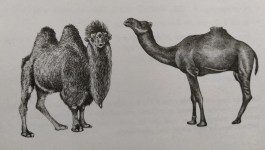
As a young trekker I was a member of a group called the Delhi Mountaineering Association. One year, the mountaineers decide to descend from the mountains and explore a new terrain and undertake something that was hitherto unexplored. The result was the Desert Expedition—the first-ever attempt (then) to cross the Thar desert in Rajasthan on foot. Eight strangers (5 men and 3 women, including yours truly), sharing a common urge to explore and discover, came together to embark on a two-week journey that touched each of us in so many different ways, and left behind indelible memories.
The walk commenced from the little village of Sam, about 44 km from Jaisalmer. This is where I had my first sight of the dunes rising from a sea of sand in the morning sunlight–a curious composite of the ripples of the ocean with the majesty of the mountains. And from here walked, our motley band of adventurers; day after sunny day, dusty winds, clinging bhurats (prickly thorns). From the sand, through the unending vista of flat arid miles stretching to the horizon, stopping to quench our parched throats with mathira the juicy wild melons, and communing with our accompanying camels. The utterly comforting feel of sleeping on the sand, under the canopy of the Milky Way, lulled by the unbroken sounds of silence. A unique bonding over seven days and 190 km (every inch traversed on blistered feet!), that left me deeply in love with the desert.
While I have not been able to go the desert as often as I would like to, serendipitously the desert has made its way into my life from time to time.
I am often reminded by my erstwhile boss that the only credentials that started me on my career as an environmental educator, was the fact that I had been on that desert expedition! My work in environment led me to study and understand (rather than only experience) the different ecosystems. When I had the opportunity to develop a teaching-learning manual on Deserts, I plumbed the depths of literature on the subject and was awestruck by the fascinating facets, incredible adaptations, and the innumerable strands that weave together create a vibrant ecosystem in a seemingly lifeless terrain. What was once intuitive was bolstered with intellect.
More serendipity! A collaborative project with Abu Dhabi, and an equally ardent desert lover transported me (after so many years) into a desert again—the Arabian Desert, also known as the Empty Quarter (Rub Al Khali in Arabic). Being amid the immense dunes and endless stretches of sand, was like homecoming. I would never have imagined this, all those years ago in the Thar.
And then, a trip to Ladakh to experience the cold desert—that I had only written about till then. So different–the starkness, the skies, the silence, and the sheer scale, and yet similar. Nowhere but in the desert have I felt this with such intensity.
My heart lies in the desert. Sadly I may not be able to recreate these experiences if I tried now. The once remote sand dunes of Sam are now a tourist hot spot. The dunes and dune life of Rub al Khali are being decimated by the sport craze for off-road vehicles zooming across the sand. The fragile cold desert ecosystem of Ladakh is being snowed under with overtourism. Deserts are disappearing, and no ‘development’ scheme can ever recreate them.
–Mamata
Ironically while the real deserts are under threat, human activity is leading to transforming non-desert areas into arid lifeless regions through the process of desertification. June 17 is observed as The World Day to Combat Desertification and Drought to promote public awareness of international efforts to combat desertification.

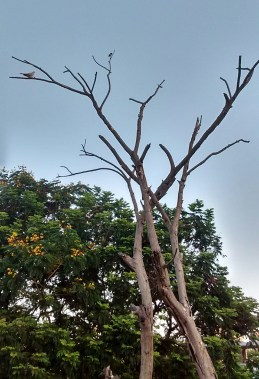
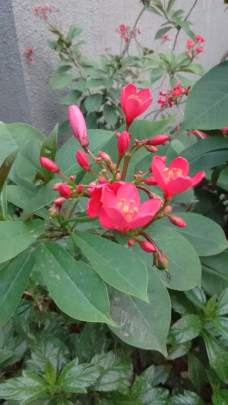 hile these are great to reach out to other humans, they are also a wonderful opportunity to be inside looking out, at nature. One does not have to be in the countryside to see Nature. Even in the midst of the urban jungle, look from the same balcony or window, and you will discover—a bird, a butterfly a bumblebee, a spider. A patch of sky and a puff of cloud. The branches of a tree with fresh green leaves, a bird call, a shaft of sunlight on a wall, or the stars on a clear night.
 But that is not the subject of the blog today. April 25th is marked as World Penguin Day, and that is the occasion of the blog. This day coincides with the annual northern migration of Adelie penguins.
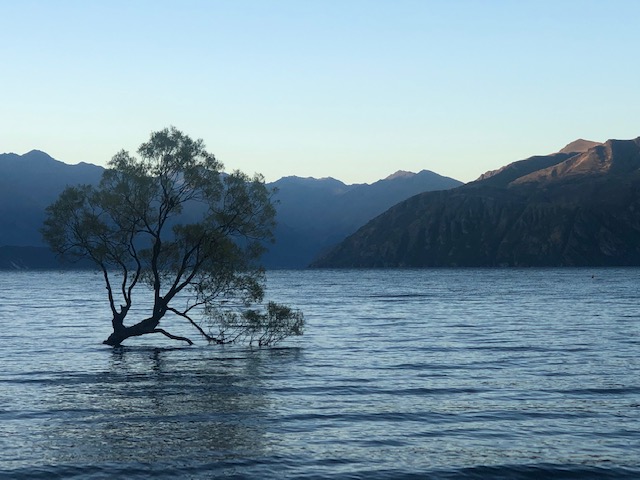 The connection is a tree that is reputed to be the most instagrammed tree in New Zealand, almost a symbol of NZ tourism. On a recent trip there, we were urged to set aside time to see the tree, specifically around sunset. So we worked around our program to ensure we got to the spot—a stretch of a beach—well ahead. We drove past a few times, keenly looking at the beach. We could see some people, but nothing special in the way of trees. We asked natives and tourists alike, and they all pointed us to the same area which our GPS had shown us, and which we had passed, looking in vain for a landmark. We decided to make our way down to the beach anyway. Lo and behold, there were many, many people there, jostling for some spot (we could not figure out what the spot was for), all setting up professional looking camera equipment. It came to a pass when we had to ask a friendly-looking lady what everyone was waiting to photograph, where the famous tree was, and what it was about. She kindly pointed to this spindly willow tree, standing a few feet into the waters of the beautiful Wanaka Lake, against a beautiful background of majestic mountains. But the tree itself? In my mind, this will forever define and exemplify ‘under-whelming’. ‘Why is the tree famous’, we asked many around us in bewilderment. While there was some story of how it was part of a fence and had survived in the water for several years, the general consensus was that it was famous because it was famous! So famous , it even has its own insta handle #ThatWanakaTree.
 AESTIVATION, lesser known cousin of hibernation, is ‘summer sleep’– a survival strategy used by many vertebrates and invertebrates to endure arid environmental conditions. Key features of aestivation, like hibernation (winter dormancy) include significant metabolic rate suppression, conservation of energy , altered nitrogen metabolism, and mechanisms to preserve and stabilize organs and cells over many weeks or months of dormancy. Even more than in hibernation, strategies to retain body water are important in aestivation, as dryness or aridity is the key trigger for the summer sleep.
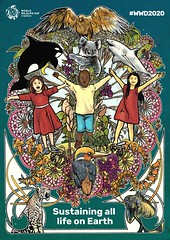 ife Day. This marks the day of signature of the Convention on International Trade in Endangered Species of Wild Fauna and Flora (CITES) in 1973. Every year on this day, events are held around the world to celebrate and raise awareness of the world’s wild animals and plants.
