Environmental Scolder-in-Chief

E_SDG goals_icons-individual-rgb-13“You have stolen my dreams and my childhood with your empty words. And yet I’m one of the lucky ones. People are suffering. People are dying. Entire ecosystems are collapsing. We are in the beginning of a mass extinction, and all you can talk about is money and fairy tales of eternal economic growth. How dare you!’ said Greta Thunberg to world leaders at the UN.

And that is a scolding they will not forget in a long time!

Greta, the girl, who in her teens is shaking up the world! Deeply concerned about the climate crisis, and even more concerned that world leaders were not taking it seriously, a few years ago, Greta took off from school to protest outside Sweden’s Parliament, calling for action on climate. She tried to get some of her school mates to join her, but no one was interested. So she took time off from school every Friday, and sat alone outside Parliament for three weeks, holding signs which said ‘School Strike for the Climate’, and handing out pamphlets. Her strikes found their way to social media and started attracting worldwide attention.

As time went on, inspired by her, more school children joined in, and organized protests in their own communities. This developed into the School Climate Strike movement, or ‘Fridays for the Future’. And there have been strikes involving tens of thousands of school children in major cities of the world.

So strong were these voices of the youth that Greta was invited to address the United Nations Climate Change Conference in 2018. Her advocacy is forcing governments to acknowledge that they need to do more for the future generations by taking climate action.

Greta is not just about advocacy and telling other people what to do. She challenged her family to adopt more a more environment friendly life style and reduce their carbon footprint. And she succeeded! Her family is vegan now, and her mother has even given up her career as an international opera singer—which involved a lot of air travel– in order to reduce her carbon footprint!

Greta herself made the headlines once again when in August 2019, she sailed across the Atlantic Ocean from Plymouth, UK to New York, US in a 60ft racing yacht equipped with solar panels and underwater turbines to participate in some key meetings. The 15-day voyage demonstrated that it was possible to reduce emissions and do a carbon neutral transatlantic crossing serving. Greta attended the UN Climate Action Summit in New York City and COP 25 (Conference of Parties) Climate Change Conference in Santiago, Chile.

Greta has told the world what young people expect. Will world leaders and adults like us be able to step and do what it takes?

–Meena

Dragonflies

The beginning of autumn

IMG_20190924_094337.jpg
Photo: Revati Pandya

decided by

the red dragonfly

Shirao

The September morning sky is dotted these days with dragonflies. It is an uplifting sight—to see them gliding gracefully, flitting, swirling and swooping like dancers against the canvas of blue sky and white clouds. I remember several Japanese Haiku that celebrate the dragonfly.

Dragonflies play an important part in Japanese life and culture. They are associated with autumn as well as spring, and are seen as harbingers of life and prosperity, birth, and renewal, happiness and strength.  Japanese art, literature, textiles, and design, as well as literature (especially haiku poetry) reflect this close association and respect. The red dragonfly is considered to be sacred. One of the popular traditional pastimes of Japanese children has been catching dragonflies.

The dragonfly is one of the oldest of the insect species, which has inhabited our planet for almost 300 million years. It is natural that these insects have become an integral part of folklore in many cultures which have developed their own beliefs associated with the form and life cycle of insect.

In China, people associate the dragonfly with prosperity, harmony and as a good luck charm. Amongst Native Americans, it is a sign of happiness, speed and purity.

In many parts of the world the dragonfly also symbolises adaptation, transformation and renewal. In Native American culture it was seen as a sign of resurrection after a hard struggle. This is probably associated with the metamorphosis that the insect undergoes in its life-cycle, from a drab larval stage in which it spends most of its life before it emerges as a graceful and colourful adult. Once it emerges, it has a very short time to live its adult life, but it seems as if it flies freely with no regrets. The Dragonfly’s scurrying flight across water represents an act of going beyond what’s on the surface and looking into the deeper implications and aspects of life. Thus it symbolises the virtue of living in the moment and living life to the fullest, while at the same time looking deeper.

Across cultures, the dragonfly has been associated with magical qualities and mysticism. This may be associated with the fact that they exhibit the phenomenon of iridescence, which means that the body of the dragonfly can reflect and refract white light to create beautiful colours that change depending on the angle of light or the angle from which you look at them. Thus they also symbolize illusion–making others see you the way you want them to see!

Dragonflies are respected by fishing communities. In some places it is believed that plenty of dragonflies over a particular spot meant there were plenty of fish around. If a dragonfly hovered near the fisherman, he took it as a good luck sign.

I had not realised what a deep and rich association the dragonfly has in so many cultures. However I have not found much about this association in Indian culture. We do tend to somewhat overlook, let alone write poems about, these flying insects as they neither catch our eye as butterflies do, nor intrude into our daily life as flies and mosquitoes do.

But I did come across something that makes immediate sense for me. Seeing swarms of dragonflies means that rain is on the way; and as our  monsoon still lingers this year, maybe they will bring more rain! And, more practically, that dragonflies are very useful in helping combat the mosquito and other pests that constitute their prey. I definitely consider having them around my house as a symbol of health and good luck!

See this dragonfly….IMG_20190924_084456_Bokeh__01.jpg

His face is

practically

nothing else but eyes.

Chisoku

–Mamata


How a German Town Became a Tamil Shrew

Well, not exactly a shrew, but a very sharp, savvy, aggressive woman!

emden

Ok, lets wind this story back!

In Tamil, ‘Emden’ (or ‘Yemden’, as pronounced in Tamil) is used to describe a person (usually female?) who gets things done, who brooks no interference or resistance or opposition.

‘Yemden’ is used in various different tonalities: If an old lady is using it to describe her favourite niece, it is in a tone of admiration for the go-getter whom no one can fool; if describing a not-favourite neighbour’s daughter, the tone is somewhat deprecatory—as in ‘what a badly-behaved girl’; if used for a much-disliked sister-in-law, the tone is definitely derogatory—as in ‘such an aggressive, uncouth person—bad addition to the family’.

When I was young, I thought it was a Tamil word, so casually was it used in conversations. It was much later that I learnt the etymology of the word. The origin of the term is convoluted:

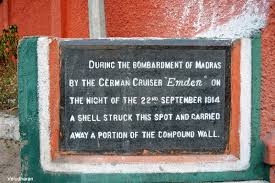
On the night of September 22, 1914, in the early days of World War I, the German cruiser Emden entered the Madras Port. Harboured there were several oil tankers belonging to Burmah Oil Company (a British company). Capt. Karl von Muller who was in command of Emden, fired at them. Within minutes, five tankers went up in flames, destroying close to 3,50,000 gallons of fuel. 
And forever imprinting that night in the memories of the people of Madras and Tamilnadu, as a night of terror, of war, of aggression, of bombs, of fire. Capt. Muller was to later write: “I had this shelling in view simply as a demonstration to arouse interest among the Indian population, to disturb English commerce, to diminish English prestige.” He certainly succeeded in arousing interest, considering that more than a century later, the word ‘Emden’ continues to be a part of Tamil vocabulary!

Emden the town which lent its name to the ship is fairly non-descript. It is a seaport in the northwest of Germany, on the river Ems. In 2011, it had a total population of 51,528.

Emden the ship has a slightly more interesting (if bloody) history. SMS Emden [was a Dresden class light cruiser built for the Imperial German Navy, and armed with ten 10.5 cm guns and two torpedo tubes.

Emden spent most of her career in the German East Asia Squadron based in China. During World War I, Emden captured nearly two dozen ships. Apart from the attack on Chennai, Emden launched a surprise attack on Penang and in the resulting Battle of Penang, she sank a Russian cruiser and a French destroyer.

Capt. Müller then took Emden to the Cocos Islands, where he landed a bunch of sailors to destroy British facilities. There, Emden was attacked by an Australian cruiser  which inflicted serious damage and forced Müller to run his ship aground to prevent her from sinking. Out of a crew of 376, 133 were killed in the battle. Most of the survivors were taken prisoner. Emden‘s wreck was quickly destroyed by wave action, and was broken up for scrap in the 1950s.

–Meena

PS: I do sense a gender issue here, with a bias against strong women! Even the use of term ‘shrew’ is on the same lines–apologies!

PPS: Ironically, the city centre of Emden was almost completely wiped out as a result of Allied bombing in World War II, which destroyed nearly all historic buildings. The most severe bombing by the RAF took place on 6 September 1944, when roughly 80 percent of all houses in the city centre were destroyed. In the collective memory of the city, this date still plays an important role. 

PPPS: Wikipedia is the main source for information on the Emdens.

Ozone Story

September 16 was proclaimed as the International Day for the Preservation of the Ozone Layer by the United Nations General Assembly. It was on this day in 1987 that the Montreal Protocol to control production and consumption of Ozone Depleting Substances was signed by various countries at Montreal, Canada. Since then this day is used as an opportunity to bring to public attention the importance of the Ozone layer and the threats to it caused by human activities.

The theme for this year’s World Ozone Day is ‘32 Years and Healing’. This celebrates one of the few success stories in the gloom and doom of news about the environment. The healing is the outcome of three decades of international cooperation to protect the ozone layer and the climate.

On reading about this I felt a sense of satisfaction at having contributed in a teeny-tiny way to the healing effort. It was in 1997 that the Centre for Environment Education got engaged in a variety of projects to raise awareness about the issue to a wide range of audiences—from school children to policy makers. As part of this we developed educational material that could communicate the somewhat complex science in a simple way, as well as motivate people to take action to prevent what was then an ominously growing hole in the ozone layer.

Today both the science and the understanding has advanced greatly, but it is still useful to remember some ozone basics.

OOOzone: When it is alone, it is called an oxygen atom. When two oxygen atIMG_20190917_152811.jpgoms get together, it is called oxygen molecule or just oxygen. When three oxygen atoms get together, it is called an ozone molecule!

Where is Ozone? A thin invisible layer of ozone gas is found in the upper atmosphere 15-60 km above the earth. This is called the ozone layer.

How much Ozone? There are only one to ten units of ozone in every million units of gas or particles in the upper atmosphere. Instruments measure ozone in parts per million (ppm).

What does the ozone layer do for us? In the upper atmosphere, the ozone layer acts as a natural shield. It protects the earth and its inhabitants by absorbing the harmful part of the ultraviolet radiation from the sun. Too much ultraviolet radiation is dangerous for all living creatures—humans, animals and plants.

What kind of danger? In humans it may increase the rate of skin cancers, eye problems and cataracts; and also weaken the immune system. It can reduce crop yields as plants will have reduced leaf size and germination time. It could kill phytoplankton—the base of the food chain in water and disturb the entire aquatic food chain. It can also damage paints and fabrics, as well as plastic.

How is the ozone layer damaged? By the use of Ozone Depleting Substances (ODS) which include chemicals called CFCs and Halons, which are released through human activities, and which float into the upper atmosphere.

In the last thirty years since the awareness about the danger from these substances was recognised, there has been a consistent effort at national and global levels to phase out the ODS, through policies, international agreements, and R&D in industry to find better substitutes. The Montreal Protocol has led to the phase-out of 99 per cent of ozone-depleting chemicals in refrigerators, air-conditioners and many other products.

However there are still products in the market that could potentially be threats. As consumers we can all play a role in protecting the layer that protects us, through the choices we make. Here are some tips on what we can avoid. Avoid aerosols whether for pesticides or perfumes. Avoid Styrofoam glasses and plates; use reusable steel and glass vessels. Avoid foam mattresses and pillows, use traditional cotton or coir products.  We must also remain vigilant to tackle any illegal sources of ozone-depleting substances as they arise

While we can celebrate success this year, this day is also a reminder that we must keep up the momentum to ensure healthy people and a healthy planet.

–Mamata


Mary Poppins 2.0

Remember the loveable character of Mary Poppins who could fix messes in homes and families? Don’t we all sometimes wish that Mary Poppins would fly into our lives and set things straight? Someone who could discipline us to set ourselves in order? Believe it or not there is a real new-age Mary Poppins, and her name is Marie Kondo!clutter.jpg

Who is this new Marie and what does she do? Marie Kondo is a Japanese “tidying expert!” She helps people to clear up the clutter in their homes, and guides them towards creating spaces of order and serenity.

Marie was born in Japan in a culture which celebrates beauty in simplicity. Marie grew up with the ingenious origami art of folding, artistic ikebana, beautifully orchestrated tea ceremonies, and the art of creating minimalistic but serene surroundings, as well as an inborn gift for creating order out of chaos. She added to this, a canny entrepreneurial spirit when she started her “tidying consultant” business as a 19-year old university student in Tokyo. Realising the immense need and scope of “tidiness consulting” in an age when people lives were ‘cluttered’ in every which way, she went on to write a best-selling book “The Life-Changing Magic of Tidying Up.”

Where Mary Poppins created magic with the wave of her umbrella and a catchy tune on her lips, Marie Kondo starts her process of transformation in a more oriental style by making her clients calmly meditate on how their space is special to them, and to give thanks for this. She then proceeds to gently but firmly get them to review all their possessions, and let go whatever does not “spark joy” in them, after thanking these for their service! She then advises on how to rearrange and reorganise the remaining belongings by category, following the KonMari Method.

Today Marie is a global expert with her own Netflix’s hit show “Tidying Up With Marie Kondo, and founder of KonMari Media Inc.

I admire this young woman who has found herself a natty niche, and is smart enough to make a successful enterprise out of it. But I cannot but help thinking of the generations of homemakers who have kept beautifully organised and managed homes with limited resources, but much hard work, care and creativity. For them it was a way of life, into which they were oriented by mothers and mothers-in-law. Today when we have much more of everything, except time and patience, voila, Marie Kondo is at your service!

–Mamata

The Moon Is Not Going Anywhere

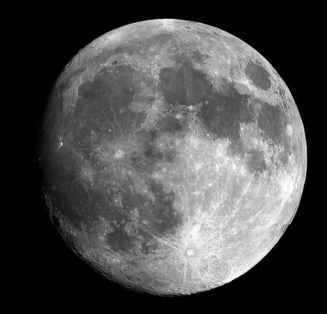
full-moon-moon-bright-sky-47367If there were no failures associated with space forays, what would Hollywood do, considering that so many of its blockbusters are centered around this theme!

We lost contact with Vikram Lander. But we will still be getting information from Chandrayaan, which will be useful to the world’s scientific community. And if not this time, next time around, we are going to make it to the moon and other frontiers.

Dr.Vikram Sarabhai, father of India’s space program and the person for whom the Lander was named, would laud the spirit of ISRO which has dusted itself after the setback and is all gung-ho to carry on. This was the spirit he tried to imbue his institutions with, as testified by a quote from a paper on him:

“He has come. Tell him.”

“I didn’t do it. You tell him.”

“No, you tell. I feel scared.”

“What is it ?’

“The meter is burnt, sir. We passed too much current.”

“Oh, I see. Well, don’t worry. How else would one learn? Next time you will be more careful.”

That, in a nutshell, was Professor Vikram Sarabhai. Meters were scarce those days. In fact, we did not get a new one for almost two months and the work was held up. But the human qualities of this great man were evident even before he took courage in both hands and shaped the destiny of the scientific institution that was to be PRL, and brought it national and international repute. Visionaries there are many and finally nothing succeeds like success; but in the case of Vikrambhai one could see straightaway that he had to succeed; there was just no other alternative!”

The world’s scientific community is with ISRO. India is with ISRO.

It is a universal human quest—to explore the frontiers and expand our knowledge. This is, in the ultimate analysis, beyond boundaries. It is about the human spirit.

–Meena

Celebrating the Teacher

September 5–Teacher’s Day in India is marked by awards, articles, and essays  remembering and honouring those who instruct and inspire.  Across the world, and across generations, there have been many who have left behind their legacy on the young minds and lives. Films and books have tried to capture some of this in their own small way.

A film that I saw recently was a new addition to this list of ‘must watch and must read’. Freedom Writers  tells the story of an idealistic young teacher confronted with the challenge of teaching ‘unteachable, at-risk’ students, and her non-conformist attempts at making meaningful connections.

The movie is based on the real experiences of Erin Gruwell that she documented in a book titled The Freedom Writers Diary: How a Teacher and 150 Teens Used Writing to Change Themselves and the World Around Them. The book was published in 1999.

Erin was a 23-year-old white American when she stepped into her classroom of a motley group of African American and Latino teenagers coming from a world of broken homes, violence, and every form of social, cultural and economic discrimination. Instead of giving up, and simply labelling her charges as ‘unteachable’, Erin realised that these young people were deprived of exposure, attention and respect. One way to open up their vision and world was to introduce them to writings that shared similar histories of discrimination, beginning with The Diary of Anne Frank, and Zlata’s Diary: A Child’s Life in Sarajevo, and including a visit to the Holocaust Museum of Tolerance in Los Angeles. Despite initial resistance, the students began to see the parallels between these books and events in history, and their own lives; they realised that they were not alone in their struggles. Erin then moved on to encouraging every student to keep a journal in which they recorded their thoughts and feelings about their past, present and future.

The students were so inspired by Anne Frank’s story that they organised a “Read-a-thon for Tolerance” and collected funds to invite Miep Gies, the Dutch woman who sheltered Anne Frank’s family, to visit them in California during the 1994/1995 school year. Miep declared that Erin Gruwell’s students were “the real heroes”. As a testament to Erin’s dauntless efforts, all 150 Freedom Writers graduated from high school and many went on to attend college—a hitherto unachieved triumph.

The book The Freedom Writers Diary is a compilation of the journals kept by these students. Its title The Freedom Writers is a tribute to the name of the 1960s US civil rights group called Freedom Riders. Erin’s book was a huge success. She went on to set up The Freedom Writers Foundation, which functions to promote Erin’s successful teaching methods.

The film brought to mind another path-breaking movie To Sir, With Love. Released in 1967, this is also based on an autobiographical novel by E.R. Braithwaite which recounts his experiences as a teacher in London. In this case, it was the challenge of a teacher of colour teaching a class of white, economically and socially-deprived teenagers in a working-class area of London. Facing similar challenges of teaching a set curriculum to semi-literate and disinterested, hostile students, Braithwaite took on the challenge by switching to unconventional teaching methods including visits to museums, and allowing students to discuss what was meaningful to them, in the class. Like Erin, he broke through the barriers, and succeeded where others had thrown up their hands in despair.

Inspiring films both. Also a reminder that, in any time and place, a single individual can make a big difference. A tribute to every teacher, who in his or her own way, touches countless minds and hearts, and changes lives.

–Mamata


Bless Us, Ganesha!

C9965879-3514-46E5-950C-07964DC42871Who can have a problem with someone whose mission is to remove obstacles from your path? No wonder then, that Ganesha is a God whom all love. Wise, witty, with a sense of fun, he is quite the favourite.
No wonder then that his birthday celebrations have caught the imagination of people across the country, and they grow larger and larger every year. I love it too, though I have a question. Is his birthday the day he was made by Parvati and given life by her, or the day that Shiva beheaded him and then brought him back to life again, though with an elephant’s head in place of his original human head. Hmm…maybe someone will explain it to me some day.

Elephants have fascinated humans for ever. The Pali Jataka stories, which go back to the period 600 to 321 BC have references to elephants. According to Buddhist stories, the night before Lord Buddha was born, his mother Maya is supposed to have dreamt of a six-tusked white elephant which came to her from heaven, with a white lotus in his trunk. This is why Buddhists consider the rare white elephant the holiest of all animals, and the embodiment of the Buddha.

The Ramayana and Mahabharata have many references to elephants in war and peace. Flourishing cities for example, are those with elephants. The descriptions of elephants in Ramayana are supposed to be detailed and fairly accurate.

Tamil Sangam literature (1st to 3rd century AD), provides a wealth of information about them. An old poetical dictionary from this body of work has 44 names for elephants, four names for female elephants, and five for baby elephants. Each part of the elephant is named.

Kautilya’s Arthashastra treats the study of elephants as a branch of study and prescribes the duties of mahouts, and approaches to management of elephant populations.

Elephants abound in folktales, proverbs, similes etc. As per a popular Indian folk tale, in the days of yore, elephants could fly. Apparently they were pretty playful. One day, a herd of elephants was gambolling in the branches of a banyan tree. A branch broke and fell (why am I not surprised?). And as to be expected, there was a rishi sitting beneath the tree. His worship was disturbed by the falling tree branch, and as was the wont of rishis, he cursed the elephants that never would they ever be able to fly again. And so it was.

Well, flying elephants would be quite a management issue! But will we at least let our elephants walk the earth? With depleting forests, their habitats are ever-shrinking and ever-fragmenting. The lure of crops as an easy source of food near their habitats is another factor that brings them out of the jungles.  And as a result, human-elephant conflicts keep increasing. Train lines, electric lines and roads across their homes have led to several accidents and deaths in recent times. The threat of poaching for ivory (and sometimes meat), never goes away.

Ganesha, the God of Good Luck! We pray to Thee. Bring peace and goodwill on earth—among humans, and between humans and elephants.

–Meena

The Sun Cooks for Me

Or at least it used to, for many years when I lived in Ahmedabad, where the sun blazed for 10 months of the year.

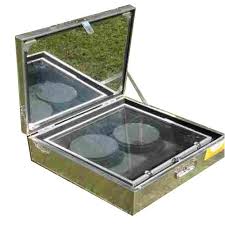
solar cooker

It was especially useful for boiling potatoes, dals, chana and rajma. Also for making nice kheer—the milk would thicken and thicken and turn a lovely creamy pink. And never ever burn and stick. Also some halwas like carrot halwa, doodhi halwa etc. For sure, food cooked in the solar cooker tasted amazing!

But….

The ‘buts’ were and are:

  • The cooker needs to be rotated once in a while to get the maximum sun. Difficult to do that when one is away at work all day.
  • Unexpected weather changes lead to disasters: Just the day when you have guests, You may come home to find that the chana is not cooked!
  • And if left too long, the food may dry out. So if you are going to be away for nine hours, don’t leave rice in the cooker.
  • Then the cooker has to be cleaned, closed and put away somewhere out of the dew each evening. And it was pretty large and clunky.
  • There can be no shade around the cooker, which means you need a large clear space, and is a bit of a problem when trees grew tall and branch out.
  • Service may be a problem. At one stage the metallic rod which kept up the mirror broke, and I could not find anyone to fix it. I tried propping it up with this and that, but not always with success.
  • Dogs may come and sniff at it.

Even with my enthusiasm, my use tapered off.

Now I live in Bangalore. It has many more no-sun days. But when I see how much cooking gas we use, I am tempted to again buy a solar cooker. I surfed and surfed. Many fewer suppliers than 25 years ago. And sadly, the design hasn’t changed one bit. It is still the same metal dabba, with four black-lidded dabbas to put the food in.

I think I still will buy one. Even if I can use only it for 100 days out of 365. Even if it means a bit of uncertainty and inconvenience. But that does make me wonder—in our country where there is so much sun, why are our bright-brains not working to develop innovative cookers at reasonable prices? Maybe something that rotates with the sun. Maybe something with a back-up for low-light days. Maybe something which would ‘turn off’ after a set amount of time (or light). Maybe something with a ‘cook’ mode and a ‘keep warm’ mode. Maybe sleeker designs. Maybe service centres.

I don’t know…But I think with good design and a little more convenience, many more people would use these.

And that, I think is the tragedy of Indian science and technology. We don’t seem to set out to solve our own problems with our own resources. Who should be more interested in developing solar cookers than a country which has abundant sunlight, and for whom fossil fuel use is a concern? And which boasts some of the brightest tech brains!

Well no one. So let me see how to go about buying a twin of the solar cooker I bought a quarter century ago.

–Meena

Green Amber Red

Imagine that you are cruising along a highway; enjoying the smooth flow and passage of time and miles. On the other hand, imagine you are in a city, driving at the required speed, eagerly crossing the green lights, slowing at the amber, and every now and then, stopping at the red light. There is a sense in both the experiences; in both cases, a different kind of pace is set.

The act of writing could perhaps be compared to this. Every writer sets their own pace and rhythm of how the words flow. For some the long uninterrupted cruise is the mode of choice; others prefer the ordered structure of breaking the flow, sometimes with a pause and sometimes with a longer halt—from green to amber to red. It is the punctuation marks that represent these traffic lights.

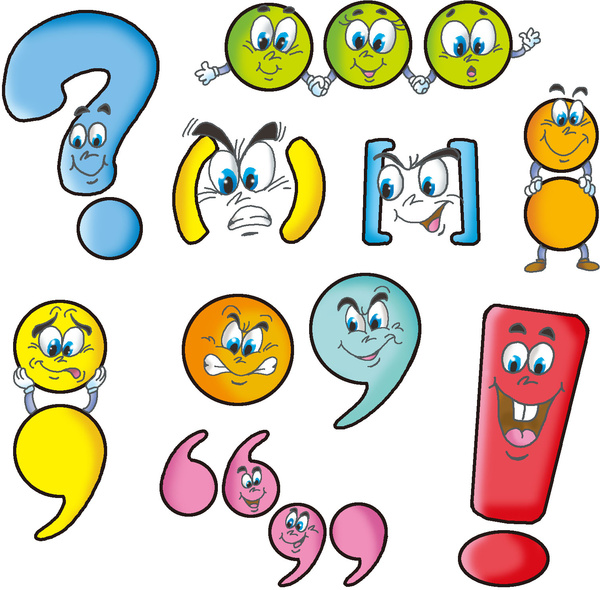
Many writers have expressed their thoughts on these—essential parts of tImage result for image punctuation marks cartoonhe tools of their trade. Some have celebrated punctuation as the friendly spirits whose bodiless presence nourishes the body of language”,  while another believes that each writer has a lifetime quota of them, to be used judiciously. I myself have always enjoyed the mental exercise of fixing the appropriate place for the appropriate mark, and am always attracted by how authors perceive and practice the use of punctuation marks.

I recently read a delightful articulation of this in an article which had excerpts from an essay titled Notes on Punctuation by Lewis Thomas. Thomas was an American physician, poet, etymologist, essayist, administrator, educator, researcher and teacher. Amidst his serious research and writing, Thomas applied equal affectionate attention to the traffic signals, giving each one a distinct character and identity.

Sharing some in his own words.

, The commas are the most useful and usable of all the stops. It is highly important to put them in place as you go along. If you try to come back after doing a paragraph and stick them in the various spots that tempt you you will discover that they tend to swarm like minnows into all sorts of crevices whose existence you hadn’t realized and before you know it the whole long sentence becomes immobilized and lashed up squirming in commas. Better to use them sparingly, and with affection, precisely when the need for each one arises, nicely, by itself.

; I have grown fond of semicolons in recent years. The semicolon tells you that there is still some question about the preceding full sentence; something needs to be added; it reminds you sometimes of the Greek usage. It is almost always a greater pleasure to come across a semicolon than a period. The period tells you that that is that; if you didn’t get all the meaning you wanted or expected, anyway you got all the writer intended to parcel out and now you have to move along. But with a semicolon there you get a pleasant little feeling of expectancy; there is more to come; read on; it will get clearer.

: Colons are a lot less attractive, for several reasons: firstly, they give you the feeling of being rather ordered around, or at least having your nose pointed in a direction you might not be inclined to take if left to yourself, and, secondly, you suspect you’re in for one of those sentences that will be labeling the points to be made: firstly, secondly and so forth, with the implication that you haven’t sense enough to keep track of a sequence of notions without having them numbered.

!!! Exclamation points are the most irritating of all. Look! they say, look at what I just said! How amazing is my thought! It is like being forced to watch someone else’s small child jumping up and down crazily in the center of the living room shouting to attract attention. If a sentence really has something of importance to say, something quite remarkable, it doesn’t need a mark to point it out. And if it is really, after all, a banal sentence needing more zing, the exclamation point simply emphasizes its banality!

As for me, I do so love the comma, and simply cannot resist the !!!

–Mamata