Why would a Penguin ever come to tea? But so goes the nursery rhyme my foster-grandchild and I are currently hooked on.
If I were to write the poem, I would say
‘Have you ever seen, a penguin out at sea’.
Would make a bit more sense.
Of course, the other argument is, why should nursery rhymes make sense?
 But that is not the subject of the blog today. April 25th is marked as World Penguin Day, and that is the occasion of the blog. This day coincides with the annual northern migration of Adelie penguins.
Any ‘Day’ is a way to focus attention and raise awareness about an issue. Penguins evoke immediate love and interest. And hence are a great species to highlight when it comes to conservation education in general, and education about the species in particular. Alarmingly, of the 17 recognized living species, 11 have been listed as Vulnerable or Endangered, and hence awareness about penguins is important. And talking about penguins also ensures we talk about the health of the waters where they spend 75 percent of their lives.
It was only very recently that I saw my first-ever penguins in the wild. It was an unforgettable experience—a visit to the Omaru Penguin Colony in New Zealand, where visitors can spend a few hours freezing on stands, waiting for Little Blue Penguins to come home to their colony for the night. And believe me, it was worth every chilly bone to see this phenomenon. Groups of ten or more penguins coming in over a period of about an hour, after spending the whole day in the waters feeding—for themselves and to regurgitate for their children. What a hard life! The Little Blue Penguins are really tiny, just about a foot high. And we were lucky enough to see pair of chicks—cuddly balls of down.
And to end, some trivia:
- The origin of the word ‘penguin’ is not clear. It may either be derived from a synonym for ‘great auk’, a bird familiar to Europeans who thought penguins looked like auks when they first saw them. (Great auks are flightless birds not related to penguins. They became extinct in the 19th century). Or it could be from the Latin pinguis, which means fat or oil.
- Some prehistoric species of penguins stood almost as tall and heavy as an adult human. Today, the largest species, the Emperor Penguin, stands at about 3 1/2 feet.
- Although except one, all species are found only in the Southern Hemisphere, most do not live in extreme cold areas like the Antarctic. Many are found in temperate areas too.
- There are two names for penguin collectives—when there is a group of them in water, they are called a ‘raft’. When there is a group on land, it is called a ‘waddle’.
Here is to World Penguin Day, may their tribes increase!
–Meena
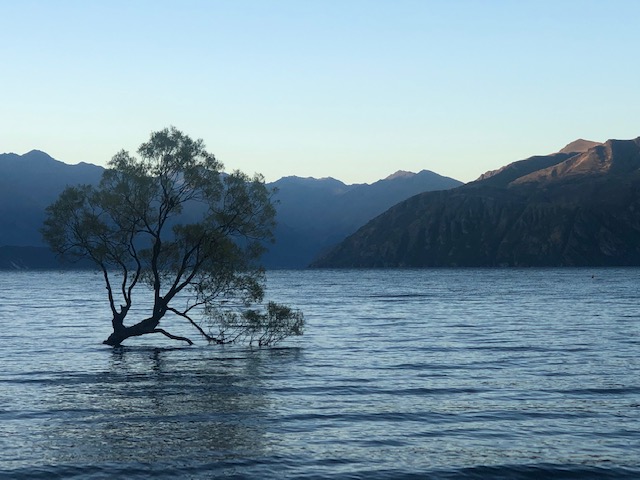 The connection is a tree that is reputed to be the most instagrammed tree in New Zealand, almost a symbol of NZ tourism. On a recent trip there, we were urged to set aside time to see the tree, specifically around sunset. So we worked around our program to ensure we got to the spot—a stretch of a beach—well ahead. We drove past a few times, keenly looking at the beach. We could see some people, but nothing special in the way of trees. We asked natives and tourists alike, and they all pointed us to the same area which our GPS had shown us, and which we had passed, looking in vain for a landmark. We decided to make our way down to the beach anyway. Lo and behold, there were many, many people there, jostling for some spot (we could not figure out what the spot was for), all setting up professional looking camera equipment. It came to a pass when we had to ask a friendly-looking lady what everyone was waiting to photograph, where the famous tree was, and what it was about. She kindly pointed to this spindly willow tree, standing a few feet into the waters of the beautiful Wanaka Lake, against a beautiful background of majestic mountains. But the tree itself? In my mind, this will forever define and exemplify ‘under-whelming’. ‘Why is the tree famous’, we asked many around us in bewilderment. While there was some story of how it was part of a fence and had survived in the water for several years, the general consensus was that it was famous because it was famous! So famous , it even has its own insta handle #ThatWanakaTree.
 d midwife spent in the poor slums of the East End of London. 23 years old and newly qualified she lived and trained as a midwife with a dedicated group of nuns St Raymond Nonnatus.
 ay of Hans Christian Anderson one of the best known children’s writer who was born on 2 April 1805 in Denmark.
 Pencil sketch, V. Raghunathan, using 3B and 4B pencils. 1980.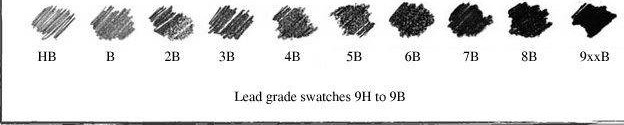
 to Eureka moments, ideas keep our little grey cells ticking away. Sometimes we let these slip away because we are preoccupied with what we feel are more serious or important matters, and sometimes because we feel that the ideas is too inane to pursue.