From A to …?

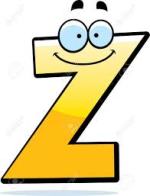
Imagine an alphabet that ended questionably with a Y? rather than a reassuring Z! Well there was actually a time when this familiar tailender was removed from the alphabet!

The English alphabet we know today took its modern 26-letter shape in the 16th century. But the origins of most letters of the English alphabet can be traced back to Egyptian hieroglyph symbols of 4,000 years ago, with a sprinkling of Semitic, Phoenician, Greek and Roman influences thrown in.

As with many letters of the English alphabet, Z also has an interesting history. Three-thousand years ago the Phoenicians used a letter called ‘zayin’, meaning ‘ax.’ It was in the form of a vertical line, with horizontal lines at the top and bottom–like an uppercase ‘I’.

The Greeks adopted it as ‘zeta’ around 800 BC. By this time the vertical line had become slanted, and the top and bottom lines had become elongated. Zeta took on the shape that we know as Z today.

But around 300 BC, the Roman Censor Appius Claudius Caecus felt that this letter was not being used frequently and decided that it had become archaic, and this letter was removed from the alphabet. According to some biographers he simply did not like the sound of the letter, and felt that when it is pronounced by pulling the lips over the teeth, the speaker looked like a smiling corpse!

Two hundred years later, Z was reintroduced to the Latin alphabet. At the time, it was used only in words taken from Greek. Because of its absence and reintroduction, zeta is one of the only two letters to enter the Latin alphabet directly from Greek.

So Z returned to the 26th place, but it was not always the last. For years, the ‘&’ symbol (now known as the ampersand) was the final letter. The symbol was pronounced as “and” but always used together with the Latin ‘per se’ meaning ‘by itself.’ So when rattling off the letters  “X Y Z and per se“ these rolled into being recited as ”X, Y, Z, ampersand.”

Early English did not have a Z, but used S for both the sibilant sounds. Even today the letter is relatively less used in ‘British English’ spellings as compared with ‘American’ English; (it is sometimes an irritant to find all these words underlined by Spellcheck if spelled with an S!)

It is also interesting to browse through the Z letters in tz cartoon.jpghe English dictionary and discover that the majority of the words listed there have their origins in a variety of other languages and cultures. Who would have thought that “ze leetle zee” would have such had such an adventurous history!
I for one enjoy the letter Z. It’s zippy, zappy, full of zest, and helps to create the right buzz!

–Mamata

Year of the Rat

This month has been one of the start of the New Year for several different communities, especially in India, as I wrote earlier. Every culture has its own calculations, myths and legends associated with the annual cycle of time. rat.png

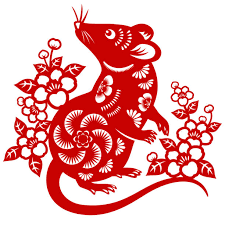
Last week was the Chinese New Year, and the start of the Year of the Rat. The year of the Rat signifies the first year in the 12-year cycle of Chinese zodiac. The years of the Rat include 1912, 1924, 1936, 1948, 1960, 1972, 1984, 1996, 2008, and now, 2020.

The Chinese zodiac is based on a repeating 12-year cycle, with each year signified by an animal, in the following order–Rat, Ox, Tiger, Rabbit, Dragon, Snake, Horse, Goat, Monkey, Rooster, Dog and Pig. Those born in a specific year are said to possess certain characteristics of the animal, as defined in the Chinese belief system; and their fortunes are determined accordingly. For example people born in the year of the Rat are supposed to be intelligent, charming, quick-witted, practical and ambitious. They are also likely to be timid, stubborn, greedy, devious, too eager for power, and love to gossip!

Why these animals and why this specific order?  There is an interesting legend linked to this. The story has many versions, but in essence it tells about a race. This is one version.

Once long, long ago, the Jade Emperor, one of the most important gods in traditional Chinese religion wanted to select 12 animals to be his guards. He sent his messengers to earth to invite all the animals in the world to take part in a race which would end by entering the Heavenly Gate.

Twelve species turned up at the start line: a pig, dog, rooster, monkey, sheep, horse, snake, dragon, rabbit, tiger, ox and rat.

As a reward for turning up, the Emperor named a year in the zodiac after each of these animals, but the race was to determine the order in which each animal would be placed in the zodiac, depending upon the order in which they reached the finish line.

All the animals set off on the course. On the way there was a big river that they had to cross. The Rat had got up and started early, but when it reached the river it felt helpless. But then it saw the strong Ox about to enter the water, so it used its wits and climbed onto the Ox’s head. The Ox was kind and let it ride with him. But as soon as they reached the other side, the wily rat quickly slid down and scampered to the finish line. And so the Rat came first, followed at number two by the diligent Ox.

Tiger and Rabbit were not far behind. Both were fast and competitive, but Tiger was faster and came in third. Rabbit who nimbly crossed the river by hopping on stepping stones and a floating log came fourth.

Everyone thought that the dragon with his magical powers of flight would be in front. But in fact the dragon took a detour to go ashore to help some villagers extinguish a fire. When it returned to the river, it saw that Rabbit was struggling on the log, and so the dragon used its breath to blow it to shore. The Rabbit never found out where the helpful breeze came from, but it finished before the Dragon, who came in at number five.

The Horse wasn’t far behind the Dragon and thought that sixth place was in the bag. However, it hadn’t noticed that the Snake had hitched a ride by wrapping itself around the Horse’s legs to save energy. Just as the finish line was in sight, the snake uncoiled itself and frightened the Horse. The Snake thus slyly slithered to sixth place while the horse came in seventh.

Next up were the Sheep (or Goat in some stories), Monkey and Rooster. They decided to work as a team and made a small raft to help them across the river. When they reached the other side, they dashed to the finish line. The Sheep/Goat reached first followed by the Monkey and the Rooster—ranking at number eight, nine and ten respectively.

That left the Dog and the Pig. The dog was playful and could not help splashing and enjoying itself in the river water while all the others overtook it. It landed up wet and panting to claim the eleventh rank. And where was the Pig? True to its nature, half way into the race it got hungry. So it decided to look for, and eat something to keep it going. But it ate so much that it just had to lie down and nap! When it awoke from its snooze, and made its way to the finish line, all the other animals had long crossed it. The Emperor had almost given up on it, but was happy to assign it the final space in the zodiac.

And so the 12 animals became the Emperor’s guards and were also assigned their place in the zodiac.

There is an interesting Post Script to this story which explains why the Cat is missing from the list. As the tale goes, Cat and Rat were then good friends, and both decided to join the race. But the Cat had a habit of waking up late. So, fearing he might miss the grand race, he asked the Rat to wake him up the next morning. The Rat, however, forgot his promise and left without his best friend.

Alas, when the Cat finally woke up, it was already too late, and he did not make it to the race on time. Hence, there is no year in the Chinese zodiac named after the Cat. And, this is why, until this day, the Cat will always hunt the Rat!

Here’s to the Year of the Rat!

–Mamata


Have We Lost the Apostrophe?

When something needs a protection society, you can be sure it is well on its way to extinction. And so is the case with the apostrophe. But ironically, the Apostrophe Protection Society (APS) in Britain has declared itself dead and buried while the apostrophe it created itself to protect is still breathing—though barely.

The Society was founded in 2001 with “the specific aim of preserving the correct use of this currently much abused punctuation mark”. The Society’s founder Mr. John Richards, who has fought valiantly for two decades in the service of the apostrophe, is closing it down for two reasons. First is that he is cutting down on his commitments—given that he is 96, that is perfectly understandable. But surely, there may be, somewhere in the world, some younger champion of the post-office comma? (In some parts of India, the apostrophe is referred to as the post-office comma). The other is disillusionment with the state of punctuation—he feels that less and less people and organizations care about the proper use of the apostrophe.

What a tragedy! The apostrophe is an essential part of punctuation. Though misused, the mind boggles when one thinks of the confusion we would face without it. The Society laid down three key tenets in this regard: (1) use apostrophes to denote missing letters; (2) use them to indicate possession—except in the case of possessive adjectives like ‘its’. They also had a strict rule about when not to use them—never use them to indicate plurals.

At any rate, the announcement of the closing down of the APS has elicited so much interest that the website has not been able to take the traffic over the last few days, and is temporarily replaced with a message that the full site will be back soon. And the reassuring thing is that the site is not being closed down and will remain open for reference. (http://www.apostrophe.org.uk/)

RIP APS. But let us hope RIP Apostrophe is still some time away!

See also our older  post ‘Emma Watson’s ‘Eats Shoots and Leaves’ Moment’ https://wordpress.com/post/millennialmatriarchs.com/21

–Meena

Read to Order

Last week I wrote about the vibrancy that marked the refree reading.jpgcent children’s literature festival that I was a part of. At my story readings I started by spreading out an array of books related to that session. As soon as the children gathered there, each once grabbed a book and started leafing through it. Every child urged that I should read for them the book she/he had picked up. The excitement of seeing books accessibly displayed, and being able to pick up a book themselves was palpable.

A few days later I read an article about how in most cases parents are the ones that make the decisions about the leisure-time reading for their children. Yes they take children to a bookshop, but it is they who choose the books that are eventually bought. These decisions are guided by a number of factors, among them the parent’s perception of what they consider “appropriate reading” for their child; sometimes titles or names that they are familiar with, and often, the price.

That is not to decry the role of parents, nor their genuinely good intentions of providing their child with desirable extra-curricular reading. Indeed the very fact that parents take their children to a bookstore or library is commendable enough. However it is possible that the selection of books may not be the one the child would have made. Added to which may be the added pressure on the child to dutifully read the selected books.  Probably a good way to kill the joy of reading itself!

In this process, what seems to be somewhat missing is the pleasure of browsing, exploring and discovering something new, something unfamiliar, or even something completely unknown. And it is this step that leads on to a lifelong love of meandering through the world of books. It is through these wanderings that not just children, adults also discover previously unknown worlds, cultures, and ways of looking at the world. For some people however, it is, perhaps, this very possibility that seems to pose a risk.

Take the recent news story about the self-styled book censor who is deliberately hiding certain books in a library in a small town in Idaho in the USA. These books seem to be those which are critical of the US President Trump, and those that deal with “liberal” issues such as gun control, human rights, immigration, and LGBTQ rights. An anonymous note left by the mystery censor stated “I am going to continue hiding these books in the most obscure places I can find to keep this propaganda out of the hands of young minds. Your liberal angst gives me great pleasure.” Fortunately it seems that this mystery stasher has not destroyed the books but simply squirreled them away randomly among the shelves where they do not belong as per the Dewey Decimal System! For biblio-wanderers like myself, this may add to the excitement of finding literally “hidden” treasures while browsing the shelves!

Going back to children and reading, as adults who play a part in selecting books for children, we need to accept that providing the space for a child to explore and discover the world of books as an independent traveller may help in unearthing unknown treasures which can keep curiosity alive, enrich imagination, and build skills of making choices (even if sometimes it is the wrong choice!).

Read to order or order to read—there is a thin line between the two.

–Mamata

BOOKAROO!

What is more fun than a barrel of monkeys? A bunch of bubbly Bookaroons telling stories at the Baroda Bookaroo! No this isn’t a new tongue twister, nor the setting and characters from Dr Seuss. This describes the two-day Festival of Children’s Literature recently held at Vadodara in Gujarat.

Bookaroo, as the festival is called, is a celebration of the magic of books that brings together children and tellers and creators of stories (writers and illustrators). The Festival that focuses on Reading for Pleasure, began in 2008 with its first event in Delhi. In the decade since then, it had grown bigger, and also travelled to 13 cities in different parts of India.  Besides the main two-day event that brings children to a common venue, Bookaroo also reaches out to those children who cannot come to the festival for various reasons, with authors visiting schools for the underserved, and with special needs; hospitals, construction sites, orphanages and remedial homes. Another form of outreach has been storytelling and art activities in public spaces like parks, metro stations, monuments, museums and public libraries.

I was privileged to be a part of this wonderful festival held in IMG_20191114_104834.jpgthis past weekend. The venue itself was unique—the Art District in Alembic City with its sprawling lawns, old trees, and intriguing studio spaces housed in what was Alembic’s (remember those ubiquitous Yera glasses?) first factory, over a hundred years old! Imagine this coming alive with the colour, sound and movement of thousands of children—a vibrant tapestry seamlessly weaving the past, present and future.
The two days were packed with parallel events catering to children from ages 4 to 14. There was something for everyone—listening and reading, doodling and drawing, singing and crafting, meeting favourite authors in person, discovering new stories and books, and of course, making new friends. Gandhian Jyotibhai Desai, all of 93 years, with a twinkle in his eyes, answered children’s questions about Gandhi and his life, inspired each one to become a change-maker. Others carried children far and wide on the magic carpet of tales old and new.

The same excitement permeated the storyteller Bookaroons. The time that we spent together was bubbling with fun and laughter. A motley group from far and near, each of us passionate about telling tales in our own ways, all of us were immediately bound by our common love for words and passion to reach out to children. For those two dizzy days we Bookaroonas put aside our hats as mothers, daughters, mothers-in-law, daughters-in-law, and grandmothers, and donned our favourite kiddie-hats—giggling and teasing; chatting and chortling late into the night; sharing ice-cream rolls and shopping tips, and swapping ghost stories!

Bookaroo’s journey started in 2003 with the setting up of India’s first exclusive children’s bookstore Eureka–a place that children could call their own, choose books of their choice without parents or teachers dictating what a good book is. Bookaroo has travelled far since then, connecting children and books in so many ways. Bookaroo is a winner of the Literary Festival Award at the London Book Fair’s International Excellence Awards, 2017. It was the first time that an Indian children’s literature festival was recognised in the international arena.

For myself, who often agonises in this blog about the dying age of the printed word, and the joy of reading, it was exhilarating to see so many happy children with paint-smudged fingers clutching their new books, and looking for the authors to autograph them. Thank you Bookaroo for a wonderful reiteration and reassurance that all is not lost!

–Mamata

14 November is celebrated as Children’s Day in India. For Bookaroo, every day is Children’s Day!


Gandhi, in and on Newspapers

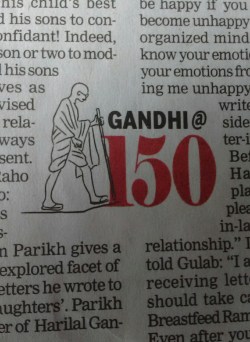
It is Gandhi week, and newspapers are full of articles and pieces aIMG_20191001_104301.jpgbout Gandhi, his thoughts and deeds. This year it is with renewed vigour as it marks the 150th anniversary of Gandhi’s birth. Being the prolific writer that he was, and the wide spectrum of subjects and areas on which he expressed his thoughts, every writer today can find some words of wisdom from Gandhi with respect to whatever they may choose to contribute for the ‘Gandhi special’ editions.
Gandhi himself was no exception to the pressure of meeting a newspaper deadline. Sometime in the second half on 1917 he wrote: I promised the Editor a contribution for the Diwali number of Hindustan. I find that I have no time to make good the promise, but thinking that I must write something, I place before the readers my views on newspapers. Under pressure of circumstances, I had to work in a newspaper office in South Africa and this gave me an opportunity to think on the subject. I have put in practice all the ideas that I venture to advance here.

Continuing, he went on to express his views on the business and ethics of newspapers of the day.

Newspapers are meant primarily to educate the people. They make the latter familiar with contemporary history. This is a work of no mean responsibility. It is a fact however, that the readers cannot always trust newspapers. Often the facts are found to be quite the opposite of what has been reported.  If newspapers realised that it was their duty to educate the people, they could not but wait to check a report before publishing it. It is true that often they have to work under difficult conditions. They have to sift the true from the false in but a short time, and can only guess at the truth. Even then I am of the opinion that it is better not to publish a report at all if it has not been found possible to verify it.

How interesting that the same debate about Fake news, and news used to provoke and promote dissension and distrust, continues to rage even today, albeit now, in the context not only of the print media, but all other media also.

Equally thought provoking and relevant are his concerns about the potentially dangerous role that newspapers can play.

It is often observed that newspapers publish any matter that they have, just to fill in space. This practice is almost universal. The reason is that most newspapers have their eye on profits. There is no doubt that newspapers have done great service. …But to my mind they have done no less harm. …many are full of prejudices, create or increase ill will among people. At times they produce bitterness and strife between different families and communities. …On the whole, it would seem that the existence of newspapers promotes good and evil in equal measure. 

He continues with his canny observations on how revenue from advertising tends to override other journalistic responsibilities. And this was over a hundred years ago!

It is now an established practice with newspapers to depend for revenues mainly on advertisements, rather than on subscriptions. The result has been deplorable. The very newspaper which writes against the drink-evil publishes advertisements in praise of drink. Medical advertisements are the largest source of revenue, though today they have done and are doing, incalculable harm to people.  I have been an eye witness to the harm done by them. Many people are lured into buying harmful medicines. …No matter at what cost or effort we must put an end to this undesirable practice or, at least, reform. It is the duty of every newspaper to exercise some restraint in the matter of advertisements.

Ironically my newspaper today has ten full-glossy pages creating aspirations of ”dream” lifestyles, and wooing consumers with advertisements of state-of-the art luxurious residences, gadgets, and holidays; and profligate indulgences in food, drink, clothes, cosmetics and more. The other ten pages has the kind of news that Gandhi had been so concerned about (violence, intolerance, discrimination and disparity), along with a sprinkling of pieces about the Gandhian tenets of simplicity, honesty and truthfulness, and introspection! Contradiction, or comfortable and convenient co-existence? Something to think about indeed!

Written by Gandhi sometime before 14 November 1917 (originally in Gujarati) Source: Collected Works of Mahatma Gandhi, Vol.14. https://www.gandhiheritageportal.org

–Mamata


Ozone Story

September 16 was proclaimed as the International Day for the Preservation of the Ozone Layer by the United Nations General Assembly. It was on this day in 1987 that the Montreal Protocol to control production and consumption of Ozone Depleting Substances was signed by various countries at Montreal, Canada. Since then this day is used as an opportunity to bring to public attention the importance of the Ozone layer and the threats to it caused by human activities.

The theme for this year’s World Ozone Day is ‘32 Years and Healing’. This celebrates one of the few success stories in the gloom and doom of news about the environment. The healing is the outcome of three decades of international cooperation to protect the ozone layer and the climate.

On reading about this I felt a sense of satisfaction at having contributed in a teeny-tiny way to the healing effort. It was in 1997 that the Centre for Environment Education got engaged in a variety of projects to raise awareness about the issue to a wide range of audiences—from school children to policy makers. As part of this we developed educational material that could communicate the somewhat complex science in a simple way, as well as motivate people to take action to prevent what was then an ominously growing hole in the ozone layer.

Today both the science and the understanding has advanced greatly, but it is still useful to remember some ozone basics.

OOOzone: When it is alone, it is called an oxygen atom. When two oxygen atIMG_20190917_152811.jpgoms get together, it is called oxygen molecule or just oxygen. When three oxygen atoms get together, it is called an ozone molecule!
Where is Ozone? A thin invisible layer of ozone gas is found in the upper atmosphere 15-60 km above the earth. This is called the ozone layer.

How much Ozone? There are only one to ten units of ozone in every million units of gas or particles in the upper atmosphere. Instruments measure ozone in parts per million (ppm).

What does the ozone layer do for us? In the upper atmosphere, the ozone layer acts as a natural shield. It protects the earth and its inhabitants by absorbing the harmful part of the ultraviolet radiation from the sun. Too much ultraviolet radiation is dangerous for all living creatures—humans, animals and plants.

What kind of danger? In humans it may increase the rate of skin cancers, eye problems and cataracts; and also weaken the immune system. It can reduce crop yields as plants will have reduced leaf size and germination time. It could kill phytoplankton—the base of the food chain in water and disturb the entire aquatic food chain. It can also damage paints and fabrics, as well as plastic.

How is the ozone layer damaged? By the use of Ozone Depleting Substances (ODS) which include chemicals called CFCs and Halons, which are released through human activities, and which float into the upper atmosphere.

In the last thirty years since the awareness about the danger from these substances was recognised, there has been a consistent effort at national and global levels to phase out the ODS, through policies, international agreements, and R&D in industry to find better substitutes. The Montreal Protocol has led to the phase-out of 99 per cent of ozone-depleting chemicals in refrigerators, air-conditioners and many other products.

However there are still products in the market that could potentially be threats. As consumers we can all play a role in protecting the layer that protects us, through the choices we make. Here are some tips on what we can avoid. Avoid aerosols whether for pesticides or perfumes. Avoid Styrofoam glasses and plates; use reusable steel and glass vessels. Avoid foam mattresses and pillows, use traditional cotton or coir products.  We must also remain vigilant to tackle any illegal sources of ozone-depleting substances as they arise

While we can celebrate success this year, this day is also a reminder that we must keep up the momentum to ensure healthy people and a healthy planet.

–Mamata


Green Amber Red

Imagine that you are cruising along a highway; enjoying the smooth flow and passage of time and miles. On the other hand, imagine you are in a city, driving at the required speed, eagerly crossing the green lights, slowing at the amber, and every now and then, stopping at the red light. There is a sense in both the experiences; in both cases, a different kind of pace is set.

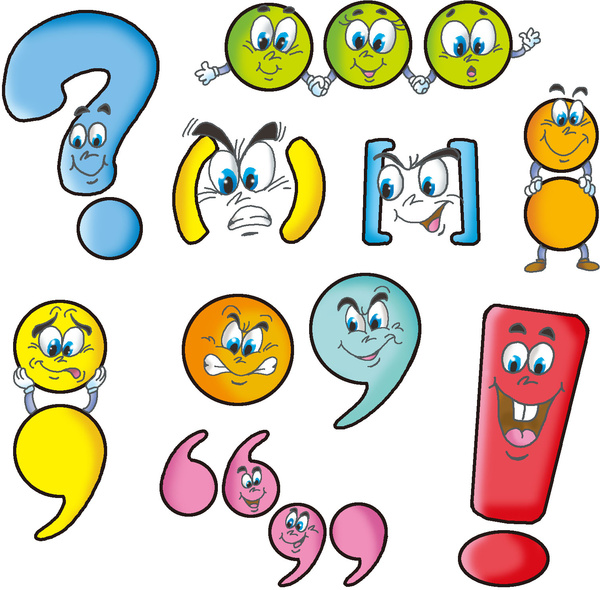
The act of writing could perhaps be compared to this. Every writer sets their own pace and rhythm of how the words flow. For some the long uninterrupted cruise is the mode of choice; others prefer the ordered structure of breaking the flow, sometimes with a pause and sometimes with a longer halt—from green to amber to red. It is the punctuation marks that represent these traffic lights.

Many writers have expressed their thoughts on these—essential parts of tImage result for image punctuation marks cartoonhe tools of their trade. Some have celebrated punctuation as the friendly spirits whose bodiless presence nourishes the body of language”,  while another believes that each writer has a lifetime quota of them, to be used judiciously. I myself have always enjoyed the mental exercise of fixing the appropriate place for the appropriate mark, and am always attracted by how authors perceive and practice the use of punctuation marks.

I recently read a delightful articulation of this in an article which had excerpts from an essay titled Notes on Punctuation by Lewis Thomas. Thomas was an American physician, poet, etymologist, essayist, administrator, educator, researcher and teacher. Amidst his serious research and writing, Thomas applied equal affectionate attention to the traffic signals, giving each one a distinct character and identity.

Sharing some in his own words.

, The commas are the most useful and usable of all the stops. It is highly important to put them in place as you go along. If you try to come back after doing a paragraph and stick them in the various spots that tempt you you will discover that they tend to swarm like minnows into all sorts of crevices whose existence you hadn’t realized and before you know it the whole long sentence becomes immobilized and lashed up squirming in commas. Better to use them sparingly, and with affection, precisely when the need for each one arises, nicely, by itself.

; I have grown fond of semicolons in recent years. The semicolon tells you that there is still some question about the preceding full sentence; something needs to be added; it reminds you sometimes of the Greek usage. It is almost always a greater pleasure to come across a semicolon than a period. The period tells you that that is that; if you didn’t get all the meaning you wanted or expected, anyway you got all the writer intended to parcel out and now you have to move along. But with a semicolon there you get a pleasant little feeling of expectancy; there is more to come; read on; it will get clearer.

: Colons are a lot less attractive, for several reasons: firstly, they give you the feeling of being rather ordered around, or at least having your nose pointed in a direction you might not be inclined to take if left to yourself, and, secondly, you suspect you’re in for one of those sentences that will be labeling the points to be made: firstly, secondly and so forth, with the implication that you haven’t sense enough to keep track of a sequence of notions without having them numbered.

!!! Exclamation points are the most irritating of all. Look! they say, look at what I just said! How amazing is my thought! It is like being forced to watch someone else’s small child jumping up and down crazily in the center of the living room shouting to attract attention. If a sentence really has something of importance to say, something quite remarkable, it doesn’t need a mark to point it out. And if it is really, after all, a banal sentence needing more zing, the exclamation point simply emphasizes its banality!

As for me, I do so love the comma, and simply cannot resist the !!!

–Mamata


On Time

“Time you old gypsy man, will you not stay? Put up your caravan just for one day?

hourglass.jpg
Source: Google

These lines from a poem learnt by rote in school, still remembered. Time had a different connotation when one was just fifteen. It was more about the “present”, and something one needed to cram in all the activities of teenage life.  Today with several decades behind one, Time is more about looking back, while Time the old gypsy man seems to be flashing past at the speed of light.

Today we live “by the clock”. Not only are our daily activities monitored by the clock, we depend on Apps to remind us to get up, to drink water, and to call our friends. Interestingly, the regular linear time line, cut up into days and weeks, is barely two and a half centuries old. In ancient times, time-keeping was more of an art than a science. People in most old civilizations relied on natural events–the turn of the seasons, the waxing and waning of the moon as some ways to measure time.  Different cultures had their own ways of measuring time.

The concept of time has always been relative and contextual. An essay that I read explores these dimensions of time through different cultures and history. Titled Cartographies of Time, the two-part essay by authors Jonny Miller and Dorothy Sanders is fascinating reading. Sharing some excerpts.

In Madagascar if you asked how long something was going to take, you might be told it would be “the time of rice cooking (about half an hour) or “the frying of a locust” (a few minutes).

For monks in Burma there is no need for alarm clocks. They know when it is time to get up when “there is enough light to see the veins on their hand.”

The Andamanese, a tribe that lives on the Andaman Islands have constructed an annual calendar built around the sequence of dominant smells of trees and flowers in their environment. Instead of living by a calendar, this tribe “simply smell the odours outside their door.’

The Amondawa tribe that lives in the Amazon Rainforest have no specific word in their language for ‘time’ nor do they determine any discrete periods of time such as a month or a year. They only have divisions for night and day, and rainy and dry seasons. Even more intriguing is that nobody in the community has an age. Instead they change their names to reflect their stage of life and position within the community. What a wonderful way to go through life, rather than our obsession with the number of candles on a birthday cake!

The fact remains that time, at least the way we understand it today, is always passing. But what we make of it, is entirely up to us.

As the Dalai Lama has said: “Old friends pass away, new friends appear. It is just like the days. An old day passes, a new day arrives. The important thing is to make it meaningful: a meaningful friend, or a meaningful day.”

–Mamata


Where Did They Come From?

Back to my favourite topic—Words and their quaint origins!

CLUE: Comes from an old English word meaning a ball of thread that could help you find your way through a maze. This, is turn, refers to the Greek myth of Theseus who found his way out of the Cretan labyrinth by unravelling a ball of thread. And, from there evolved the use of the word “clue” which refers to hints that help to solve a mystery (or a crossword!).

QUIZ: An invented word. The story goes that in 1780 Richard Daly a Dublin theatre manager made a bet that he would introduce a new word into the language in 24 hours. He sent street urchins to write “Quiz” (a word that he made up) in chalk upon every wall and bare surface in the city, and in a few hours everyone was discussing it. Since no one knew what it meant everyone thought that it was some kind of a test. It came to be used to mean ‘enquiry’.

BLURB: A blurb on the cover of a book may give us a clue about what is in the book.  The word blurb was coined in 1907 by American humorist Gelett Burgess. The cover of his 1906 book Are You a Bromide?  had the picture of a fictitious Miss Belinda Blurb in the act of “blurbing”,  proclaiming “Yes, this is a blurb.”  From then on covers of books used to carry text “blurbs” without the picture. The word blurb entered standard English in the 1920s.

BLOCKBUSTER: This was the British name in World War II for a super-large high-explosive bomb capable of destroying large areas. Within a few years of its use in military terminology the word blockbuster was used to describe other powerful things such as sports teams and hail storms. In 1954 the expression block-buster was used to describe movies that grossed over two million dollars. Today blockbuster is generally used for super-hit movies, but also to describe something that is powerful, exciting, immense and successful.

Surprisingly today we say that a movie “bombed” at the box office to mean just the opposite!

CARTOON: This is the age of blockbuster ‘cartoon’ or animated movies. Interestingly the word derives from the Latin charta meaning paper via the Italian form cartone (a big piece of paper). It originally referred, in the Middle Ages, to a preparatory sketch for a tapestry or other artwork. The modern usage emerged in around 1843 when Punch magazine used satirised drawings of the new Victorian Houses of Parliament, and continued to use humorous illustrations in its issues. In the early 20th century, it began to be used to refer to animated films which resembled print cartoons.

IGNORAMUS: This used to be a favourite word of mine when I was in my teens—just liked the sound of it, and had fun using it to describe people! The word has its origins in legalese. Grand Juries in England wrote “ignoramus” on the back of rejected proposals for indictment to mean “we have no knowledge of it.” The implications that they did not wish to hear anything of it may have led to its later use to describe someone who knows nothing of anything.

The more I read about words, the more I discover what an ignoramus I am!

–Mamata

ignoramus.jpg
Source: Google